
Blog
Caring for Butcher Block Countertops in Your NWI Home


For homeowners in Dyer and Crown Point, the secret to keeping butcher block countertops looking beautiful is rooted in a simple, honest approach: consistent, gentle care. Our family at Groen's has built our reputation on quality that lasts, and we want to share that same wisdom with you. It truly just boils down to daily wipe-downs, monthly oiling to keep the wood from drying out, and tackling spills right away. This little bit of effort is all it takes to make sure your wood surfaces stay a warm, functional centerpiece in your kitchen for generations.
Why NWI Homes Embrace Butcher Block Countertops
Here in Northwest Indiana, the kitchen isn't just for cooking—it's the heart of the home. It’s where family gathers and friends catch up. That’s exactly why so many of our neighbors in Dyer, Crown Point, and St. John are falling in love with the timeless appeal of butcher block countertops. They bring a natural warmth and an honest, hardworking character that just feels comfortable and fits our community perfectly.
Unlike cold stone or laminate, a wood surface feels alive and inviting. It even seems to soften the clatter of a busy kitchen, making the whole space feel calmer. This is the kind of heirloom quality our family at Groen’s has built our name on since 1983. Much like the solid wood, American-made furniture we stand behind, a well-cared-for butcher block is an investment that tells a story over generations. You can see more of our commitment to lasting quality by exploring our custom Amish furniture near you.
A Versatile Foundation for Your Style
One of the best things about butcher block is its incredible versatility. It just works with so many different kitchen designs, making it a perfect foundation for whatever your vision is. Whether you're in a modern farmhouse in Schererville or a classic traditional home in Munster, this material adapts beautifully.
- For Modern Kitchens: It brings a touch of organic warmth that softens the hard lines of sleek cabinetry and stainless steel appliances.
- For Rustic and Farmhouse Styles: It dials up the cozy, lived-in feel, pairing perfectly with shaker cabinets and apron-front sinks.
- For Traditional Spaces: It adds a classic, functional elegance that feels like it was pulled from a professional chef’s kitchen.
At Groen's, we believe you shouldn't have to settle for "close enough." A butcher block countertop is a perfect example of a truly custom choice—a surface that can be made to order, tailored to your exact needs and style, from the species of wood right down to the edge profile.
The beauty of butcher block is that it’s also forgiving. The minor scratches and scuffs from daily life aren't disasters; they become part of the patina that develops over time, adding to its unique charm. With the simple care routines our team will outline in this guide, you can confidently keep this beautiful surface looking great, ensuring it remains the warm, inviting soul of your kitchen for years to come.
Your Daily and Weekly Care Routine for Lasting Beauty
Caring for a butcher block countertop is far less work than most people imagine. It’s not about intense scrubbing or special treatments; it's about building a few simple, consistent habits into your daily life.
For our neighbors in busy family kitchens across Schererville and Munster, this routine quickly becomes second nature. A little daily attention is the real secret to preserving that beautiful, warm wood surface for years to come.
The Gentle Daily Wipe-Down
The single most important thing you can do for your butcher block is a quick wipe-down after you’re done cooking. Just use a soft cloth, warm water, and a tiny bit of mild dish soap. Gently clean the whole surface to get rid of crumbs and food residue.
After washing, you absolutely must dry the countertop completely with a clean towel. Wood is porous, and letting water sit—especially around the sink—is the fastest way to get dark spots or even damage the wood fibers.
Our Pro Tip: Keep a dedicated microfiber cloth for your countertops right under the sink. Having it ready to go makes this two-minute task feel effortless, so you’ll never be tempted to skip it.
Mastering the Art of the Quick Spill Response
Life is messy, and spills are just a part of a well-loved kitchen. Whether it's red wine, coffee, or tomato sauce, the rule for butcher block is simple: act immediately.
- Blot, Don't Wipe: The first instinct is to wipe, but that just spreads the liquid and pushes it deeper into the wood grain. Grab a paper towel and blot the spill instead.
- Clean and Dry: Once you’ve soaked up the worst of it, follow your daily wipe-down routine with a little soap and water.
- Dry It Thoroughly: This is key. Pay extra attention to drying the area completely so no moisture gets a chance to soak in.
This immediate action is your best defense against stains. It keeps your surface looking pristine and saves you from needing more intensive cleaning down the road.
A Natural Approach to Weekly Sanitizing
About once a week—or anytime after you've worked with raw meat—it’s a good idea to give your countertop a deeper, sanitizing clean. But please, step away from the harsh chemical cleaners! They can strip the protective oil finish right off the wood, leaving it dry and vulnerable.
Instead, our team always recommends a simple, natural solution. Mix equal parts white vinegar and water in a spray bottle.
Lightly mist the surface, let it sit for a minute or two to work its magic, and then wipe it clean with a damp cloth. As always, finish by drying the surface thoroughly. This method gets the job done without damaging the finish or leaving harsh chemicals where you prepare your food. For more ideas on keeping your whole home fresh, check out our guide on spring cleaning strategies for your home.
The Essential Guide to Oiling Your Butcher Block
If daily wipe-downs are the foundation of caring for your butcher block, then regular oiling is the framework that keeps it standing strong for generations. You have to think of the wood as a living material in your kitchen; it gets thirsty. Oiling is how you give it a drink. This isn't just about cleaning—it's the single most important act of preservation you can perform for your investment.
This simple ritual feeds the wood, replenishing the moisture that daily use and a dry environment can strip away. It’s what keeps the wood from drying out to the point of cracking or splitting. More importantly, a well-oiled surface creates a beautiful, food-safe barrier that protects your countertop from the inside out.
Why Oiling Is So Crucial for Your Countertops
A properly oiled butcher block doesn't just look better; it performs better. When the oil soaks into the wood fibers, it makes it much harder for spills like water, wine, or coffee to penetrate and leave a stain. It also brings out a deep, rich luster that makes the natural grain pop, turning a functional work surface into a stunning centerpiece.
For our neighbors here in Northwest Indiana, this step is non-negotiable. Our dry winters can be brutal on any wood surface. As soon as the furnace kicks on and the indoor humidity plummets, wood starts losing moisture fast, making it brittle. A consistent oiling routine is your best defense against the seasonal climate swings we all know too well.
At Groen's Fine Furniture, our family has seen firsthand how a little bit of care preserves quality for decades. We view oiling a butcher block the same way we view caring for a solid wood Amish dining table—it’s a simple act that honors the craftsmanship and ensures the piece serves your family for a lifetime.
Selecting the Right Oil
When it comes to choosing an oil, there’s one simple rule: always use a food-safe, non-spoiling oil. This is not the place for your everyday cooking oils like olive, vegetable, or canola. They might look good for a day, but they will eventually go rancid. Our team can assure you, you don't want a sticky, smelly countertop that attracts bacteria.
Your best bet is food-grade mineral oil. It’s affordable, you can find it almost anywhere, and it’s completely safe for food prep surfaces. It’s a stable, non-drying oil that does a fantastic job of moisturizing the wood without getting tacky or spoiling. Some people also like specialized butcher block conditioners, which are usually mineral oil-based but have a little beeswax mixed in for extra water resistance.
This visual guide shows the simple daily and weekly steps that get your surface ready for its essential oil treatment.
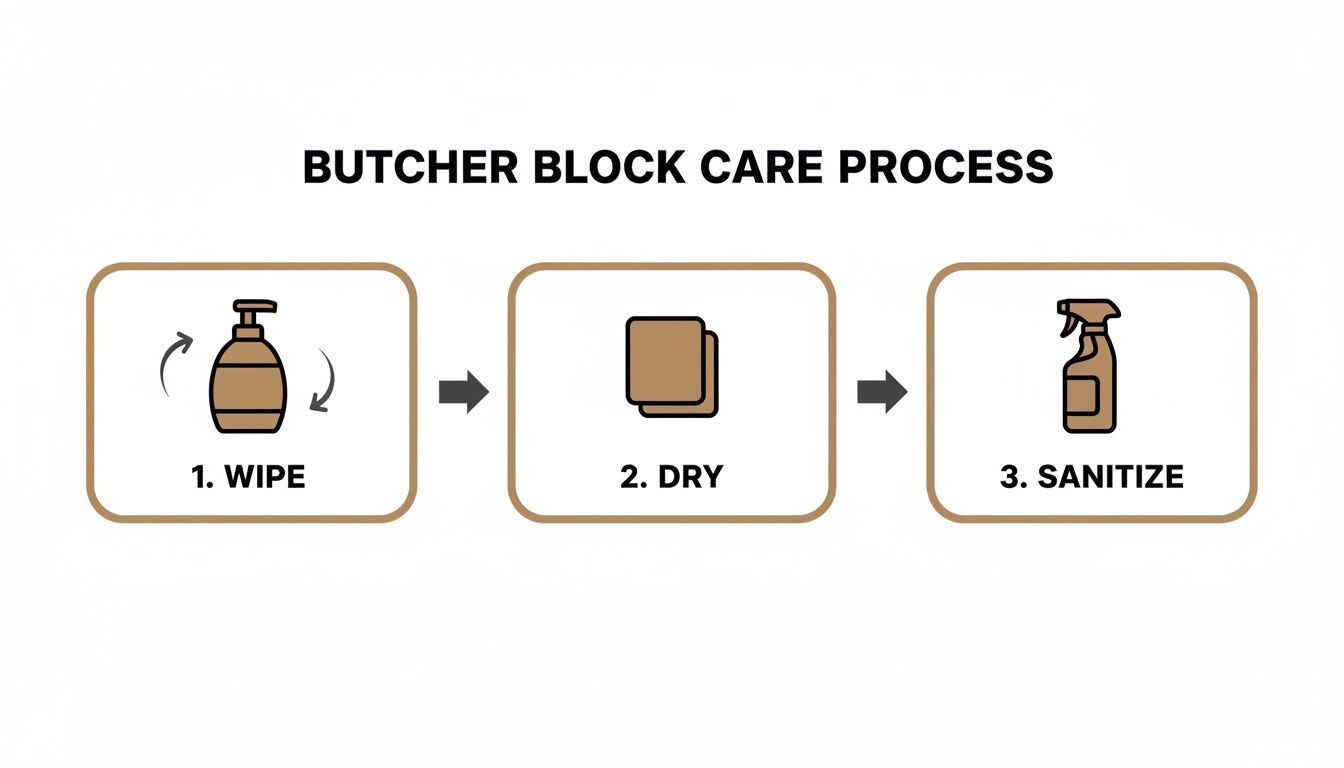
Wiping, drying, and sanitizing like this creates a clean slate, allowing the mineral oil to soak in as deeply as possible.
The Oiling Process Step-by-Step
Oiling your butcher block is incredibly easy—it’s more about patience than skill. Our team always recommends doing it in the evening before you go to bed. The most important step is just letting it sit.
Here's how we do it:
- Prep the Surface: Start with a perfectly clean and, most importantly, completely dry countertop. No crumbs, no sticky spots.
- Apply the Oil Generously: Pour the mineral oil right onto the wood. Don't be shy. You’ll see the wood start to drink it up, and that will tell you how much it needs.
- Spread It Evenly: Grab a clean, lint-free cloth (an old t-shirt works great) and rub the oil into the wood, always going with the grain. Make sure you cover every inch, including the edges. You might notice some spots soak up the oil instantly—give those thirsty areas an extra splash.
- Let It Penetrate: This is the magic step. Just walk away. Let the oil sit and soak into the wood for at least a few hours, but overnight is ideal.
- Buff Off the Excess: The next morning, take another clean, dry cloth and wipe away any oil that’s still sitting on the surface. Buff the wood until it feels smooth and dry to the touch, not greasy.
This whole process is fundamental to wood care. If you want to learn more about maintaining other pieces in your home, check out our guide on how to care for wood furniture.
How Often Should You Oil Your Countertop?
Frequency is everything, and it really depends on the age of your countertop and your environment. A brand-new block is a lot thirstier than one that's been seasoned for a year.
To make it easy, here’s a quick reference guide based on what we see with countertops in the Dyer and Crown Point area.
Butcher Block Oiling Schedule
| Countertop Condition | Recommended Oiling Frequency | Key Indicators |
|---|---|---|
| Brand New (First Month) | Once a week | The wood will absorb oil very quickly. |
| Established (1-12 Months) | Once every 2-3 weeks | Surface starts to look a bit dull or dry. |
| Well-Seasoned (1+ Year) | Once a month | A good habit for consistent protection. |
| Heavy Use / Dry Climate | Every 2 weeks (or as needed) | Water no longer beads on the surface. |
Following a simple schedule like this is the secret to longevity. These monthly mineral oil applications can boost the life of your countertop by 50-100% compared to one that's neglected. For a standard 40 sq ft countertop, that small effort turns a nice installation into a family heirloom that lasts 20+ years.
While it's a different application, this comprehensive guide to teak oil for boats does a great job explaining the long-term benefits of protecting wood with oil in harsh environments.
How to Handle Scratches, Stains, and Minor Repairs
One of the best things about choosing butcher block for your kitchen is just how forgiving it is. When you get a chip or a deep stain in stone or quartz, you’re usually looking at a costly professional repair. But wood? Wood offers a chance for renewal, and you can do it yourself. Here at Groen's Fine Furniture, we love showing our clients in Dyer and Crown Point that minor imperfections aren’t disasters—they’re just opportunities to restore the wood's natural beauty.
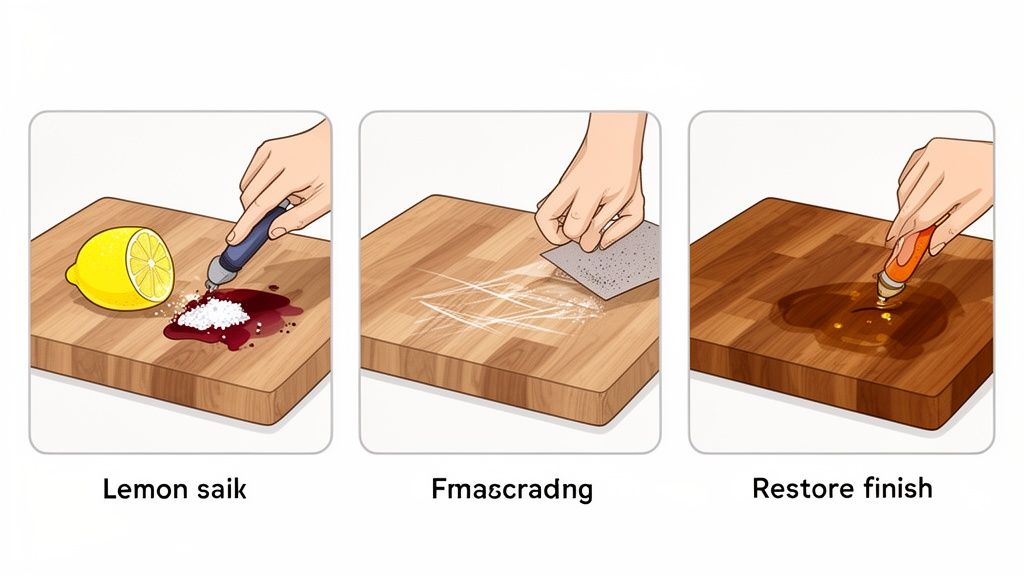
Life happens in the kitchen. A dropped pan, a splash of red wine, or a forgotten puddle of water are all part of a well-loved home, and your countertops will bear witness to it all. This is where you’ll learn to handle these common issues with confidence, reinforcing the lasting value of your investment.
Tackling Common Kitchen Stains
A dark ring from a wet glass or a faint coffee spill can be frustrating, but these marks are rarely permanent. You can often lift them with a few simple items from your pantry, no harsh chemicals needed.
For those light water rings or minor food discolorations, a little lemon and salt work wonders.
- Sprinkle a bit of coarse salt right onto the stained area.
- Cut a lemon in half and use it to scrub the salt into the wood, moving in a circular motion.
- Let the mixture sit for a few minutes before wiping it clean with a damp cloth. Make sure you dry the area completely.
The salt acts as a gentle abrasive, and the citric acid in the lemon helps to naturally bleach out the stain. After any stain treatment, it’s really important to apply a light coat of mineral oil to the spot to restore its protective finish and help the area blend in.
Erasing Scratches and Minor Dents
Scratches are an inevitable part of living with a wood work surface, but they are also incredibly simple to fix. For minor knife marks or light scuffs, all you need is a small piece of fine-grit sandpaper. Something around 220-grit is usually perfect for the job.
The process is straightforward:
- Sand the affected area lightly, always moving with the wood grain. The goal isn't to dig in, but to smooth the scratch and feather the edges so the sanded spot blends into the rest of the surface.
- Wipe away all the sanding dust with a clean, dry cloth. You want the surface to be totally free of debris before moving on.
- Apply a fresh coat of mineral oil to the sanded patch. The wood will likely be extra "thirsty" here, so be generous and let it soak in before buffing away any excess.
For small dents—like from a dropped can—you can sometimes use steam to raise the compressed wood fibers back up. Just place a damp cloth over the dent and press a hot iron over it for a few seconds. The steam can often swell the wood right back into place. To learn more about protecting your wood surfaces from daily wear, check out our ultimate guide to protecting wood furniture from scratches and stains.
The ability to sand away years of use and re-oil the surface is what gives butcher block its incredible longevity. It’s not just a countertop; it's a renewable surface that can evolve with your family, looking beautiful for decades.
Prevention as the Best Policy
While repairs are simple enough, preventing damage in the first place is even easier. A few key habits will dramatically cut down on the need for sanding and stain removal. Caring for butcher block countertops is as much about what you avoid doing as it is about active maintenance.
- Always Use Trivets: Hot pots and pans are the main cause of scorch marks, which are much tougher to remove than stains. Make it a house rule to always place hot cookware on a trivet or potholder.
- Embrace Cutting Boards: Even though it’s called "butcher block," cutting directly on the main surface will inevitably lead to scratches. Using a dedicated cutting board protects your countertop and keeps it looking smooth.
- Wipe Up Water Immediately: Pay close attention to the area around your sink. Standing water is the number one enemy of butcher block, leading to dark stains and potential wood damage. A quick wipe with a dry cloth after doing dishes makes a huge difference.
By treating these minor repairs as part of the natural lifecycle of your countertop, you can maintain its warmth and beauty for a lifetime. This hands-on approach is one of the greatest rewards of choosing a natural wood surface for the heart of your Northwest Indiana home.
Designing a Kitchen That Lasts with Custom Options
Caring for your butcher block countertop is really about more than just wiping it down and oiling it; it’s an investment in the heart of your home. At Groen's Fine Furniture, our family has always believed you should never have to settle for anything less than perfect. This simple idea guides everything we do, from helping you pick out a timeless piece to showing you how to keep it beautiful for decades.
Choosing that warm, inviting butcher block is a great first step. Now, imagine that gorgeous wood surface paired with a custom dining set you designed yourself through our Canadel Custom Order Services. Picture it as the centerpiece of a solid wood Amish island—a place where your family will gather for years. Your home should tell your story, and our team is here to help you put it all together.
Making Your Vision an Affordable Reality
We get it. Creating the kitchen you've always dreamed of is a big undertaking. For families here in St. John, Dyer, and across Northwest Indiana, finding that sweet spot between lasting quality and a sensible budget is everything. That’s why we offer Special Financing options (subject to credit approval), giving you the buying power you need today. This isn't just about a sale; it's about making sure that lasting quality is within reach.
Our family has been serving the NWI community since 1983, and one thing we've learned is that a beautiful home is built on smart, durable choices. Butcher block is a perfect example of affordable luxury when you commit to its simple care.
With the right maintenance, butcher block countertops can last an impressive 20 years or more, which makes them a fantastic long-term investment. The hardwood construction is incredibly resilient against impacts, and unlike brittle stone, you can just sand out minor scratches. This durability is unlocked by consistent care, like applying food-grade mineral oil once a month to keep the wood sealed and hydrated. For a full rundown on its lifespan, you can learn more about the pros and cons of butcher block.
As you're exploring custom options for your kitchen, a good Kitchen Countertop Materials Comparison Guide can really open your eyes to what’s out there beyond just butcher block. It helps you make a truly informed decision that fits your family's lifestyle.
Visit Groen’s Fine Furniture in Dyer or Crown Point today to explore our custom options and ask about our special financing plans. Let our family help you create a home you love.
Your Butcher Block Care Questions Answered
Even after you learn the ropes of butcher block care, specific questions always pop up. It's one thing to know the general steps, but it's another thing entirely to feel confident when a real-world kitchen mess happens.
Our family at Groen’s has been answering questions about wood care since 1983, so we've heard it all. Think of this as a conversation with a seasoned expert who just wants your countertops to look their best.
Can I Cut Directly on My Butcher Block Countertop?
You technically can—it's called a "butcher block" for a reason—but our team strongly recommends using a separate cutting board for daily food prep. Think of your countertop as the beautiful main stage and a dedicated cutting board as the rugged workhorse.
Chopping right on the counter will inevitably lead to scratches and knife marks. The good news is that these can be sanded out, but why create the extra work for yourself? Using a cutting board is a simple habit that preserves that smooth, pristine finish for much, much longer.
What Is the Best Way to Clean Tough Spills Like Red Wine?
The number one rule here is speed. The second you spot a spill, especially something dark like red wine or coffee, blot it up immediately with a paper towel. It’s crucial to blot, not wipe. Wiping just smears the liquid around and can push it deeper into the wood grain.
For any stubborn stain that’s left behind, your pantry probably holds the solution.
- Make a simple paste with baking soda and a few drops of water.
- Another great trick is to sprinkle coarse salt on the stain and use half a lemon to gently scrub it in a circular motion.
- Let your chosen mixture sit on the spot for five to ten minutes to do its magic.
- Wipe the area clean with a damp cloth and—this is critical—dry it completely.
After a deep clean like this, you absolutely must re-oil the spot. The cleaning process strips away the protective finish, and re-oiling seals the wood back up so it blends seamlessly with the rest of your countertop. For more answers to common household care questions, you can always check out our main FAQs page.
From our family to yours, remember that a stain is rarely a catastrophe. With a little patience and the right technique, you can restore your butcher block's beauty and keep it looking its best for years to come.
How Do I Know if My Countertop Needs to Be Re-Oiled?
Your countertop will give you some pretty clear signals when it's getting thirsty. The easiest way to tell is with a quick water test. Just sprinkle a few drops of water on the surface.
If the water beads up nicely, your oil finish is holding strong. But if the water starts to soak in, spreads out, or darkens the wood, that’s your cue. It's time for a fresh coat of mineral oil. You might also notice the wood looking a bit dull, dry, or lighter in color, especially around the sink or other high-use areas.
Here in our Northwest Indiana climate, the dry air from running the furnace all winter can make the wood extra thirsty, so don't be surprised if you need to oil it a little more often in the colder months.
Is It Safe to Place Hot Pots Directly on the Butcher Block?
Absolutely not. You should never place a hot pot, pan, or baking sheet directly onto your wood countertop. The intense heat will scorch the wood, leaving a dark burn mark that’s incredibly difficult—and sometimes impossible—to remove without some serious sanding.
That kind of heat can also damage the wood fibers and even weaken the glue holding the block together over time. Always, always use trivets or potholders as a protective barrier. It’s a simple habit that prevents a permanent mistake.