
How to Clean a Leather Couch: Our Family’s Guide for a Lasting Look

For homeowners in Dyer, Crown Point, and all across Northwest Indiana, a leather couch is more than just a piece of furniture—it’s the heart of the home, the centerpiece of family life. As a family-owned business since 1983, our family at Groen's knows that a quality sofa from brands like Flexsteel or Bassett is a real investment in your family's comfort.
But the secret to making that investment last for generations? It's all in the care.
Before we get into the details, here's the quick answer you're probably looking for: a simple routine of vacuuming, wiping with a gentle cleaner, conditioning, and buffing is all it takes to keep your leather beautiful for years to come.
Your Guide to Lasting Leather Furniture in Northwest Indiana
At Groen’s Fine Furniture, our family has spent decades helping our Northwest Indiana neighbors choose pieces that truly stand the test of time. A beautiful leather sectional isn't just a purchase; it's an investment in your home's comfort and legacy. The key to protecting that investment lies in simple, consistent care.
Proper maintenance does more than just keep your couch looking brand new—it actively extends its life. In fact, a good cleaning routine can extend your leather couch's lifespan by up to 50%, saving you hundreds, if not thousands, in replacement costs down the road.
The global market for leather care products was valued at USD 3.9 billion in 2024, which just goes to show how many homeowners are realizing the value of maintaining their furniture. You can learn more about these market trends and their impact on furniture care.
Our goal is to give you the confidence to care for your furniture yourself, turning what might seem like a daunting chore into a simple, satisfying routine. This guide is built on the same principles we use in our Dyer and Crown Point showrooms: honest, practical advice you can trust.
Quick Leather Couch Cleaning Cheat Sheet
For a handy reference, here are the essential steps our team recommends for keeping your leather looking its best. Think of this as your go-to plan for routine upkeep.
| Action | What You Need | How Often |
|---|---|---|
| Dust & Vacuum | Microfiber cloth, vacuum with a soft brush attachment | Weekly |
| Gentle Wipe-Down | Distilled water, pH-neutral soap, two microfiber cloths | Monthly |
| Conditioning | A quality, pH-balanced leather conditioner | Every 6-12 months |
| Stain Treatment | Specific cleaner for the stain type (e.g., ink, grease) | As needed, immediately |
For more in-depth advice on all types of furniture, you can always check out our complete furniture maintenance guide.
First Things First: Identifying Your Leather Type
Before a single drop of cleaner ever touches your sofa, the single most important step is figuring out exactly what kind of leather you're working with. It's something we talk about constantly with our Northwest Indiana neighbors. You wouldn't use the same gardening tools for a delicate flower bed in St. John as you would for rugged landscaping in Crown Point, right? The same idea applies to your furniture.
Using the wrong product can cause irreversible damage, turning a simple cleaning job into a costly mistake. This is why our family always starts here when guiding you through custom orders in our Dyer showroom. Matching the right material—like a rugged, American-made Flexsteel sectional or a sophisticated Amish-crafted chair—to your family’s lifestyle is the key to furniture that doesn’t just look beautiful on day one, but for a lifetime.
The Simple Water Drop Test
You can get a pretty good idea of your leather's absorbency with a quick test right at home. Just find a hidden spot on your couch—think an inside seam or the area under a cushion—and place a single drop of water on the surface.
- If the drop beads up: You most likely have protected or pigmented leather. This type has a protective topcoat, which is great news because it's more resistant to stains and a bit easier to clean. It’s a fantastic choice for busy homes with kids or pets.
- If the drop soaks in quickly: You're probably looking at unprotected leather, like aniline or nubuck. This kind of leather is prized for its incredibly soft, natural feel, but it's also much more absorbent and needs a gentler, more careful cleaning approach.
Understanding this difference is everything. If you're still exploring different materials, our team put together a helpful guide that breaks down the difference between suede and leather to help you become an expert.
This simple decision tree can also help you figure out if your couch just needs a quick spot clean for a fresh spill or if it's ready for some routine care.
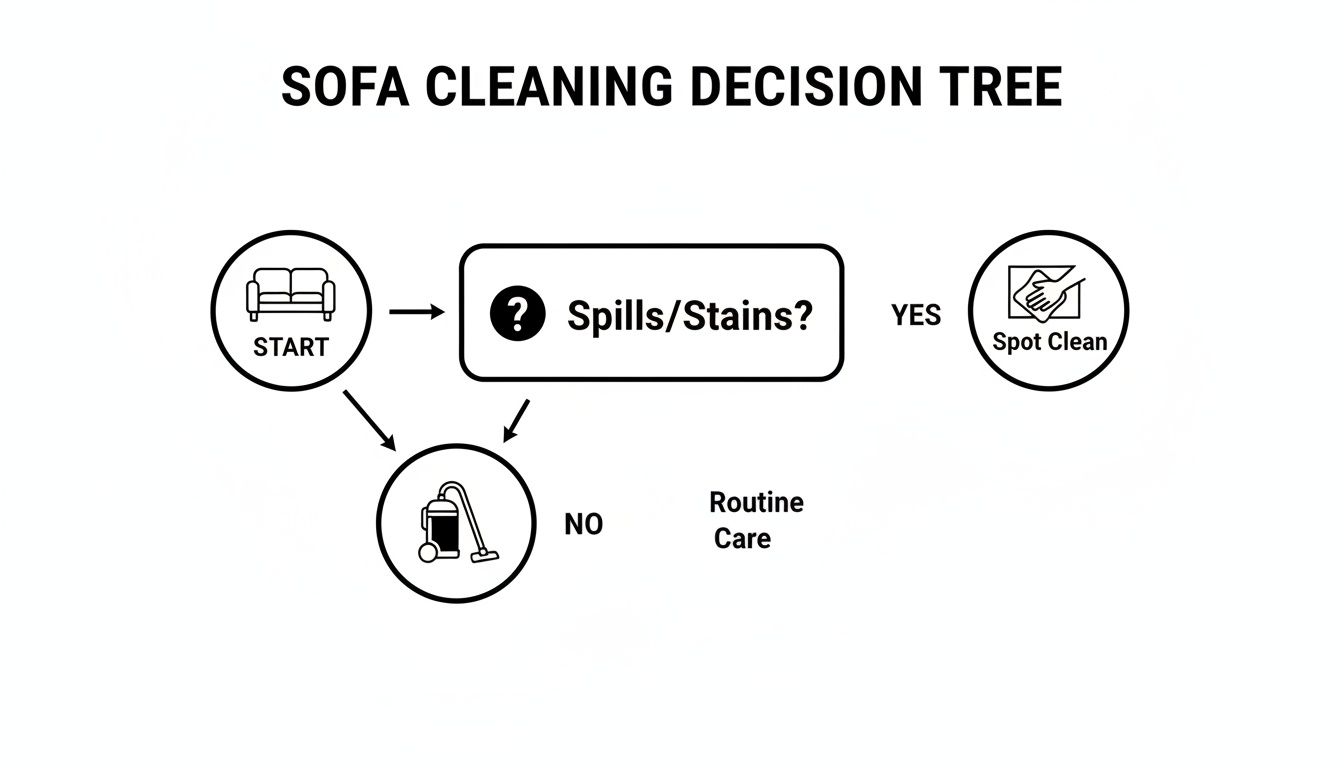
As the flowchart shows, the first step is always to assess the problem. Are you dealing with a new mess, or is it just time for some general upkeep?
Our Family's Pro Tip: Always, always test any new cleaning product on a small, hidden area first, no matter what kind of leather you have. It’s a simple precaution we’ve shared with customers for nearly 40 years, and it's the best way to prevent any unexpected discoloration or damage to your cherished furniture.
A Gentle Approach to Routine Leather Cleaning
For decades, our family has been sharing a simple and incredibly effective cleaning method that keeps leather furniture looking beautiful in homes all across Northwest Indiana. This gentle approach is all you really need for regular upkeep. It preserves the integrity and feel of your furniture without resorting to harsh chemicals.
Before you even think about solutions or cloths, the first and most important step is to get rid of surface dust and debris. Grab your vacuum and pop on a soft brush attachment. This quick step is crucial because it prevents tiny particles from scratching the leather surface when you start wiping it down.
Gently vacuum all the surfaces of your couch. Be sure to get into the seams and crevices where crumbs and dust love to hide. This simple action is your best first line of defense in keeping your leather healthy.
The Right Cleaning Solution
Once the surface is clear, it’s time for a light wipe-down. You don’t need anything fancy or expensive for routine maintenance, trust our family on this.
Our go-to recipe is as simple as it gets: just mix a few drops of a mild, pH-neutral soap with distilled water. Using distilled water is a key tip from our team, as it prevents the mineral spots that tap water can sometimes leave behind, especially on darker leathers.
Next, take a clean, soft microfiber cloth and dampen it with your solution. The keyword here is damp, not soaking wet. You should never saturate the leather, because that excess moisture can cause serious damage over time. Gently wipe down the couch in small, manageable sections.
Immediately follow up with a second, completely dry microfiber cloth to buff the area. This absorbs any leftover moisture and leaves a perfect, streak-free finish every single time. It's a two-cloth method that just works.
Why This Method Works
This gentle technique truly respects the material. While leather definitely requires specific care, many of the core principles of furniture maintenance are universal. Exploring professional sofa upholstery cleaning techniques can give you some valuable insights into proper fabric care in general. To learn more about how different materials react to cleaning, check out our guide that covers everything you need to know about upholstery materials.
Here's a game-changer for homeowners in Dyer and Crown Point: performing a DIY leather couch cleaning with the right method can cut professional service costs by an estimated 70%. Wiping gently is crucial, as too much water can cause leather fibers to swell by up to 15%, risking cracks over time. This simple routine is essential for preserving warranties on durable brands like Flexsteel, turning your investment into an asset that can last 20+ years.
This routine maintenance is the real secret to making your furniture last. It ensures the investment you made—perhaps with our flexible Special Financing—continues to be a source of comfort and pride in your home for years to come. It’s about building lasting value, one gentle cleaning at a time.
How to Tackle Tough Stains and Spills
In a busy Northwest Indiana home, spills are just part of life. Whether it’s a tipped-over glass of wine during a family get-together in Munster or an ink pen mishap in a Crown Point home office, knowing how to react quickly can save your beautiful leather sofa.
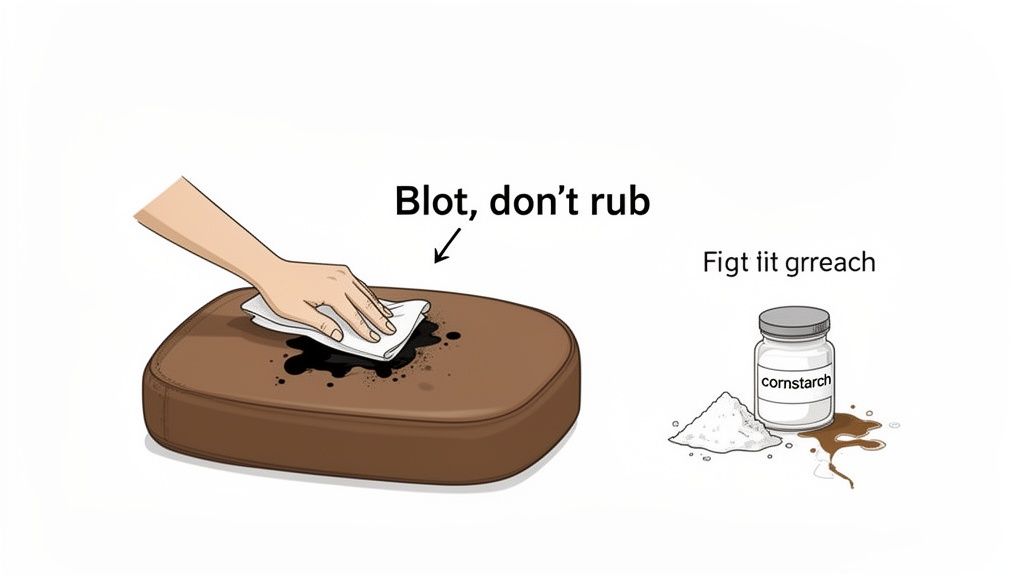
Here at Groen’s, we believe that when you invest in a quality piece, you should have the knowledge to care for it through all of life's little messes. The single most important rule we share with our customers is to always blot, never rub. Rubbing a stain only pushes it deeper into the leather's pores and spreads it around, making it a much bigger problem to remove.
Acting Fast on Common Spills
The secret to successfully treating a stain is speed. Fresh spills are always far easier to manage than those that have had time to settle in.
For liquid spills like soda or coffee, gently blot the spot with a clean, dry microfiber cloth. Make sure you work from the outside of the spill inward—this keeps it from spreading. Keep blotting with a fresh part of the cloth until it stops absorbing liquid. Often, this simple first step is enough to prevent a permanent mark.
Grease stains, like that inevitable drop of pizza oil, need a different tactic. After blotting up any excess, sprinkle a generous amount of cornstarch or talcum powder right on the spot. Let it sit for several hours, or even overnight. The powder will literally pull the grease out of the leather. Afterwards, just brush it all away with a soft brush.
Deeper Stain Removal Techniques
For those more stubborn marks, you might need a slightly more targeted solution. Our advice is always to start with the gentlest method possible. Only move to stronger cleaners if you absolutely have to.
Ink is a common household issue we hear about all the time. If you’ve got a pen mark on protected leather, you can sometimes lift it with a cotton swab dipped in isopropyl alcohol. Dab the ink spot—very, very gently. Never scrub. This method is too harsh for delicate, unprotected leathers, so for those, it's best to call a professional.
Our Promise to You: At Groen's, our relationship with you doesn't end when our white-glove delivery team leaves your home. We're here as a resource for the long run. If you encounter a particularly stubborn stain and aren't sure what to do, don't hesitate to call our showrooms in Dyer or Crown Point. Our family is always happy to offer trusted advice.
For a complete home refresh, you might also find some great tips in our guide to effective spring cleaning for your entire home.
Common Leather Stain Removal Guide
To make things easier, our team put together this quick-reference table for treating some of the most common household stains you'll encounter.
| Stain Type | Recommended Solution | Key Tip |
|---|---|---|
| Grease or Oil | Cornstarch or talcum powder | Let the powder sit for at least four hours to fully absorb the oil before brushing it off. |
| Ink (Protected Leather) | Isopropyl alcohol on a cotton swab | Dab very lightly and avoid rubbing. Test on a hidden spot first to ensure it doesn’t lift the color. |
| Dark Liquids (Wine, Coffee) | Blot immediately with a dry cloth | For any remaining stain, use a damp cloth with a tiny amount of mild, pH-neutral soap. |
| Unknown Stains | Damp cloth with mild, pH-neutral soap | Always start with the gentlest method. If it doesn’t work, seek professional advice. |
Remember, when in doubt, it's always safer to start gentle or give a professional a call rather than risk damaging your beautiful furniture.
The Secret to Soft, Supple Leather
Cleaning is a huge part of keeping your leather furniture beautiful, but it's only half the battle. Think of it like caring for your skin—after you wash it, you need to moisturize. It's the exact same idea with leather. To stop it from drying out, getting brittle, and eventually cracking, you have to put those natural oils back in.
This is where a quality, pH-balanced leather conditioner comes into play. It's truly the secret ingredient our family has recommended for years to keep leather soft, supple, and looking its best.
Why Conditioning Isn't an Optional Step
Skipping the conditioner after a good cleaning is basically asking for trouble down the road. Without those essential oils, leather starts to lose its flexibility. This is especially true here in Northwest Indiana, where the big seasonal temperature swings can be really tough on natural materials.
A simple conditioning routine is your best defense. Applying a good conditioner just once every 6 to 12 months is all it takes to maintain that soft, luxurious feel you fell in love with on our showroom floor. It’s one small step that protects your investment for the long haul.
The Right Way to Condition Your Leather Couch
Applying conditioner is a quick and easy process that makes a world of difference. Here’s how our team recommends doing it for the best results:
- Start with a Clean Slate: Always, always apply conditioner after you’ve thoroughly cleaned and dried the couch. You don't want to seal in any dirt.
- Use a Soft Cloth: Put a small, coin-sized amount of conditioner onto a clean, lint-free microfiber cloth—never squeeze it directly onto the leather.
- Work in Gentle Circles: Gently massage the conditioner into the leather using broad, circular motions. This helps you get even coverage and allows the oils to really penetrate the surface.
- Let It Soak In: Give the conditioner about 15-20 minutes to absorb. You’ll actually see the material start to regain its rich luster.
- Buff Off the Excess: Grab a second clean, dry cloth and give the entire surface a light buffing to remove any leftover residue.
This simple act of care ensures the high-end Bassett or Flexsteel sofa you chose—perhaps with our helpful Special Financing—continues to be a source of comfort and pride for years to come.
You can practically transform your leather couch's appearance overnight. In fact, regular conditioning after cleaning can restore up to 80% of its original suppleness. This simple biannual process can prevent the kind of drying that might shorten a couch's life by 40%, keeping those custom sectionals from Groen's looking showroom-fresh for our neighbors in Dyer, Crown Point, and beyond. For more insights, you can check out the leather care market research from this detailed report.
Bring Your Dream Living Room to Life
Caring for a leather couch is so much simpler than people think, and the reward is a beautiful piece of furniture that can genuinely last a lifetime. That commitment to lasting quality is really what our family is all about. We've always believed that once you know how to clean a leather couch the right way, you can enjoy its comfort for decades.
We love inviting our Northwest Indiana neighbors to visit Groen’s Fine Furniture in Dyer or Crown Point to see our incredible collection of American-made and Amish furniture. Our non-commissioned team is here to help you explore bespoke custom order options from amazing brands like Canadel and find the perfect fit for your home.
Picking out the right piece is such an exciting first step, and our team can offer even more great advice on choosing the best sofa for you.
Visit Groen’s Fine Furniture in Dyer or Crown Point today to explore our custom options and ask about our special financing plans. Let our family help you create a home you love.
Common Questions About Leather Couch Care
Even with a solid cleaning plan, questions are bound to come up. Our family has been helping Northwest Indiana homeowners care for their furniture since 1983, and we’ve heard just about everything. Here are a few quick answers to the most common questions our customers ask.
Think of this as our neighborly advice to help you feel confident in your routine. We want you to enjoy the lasting comfort of your Flexsteel or Bassett sofa without worrying about every little thing.
How Often Should I Really Clean My Leather Couch?
Consistency is way more important than intensity. For most homes in Dyer or Munster, a quick dusting or vacuuming once a week is perfect. A gentle wipe-down, like we described earlier, should happen about once a month.
The most important task is conditioning, which we recommend every 6 to 12 months. This single step is what prevents drying and cracking, preserving the value of your investment for years to come.
Can I Use Household Cleaners Like Vinegar or Baby Wipes?
This is a big one we hear a lot. Our team strongly advises against using general household cleaners. Products containing ammonia, vinegar, or alcohol can strip the leather's natural oils and protective finish, causing it to dry out and potentially discolor.
Always stick to a pH-neutral soap or a cleaner specifically designed for leather upholstery. It's the safest way to protect the beautiful piece you chose, perhaps even customizing it through our design services to be the perfect fit for your home.
What If My Couch Gets a Small Scratch?
Minor scratches are often just part of a well-loved leather piece's story, adding to its character. But if a scratch really bothers you, you can often buff it out with a clean, dry microfiber cloth. Gently rubbing the area in a circular motion can help the surrounding oils blend into the mark.
For a comprehensive guide on maintaining your leather furniture and keeping it like new, you can explore the best way to clean a leather sofa for additional tips and tricks.