
Blog
How to Care for Wood Furniture: A Northwest Indiana Homeowner’s Guide


For homeowners in Dyer and Crown Point, knowing how to care for your wood furniture is really about protecting family heirlooms. Our family has been helping folks in Northwest Indiana do just that since 1983, and we've learned the secret isn't some complicated process—it's a consistent but simple routine.
Just some weekly dusting with a soft cloth, cleaning up spills right away, and maybe a seasonal polish to nourish the wood. Honestly, these small habits make the biggest difference in keeping the natural beauty of your furniture alive for generations.
Building a Simple Wood Furniture Care Routine
That solid wood furniture you picked out, whether it’s from a trusted brand like Flexsteel or one of our custom Amish craftsmen, is more than just an object. It’s an investment in your family's story. These pieces are built to host decades of holiday dinners, homework sessions, and late-night conversations in your NWI home.
Preserving their beauty just requires a simple, consistent routine. This isn't about adding complicated chores to your list; it's about forming a few mindful habits. A good weekly schedule stops damage before it even has a chance to start, protecting the natural luster and integrity of the furniture you love.
The Foundation of Lasting Beauty
Regular dusting is, without a doubt, the most important thing you can do. It might sound too simple, but it prevents the buildup of tiny airborne particles that act like sandpaper over time, creating a gritty film that scratches the finish whenever you move a lamp or a picture frame.
The global wooden furniture market, which was valued at a massive USD 461.84 billion in 2024, is booming because people want durable pieces that last. Proper care is what makes that longevity a reality. Just applying a protective wax every six months or so can extend a piece's life in a huge way.
In our family-owned business, we always tell customers the best tool is the simplest one: a clean, dry microfiber cloth. Stay away from feather dusters—they just push dust around. And never, ever use abrasive materials that could dull or damage the finish.
Your Weekly Checklist for Pristine Furniture
Consistency is what transforms furniture care from a dreaded chore into a simple, rewarding habit. Below is a quick checklist to guide you. It's the core of what our family recommends for keeping wood looking its best week after week.
A little bit of attention on a regular schedule goes a long way. This checklist breaks down the essential weekly tasks, the best tools for the job, and why each small step is so crucial for the long-term health of your furniture.
| Your Weekly Wood Furniture Care Checklist | ||
|---|---|---|
| Care Task | Recommended Tool | Why It's Important |
| Dust All Surfaces | Soft, lint-free microfiber cloth | Removes abrasive particles that can cause micro-scratches on the finish. |
| Check for Spills & Rings | Dry, absorbent cloth | Immediate action is the best defense against moisture damage and stubborn water rings. |
| Rotate Decor Items | Your hands! | Prevents discoloration from uneven light exposure and avoids permanent indentations or marks. |
By following these simple steps, you’re not just cleaning—you’re actively maintaining the health and appearance of your furniture. For more in-depth advice on specific materials and finishes, you can always check out our comprehensive furniture maintenance guide.
Cleaning Different Wood Finishes The Right Way
Knowing how to properly care for your wood furniture starts with one crucial detail: its finish. That protective top layer dictates everything—what cleaners are safe, how you tackle spills, even how often you need to maintain it. A delicate, hand-rubbed oil finish on a custom Amish dining table needs a much different touch than the tough, durable lacquer on a contemporary Bassett dresser.
Using the wrong method can do more than just make a mess; it can strip that protective barrier right off. This leaves the beautiful wood underneath exposed and vulnerable to moisture, scratches, and stains. Before you grab a cloth and cleaner, take a moment to figure out exactly what you're working with. It's the single most important step for a safe and effective cleaning routine.
Identifying Your Furniture's Finish
If you're not sure what kind of finish your furniture has, there’s a simple test our team at Groen's often recommends. Find a hidden spot on the piece, like the inside of a table leg or the back of a headboard, and place a single drop of boiled linseed oil on it.
- If the oil drop beads up on the surface, you’re likely dealing with a hard film finish like lacquer, shellac, or polyurethane.
- If the oil drop soaks into the wood, it's almost certainly an oil finish.
This quick check will give you the confidence to move forward without guesswork. And a universal rule of thumb: never, ever use harsh chemical cleaners containing ammonia or bleach. They can cause permanent, irreversible damage to almost any wood finish out there.
Safe Cleaning for Common Finishes
Once you've identified the finish, you can clean with confidence. The goal is always the same: get rid of the daily dirt and grime without harming that protective layer.
For Lacquer, Polyurethane, or Shellac Finishes
These are the workhorses of modern furniture finishes, found on pieces from brands like Flexsteel and Canadel. They form a hard, resilient barrier that stands up well to everyday life.
- Your Go-To Cleaner: Keep it simple. Just mix a few drops of a mild, pH-neutral dish soap into a bowl of warm water.
- The Right Technique: Get a soft microfiber cloth lightly damp with your soapy water, then wring it out until it’s almost dry. Gently wipe the surface, always moving in the same direction as the wood grain.
- The Final Step: This is key—immediately go over the surface with a separate, completely dry microfiber cloth. This ensures no moisture hangs around to seep into seams or tiny imperfections in the finish.
For Oil or Wax Finishes
You'll often find these penetrating finishes on heirloom-quality Amish pieces. Instead of sitting on top, they soak into the wood itself, giving it that soft, natural luster. They require a bit more nurturing.
- Your Go-To Cleaner: Water-based cleaners are the enemy here. Instead, opt for a specialized cleaner made for oiled woods. For stubborn grime, a cloth lightly dampened with mineral spirits (odorless turpentine) will do the trick.
- The Right Technique: Never apply the cleaner directly to the furniture. Put a small amount on your cloth first, then gently wipe the surface to lift the dirt.
- The Final Step: After cleaning, the wood might look a little "thirsty." You'll likely need to reapply a corresponding furniture oil or wax to restore the protective layer and nourish the wood.
A critical piece of advice we share with our customers in Dyer and Crown Point is to always test a new cleaning product on a hidden area first. Give it a few minutes to see if it causes any discoloration or dulling before you tackle the whole piece. This simple precaution has saved many a beautiful table from a costly mistake.
This simple flowchart breaks down the core of a weekly care routine, showing why dusting has to be the first step.
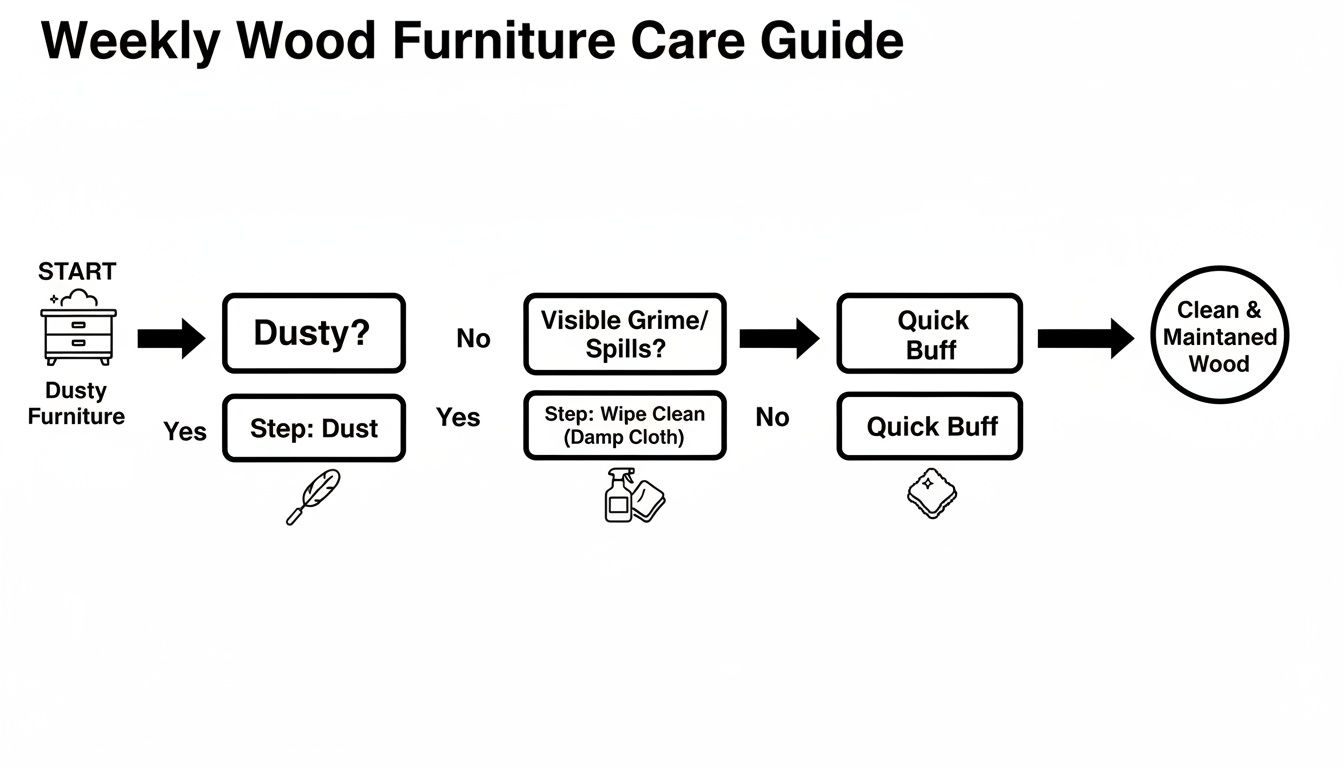
As you can see, simply keeping dust off your furniture is the foundation of good wood care, preventing the buildup that makes deeper cleaning necessary in the first place.
Handling Spills and Smudges
No matter what kind of finish your furniture has, the number one rule for spills is universal: get to it fast.
When a spill happens, blot, don't wipe. Grab a clean, absorbent cloth and press gently. Wiping just smears the liquid around, pushing it deeper into the grain or finish. For sticky fingerprints or smudges on hard finishes, that mild soap-and-water solution is your best bet. For oiled surfaces, a spot clean with your dedicated oil-wood cleaner is the way to go. Taking care of these little issues right away is the best way to keep them from becoming permanent marks on the furniture you love.
Protecting Furniture from Your Home's Environment
Your furniture doesn't just sit in your home; it lives there with you. Here in Northwest Indiana, from Dyer to Crown Point, our homes see it all—from bright summer sun to intensely dry winter air. These environmental shifts play a huge role in how your wood furniture ages. At Groen’s, our family has always believed that true care for wood furniture starts with understanding how to shield it from these daily challenges.
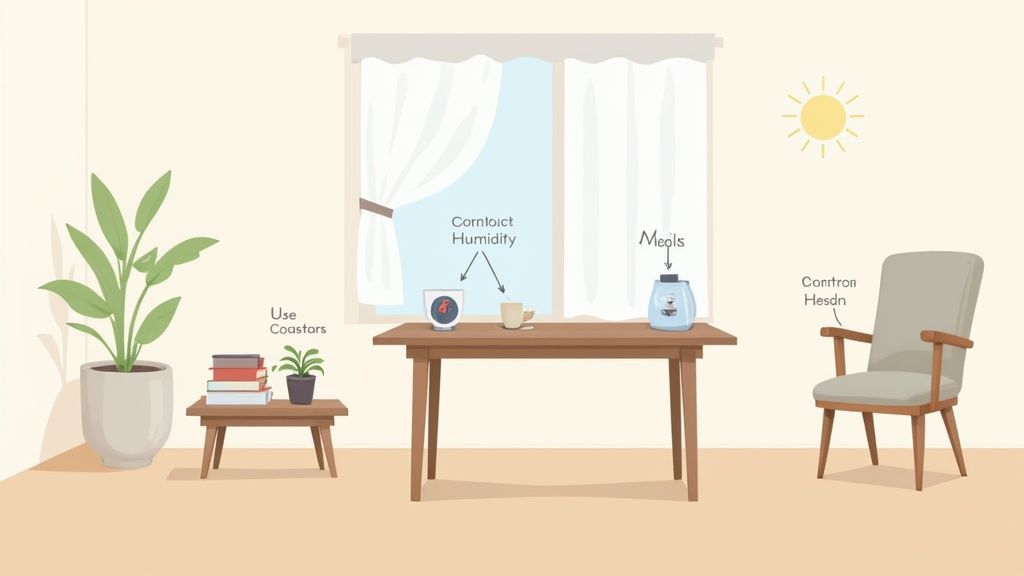
Just like we protect ourselves from the elements, our furniture needs that same thoughtful consideration. Things like sunlight, heat, and humidity can silently cause damage over time. But with a few simple, proactive habits, you can protect your investment and ensure its beauty lasts for generations.
Managing Sunlight and Heat Exposure
One of the biggest culprits of furniture damage is something we all love: natural light. While it brightens up our homes in St. John and Schererville, direct sunlight’s UV rays can fade, bleach, and dry out wood finishes over time. Think of it like a constant, low-grade sunburn for your furniture.
Protecting wood from sunlight is essential. In fact, studies show that UV exposure can cause 60% of color fading in untreated wood in just a few years. Fortunately, simple things like curtains or UV-blocking films on your windows can cut this damage by as much as 70%. Keeping temperatures stable and below 75°F is also key to preventing the wood from drying out and cracking.
At Groen's, we often advise customers to think about furniture placement before our white-glove delivery team even arrives. That beautiful Amish table you designed? Try to position it away from a window that gets direct afternoon sun. If that's not possible, simply rotating the piece every few months can help it age evenly.
Controlling Humidity Levels
Wood is a natural material, and it "breathes"—it expands and contracts with changes in air moisture. The humid summers and dry, heated winters in Northwest Indiana create a pretty tough environment for solid wood pieces.
- In high humidity (summer): Wood soaks up moisture from the air and swells. This is why you might find drawers and doors sticking, or in more extreme cases, why joints become stressed.
- In low humidity (winter): As our furnaces run, the indoor air gets very dry. The wood releases its moisture, causing it to shrink. This can result in gaps appearing between table leaves or, worse, cracking and splitting.
The sweet spot for wood furniture is a humidity range between 40% and 60%. A simple, inexpensive hygrometer can help you monitor your home's levels. Using a humidifier in the winter and a dehumidifier during those sticky summer spells is one of the best things you can do to maintain a stable environment and protect your furniture's structural integrity.
Preventing Everyday Scratches and Stains
Beyond the climate, daily life poses its own set of risks. Your best defense against water rings, heat marks, and surface scratches comes down to small, consistent habits. These simple practices are crucial for maintaining the finish on everything from a durable Flexsteel coffee table to a bespoke Canadel dining set you designed yourself.
Here are a few neighborly tips from our family to yours:
- Always Use Coasters and Placemats: This is the easiest win. It stops moisture from a sweating glass or heat from a hot plate from ruining the finish. Promptly wiping up spills is just as important—liquids left to sit can lead to 35% more stain penetration.
- Lift, Don't Drag: When you're moving lamps, vases, or other decor, always lift them instead of sliding them across the surface. This one small action prevents countless micro-scratches that dull the finish over time.
- Use Protective Pads: Adding felt pads to the bottom of lamps, coasters, and other objects provides a soft barrier. This is also a fantastic way to protect your floors, a topic we cover in our guide on how to protect your floors from your furniture.
By being mindful of your home's environment and adopting these small habits, you're performing the most important kind of maintenance. It’s this proactive care that ensures the pieces you invest in today will continue to be a source of pride and comfort in your home for many years to come.
A Practical Guide to Fixing Scratches, Stains, and Dents
Even in the most careful homes across Northwest Indiana, life happens. A dropped toy, a spilled drink, or a hot mug can easily leave its mark on your treasured wood furniture. But the good news is that these minor accidents don't have to be permanent. Think of this as a first-aid guide for your furniture, helping you confidently handle those inevitable imperfections.
From St. John to Schererville and Munster, our team has heard it all. We want to empower you with simple, effective solutions for the most common issues. With a little patience and the right technique, you can often make those blemishes disappear.
Addressing Minor Surface Scratches
Light surface scratches are often just in the finish, not the wood itself. So, before you even think about refinishing, try one of these gentle at-home remedies. They work by either filling or coloring the scratch to help it blend right in.
- The Walnut Trick: This one sounds like an old wives' tale, but it really works on very fine, light-colored scratches. Simply rub the meat of a walnut over the mark. The natural oils and color from the nut can fill and darken the scratch, making it virtually invisible.
- Specialized Touch-Up Pens: For more defined scratches, a furniture touch-up pen or marker is a fantastic tool. These come in all sorts of wood shades and let you carefully color in the damage. A pro tip from our team: always start with a lighter shade than you think you need. You can always go darker, but you can't go lighter.
The key is to work slowly and build up the color gradually. This small effort can make a world of difference.
Removing Water Rings and Heat Stains
Ah, the dreaded white ring. We've all been there. It’s usually left by a sweating glass or a hot pizza box, and it’s a common frustration. This mark is typically just moisture that's gotten trapped within the top layer of the finish.
For a fresh water ring, the simplest solution is often the best. Place a clean, dry cotton cloth over the stain and press it with a warm (not hot!) iron on a low, dry setting. Check your progress every few seconds. The gentle heat helps the trapped moisture evaporate right out of the finish.
If that doesn't quite do the trick, you can create a mild abrasive paste.
- Mix equal parts baking soda and non-gel white toothpaste.
- Gently rub the paste onto the stain with a soft cloth, always moving with the wood grain.
- Wipe away the residue with a clean, damp cloth and then dry the area completely.
This method gently buffs out the blemish without harming the surrounding finish. For more in-depth solutions, our ultimate guide to protecting wood furniture from scratches and stains offers additional tips and tricks.
Our family always advises customers to act quickly. The sooner you address a water or heat mark, the higher your chance of removing it completely. A stain that has been sitting for months is much harder to resolve.
When to Tackle Deeper Dents and Gouges
Deeper damage—like dents where the wood fibers are compressed or gouges where wood is actually missing—requires a more careful assessment. These issues go beyond the finish and into the wood itself.
For a shallow dent, you can sometimes use steam to encourage the compressed wood fibers to swell back into place. Place a damp cloth over the dent and press it with a hot iron for a few seconds at a time. This method tends to work best on unfinished or oiled woods.
However, for deep gouges or extensive damage, a DIY fix might do more harm than good. This is when it’s time to consider professional help. A skilled restorer can fill the gouge, perfectly match the grain and color, and seamlessly repair the finish, preserving the value and beauty of your piece. Knowing when to call in a professional is just as important as knowing how to handle the small stuff yourself.
Caring for Your Custom Designed Furniture
At Groen’s Fine Furniture, we’ve always believed you should never have to settle for "good enough." It's why our family has spent decades helping homeowners across Northwest Indiana bring their visions to life with bespoke furniture that feels just right. There's a certain pride that comes with owning a solid wood Amish dining set or a Canadel collection you designed yourself.
That level of personalization means your furniture deserves its own special care routine. The specific wood, the unique finish, and the style you hand-picked all have their own needs. Protecting that investment isn’t just about cleaning—it’s about preserving a piece of your family's story.
The Value of Quality Craftsmanship
Choosing high-quality, custom-made furniture from the start is more than half the battle. Unlike a mass-produced table built with thin veneers or particle board, a solid wood piece from our American-Made craftsmen is built for the long haul. It can be maintained, cared for, and even restored for generations to come.
That initial investment in American-made craftsmanship really does pay off over a lifetime. You aren't just buying a piece of furniture; you're creating a future heirloom. We know this is a big decision, which is why we offer Special Financing options (subject to credit approval). It’s our way of giving you the buying power to invest in real quality without stretching your budget.
Our team in Dyer and Crown Point often says that caring for a custom piece is different because you have a personal connection to it. You remember choosing the wood, the stain, and the hardware. That connection makes the small effort of proper care feel more like a rewarding ritual than a chore.
Honoring Your Unique Design Choices
Truly caring for custom furniture means honoring the very materials you chose. An oiled finish on an Amish-built table, for instance, will "drink" in conditioning oils to stay nourished and rich. On the other hand, a modern catalyzed lacquer on a Canadel chair provides a tough, sealed surface that needs a much gentler approach.
To truly understand what makes caring for your custom piece unique, it helps to see the difference side-by-side.
Custom vs Standard Furniture Care Considerations
When you invest in a custom-designed piece, you’re not just buying a different look—you’re buying a different kind of ownership. The care involved reflects the superior quality and longevity of the materials.
| Care Aspect | Custom Solid Wood (Amish, Canadel) | Standard Veneer/MDF Furniture |
|---|---|---|
| Material Durability | Built from solid hardwoods. Major damage can often be sanded and refinished, preserving the piece for decades. | Made with thin wood veneers over composite board. Deep scratches or water damage are often permanent. |
| Finish Maintenance | Finishes are often hand-applied and can be reconditioned. Oil finishes need periodic reapplication to nourish the wood. | Factory-applied finishes are durable but difficult to repair if they chip, peel, or get damaged. |
| Long-Term Value | Properly maintained, these pieces hold or even increase their value, becoming cherished family heirlooms. | Generally depreciates quickly and is often considered disposable after a few years of use. |
In the end, learning how to make your custom furniture simple to care for is all about understanding its unique character. By investing in true craftsmanship and following these dedicated care principles, you ensure the beautiful piece you designed will serve your family for years—and generations—to come.
Seasonal Care and Long-Term Preservation Tips
Your wood furniture needs more than just routine dusting to last a lifetime, especially with the changing seasons we get here in Northwest Indiana. Think of it this way: consistent care is the foundation, but long-term preservation strategies are what will turn that beautiful Flexsteel table you just bought into a treasured family heirloom for your grandkids.
This is about playing the long game. It means doing quick annual check-ups, knowing the right way to apply a protective finish, and understanding how to handle your furniture when life calls for a move. These simple habits are the secret to keeping your pieces beautiful and structurally sound for decades.
Polishing and Waxing: A Seasonal Ritual
Treating your furniture to a good polish or wax is like a spa day for the wood. It’s not something you need to do every week, but this seasonal ritual is absolutely vital for nourishing the wood and beefing up its protective barrier. It’s how you restore moisture after a long, dry winter and add a layer of defense against summer humidity.
But not all products are created equal. It's crucial to know the difference:
- Furniture Polish: Most polishes you find at the store are silicone-based and designed to give a fast, high-gloss shine. They look great at first, but our family generally advises caution. Over time, that silicone can build up into a cloudy film that actually attracts more dust and is a real headache to remove.
- Furniture Wax: This is what our family has trusted for generations. A high-quality paste wax goes beyond the surface, penetrating the finish to nourish the wood itself. It also fills in microscopic scratches and creates a hard, durable layer of protection that repels moisture.
A good rule of thumb is to apply a quality paste wax once or twice a year. For a more detailed schedule, our Fall Furniture Maintenance Checklist is the perfect guide to follow.
The Annual Furniture Inspection
Catching a small issue before it becomes a big, expensive problem is the cornerstone of preserving your furniture. Once a year, set aside a few minutes to give your most-used pieces a quick but thorough once-over. This simple habit can save you from significant damage down the road.
Check for loose hardware on drawers, wobbly table legs, or the start of a crack in a joint. Gently test if chair and table legs are still sturdy. Tightening a loose screw today is infinitely easier than trying to repair a joint that has completely failed. It’s one of the most effective things you can do to ensure your furniture’s longevity.
Best Practices for Moving and Storage
Whether you're just rearranging your living room in Crown Point or moving across NWI, how you handle your furniture matters. A lot. The number one rule our white-glove delivery team lives by is to always lift, never drag.
Dragging a piece—even just a few inches—puts incredible stress on the joints and can cause deep, permanent scratches in both your floor and the furniture. For heavy items like a solid wood Amish buffet, always get a second person to help. When possible, disassemble larger pieces like bed frames or dining tables. This takes the strain off their structural points and makes them much easier to move safely.
Proper handling is everything. Research shows that dragging can create scratches 50% deeper into a finish, and taking a piece apart can reduce stress on its joints by 60%. This kind of care is essential for an industry that continues to grow, with the wooden furniture market projected to hit $989.8 billion by 2034.
When it comes to storage, avoid damp basements and hot attics at all costs. Those extreme swings in temperature and humidity are the enemy of wood furniture. Always opt for a climate-controlled space and cover your pieces with light, breathable blankets—never plastic, which traps moisture and will ruin a finish.
Your Wood Furniture Care Questions Answered
Over our many years in business, our team has heard just about every question imaginable from customers in our Dyer and Crown Point showrooms. Learning how to properly care for wood furniture can feel a little tricky, but it’s usually much simpler than you might think.
To help out, we’ve gathered our family’s expert answers to some of the most common questions we hear every day.
How Often Should I Polish My Wood Furniture?
That’s a great question, and the answer really comes down to the finish on your specific piece.
For most modern furniture with a hard, sealed finish like lacquer or polyurethane, polishing just 2-4 times per year is plenty. The real goal is to nourish the finish and give it a protective layer, not to create a waxy buildup over time.
On the other hand, pieces with a hand-rubbed oil finish—like many of our custom Amish designs—might need more frequent conditioning. These finishes tend to "drink" in the oil, so you might notice them looking a little dry or thirsty more often. This is especially true during our dry Northwest Indiana winters.
Can I Use All-Purpose Cleaners on My Wood Table?
We strongly advise against this. Honestly, it’s one of the fastest ways to cause lasting damage. The harsh chemicals in most all-purpose cleaners are designed to cut through grease and grime, but they can’t tell the difference between that and your furniture’s protective finish.
Using these cleaners can strip the finish right off, dulling that beautiful shine and severely drying out the wood itself. Our team always recommends sticking to pH-neutral, wood-safe cleaners or a simple, trusted solution of mild dish soap and water.
What Is the Best Way to Remove Sticky Residue?
Sticky spots from tape, stickers, or sugary spills are a common annoyance we all deal with. The key is to start with the gentlest method first.
Grab a damp microfiber cloth with just a single drop of mild dish soap. Gently rub the area to see if you can dissolve the residue without much fuss.
If that doesn’t quite do the trick, you can try a small amount of mineral spirits on a clean, soft cloth. It’s excellent at dissolving many stubborn sticky substances. Just remember the golden rule: always test it on a hidden spot first. This ensures it doesn’t react poorly with your specific finish before you tackle the more visible area.
Visit Groen’s Fine Furniture in Dyer or Crown Point today to explore our custom options and ask about our special financing plans. Let our family help you create a home you love.