Blog
How to Mix Furniture Styles for a Timeless, Cohesive Home


Mixing furniture styles is really about telling your family’s story, not just sticking to a single design rule. For homeowners here in Dyer and Crown Point, that often means blending a cherished family heirloom with a new piece you’ve just fallen in love with. At Groen's Fine Furniture, our family believes the goal is to create a space that feels deeply personal and uniquely you.
A great way to get started without feeling overwhelmed is the 80/20 rule. Let one primary style anchor about 80% of your room, and then introduce a contrasting style for the remaining 20% to add personality and character.
Finding Harmony in Different Furniture Styles
Creating a home in Northwest Indiana that feels like it’s been thoughtfully collected over time is what it's all about. The idea of pairing a solid wood Amish dining table with a brand new, super-durable Flexsteel sofa might seem tricky, but you absolutely don’t have to commit to just one design era.
When you mix furniture styles successfully, you're crafting a narrative that reflects your family’s journey.
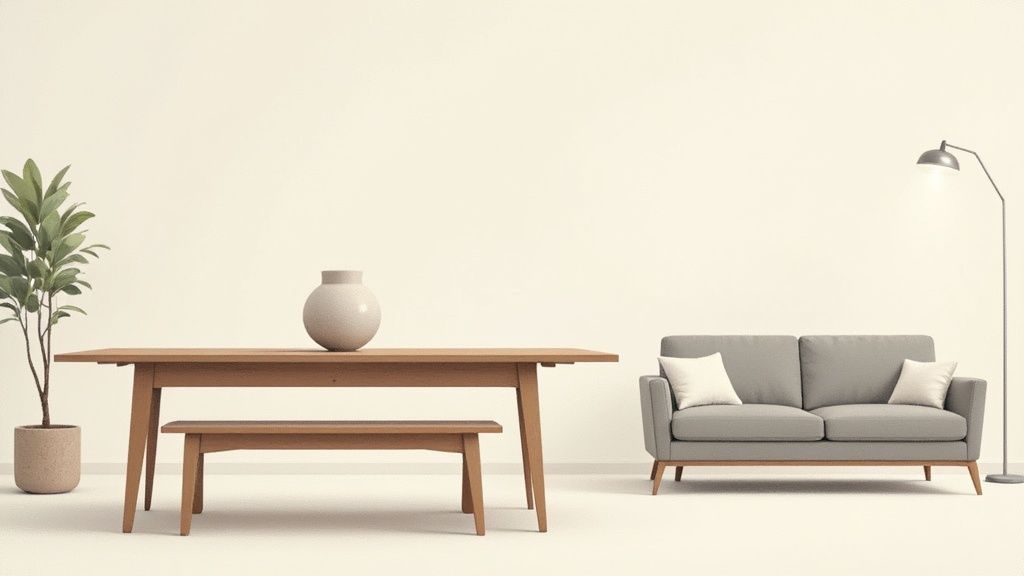
The key is creating harmony, not chaos. The 80/20 principle is a simple guideline that gives you a framework for creative expression while keeping your space from looking like a random collection of furniture. It’s what makes a room feel curated and intentional.
Core Principles for Blending Styles Harmoniously
To make this process even easier, we've put together a quick reference guide. These are the foundational ideas our family uses to help our clients create a harmonious blend of different furniture pieces.
| Core Principle | Why It Works | Quick Tip |
|---|---|---|
| 80/20 Rule | Establishes a dominant theme while allowing for creative accents. | Choose a primary style for large items like your sofa, and use accent chairs or tables for the secondary style. |
| Common Thread | Finds a shared element like color, shape, or material to unify different pieces. | Look for similar leg styles or wood undertones to connect a modern table with traditional chairs. |
| Scale & Proportion | Ensures pieces are balanced and don’t visually overpower each other. | Pair a bulky sofa with a visually lighter coffee table to create a sense of balance. |
These principles are the secret sauce to making an eclectic mix feel cohesive. By focusing on these core ideas, you can confidently combine pieces from different eras and styles.
Since 1983, our family at Groen's Fine Furniture has guided countless NWI residents through this very process. From St. John to Schererville, we’ve seen how thoughtful combinations can transform a house into a warm, inviting home. We truly believe you don't have to settle for a one-size-fits-all look, and our team is here to share the principles that make it all work beautifully.
Establish Your Foundation with an Anchor Piece
Every beautifully mixed room starts with a single, foundational item. This anchor piece is the heart of your design, the starting point from which every other decision flows. Choosing this one key item first simplifies the entire process of mixing furniture styles by creating a clear point of reference.
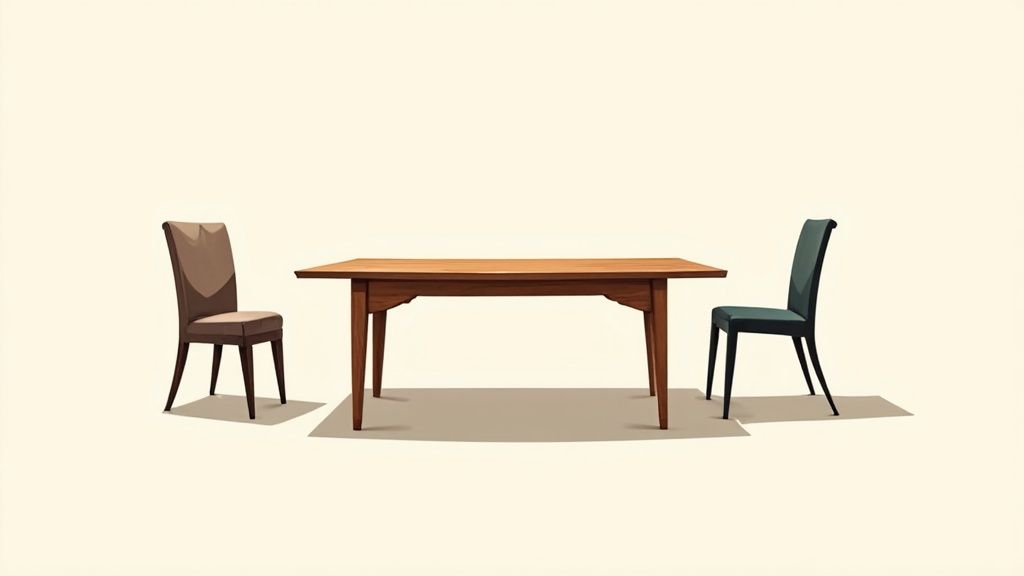
Imagine starting with a timeless, American-made Amish dining table destined for family gatherings in your Schererville home. Its sturdy, honest craftsmanship provides a stable foundation. From there, picking out chairs—whether they're modern, traditional, or even industrial—becomes a fun, creative exercise instead of a confusing puzzle.
This same idea applies to the living room. Picking a substantial Bassett sectional that just begs you to get comfortable can anchor your space with a clear style. Our family always recommends our clients in Northwest Indiana invest in a high-quality anchor from a durable brand like Flexsteel. It gives you a lasting foundation you can build on for years to come.
Why Your Anchor Piece Matters
Your anchor isn't just the biggest piece of furniture; it's the statement that defines your room's main purpose and feel. It sets the scale, material, and dominant style that will guide all your other choices.
- It Sets the Mood: A plush, deep-seated sofa signals comfort and relaxation, while a sleek, minimalist media console suggests a more modern, streamlined aesthetic.
- It Determines Scale: The size of your anchor piece helps dictate the proportions of everything else, from accent chairs to coffee tables, ensuring the room feels balanced.
- It Simplifies Choices: Once your main piece is in place, you can confidently select complementary items that either echo its style or provide an intentional, stylish contrast.
At Groen's, our family has seen how a well-chosen sofa or dining table can completely transform a room. It becomes the true north for your design compass, making every subsequent choice easier and more intentional. A quality anchor piece is an investment in both style and lasting comfort.
Choosing the right sofa is often the most critical step in this process. Its style and comfort will influence the entire living area. For more guidance, you can explore our team's insights in The Ultimate Sofa Buying Guide for Your Living Room to help you find the perfect foundational piece.
Our design team is always here to help you select an anchor that not only looks beautiful but is built to last. A great foundation is the secret to creating a room that feels both personal and thoughtfully designed.
Unify Your Space with Color and Texture
Okay, you've picked your anchor piece. Now comes the real magic: tying everything together. This is where we use color and texture to create a conversation between all the different pieces in your room. Think of these two elements as the glue that holds your eclectic design together, allowing that mid-century modern chair and a traditional sofa to coexist beautifully.
Start with a Cohesive Palette
One of the best tricks of the trade our family shares with our clients in Dyer and Crown Point is the 60-30-10 rule. It’s a dead-simple framework for distributing color that instantly creates balance.
Here’s how it breaks down:
- 60% of your room should be your main, dominant color (think walls, large rugs).
- 30% is your secondary color (this is often your upholstery, like sofas and chairs).
- 10% is your accent color (for the fun stuff like pillows, art, and decor).
This isn't just a suggestion; it's a designer's secret weapon. It creates a visual thread that runs through the space, making your eclectic choices feel intentional and curated, not random.
Let's say you're pairing a warm, solid wood Amish sideboard with a cool, industrial-style metal coffee table. The styles are worlds apart, but a shared color story can connect them. For example, your 60% dominant color could be a soft neutral gray on the walls, your 30% secondary color could be a rich navy blue on your Bassett sofa, and your 10% accent could be pops of ochre in your throw pillows. See how it all starts to click?
For a deeper dive into crafting the perfect color scheme, check out our team's advice in An Expert's Guide to a Perfect Color Palette.
Add Depth with Varied Textures
Color is crucial, but don't stop there. Texture is what gives a room soul. A space filled with too many similar surfaces—all smooth, all rough, all soft—can feel flat and uninspired, no matter how great your furniture styles are.
Texture adds physical and visual weight, making a space feel layered, interesting, and complete. It's the difference between a room that looks good in a picture and one that feels incredible to live in.
Don’t be afraid to mix materials. The contrast between smooth and rough, soft and hard, is what gives a room its character and depth. It’s a tactile experience that makes a house feel like a comfortable home.
Think about the interplay of different materials. Combine the sleekness of a metal lamp with the ruggedness of a hand-scraped Amish table. Pair the buttery smoothness of a leather chair with the softness of a velvet pillow. A durable performance fabric on a Flexsteel sofa, the grain of a solid wood piece, and the softness of a plush wool rug all contribute to a rich, sensory experience. This is what elevates your mixed-style design from just "good" to truly exceptional.
Balancing Scale and Form Across Different Eras
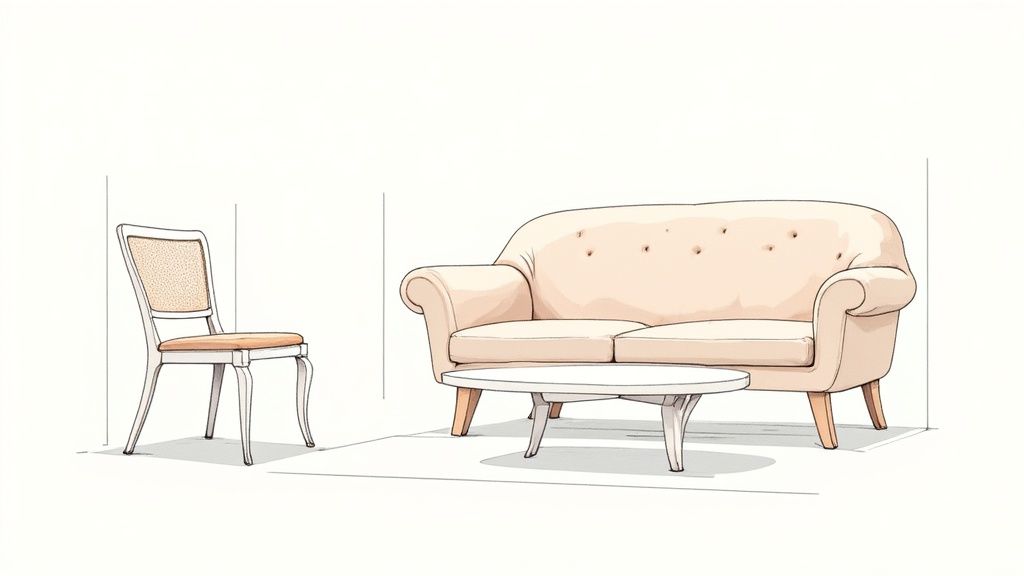
Successfully mixing furniture styles goes far beyond just aesthetics—it’s about how each piece physically and visually occupies the room. At our family's showrooms in Dyer and Crown Point, we often see how a delicate, antique chair can get completely lost next to a bulky, modern sectional. Balancing scale and form is the real secret to making your collection feel curated, not chaotic.
The key is to find a common thread that links the shapes and silhouettes of your furniture. This creates a kind of visual conversation between them and prevents one piece from overpowering another.
Finding Common Ground in Shapes
Instead of getting hung up on the era a piece comes from, look at its fundamental design elements. Do your pieces share similar lines or heights? A low-profile mid-century modern coffee table, for example, works beautifully with a contemporary sofa that also sits low to the ground. Their shared horizontal lines create a natural sense of harmony.
Here are a few common threads to look for:
- Leg Style: Compare the legs on your pieces. A traditional sofa with turned legs can pair surprisingly well with an accent chair that has similarly curved or detailed legs, even if the styles are totally different.
- Overall Silhouette: Look at the general shape. A rectangular, clean-lined media console from a brand like Bassett can echo the shape of a more rustic, blocky coffee table.
- Height Consistency: Pay attention to the height of chair backs or tabletops. Keeping these elements at a similar visual level creates a clean, uncluttered sightline across the room.
This thoughtful approach to form and scale ensures your room feels balanced and intentional. It’s a common concern we help our clients in Munster and St. John solve, and getting it right makes all the difference.
The Importance of Accurate Measurements
Before you fall in love with a piece, you absolutely have to make sure it will physically fit and proportionally work in your space. This is where a tape measure becomes your best friend.
Knowing the exact dimensions prevents the all-too-common mistake of buying furniture that’s either way too big or comically small for the room. This simple check ensures that your carefully chosen pieces not only look great together but also fit perfectly in your home.
Design It Your Way with Custom Furniture
Sometimes, the biggest hurdle in mixing furniture styles is finding that one perfect "missing link" piece—the single item that ties your modern sofa to your traditional bookcase without looking out of place. Instead of an endless search for something that might not even exist, why not create it yourself? This is where customization becomes your greatest ally, letting you stop settling and start designing a home that’s authentically you.
For our neighbors across Northwest Indiana, from Dyer to Munster and beyond, this made-to-order approach is the real secret to mastering a beautifully blended interior. It’s all about taking the reins of the design process to make sure every last detail lines up with your vision.
Bridge the Gap Between Styles
Let's say you love the inviting warmth of a modern farmhouse look but you’re also drawn to the clean, sleek lines of contemporary design. With a brand like Canadel, you don’t have to choose. You can design a dining table that has the rustic charm of a farmhouse base and top it with a perfectly smooth, modern finish. Then, pair it with chairs that have a traditional shape but are covered in a bold, contemporary fabric. You design it your way, hand-picking the exact finish, leg style, and materials to build a hybrid piece that marries both styles flawlessly.
This same deep level of personalization is the heart and soul of our American-made Amish furniture. Have you been dreaming of a media center that feels both classic and current? Our skilled artisans can build a solid wood, bespoke piece with the sturdy, timeless construction of traditional furniture but finish it with the clean lines and minimalist hardware of modern design.
Customization isn't just about picking out a color; it's about creating furniture that tells your unique story. It's the secret to getting a piece that doesn't just fit into your space—it finally completes it.
Making Bespoke Design Accessible
The idea of "custom furniture" might sound exclusive or out of reach, but it’s more accessible today than ever before. It's a trend that's growing globally as more people want to express their unique identity through their homes. In fact, the bespoke furniture market is projected to surge from $35.47 billion in 2023 to over $58 billion by 2031. For our customers, this means more options and better value. You can learn more about how the bespoke market reflects a desire for personalization from Verified Market Research.
At Groen’s Fine Furniture, our family has always believed that exceptional design should be within everyone's reach. That's why we offer special financing options, subject to credit approval, giving you the buying power to invest in pieces made just for you. This turns the dream of a bespoke interior into an affordable luxury. Our team is here to walk you through the process, making it simple and genuinely fun. To get started, check out our guide on how we make custom furniture simple for homeowners all over NWI.
Bringing Your Vision to Life in Our Showroom
Reading tips online is a great start, but there's just no substitute for seeing, touching, and experiencing furniture in person. This is where your ideas really start to click and your vision for your home truly comes alive.
We want to personally invite our neighbors from Crown Point, Dyer, and all over Northwest Indiana to come explore our showroom. It's about more than just shopping; it's about getting a real feel for the quality and craftsmanship our family stands behind.
The final, most important step in mixing furniture styles is seeing how the pieces actually look and feel together in a physical space. You can "test drive" the incredible comfort of a Serta or Beautyrest mattress, feel the solid, honest build of an American-made Amish dining table, or see for yourself how a durable Flexsteel sofa looks next to a sleek Bassett accent chair. This is how you build real confidence in your choices before you buy.
Personalized Guidance from Our Family to Yours
When you visit, our knowledgeable team is here to offer genuine, personalized design advice—with zero pressure. We're a non-commissioned staff, which means our only goal is to help you. We’re not just furniture experts; we’re your neighbors, grounded in our family’s multigenerational ownership and a deep commitment to 5-star service.
We can walk you through all the custom options and help you find that one perfect piece you’ve been searching for to complete your room.
At Groen’s, helping you create a home you absolutely love isn’t just our job—it’s been our family’s passion since 1983. We believe in building spaces that last, one thoughtful piece at a time.
Creating a home you feel comfortable in is one of the most important investments you can make. That's why we offer special financing options (subject to credit approval) to give you the buying power you need to make it happen.
Visit Groen’s Fine Furniture in Dyer or Crown Point today to explore our custom options and ask about our special financing plans. Let our family help you create a home you love.
Common Questions About Mixing Furniture Styles
Even with the best advice, mixing furniture styles can feel a little tricky. As a family-owned business serving Northwest Indiana since 1983, we’ve heard just about every question in the book! Our team has put together some clear, expert answers to the concerns we hear most from homeowners in Dyer, Crown Point, and our surrounding communities.
Can I Mix Different Wood Tones in the Same Room?
Absolutely! In fact, mixing wood tones is one of the best ways to give a room depth and character, saving it from feeling too uniform or "matchy-matchy."
The key is to pick a dominant wood tone for your biggest pieces—think a solid wood Amish bookcase or dining table. From there, you can layer in one or two other tones through smaller items like accent tables, chairs, or even picture frames. To make sure everything clicks, just look for a common undertone (warm, cool, or neutral) across the different finishes. It creates a subtle connection that pulls it all together.
What Is the Easiest Way to Start Mixing Styles?
If you're feeling a bit overwhelmed, the simplest way to dip your toes in is with the 80/20 rule.
Just furnish about 80% of your room in a consistent style you truly love, whether it's modern, traditional, or rustic. This builds a strong, cohesive foundation. Then, bring in the final 20% with a contrasting style to create that pop of visual interest. For instance, you could add a pair of sleek industrial bar stools to a traditional kitchen island, or hang an ornate, vintage-style mirror over a clean-lined modern console table from a brand like Bassett.
This simple guideline gives you the freedom to experiment without the risk of creating a space that feels chaotic. It’s a trusted approach our family recommends to ensure a balanced, intentional look.
How Do I Use Rugs and Pillows to Unify Different Styles?
Accessories are your secret weapon for creating harmony. Things like area rugs, pillows, throws, and curtains are fantastic for building a visual bridge between all your different furniture pieces.
A large area rug with a unifying color palette can instantly anchor a room with diverse styles, pulling everything together. In the same way, throw pillows can introduce a color from a traditional armchair onto a modern Flexsteel sofa, visually linking the two and making the combination feel deliberate and stylish.
Is It Okay to Mix Very Old Furniture with New Pieces?
Yes, and this is often where the magic happens! This kind of contrast often creates the most personal and interesting spaces. The trick is to make sure the pieces feel connected in some small way. This link can be a shared color, a similar silhouette, or even just a deliberate, stylish juxtaposition.
For example, placing a sleek, modern lamp on an antique wooden side table creates a compelling visual story. Just be mindful of scale so one piece doesn't overpower the other. This thoughtful pairing is what turns a house into a home filled with personality.