Blog
The Truth About 2000 Thread Count Sheets

For many shoppers in Northwest Indiana, the advice sounds simple. Buy the highest thread count you can afford, and your bed will feel more luxurious.
That advice misses the mark.
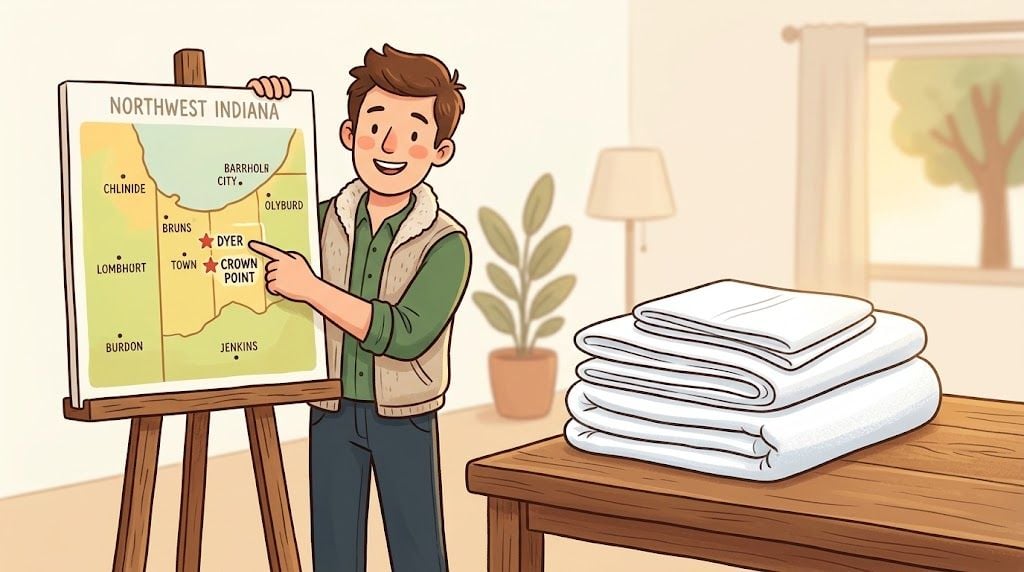
A 2000 thread count sheet sounds impressive on a package, but the number alone doesn't tell you whether the fabric will feel cool, soft, breathable, or durable in real life. In many cases, it tells you more about marketing than comfort. Our family has helped homeowners in Dyer, Crown Point, St. John, Schererville, and Munster create comfortable homes since 1983, and this is one of the bedding questions that causes the most confusion.
People don't shop for sheets in a lab. They shop after a long workweek, while replacing worn bedding, furnishing a guest room, or putting the finishing touches on a new bedroom. They want something that feels good, washes well, and helps them sleep better. That's why it helps to slow down and look past the biggest number on the label.
A Guide to Luxurious Sleep in Northwest Indiana
A couple walks into a showroom after moving into a new home in Crown Point. They've picked out a mattress, they're thinking about pillows, and then they see sheet packaging covered in bold promises. One set says “2000 thread count” in oversized lettering. Another doesn't sound nearly as dramatic. The natural question is, which one is better?
That's where a lot of families get stuck. A bigger number feels like a safer choice. It sounds more premium, a little like choosing the larger engine or the thicker carpet pad. But bedding doesn't work that way. The sheet that looks most impressive on the package isn't always the one that feels best after a week of sleeping on it.
At our family business, we've learned that sleep wellness starts with honest information. A bedroom should support rest, not confusion. If you're refreshing your space in Dyer, Munster, or anywhere across NWI, it helps to think about sheets the same way you think about any long-term home purchase. You want comfort, lasting quality, and materials that suit how you live.
For a calmer, more restful bedroom overall, our team also shares ideas in this guide to designing a relaxing bedroom.
Simple truth: The best sheets for your home aren't the ones with the biggest number. They're the ones that match your sleep style, room temperature, and comfort preferences.
That's especially important in Northwest Indiana, where bedrooms can feel different from season to season. Some sleepers run warm. Some want a crisp hotel feel. Others want a smoother, cozier fabric. A smart sheet choice starts there, not with a flashy label.
What Does Thread Count Actually Mean
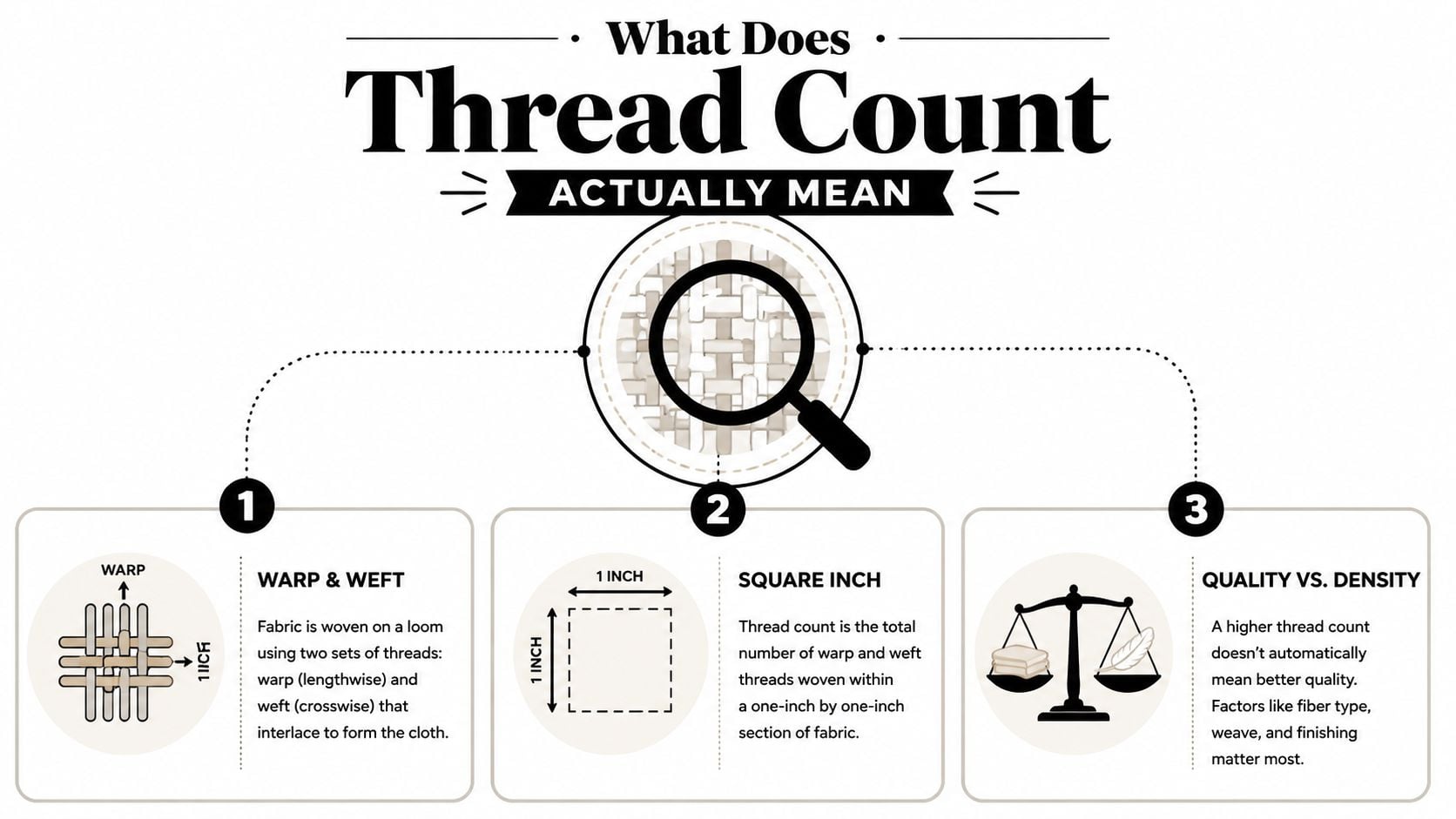
Thread count is the number of threads in one square inch of woven fabric. It's calculated by adding the warp threads, which run lengthwise, and the weft threads, which run widthwise.
That definition is useful, but it only helps if you know what the number should mean in practice. Many shoppers assume the higher the count, the better the sheet. That sounds logical. More threads must mean more luxury, right? Not necessarily.
The number has a useful range
Reputable textile guidance gives shoppers a much more grounded benchmark. According to Good Housekeeping's thread count guidance, the best cotton sheets often land between 300 and 500 thread count, and anything above 500 isn't necessarily better. They also note that counts over 1,000 are worth skepticism.
That changes the way you should read a package. If respected textile testing points to a much lower range for quality cotton sheets, then a claim like 2000 thread count sheets shouldn't automatically signal luxury. It should prompt questions.
Why shoppers get confused
The confusion comes from treating thread count like a test score. People see a larger number and assume it represents a better result. But fabric quality works more like cooking ingredients. If the cotton, weave, and yarn quality aren't good, piling on a higher number won't fix the final product.
A lower number can still feel beautiful. A moderate count in the right fabric can feel crisp, airy, smooth, and long-lasting. A sky-high count can feel heavy or stuffy if the construction isn't right.
If you want a practical overview of material, fit, and feel while you shop, our bed sheets buying guide is a useful next step.
A sheet label should start a conversation, not end it.
That's the healthiest way to read thread count. It's one detail. It isn't the whole story.
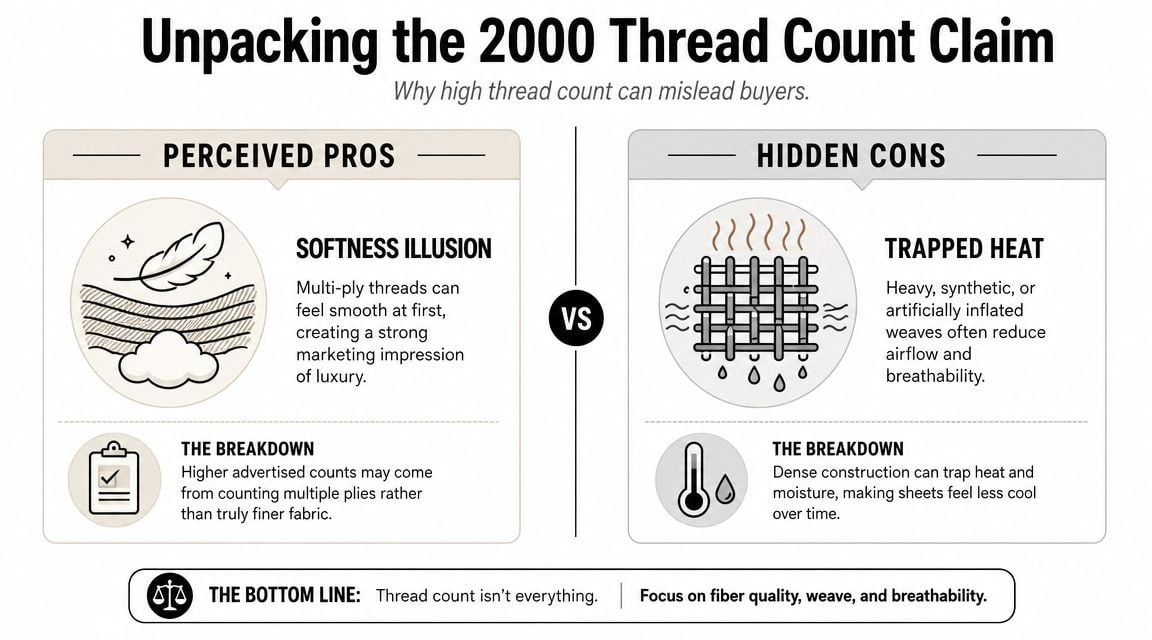
Unpacking the 2000 Thread Count Claim
Once you know what a normal range looks like, the next question is obvious. How does a sheet end up labeled 2000 thread count in the first place?
A big part of the answer is multi-ply yarn. Instead of using a single stronger yarn, some manufacturers twist multiple finer strands together. Then the counting can make the final number look much larger on the label than shoppers expect.
A simple way to picture it
Imagine this scenario. If you were counting ropes in a garage, you would count each rope as one rope. You would not untwist the rope, count all the smaller strands inside it, and then claim you had far more ropes than you do.
That's why high thread count marketing can feel misleading. The number sounds enormous, but it may not reflect better fabric performance. It may reflect the way the yarn was built and counted.
According to Peacock Alley's thread count guide, thread counts nearing or exceeding 1,000 are almost certainly made with multi-ply yarns and are likely to be lower quality than sheets with a more reasonable count. The same guide says it's physically difficult to weave more than 500 to 600 threads into a square inch of high-quality cotton.
What that means in your bedroom
When shoppers hear “2000,” they often picture softness, luxury, and hotel-level comfort. But very high counts can come with tradeoffs:
- Less airflow because the fabric may be denser than many sleepers want
- More trapped warmth for people who already sleep hot
- A heavier feel that some people mistake for quality at first touch
- More focus on the headline number than on the actual fiber and weave
If you're also tuning the rest of your bed for comfort, this guide on how to choose the perfect pillow can help round out the sleep setup.
Shoppers often buy 2000 thread count sheets expecting a cloud-like feel, then discover they've bought a denser fabric with a better sales pitch than sleep experience.
That's why the label alone shouldn't make the decision for you.
What Really Creates Comfortable Sheets
If thread count isn't the main event, what is?
The answer is more practical than glamorous. Fiber quality, yarn construction, and weave shape how sheets feel against your skin and how they hold up after repeated washing. Those are the details that separate a sheet that feels nice for a weekend from one that stays comfortable over time.
Start with fiber and yarn quality
From a textile-engineering standpoint, CHOICE explains thread count and yarn construction by noting that single-ply cotton yarns typically top out around 400 to 500 thread count. Going higher often requires multi-ply yarns, which can be made from weaker, shorter fibers and may be less durable than strong single-ply yarns.
That's a much better clue than a giant front-of-package number.
When you're comparing sheets, look for plain-language signs of quality:
- Single-ply construction usually tells you the yarn itself is doing the work, rather than relying on inflated counting.
- Better cotton fibers tend to produce smoother, stronger yarns.
- Clear material labeling helps you understand what's touching your skin at night.
If you're building a full bedding setup, our guide on the difference between a comforter and duvet cover can help you coordinate layers that feel right together.
Weave changes the sleep experience
Two sheet sets can have similar thread counts and feel completely different because of the weave. That's where shoppers often get their “aha” moment.
Here's a quick side-by-side look:
| Characteristic | Percale Weave | Sateen Weave |
|---|---|---|
| Feel | Crisp and smooth | Silky and smooth |
| Temperature feel | Usually cooler and airier | Usually warmer and drapier |
| Surface look | Matte | Slight sheen |
| Best for | Hot sleepers and those who like a fresh hotel feel | Sleepers who want a softer, smoother hand-feel |
Percale often appeals to people who want their bed to feel cool and clean. Sateen often appeals to people who enjoy a softer, more fluid feel across the skin. Neither is universally better. The right one depends on how you sleep.
A better shopping question
Instead of asking, “What's the highest thread count?” ask these:
- Does the sheet feel breathable or dense?
- Is it single-ply or likely multi-ply?
- Do I want crisp percale or smoother sateen?
- Will this fabric suit my room temperature and sleep habits?
Those questions lead to better choices than chasing a number.
Practical rule: Buy sheets for the way they feel after washing and sleeping, not for the way the package looks on a store shelf.
That's the difference between marketing luxury and everyday comfort.
How Groens Helps You Find Your Perfect Match
Buying sheets online can turn into a guessing game. A product description says “silky,” another says “cooling,” and a third leans hard on a giant thread count number. Until you feel the fabric, it's hard to know what any of that means for your own bed.
That hands-on part matters. In a showroom, shoppers can compare textures directly and talk through how they sleep. Someone who wakes up warm usually needs something very different from someone who wants a smoother, cozier finish. The right bedding choice becomes much clearer when it's part of a full sleep conversation instead of a label comparison.
Why material details matter more than hype
Many sheets sold with very high thread counts aren't even pure cotton. According to this retail example of blended 2000 thread count sheets, many are blends that include microfiber or polyester. Those blends are often marketed for silky feel and wrinkle resistance, but they can give up some of the breathability and temperature regulation that many shoppers want from high-quality, single-ply cotton sheets with a lower count.
That's why an in-person conversation helps. A shopper might say, “I want soft sheets,” when what they really mean is one of several different things:
- Less wrinkle-prone because they don't want to iron or fuss
- Cooler at night because they sleep warm
- Smoother on the skin because crisp fabrics feel too sharp
- Easier care because the guest room needs simple upkeep
At Groen's Fine Furniture, that kind of discussion often connects bedding choices with the broader sleep setup, including mattress comfort and support. For shoppers comparing Serta and Beautyrest options or using a more guided mattress-shopping approach, our ultimate guide for choosing a mattress helps frame those decisions.
Comfort should fit your budget too
Our family also knows that quality bedding and sleep products are part of a bigger home investment. That's where special financing, subject to credit approval, can provide buying power for families who want lasting comfort without feeling rushed into the wrong choice.
The same philosophy carries through the rest of the home. Design it your way with custom furniture, bespoke Canadel dining, or made-to-order Amish solid wood pieces that fit your life instead of forcing you to settle. It's the same mindset. Look beyond the headline. Pay attention to what the materials and construction deliver.
Experience True Comfort at Groens Fine Furniture
Lesson with 2000 thread count sheets is simple. Bigger numbers don't automatically create better sleep.
What matters more is what the sheet is made of, how the yarn is constructed, how the fabric is woven, and whether the final feel matches the way you sleep. A crisp percale sheet, a smooth sateen sheet, or a well-made cotton set in a moderate thread count can all be smart choices. The label only helps if you know how to read it.
For families across Dyer, Crown Point, and the surrounding Northwest Indiana communities, honest guidance still matters. Our multigenerational ownership has always centered on helping people make informed home decisions, whether they're choosing bedding, a mattress, or custom furniture for a room they'll enjoy for years. That's part of what 5-star service should feel like. Clear advice, no gimmicks, and comfort you can trust.
If you've been comparing sheet sets and wondering whether that 2000 number means luxury, you already know the better question. How will this fabric feel in my home, on my bed, night after night?
Visit Groen's Fine Furniture in Dyer or Crown Point today to explore our custom options and ask about our special financing plans. Let our family help you create a home you love.