Blog
Buying Bed Sheets Guide: Find Your Perfect Sleep


Shopping for sheets often starts the same way. You walk into a big bedding aisle, see stacks of packages promising softness, cooling, luxury, hotel feel, and high thread count, and somehow leave more confused than when you walked in.
That's especially true for families here in Dyer, Crown Point, and across Northwest Indiana, where one bedroom might need cool, breathable bedding for July humidity while another needs something cozier for winter. Add in pillow-top mattresses, toppers, guest rooms, kids' rooms, and different sleep habits, and sheet shopping stops feeling simple pretty quickly.
Our family has spent years helping NWI homeowners think about comfort as a whole system, not a pile of separate products. A mattress matters. Your pillow matters. Your protector matters. And your sheets matter more than many people realize. They're the layer your skin touches all night, and they can either help your mattress do its job or get in the way.
Your Guide to a Better Night's Sleep Starts Here
A lot of people start looking for new sheets because something already feels off. The bed sleeps warmer than it used to. The fitted sheet pops off one corner every night. A “luxury” set felt nice in the package but turned stiff, slippery, or noisy after a few washes.
We hear versions of that story all the time from homeowners in St. John, Schererville, Munster, and the surrounding area. Most aren't looking for fancy sheet jargon. They just want bedding that feels good, fits right, and helps them sleep without constant fiddling.
That's the heart of a practical buying bed sheets guide. Good sheets aren't just about color or pattern. They're part of your sleep setup, the same way good tires are part of a smooth ride. Even a strong mattress can feel less comfortable if the sheet traps heat, bunches up, or slides loose through the night.
Why sheets and mattresses need to work together
A cooling mattress won't feel as cooling if you cover it with fabric that holds warmth. A supportive mattress won't feel as tidy or restful if the fitted sheet keeps creeping off the corners. If you've invested in a quality sleep surface, the wrong bedding can cancel out some of that benefit.
Your sheets are the handshake between your body and your mattress. If that first layer feels wrong, the whole bed feels wrong.
Sleep wellness is really about reducing friction. You want the bed to feel easy. Easy to climb into, easy to stay comfortable in, and easy to keep looking neat.
Honest guidance beats flashy packaging
Big claims on sheet packaging can make everything sound important at once. Thread count. Fiber length. Cooling finish. Deep pocket. Wrinkle resistant. Some of those details matter a lot. Some matter less than shoppers have been led to believe.
Our approach is simpler. Start with how you sleep. Then look at material, weave, fit, and value. Once those pieces line up, buying sheets gets much less overwhelming, and your chances of waking up rested go up.
Decoding the Language of Bed Sheets
The easiest way to understand sheets is to think about three layers of decision-making. First is the fabric, or what the sheet is made from. Second is the weave, or how the yarns are put together. Third is thread count, which gets the most attention but often deserves less than it gets.
Each one changes how the bed feels against your skin and how it behaves through the seasons.
Start with the fabric
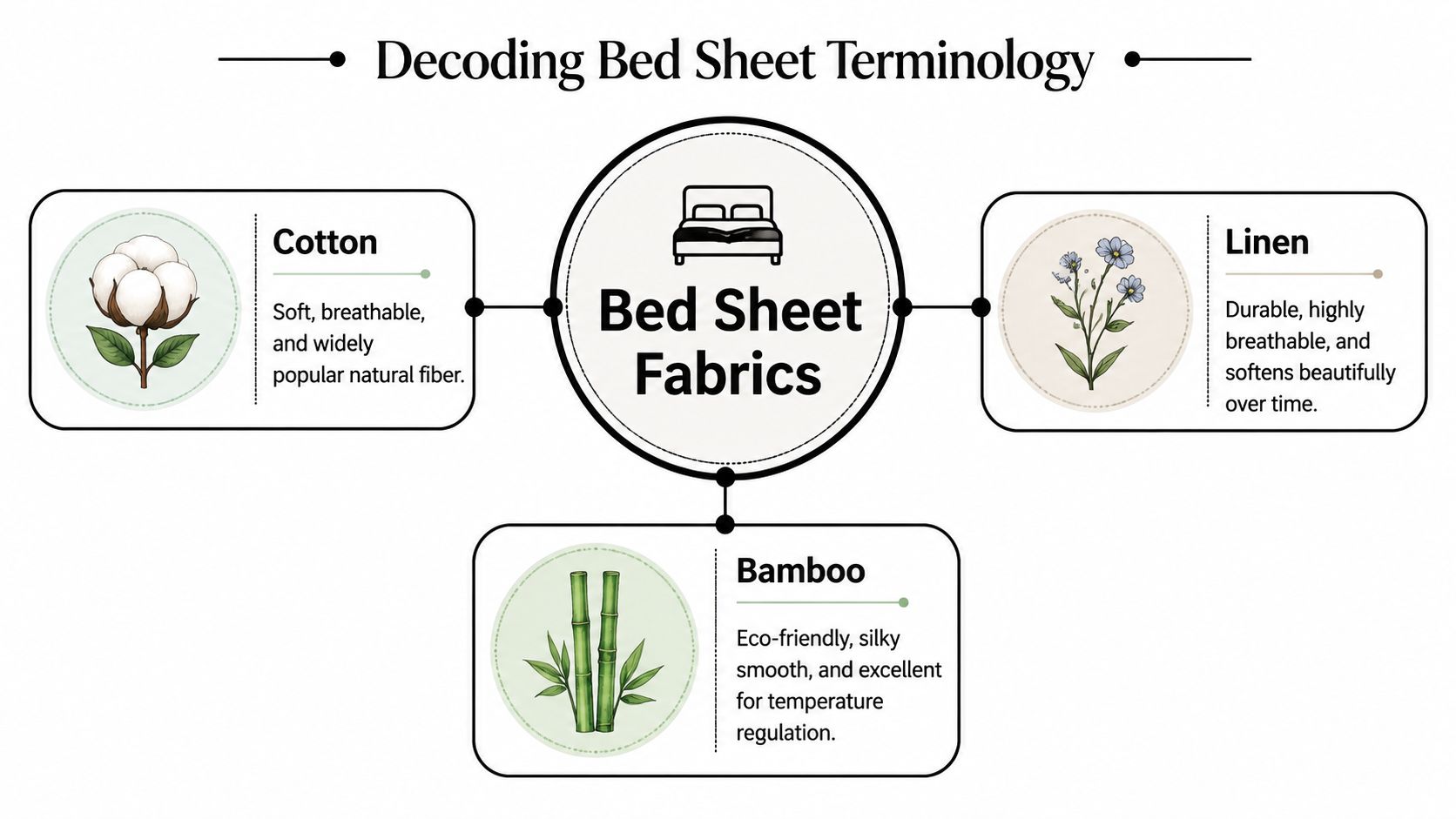
Cotton is the familiar favorite for good reason. It's breathable, comfortable, and easy for most households to live with. Within cotton, long-staple varieties tend to last longer and feel smoother than short-staple alternatives, so two cotton sets can feel very different even when the labels look similar.
Linen has a more relaxed, airy character. It's often chosen by sleepers who like a casual look and a fabric that gets softer over time. Linen doesn't feel the same as silky cotton. It has more texture, which some people love and others need a night or two to get used to.
Bamboo and Tencel-style options appeal to shoppers who want a smoother hand and strong temperature regulation. If you want a deeper dive into texture and construction, it can help to compare bamboo sheet weaves so you can see why two bamboo sets may not feel alike.
For shoppers trying to pull the whole bed together, our complete bedding guide with mattress protectors and comforters can help you think beyond just the sheets.
Then look at the weave
Weave is where many shoppers get tripped up. A simple way to picture it is clothing.
Percale is like a crisp button-down shirt. It feels cleaner, cooler, and more matte.
Sateen is closer to a silky blouse or a polished hotel sheet. It feels smoother and a little warmer, with more sheen.
According to ArchiPro's guide to bed sheets, percale sheets typically fall in the 180 to 300 thread count range, while sateen sheets usually range from 300 to 600 because the weave is different. That's why comparing two sets by thread count alone can be misleading.
Practical rule: If you love a fresh, cool bed, start with percale. If you want a softer, drapier feel, start with sateen.
What thread count really means
Thread count gets treated like a scorecard, but it's only one clue. In cotton bedding, the most useful target isn't the highest number on the shelf. It's the range where softness, durability, and breathability tend to balance well.
ArchiPro notes that 300 to 500 is the optimal thread count range for quality cotton bedding, and that thread counts beyond 500 to 800 are often more about marketing than real quality gains in everyday use. The same guide adds that sheets over 900 thread count show negligible differences in softness and durability compared with the 300 to 500 range while often costing more.
A simple way to shop smarter
When you pick up a package, check it in this order:
- Fiber first: Is it cotton, linen, bamboo, Tencel, or a blend?
- Feel second: Does the weave sound crisp and cool, or smooth and silky?
- Thread count third: Is the number in a sensible range for that fabric and weave?
- Care reality: Will this fit your household's laundry habits?
That order keeps you from paying for a big number when what you really needed was the right fabric.
Ensuring a Perfect Fit for Your Mattress
A beautiful sheet set can still be maddening if the fitted sheet won't stay on the bed. That's one of the most common complaints we hear, especially from households using thicker mattresses or adding a topper for extra comfort.
Modern sleep setups have changed. Many premium mattresses sit taller than older models, and once you add a topper or protector, a “standard” fitted sheet can become a nightly wrestling match.
Pocket depth matters more than many labels suggest
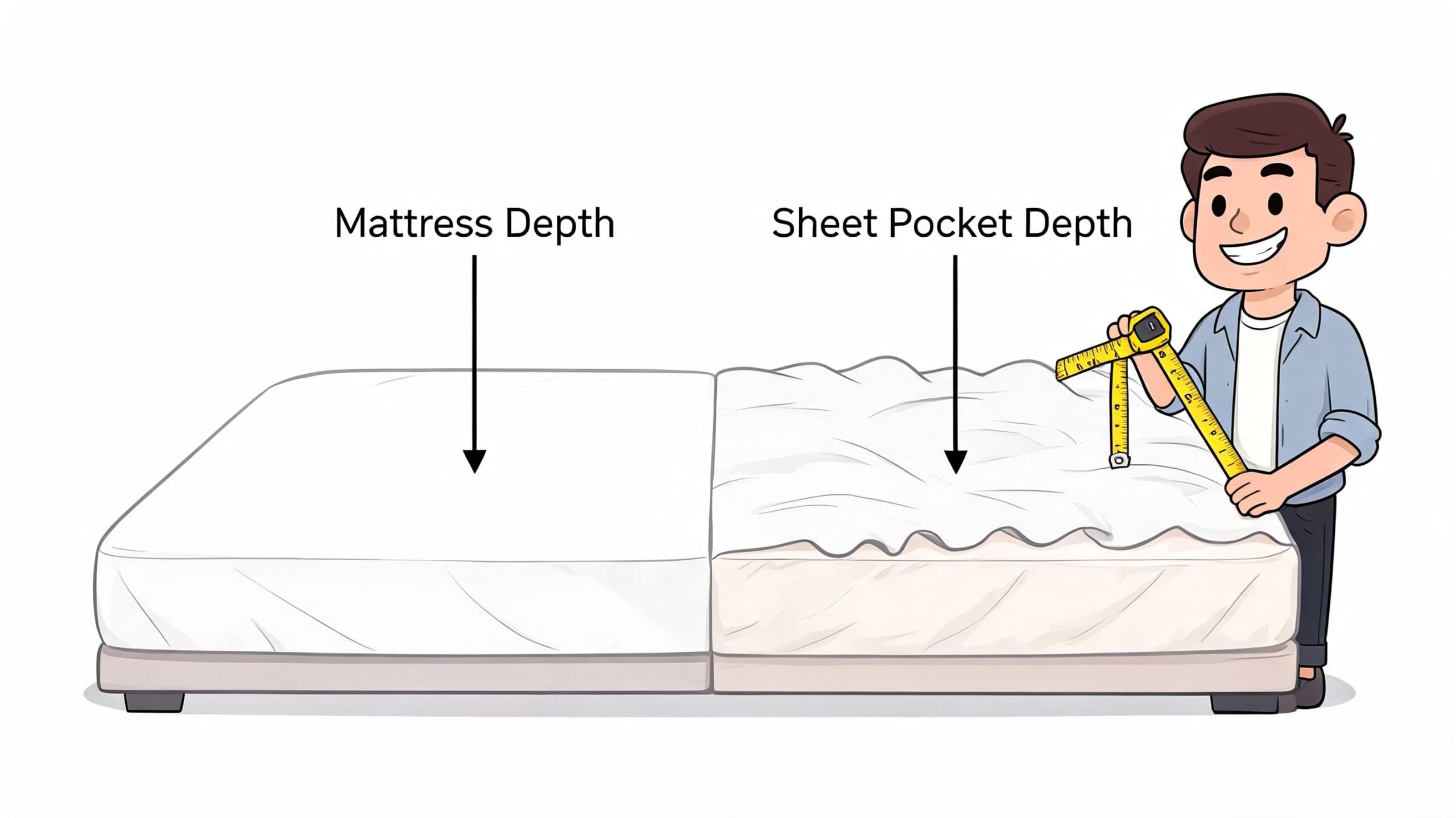
Consumer Reports notes in its sheet buying guide that standard fitted sheets with 16-inch pocket depths fail to fit modern mattresses in about 50% of cases. The same guide also warns that sheets can shrink by 3% to 6% during washing, which explains why a set that “almost fit” on day one may become frustrating later.
That's especially relevant if you sleep on a thicker mattress or a model with a pillow top. Many households looking at supportive sleep surfaces, including the kinds discussed in a helpful mattress buying guide, need to think about the full height of the sleep system, not just the mattress label.
How to measure the bed correctly
Use a tape measure and keep it simple.
- Measure from the bottom edge of the mattress to the top surface.
- Include any topper that stays on the bed.
- Include anything that changes the height in real use.
Then compare that total to the fitted sheet's pocket depth.
Select a fitted sheet with a pocket depth 2 to 3 inches deeper than your mattress's total height, according to Consumer Reports.
What shoppers often miss
Some people assume mattress size and sheet size are enough. Queen mattress, queen sheets. King mattress, king sheets. That works for width and length, but it doesn't solve height.
Watch for these trouble spots:
- Pillow-top beds: They often need more depth than standard fitted sheets provide.
- Foam toppers: Even a slim topper changes the fit.
- Wash-and-dry shrinkage: A sheet that starts snug may become too tight after laundering.
- Elastic quality: A fitted sheet can list the right size and still perform poorly if the edge construction is weak.
A proper fit keeps the sleep surface smoother, protects your bedding investment, and makes the whole bed look more put together.
Matching Sheets to Your Personal Comfort
The “right” sheet isn't the same for everyone in the house. One person kicks off the covers in August. Another wants the bed to feel soft and enveloping year-round. One sleeper loves crisp fabric. Another wants a smoother finish with less texture.
The better question isn't “What's the best sheet?” It's “What helps you sleep comfortably on your mattress in your home?”

If you sleep hot
Northwest Indiana summers can feel heavy and humid, and that changes the sleep experience. A sheet that seemed fine in a climate-controlled showroom can feel very different after a sticky July night.
For hot sleepers, fabric and weave choice matter a lot. Bamboo lyocell is one option worth serious attention. According to Home Depot's bed sheet selection guide, bamboo lyocell sheets can wick 40% more moisture than cotton and may reduce sleep temperature by 2 to 3°F.
That doesn't mean every hot sleeper needs bamboo. Crisp percale cotton and breathable linen can also make sense. But if your main complaint is “I wake up warm and clammy,” it's smart to prioritize airflow and moisture management over silky feel.
If you want a softer, cozier feel
Some sleepers don't want the bed to feel crisp at all. They want it smooth, drapey, and a little more cocoon-like. That's where sateen and other softer-finish fabrics often shine.
This is also where mattress pairing matters. A plush mattress topped with a slippery, overly warm sheet can feel too enveloping. A firmer mattress with a softer sheet can create a more balanced feel. Bedding is part of the comfort equation, not just decoration.
Ask these three comfort questions
Try this quick self-check before you shop:
- How do you regulate temperature at night: Do you run warm, cold, or somewhere in between?
- What texture helps you relax: Crisp and cool, or smooth and silky?
- What annoys you most: Heat, roughness, wrinkles, bunching, or a loose fit?
A sheet that matches your sleep habits will usually feel better than a sheet that simply sounds more luxurious on the package.
For visual ideas on layering and how sheets work with pillows, quilts, and finishing touches, our bedroom accessorizing guide can help you build a bed that feels coordinated as well as comfortable.
Investing in Lasting Quality and Affordable Luxury
Most shoppers don't want the most expensive sheets on the shelf. They want sheets that feel worth bringing home. That's a different question, and a better one.
Material drives a lot of the price difference. Sleepopolis notes in its bed sheets ultimate guide that a queen-size sheet set can range from $50 to over $300, largely based on fabric. The same guide points out that synthetics tend to be the least expensive, while spending modestly more on quality cotton, linen, or Tencel usually brings longer product life and better comfort.
What different price levels usually mean
A lower price doesn't automatically mean poor value. A higher price doesn't automatically mean better sleep. The goal is to understand what you're paying for.
| Budget Tier | Typical Materials | Key Benefits |
|---|---|---|
| Value-focused | Synthetics or blends | Lower upfront cost, easy for backup sets or occasional-use rooms |
| Mid-range | Quality cotton, some bamboo or Tencel options | Better balance of comfort, breathability, and everyday durability |
| Premium | Linen, silk, higher-end natural materials | Distinctive feel, luxury finish, and strong long-term appeal for the right sleeper |
Where quality shows up in daily life
You usually feel quality in small ways, not marketing phrases.
A better sheet set often:
- Feels more consistent: It stays comfortable wash after wash.
- Fits more reliably: The corners are less likely to fight you at bedtime.
- Breathes better: You spend less time flipping pillows and adjusting blankets.
- Looks better on the bed: The drape and finish can make the whole room feel more polished.
If you're replacing sheets often because they pill, stretch oddly, or stop fitting well, the lower upfront cost may not be the better value after all. A solid mid-range set often hits the sweet spot for a busy family home.
Affordable luxury is really about buying power
Some households are furnishing more than one bedroom at once. Others are pairing bedding with a new mattress, dresser, or a made-to-order bedroom setup that better fits the room. In those moments, budgeting gets real.
That's why special financing, subject to credit approval, can matter. It gives families more buying power to choose materials and comfort features that hold up better over time instead of settling for a quick-fix purchase. The same idea applies throughout the home. If you're designing a bedroom to work beautifully together, the “design it your way” mindset matters just as much here as it does with custom dining from Canadel or solid wood Amish furniture built to your specifications.
If you're also trying to plan a bedding refresh schedule, this guide on how often to change your sheets can help you think more practically about long-term upkeep.
Common Sheet Buying Myths and Mistakes
The bedding industry loves shortcuts. “Luxury” gets printed on almost everything. “Cooling” can mean several different things. And thread count often gets used like a trophy.
That's where shoppers get burned. A package can sound impressive and still miss the basics that affect sleep.
Myth one says higher thread count always means better sheets
It doesn't. A very high number can distract from the more important questions, like fiber quality, weave, and breathability. Some manufacturers use construction tricks to inflate the number without improving how the sheet feels in real life.
If a label pushes thread count hard but says little about the fabric itself, slow down. That's often a sign to look closer.
Mistakes that cause buyer's remorse
People usually regret sheet purchases for practical reasons, not abstract ones.
- Buying with your eyes only: Packaging can't tell you whether you prefer crisp percale or smoother sateen.
- Ignoring the laundry reality: Some fabrics fit your lifestyle better than others if you wash often or want easier care.
- Skipping care instructions: A set that needs more upkeep than your household can give it may never feel like a good purchase.
- Forgetting the protector: A good mattress protector can change how bedding performs over time by helping preserve the sleep surface under it.
The smartest bedding shoppers read the label, but they also think about how the product will live in their real home.
Myth two says the softest sheet in the store is the right one
Not necessarily. Some sheets feel impressively soft in the package because of finishing treatments, but that first impression doesn't always predict how they'll feel after repeated washes.
Care matters here too. If wrinkle control is a major concern in your home, even an outside resource like these Gold Coast ironing services can be useful for understanding how some households handle high-maintenance bedding, even if you're using the idea as a reminder to choose easier-care fabrics.
A better way to avoid mistakes
Use a short filter before you buy:
- Does this fabric suit how I sleep?
- Does this weave sound like the feel I want?
- Does this fit my mattress depth and laundry routine?
That simple check beats glossy packaging almost every time.
Your Checklist for Finding the Perfect Sheets in Our Showroom
You get to the showroom, run your hand across two sheet sets, and both feel good for a few seconds. Then the essential question shows up. Which one will still feel right at bedtime on your mattress, in your room, with your sleep habits?
That is the difference between browsing and choosing well. A showroom visit goes much more smoothly when you bring a few clear details with you, especially if you want your sheets and mattress to work together as one sleep system instead of acting like separate purchases.
For shoppers in Dyer, Crown Point, and nearby Northwest Indiana communities, seeing sheets in person helps clear up a lot of confusion. You can compare crisp against smooth, lighter fabrics against cozier ones, and fitted sheet depth against the actual height of your bed. That hands-on step matters because a sheet that feels pleasant on a display table may behave very differently once it is stretched over a tall mattress or layered over a topper.
Bring these details with you
A short checklist can save a lot of guesswork.
- Your mattress height: Measure the full bed setup, including any topper that stays on the mattress. Fitted sheets work like a lid on a container. If the depth is off, the corners slip or pull.
- How you sleep: Jot down whether you sleep warm, like a cool crisp feel, prefer a smoother finish, or want something softer right away.
- Who uses the bed: A primary bedroom, guest room, or kid's room may need very different things in comfort, durability, and care.
- Your daily routine: Think about wash frequency, pets, children, and whether you want easy-care bedding or do not mind a little extra upkeep.
- Your room plan: If you are updating more than sheets, note the colors, wood tones, and overall style you want in the space.
What to do once you're in the showroom
Start with your hand, then use your questions. Touch fabrics side by side and ask how each one tends to feel after regular washing, not just straight from the package. A good comparison in person is a lot like trying pillows. Small differences become very clear once you have two or three options right in front of you.
Then bring the mattress back into the conversation. If your mattress sleeps warm, very heavy sheets may hold more heat than you want. If your mattress has a plush top or added topper, fitted sheet depth becomes a practical comfort issue, not just a sizing detail. The best results usually come from pairing the sheet's feel, weight, and fit with the support and surface feel of the bed underneath.
If you are updating the whole bedroom, it also helps to view sheets as part of the finished room, not an isolated item on a shelf. Bedding often looks better and feels more intentional when it coordinates with a Bassett bedroom collection or a made-to-order Amish solid wood piece chosen for your space and style.
One practical option for shoppers comparing sleep surfaces and bedding together is Groen's Fine Furniture, a family-owned retailer serving Northwest Indiana with showrooms in Dyer and Crown Point.
A strong sheet choice usually comes down to three things working together. Your mattress. Your comfort preferences. Your real home routine. When those line up, the bed feels better night after night, and that is the whole point.