40 Inch Round Coffee Table: A NWI Buyer’s Guide


You know the feeling. The sofa is in place, the rug is down, the lamps are working, and the room still looks unfinished. In many Northwest Indiana homes, that missing piece is the coffee table. It’s the spot where family movie snacks land, where guests set down a mug, and where the whole seating area starts to feel connected.
A 40 inch round coffee table often solves that problem because it sits right in the middle of the room without adding hard corners or a heavy visual block. For homeowners in Dyer, Crown Point, St. John, Schererville, Munster, and nearby communities, it’s a shape and size that can work beautifully in both older homes with tighter rooms and newer open layouts. The key is choosing one that fits your space, your routines, and your standards for quality.
The Perfect Centerpiece for Your Northwest Indiana Home
We’ve helped families furnish living rooms since 1983, and coffee tables tend to create more hesitation than people expect. A sofa is easy to notice. A recliner gets tested right away. But a coffee table has to do several jobs at once. It needs to fit the room, feel comfortable to use, and look right with everything around it.
A 40 inch round coffee table has become a go-to size because it lands in the middle. It’s not tiny, and it usually doesn’t overwhelm the room the way an oversized piece can. In the market, this size spans a broad range of styles and builds, with prices running from around $487 to more than $2,100, a 330% price variance that reflects major differences in materials, craftsmanship, and design approach, as shown in One Kings Lane’s market example for a 40-inch round coffee table.
That spread matters because many shoppers assume all round tables in the same size are roughly equal. They aren’t. One may be built for short-term convenience. Another may be made as a piece you plan to keep through moves, remodels, and growing families.
Why this size feels so useful
Round tables soften a room. They break up the straight lines from sofas, media consoles, windows, and rugs. In a family room, that matters more than is often realized.
They also tend to make movement easier. You don’t have to steer around corners, and the shape encourages conversation because everyone reaches toward the same center point.
A coffee table isn’t just a filler piece. It’s the anchor that helps the seating area feel settled and lived in.
What shoppers often get stuck on
Most confusion comes down to three questions:
- Will it fit the room: A table can look perfect online and feel oversized the minute it arrives.
- Will it hold up: Surface materials, joinery, and finish quality make a big difference in daily life.
- Should you customize: If your wood tones, upholstery, or room layout are specific, standard options can feel close, but not quite right.
That’s why a little planning up front saves so much frustration later. A 40 inch round coffee table can be an excellent choice, but only when the scale, material, and style all work together.
Will a 40 Inch Round Table Fit Your Living Room
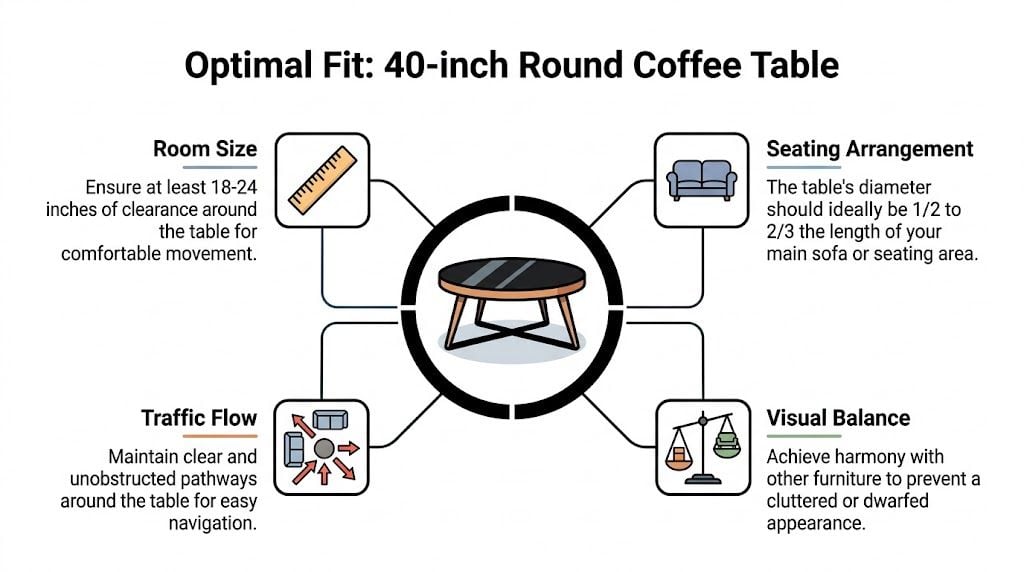
This is the question to answer before you look at finish colors or pedestal shapes. A coffee table can be beautiful and still be wrong for the room. Fit comes first.
The good news is that you don’t need to be a designer to figure it out. A tape measure, a little floor space, and a few practical rules will usually tell you whether a 40 inch round coffee table makes sense.
Start with the seating distance
The first measurement is the gap between the front edge of your sofa and the edge of the table. In most homes, people are happiest when the table is close enough to reach comfortably but not so close that knees feel trapped.
A lot of homeowners in NWI guess at this. We’d rather you measure. If you want a simple walkthrough, our guide on how to measure furniture helps you map the room before you buy.
Height matters too. Many 40 inch round coffee tables come in a low 16-inch height, and that works especially well with sofas that have seat heights of 16 to 18 inches, reducing reach strain by 25% to 30% under BIFMA-based guidance cited with the Baguette table specifications.
Think in walkways, not just in empty floor
A table may fit in the center and still interrupt how people move through the room. This happens all the time with open living rooms connected to kitchens, entryways, or hallways.
Use this quick check:
- Mark the table size on the floor with painter’s tape or a blanket.
- Walk the usual paths from sofa to chair, doorway to sofa, and sofa to TV area.
- Notice the pinch points where someone has to turn sideways or step awkwardly.
- Sit down and reach forward as if you’re placing a drink or grabbing a remote.
If the room feels smooth in motion, you’re on the right track. If it feels tight before the table is even there, it won’t feel better once the piece arrives.
Practical rule: The best coffee table size is the one that works for real movement, not just for a photo.
A round table works differently than a rectangle
A 40 inch round coffee table usually performs best when your room needs softer circulation. That’s often true in square living rooms, family rooms with sectionals, and spaces where kids or pets are constantly cutting across the center.
Here’s a simple comparison:
| Room setup | How a 40 inch round coffee table tends to work |
|---|---|
| Standard sofa | Creates a balanced center point and avoids harsh corners |
| Sofa and loveseat | Helps unify the seating area when chairs face each other |
| Sectional | Often fits well inside the conversation zone if the opening isn’t too narrow |
| Tight walkway room | Can improve flow, but only if pathways stay clear |
Common room examples we see in local homes
In an older bungalow or ranch in Northwest Indiana, the living room may be compact but fairly square. A round shape often helps there because it keeps the center open visually. The room feels less boxed in.
In a larger Crown Point or St. John family room with a sectional, a 40 inch round coffee table can be a strong choice when the table sits inside the seating area rather than pushing into a main traffic lane. If the sectional opening is narrow, though, a smaller round or a narrow rectangle may make more sense.
For a sofa-and-chair arrangement, this size usually feels conversational. Guests don’t have to lean around corners, and the room tends to feel more welcoming.
A simple fit checklist
Before you commit, ask yourself:
- Can everyone reach it comfortably from the main seat
- Can people walk around it without changing stride
- Does the height match the sofa’s feel
- Does the room still feel open when the center is occupied
If you answer yes to those, a 40 inch round coffee table is probably a practical fit for your living room. If one answer is no, pause there. A beautiful table never fixes a layout problem.
Choosing Materials for Lasting Beauty and Durability
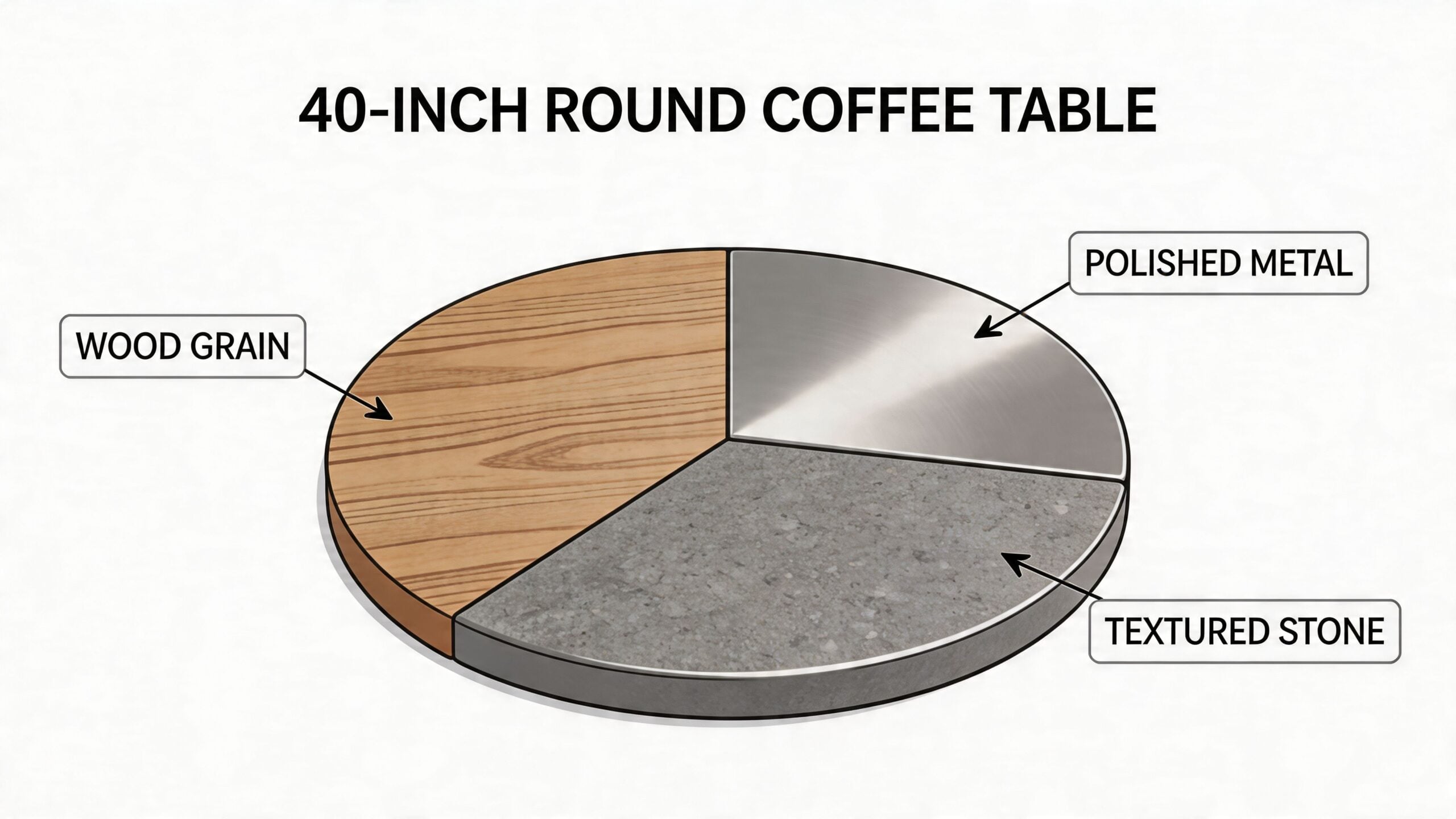
Once the size makes sense, the next question is what the table is made of. Due to material differences, two coffee tables that look similar online can perform very differently in real life.
For a family room in Northwest Indiana, material choice affects more than appearance. It shapes how the table handles daily use, changing humidity, accidental bumps, and years of cleaning. If you want a piece that still looks good after real family life, materials deserve a close look.
Solid wood, veneer, and engineered builds
Many shoppers hear “veneer” and immediately think “low quality.” That’s too simple. Veneer can be used very well or very poorly, depending on what’s underneath and how the piece is built.
One useful example is an oak veneer over a solid rubberwood core. In the Austen-style construction, that combination is cited at 900 to 1,000 lbf on the Janka scale, making it 20% to 30% more dent-resistant than pine and helping minimize warping by up to 50% in humid environments like Northwest Indiana, according to the Austen product construction notes.
That kind of detail matters because not all engineered construction is equal. A well-built hybrid can offer solid everyday performance. A weaker build can loosen, chip, or age poorly.
How common materials compare
| Material | Strengths | Watch-outs |
|---|---|---|
| Solid wood | Long-term durability, natural beauty, repairable over time | Usually heavier and often a larger investment |
| Quality veneer over strong wood core | Stable, can hold finish well, often good value | Depends heavily on core quality and craftsmanship |
| MDF-based construction | Smooth painted finish, accessible styling | Often less forgiving with impact, moisture, and long-term wear |
| Metal and glass combinations | Light visual profile, modern look | Glass shows smudges and can feel less warm in family spaces |
| Stone-top styles | Substantial presence, easy to wipe down | Weight and edge feel should be considered carefully |
Why solid wood still matters
Our family has always had a soft spot for solid wood because it ages with character. A scratch in real wood often becomes part of the story or can be touched up. A damaged synthetic surface usually doesn’t age as gracefully.
That’s especially true if you’re drawn to Amish furniture or other American-made craftsmanship. A solid wood 40 inch round coffee table can become the kind of living room piece that stays through more than one phase of life. It isn’t disposable, and it doesn’t need to be.
If you want a deeper look at wood species and how they wear over time, our article on choosing the right hardwood for longevity and style breaks down the differences in plain language.
A coffee table sees daily contact. Hands, feet, trays, remotes, game nights, homework, and the occasional dropped item all end up there. Build quality shows up quickly.
Care matters, but it shouldn’t be complicated
A good table shouldn’t demand constant fuss. Most homeowners want a routine that’s simple.
A few habits go a long way:
- Use coasters regularly: This is still the easiest way to protect wood and finished surfaces.
- Dust with a soft cloth: Dry microfiber is usually enough for everyday care.
- Wipe spills promptly: Even durable finishes benefit from quick cleanup.
- Avoid harsh sprays: Strong cleaners can dull or damage the finish over time.
What to choose if you want lasting value
If your priority is a forever piece, lean toward solid wood or a thoughtfully built wood-core table with a durable finish. If your priority is a lighter visual style or a very specific modern look, mixed materials can work well, but stability should stay high on your list.
The best choice isn’t the fanciest material on paper. It’s the one that fits your household, your maintenance habits, and how long you want the table to last.
Styling Your Round Coffee Table Like a Designer
Once the table is in place, many people stop there. The room works, but it doesn’t feel finished. Styling is what turns a useful surface into part of the home.
The good news is that a round table is easier to style than people think. The shape naturally lends itself to balanced arrangements, and you don’t need a catalog-perfect setup to make it look thoughtful.

Use one anchor piece first
Start with a tray. On a round surface, a tray gives the eye a place to land and keeps smaller objects from looking scattered. It also makes cleanup easier when you need the whole table for snacks, puzzles, or board games.
Then add only a few elements around it. A small stack of books, a candle, a bowl, or a vase is usually enough.
Designer habit: Leave open space. A styled coffee table should still work like a coffee table.
A simple formula that works
If you’re not sure where to begin, try this mix:
- Something low and useful: a tray or bowl
- Something with height: a vase, branch, or candleholder
- Something personal: a book, object from travel, or meaningful accent
That combination keeps the arrangement from feeling flat. It also keeps the room from looking over-decorated.
Match the table to the seating mood
Different table styles call for different styling approaches. A rustic or Amish-made wood table often looks best with natural textures like woven trays, ceramic pottery, linen, and books with quiet covers. A cleaner-lined table with a darker finish may pair well with metal, stone, or glass accessories.
If the table sits in front of a Flexsteel sofa, think about balance. A durable upholstered piece often has visual weight, so the tabletop styling should feel grounded without becoming crowded. Fewer, better-chosen objects usually look stronger than a lot of small accessories.
For more inspiration beyond our own showroom conversations, this article on styling a coffee table offers useful ideas about layering decor in a way that still feels livable.
What not to do
A few common mistakes make even a good table look awkward:
- Too many small objects: They create visual noise instead of interest.
- No height variation: Everything sits flat and disappears.
- Decor with no function: If you can’t set down a mug, the table has stopped doing its job.
- Ignoring the rest of the room: The table should relate to the sofa, rug, and side tables around it.
If you’d like a practical styling reference, our team also put together a foolproof guide to the perfectly styled coffee table.
The goal is comfort, not perfection
The nicest coffee tables rarely look overworked. They look lived in, tidy, and personal. That’s a better standard than trying to copy a photo exactly.
If your 40 inch round coffee table holds a favorite candle, a good book, and still has room for Friday night takeout, you’ve done it right.
Design It Your Way Custom Amish and Canadel Options
Many homeowners realize they don’t have to settle for “close enough.” Maybe the stain is too dark. Maybe the base is too bulky. Maybe the size works, but the table doesn’t connect with the wood tones already in the room.
That’s the limitation of many ready-made collections. Mainstream retailers often offer limited customization for 40-inch round coffee tables, which leaves a gap for shoppers who want custom wood selection, finish matching, or locally crafted alternatives, as noted in the Cyra round coffee table retail comparison context.
Why custom matters in real homes
A custom table isn’t just about preference. It often solves practical design problems.
In a Crown Point home with warm oak floors, a generic gray-brown finish may look off from the start. In a Dyer family room with existing end tables you want to keep, the right finish and base style can tie the room together instead of competing with it.
That’s why so many shoppers are drawn to bespoke furniture after looking at standard options. Custom lets the table serve the room, not the other way around.
Amish craftsmanship and Canadel flexibility
Two custom paths appeal to different kinds of shoppers, and both can be excellent.
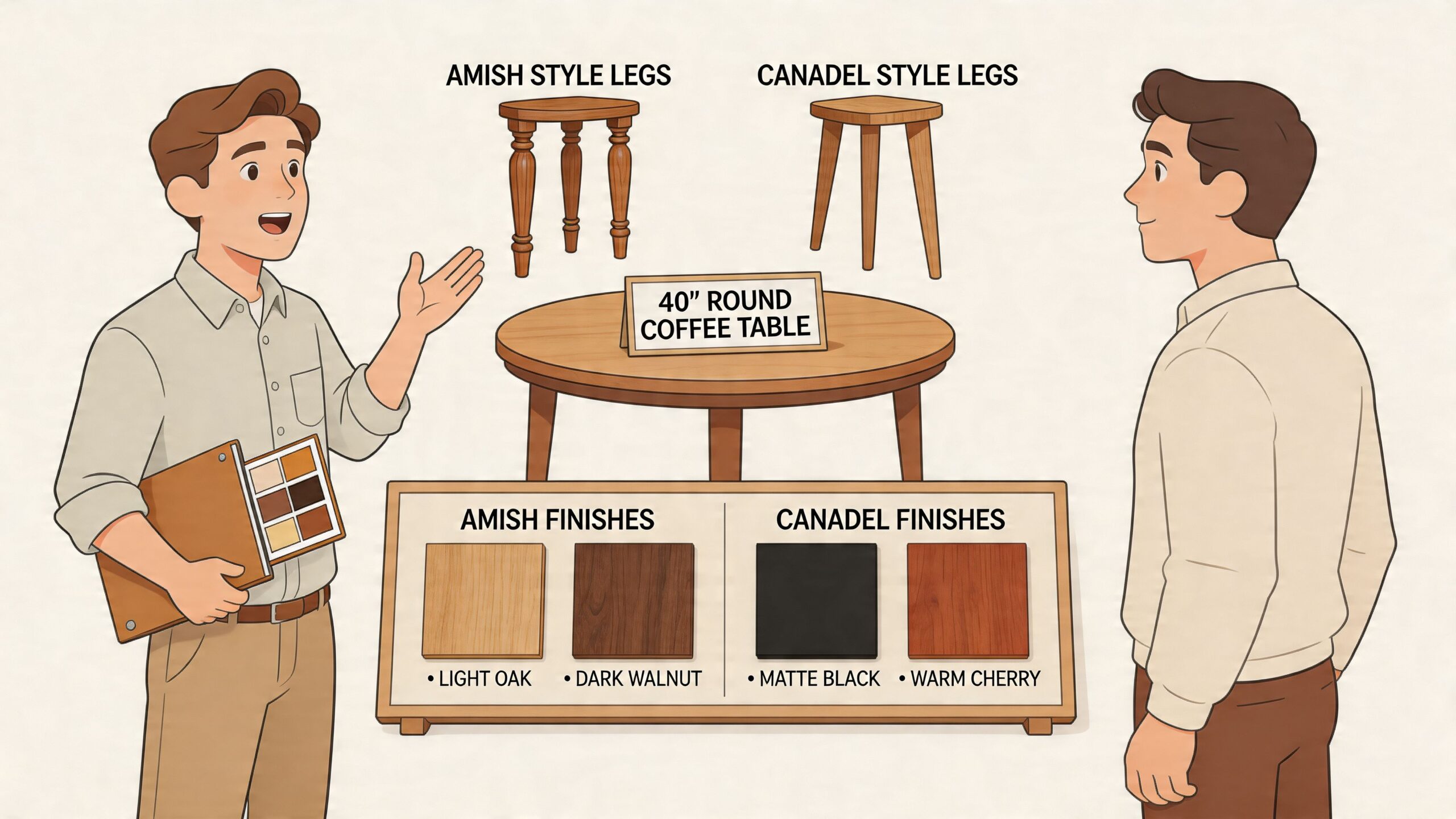
Amish solid wood furniture is often chosen by families who care most about heirloom quality, wood character, and long-term durability. These pieces tend to feel grounded, substantial, and personal. You choose with longevity in mind.
Canadel appeals to homeowners who want more control over design details and finish coordination. If you’ve ever looked at a table and thought, “I like the shape, but not that stain,” custom programs answer that problem directly.
What you can often personalize
Customization can include choices like these:
- Wood species: Some people want the grain and feel of a specific hardwood.
- Finish tone: This matters when you’re matching nearby furniture or flooring.
- Base style: A pedestal, open base, or more architectural silhouette changes the whole look.
- Scale details: In some programs, proportions and companion pieces can be coordinated.
You live with a coffee table at the center of the room. If one detail bothers you now, it’ll probably bother you more a year from now.
One option among local resources
For shoppers comparing custom possibilities in Northwest Indiana, Groen’s Fine Furniture’s custom order guide outlines how custom furniture planning works, including made-to-order options tied to the store’s Amish and Canadel offerings. That kind of process can be helpful when you want to align wood, finish, and style with the rest of your home rather than buying a one-size-fits-all piece.
Who custom is best for
Custom tends to make the most sense for people who fall into one of these groups:
| Shopper type | Why custom can help |
|---|---|
| The long-term homeowner | Wants a lasting piece that won’t feel temporary after the next update |
| The room finisher | Already has key furniture and needs a table that coordinates closely |
| The shop-local loyalist | Prefers craftsmanship and personal guidance over mass-market sameness |
| The family buyer | Wants solid wood and practical durability for everyday use |
A 40 inch round coffee table is already a versatile format. When you can design it your way, it becomes much easier to land on something that feels right for your room now and still feels right years from now.
Making Quality Affordable with Financing and Delivery
A well-made coffee table is an investment, especially if you’re choosing solid wood, custom finishes, or a piece you plan to keep for a long time. That doesn’t mean it has to feel out of reach.
The furniture market already shows that premium pieces are often paired with more flexible purchasing paths. In the 40-inch round category, retailers have offered financing on $1,000-plus pieces, reflecting a broader effort to make higher-quality furniture more attainable for families, as referenced earlier in the market examples from the introduction.
Why financing can be a practical tool
Special Financing, subject to credit approval, gives households buying power when they’re furnishing a room thoughtfully instead of rushing into mismatched pieces. That matters if you’d rather choose the table you actually want than settle for a short-term substitute.
Used carefully, financing helps in situations like these:
- You’re finishing a full room: The sofa, rug, lamps, and table all need to work together.
- You’re choosing better materials: Solid wood or custom furniture often asks for a longer-term mindset.
- You’re moving into a new home: A lot of needs hit at once, and timing matters.
If you’d like to understand how that process works locally, this overview of furniture financing options for your Northwest Indiana home explains the basics in straightforward language.
Delivery matters more than people expect
Coffee tables seem simple until delivery day. Then you’re thinking about doorways, floors, packing materials, and whether the piece lands exactly where it should.
That’s why white-glove delivery matters. It turns the last step of the purchase into part of the service, not just a drop-off. For busy families in Munster, Schererville, St. John, and beyond, that can remove a lot of stress from the process.
A furniture purchase isn’t finished when you pay for it. It’s finished when the piece is in your home, placed correctly, and ready to use.
A better way to think about value
The cheapest path and the most sensible path aren’t always the same. A table that fits the room, wears well, and arrives without hassle often gives better value than one that creates problems from the start.
That’s especially true with a 40 inch round coffee table because it sits in the center of everyday life. When the quality is right and the buying process is manageable, the piece earns its place quickly.
Find Your Forever Coffee Table at Groen’s
A good coffee table does more than fill the middle of the room. It shapes how people gather, move, and relax. With a 40 inch round coffee table, the sweet spot is often its balance. It’s large enough to be useful, soft enough to help traffic flow, and versatile enough to work in many Northwest Indiana homes.
The decision comes down to fit, material, and whether you want something standard or something made more personally. Measure first. Look closely at construction. Be honest about how your family lives. If the room needs a table that works hard and still feels welcoming, this size is often worth serious consideration.
Our family has spent decades helping homeowners in Dyer, Crown Point, and the surrounding NWI communities make those choices with confidence. We believe the right furniture should feel comfortable, lasting, and personal. It should support daily life now and still make sense years from today.
If you’re comparing shapes, woods, finishes, or custom possibilities, it helps to see the pieces in person. You notice scale differently. You feel surface textures. You can tell right away whether a pedestal base feels airy enough or whether a solid wood top has the warmth you’ve been looking for.
Visit Groen's Fine Furniture in Dyer or Crown Point today to explore our custom options and ask about our special financing plans. Let our family help you create a home you love.