Couch vs Sofa: A Homeowner’s Guide to Choosing Right

You’re probably doing what most homeowners do when it’s time to replace the main seat in the living room. You start browsing, you see one listing call it a couch, another call it a sofa, and before long you’re wondering whether there’s a real difference or just different marketing.
For families across Northwest Indiana, that question matters more than it seems. The piece you choose becomes the spot for holiday visits, movie nights, after-school conversations, and the quiet hour each evening when everyone finally sits down.
Our family has helped local homeowners sort through that decision for decades. We’ve seen couples in Dyer furnishing a first home, growing families in Crown Point needing something more durable, and longtime homeowners in Munster wanting a room that feels a little more polished. The language can be confusing, but the decision doesn’t have to be.
Your Living Room's Centerpiece Couch or Sofa
A customer might walk in and say, “We need a new couch.” Their spouse might follow with, “Something a little more like a sofa.” Most of the time, they’re pointing at the same category of furniture, but they’re describing two different feelings.
“Couch” usually sounds relaxed. It feels everyday. It’s where kids pile up with blankets, where the dog tries to claim one corner, and where nobody worries too much about perfect posture.
“Sofa” tends to signal something more thoughtfully designed. It brings to mind cleaner lines, a more refined silhouette, and a piece that helps define the room instead of merely occupying space.
That’s why the couch vs sofa question is worth slowing down for. You’re not just choosing a word. You’re choosing how your room will function, how formal or casual it will feel, and how the space will welcome the people who live there.
If you’re starting your search, browsing a broad look at living room essentials can help you see how seating works with tables, storage, rugs, and room layout as one complete picture.
Practical rule: If you say “couch,” you’re usually talking about comfort first. If you say “sofa,” you’re often thinking about comfort plus presentation.
The Story Behind the Seating A Tale of Two Words
Language leaves clues.

The reason “sofa” and “couch” feel different is not just habit. Each word grew out of a different setting, and those roots still shape how the piece feels in your mind before you ever sit down.
How sofa became a furniture term
“Sofa” has older, more formal roots. The word traces back to the Arabic ?uffa, a raised platform layered with cushions and textiles, and it reached English through Turkish and French, as noted in Penn Today’s history of the sofa.
That background helps explain why “sofa” still sounds a little more intentional. The word carries the image of a furnished sitting place, not just a padded spot to stretch out. It suggests a piece that belongs to the room in the same way a dining table or sideboard does. Chosen carefully. Meant to last.
Furniture history followed that same path. As upholstered seating became more refined in Europe, the sofa came to represent comfort that was built into the design, not added as an afterthought. For families shopping today, that old distinction still matters. A word can hint at what you expect from the piece, whether that is customized support, a polished look, or a stronger frame under daily use.
Why that history still matters in a modern home
“Couch” developed a more relaxed personality over time. It sounds informal, lived-in, and familiar. “Sofa” sounds more architectural. It works like the difference between a weekend sweatshirt and a well-made sport coat. Both can be comfortable, but they send different signals and often come with different expectations.
That is useful when you are trying to describe the room you want. A homeowner in Northwest Indiana might say “couch” because the goal is movie-night comfort, easy cleaning, and room for the kids to pile on. Another might say “sofa” because they are picturing a piece with cleaner lines, better upholstery, and options that hold up for years instead of just looking good on delivery day.
The deeper value is in what the words point to. Pieces sold as sofas are often associated with more considered construction and more fabric choices, which opens the door to healthier materials and longer-term durability. That matters if you are trying to avoid lower-quality off-the-floor furniture made with questionable additives or short-lived cushions. The label alone does not guarantee quality, of course, but it often points you toward a different level of design and customization.
For homeowners comparing room character as much as furniture terminology, contemporary vs traditional design styles can help connect the word you use with the atmosphere you want at home.
The history of the word often reveals the kind of seating people expect it to describe.
Decoding the Design Couch and Sofa Differences
In everyday conversation, people mix the terms all the time. In design, there’s still a useful distinction.
The clearest way to think about couch vs sofa is this. A sofa is usually more structured. A couch usually feels more relaxed.
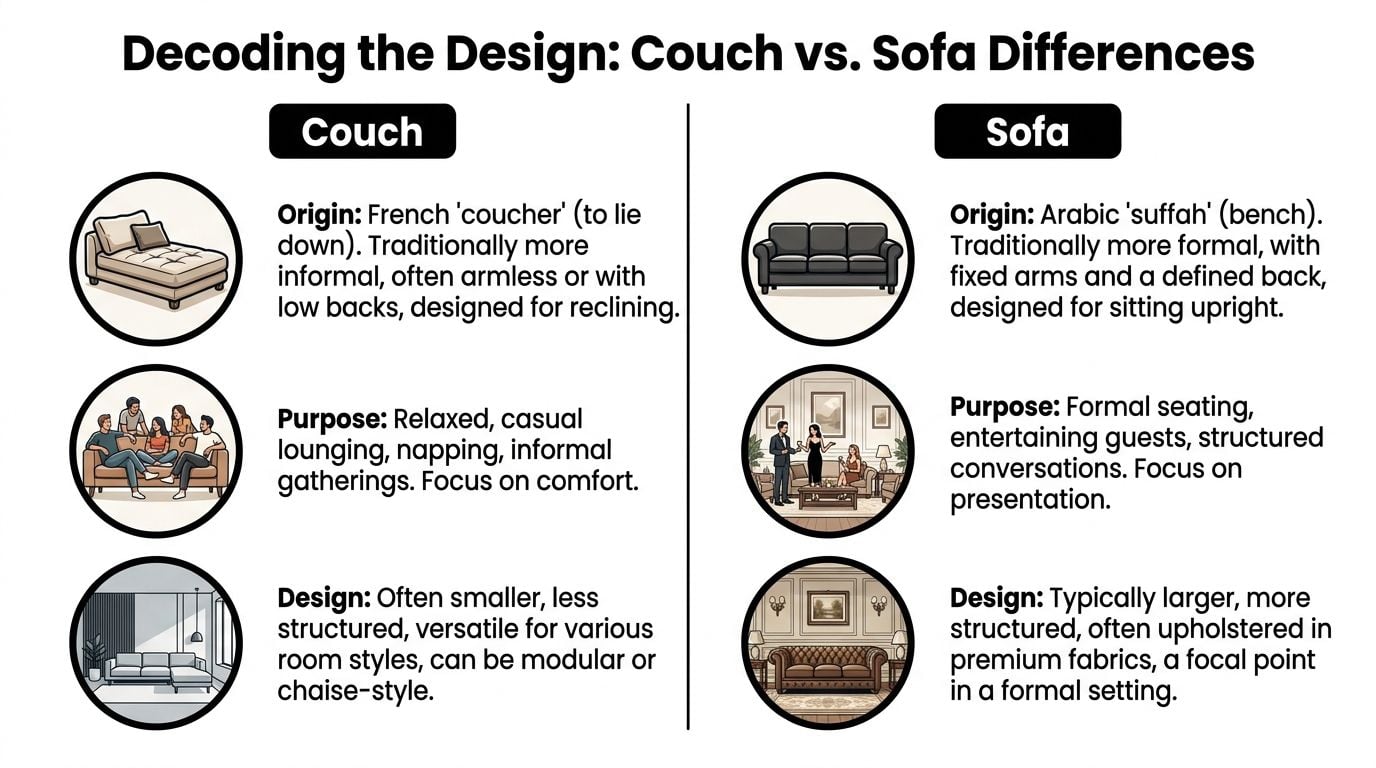
Quick Comparison Couch vs Sofa
| Characteristic | Sofa | Couch |
|---|---|---|
| Overall feel | More formal and tailored | More casual and familiar |
| Typical use | Upright seating, conversation, entertaining | Lounging, relaxing, everyday family use |
| Silhouette | Structured arms and defined back | Can feel softer or less rigid |
| Room style | Formal living rooms, polished spaces | Family rooms, media rooms, relaxed layouts |
| Word choice in retail | Common in design and furniture sales | Common in everyday speech |
| Cultural tone | Often sounds more traditional or refined | Often sounds more approachable |
What people usually mean by each word
In the U.S., including Indiana, “couch” is the common, casual term, while “sofa” often feels more formal or old-fashioned and is more common among designers and retailers, as described in this history of couch vs sofa usage.
That same piece notes that in Britain, “sofa” is the standard term, and “couch” reads as more American. So if you’ve ever noticed one word sounding more polished than the other, you’re not imagining it. Culture shaped the language.
Design details that change the experience
Here’s where shoppers often get tripped up. They assume the difference is only about style vocabulary. It isn’t.
A sofa usually has a more defined frame. You’ll often see balanced arms, a clear back height, and cushions that support sitting upright. That makes it a natural fit for a front room, a conversation area, or any space where you want the furniture to help organize the room.
A couch can lean softer in personality. It may invite curling up, stretching out, or treating the seat as part lounge spot and part landing pad after a long day. That doesn’t make it lower quality. It just serves a different mood.
Consider these common examples:
- Guest-focused room: A sofa with a crisp profile makes the room feel composed.
- Family TV room: A couch or sectional often feels more natural because people want to recline, sprawl, and move around.
- Small sitting area: A sofa can look neater and more deliberate.
- Basement hangout: A couch usually wins on ease and informality.
If you’d like a practical shopping lens instead of a vocabulary lesson, 5 things to look for in your new sofa or chair is a useful next step.
The label matters less than the posture the piece encourages. Upright and tailored feels like a sofa. Lounge-friendly and easygoing feels like a couch.
Choosing the Right Fit for Your Northwest Indiana Home
The right answer depends less on the dictionary and more on how your household lives.
A formal tufted piece may look beautiful online. But if your family spends every evening stretched out with snacks, pets, and a stack of throw blankets, that polished look may not match daily life.
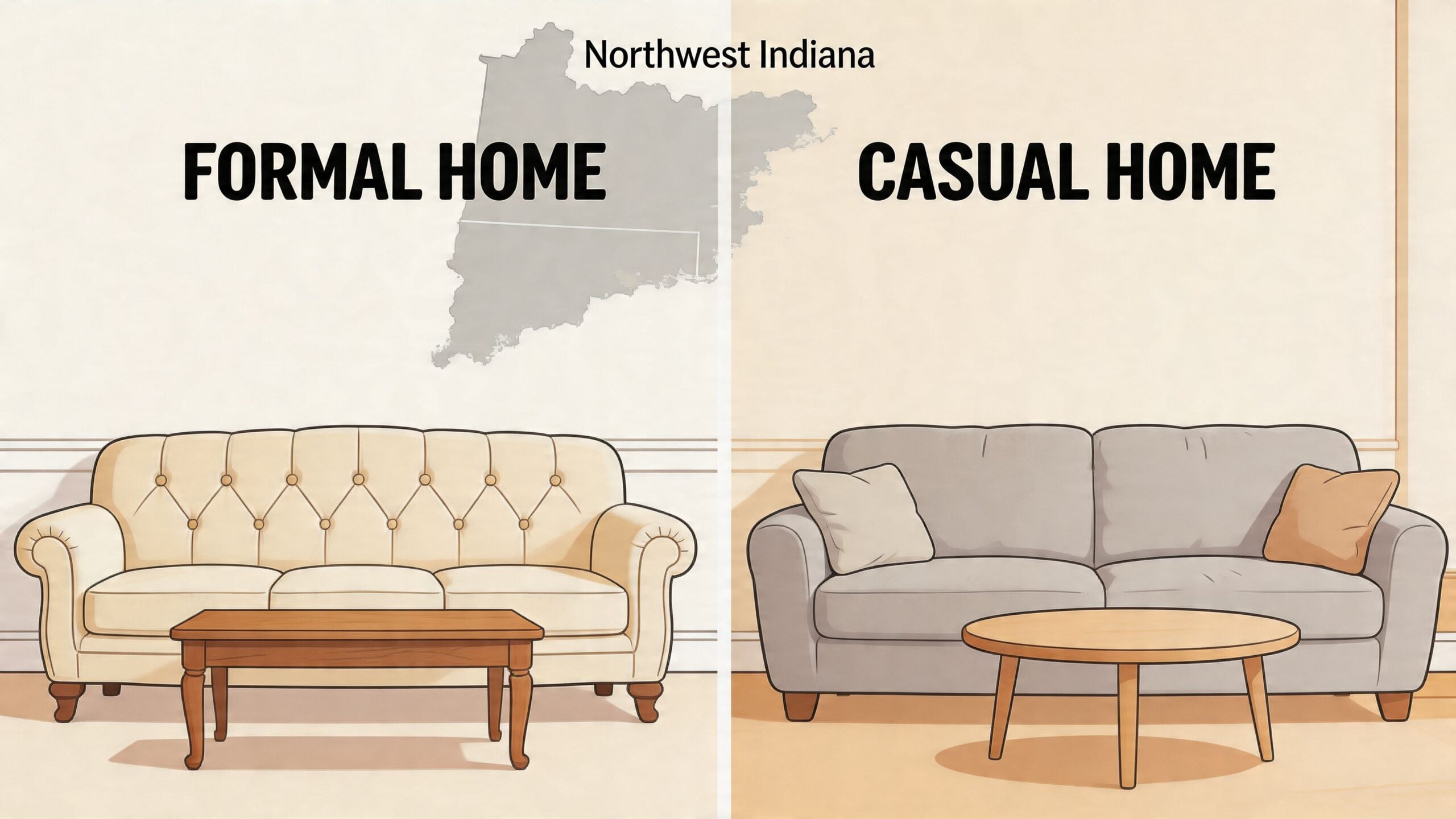
Start with the room’s real job
Ask one question first. What happens in this room most often?
If the room is where you host holidays, welcome neighbors, or keep things looking neat for company, a sofa usually makes more sense. It helps the room feel composed and intentional.
If the room is where your family lives, a couch-like feel may serve you better. That’s especially true in open-concept homes where the seating has to support homework, movie nights, and everyday traffic.
Match the piece to your household
A few local examples make this easier.
- Dyer family room: Parents with kids and pets usually need comfort, forgiving upholstery, and a shape that invites use instead of caution.
- Crown Point new build: An open great room often benefits from seating that defines zones without making the space feel stiff.
- Munster front room: A more structured sofa can support a classic home style and make the room feel finished.
- St. John reading nook or den: A compact, refined piece may work better than an oversized lounge setup.
Think through size before style wins the argument
Many shoppers fall in love with scale too late. The piece works on the showroom floor or in a photo, but it overwhelms the room once it’s home.
That’s where dimensions matter. As noted in our sizing guidance, sofa size guide can help you measure wall space, traffic flow, and the room around coffee tables and chairs so the piece fits the way you expect.
Use this checklist before you commit:
- Measure the seating wall. Don’t guess. Write it down.
- Map walking space. People need to move around the piece comfortably.
- Account for side tables and lamps. The sofa or couch doesn’t live alone.
- Consider who sits there most. Tall adults, young kids, and older relatives all use depth and height differently.
A good fit feels right before you sit down. The piece belongs to the room instead of fighting it.
Beyond Style A Focus on Health and Lasting Quality
A lot of couch vs sofa guides stop at appearance. That misses two issues families ask about more and more often. What’s inside the piece, and how long will it hold up?
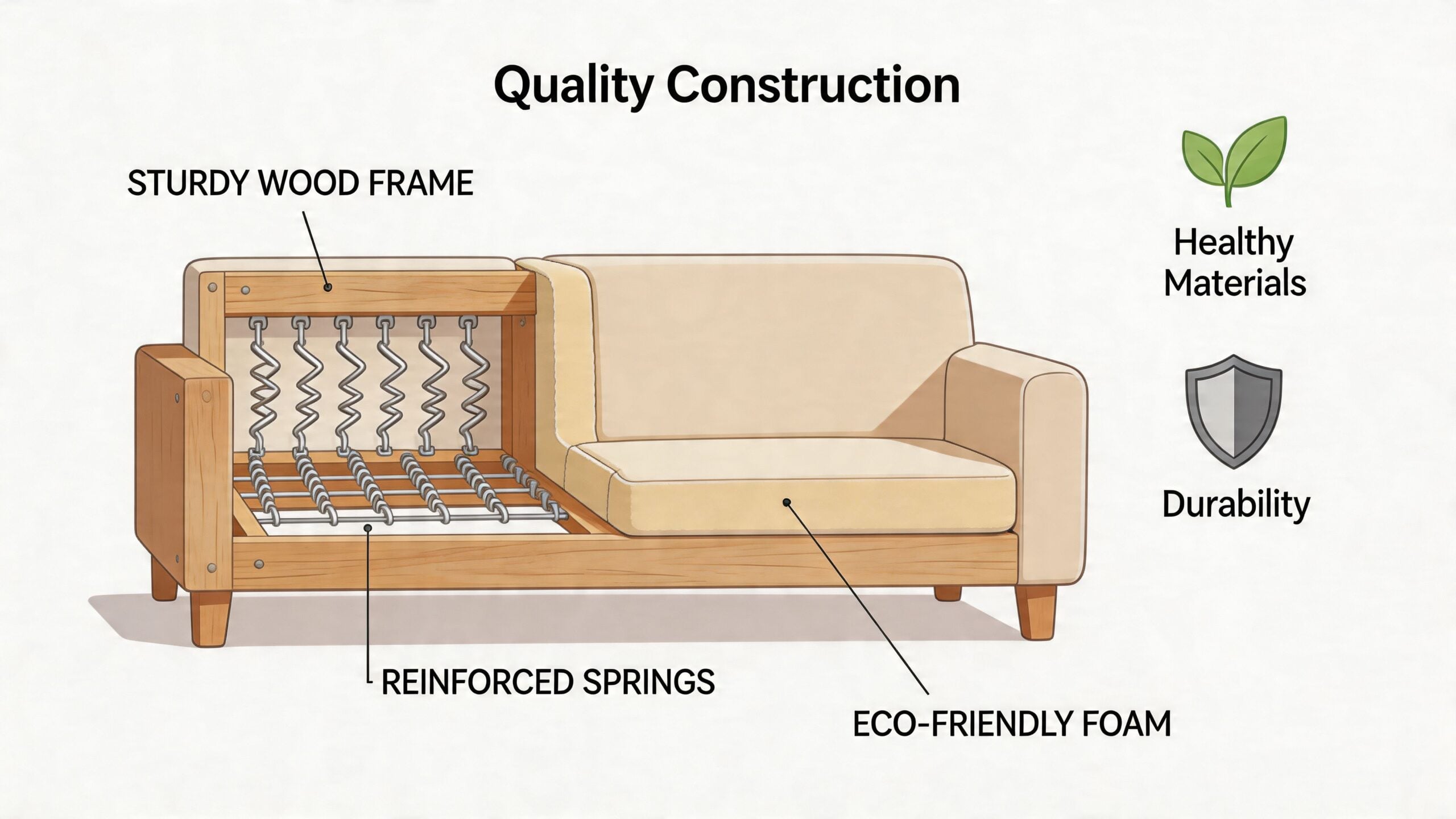
Material safety deserves more attention
A 2023 study found that replacing an old couch with a flame retardant-free model significantly reduces harmful chemical levels in household dust, according to this buying guide discussing the study.
For families with children, that matters. Kids spend more time close to upholstery, cushions, and floors. If you’re refreshing an older room, what’s inside the furniture can matter just as much as the color or shape.
This doesn’t mean every casual couch is unsafe or every sofa is automatically better. It means materials deserve direct questions:
- Ask about cushion contents.
- Ask whether flame retardants are present.
- Ask how transparent the maker is about materials.
- Ask what can be replaced later if cushions wear out.
Good construction pays you back
The next part is durability. Strong frames, supportive suspension, and quality upholstery usually age better than furniture built for quick turnover.
That’s one reason people often gravitate toward American-made lines such as Flexsteel when durability matters, or toward solid wood Amish-made options when they want a long-term piece with more control over materials and construction choices. If you’re weighing lifespan as part of value, how long furniture should last gives a practical way to think about the investment.
Care matters too. Once you bring home a piece you love, proper maintenance protects both appearance and indoor comfort. If you want a straightforward care reference, this ultimate guide to clean any sofa is a useful outside resource for routine upkeep.
The smartest furniture question isn’t “What does it look like today?” It’s “What will my family be living with five years from now?”
Design It Your Way at Groens Fine Furniture
A showroom floor can only show so much. The better question is whether a piece fits the way your family sits, stretches out, hosts guests, and lives with furniture year after year.
Custom ordering helps solve problems that off-the-floor pieces often miss. One family may need a shorter seat depth so feet rest comfortably on the floor. Another may want a roomier layout for weekend movie nights. Someone else may care just as much about fabric performance, cushion feel, or having clearer choices about the materials used inside the piece.
Where custom helps most
Seat depth, cushion support, arm style, and overall scale all change how a sofa feels in daily use. A piece that looks right in the store can feel awkward at home if the seat is too deep, the back is too upright, or the frame fills too much visual space.
That is why made-to-order options matter.
As noted in Wayfair’s design discussion of sofa dimensions, sofa proportions and seat depth play a big role in comfort and posture. In plain terms, a good fit works like a well-sized pair of shoes. If the scale is off, you feel it every day.
A piece that feels balanced in a large Crown Point great room may look oversized in a smaller Schererville living room. A structured seat that suits one homeowner’s reading routine may feel too formal for a family that wants to curl up and lounge.
What you can customize
At Groen's Fine Furniture, custom furniture options can include upholstery, cushion feel, scale, wood finish, and made-to-order Amish solid wood pieces for shoppers who want more control over fit, appearance, and materials.
The biggest advantages usually come down to a few practical choices:
- Performance fabrics for busy households. A smart option for kids, pets, snacks, and everyday traffic.
- Adjusted proportions. Helpful for shorter sitters, taller adults, and rooms where every inch matters.
- Solid wood options. Amish craftsmanship appeals to families who want lasting construction and more say in species, finish, and overall look.
- Room-to-room consistency. Bassett or Flexsteel upholstery can be chosen to work with the chairs, tables, and accent pieces you already own.
Custom also gives families a better chance to match comfort with peace of mind. If material health matters to you, asking for more information before ordering is often easier than trying to decode a mass-produced piece after it arrives. That can be especially helpful for shoppers who want to avoid mystery materials and buy something they feel good about bringing into the home.
Quality with budget flexibility
A better-made piece often costs more upfront, but it can make better sense over time if it fits well, wears well, and does not need to be replaced early.
Special Financing, subject to credit approval, can help homeowners spread out the investment when they choose stronger construction or more personalized options. For many Northwest Indiana families, that means buying once with intention instead of settling for something that never felt quite right.
Frequently Asked Questions From Our NWI Neighbors
Some questions come up in almost every showroom conversation. These are the ones that help shoppers avoid regret later.
Is there really a difference between a couch and a sofa
Usually, yes, but not always in a strict technical sense. In everyday use, many people mean the same thing. In design language, sofa often suggests a more structured, upright, polished piece, while couch suggests a more casual lounging feel.
Which is better for a family room
Most family rooms lean couch in spirit, even if the retailer labels the piece a sofa. The better question is whether the seat supports your household’s habits. If everyone lounges, look for comfort and durability first.
Which works better in a formal living room
A sofa usually fits that setting more naturally. Cleaner lines, a defined back, and a more structured shape help the room feel orderly and ready for guests.
How should I measure before I shop
Measure three things before anything else:
- Wall space: Know the maximum width your room can handle.
- Walking room: Leave enough space for traffic around the piece.
- Entry path: Check doorways, hallways, stair turns, and any tight corners.
A piece can fit your room on paper and still fail to make it through the front door if the path isn’t clear.
What if I need help getting it into the house
That’s where white-glove delivery is useful. Professional delivery teams handle placement more carefully, which can help reduce stress, especially with heavier frames, tight entryways, or homes with multiple turns from the door to the living room.
Are performance fabrics worth it
For many households, yes. They can be especially practical if you have kids, pets, or frequent guests. The right fabric choice can make daily life easier without forcing you into a style you don’t want.
Should I choose leather or fabric
That depends on how you live. Fabric often gives you more softness, color variety, and pattern flexibility. Leather can offer a different kind of wear and personality over time. The best choice is the one that fits your maintenance habits, comfort preference, and room style.
How do I know if a piece is built well
Ask what’s inside it. Look for clear answers about frame construction, suspension, cushion quality, and material sourcing. If the seller can’t explain what the furniture is made of, that’s useful information too.
Visit Groen’s Fine Furniture in Dyer or Crown Point today to explore custom options and ask about Special Financing plans. Let our family help you create a home you love.