Corner Media Console The Ultimate Buyer’s Guide

If you've got a living room corner that feels wasted, you're not alone. We meet plenty of homeowners across Northwest Indiana who have a TV on one wall, seating pulled in another direction, and one awkward angle that never feels finished.
A corner media console solves that problem in a practical, attractive way. It can free up wall space, soften the feel of a room, and give your electronics a proper home without making the space look crowded. If you're shopping in Dyer, Crown Point, St. John, Schererville, or Munster, this is one of those pieces that's worth getting right the first time.
Solving Your Living Room Layout With a Corner Media Console
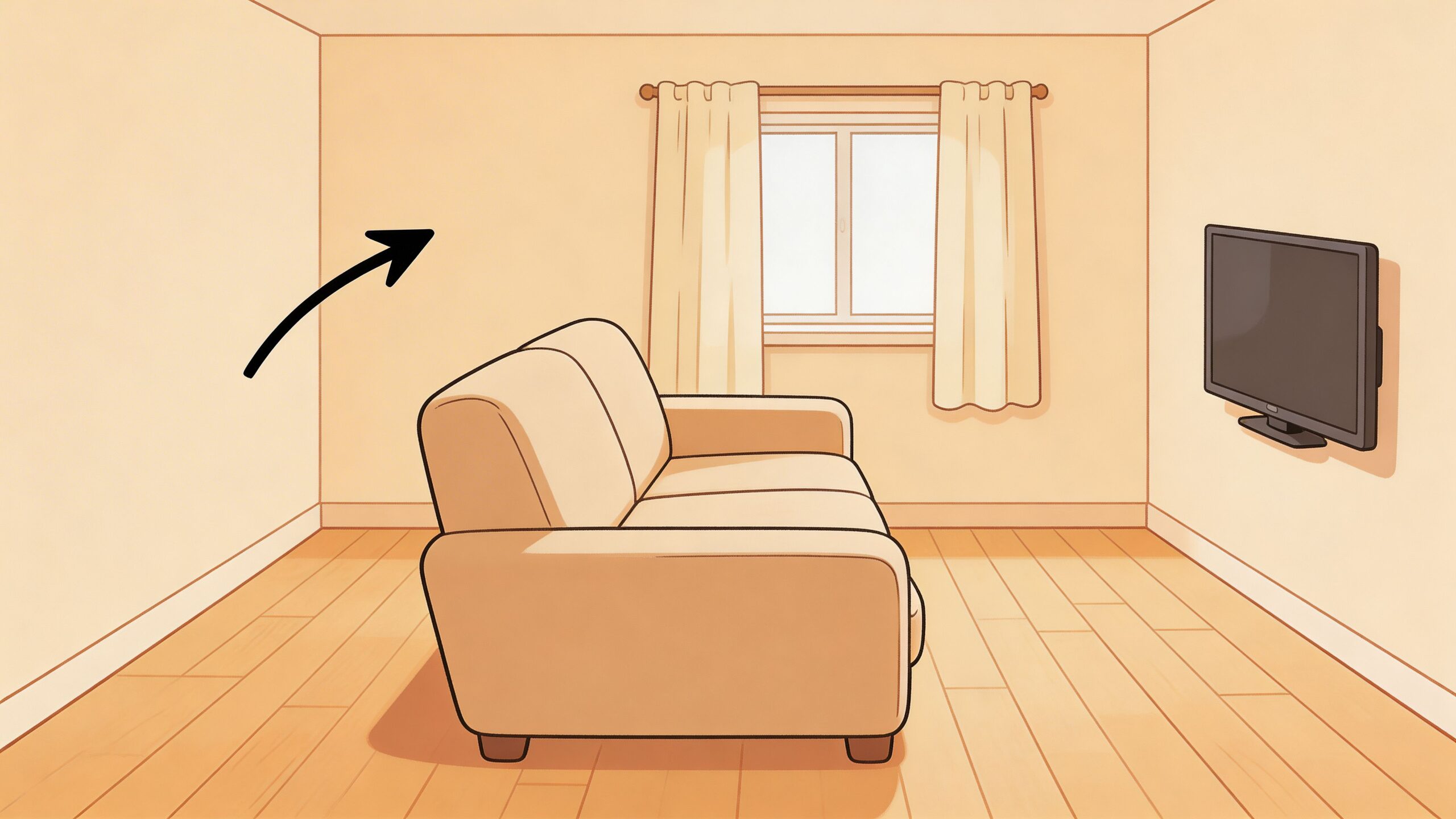
A lot of living rooms weren't designed around today's entertainment setups. You might have a fireplace on one wall, windows on another, and traffic flowing right through the middle. That leaves the TV competing with everything else.
In homes like that, a corner media console often feels less like a compromise and more like the missing piece. It turns an underused angle into a purposeful zone for watching shows, streaming movies, or letting the kids play games without the television taking over the entire room.
Why this layout works so well
A corner setup changes the flow of the room in a subtle way. Instead of forcing all your furniture to line up on one long wall, it lets you angle the entertainment area into a spot that's often hard to use for anything else.
That matters because home entertainment is still a central part of how families use their living spaces. The entertainment center and TV console market is projected to reach USD 5,573.2 million by 2033, and 92% of households own at least one TV in North America, according to this entertainment center market projection.
A familiar example from real homes
We often see a setup like this in older and newer NWI homes alike:
- The window wall is too valuable to block with a large standard console.
- The longest wall is already spoken for by a sofa, fireplace, or walkway.
- The corner collects cords and clutter because no existing piece fits correctly.
A corner media console can clean up all three issues at once.
A good corner setup doesn't just hold a TV. It gives the room a clearer purpose.
If you're planning the whole room around a TV zone, it also helps to look at broader home theatre room design ideas so your console, seating, and viewing angles work together. And if you're still sorting out the rest of the room, this guide on arranging living room furniture is a helpful next step.
Why a Corner Console is the Smart Choice for Your Space
Some furniture solves a storage problem. A corner media console solves a layout problem.
That's the main reason people end up happier with one than they expected. It doesn't just squeeze into a corner. It makes the whole room feel more deliberate.
It uses space that usually goes unused
Corners often become dead zones. You can't always fit a chair there, and a regular TV stand can leave a strange gap behind it. A corner unit uses that geometry instead of fighting it.
That can make a room feel more open because the furniture isn't pushing as far into your main walking path. In smaller family rooms or mixed-use spaces, that difference is easy to feel.
It creates a focal point without overwhelming the room
A long rectangular console tends to claim a wall. Sometimes that's exactly what you want. Other times, it can make the television look like the only thing in the room.
A corner media console can feel softer. The eye reads it as part of the room's shape instead of one more large block of furniture.
Here's a simple comparison:
| Room concern | Standard console | Corner media console |
|---|---|---|
| Awkward corner | Often leaves it unused | Puts it to work |
| Traffic flow | Can project farther into room | Usually tucks in more neatly |
| Visual balance | Strong wall-dominant look | More integrated feel |
| Multi-use rooms | Can limit seating options | Often improves flexibility |
It has a long history for a reason
This furniture style didn't appear by accident. The rise of home entertainment created a real need for compact TV furniture. The Atari 2600, released in 1977, sold 30 million units, helping drive demand for furniture that could hold bulky TVs and game systems in living rooms, as noted in this history of the corner media console's evolution.
That history still matters today. The screens are flatter now, but families still want the same things: better use of space, organized storage, and a setup that doesn't dominate the room.
Practical rule: If your TV area feels cramped with a standard stand, the issue often isn't the room size. It's the shape of the furniture.
Measuring for a Perfect Fit Sizing Your TV and Room
Many mistakes occur here. People measure the front width of the console, glance at their TV size, and assume they're done.
A corner media console needs a little more care because its shape interacts with two walls, not one. If you skip that step, you can end up with a piece that technically fits but doesn't install cleanly.
Start with the corner itself
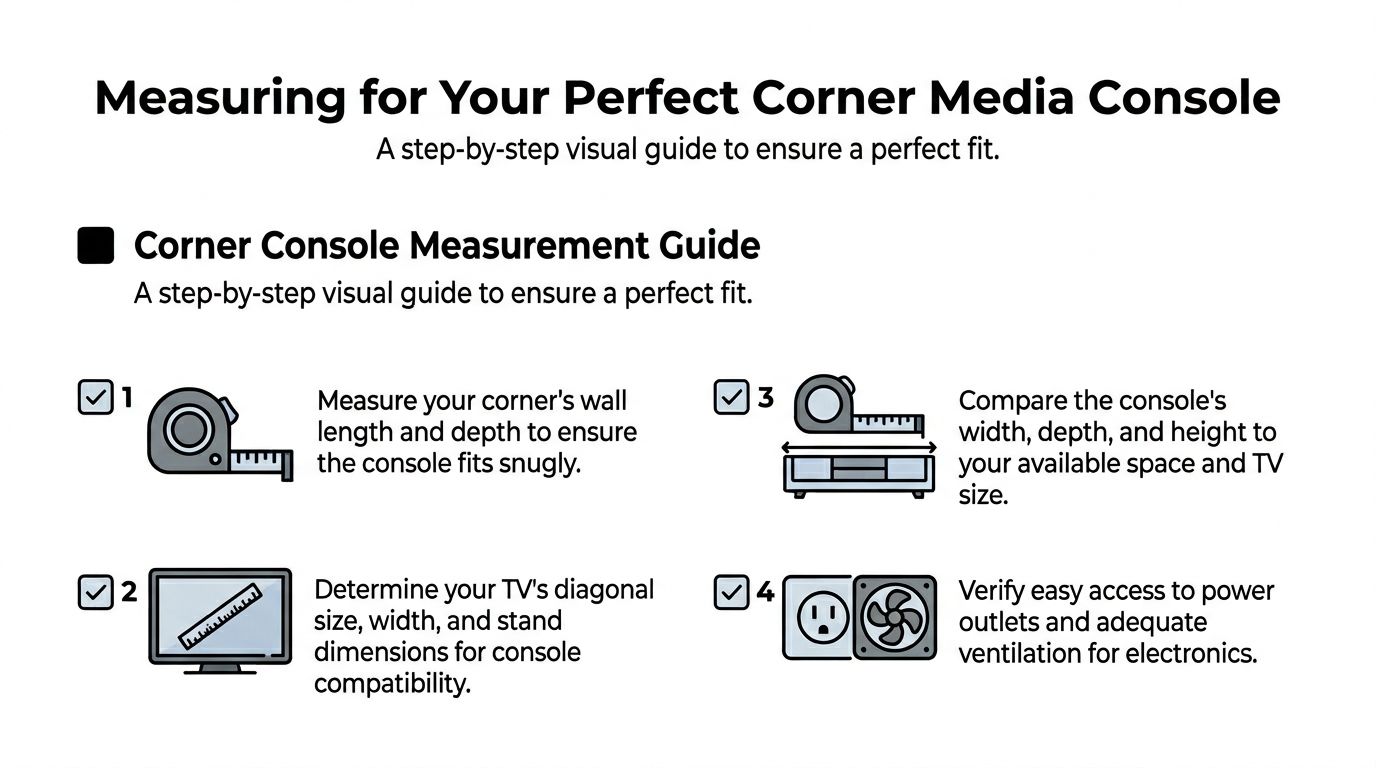
Measure from the corner outward along each wall. Don't just measure the open area in front.
A typical corner unit for a 55-inch TV might require 29 inches of wall space along each wall from the corner apex, and installers should allow an extra 2 to 4 inches for cables and wall irregularities, based on this corner TV stand measurement example.
That extra clearance often trips people up. Baseboards, outlets, and walls that aren't perfectly square can all affect the final fit.
Measure more than the TV's diagonal
Many shoppers know their screen size, but not the TV's width or the size of its stand. Those details matter.
Use this checklist:
- Measure the TV's diagonal size so you know the general category.
- Measure the TV's full width from left edge to right edge.
- Measure the base or feet if the TV will sit on the console rather than mount above it.
- Check the depth of the TV base so it fits safely on the top surface.
A console can be rated for a certain TV size, but that doesn't always mean every model in that size range will sit the same way.
Check the room around the console
Don't stop at the furniture footprint. Think about how the piece will function once it's in place.
A few things to look at:
- Outlet access: Can you still reach power without crushing cords behind the cabinet?
- Door and drawer swing: Will anything hit a wall, trim, or nearby chair?
- Ventilation: Do your components have enough breathing room?
- Walking space: Can people move comfortably past the console?
Measure the room as people use it, not as it looks when it's empty.
Older homes need extra care
Many Northwest Indiana homes have small quirks that make showroom measurements only part of the story. Walls may be slightly out of square. Trim may be thicker than expected. Flooring transitions can affect leveling.
That's one reason a measuring plan helps so much. If you'd like a more complete room-by-room method, this guide on how to measure furniture is a useful reference.
A quick fit check table
| What to measure | Why it matters |
|---|---|
| Wall length from the corner | Confirms the unit can sit properly on both walls |
| Depth from the corner area | Prevents the console from protruding too far |
| TV width and stand size | Ensures safe support and visual balance |
| Cable and outlet clearance | Helps avoid pinched cords and awkward installation |
| Nearby traffic path | Keeps the room comfortable to live in |
If you're ever between two sizes, it's usually better to pause and verify. With corner furniture, "close enough" often isn't close enough.
Choosing Your Style Materials and Finishes That Last
Once the measurements are right, the next question is quality. Two consoles can look similar online but perform very differently in a home after a few years.
The biggest difference usually comes down to materials.
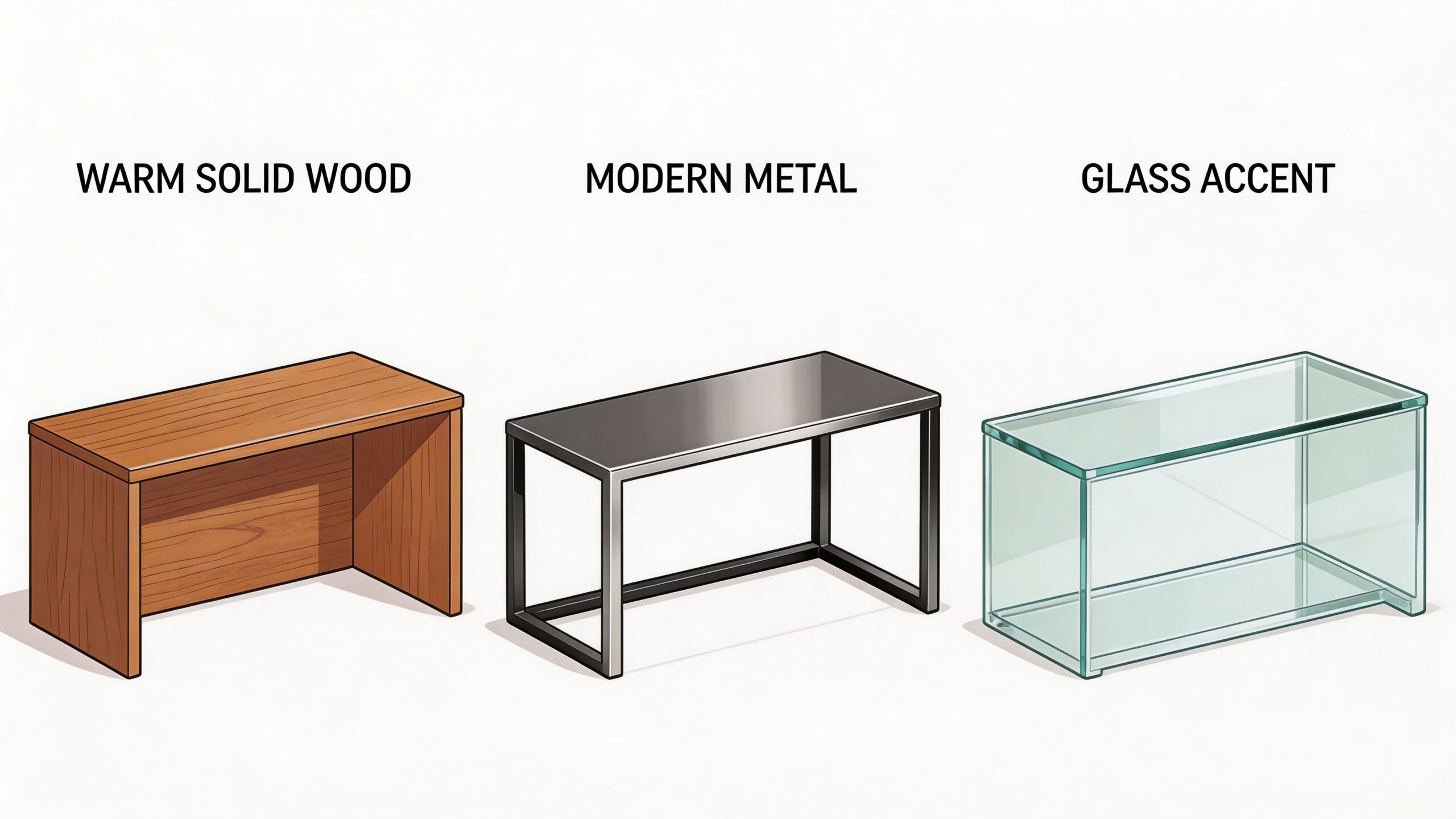
Solid wood versus lighter-built alternatives
A solid wood corner media console has a different feel from the start. The doors tend to hang better, shelves feel steadier, and the piece usually has more visual warmth.
Engineered materials can work in some homes and budgets, but they don't age the same way. If you're after a piece that feels substantial and keeps its character over time, solid wood is hard to beat.
For many families, that matters more in a media console than they first expect. This isn't a throwaway accent table. It's a daily-use piece that holds electronics, hides clutter, and often sits at the center of the room.
Wood species change the look
Different hardwoods create different moods.
- Oak has visible grain and a grounded, traditional feel.
- Maple tends to look cleaner and smoother, which works well in transitional spaces.
- Cherry often brings a richer, more classic tone that deepens beautifully over time.
The finish matters just as much. A lighter stain can keep a corner setup airy. A deeper finish can anchor a room with leather seating, darker flooring, or more formal architecture.
Style should match the room, not fight it
A corner media console can lean traditional, transitional, or modern. The right choice depends on what else is already in the room.
If your living room includes softer silhouettes and well-fitted upholstery, a piece with framed doors and warm wood tones often blends naturally. If your style is cleaner, glass accents, simpler hardware, and straighter lines may fit better.
The best console doesn't steal attention from the room. It makes everything around it feel more settled.
For a deeper look at how hardwood choice affects both appearance and durability, this guide on choosing the right hardwood for longevity and style is worth reading.
Key Features for Modern Entertainment
A nice-looking console isn't enough if it makes electronics harder to use. Modern entertainment furniture needs to work behind the doors as well as it does from the front.
That's why the details matter. Cable access, shelf layout, airflow, and sound performance all affect daily life.
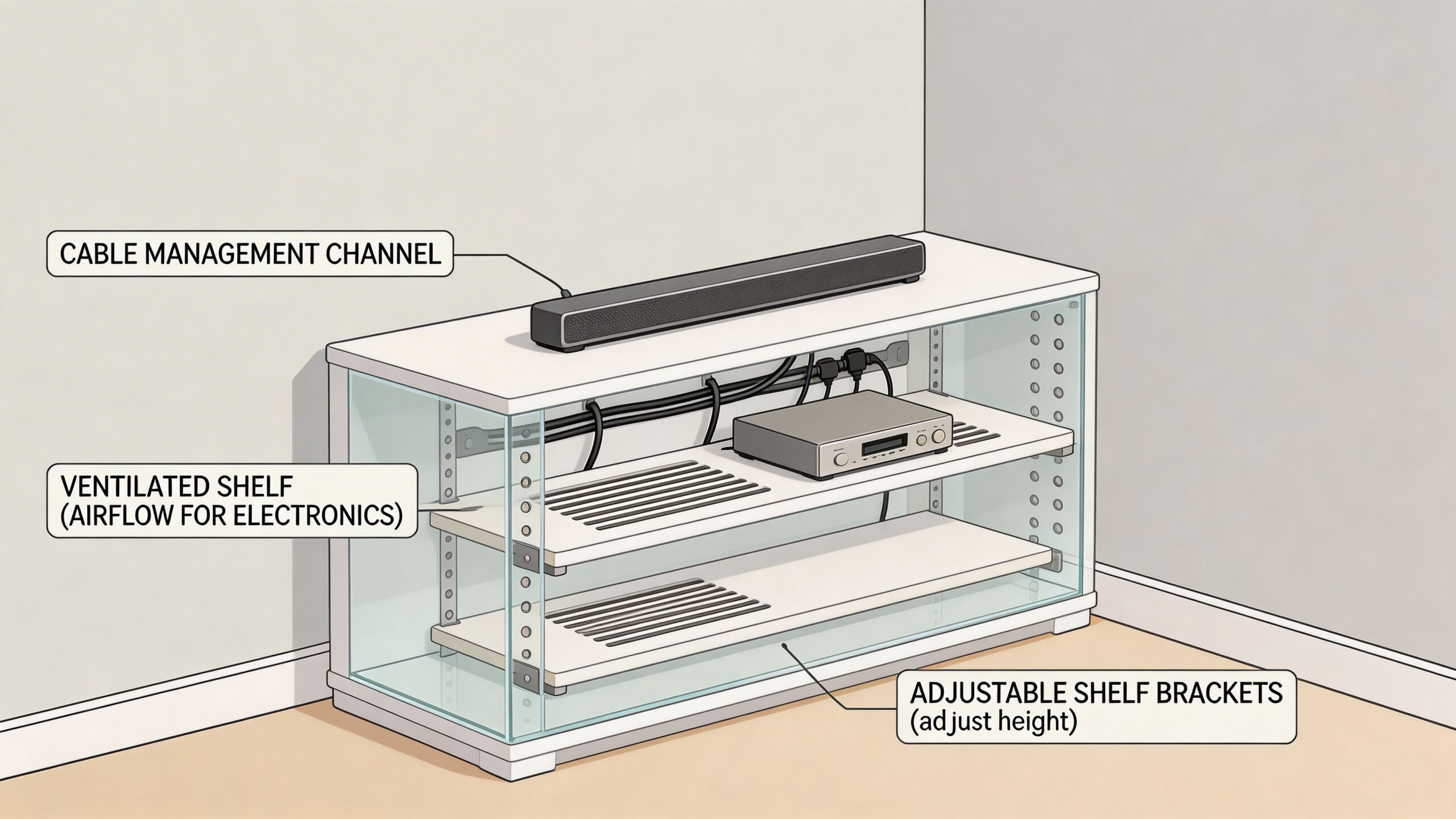
The features worth checking first
Some of the most useful features aren't flashy. They're the ones that keep the setup tidy and easy to live with.
- Cable management openings: These help route cords cleanly so you don't get a knot of wires behind the unit.
- Ventilated compartments: Streaming boxes, receivers, and game systems all need airflow.
- Flexible shelving: Adjustable shelves let you fit a soundbar, console, or larger component without forcing a workaround.
- Closed storage: Doors reduce visual clutter and keep accessories from piling up in the open.
If you use multiple devices, think through where each one will live before you buy. It saves frustration later.
Corner placement affects sound more than many realize
This is the part many guides skip. The corner itself changes how audio behaves.
The solid wood cabinetry of heirloom-quality Amish corner consoles provides 3 to 6 dB of additional acoustic damping compared to engineered materials, reducing cabinet resonance and improving audio fidelity from soundbars and speakers, according to this overview of corner console acoustic performance.
That means materials don't just affect appearance. They can influence what you hear.
How to think about soundbar placement
If you're adding a soundbar, center it as carefully as you center the TV. In a corner cabinet, that midpoint matters because the walls around the unit influence how sound reflects into the room.
A few practical habits help:
- Keep the soundbar unobstructed by decor or a thick front rail.
- Avoid overstuffing the cabinet with components that block airflow and crowd speaker space.
- Test the sound from your main seat before finalizing where each device sits.
Good media furniture should reduce clutter, protect electronics, and supports the way sound behaves in the room.
If your entertainment setup may include larger display options beyond a standard television, it can also help to look at examples of modern home theater projectors so you can plan shelf space, cord routing, and viewing layout with more flexibility.
Design It Your Way Custom Orders and Financing at Groen's
Sometimes the right corner media console is easy to find. Sometimes you find one that's almost right. The width works, but the finish doesn't. Or the style feels right, but the height isn't ideal for your room.
That's where custom order becomes valuable. It lets you stop compromising.
Bespoke beats close enough
With custom furniture, you can focus on the details that change how the piece lives in your home:
- Wood species that matches your existing tables, trim, or flooring
- Finish color that works with your room's light
- Hardware choices that push the look more traditional or more clean-lined
- Storage configuration based on what you use
For families who want a lasting piece, Amish solid wood is especially appealing because it combines craftsmanship with personal choice. Instead of adjusting your room to fit a mass-market unit, you can design it your way.
Custom order is a long-term value decision
A made-to-order console often makes more sense than replacing an imperfect piece a few years later. If the room has unusual dimensions, or if you want a specific mix of open shelving and concealed storage, a bespoke approach can prevent buyer's regret.
This is especially true in homes where the entertainment area is one of the main gathering spots. The more often a piece is used, the more its details matter.
If you're curious about the process, this overview on getting started with custom order explains how to narrow choices without feeling overwhelmed.
Financing can make better furniture more reachable
Quality furniture is an investment. Many families want solid wood, better craftsmanship, and a design they'll still love years from now, but they also want that purchase to fit their budget.
Special Financing, subject to credit approval, can create buying power. It gives homeowners a way to choose the right piece instead of settling too quickly for the nearest option.
For a family-owned business serving Dyer, Crown Point, and the surrounding NWI communities since 1983, that combination matters. Bespoke options and flexible payment tools make it easier to bring home furniture that feels personal, lasting, and honest.
Styling Your Console for Comfort and Ergonomic Viewing
The console itself is only part of the setup. The TV height, speaker placement, and safety details all shape how comfortable the room feels once you're using it.
A beautiful corner media console should support the way your family watches, listens, and moves through the room.
Set the screen at a comfortable height
One common mistake is pairing a large TV with a very low stand. Low-profile media stands can force viewers into upward gazing angles of 15 to 25 degrees, which can contribute to neck strain, according to this corner low TV stand reference.
Custom-height Amish corner units can also offer a significantly lower tip-over risk compared to mass-market options, which matters for families with children in the home.
Make safety part of the plan
If you have kids or grandkids visiting often, stability matters just as much as style.
Consider these basics:
- Use anti-tip protection when available.
- Keep heavier electronics low in the cabinet rather than on top.
- Avoid top-heavy decor that can be pulled down easily.
A more substantial piece often brings peace of mind because it feels planted, not flimsy.
Keep styling simple and balanced
The corner already gives the room shape. You don't need to overdecorate it.
Try a restrained approach:
- One small lamp or vase if the surface has room
- A stack of books or a low tray to soften the top without blocking the screen
- Artwork or a plant nearby to connect the corner to the rest of the room
The goal is comfort, not crowding. When the console, TV, and seating all work together, the room feels easier to enjoy.
Find Your Family’s Next Heirloom in Dyer or Crown Point
A great corner media console does several jobs at once. It solves a layout issue, supports your electronics, and helps the room feel finished instead of patched together.
When you combine careful measurements, lasting materials, and a style that fits your home, this piece can become more than a TV stand. It can become part of the way your family lives every day. If you're looking for solid wood craftsmanship and custom possibilities nearby, this guide to finding Amish furniture in Northwest Indiana is a helpful place to continue.
Visit Groen's Fine Furniture in Dyer or Crown Point today to explore our custom options and ask about our special financing plans. Let our family help you create a home you love.