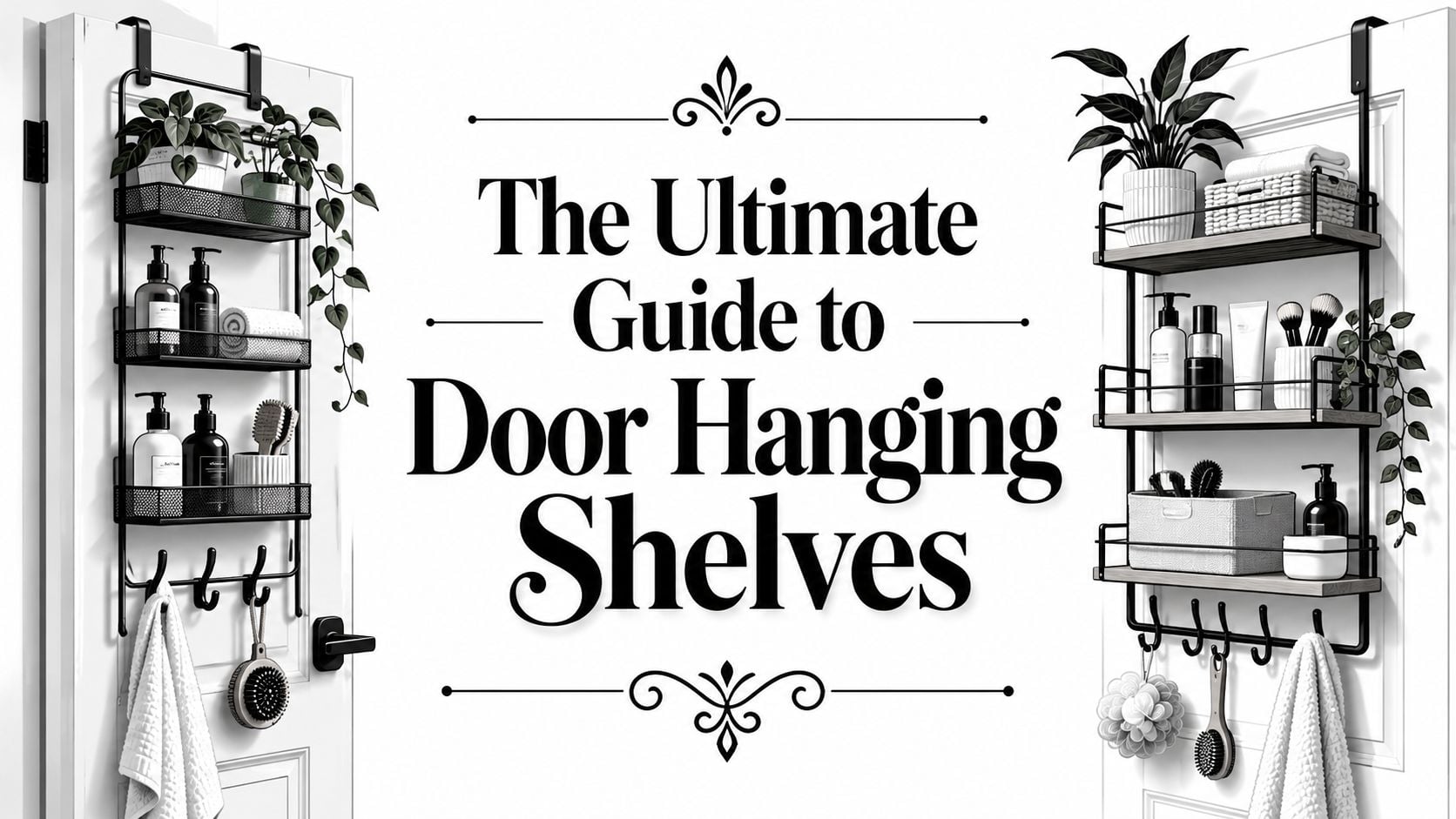
The Ultimate Guide to Door Hanging Shelves

A lot of homeowners in Northwest Indiana hit the same point at about the same time. The pantry starts overflowing, the bathroom cabinet turns into a pile, and the back of a bedroom or laundry door starts looking like wasted space.
That's where door hanging shelves come in. They're one of the simplest ways to claim storage that was always there but never really used. For many homes in Dyer, Crown Point, St. John, Schererville, and Munster, that can mean the difference between daily clutter and a room that feels easier to live in.
This guide takes an honest look at what door hanging shelves do well, where they fall short, and when a quick fix should stay a quick fix.
Table of Contents
- Unlocking Hidden Space in Your Northwest Indiana Home
- Understanding Over the Door Storage Solutions
- Choosing the Right Door Hanging Shelf for Your Needs
- A Practical Guide to Installation and Safety
- Room by Room Styling and Organization Ideas
- When to Consider Custom and Permanent Storage
- Creating a Home in NWI That Works for You
Unlocking Hidden Space in Your Northwest Indiana Home
In a lot of local homes, storage problems don't start with a lack of square footage. They start with small daily habits. Extra spices collect in the pantry. Hair tools crowd the vanity. Cleaning supplies migrate from one closet to another until no one can find the glass cleaner.
Door hanging shelves work because they use a surface that usually sits empty. The back of a pantry door, linen closet door, laundry door, or bedroom closet door becomes useful vertical storage without taking up floor space. That makes them especially appealing in homes where every cabinet shelf already has a job.
A family trying to organize a narrow pantry often doesn't need a full remodel right away. They may just need a place for wraps, snacks, oils, or small boxed goods. A busy bathroom may need a home for daily toiletries so the sink stays clear. A spare bedroom closet may need a better spot for accessories or folded items that don't belong in a dresser.
Practical rule: If the room feels crowded but the door swings freely and the doorway area is unused, that door may be the cleanest place to add storage.
That said, a door organizer isn't magic. It's best seen as a smart, space-saving tool, not an answer to every storage problem. Some homes benefit from this quick improvement right away, while others need a more thoughtful plan. Homeowners looking for more ideas beyond the back of the door can also explore these best storage solutions for small spaces.
Understanding Over the Door Storage Solutions
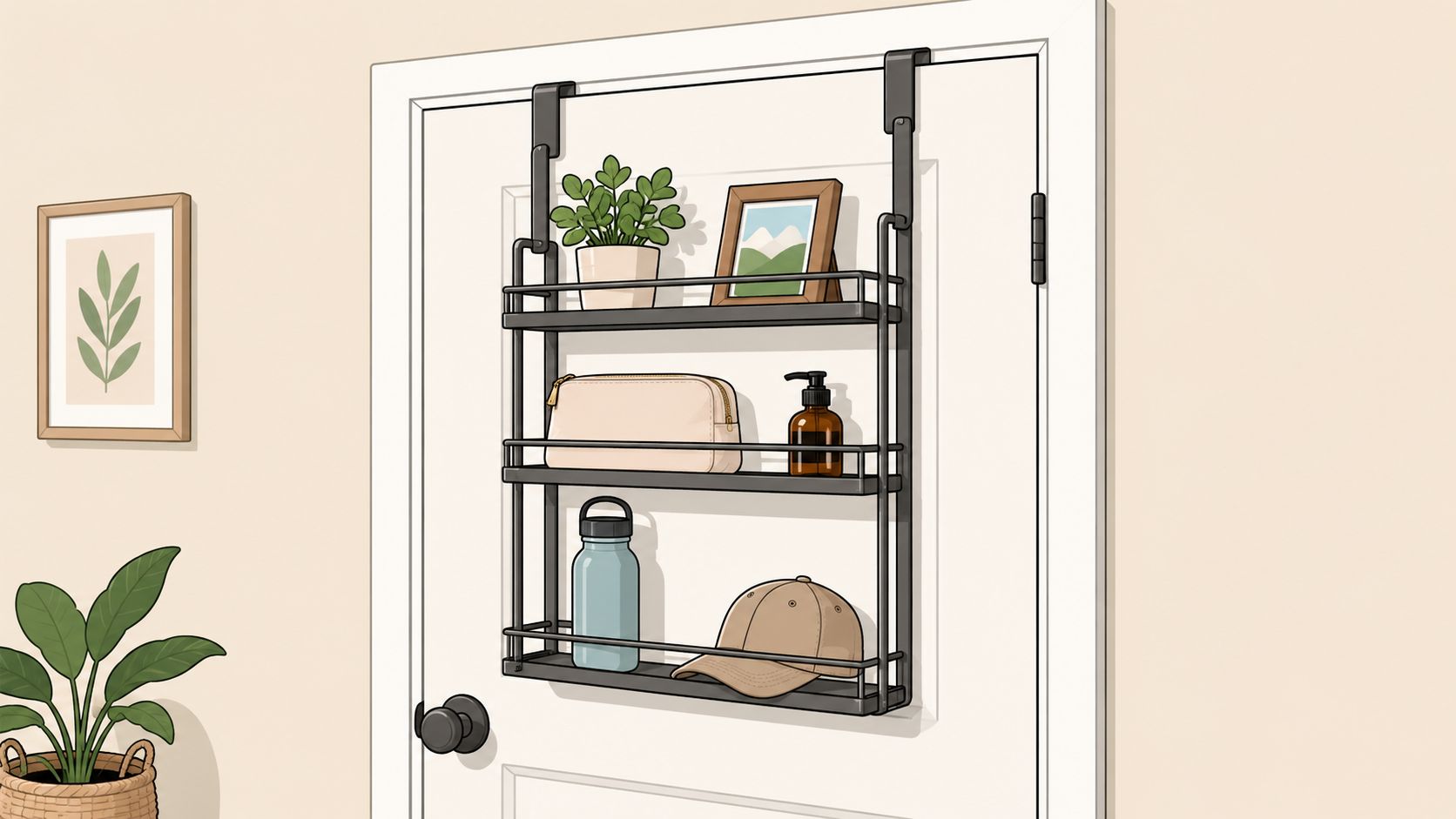
A door hanging shelf is exactly what it sounds like. It hangs over the top of a door and uses that vertical surface to hold baskets, shelves, pockets, or hooks. The appeal is simple. No floor space gets sacrificed, and many models don't require permanent wall mounting.
Why this storage idea caught on
This style didn't appear out of nowhere. The modern door hanging shelf belongs to a longer story of space-saving storage. A brief history of floating shelves and open shelving notes that iconic systems such as Dieter Rams's 1960 modular wall system and the first floating shelves of the 1970s helped shape the clean, discreet storage styles people expect today.
That history matters because it explains the design goal. People have long wanted storage to feel lighter, less bulky, and less intrusive. Door hanging shelves bring that same idea into everyday rooms by using “found” vertical space.
Some homeowners eventually realize that a better pantry layout would solve more than any organizer can. For readers thinking along those lines, this look at expert pantry design for Vancouver homes is useful because it shows how storage works best when it's planned around real household routines, not just added after the fact.
The main types homeowners see most often
Not all door hanging shelves behave the same way. The most common versions fall into a few broad groups:
- Multi-tier metal racks hold pantry goods, cleaning supplies, or bottles. These are the most shelf-like option.
- Fabric pocket organizers work well for lightweight items such as accessories, toiletries, or kids' supplies.
- Slim basket systems split the difference. They offer visibility and airflow while staying fairly shallow.
- Hook-and-shelf combinations are better for mixed use, such as towels below and small items above.
The right format depends on the room and the objects. A pantry usually benefits from rigid shelves or wire baskets. A closet door may do better with soft pockets. A child's room may need lighter, forgiving materials.
Readers trying to organize tight sleeping spaces may also find ideas in these clothes storage solutions for small bedrooms, especially when closet space is doing double duty.
Choosing the Right Door Hanging Shelf for Your Needs
Most problems with door hanging shelves happen before the first item ever gets loaded. The shelf is too deep, the hooks are too tight, or the material doesn't match the room. Choosing well starts with fit, then moves to material, then ends with weight planning.
Start with the door, not the organizer
The most important measurement isn't shelf width. It's clearance.
One over-the-door pantry organizer specifies a door gap greater than 0.06 inches and says the shelf body should sit at least 7.1 inches away from the door to hang safely, according to this 6-tier over-the-door pantry organizer product guidance. That detail explains why some organizers scrape, rattle, or stop the door from closing properly.
A careful fit check should include:
- Top gap check so the hook can sit over the door without binding.
- Side and jamb clearance so the door still closes smoothly.
- Interior depth so stored items don't hit nearby shelving or walls.
- Trim and weatherstripping check because decorative trim and tighter seals can create interference.
Measure the door in its real working position, not just the slab by itself. A shelf that fits on paper can still fail once the door swings and closes.
Adjustable basket spacing also helps. Taller items can use fewer shelf positions, and that often makes the organizer easier to live with day to day.
Material changes how the shelf behaves
Material affects more than appearance. It changes rigidity, noise level, lifespan, and what the organizer can reasonably hold.
| Material | Best For | Pros | Cons |
|---|---|---|---|
| Steel | Pantry items, cleaning supplies, heavier daily use | Rigid, durable, usually more stable | Can feel noisy against the door if poorly fitted |
| Fabric | Closets, kids' items, accessories | Lightweight, soft, forgiving | Less structure, not ideal for dense items |
| Wire mesh | Toiletries, pantry overflow, visible storage | Good visibility, airflow, easy to wipe down | Small items may tip or shift |
| Mixed material systems | Light household overflow in flexible spaces | Versatile, can balance function and appearance | Performance varies widely by construction |
A pantry door that opens several times a day usually benefits from a sturdier frame. A guest room closet may be perfectly fine with something softer and lighter. Households also need to think about how often the door gets bumped, slammed, or opened by children.
For shoppers comparing short-term add-ons with more flexible furniture, these ideas on how to choose multi-functional furniture for modern homes can help frame the bigger decision.
Weight belongs low and balanced
A door shelf doesn't carry weight the same way a floor cabinet does. Everything hangs from the hooks and top rail, which means balance matters as much as total capacity.
A heavier-duty steel model can advertise up to 60 pounds total capacity, or about 10 pounds per shelf, based on this over-the-door organizer product listing. Even with that capacity, the safer habit is to place canned goods, jars, and other dense items low and lighter items high.
A useful sorting approach looks like this:
- Bottom tiers for cans, jars, extra bottles, or bulkier packaged items.
- Middle tiers for sauces, snacks, rolls, or backup toiletries.
- Top tiers for boxed goods, paper products, or items used less often.
That layout reduces sway and puts less stress on the hanging point. It also makes the whole unit feel steadier every time the door moves.
A Practical Guide to Installation and Safety
A well-chosen organizer can still become annoying if it's assembled loosely or loaded carelessly. Most frustration shows up as wobble, rubbing, or a door that suddenly sounds louder than it used to.
Build stability before loading anything
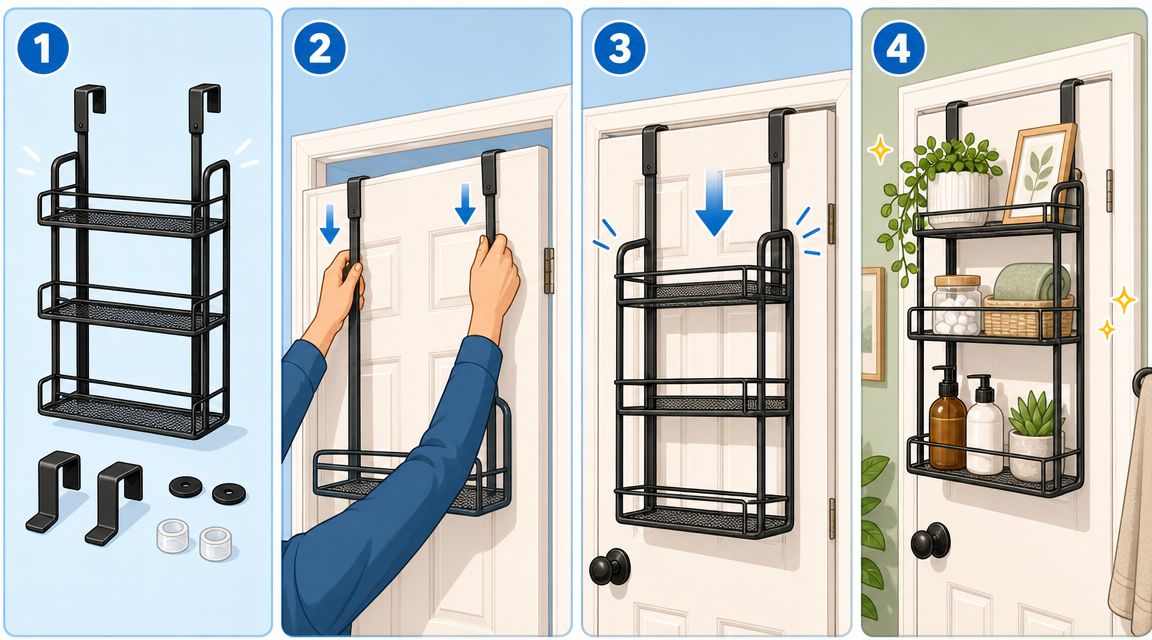
Many multi-tier racks use hooks, connector rails, fasteners, and locking hardware to reduce side-to-side movement. Assembly guidance for these systems shows that the frame depends on those parts working together, not just on the top hooks alone. Skipping a tightening step often creates the wobble people blame on the product.
A good installation routine is usually simple:
- Assemble on the floor first so all rails and baskets line up before hanging.
- Tighten evenly rather than fully locking one side and then the other.
- Hang and test the door empty before adding any items.
- Open and close slowly to check for rubbing, scraping, or shifting.
If the organizer moves too much while the door swings, the frame may need re-tightening or the shelf spacing may need to be adjusted.
How to protect the door during everyday use
One common worry is whether a shelf will damage the door. That concern is fair. Retail guidance around door organizers often points to a basic tradeoff. These systems save space, but they can interfere with door function in tight-clearance situations. A closer look at door organizer storage options can also help homeowners compare hanging storage with more stable wall-based approaches.
A second issue is hinge stress. As noted earlier, some heavy-duty steel units are rated for up to 60 pounds total, but the better practice is still to keep the heaviest items low so the center of mass stays stable.
A door should still feel like a door after the organizer is installed. If it drags, bangs, or needs extra force, something needs to be corrected before regular use.
A few simple habits help:
- Use felt or protective pads where metal might touch painted surfaces.
- Keep dense goods on lower levels instead of clustering them near the top.
- Avoid overstuffing baskets so items don't protrude into the closing path.
- Recheck hardware periodically because repeated motion can loosen connections over time.
Room by Room Styling and Organization Ideas
Door hanging shelves shine when they're matched to the right room. The same unit that works nicely in a pantry may feel awkward in a humid bathroom or a hard-working family laundry room.
Pantry and kitchen doors
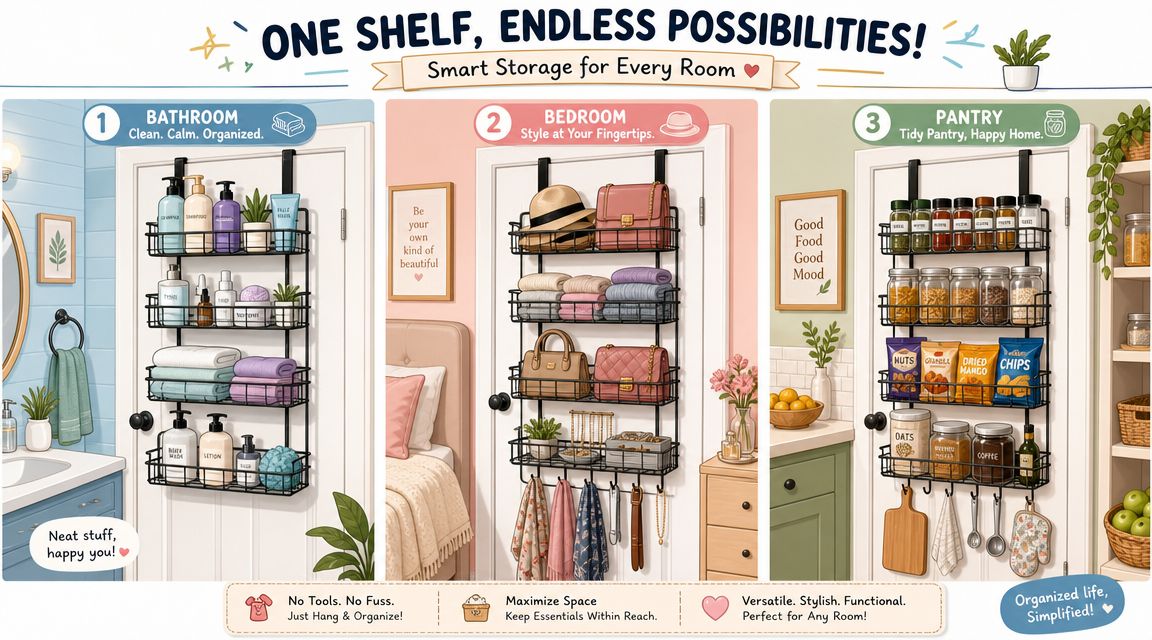
This is the most obvious use, and often the most successful. Pantry doors are natural homes for spices, wraps, packets, snacks, oils, and backup dry goods. A shallow organizer keeps those items visible so they don't disappear behind deeper shelves.
A helpful pantry habit is to group by use, not by package type. Breakfast items together. Lunchbox items together. Baking items together. That keeps the door from turning into random overflow.
For readers who enjoy thinking about vertical display and tidy tiered arrangements beyond pantry storage, this article on a metal plant stand 3 tier offers useful visual ideas about balancing height, access, and presentation.
Pro tip: Clear containers or labels make a big difference on door shelves because items sit at eye level and visual clutter builds fast.
Bathroom and laundry spaces
Bathrooms tempt people to overuse door organizers. They seem perfect for hair products, extra soap, lotions, and cleaning supplies. Sometimes they are. But room conditions matter.
Guidance on back-of-door organizing notes that effectiveness varies by room, and in high-moisture spaces like bathrooms or in high-use family areas, material and construction are critical for longevity, as discussed in this back-of-door organizer guidance. In plain terms, a shelf that feels fine in a dry hallway closet may age faster in a steamy bathroom.
A laundry room presents a different issue. Doors there often get opened with full hands, bumped by baskets, or used as working pass-throughs. Lightweight products and securely attached baskets tend to hold up better under those conditions than loosely fitted racks.
In wet or busy rooms, durability comes from the right material and a calmer load, not from trying to cram in more items.
Pro tip: Reserve these shelves for backup toiletries, washcloths, and light supplies. Daily heavy bottles are often better on anchored shelving.
Bedroom closets and home office doors
Closet doors are useful because they can hold items that don't need drawer-depth storage. Shoes, scarves, belts, small bags, folded accessories, and hobby supplies all fit well here. A soft or mixed-material organizer often feels quieter in these spaces.
A home office door can also help control small clutter. Stationery, chargers, notebooks, envelopes, and light craft materials are good candidates. The best setups avoid deep baskets that make the door harder to close or visually bulky.
Living spaces can benefit too, especially when hidden storage matters. Readers looking for more polished everyday organization can browse ideas for storage for the living room, where furniture-based options often create a calmer look than visible over-door storage.
Pro tip: In closets, leave one section intentionally empty at first. Most households discover they need a little flexible room once the organizer goes into daily use.
When to Consider Custom and Permanent Storage
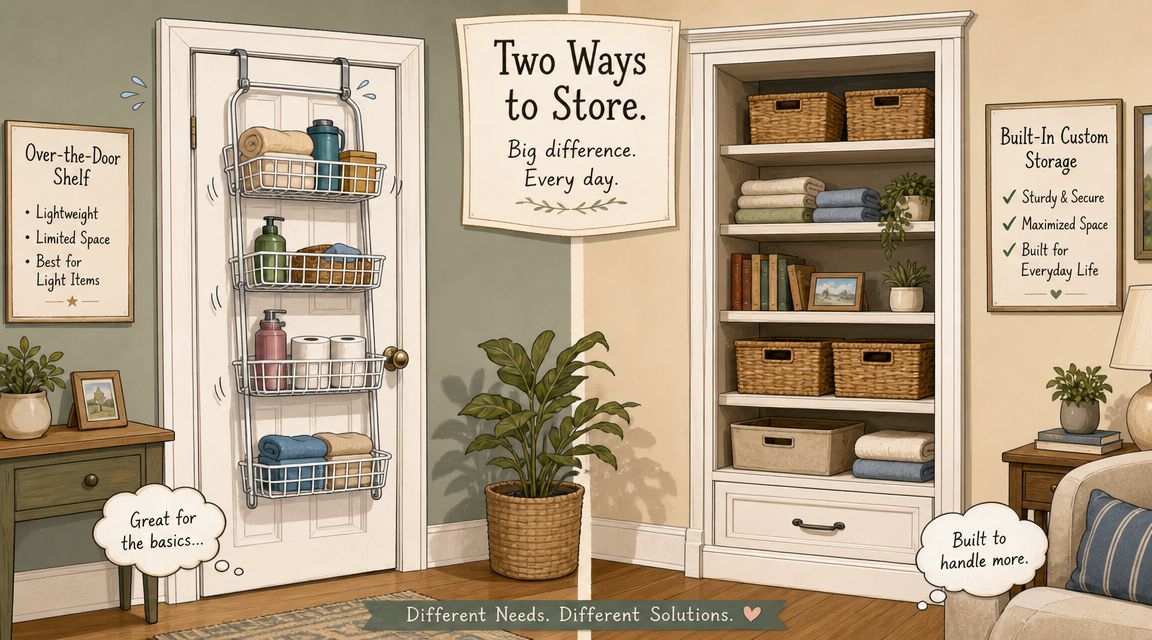
Door hanging shelves are useful, but they also have clear limits. They depend on door clearance. They carry weight through hooks instead of a grounded base. They usually come in standardized sizes that may not match the room or the household's long-term habits.
When a temporary fix is the right choice
A door organizer makes sense when the goal is speed, flexibility, or a light-duty solution. It's a smart fit for renters, guest rooms, seasonal overflow, or homes that need a quick improvement without a larger project.
It also works when the items themselves are temporary. Extra school supplies, travel toiletries, gift wrap, backup snacks, or cleaning cloths don't always need dedicated furniture. In those cases, door storage keeps clutter off counters and floors with minimal commitment.
When it makes sense to move beyond the door
The tradeoff becomes clearer when storage is heavy, daily, or permanent. Many homeowners wonder whether door organizers will damage the door or stop it from closing properly. That practical concern highlights the larger issue that, for heavier or longer-term storage, anchored or freestanding furniture is often the more reliable choice, as reflected in this retail guidance on door organizers.
That's usually the moment to think bigger. A solid wood cabinet, a bookcase, a pantry piece, or a made-to-order storage solution can solve the root problem instead of borrowing space from a swinging door. Better furniture also adapts more gracefully to family life. It handles weight more confidently, creates cleaner sightlines, and often looks intentional instead of improvised.
For households ready to invest, customization is often what changes storage from “good enough” to “exactly right.” Design-it-your-way options, bespoke dimensions, and made-to-order solid wood pieces can fit awkward walls, specific routines, and changing needs. Special financing available, subject to credit approval, can also make a permanent upgrade feel more manageable when a family wants lasting value instead of another temporary fix.
Creating a Home in NWI That Works for You
The best thing about door hanging shelves is that they solve a very real problem with very little fuss. They can reclaim unused space, calm clutter, and make a small room feel more workable almost immediately.
Their limits matter just as much as their benefits. A door shelf is strongest when it's properly measured, lightly to moderately loaded, and used in the right room. When storage needs become heavier, more visible, or more permanent, the smarter move is often to step away from the door and choose furniture or built-in style solutions that are meant to carry that load for years.
That kind of thinking helps homeowners make better decisions across the whole house. The right question isn't only “Where can more stuff go?” It's also “What kind of storage will still make sense next year?” For anyone preparing a home for guests, a life transition, or even a future move, this guide on preparing your property is a helpful reminder that tidy, purposeful storage improves how a home lives and how it feels.
In Northwest Indiana, practical homes tend to be the ones that balance quick fixes with lasting choices. Door hanging shelves have their place. So do permanent pieces that are built around real family routines, real rooms, and real daily use.
Visit Groen's Fine Furniture in Dyer or Crown Point today to explore custom options and ask about special financing plans. With multigenerational ownership, 5-star service, and a long legacy serving Northwest Indiana since 1983, Groen's helps families design it their way with bespoke Canadel dining, Amish solid wood craftsmanship, and quality furniture made for lasting comfort. Let their family help create a home you love.