How to Anchor a Bookcase on Wall Securely: A Complete Guide

A heavy bookcase leaning against drywall is one of the most underestimated hazards in a home. Drywall alone holds almost nothing — a fully loaded bookcase can weigh hundreds of pounds depending on its size and contents, and if it tips, the damage is measured in injuries, not scuffed paint. The fix is the right anchor for the right wall, installed in the right sequence. This guide covers the exact hardware and steps to secure your unit safely, whether you're hitting a stud, drilling into hollow drywall, or fastening into brick.
From Empty Wall to a Beautiful Focal Point

For homeowners all over Northwest Indiana, from Dyer to Crown Point, placing a bookcase on wall space does more than fill a room — it creates a personal and functional focal point. But the absolute key to getting this project right is making sure the bookcase is safe, secure, and properly anchored. This isn't just about protecting your furniture; it's about protecting your family.
Our family at Groen's Fine Furniture has spent decades helping NWI neighbors select and place furniture that becomes a lasting part of their homes. We've seen firsthand how a well-placed bookcase can complete a living room in St. John or create the perfect cozy reading nook in a Schererville home office.
Why Securing a Bookcase is Non-Negotiable
The numbers back up what experience teaches. Furniture tip-over prevention became a documented consumer-safety priority in the United States after the U.S. Consumer Product Safety Commission reported 542 product-instability or tip-over fatalities involving televisions, furniture, and appliances between 2000 and 2017. The same CPSC analysis estimated that approximately 28,300 people were treated annually in hospital emergency departments for related injuries during 2015–2017. Although the statistics cover several product categories, shelving units and bookcases were specifically identified: among estimated furniture-only tip-over injuries (CPSC tip-over report).
The age distribution of tip-over victims shows why anchoring matters particularly in homes with young children. In a CPSC review covering 2000–2018, 459 reported tip-over-related deaths involved children aged 17 or younger, and 93 percent of those child fatalities involved children 5 years old or younger. The agency also estimated that an average of 11,000 children were treated in hospital emergency rooms each year during 2016–2018 for tip-over injuries, representing 41 percent of all reported tip-over injuries in that analysis. While many incidents involved televisions, the CPSC emphasized the risk across furniture categories (CPSC's Anchor It campaign).
If you have young children in the house, anchoring is not optional. Beyond safety, a secure installation has real perks:
- Longevity: Anchoring prevents the frame from sagging or warping under stress, extending the life of your furniture.
- Stability: It keeps books, photos, and decor from shifting or falling off due to bumps or vibration.
- Peace of Mind: Knowing your furniture is safely attached brings an invaluable sense of security for your whole family.
At Groen's, we believe furniture should bring comfort, not concern. Taking the extra time to secure your bookcase properly is the single most important step you can take to enjoy it for generations.
Whether you're working with a piece you already own or a custom, American-made design from our Amish craftsmen, the principles for a secure installation are the same. For more inspiration, see our guide on how to create a perfectly balanced accent wall.
How I Picked These Anchors & Methods
Any successful project starts with good preparation and the right anchor for your wall. These recommendations come from decades of installs across NWI homes, and we weigh three criteria every time:
- Weight capacity vs. wall type. A stud is always the first choice: wood screws driven 1.5 inches into a stud hold substantial weight. Toggle bolts in hollow drywall typically carry moderate loads depending on thickness and manufacturer specifications; sleeve anchors in brick handle heavy-duty applications. Match the rating to the loaded weight of the unit, not its empty weight.
- Stud vs. hollow core trade-offs. Hitting a stud costs nothing extra and is unmatched in strength. Toggle bolts trade lower capacity for flexibility of placement — fine for medium loads, never for a fully loaded solid oak bookcase.
- Failure consequences. We rank methods by how they fail. A stripped plastic anchor fails; a pulled-out toggle takes a chunk of drywall with it; a cracked brick from overtightening ruins the install entirely.
Our most instructive mistake: early on, someone used plastic anchors meant for picture frames on a solid oak bookcase. The anchors tore loose from the drywall under load — nothing serious happened, luckily, but it taught us to never let anyone leave our showroom without matching hardware to wall construction. That habit now runs through everything we sell, including pieces like the Company Time II Wall Clock, which weighs 14.4 lbs and measures 2.5 × 34 × 34 in.
Your Essential Toolkit
- Stud Finder: Your most important tool for drywall. A quality electronic model pinpoints the wooden studs — the strongest anchor points behind the wall.
- Tape Measure & Pencil: "Measure twice, drill once" is a mantra our family has sworn by for decades.
- Level: A 24-inch or longer level keeps your bookcase perfectly horizontal. Even a tiny tilt puts uneven stress on the mounting hardware.
- Drill with Assorted Bits: Bits for pilot holes into studs, plus a 1/2-inch bit for toggle-bolt clearance holes and masonry bits for brick.
Matching Hardware To Your Wall
Using the wrong anchor is a common pitfall. Always verify the load rating on your hardware packaging before starting.
Essential Tools and Hardware for Mounting Your Bookcase
Match the right tools and anchors to your wall type for a secure and professional installation.
| Tool or Material | Ideal Wall Type | A Pro Tip from Groen's |
|---|---|---|
| Wood Screws | Drywall with Studs | Make sure your screws are long enough to go at least 1.5 inches into the stud itself. |
| Toggle Bolts | Hollow Drywall (No Studs) | Drill a clearance hole large enough so the spring toggle can pass through fully. |
| Sleeve Anchors | Brick or Concrete Walls | Heavy-duty option for masonry; drill to the anchor's embedment depth, not deeper. |
If you're ever unsure, it's always better to choose an anchor rated for more weight than you think you need. Peace of mind is priceless.
For a deeper dive into securing cabinetry, which follows many of the same principles, this complete cabinet installation guide offers an excellent blueprint. The skills are transferable, just like learning how to get perfect alignment — see our own guide on the step-by-step process for hanging pictures perfectly.
How to Attach Bookcase to Wall: Step-by-Step
Here is the sequence our installers follow, regardless of wall type. Getting the order right matters as much as the hardware itself.
- Map the studs. Run the stud finder across the wall at the height where the mounting rail or bracket will sit, and mark stud centers with tape. Studs are typically 16 inches on center.
- Measure the bookcase, not just the wall. Note where the unit's top rail and rear cleat sit relative to its back panel, so your wall marks line up with the hardware holes, not the frame edges.
- Mark and level the anchor line. Draw a light pencil line at the mounting height and check it with your level before drilling anything.
- Drill pilot holes. For studs, drill a pilot hole slightly smaller than the screw shank. For a typical wood screw, a 1/8-inch pilot works in most softwood studs. Pilot holes prevent splitting and make driving easier.
- Drive the fasteners and set the unit. With a second person lifting, slide the bookcase over the screws or brackets, then snug everything down. Stop the moment it feels firm against the wall, overtightening strips the hole or cracks the wood.
- Test it. Push the top of the unit firmly toward the wall and sideways. Any wobble means a fastener isn't seated, so fix it before loading shelves.
Pro Tip: If a screw starts spinning freely in a stud, you've stripped the pilot hole. Don't keep cranking. Back it out, fill the hole with a wooden matchstick and wood glue or move to the adjacent stud, and redrill.
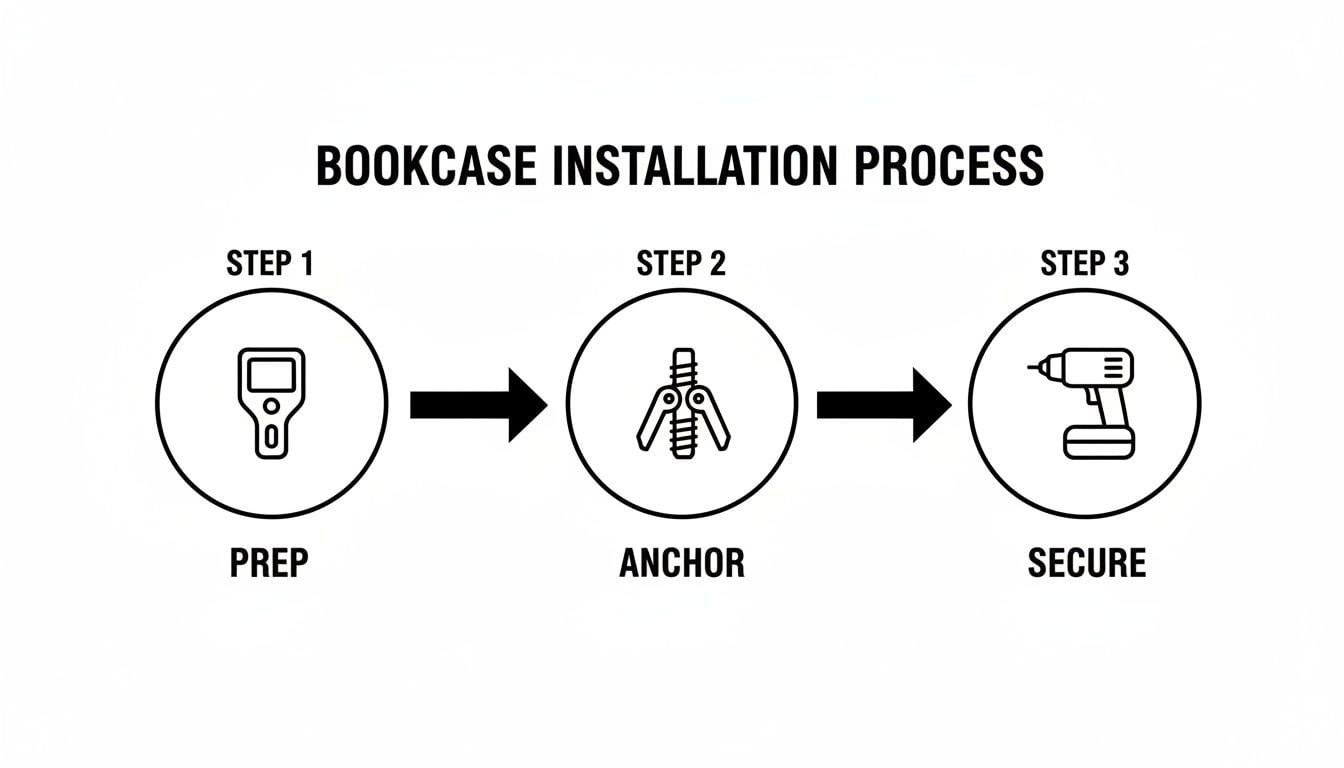
This simple infographic breaks down the core steps, from prep to the final screw.
How to Secure Your Bookcase to Any Wall Type
The technique changes depending on what's behind the paint. We'll walk through the three most common wall types you'll encounter.
Securing to Drywall with Studs
This is the best-case scenario for mounting anything heavy, especially a solid wood bookcase from brands like Bassett or our Amish craftsmen. Glide an electronic stud finder across the wall and mark the centers of the studs behind your bookcase, aiming to hit at least two of them. Drill a 1/8-inch pilot hole into the center of each stud — the center matters, because the edges crumble — then drive wood screws or lag screws through the unit's mounting rail. Screws must penetrate at least 1.5 inches into the stud itself; drywall thickness doesn't count as grip.
Pro Tip: If the stud finder gives inconsistent beeps, knock on the wall — solid thud means stud, hollow echo means no. Verify before drilling.
Anchoring in Hollow Drywall
If the perfect spot falls between studs, you need heavy-duty hollow wall anchors — never the plastic anchors meant for picture frames. For a toggle bolt, drill a clearance hole large enough for the spring toggle to fold and pass through completely (check your specific bolt's packaging for the required diameter). Pinch the toggle closed, push it through the hole until it springs open on the far side, pull gently to seat it against the back of the drywall, then tighten the bolt until the anchor is snug before attaching the bookcase.
Pro Tip: The most common failure point here is enlarging the hole after it's drilled — overtightening pulls the toggle's wings through, or the hole gets chewed wider and the anchor spins. Drill once, insert once, tighten slowly.
Toggle bolts hold moderate weight in standard drywall, depending on the manufacturer's rating. That's enough for a small floating bookcase, but a fully loaded tall unit should still land on studs.
Mounting on Brick or Masonry Walls
Older Crown Point homes and basements often have brick or block walls. You'll need a hammer drill and masonry bits. The two main hardware options behave differently: a sleeve anchor expands along its entire embedded length as you tighten the nut, giving an even, high-capacity grip in solid brick or concrete, while a lag shield is a soft-metal liner that the lag screw threads into, expanding it against the hole — easier to align and more forgiving, with somewhat lower capacity. Drill the hole to the specified diameter and embedment depth, blow out the dust, tap the anchor in, and tighten. For a clear walkthrough of the sleeve anchor method, XTREME EDEALS INC.'s guide to sleeve anchors for brick is worth a read before you start.
Pro Tip: If the drill bit wanders or the hole walls feel crumbly, you may have hit mortar rather than brick. Move the hole 2 inches over — mortar joints are weaker and anchors can pull free.
It's the same technique we recommend when you need to attach a headboard directly to the wall for maximum stability.
No matter what kind of wall you have, a careful, measured approach will ensure your bookcase is a safe and beautiful fixture for years. If you're looking to maximize space, you can also learn more about wall shelves for smart storage and other vertical solutions.
Styling Your Wall Bookcase for Function and Beauty

Now that your bookcase is securely anchored to the wall, it's time for the fun part—making it look fantastic. A well-styled bookcase is so much more than just a place to stash things; it's a canvas that tells your family's story and brings a layer of warmth and personality into the room.
You can get creative with your shelves. Our design team loves helping Northwest Indiana families curate displays that feel both personal and polished. With a little thought, an ordinary wall can become a beautiful focal point that makes a house feel like home.
Creating Visual Harmony on Your Shelves
The secret to a beautifully styled bookcase on wall displays isn't about cramming every inch with stuff. It's about creating thoughtful groupings that catch the eye and feel cohesive. A few simple principles are all you need to get it right.
A technique we always come back to is the "rule of three." There's just something about grouping items in odd numbers, especially threes, that looks more balanced and interesting. Try putting a small stack of books next to a framed photo and a unique vase—it creates an elegant little scene instantly.
Variation is also your best friend. Play around with:
- Varying Height: Place a tall, slender vase next to a short, squat bowl. This creates a more dynamic look and keeps the arrangement from feeling static or flat.
- Mixing Textures: Combine smooth ceramic pieces with a rough, woven basket or a soft, fabric-bound book. These little contrasts in texture add a ton of depth and character.
- Alternating Book Placement: Don't just line up your books like soldiers. Stack some horizontally to create little platforms for other decorative items. It adds a bit of architectural interest to the shelf.
"Your bookcase is a canvas for your life's treasures. Mix beloved books with family photos, travel souvenirs, and meaningful objects. This blend is what transforms a piece of furniture into a personal gallery that reflects who you are."
Weaving in Your Personal Style
Your bookcase should look and feel like you. Whether your home is minimalist and modern or cozy and eclectic, the items you choose to display will set the tone for the whole room. Use the colors from your book spines and decor to echo the room's color palette, which helps tie everything together beautifully.
If you're hunting for more ideas, our family put together a detailed guide on how to decorate shelves in any room that's packed with even more practical tips. By being thoughtful about what you display, you'll turn a functional piece of furniture into a meaningful part of your home.
Considering a Custom Bookcase Solution
Sometimes, a standard, off-the-shelf bookcase just doesn't cut it. Maybe it's a few inches too wide for that perfect alcove, or the finish doesn't quite match the treasured pieces you already own. For homeowners here in St. John and across Northwest Indiana, a custom solution can be a worthwhile investment.
Instead of settling for "good enough," you can create something that fits your space and your life perfectly. Our family has always believed your furniture should be an extension of your personality, not just a box to fill a space. You can learn more about these home organization market trends and custom options at Data Horizon Research's bookcases and shelving market report.
Design It Your Way with Groen's
At Groen's, our "Design it your way" philosophy is at the heart of everything we do. It means you don't have to compromise on your vision. We specialize in helping you create bespoke furniture that's made just for you, from start to finish.
Imagine a beautiful bookcase built to the exact dimensions of that awkward spot under the stairs, or a complete wall unit designed to match your existing dining set. This is the level of personalization that turns a house into a home.
Our most popular custom options include:
- Bespoke Canadel Designs: Perfect for creating a cohesive look, allowing you to match woods, finishes, and styles across your dining and living spaces.
- Solid Wood Amish Furniture: For a true heirloom-quality piece, our American-made Amish furniture is crafted with skill and attention to detail.
Choosing a custom solid wood bookcase means you're investing in a piece that will last for generations. It's not just furniture; it's a future family heirloom built with honest craftsmanship.
Affordable Luxury and 5-Star Service
We understand that "custom" can sometimes sound expensive, but our family is committed to providing affordable luxury. With our available Special Financing options (subject to credit approval), you gain the buying power to invest in quality without straining your budget. It's all about making lasting quality accessible.
For our neighbors across NWI, choosing a custom solution from Groen's means you get our signature 5-star, white-glove service. From the initial design conversation in our showroom to the final, careful installation in your home, our team handles every detail with care. If you're curious about the process, you can explore our guide on how we make custom furniture simple. Let our family help you create a piece that you'll love for a lifetime.
Frequently Asked Questions
We get a lot of questions from customers across Northwest Indiana about installing a bookcase on a wall. Our goal is to give you clear, expert advice so you feel completely confident, whether you're in Dyer, Crown Point, or anywhere in between.
How High Off The Floor Should I Mount My Bookcase?
For a modern, "floating" look, we find mounting 8-12 inches off the floor works beautifully and makes cleaning underneath simpler. If the bookcase is part of a media center, align its height with your TV console for a cohesive, built-in appearance. For a full library wall effect, stack units directly from the floor up — but floor-standing units still need anti-tip anchoring at the top.
What Is the Bookshelf Rule?
The term generally refers to the principle that any tall or heavy storage unit should be secured to prevent tipping. Modern furniture-safety standards illustrate how anchoring guidance developed from accident data into formal requirements. In 2023, the U.S. Consumer Product Safety Commission adopted ASTM F2057-23 as a mandatory safety standard for covered clothing-storage units. The standard addresses units at least 27 inches high, weighing at least 30 pounds, and offering at least 3.2 cubic feet of enclosed storage volume. Its scope is aimed at dressers, chests, bureaus, and similar storage furniture rather than every bookshelf, but the dimensions are useful context: a tall, heavy bookcase can have comparable proportions (CPSC's standard announcement). Regardless of whether a specific standard applies, general tip-over prevention guidance dictates that any tall bookcase should be anchored to the wall to ensure safety.
How Do You Anchor a Bookshelf to a Wall Without Studs?
Use toggle bolts in hollow drywall: drill a clearance hole sized to your specific hardware, push the spring toggle through until it opens behind the wall, and tighten to seat it. Check your hardware packaging for exact weight ratings — fine for light floating shelves, but for a fully loaded bookcase, reposition so at least part of the mounting rail lands on a stud, or choose a freestanding unit with an anti-tip strap.
How do I attach furniture to the wall?
To attach furniture to the wall safely, first locate the wooden studs using a stud finder, as this provides the strongest hold. Mark your drill points, ensuring they align with the furniture's mounting brackets or rails. Drill pilot holes into the studs, then drive appropriate wood screws or lag bolts through the furniture's attachment points into the wall. If studs are unavailable, use heavy-duty hollow wall anchors rated for the furniture's weight.
How to anchor a rotating bookshelf?
Anchoring a rotating bookshelf requires securing the stationary base rather than the spinning column. First, ensure the base plate is anchored to the floor or wall studs using heavy-duty screws or appropriate masonry anchors if placed on concrete. Because the rotation creates dynamic movement and shifting weight, verify that the central pivot mechanism is tightly fastened according to the manufacturer's instructions, and consider adding a secondary anti-tip tether from the top of the stationary frame to a wall stud to prevent lateral tipping.
What Is The Biggest Mistake People Make When Mounting a Bookcase?
By far, the most common and dangerous mistake is using the wrong hardware — grabbing a plastic picture-frame anchor for a heavy bookcase. Match the anchor's weight capacity and design to your wall material, and if you're not completely satisfied with how a piece sits after install, tell the delivery team before they leave; at Groen's that's exactly when adjustments are easiest to make.
Visit Groen's Fine Furniture in Dyer or Crown Point today to explore our custom options and ask about our special financing plans. Let our family help you create a home you love. Learn more at Groen's Fine Furniture.