
How to Store Mattress Topper by Material Type


A topper comes out of a guest room, or gets pulled from a humid basement during a seasonal cleanout, and the immediate question is where to put it. For homeowners in Dyer, Crown Point, and across Northwest Indiana, the answer depends on two things: the topper's material and the conditions where it'll be stored.
The safest approach isn't to roll every topper the same way or seal each one in plastic. Clean and dry it according to its care label, choose a storage shape that suits the material, and keep it in a stable, dry place. That care can help prevent musty odors, lasting creases, and damage that makes a topper less comfortable when it returns to the bed.
Why Moisture Control Comes First
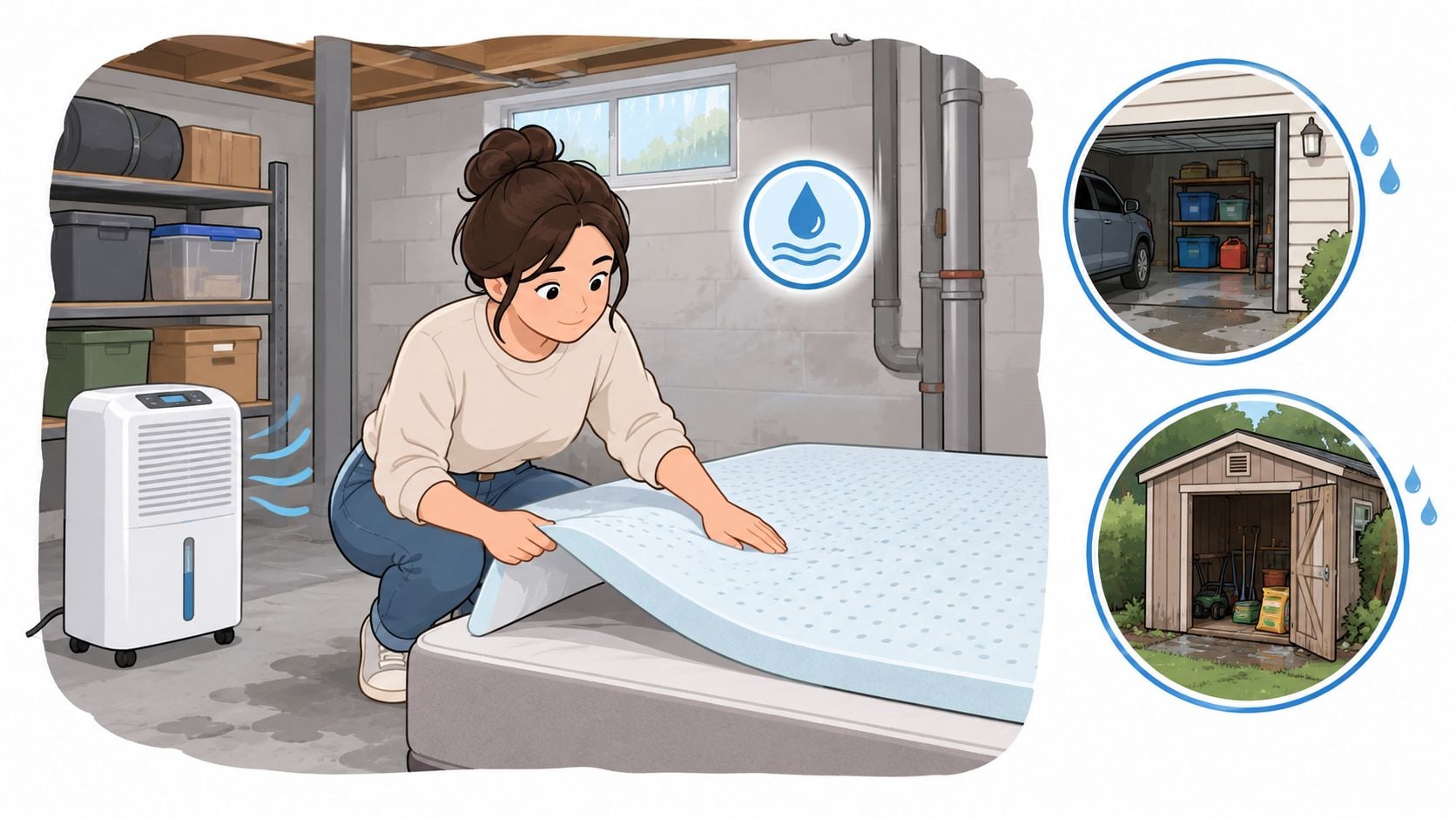
Surface dryness is a poor test. Foam, fiber, and quilted layers can stay damp for hours after the cover feels ready. That matters in Northwest Indiana, where basements and garages hold humidity through much of the year. Pack a topper before its core is dry, and that trapped dampness has nowhere to go.
The care label is the controlling source here. It tells you whether the entire topper is washable, which water temperature and detergent are permitted, and how the topper can be dried. Follow those directions rather than assuming a removable cover and the topper itself can be washed alike. The label's rule is simple: the entire washable topper, not just its cover, must be thoroughly dry before storage or reuse.
What "completely dry" should mean
Don't rely on a quick touch test. Check both sides and seams, and give the topper time to air out on a clean, ventilated surface. If the center still feels cool or clammy, or there's a lingering damp smell, keep drying it. For foam, avoid soaking the core unless the label specifically permits it.
A breathable fabric bag helps shield a dry topper from dust while allowing air to circulate. Pairing that with a dust- and allergen-conscious bedroom routine keeps stored bedding cleaner when it comes back into the room.
Pay attention to the room, too
A topper's storage room matters as much as its cover. Keep indoor relative humidity below 60%, with 30%–50% as the ideal range to limit mold risk (EPA indoor humidity guidance). A hygrometer tells you quickly whether a basement or spare room qualifies. If the reading runs high, run a dehumidifier or move the topper to a drier indoor location.
Moisture is the first storage decision because it affects every material. Start packing only when the whole topper is dry, not merely when its surface feels ready.
Matching Storage Method to Topper Material
The right storage shape depends on what the topper is made of. A soft fold that works for fiberfill can leave a permanent crease in foam, and a tight roll can flatten fill that needs its loft. Read the care label and check the original packaging before choosing a method.
Foam and latex toppers tolerate a loose roll only when the label allows it, while down and fiberfill need a gentle fold.
| Topper Material | Preferred Storage | Main Risk to Avoid | Label Check |
|---|---|---|---|
| Memory foam and latex | Store flat, or roll loosely only if the label allows | Vacuum compression, tight straps, sharp bends | Confirm flat or rolled storage in the care label |
| Down | Fold gently and protect with a breathable cover | Crushing the loft or sealing it while damp | Follow cleaning and drying directions |
| Fiberfill | Fold gently if the label allows | Tight folds or weight that flattens the filling | Confirm washing, drying, and storage guidance |
Before rolling anything, read the care label and photograph it so the storage shape is on record.
Memory foam and latex need a shape that avoids concentrated pressure. When the label permits rolling, make a loose, even roll instead of forcing the topper into a compact cylinder. I've seen foam toppers come back from garage storage with crease lines that never relaxed, and every one of them had been bent tighter than the label allowed. If the instructions call for flat storage or the material resists rolling, a clear shelf beats a smaller footprint.
Down and fiberfill toppers handle differently. A gentle fold makes them easier to store without pressing them into a hard bundle, and heavy objects should stay off them so the fill keeps its loft. These fills also absorb moisture faster than solid foam, so a topper in a damp Northwest Indiana basement can matt down even when it went in dry.
Let the label settle the question
Care advice differs because toppers vary in thickness, construction, and cover design. Identify the material before you pack it, and treat the label as the final word on shape. For a broader look at product features and fit, use Groen's guide to choosing a mattress topper.
If a move or seasonal bedding change calls for extra packing protection, mattress storage tips for homeowners and renters can provide another useful reference. Whatever method you consider, the care label outranks any general rule about rolling or folding.
Packing and Protecting From Climate and Pests
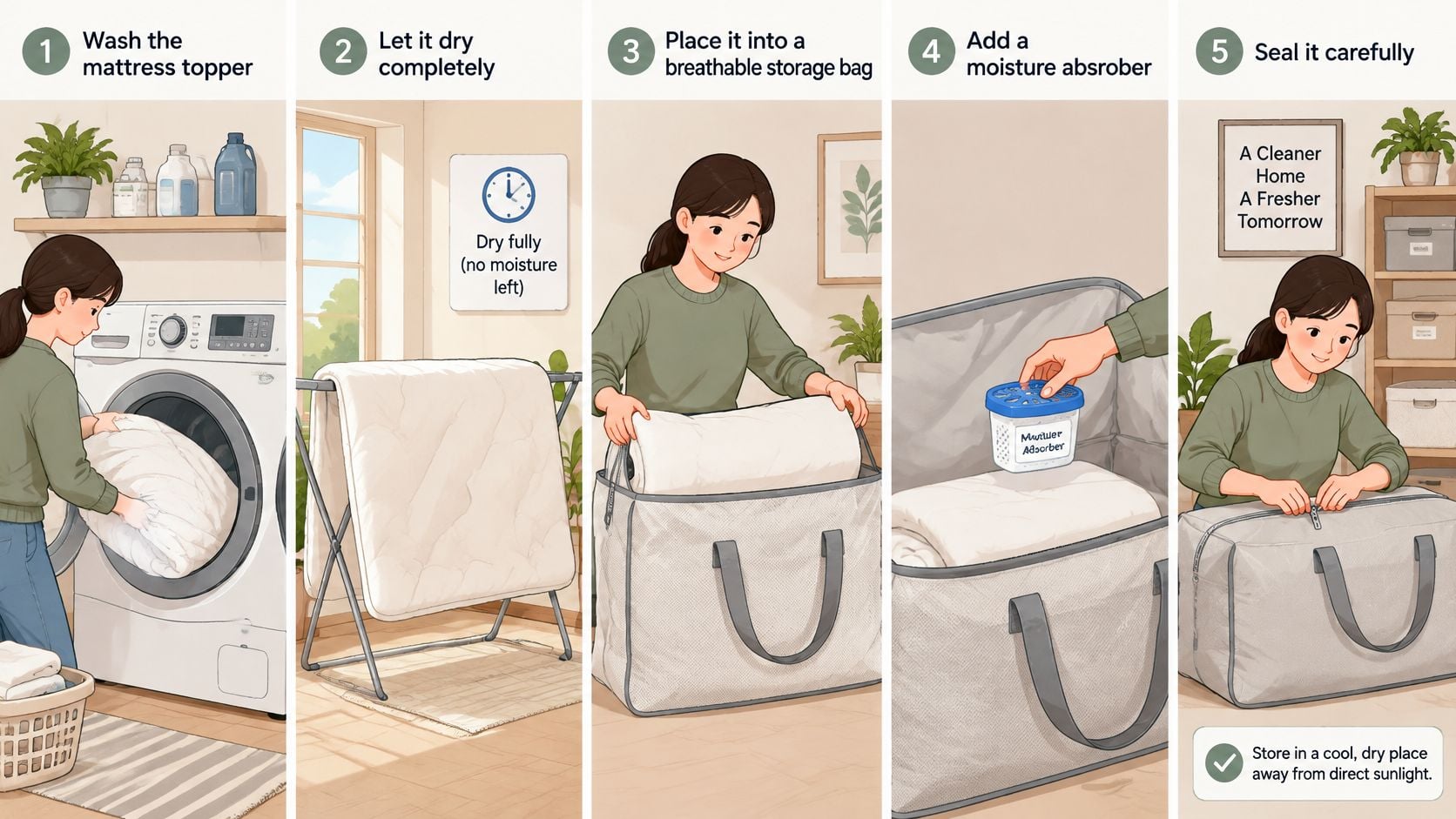
A topper stored in a Northwest Indiana basement or garage can pick up moisture from the room, even when it feels dry on the surface. Pack it only after it is clean and completely dry. Let a damp topper air-dry for at least 24 hours on a clean, ventilated rack, and longer if the center still feels cool. Follow the care label for cleaning and drying, and avoid a dryer or direct heat unless the label permits it.
Keep the pack loose and supported
Use a breathable cover for everyday storage. Sealed containers are acceptable only for a fully dry topper whose label permits them. Do not seal a foam topper that needs ventilation. If the label allows rolling, make an even roll and secure it with broad fabric straps. Tight cords can leave pressure marks, and a strap should never force the roll smaller.
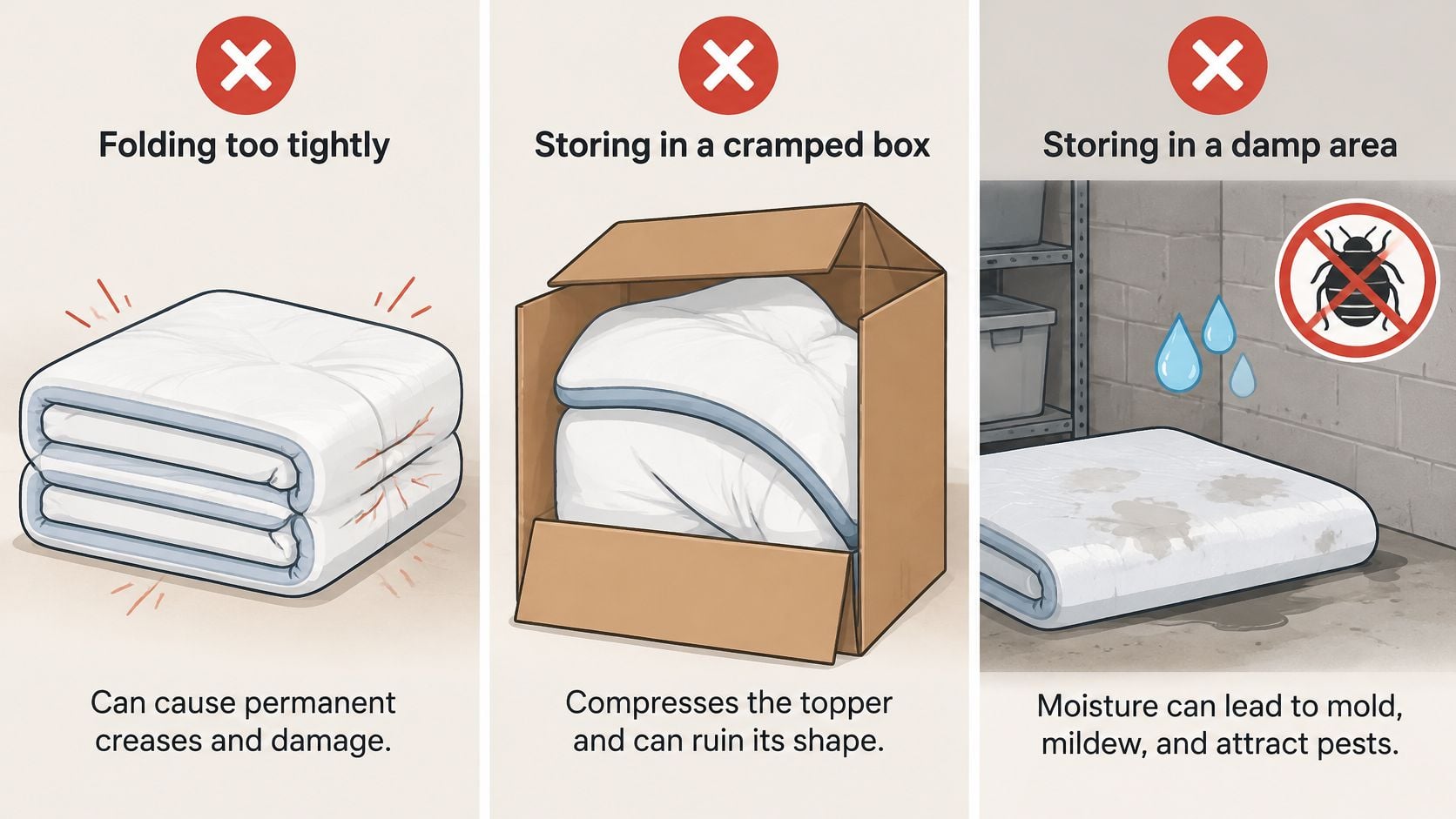
Store the topper indoors, above freezing and below 90°F, and check the label for any stricter limits. In humid homes, a clean, raised shelf is safer than a concrete floor. Keep the topper away from damp basements, garages, attics, sheds, leaks, direct heat, and sunlight. These locations can expose it to moisture or sharp temperature changes. Leave boxes and furniture off the stored topper.
Keep dust and pests out
Check the storage area for clutter or signs of pest activity before packing. A clean space and a well-fitted cover help limit dust and reduce exposure to pests. For household steps to prevent bed bugs at home, keep stored bedding away from items that may be infested.
Set the topper in the position its label allows. A flat topper needs level support; a rolled one should rest without sagging. A mattress protector helps shield bedding during use, but it does not replace dry, careful storage.
Storage Timelines and Monthly Checks
A topper stored in January and ignored until November has usually picked up a problem you could have caught in March. Northwest Indiana humidity swings hard between seasons, and foam, fiber, and down-alternative toppers each respond differently to months under compression.
Treat vacuum storage as a short-term option. The bag keeps out dust, but it also holds foam under pressure the whole time. If a topper stays vacuum-packed longer than about three months, open it, air it for a day, and inspect both sides for compression lines. The product label controls here, so skip vacuum compression entirely if the manufacturer doesn't approve it.
For longer stretches, the material sets the terms. A memory foam or latex topper should rest flat or loosely rolled, exactly as its instructions allow, while a fiber or down-alternative topper tolerates folding better but still needs air circulation. Write the storage date and the material on a label on the bag, then set a phone reminder for the three-month inspection. Without a date, a stored topper tends to stay in the closet for a year or more. For bedding heading to an off-site unit rather than a bedroom closet, Container Self Store's long-term storage guide walks through how to prepare belongings for extended time away.
Make each check quick and practical
A monthly check takes a minute or two. Look and smell for signs that call for immediate attention:
- Condensation or dampness: Stop, dry the topper completely, and check the room's humidity before the topper goes back in storage.
- Musty odor or visible spotting: Don't put the topper back on a bed. Check its care label and address the problem before deciding whether it can be used.
- Discoloration or pest activity: Inspect the nearby storage area as well, and keep the topper apart from affected belongings.
- Creases or loss of shape: Let the topper rest in the position allowed by its instructions, then check whether it recovers before reuse.
If the room reads damp at your monthly check, move the topper to a drier spot rather than trusting the cover to hold. Tight floor plans make that harder, so these small-space storage ideas can help you find a dry indoor location without cramming the topper into a corner.
Common Mistakes That Damage a Stored Topper
Packing a topper too soon is the most common storage error, and it usually goes unnoticed until the odor appears. If it feels cool or clammy, or still smells damp, keep it uncovered in a ventilated place until it's dry throughout.
Another common mistake is treating every topper as foldable. A foam topper folded into a small rectangle can develop deep creases or cracks where it bends. Follow the label's storage shape instructions. If rolling is allowed, keep the roll loose; if the instructions call for flat storage, don't force a roll just to save space.
Pressure and cold can cause trouble
Rigid straps and narrow cords can leave dents by concentrating pressure in one place. Broad fabric straps are gentler, and they don't need to be pulled tight. A roll should stay supported without being squeezed into the smallest possible bundle.
Cold foam needs careful handling, too. Memory-foam toppers can usually be stored flat or loosely rolled, but bending or pressing the foam out of shape can damage its structure. After a topper has been kept in a cold space or transported in cold weather, let it reach room temperature before unrolling it. Cold foam is more likely to tear or crack during unrolling, so I tell customers to bring a topper inside the night before they plan to unpack it.
Correct the problem before it becomes permanent
If a topper comes out with a crease, don't cover it with bedding and assume it'll disappear. Let it rest flat if its instructions allow, then inspect its shape and recovery. A stubborn crease or a crack can signal lasting deformation.
If a stored topper comes out smelling damp, treat it as a failed pack job. Dry it fully in a ventilated indoor space and figure out where the moisture came from before sealing it again. Keep the storage area at or below 65% relative humidity, ventilate the topper periodically, and confirm that limit against the label. Whatever the fix, the topper's own instructions stay the controlling authority.
Deciding When to Store, Clean, or Replace
The topper's condition decides your next move. If it comes out clean, dry, and still springs back to shape, store it again by its material and care label. If it smells stale from being packed away, air it out for a day and check it before sheets go back on. A permanent crease, foam that stays flat, or an odor that survives airing means storage already cost you the comfort it was adding.
Before reuse, spread it on a clean floor and inspect both sides. Look for damp spots, odor, tears, pest traces, and areas that stay compressed when everything else has relaxed. Memory foam and dense latex recover slowly, so give them several hours at room temperature before judging. Fiberfill should loft back evenly. Any section that stays thin or lumpy after that is telling you something.
Soil is different from damage. If the label allows cleaning, follow its method rather than guessing. Foam cores don't tolerate soaking, and cleaning a memory-foam mattress or topper correctly takes more patience than a machine wash. A topper that's wet-cleaned and stored before it's fully dry will come back smelling worse than it went in, especially through a humid summer here.
When replacement makes more sense
If the foam no longer recovers, the odor persists, or the creases are permanent, no storage method will fix it. Compare what you have to what the bed needs now. Keeping a dead layer on the mattress costs you sleep, not shelf space.
For Northwest Indiana households ready to refresh a bedroom, Groen's Fine Furniture has served the community since 1983, with showrooms in Dyer and Crown Point and multigenerational ownership backed by five-star customer reviews. Its mattress guide and sleep-product selection can support a more informed choice, and the store's delivery service can bring a new mattress or bedroom piece into the home. Custom orders include solid wood Amish furniture built to specification, and special financing is available, subject to credit approval.
Visit Groen's Fine Furniture in Dyer or Crown Point to browse mattresses, bedroom options, and custom solid wood Amish furniture. Ask about special financing, subject to credit approval, and bring questions about topper care to the showroom so the family's team can help you choose a comfortable fit for your home.