Pillow Top vs Euro Top Mattress: Which Fits Your Sleep?

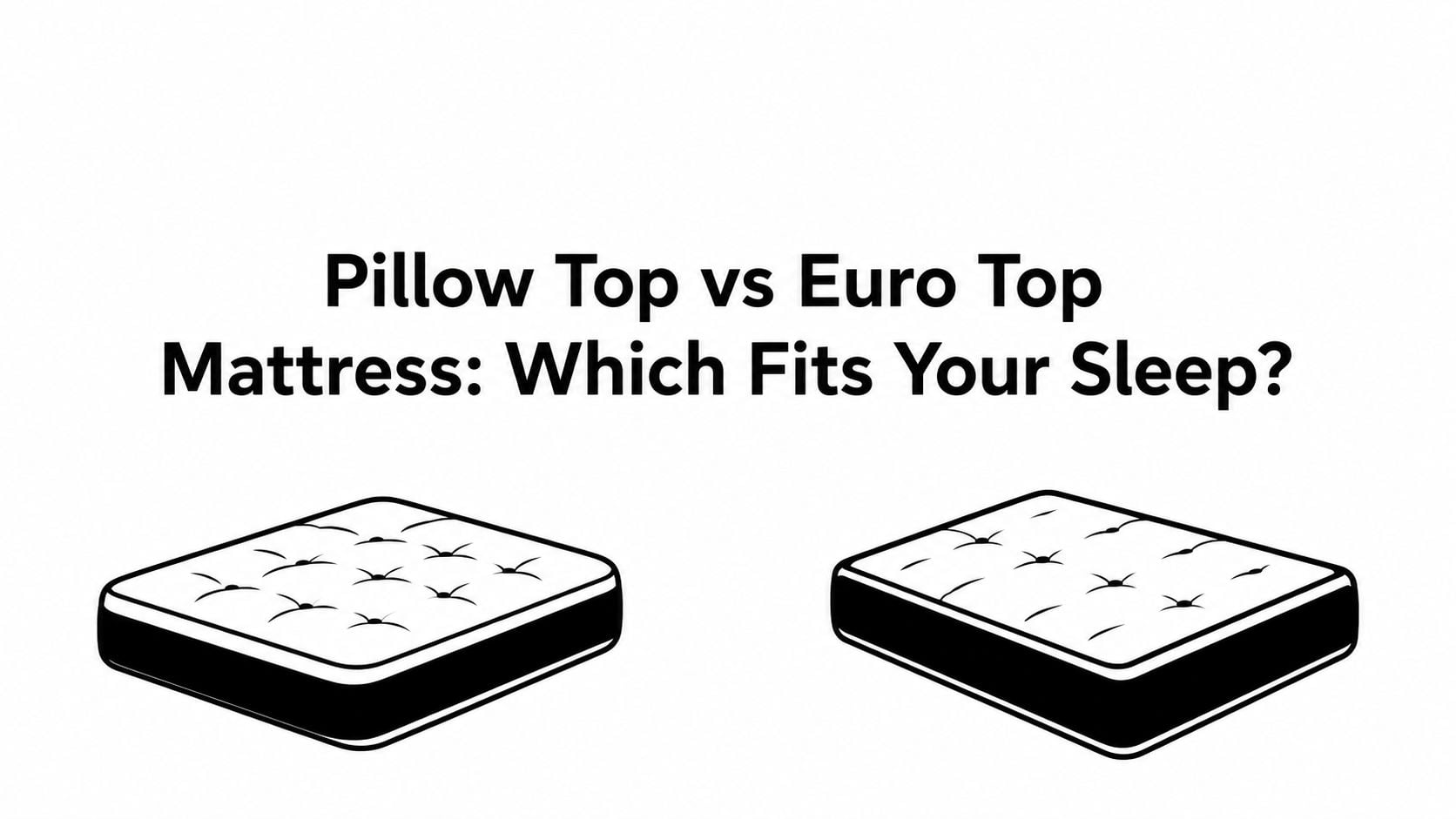
What if the name on the mattress tells shoppers almost nothing about how it will feel in two years? For homeowners in Dyer and Crown Point comparing a pillow top vs euro top mattress, that question matters more than the showroom label. Both styles add cushioning, but the materials, density, foundation, and warranty terms usually predict comfort and aging better than the seam style alone.
Pillow Top and Euro Top Side by Side
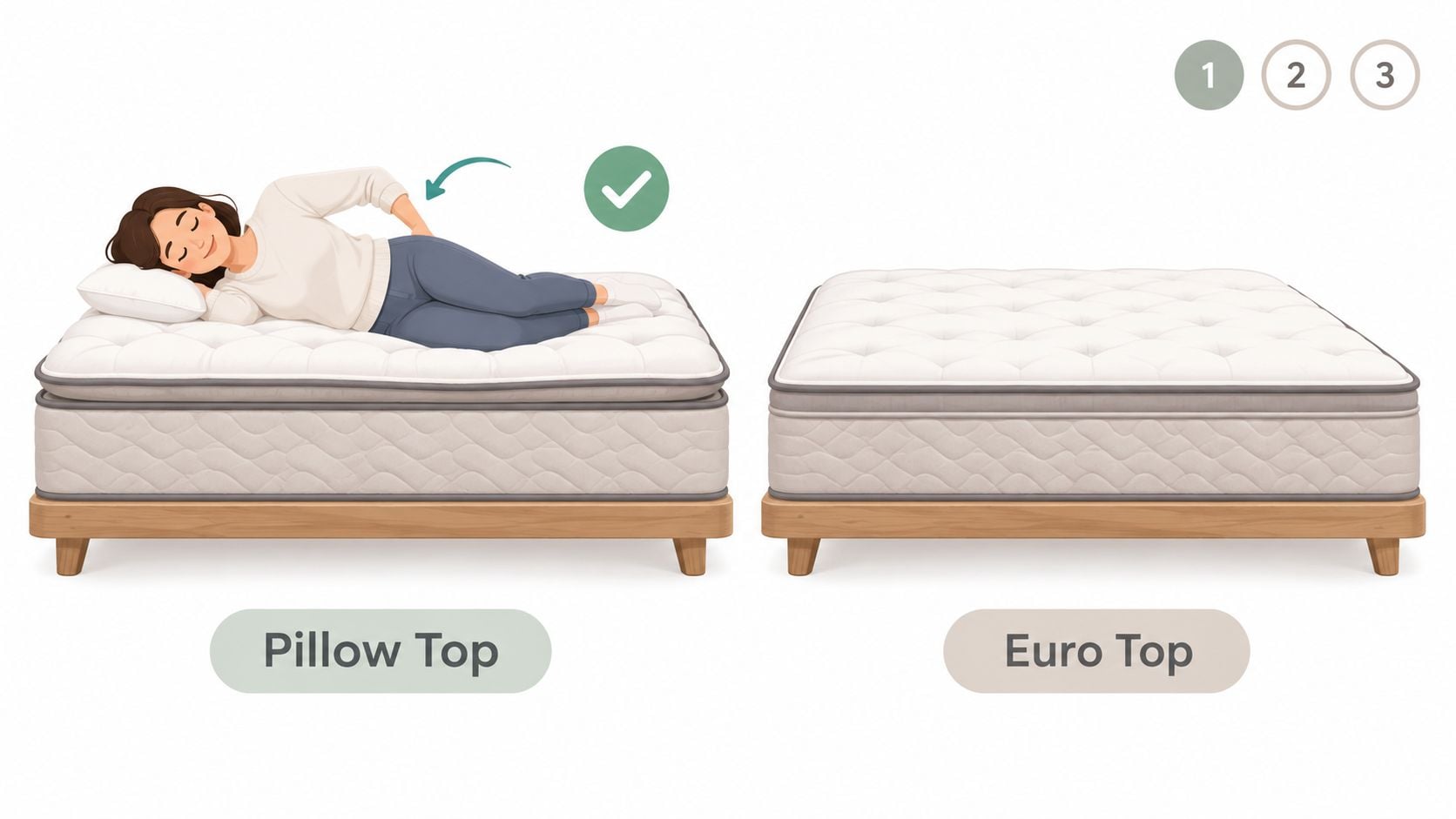
For homeowners in Dyer and Crown Point who've lain on two mattresses that look nearly identical, the core answer is simple. A pillow top is a separate cushioning panel sewn onto the surface with a visible lip, while a Euro top places its padding beneath the cover and seams it flush to the edges. That small construction detail changes the profile, the edge feel, and how evenly the comfort layer carries weight over time.
Inside, the foam or fiber can be identical across both styles. The label describes where the padding sits, and the padding itself describes how the bed will feel.
Pillow top and Euro top compared on construction and feel
| Feature | Pillow Top | Euro Top |
|---|---|---|
| Comfort layer attachment | Separate panel sewn on with a visible lip | Padding sewn flush beneath the cover, to the edges |
| Surface profile | Raised, rounded, pronounced plush top | Uniform, flat top that continues into the sidewall |
| Edge support | Lip can dip or roll at the perimeter | Flush seam gives a more usable edge to sit on |
| Initial cushioning | Immediate, pronounced plush feel | Smoother, less dramatic first impression |
| Layer movement over time | Separate layer may shift or compress unevenly | Enclosed layers limit movement and encourage even loading |
| Heat behavior | Depends on comfort layer foam or fiber, not the style | Depends on the same materials and cover quilting |
| Best first choice when | You want maximum initial softness | You want consistent edges and a clean profile |
Attachment decides how the layer moves against the support core. A separate panel sits above the main body, so repeated loading can let it ripple, bunch slightly, or compress unevenly where shoulders and hips press hardest. Enclosed padding has less room to move because the cover holds it in place and carries it closer to the perimeter, which can keep the usable sleep surface more consistent near the edge.
Either build can sleep firm or plush. A Euro top filled with soft, low density foam still loses loft, and a pillow top built with resilient materials can feel balanced for years. Some hybrids layer a separate pillow top over a quilted Euro-style panel in the same bed, so the two names blur together on plenty of floor models.
The label tells you how the top is sewn, while the materials tell you how it will sleep.
Two checks shoppers can do in minutes
Start with the seam check. Run a hand along the side where the top meets the main body and look for the visible lip or inset that signals a pillow top. If the surface flows straight into the sidewall without that separation, it's built as a Euro top. If a display model has an openable cover, ask staff to show the comfort layer construction rather than guessing from the tag.
Next, bring a tape measure and record total height from the foundation to the top of the crown. A thicker top raises bed height, changes how easily someone gets in and out, and can affect nightstand clearance and whether existing deep pocket sheets still fit. Write the height down for both models. Two mattresses that feel similar lying down can create very different room setups once they're home in St. John, Schererville, or Munster.
Use the table to shortlist two models with matching firmness targets, then judge them by materials, edge stability, and sustained comfort during a proper lie down test. Our family has furnished homes in Dyer and Crown Point since 1983, and our team keeps Serta and Beautyrest models on the floor so Northwest Indiana shoppers can test both constructions side by side with honest guidance.
Durability, Sag and Warranty Limits Compared
Ask what wears out first: the lofty surface, the foam under it, or the support beneath that. The sewn edge is easy to see on the floor. The aging pattern is harder to see, because it comes from comfort layer density, layer thickness, coil or foam core design, sleeper weight, rotation habits, and the base under the mattress.
Pillow tops can show impressions sooner when the upper package uses soft fiber or low density foam. Euro tops can hide the same problem when the flush border looks tidy while the inside layers are still light. We tell neighbors at Groen's Fine Furniture to treat the top style as a construction clue, then grade the actual stack above the springs.
Shoppers who sit on the edge or sleep near it should read about how mattress edge support changes usable sleep space before assuming a flush top automatically feels more stable.
Durability benchmarks and warranty checks by top style
| Benchmark | Pillow Top | Euro Top | What It Means for You |
|---|---|---|---|
| Early impression risk | Higher when the crown uses lofty fiber or soft foam | Depends on the hidden comfort package, not the tidy sidewall | Press the same spot for a slow count and watch how fast it rebounds |
| Warranty sag threshold | Set by each written policy | Set by each written policy | Get the exact indentation depth in writing before ordering |
| Decisive durability variables | Comfort layer density and thickness, core design, sleeper weight, foundation | Same variables apply | Compare spec sheets rather than labels |
| Thick comfort layer risk | Thick, soft surfaces can trade first minute plushness for later body impressions | Applies to any thick comfort package | Thickness raises the stakes for material quality |
| Foundation requirement | An unsuitable base can void coverage | Same | Verify platform type, slat spacing, and center support |
A mattress can feel worn before it is legally defective. The support core may still push back while the comfort layer loses loft, so the surface feels flat at the shoulder or hip even though the bed has not reached the warranty cutoff. That gap is why the written threshold matters more than the sales tag.
In our delivery and service experience, lighter pillow top packages tend to show their age sooner, while tighter Euro top packages often keep a steadier feel. The exceptions follow materials. Dense foam or latex above a sound support core ages better than airy fiber over the same core.
Before the mattress leaves the showroom, ask three things. What exact indentation depth triggers coverage, measured with which straightedge method? What base keeps the warranty valid, including slat spacing and center support? Is rotation allowed, required, or irrelevant to the design? Write the answers on the order so the foundation and warranty match the mattress you tested.
Comfort, Heat and Spinal Alignment Compared
A softer, thicker comfort layer lets shoulders and hips sink deeper, and plenty of side sleepers love that immediate pressure relief. The tradeoff shows up when sinkage goes too far. Excessive immersion pulls the spine out of neutral, makes repositioning harder, and turns a plush first minute into a restless night.
On our showroom floor we coach shoppers on the same two points: a thicker cushioning layer can ease pressure at the shoulder and hip, and some cushioning materials hold body heat close. Hot sleepers notice it within minutes. That means temperature belongs in the test from the start, not as an afterthought at checkout.
Materials change the answer
Dense memory foam contours closely and spreads pressure well, but it can restrict airflow and respond slowly when a sleeper changes position. Latex responds faster, feels more resilient, and tends to hold its loft better than softer, looser fills. Loose fiber feels inviting on day one, yet it gives shoppers less confidence about how the surface will feel a few years in.
Heat follows material choice, plus cover quilting, coil openness, and the room itself. Shoppers who sleep warm should compare mattress features that matter most for hot sleepers and then lie on both tops long enough to feel warmth building under the cover. Identical foams can sit inside either construction, so the label tells you less than the foam spec sheet does.
Plush and supportive describe different layers. A soft surface says nothing about whether the core underneath is holding the spine level.
No top style is automatically right for a sleep position. A pillow top that lets the hips drop too far pulls the waist down and bends a side sleeper's spine, and a Euro top with a weak core or an overly thick comfort package leaves a back sleeper unsupported, tidy edge or not.
Judge the whole package. Pressure relief, spinal neutrality, ease of movement, and heat buildup all count, tested in your normal position for several minutes rather than the thirty seconds a salesperson usually gets. If a model cushions the shoulder but traps heat or lets the pelvis sink, the top style printed on the tag won't fix it.
Best Pick by Sleep Position and Body Type
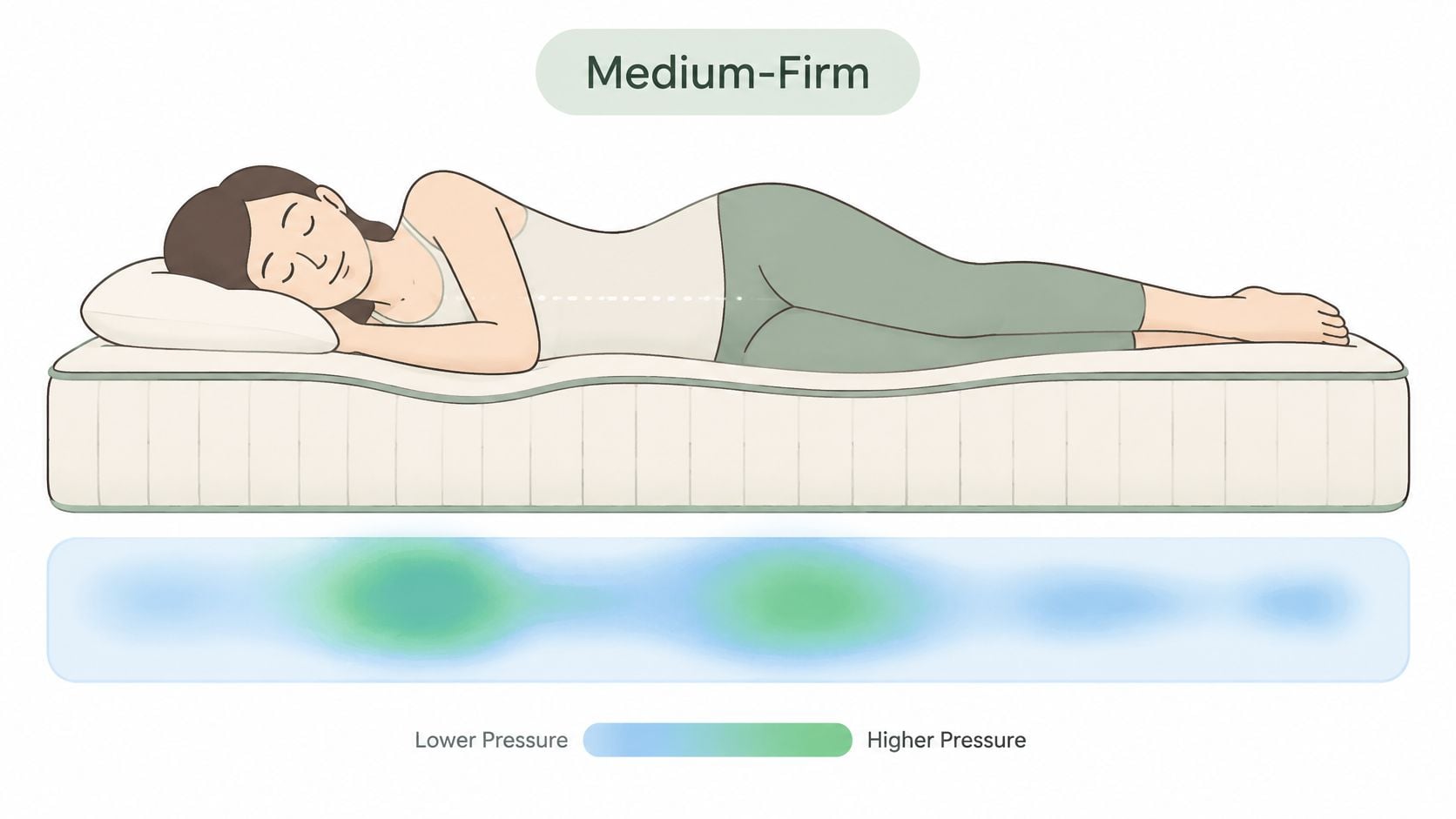
Sleep research on low back pain keeps landing on the same answer we reach on our own showroom floor: medium-firm surfaces suit more sleepers than very soft or very firm ones. We start there, then adjust for how much weight each body puts into the comfort layers. Load decides how far anyone sinks. A mattress that keeps a lighter side sleeper level can let a heavier sleeper's hips drop straight through the padding, and a bed that supports the heavier sleeper can feel like a board under the lighter one.
Shoppers who want a firmness target before visiting our Dyer or Crown Point showroom can work through our guidance on choosing the right mattress firmness. From there, use the profiles below as a starting lean for a pillow top vs euro top mattress comparison. Each row is a hypothesis to check against real materials, since two mattresses wearing the same top label can behave completely differently once you look at the foam, fiber, or latex under the cover.
Recommended top by sleeper profile
| Sleeper Profile | Lean Toward | Why | Watch For |
|---|---|---|---|
| Side sleeper | Pillow top or softer Euro top | Extra give cushions shoulder and hip pressure | Hip sinking past the shoulder line |
| Back sleeper | Euro top on a supportive core | Flush surface keeps the pelvis level | Thick padding letting the hips drop |
| Stomach sleeper | Firmest Euro top available | Limits the pelvic sink that arches the low back | Any top plush enough to bow the spine |
| Heavier sleeper | Euro top with dense foam or latex comfort layers | Resists compression and holds support under load | Thin fiber fill or soft foam packing flat |
| Lighter sleeper | Either top, decided by the pressure relief test | Lighter load calls for more surface softness | Plushness deep enough to slow repositioning |
| Combination sleeper | Responsive medium-firm Euro top | Even feel and easy movement across positions | Edge roll during position changes |
The profiles where a table can't help are the ones with two bodies on one mattress. We see it every week: the same surface feels supportive to one partner and bottomless to the other because weight and position change how far each person sinks. Each partner should test their own side separately, sit on the edge, and roll toward the middle before anyone calls the mattress comfortable. When the gap between partners runs wide, resilient comfort-layer materials will keep a shared surface more consistent under uneven loads than either top label can promise on its own.
Aging adults with joint pain face a different balance. Hips and shoulders need real cushioning, yet a surface too soft to push against makes standing up and turning over harder than it should be. A medium-firm core under a moderate comfort layer is usually the safest first test for that group, and the in-store trial should include getting in and out of the bed several times rather than lying still once.
How to Test Both Tops in a Showroom
A quick hand press tells shoppers almost nothing. Hands don't load a mattress the way hips and shoulders do, and a 30 second sit won't reveal heat buildup, pelvic sink, or edge roll. The routine below separates two similar looking models by testing the things that predict how a mattress sleeps and ages, and these mattress shopping tips for a more useful showroom visit can help shoppers arrive with the right questions ready.
- Match the firmness target. Choose two models built to the same firmness goal so the comparison is fair. Testing a plush pillow top against a firm Euro top only proves that firmness feels different, which is the most common showroom slip we see.
- Lie down for 10 to 15 minutes. Use the usual sleep position on each mattress, not a polite perch on the edge. On our showroom floor, we ask shoppers to stay in position for at least 10 to 15 minutes per model, checking hip sink and warmth before deciding which surface feels right.
- Check the hips and spine. Hips shouldn't drop noticeably lower than the shoulders, and the waist shouldn't feel unsupported or sharply bent. Ask a partner or team member to look from the side, since spinal neutrality is easier to see than to feel.
- Sit on the edge. Sit where someone would tie shoes or stand up in the morning, then shift weight slowly. Note any roll, dip, or collapsing lip, because weak edges shrink usable sleep space for couples.
- Test the partner's side independently. Move across the mattress and repeat the position test on the other half. Different body weights load the same top differently, so one person's good result doesn't settle the question for both.
- Notice heat after about 10 minutes. Pay attention to warmth under the back, hips, and cover rather than the first cool touch. Hot sleepers often miss this step and only discover heat retention after several nights at home.
- Ask for materials, density, and indentation limits. Request the comfort layer material and density plus the manufacturer's allowable permanent indentation. Vague answers are a reason to slow down, because those specs predict aging better than the style name on the tag.
- Confirm the foundation before leaving. Verify the platform, slat spacing, or base the warranty requires for that exact model. A strong mattress on the wrong base can feel wrong and can put a future claim at risk.
A good result looks consistent across both models. The spine stays level, movement feels easy, the edge holds without rolling, and heat doesn't build under the body.
When one mattress wins on those points, shoppers have a repeatable reason for choosing it. The seam style stops mattering the moment the test results disagree with it.
Choose Your Top and Confirm the Order
Which mattress still looks like the right choice after you account for materials, warranty limits, and the foundation? The top style is a weak predictor of how a mattress will sleep and age. A Euro top may offer a more consistent surface, while a pillow top may feel plusher at first, but neither style alone settles the decision. Compare the comfort-layer materials and density, the warranty's sag threshold, and the required foundation before you order.
Get four details in writing: the warranty duration and sag threshold, the comfort-layer specifications, the foundation requirements, and the mattress's total height for your bedding and room. Review the mattress return policy and what it covers before delivery, so you know the terms if the fit or feel disappoints.
Compare cost with the expected years of comfort, not just the purchase price or first-night feel. Consider how soon the mattress may need replacing and whether its materials and warranty support that expectation. A lower sticker price may not be the better value if the bed stops feeling supportive sooner.
The bed frame and delivery also affect the order. A solid wood Amish bed frame can be made to suit the mattress height, room dimensions, and finish. Design it your way custom options help match those details; Special Financing, subject to credit approval, may help with budgeting, and White-Glove Delivery includes setup. Ask our team at Groen's Fine Furniture in Dyer or Crown Point to compare mattresses and confirm the foundation, frame fit, delivery, and financing before you decide.
For a practical comparison, divide the total cost by the years you reasonably expect to sleep comfortably on the mattress. Then weigh that figure against the materials, warranty threshold, and support your foundation provides. Choose the top that performs better in your showroom test, and confirm the details that will matter after it is home.