How to Choose a Mattress for Back Pain Wisely


A stiff back can turn an ordinary Northwest Indiana morning into a slow negotiation with the bed. For homeowners in Dyer, Crown Point, and nearby communities, it's natural to wonder whether a mattress is contributing to that discomfort. A thoughtful choice can support better rest, but no mattress can diagnose or treat every cause of back pain.
Our family has helped Northwest Indiana shoppers make furniture and mattress decisions since 1983. The aim isn't to find the hardest bed or the most impressive label. It's to find a sleep surface that feels comfortable and keeps the body supported, then consider the pillow, bed base, and trial experience as part of the same decision.
Why Back Pain Changes the Mattress Decision
A shopper may wake with a stiff lower back and feel better after moving around. Another may hurt while lying down or feel pain when getting out of bed. Those patterns can help guide mattress testing, but they don't establish what's causing the pain.
The strongest mattress evidence concerns adults with chronic, nonspecific low-back pain and outcomes such as pain in bed, pain on rising, disability, sleep quality, and spinal alignment. It doesn't apply to every kind of backache. A mattress change may be one practical adjustment, but it shouldn't replace medical care when symptoms point to a more serious issue. A clinical evidence summary on mattress research and low-back pain discusses both the limits of the evidence and the importance of considering the wider sleep setup.
Notice when the pain needs more than a mattress change
Morning stiffness by itself is different from warning symptoms such as leg weakness, numbness, fever, pain following trauma, or pain that radiates and worsens. Those signs call for clinical guidance rather than another round of mattress shopping. Persistent or severe symptoms also deserve professional attention.
For a general overview of supportive habits and options beyond the bed, readers can explore ways to find relief for aching backs. The important distinction is that comfort advice can inform a purchase, while a clinician is the right person to assess symptoms and recommend care.
A practical decision starts with the pain pattern, then considers the position used most often, a medium-firm mattress as a research-supported starting point, and a careful test of the whole sleep setup. That's a more useful path than choosing by label alone.
Read Your Pain Pattern and Sleep Position
Before comparing mattresses, put the discomfort into plain words. Does it show up while lying still, when rising, or after spending much of the night on one side? Then note the position used most often. These observations aren't a diagnosis; they're a short personal brief that makes testing more focused.
A couple may share one bed but have different needs. One partner might sleep curled on the side and wake with a sore hip, while the other sleeps on the back and feels stiff when getting up. The mattress needs to feel acceptable to both, even if their pressure points and preferred positions differ.
Match the surface to the position
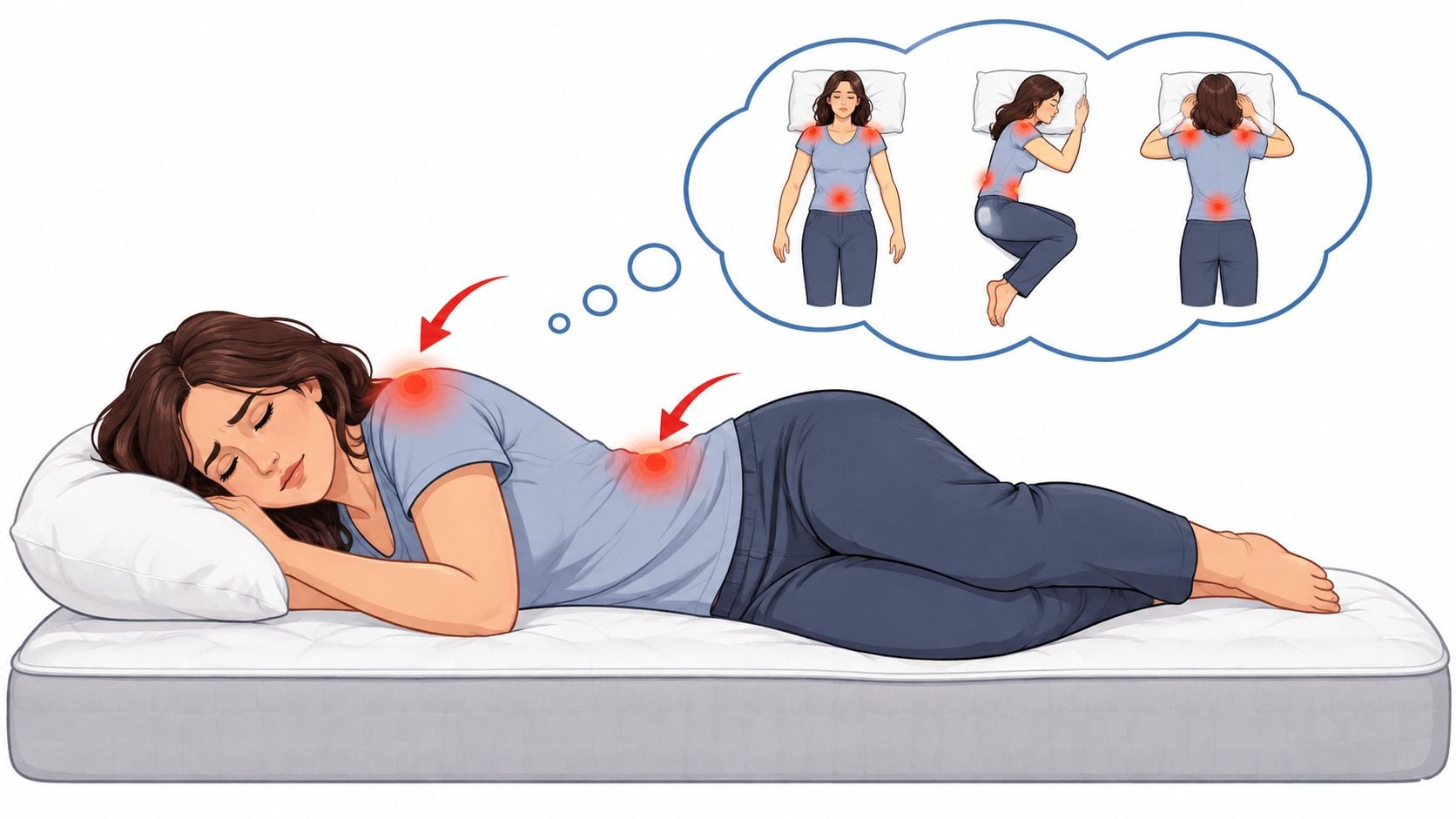
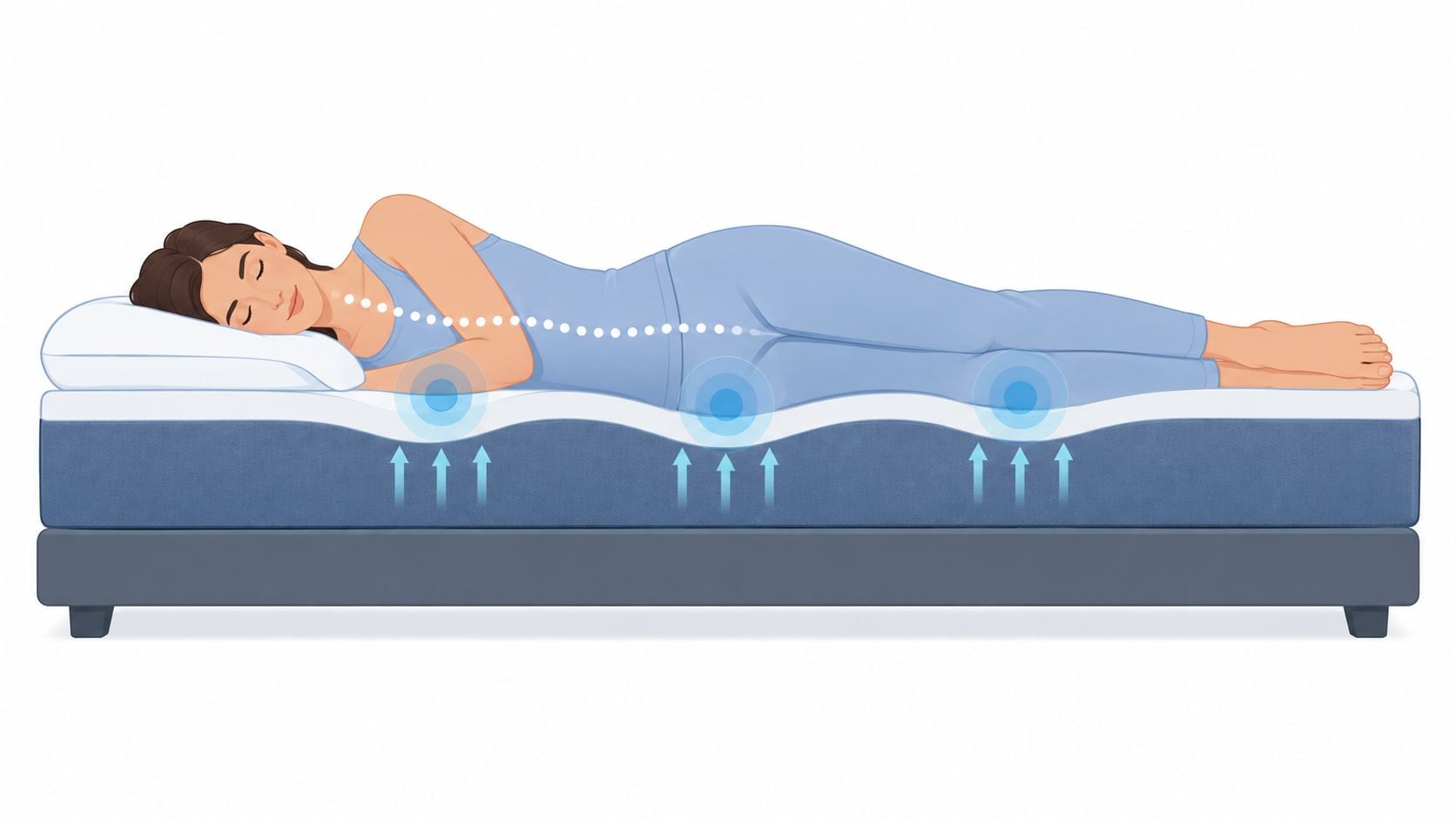
Side sleeping: The shoulders and hips need room to settle into the mattress. If they can't make comfortable contact, pressure may build; if the waist sinks too far, the body may feel poorly supported. The useful question is whether the surface accommodates those pressure points while the middle of the body stays supported.
Back sleeping: Look for support under the natural curve of the lower back without letting the pelvis drop substantially below the rib cage. A pillow under the knees can help support alignment for back sleepers, while side sleepers may find a pillow between the knees useful. These simple adjustments make the pillow part of the assessment, not an afterthought.
Stomach sleeping: This position can increase lumbar extension and may aggravate symptoms. If it's the usual position, assess how the body feels on the mattress rather than assuming that a particular brand or firmness will solve the problem.
Body shape and sensitivity matter, too. A heavier sleeper, a lighter sleeper, an older adult, and someone sensitive at the shoulders or hips can experience the same mattress differently. A guide to choosing a mattress for a sleeping style can help organize the questions to bring into testing. For additional general ideas, readers can review these lower back pain relief tips, while keeping in mind that persistent symptoms warrant clinical advice.
Carry three notes into the showroom: when the pain appears, the main sleep position, and the spots that feel sore or pressured. That's more useful than arriving with a fixed firmness choice.
Start with Medium-Firm, Then Check Real Support
A shopper who asks for "the best mattress for a bad back" often hears one piece of advice: get something firm. Research points somewhere more useful. In a randomized, double-blind, multicenter trial, 313 adults with chronic, nonspecific low-back pain slept on firm or medium-firm mattresses for 90 days. Both groups generally improved, and the medium-firm group did better on pain while lying in bed, pain on rising, and disability (trial details).
| Firm Versus Medium-Firm After 90 Days | Firm mattress | Medium-firm mattress |
|---|---|---|
| Odds ratio for pain in bed | 2.36 | |
| Odds ratio for pain on rising | 1.93 | |
| Odds ratio for disability | 2.10 | |
| Pain in bed improved | 77.8% | 82.6% |
| Pain on rising improved | 80.4% | 85.8% |
The odds ratios compare the two groups rather than predict any one shopper's outcome. The improvement percentages tell a quieter story too: many participants got better on either surface. So medium-firm works like a sensible starting line for testing, with the sleeper's own response deciding the finish.
Treat the Label as a Starting Point
Firmness labels work like clothing sizes. A "medium" from one brand can fit differently than a "medium" from another, because body weight, shape, sleeping position, sensitivity at the shoulders and hips, and mattress construction all change how a surface feels. Two mattresses carrying the same word can cradle a spine differently.
A systematic review of controlled trials published since 2000 found that mattresses people identified as medium-firm were generally favorable for comfort, sleep quality, and spinal alignment. The same review reported that a self-adjusted, custom-inflated mattress could also be beneficial, which suggests personal adjustment outweighs any manufacturer's firmness word (review of mattress design and sleep outcomes).
Since the same label covers different surfaces, line up two or three beds described as medium-firm and notice how each one responds under the same body. A mattress firmness guide gives shared vocabulary for describing those differences, and what the spine reports still carries more weight than any claim that one firmness suits every back.
Test Alignment, Pressure, Pillow, and Base
A quick sit on the edge won't say much about how a mattress feels at 3 a.m. As noted earlier, research supports treating medium-firm as a reasonable starting point, but the sleeper's response should guide the final choice. That response takes time to read. Lie in the position used most often for 10–15 minutes, long enough for the body to relax and for pressure to make itself clearly known.
Then check the alignment. Ask a partner or salesperson to sight along the body the way you'd check whether a shelf sits level. The pelvis should not sink well below the rib cage, and the waist should feel held rather than hanging. If the midsection sags or the lower back arches to fill a gap, the surface is failing its main job.
Use the whole-bed check
Next, roll to another position and sit up. Turning should feel manageable rather than like climbing out of a hammock. Notice whether pressure builds at the shoulders or hips, whether the surface sleeps too warm, and whether a partner's movement carries across the bed. A mild annoyance at minute ten can become a real problem by night thirty.
Then look past the mattress itself. The pillow sets the angle of the neck and upper spine, so a good mattress paired with the wrong pillow can still leave the neck out of line. A guide to choosing the right pillow helps match pillow height to sleep position. The base matters just as much: a sagging box spring or mismatched foundation undermines even a well-chosen surface, the way a crooked foundation tilts the whole house.
A useful pass-or-pause test: The spine feels naturally supported, pressure is tolerable, turning is manageable, and the trial or exchange terms are clear.
If pain keeps worsening, sleep quality drops, or mornings stay stiff after several weeks on a new setup, the mattress may not be the root cause. A clinician can help sort out what the furniture cannot fix.
Compare Sleep Systems in a Local Showroom
Two mattresses can share the same firmness label and still support a body differently, the way two pairs of shoes in the same size can fit different feet. At Groen's Fine Furniture, shoppers can compare several mattress collections by lying in their usual positions and noticing pressure at the shoulders and hips, support through the lower back, and ease of movement. One model may feel more accommodating at the hips; another may make turning easier. The useful question is which surface fits the person sleeping on it.
“Medium-firm” won't feel identical for everyone. A heavier side sleeper, a lighter back sleeper, or someone sensitive at the hips may prefer different constructions even when the firmness descriptions sound similar. Evidence reviews also caution that mattress studies vary too much to name one ideal firmness for every body and pain pattern, though some surfaces, including foam and water mattresses, may perform better than firm ones for certain outcomes (systematic review of mattress firmness and comfort). Treat medium-firm as a well-researched starting point, then let the body's feedback narrow the choices.
Make the comparison useful for everyone sharing the bed
Couples can test the same surface in each person's normal position, then compare what each noticed at the shoulders, hips, and lower back. Zoned or adjustable systems may be worth trying when partners need different support, although research on newer customized options remains too mixed for a blanket recommendation.
A practical goal for the visit: leave with two or three mattresses that deserve a longer trial.
Groen's team serves Dyer, Crown Point, and surrounding NWI communities, including St. John, Schererville, and Munster. Shoppers can ask about the Helpful Mattress Guide, a bed-matching system that identifies individual pressure points, and about White-Glove Delivery so the mattress and base arrive as one setup. For households also furnishing the room, the team can point out compatible bedroom pieces and coordinate delivery around the new bed. These mattress shopping tips can help prepare a focused comparison before the visit.
Plan a Visit and Know When to Get Help
Saturday morning works better than a rushed weeknight: bring the person who shares the bed, wear clothes you can stretch in, and give yourself time to lie in your normal position. Start from medium-firm as a researched baseline, then check the whole system: where the pain shows up, whether the spine stays level, where pressure builds, how the pillow fills the neck gap, and whether the base keeps the surface steady.
Before you decide, read the mattress return policy so the trial terms are clear before the mattress comes home. If you want a broader sleep-wellness checklist first, ask for the Helpful Mattress Guide mentioned earlier.
Keep the next step practical
Quality sleep products are a meaningful household purchase. Special Financing is available, subject to credit approval, and can give a household room to match the mattress, pillow, and base to the budget. Ask the team about current options instead of guessing at rates or payments.
A new bed does not replace medical assessment. If pain is severe, travels into an arm or leg, keeps worsening, or still limits sleep and morning function after several weeks on a suitable surface, contact a clinician. The mattress can improve the setup around pain; it cannot explain every cause of pain.
Groen's Fine Furniture is family-owned and has served Northwest Indiana since 1983, with showrooms in Dyer and Crown Point where you can test comfort before deciding. Visit Groen's Fine Furniture to try mattresses in your usual sleep position and ask about White-Glove Delivery and Special Financing, subject to credit approval.