
Blog
Mattress Thickness Guide for Better Sleep

A lot of Northwest Indiana shoppers end up in the same spot. They lie on two mattresses in a showroom for five minutes, both feel comfortable enough, and the decision starts to look like a coin flip.
It isn't.
The overlooked choice is usually thickness. That single detail affects how the bed feels under shoulders and hips, how high the full setup sits off the floor, whether sheets fit, and whether getting in and out of bed feels smooth or awkward every single day. For families in Dyer, Crown Point, St. John, Schererville, Munster, and across NWI, a mattress thickness guide matters because sleep wellness isn't just about softness. It's about how the whole bed works together.
Why Mattress Thickness Matters for Better Sleep
A couple walks into Groen's in Dyer or Crown Point, tries two mattresses, and both feel good for a few minutes. The mistake happens after delivery. One mattress adds too much height on their current foundation, the bed ends up hard to climb into, the fitted sheets ride up at the corners, and the partner who sleeps on their side starts feeling pressure in the shoulders before the week is over.
Thickness decides how the whole setup works, not just how soft the bed feels at first touch. It changes how much cushioning sits above the support layers, how stable the surface feels for two sleepers, how the mattress meets the headboard, and how high the finished bed stands once you add the frame or base underneath. At Groen's showrooms, this is one of the first things worth checking because a mattress that feels fine in isolation can become a bad fit once it sits on your actual bed.
Thickness changes how your body settles
Side sleepers usually notice a thickness mistake first. If the mattress is too thin for the comfort materials inside it, shoulders and hips can push through the top layers too quickly and create sharp pressure points. Back sleepers often run into the opposite problem. Too much loft without the right support can let the midsection dip and throw off alignment through the night.
Bed height matters too. For many older adults, a total bed height of about 22 to 24 inches from the floor to the top of the mattress makes standing up easier than a setup that climbs past 28 inches. That is the kind of detail that gets missed when shoppers focus only on the mattress top and ignore the frame, foundation, and sheet depth.
Practical rule: If a mattress feels comfortable in the showroom but makes the full bed look obviously too high or too low, fix that before you buy.
Thickness also affects how your pillow works with the mattress. If your shoulders sink more, you may need a different pillow loft to keep your neck level. If they do not sink enough, your neck can stay tipped upward all night. Anyone dealing with stiffness in the upper body should also read how to fix neck pain at night, especially if the mattress profile and pillow height are working against each other.
It's a full bed decision
A smart mattress thickness has to fit the whole setup:
- Your sleep position and body shape: side, back, stomach, and combination sleepers put pressure in different places.
- Your frame or base: platform beds, adjustable bases, box foundations, and older frames all change final height.
- Your bedding: deeper mattresses often need deep-pocket sheets, and standard sets can pop off fast if the corners are stretched.
- Your access to the bed: getting in and out should feel easy every night, not like stepping onto a tall perch.
That is why thickness should be chosen as part of one complete plan. If age, mobility, or daily comfort are becoming bigger concerns, why your mattress gets more important as you age explains what to watch for and why the right setup matters so much.
Understanding the Standard Mattress Thickness Tiers
Mattress thickness means the full height from the top cover to the bottom of the mattress. That height comes from the support core plus the comfort materials above it. More inches give manufacturers more room to build layers, but extra height only helps if it fits your body and your bed setup.
For everyday adult use, the market clusters into a few practical tiers. In Groen's Dyer and Crown Point showrooms, these tiers matter because shoppers are rarely choosing a mattress in isolation. They are trying to get the final bed height right, keep sheet fit simple, and avoid buying a mattress that looks good on the floor but sits awkwardly on their actual frame at home.
Mattress Thickness Tiers at a Glance
| Tier | Height Range | Typical Use | Layer Composition |
|---|---|---|---|
| Low-profile | about 2 to 8 inches | bunk beds, trundles, kids' rooms, RVs, occasional guest use | minimal comfort stack over a basic support core |
| Standard | about 8 to 12 inches | most adult everyday sleepers | balanced support core with enough comfort layering for general use |
| Thick | about 12 to 14 inches | sleepers wanting more cushioning or deeper comfort layers | taller support core plus more substantial transition and comfort materials |
| Extra-thick | 16 inches and up in some tier systems | specialty luxury builds and very tall bed presentations | multiple comfort sections and a high-profile construction |
What each tier really means
Low-profile mattresses solve clearance problems first. They make sense for bunks, trundles, daybeds, RVs, and guest spaces where keeping the bed lower matters more than adding deep cushioning. For a primary bedroom, they are usually too limited unless the sleeper is very light or the setup has a specific height restriction.
Standard thickness is the safest starting point for most adults. An 8 to 12 inch mattress usually gives enough support and comfort material without making the whole bed too tall, too heavy, or too fussy with bedding. In the showroom, this is often the range that works best on common platform beds, adjustable bases, and many traditional frames already in Northwest Indiana homes.
Thick mattresses, usually in the 12 to 14 inch range, are a better fit for shoppers who want more surface cushioning or are considering hybrids and pillow-top styles. They can feel more substantial, and they often look better on taller headboards. The trade-off is simple. The bed gets heavier, the sidewall gets taller, and standard sheets are more likely to fight you.
Extra-thick models are a style choice as much as a comfort choice. They create a taller bed presentation and can suit some luxury builds, but they also push the total bed height up fast once you add a foundation or taller frame. That is where people get into trouble. A mattress that feels good in theory can become annoying every single night if getting in and out of bed starts to feel like climbing.
At Groen's, this is why thickness gets discussed alongside your frame, foundation, and bedding from the start. A 14 inch mattress on a low platform can feel balanced. That same mattress on a tall traditional frame can put the sleep surface higher than many adults want, especially if easier access matters.
Anyone comparing profile options should also keep width and length separate from height. This mattress size guide that explains mattress dimensions clearly helps shoppers sort out size versus thickness, which get mixed up all the time.
Matching Thickness to Your Sleep Position and Body Type
A mattress can feel great for five minutes in a showroom and wrong by the end of the week if the thickness does not match how you sleep, how much weight the bed needs to carry, and how high the full setup sits once it is on your frame.
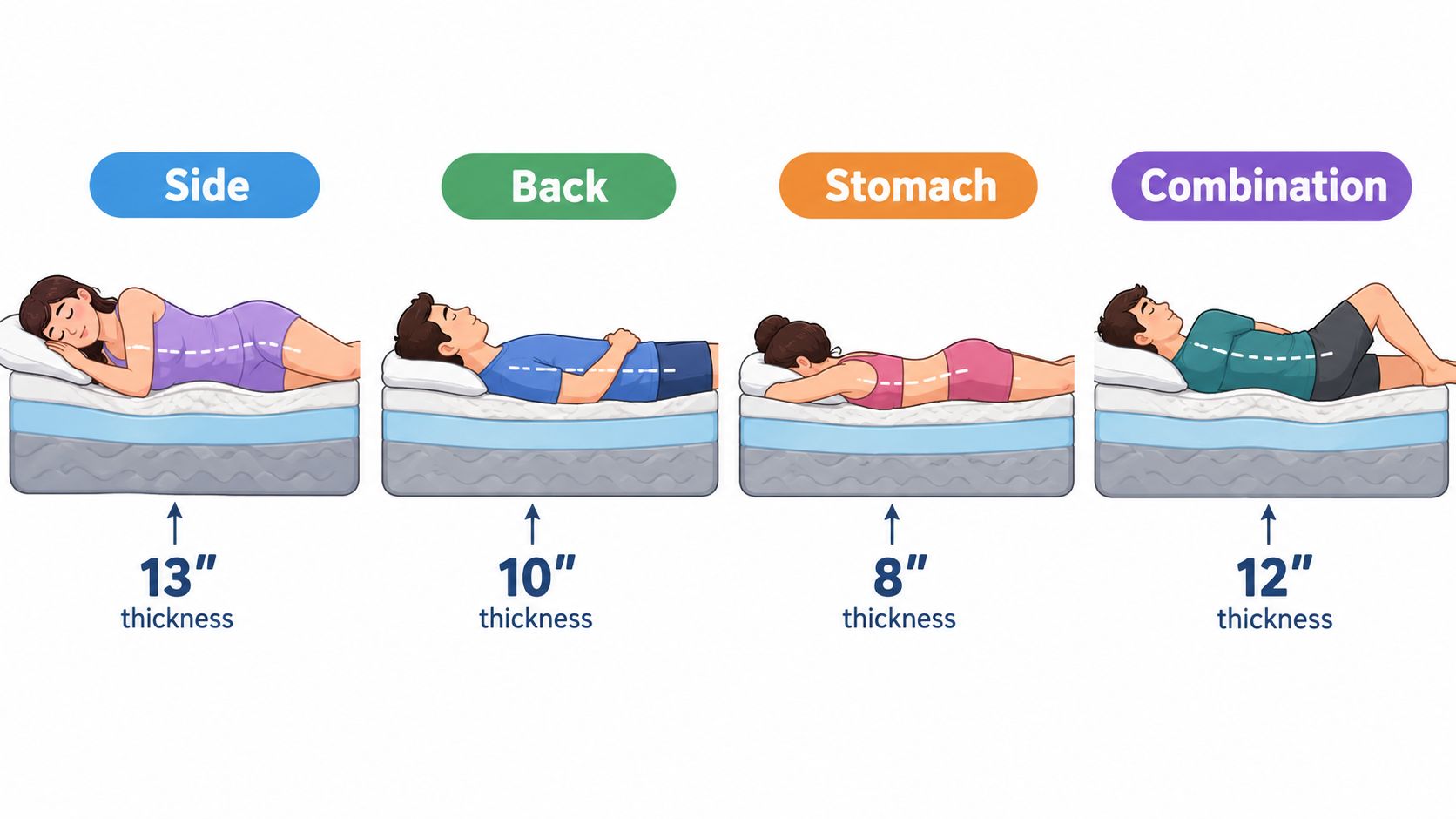
At Groen's showrooms in Dyer and Crown Point, this is one of the easiest mistakes to spot. A shopper tries a plush 14 inch mattress, loves the pressure relief, then realizes at home that the bed becomes too tall on their existing frame and harder to get in and out of. The reverse happens too. A thinner mattress can keep the bed height comfortable but leave a side sleeper with sore shoulders because there is not enough cushioning on top.
Side sleepers need more depth
Side sleeping puts the most pressure on the shoulder and hip. If the mattress is too thin, those areas hit the firmer support layers too quickly and the bed starts to feel hard instead of supportive.
For many side sleepers, especially petite to average builds, 12 to 14 inches is the right starting point. That extra height gives the comfort layers enough room to cushion pressure points while keeping the spine straighter. If you sleep on your side and your bed already sits high on a taller frame, check the total bed height before you buy. Comfort matters, but so does being able to sit on the edge and stand up without effort.
Back sleepers usually fit the middle range
Back sleepers tend to do best in the 10 to 12 inch range. That profile usually gives enough cushion under the shoulders and hips without letting the midsection sink too far. It is the safest starting point for shoppers who want support first and do not want an overly tall bed.
This range also plays nicely with a lot of bed setups in Northwest Indiana homes. It works on platform beds, many adjustable bases, and traditional frames without pushing sheet depth or bed height into annoying territory.
Stomach sleepers should stay lower and firmer
Stomach sleepers need flatter support. Too much loft under the body lets the hips drop, and that is how lower-back strain starts.
A mattress in the 8 to 10 inch range often makes more sense here, especially if the build is firm and supportive. Some stomach sleepers can go a little taller if the comfort layers are tight and responsive, but soft, thick profiles are usually the wrong pick.
Body type changes how thickness performs
Heavier sleepers should usually start at 12 to 14 inches or more. More material gives the mattress a better chance to hold support, resist that flattened feeling, and keep the comfort layers from bottoming out too fast.
Lighter sleepers often do not need that much height. A lower-profile mattress can still feel comfortable and supportive because the body does not press as far into the surface. Combination sleepers land in the middle. They need enough cushioning for pressure relief and enough pushback to change positions easily.
If you want a clearer match between build, support needs, and feel, this body type mattress guide is a useful next step.
A simple starting point:
- Side sleeper: start with 12 to 14 inches
- Back sleeper: start with 10 to 12 inches
- Stomach sleeper: start with 8 to 10 inches
- Heavier body type: choose thicker builds with stronger support
- Lighter body type: do not pay for extra height you will not use
The right answer is not just your sleep position. It is your sleep position plus your body type plus the full bed setup waiting at home. That is why shoppers in Dyer and Crown Point get better results when they test thickness with their frame height, preferred sheet fit, and ease of entry all in mind.
How Mattress Types Affect Thickness and Feel
Mattress height only matters if the materials under that fabric can use it well. A 12-inch mattress with cheap foam can feel flat and unstable, while a 10-inch mattress with a stronger coil unit or denser comfort layers can feel far better night after night.
Start with construction. Then judge thickness inside that type. If you want a broader primer before narrowing the field, read this mattress type guide.
Mattress Type vs. Thickness and Feel
| Mattress Type | Typical Thickness | Feel | Motion Isolation | Best For |
|---|---|---|---|---|
| Innerspring | about 8 to 12 inches | buoyant, breathable, easier to move on | lower than foam-heavy builds | guest rooms, shoppers who want a classic feel |
| Memory foam | about 10 to 14 inches | close contouring, slower response, deeper pressure relief | usually strong | side sleepers, motion-sensitive couples |
| Latex | about 9 to 12 inches | springy, supportive, cooler, less “stuck” feeling | moderate | sleepers who want responsiveness with cushioning |
| Hybrid | about 12 to 16 inches | balanced support and cushioning | often strong | primary bedrooms, couples, mixed sleep styles |
Innerspring mattresses usually feel taller than they measure because coils create lift and airflow. They make sense for guest rooms, back sleepers who like an easier surface to move on, and anyone trying to avoid an overly tall bed on a high frame. In Groen's Dyer and Crown Point showrooms, this is often the category that works best when the bed already sits high and adding a thick hybrid would make getting in and out a chore.
Memory foam mattresses often need more build height to avoid feeling too shallow or too firm. Extra foam layers can improve pressure relief, but they also add total bed height fast. That matters if you already have a tall foundation or deep-pocket sheets are not something you want to deal with.
Latex mattresses are different. Latex has natural pushback, so it does not need a very tall profile to feel supportive. For shoppers who want cushioning without that slow, sink-in feel, latex often gives more support per inch than memory foam.
Hybrids run thicker because they stack more materials
A hybrid usually combines a coil support core with substantial comfort layers on top. That layered build is why so many hybrids land in the taller range. The payoff is balance. You get pressure relief, stronger edges, and a surface that works well for couples who need support and motion control in the same bed.
There is a trade-off. Thick hybrids can make the full bed setup much taller than expected, especially on traditional frames or storage beds. In the showroom, this is one of the easiest mistakes to catch early. A mattress that feels great for ten minutes can still be the wrong pick if it leaves your nightstand too low, your fitted sheets straining, or your feet dangling when you sit on the edge.
Use this quick filter:
- Choose innerspring if you want a simpler profile, easier movement, and less total bed height.
- Choose memory foam if pressure relief matters most and you are fine with a slower, closer-contouring feel.
- Choose latex if you want responsive support without needing an especially thick mattress.
- Choose hybrid if you want the broadest comfort range and do not mind a taller build.
If you are deciding between coil-driven lift and a more layered, cushioned feel, this hybrid versus innerspring mattress breakdown will help you sort out which setup fits your bed, body, and room better.
Bed Frame, Sheet, and Room Fit Considerations
You feel great on a mattress in the showroom. Then it gets home, lands on your frame, and suddenly the bed is too high to get into comfortably, the fitted sheets keep popping off, and the nightstand looks oddly low. That is a setup problem, not a comfort problem.
In the Dyer and Crown Point showrooms, this comes up all the time. Mattress thickness has to match the whole bed. Frame height, foundation height, sheet pocket depth, room scale, and who is getting in and out of the bed every day all matter just as much as the feel on top.
Start with total bed height
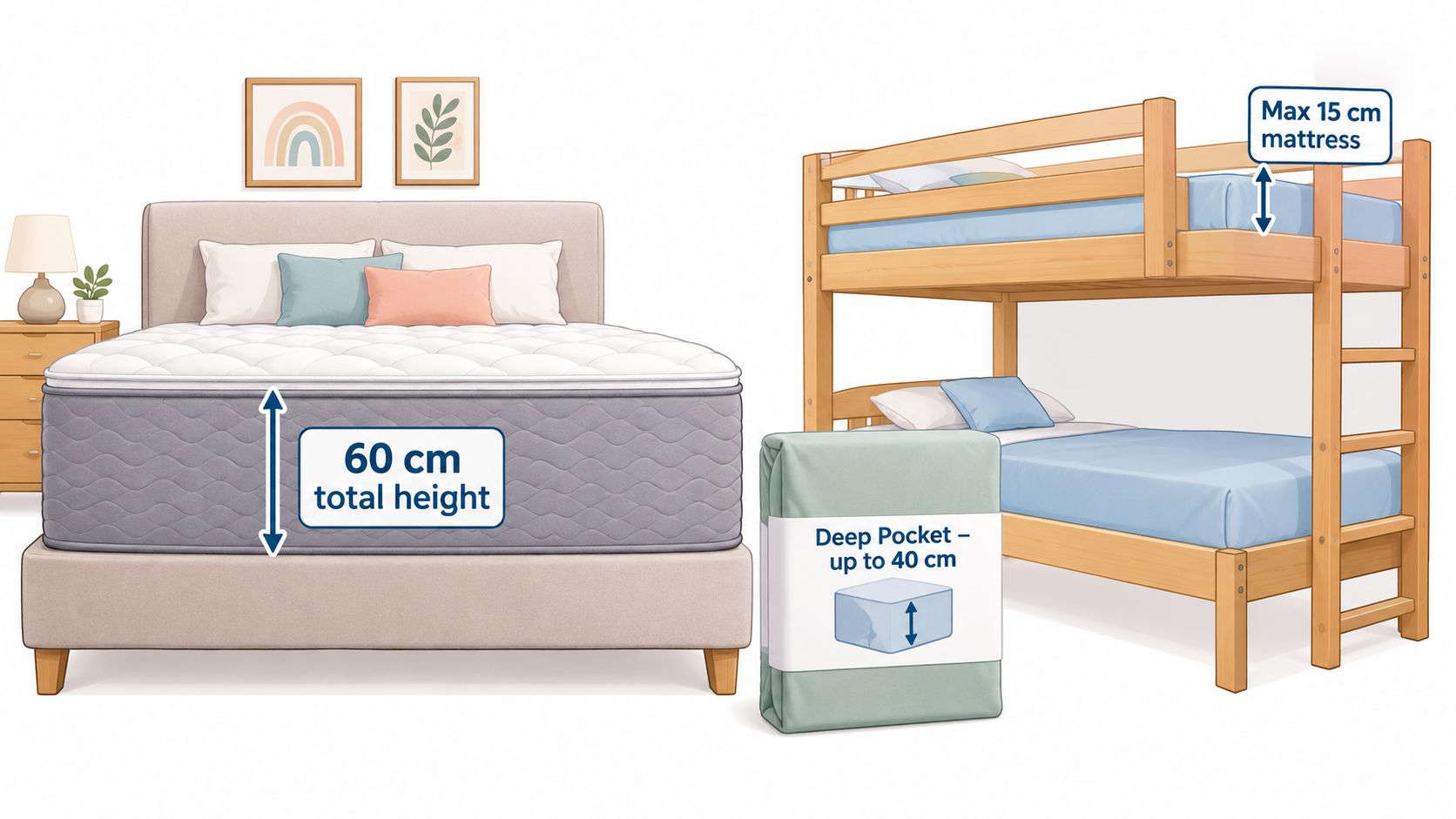
A mattress does not sit in the room by itself. Put a 14-inch mattress on a tall traditional frame or a base with extra lift, and the finished bed can become awkward fast. Shorter adults, older sleepers, and anyone with knee or hip trouble usually do better when they can sit on the edge with both feet planted instead of climbing up or dropping down.
Low platform beds create the opposite issue. A thinner mattress may keep the look clean, but the bed can end up too low for easy entry and exit.
Before you buy, check three things:
- Headboard exposure: a taller mattress can cover too much of the headboard and throw off the proportions.
- Nightstand height: the top of the mattress should sit reasonably close to the top of the nightstand so reaching for a lamp, phone, or water feels natural.
- Under-bed clearance: changing mattress thickness can affect drawers, storage bins, and the visual weight of the bed in a smaller room.
If you want exact measurements before you commit, use this guide to measuring furniture and room fit.
Sheets need to match the mattress depth
This is one of the easiest details to overlook.
Once you get into thicker mattress profiles, standard fitted sheets often stop fitting well. Corners pull loose. The fabric strains. On adjustable bases, a shallow-pocket sheet can slip even faster because the bedding has to move with the mattress. If you are buying a taller mattress, check the sheet pocket depth at the same time. Do not assume your current linen closet will still work.
Bunk beds and smaller rooms need stricter choices
For bunk beds, keep the mattress low-profile and make sure the top sleeper stays safely below the guardrail. That is a safety rule, not a style preference. For many bunk setups, that means choosing a thinner mattress on the top bunk and being much more careful about total height than you would be in a standard bedroom.
Room size matters too. A very tall mattress on a bulky bed can crowd a smaller bedroom and make the ceiling feel lower. In many Northwest Indiana homes, especially guest rooms and kids' rooms, a moderate mattress height fits the space better and keeps the room easier to use.
If your current bed has become harder to get into, harder to make, or harder to live with, the issue may be age as much as thickness. This SleepHabits bed change guide is a useful reference for deciding when the whole setup needs a fresh start.
Choosing the Right Thickness at Groen's Fine Furniture
A lot of Northwest Indiana shoppers walk into the Dyer or Crown Point showroom focused on comfort and leave realizing the decision is total bed height.
That shift matters. The right mattress thickness has to work with the frame you already own, the sheets you plan to keep, who sleeps in the bed, and how easy the bed is to get in and out of every day.
Strong recommendations by use case
For a guest room, keep it practical. An 8 to 10 inch mattress is usually the smart pick because it is easier to move, easier to make, and less likely to turn a smaller bedroom into a tall, awkward setup. It also fits the way many guest rooms are used in homes across St. John, Munster, Schererville, and the rest of NWI.
For a primary bedroom, start at 12 inches. That is the sweet spot for many couples because it usually gives enough depth for real support and enough comfort for pressure relief, without making the whole bed too tall once it sits on a standard frame or foundation. If one sleeper is on their side and the other is on their back, this is often the safest choice.
Go to 14 inches or more only when the sleeper clearly needs the extra cushioning depth and the bed setup can handle the added height. That profile can be a very good fit for side sleepers, larger body types, and anyone who wants a more substantial feel. It is a poor fit for shorter sleepers, high bed frames, or anyone already struggling to climb into bed comfortably.
Match the mattress to the whole setup
At Groen's Fine Furniture, the useful part of the shopping process is seeing different profiles in person and checking them against the full setup, not judging thickness in isolation. The stores carry options across innerspring, memory foam, latex, and hybrid builds, so the choice can be based on how the mattress will live in the room.
That matters more than people expect.
A 12-inch mattress on a low platform bed can feel balanced and easy to use. The same 12-inch mattress on a tall traditional frame may put the sleep surface too high for daily comfort. The same issue shows up with adjustable bases, older bed frames, and guest rooms where you do not want the bed dominating the space.
Families in the Dyer and Crown Point showrooms also run into this with non-standard needs. A vintage frame may call for a lower profile. A main bedroom with a low modern bed may need more mattress depth to avoid feeling too close to the floor. A child, guest, or older adult may need a setup that is easier to enter and exit safely.
The right mattress thickness should solve a problem. It should not create a new one with bed height, fitted sheets, or everyday access.
Cost matters too. Special financing, subject to credit approval, can help families choose the thickness that fits the room and the sleeper instead of settling for a thinner option that feels wrong from day one. That usually costs less in the long run than replacing a mattress that never matched the setup.
Visit Our Dyer or Crown Point Showrooms Today
You get home with a mattress that felt good in a quick test, set it on your frame, and suddenly the bed sits too high, your fitted sheets barely stretch, and getting in and out feels awkward every night. That is the mistake worth avoiding.
The better move is to test mattress thickness as part of the whole setup in Groen's Dyer and Crown Point showrooms. Lie on the mattress, check the height with the frame you have in mind, and pay attention to how easy the bed feels to use, not just how soft it feels for five minutes. A mattress has to fit your body, your bed, and your room.
Why in-person testing still matters
An 8-inch profile, a 10-inch profile, and a thicker model can all feel fine at first. The difference shows up when you factor in edge support, how far you sink, whether your shoulders stay level, and how high the finished bed will sit once everything is put together. That is much easier to judge in person than from a spec sheet.
Bring a few simple details with you. Measure your current frame height. Check the pocket depth on your fitted sheets. Know who will use the bed every day, especially if it is for a child, a guest room, or an older adult who needs easier access. Those details usually point to the right thickness faster than comfort labels do.
Shoppers also benefit from seeing the full room context. Many Northwest Indiana families come in for a mattress and end up solving a bigger problem, like a bed that overpowers a smaller room, a frame that sits too low, or a setup that needs better furniture, delivery help, or design guidance to work well.
A local decision deserves local help
Groen's has served Northwest Indiana since 1983, and that local experience matters here. Families in Dyer, Crown Point, St. John, Schererville, and Munster do not need a sales pitch about buying the thickest mattress on the floor. They need honest guidance on what fits their sleep position, their frame, and the way they live.
Before you go, bring frame measurements and a clear sense of what is not working now. Then test the height ranges that make sense for your room and your routine.
Visit Groen's Fine Furniture in Dyer or Crown Point today to compare mattress thicknesses in person, explore options for hard-to-fit bed setups, and ask about special financing plans. The team helps Northwest Indiana families choose a mattress that feels right at night and works with the complete bed setup during the day.