Blog
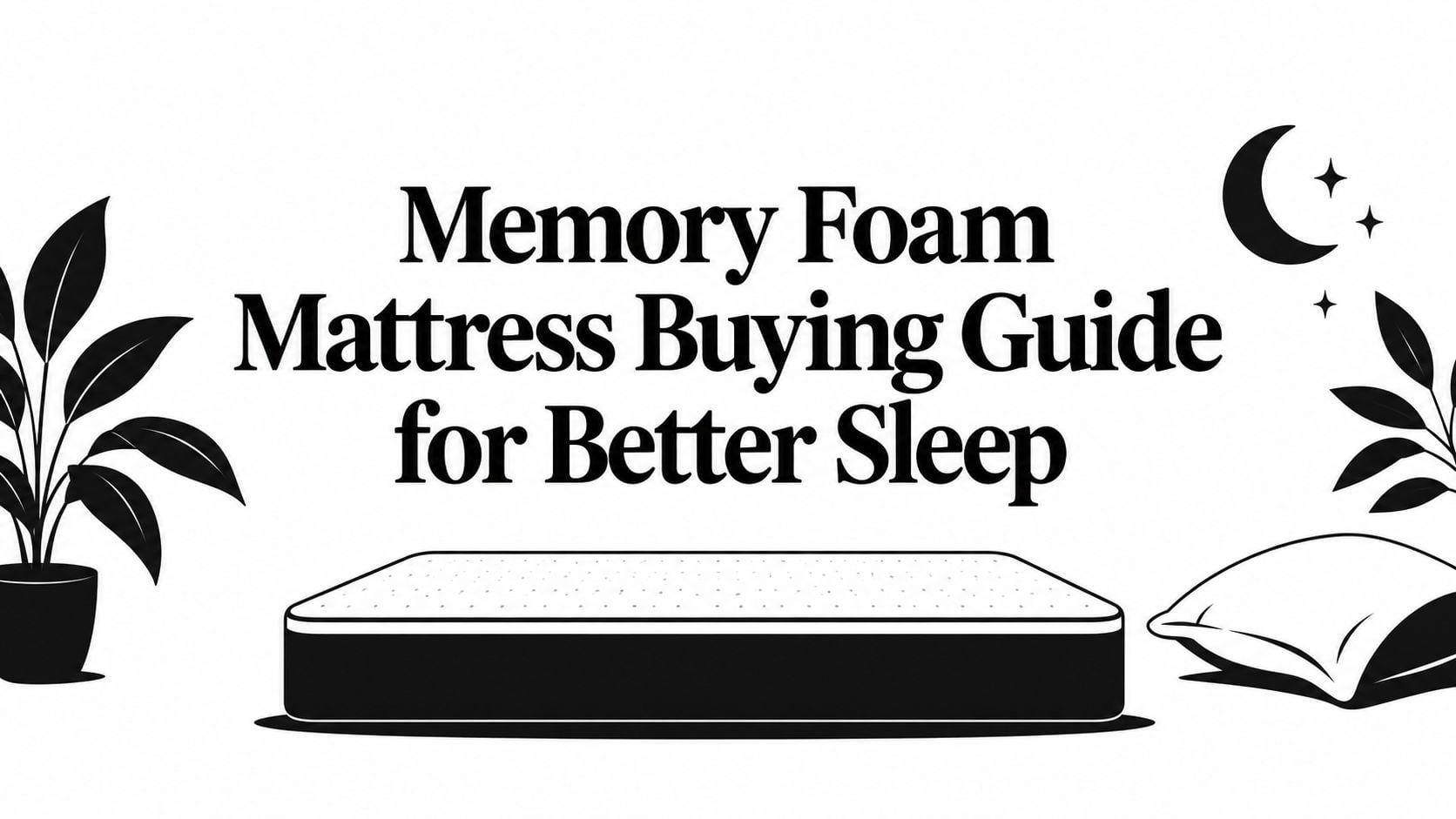
Memory Foam Mattress Buying Guide for Better Sleep

A lot of Northwest Indiana shoppers start in the same spot. The old mattress has a dip in the middle, one partner wakes up sore, the other wakes up hot, and a quick online search turns a simple errand into a maze of gel layers, copper covers, firmness charts, and sales language.
For homeowners in Dyer, Crown Point, St. John, Schererville, and Munster, a memory foam mattress can be a smart buy, but only when the right details get attention. Our family has served NWI since 1983, and the pattern is familiar. People rarely regret buying the mattress that fits their body and holds up. They regret buying the one that felt plush for five minutes and lost support too soon.
This memory foam mattress buying guide keeps the focus where it belongs. Density matters more than showroom softness. Cooling claims need a reality check. Trial terms, warranty language, White-Glove Delivery, and Special Financing available (subject to credit approval) all affect value just as much as the sticker on the tag. Sleep wellness starts with comfort, but it doesn't end there.
Why a Memory Foam Mattress Deserves a Thoughtful Buying Guide
A shopper lies down on a memory foam mattress for 30 seconds, says, “That feels great,” and buys it. Three weeks later, the same bed sleeps warmer than expected, feels softer at the hips, and costs more to return than they realized. That happens because memory foam is one of the easiest mattress types to misjudge on a quick test.
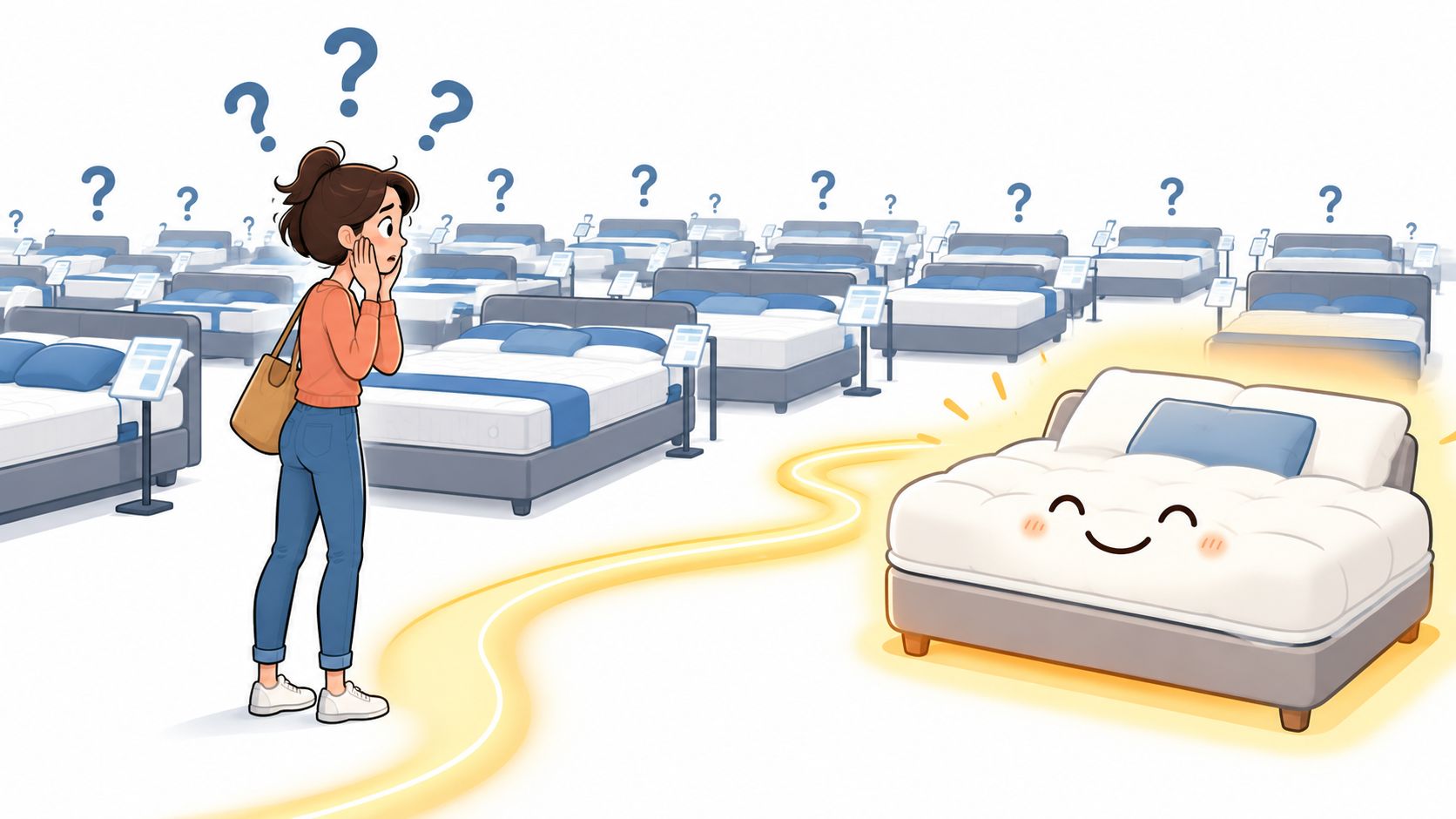
Memory foam deserves a stricter buying process than many other mattresses. It changes as your body settles in. It responds to heat. It can feel supportive at first, then let you sink more than you wanted after several minutes. That delayed feel is exactly why shoppers need better questions than “Is it soft?” or “Does it have cooling gel?”
Start with the specs that decide whether the bed will still feel good a few years from now. Density matters more than the firmness label. Support matters more than a plush top layer. Trial terms, warranty coverage, delivery setup, and financing matter because the true cost of ownership is never just the sticker price.
What usually goes wrong
The biggest mistake is buying the story instead of the build.
- Shoppers focus on firmness labels: “medium” on one memory foam mattress can feel nothing like “medium” on another.
- They confuse density with firmness: density speaks to material quality and durability. Firmness is just the surface feel.
- They assume all-foam works for everyone: some sleepers do better on a hybrid or another design with more bounce and airflow, especially heavier bodies and hot sleepers.
- They ignore the back-end costs: a long trial, clear warranty terms, and realistic financing can make a better mattress cheaper to own over time than a bargain bed that fails early.
That last point gets skipped in a lot of buying guides, and it should not. A mattress is a long-use purchase tied to recovery, aches, partner disturbance, and sleep quality. That is also why we point shoppers to practical reading like this guide to why a high-quality mattress matters for long-term health, not just showroom signs.
What deserves your attention
Ask blunt questions.
- What is the foam density in the comfort layers?
- Will this support your body type without early sagging?
- Does the all-foam feel suit how you move, sleep, and run hot at night?
- What does the trial require if you want to return it?
- How much will delivery, setup, protection plans, and financing add to the bill?
Those answers separate a mattress that feels good for ten minutes from one that still earns its keep night after night.
What Memory Foam Actually Is and Where It Came From
You lie down on a memory foam bed for five minutes in the store, stand up, and still see your handprint in the surface. That is not a gimmick. That is the material doing exactly what it was built to do.
Memory foam is viscoelastic polyurethane foam. It responds to pressure and temperature. Your weight compresses it. Your body heat softens it. Then it comes back slowly instead of springing up fast. That slow recovery creates the hugged-in, body-tracing feel people either love or reject right away.
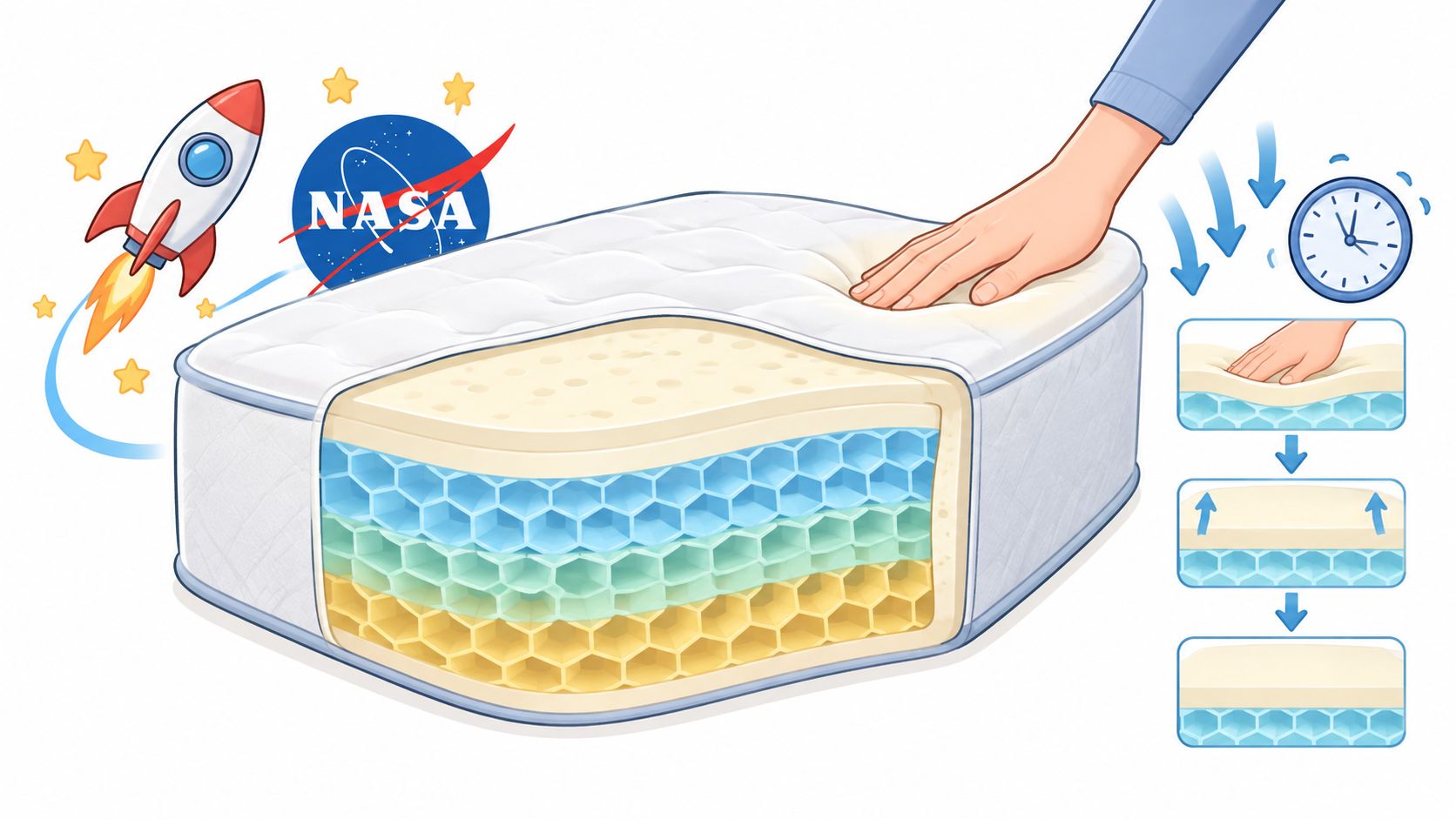
The backstory matters because it explains why memory foam feels different from every springier mattress on the floor. The material started in aerospace settings, where the goal was pressure absorption and force distribution, not bounce. Consumer mattresses hit the market in the early 1990s after that foam technology was adapted for home sleep products. If you want the longer version, this history of mattresses from straw mats to memory foam lays out how the category developed.
Here is the plain-English takeaway. Memory foam was built to absorb, contour, and recover slowly. Shoppers who want a lifted, quick-response feel often do better skipping all-foam and looking at a hybrid or another design with more pushback. That is one of the biggest mistakes in this category. People shop for softness and ignore how the bed responds when they roll, sit up, or change position at 2 a.m.
Why the material matters more than the marketing
A lot of labels on showroom tags are fluff. “Cooling.” “Luxury.” “Ultra-plush.” Those words do not tell you much by themselves.
The material behavior does.
Memory foam should do three things:
- Contour under pressure: it should spread weight across a wider area instead of letting hips and shoulders jam into the surface.
- Recover slowly: it should not bounce back like latex or coils.
- Change feel with warmth: it often feels firmer at first, then softens as the surface warms up.
That third point catches shoppers off guard. A bed can feel supportive for the first minute and noticeably deeper after ten. For some sleepers, that is pressure relief. For others, it is the start of the stuck feeling they end up hating.
What is actually inside a memory foam mattress
Most memory foam mattresses are built in layers, and the top layer is only part of the story. The upper comfort layers handle contouring and pressure relief. The lower support core keeps your body from sinking too far out of alignment. Some models add cut channels or open-cell foam to move more air, but airflow features do not fix a weak support build.
Judge the whole stack, not the first soft inch.
That is also why this category needs a buying guide with some backbone. The foam chemistry explains the feel, but the buying decision comes down to whether that feel fits your body, sleep style, and long-term use. If you hate slow response, sleep hot, or need more bounce to move easily, all-foam may be the wrong call no matter how nice the top layer feels in the store.
Density and Firmness Decoded
A shopper walks in, tries one mattress for 60 seconds, and says, “This one feels soft, so it must be better.” That is how people end up replacing a mattress too soon.
Buy memory foam by density first. Then choose the firmness that fits your body.
Firmness is easy to notice on the showroom floor. Density is what decides whether that comfort still feels good after a few years of real use. If a brand cannot tell you the density of the memory foam layer, treat that as a warning sign.
Density is the durability spec
Density tells you how much material is packed into the foam. More material usually means better resistance to early softening, sagging, and body impressions. Less material usually means the bed feels fine at first, then starts giving up too early.
This is the point many buying guides miss. A mattress can feel plush and still be well built. It can also feel firm and still use cheap foam that breaks down faster than it should. Firmness does not tell you build quality. Density does.
For a primary bedroom, target memory foam comfort layers around 3.5 lb/ft³ or higher. If you are heavier, sleep in the same bed every night, or want the mattress to hold up longer, 4.0 lb/ft³ and up is the safer bet.
Firmness is the comfort spec
Firmness tells you how the mattress feels on day one. It does not tell you how well the foam will age.
Some Northwest Indiana shoppers want that close, body-hugging cradle. Others want a flatter, easier-on-and-off surface. Both are valid preferences. Neither one says much about longevity unless you also know what the foam is made of.
ILD and IFD numbers can help a little here. They describe how resistant the foam feels when you first press into it. That matters for comfort testing. It is not the spec to chase if your goal is long-term value.
| Density (lb/cu ft) | What It Usually Means | Best Fit | Longevity Outlook |
|---|---|---|---|
| Below 3.0 | Lighter, less durable memory foam | Guest rooms, occasional use, tight budgets | Shorter useful life |
| 3.0 to 4.0 | Middle ground for cost and durability | Many primary sleepers, depending on build | Better, but still worth checking layer thickness |
| 4.0 to 5.0+ | Heavier, slower-wearing foam | Primary bedrooms, heavier sleepers, buyers keeping a mattress longer | Stronger long-term value |
What actually matters in the store
Ask plain questions and make the salesperson get specific.
- What is the density of the actual memory foam comfort layer?
- How thick is that layer?
- Is the higher-density foam near the top where I sleep, or buried deeper in the build?
- Will this feel different after ten minutes than it does in the first minute?
That last question matters more than shoppers think. Memory foam changes as it warms up. A mattress that feels supportive at first can let you sink much deeper after a few minutes. For some people, that is pressure relief. For others, that is the stuck feeling they regret.
If you want help sorting out surface feel, pressure relief, and support, our guide to choosing the right mattress firmness covers that clearly. Start there for comfort. Come back to density for quality.
One more straight answer. Some sleepers should skip all-foam entirely. If you are heavier, run hot, struggle to change positions, or hate that slow-sink feel, a memory foam mattress can still be the wrong build even if the density is good. A well-made hybrid often solves those problems better than chasing a firmer all-foam model.
Types of Memory Foam Mattresses Worth Comparing
You sit on one memory foam mattress and sink in like wet sand. You try the next one and it feels cooler, springier, and much easier to move around on. Both have "memory foam" on the tag. That label alone tells you almost nothing.
What matters is the build under the cover. Some memory foam beds are classic all-foam models built for deep contouring. Others use memory foam as the comfort layer over coils, which changes edge support, airflow, and how trapped or mobile you feel at night. If you only compare softness in the showroom, you will miss the differences that affect ownership after the first week.
The five builds worth comparing
Traditional viscoelastic memory foam is the old-school version. It has the slow, close-hugging response people either love or hate. It does a strong job with motion isolation and pressure relief, but it can also make changing positions feel like work.
Gel-infused memory foam adds gel to chase a cooler story. Sometimes it helps with that first impression. It does not fix a bad mattress design. If the foam lets you sink too far and the mattress has poor airflow, gel alone will not save it.
Open-cell memory foam is built to breathe better than older, denser-feeling foam. For shoppers who like pressure relief but hate that closed-in feel, this type is often a smarter place to start than basic memory foam.
Copper- or graphite-infused foam gets marketed hard. The question is simple. Does the mattress sleep cooler in actual use, or is the infusion just a brochure feature? Treat these add-ins as secondary. Density, support design, and overall construction still matter more.
Foam-over-coil hybrids use memory foam on top of a coil support system. For many shoppers, this is the category to beat. You usually get better edge support, easier movement, and a less stuck feel without giving up pressure relief.
| Foam Type | Heat | Bounce | Motion Isolation | Best For |
|---|---|---|---|---|
| Traditional memory foam | Warmer tendency | Low | Excellent | Sleepers who want deep contouring |
| Gel-infused memory foam | Moderate | Low | Excellent | Buyers wanting contouring with some cooling effort |
| Open-cell memory foam | Moderate to cooler | Low to moderate | Very good | People who like foam but want less trapped feel |
| Copper or graphite infused foam | Moderate to cooler | Low to moderate | Very good | Shoppers comparing specialty cooling claims |
| Foam-over-coil hybrid | Cooler than many all-foam builds | Moderate to higher | Good to very good | Combination sleepers and edge-support shoppers |
The support core usually matters more than the cooling story on the label.
Where many shoppers should start
Pure all-foam works well for some sleepers. It is not the safe default many online guides make it out to be.
Shoppers who run hot, sleep near the edge, change positions often, or hate that slow-sink feel should put hybrids near the top of the list. A hybrid often solves the complaint better than a firmer all-foam bed does. You get memory foam pressure relief, but with more support and less struggle getting in and out of bed.
Material comparison matters too. If you are torn between contouring and bounce, our latex mattress vs memory foam guide will help you sort that out before you buy the wrong feel and live with it.
One more blunt truth. Fancy infusions are usually marketing. Construction is what you sleep on. Compare the type of foam, the thickness of the comfort layers, and whether the mattress is all-foam or hybrid. That is how you narrow the field fast.
Matching Your Sleep Position, Weight, and Temperature
You can love the showroom feel of a memory foam mattress and still hate it by the third night. That usually happens when the mattress matches the sales pitch better than the sleeper. Start with how you sleep, how much weight the mattress has to carry, and whether you already run warm.
Start with your position, but do not stop there
Sleep position sets the comfort target. It does not tell the whole story.
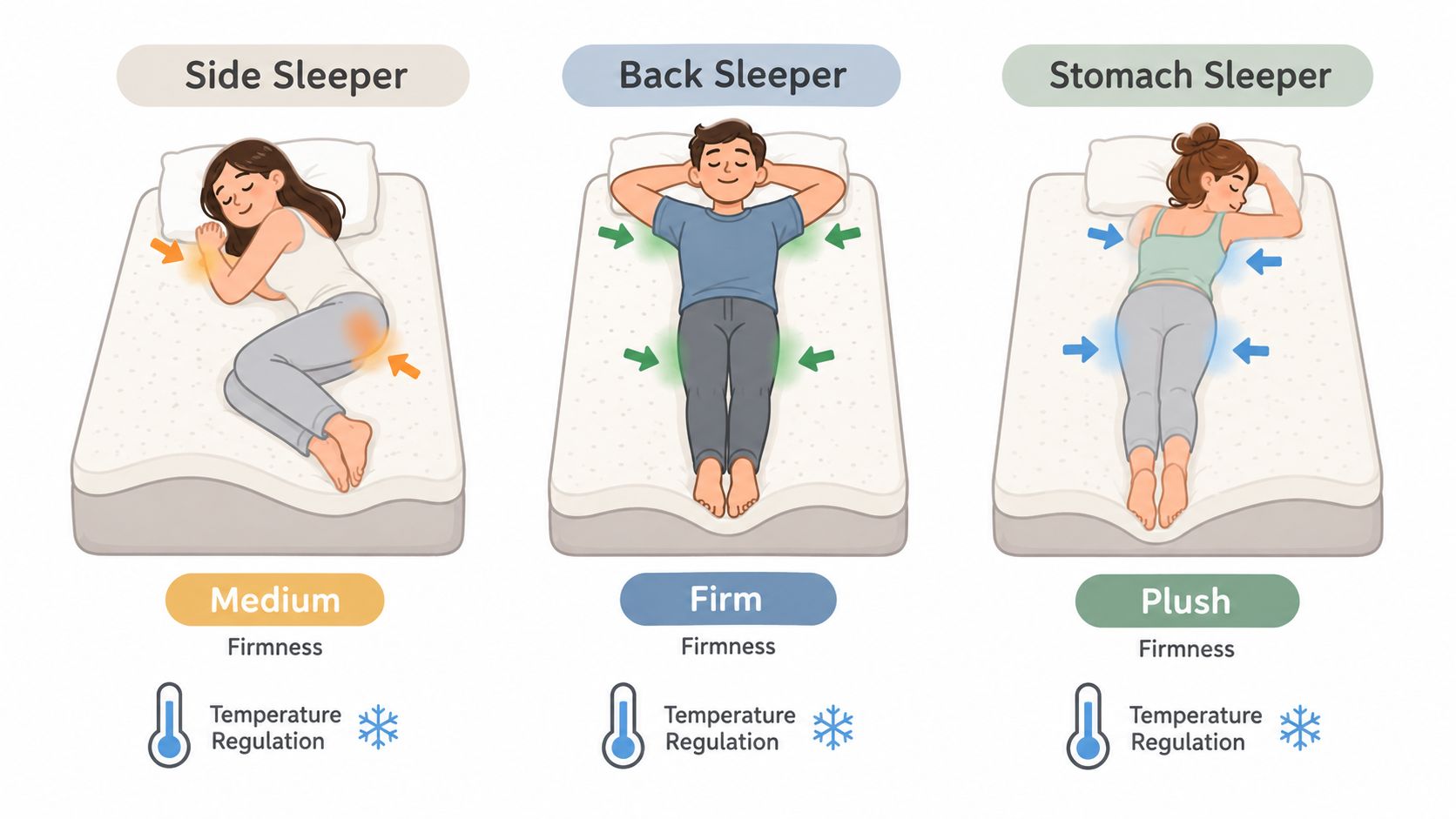
Side sleepers usually need enough cushion at the shoulder and hip to avoid pressure buildup. Back sleepers need a flatter surface that keeps the lower back from sagging. Stomach sleepers need the firmest support of the three, because too much sink under the hips can throw the spine out of line fast.
- Side sleepers: medium to medium-soft usually works best if pressure relief is the priority.
- Back sleepers: medium-firm is the safer starting point for steadier alignment.
- Stomach sleepers: firm support makes more sense than a thick, slow-sinking cradle.
Weight changes the answer more than many shoppers expect
Online firmness charts fall apart. A 130-pound side sleeper and a 240-pound side sleeper do not experience the same mattress the same way.
Heavier shoppers should focus hard on density and support retention, not just the firmness label on the tag. As noted earlier, denser comfort foam usually holds up better and resists early body impressions more effectively. If you carry more weight, low-density foam gets soft faster, lets the hips sink deeper, and shortens the useful life of the mattress.
Lighter sleepers can often do well on a plusher surface because they do not push as far into the comfort layers. Heavier sleepers usually need stronger support underneath and often do better with a hybrid than a thick all-foam build. If you want a clearer starting point, this body type mattress guide helps sort mattress fit by build, not just feel.
Temperature is not a side note
If you already sleep hot, be blunt with yourself. Memory foam can still work, but some people should avoid all-foam entirely.
That includes shoppers who trap heat easily, use heavy bedding, sleep two to a bed, or want a cool surface all night. In those cases, a breathable hybrid or a more open foam design usually makes better practical sense than chasing fancy cooling claims on an all-foam model.
A good quick filter is simple:
- Sleep cool and want close contouring: traditional memory foam can still fit.
- Sleep warm but still want foam pressure relief: open-cell foam or a hybrid is the smarter bet.
- Sleep hot, change positions often, or hate feeling stuck: skip thick all-foam options and move straight to hybrids.
For families trying to improve the full sleep setup, not just the mattress, this sleep quality guide for families is a useful companion read.
The right memory foam mattress should match your body in three ways. How you lie down, how deeply you compress the bed, and how much heat you hold through the night.
Buy the sleep system, not just the mattress
A poor pillow can wreck good alignment. A weak foundation can change how support feels. An adjustable base can help some back sleepers and pressure-sensitive sleepers, but it will not rescue a mattress that is wrong for your weight or sleep style.
Get those pieces in the conversation before you buy. It is cheaper than replacing the mattress you chose on firmness alone.
Comfort Trade-offs That Show Up on Night One
You get the mattress home, lie down, and the first reaction is usually, "That feels great." Give it two minutes. Night one is when memory foam starts showing its real personality, and some shoppers love it while others know right away they bought the wrong build.
Motion control is the big win
Memory foam does an excellent job of muting movement. If your partner gets up before sunrise, shifts all night, or drops into bed late, foam usually keeps that motion from traveling across the mattress.
That quieter surface is a real benefit for couples. It is one of the few comfort traits you can feel almost immediately.
Edge support is often the first disappointment
Plenty of all-foam mattresses feel comfortable in the middle and weak at the sides. That matters more than shoppers expect.
If you sit on the edge to get dressed, sleep near the perimeter, or need a steady push when standing up, pay attention here. A mattress with stronger edge reinforcement, often a hybrid or a firmer foam design, will feel better from the first night on. Soft edges are not a small annoyance. They make the whole bed feel smaller.
Pressure relief only works if support keeps up
Memory foam is supposed to cushion shoulders, hips, and joints. Good foam does. Cheap or badly balanced foam lets those heavier areas sink too far.
That is where buyers get confused. They blame firmness because the bed feels soft and pleasant at first, but the problem is support under the comfort layers. If your hips drop and your lower back starts to flatten out, you are not getting pressure relief. You are getting early misalignment.
Lie in your normal sleep position for a full two minutes. Foam changes as it warms up, and that short wait tells you more than the first ten seconds ever will.
Slow response is either soothing or annoying
Some shoppers love the hugged, settled-in feel. Others hate the slight pause when they roll or switch sides.
This is not a minor preference. If you change positions often, get up during the night, or dislike that "stuck" feeling, thick slow-response memory foam gets old fast. A quicker-response foam or a hybrid usually fits better, even if the showroom feel seems less dramatic at first.
Heat buildup is still part of the deal
Cooling covers, gel infusions, and other add-ons can help at the margins. They do not change the basic truth. Dense memory foam holds more heat than more breathable mattress constructions.
So test for the trade-off that matters. Deep contouring usually means more heat retention. If you want that close body cradle, accept that it may sleep warmer. If you want cooler sleep, give up some of that sink-in feel.
Use a simple showroom check:
- Lie still long enough for the foam to respond
- Notice whether your hips keep sinking after the first few seconds
- Sit and lie near the edge, not just in the center
- Pay attention to how easy it is to change positions
- Check for warmth building under your back and shoulders
Night-one comfort is not about the fanciest label on the mattress. It comes down to four things you can feel right away: motion control, edge stability, support under your hips, and how trapped or free you feel when you move.
True Cost of Ownership Beyond the Price Tag
A low sticker price can turn into an expensive mattress fast.
Memory foam is a category where cheap mistakes show up later, not in the first five minutes on the sales floor. The mattress that feels soft and impressive during a weekend sale can be the same one that loses comfort early, leaves you shopping again sooner than expected, and costs more over time than the better-built option you passed on.
That is why price should come after the build details and the policies.
What actually raises or lowers ownership cost
Start with the part that matters most. Density drives durability far more than the firmness label does. A mattress can feel firm and still use lower-grade foams that break down too soon. It can feel plush and still hold up well if the materials are denser and better made. If you remember one buying rule, make it that one.
Then look at the costs shoppers tend to ignore until something goes wrong:
- How soon you may need to replace it: Lower-density foams usually wear out faster.
- Trial terms: A trial is only helpful if the return process is clear and pickup is included.
- Warranty standards: Long warranties sound good on paper, but the coverage may be narrow enough to be hard to use.
- Delivery and setup: White-Glove Delivery, setup, and old mattress removal can be worth paying for if you do not want to wrestle a heavy foam bed through the house.
- Financing terms: Financing can make a stronger mattress fit the household budget, but only if the terms are straightforward.
The cheapest option is often the shortest-term option
Many shoppers in Northwest Indiana get tripped up. They compare two prices, assume memory foam is memory foam, and choose the lower number.
That shortcut misses the biggest cost driver. If one mattress lasts comfortably for years longer, the higher upfront price may be the better buy by a wide margin. Replacing a bargain mattress early is not saving money. It is paying twice.
| Factor | Lower-Priced Foam | Better-Built Foam | Higher-End Foam |
|---|---|---|---|
| Main risk or benefit | Lower upfront cost, more wear risk | Better balance of comfort and staying power | Higher upfront cost, stronger long-term case |
| What matters most | Trial and warranty details | Density and overall construction | Density, policy details, and budget fit |
| Likely ownership outcome | Greater chance of earlier replacement | Better fit for many primary bedrooms | Better for shoppers buying for longevity |
Three questions that keep shoppers out of trouble
Ask these before you focus on the sale tag:
- What is this mattress likely to cost me if I need to replace it sooner than expected?
- If it does not work out, who handles the return and what does that process look like?
- Would financing a better-built mattress cost less in the long run than replacing a cheaper one early?
Those questions get you closer to honest value than any promo sign will.
Try It, Trust It, and Bring It Home
You lie down for two minutes, the bed feels soft, the sale tag looks good, and then the questions hit after the paperwork starts. Who handles a return? What base does the warranty require? Is this foam dense enough to hold up, or just plush for ten minutes in a showroom?
That is why the store test matters. Memory foam needs time to respond to your body heat and pressure. A quick sit or hand press tells you almost nothing.
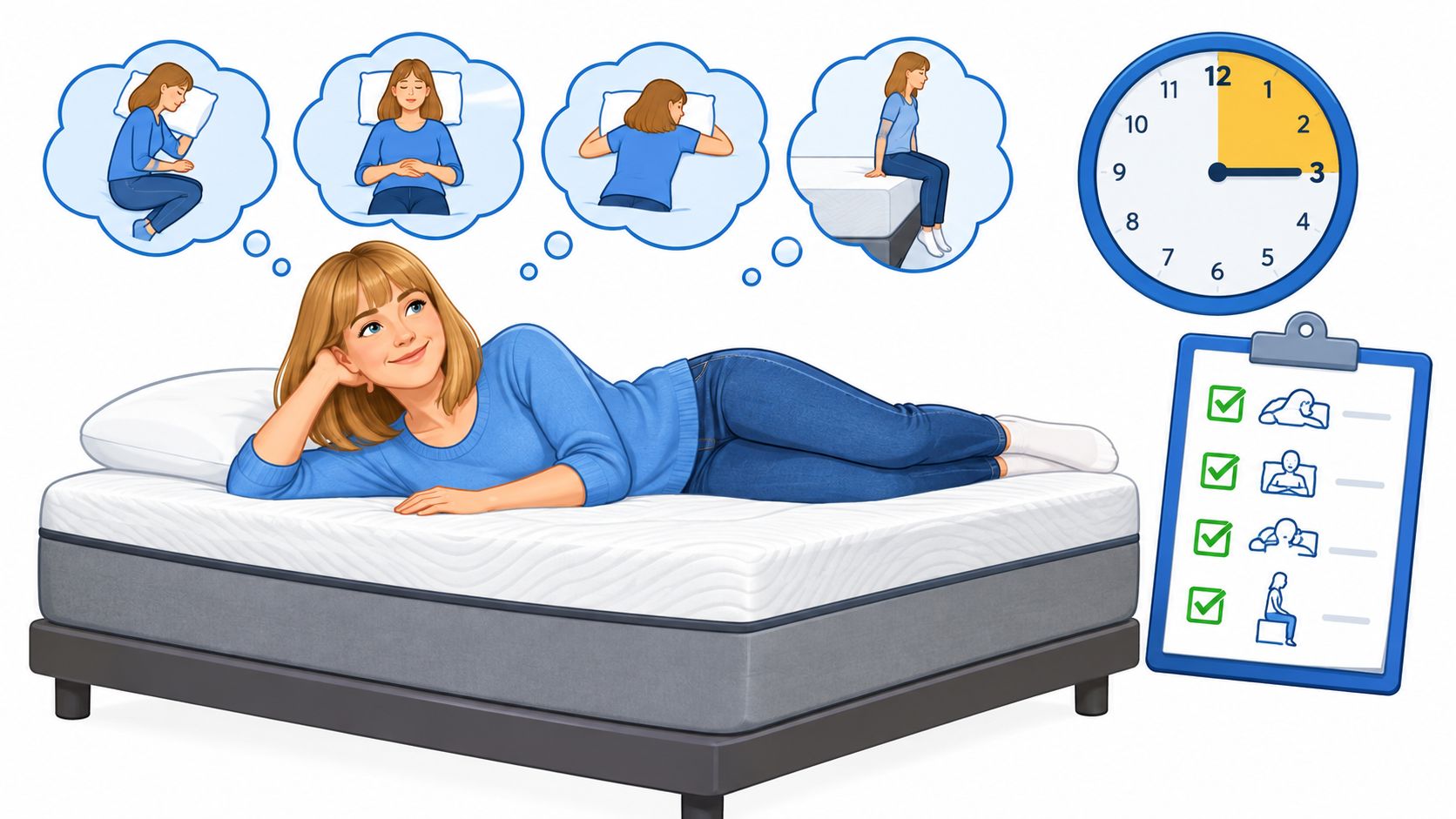
Use a real testing routine
Give each mattress a fair test. If you rush it, you are only testing the cover and the first inch of foam.
Use this routine:
- Lie in your main sleep position first for a few minutes and let the foam settle.
- Switch to your second-most common position and notice whether changing positions feels easy or like work.
- Sit on the edge the way you would when getting dressed in the morning.
- Test it with your partner if two people will sleep on it.
- Notice warmth under your shoulders, back, and hips, where heat tends to build first.
A good mattress should feel supportive after a few minutes, not just soft on first contact.
Ask the questions that expose the weak spots
The hangtag will talk about comfort. You need answers about ownership.
- What is the memory foam density?
- Is this all-foam or hybrid construction?
- Who should skip this model and choose a hybrid instead?
- What does the trial period require?
- Who handles the return or exchange if it does not work out?
- What foundation is required to keep the warranty valid?
- Does White-Glove Delivery include setup and old mattress removal?
- What financing terms are available right now?
Those questions separate a serious mattress from a dressed-up foam bed with good marketing.
One practical option in Northwest Indiana is Groen's Fine Furniture, which gives shoppers a place to compare memory foam and gel memory foam models in person and ask direct questions about delivery, financing, and warranty terms before signing anything. A written quote should cover the full purchase, not just the mattress price.
Read the paperwork before signing
A friendly showroom experience does not fix bad policy details.
If you do not understand the trial, warranty, delivery, and return terms before you buy, you are guessing on the most expensive part of the decision.
Shoppers in Dyer or Crown Point should leave with:
- The exact model name and size in writing
- The full delivery setup listed clearly
- Any old mattress removal details
- The trial terms
- The warranty basics
- The financing terms, if financing is used
Local shoppers deserve straight answers, not a script. The same stores that help families choose custom dining pieces, solid-wood furniture, and made-to-order options should be just as plainspoken in the mattress department. A bed affects how you feel every morning. It should be sold with more care than accent furniture.
Whether you choose memory foam, a cooler hybrid, or another sleep setup, the process should feel clear before you stand up from the mattress.
Northwest Indiana shoppers who want honest mattress guidance can visit Groen's Fine Furniture in Dyer or Crown Point to compare memory foam options, ask direct questions about density, delivery, and warranty terms, and explore Special Financing available, subject to credit approval. Our family has served NWI since 1983, and that local, personal approach still matters when a mattress needs to fit real sleep habits, real budgets, and real long-term comfort.