
8 Apartment Patio Privacy Ideas


You step onto your patio with a cup of coffee, and instead of relaxing, you lock eyes with the neighbor on the next balcony. That is a common privacy problem. In Northwest Indiana, apartment and condo patios are often close together, and a small outdoor space can feel exposed fast.
At Groen’s Fine Furniture, our family has helped local homeowners and renters build comfortable outdoor rooms since 1983. We see it every season. The patio usually is not failing because of size. It is failing because it lacks shelter, shape, and furniture that makes the space feel finished.
Good privacy fixes do not always require construction, permits, or permanent changes. Many work well for renters, and the best ones do more than block a sightline. They make the patio easier to use. A privacy panel paired with the right seating group creates a destination. Tall planters behind a loveseat can soften an open railing and give the whole layout more structure. That furniture-first approach matters if you want a patio that feels inviting instead of patched together.
Some products are decorative but weak in real use. Others hold up well but can make a small balcony feel boxed in. We help customers sort through those trade-offs every day, including materials, scale, weather exposure, and how much flexibility they need if they may move in a year or two. If you want examples of panel-style products, Sunbelly privacy screens show the kind of simple visual barrier many renters start with.
Start by identifying the exact problem. Side views need a different solution than an upstairs overlook. Wind across an open railing calls for a different setup than a patio that feels bare. Once that part is clear, the right mix of furniture, screening, fabric, and greenery gets much easier to choose.
If you want more inspiration beyond furniture-centered ideas, this roundup of outdoor privacy solutions can help you think through broader approaches. Our list focuses on the options we recommend most often for Northwest Indiana patios, especially when comfort, durability, customization, and budget all matter.
1. Outdoor Privacy Screens and Panels
A freestanding privacy screen is often the fastest fix. If your patio feels exposed from one side, a screen gives you immediate relief without forcing you into a full redesign.
The market has grown for a reason. The global outdoor privacy screen market was valued at USD 1.2 billion in 2022 and is projected to reach about USD 2.0 billion by 2030, with growth tied to urbanization and demand for private outdoor spaces (outdoor privacy screen market). That tracks with what we see in-store. People want flexible pieces they can move, layer, and live with.
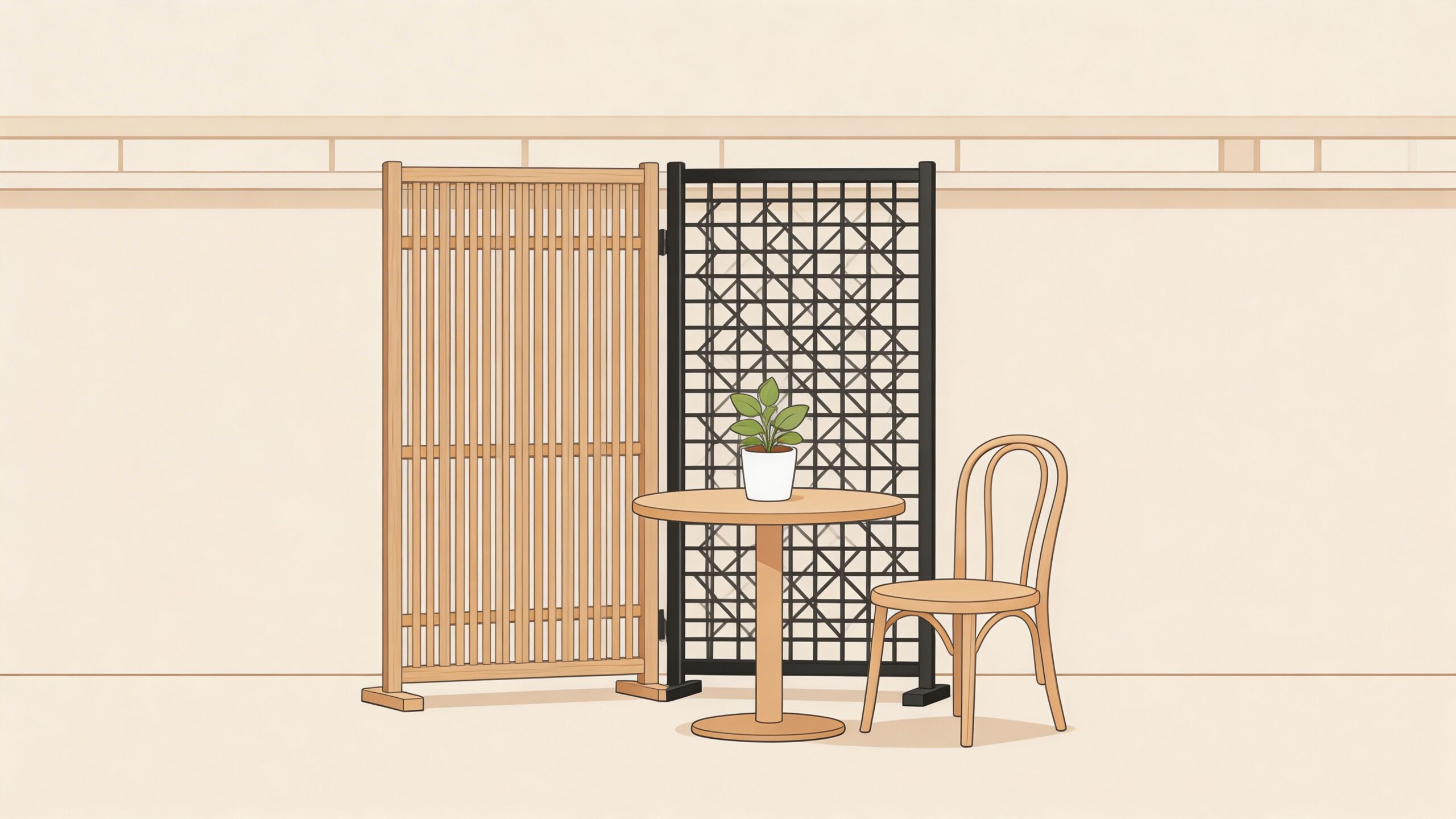
What works best
Composite, wood, metal, and bamboo all have their place.
Composite panels usually make the most sense for busy households. They are clean-looking, low upkeep, and especially useful in our part of the Midwest where moisture, wind, and winter can punish lighter materials. Metal panels can look sharp and modern, but make sure the pattern blocks the sightline you are trying to solve. Some decorative cutouts look great online and do very little once the sun hits them.
Wood screens are warmer and more furniture-like. They pair beautifully with solid wood outdoor pieces and can feel less temporary than a fabric divider. If you like a more natural look, they often blend into the patio better than black metal frames.
Real trade-offs to consider
Not every screen deserves the floor space it takes up.
A bulky panel on a tiny balcony can make the patio feel smaller. A narrow slatted screen usually feels lighter than a fully solid wall. In windy conditions, lightweight screens can rattle, shift, or tip if they are not secured properly.
In Northwest Indiana, stability matters as much as style. If a freestanding screen is easy for you to move, strong wind may think so too.
Look for drainage at the base, enough weight to stay put, and a design that still allows some airflow. If you want ideas for a more specific product style, Sunbelly privacy screens are a good example of how screens can balance coverage and design.
A smart setup uses the screen as a backdrop, not as an afterthought. Put it behind a loveseat, beside a dining bistro set, or at the corner where neighbors have the clearest line of sight. That way it solves privacy and helps define the room.
2. Strategic Outdoor Furniture Placement
Some of the best apartment patio privacy ideas do not start with a barrier. They start with furniture that shapes the space.
A high-backed sectional, a deep lounge chair, or a substantial bench can interrupt sightlines better than many people expect. The trick is to stop arranging furniture as if the patio were a blank rectangle. Angles work harder than straight rows.
Use furniture as a privacy layer
A Flexsteel outdoor sectional with a taller profile can shield a sitting area from a nearby balcony when you angle it toward the interior of the patio. A pair of Bassett-style club chairs can create a conversational corner that feels tucked in rather than exposed. An Amish-crafted bench along one edge can anchor the patio and visually separate your zone from the next one over.
I usually tell customers to think about their patio the way they would think about a family room. The same logic applies. Traffic flow, visual anchors, and seating orientation all matter. This guide on how to arrange living room furniture translates surprisingly well outdoors.
What works and what does not
Furniture placement helps most when the problem is an oblique view, not a direct overhead view. If your neighbor sees straight down onto your patio, furniture alone will not solve it. If the issue is a side view from ten or fifteen feet away, a taller seating arrangement can make a major difference.
This approach is also strongest when the furniture belongs outdoors. Weather-protected frames and durable upholstery hold their shape and look intentional. Indoor pieces dragged outside for a season rarely create the same effect, and they age badly.
A few practical layouts that work well:
- Sectional on the exposed side: Place the back of the sectional toward the unwanted view and open the seating inward.
- Bench plus planters: Use a bench to define the edge, then soften it with tall pots behind or beside it.
- Dining set as a center anchor: A sturdy dining grouping creates a clear room layout, which makes the surrounding privacy elements feel purposeful.
What does not work well is scattering small lightweight chairs around the perimeter. That usually leaves every sightline open and makes the patio feel temporary.
Our team in Dyer and Crown Point helps customers design it your way because the right outdoor furniture can do more than provide a seat. It can create shelter, rhythm, and a sense of ownership over the space.
3. Living Green Walls and Planters
A patio can feel exposed even after you bring in good seating. Greenery helps because it softens the edges of the space and blocks sightlines in a way that feels natural instead of boxed in.
A living wall or a grouped row of planters also changes how the patio functions. The space feels quieter, more settled, and more like a real outdoor room. That matters on apartment patios where every square foot has to earn its keep.
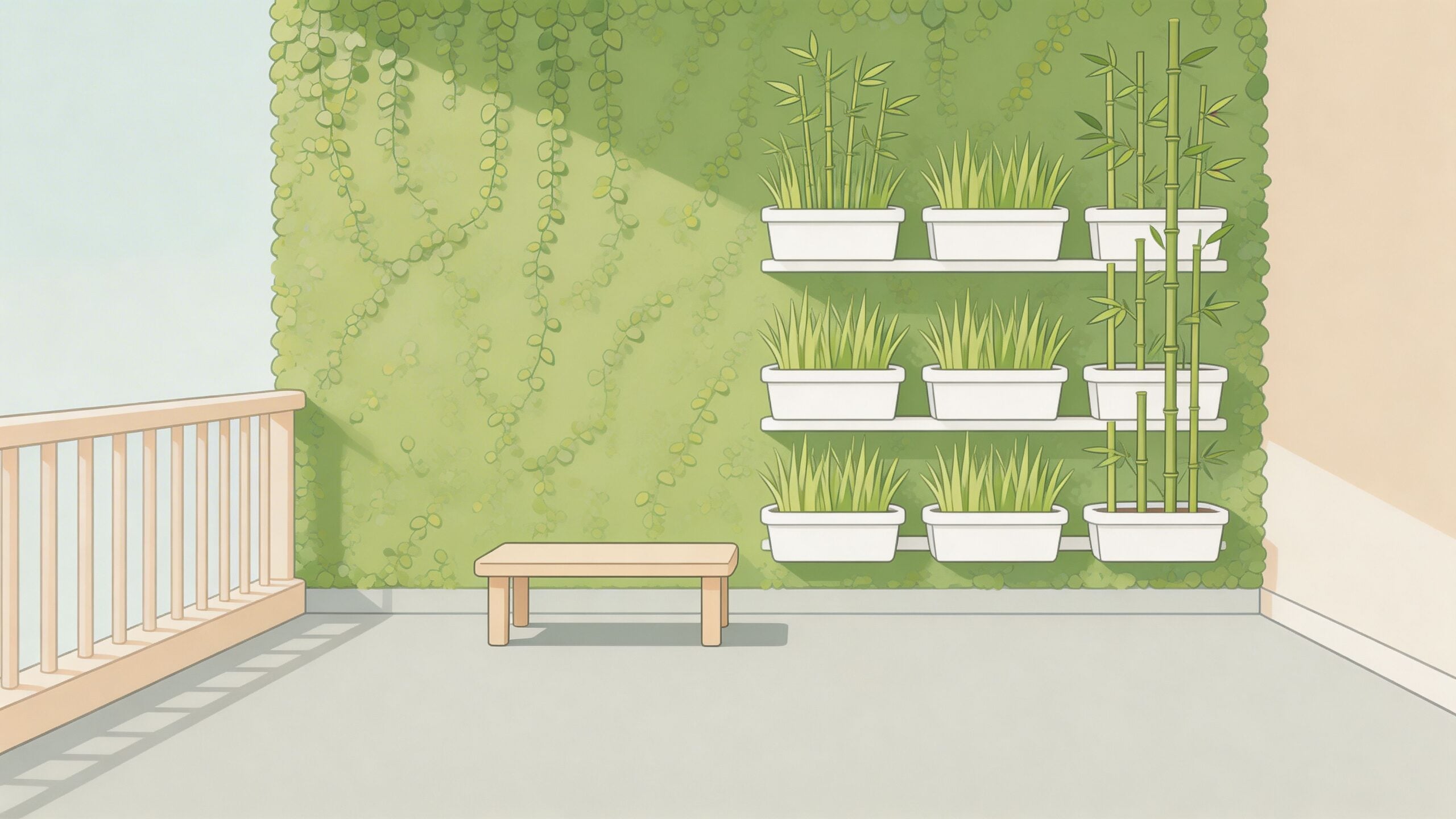
Best uses for plant-based privacy
Tall, narrow planters along a railing are a smart choice when you want coverage without shutting out all the light. A trellis with climbing plants works well if you can give it time to fill in. A modular vertical garden is useful on small patios because it adds privacy without taking up much floor space.
Planters also pair especially well with furniture, which is where many patios come together. A deep-seat loveseat with taller planters behind one side creates a sheltered corner for reading or morning coffee. A compact dining set framed with greenery feels more finished and intentional, not like a temporary setup on concrete. That is often the difference between a patio that looks decorated and one that feels livable.
For renters, movable planters are usually the easiest place to start. For homeowners planning to stay put, heavier containers, a freestanding trellis, or a mounted growing system can give the patio a cleaner, more permanent look. If you want your indoor and outdoor spaces to feel connected, our ideas for styling curtains and soft furnishings with the same finished look you want indoors can help tie the whole home together.
Honest caution about what fails
Plants ask for patience. They also ask for the right conditions.
Fast-growing vines often disappoint on apartment patios in Northwest Indiana. Containers dry out faster than people expect. Wind exposure is rough on tender growth. A plant that looks full and lush at the garden center can struggle by midsummer if the sun, drainage, and pot size are off.
Choose sturdy planters with drainage and enough soil volume to support real growth. Match the plant to your actual light conditions, not the photo on the tag. If privacy matters now, use plants as one layer of the solution, then add furniture or a low screen for immediate coverage.
At Groen's, we usually recommend building the patio in layers. Start with quality furniture that gives the space purpose. Add planters where they block the most noticeable views. Then refine the look with the right scale, finish, and layout so the whole patio feels comfortable, durable, and worth using every day. Financing can also help if you want to invest in better pieces now instead of replacing flimsy ones after a season or two.
4. Outdoor Curtains and Fabric Screens
A bare apartment patio can feel exposed the minute you sit down. Curtains change that fast. They soften hard railings, filter sightlines from nearby units, and help a small balcony read like a real outdoor room instead of leftover square footage.
They are also one of the better choices for renters who need privacy without committing to a permanent build. Ceiling tracks, tension rods, and other removable setups can work well if your lease limits drilling or attached structures. The trade-off is stability. On an upper-floor balcony in Northwest Indiana, wind can turn a light curtain panel into a nuisance if the fabric and hardware are not up to the job.
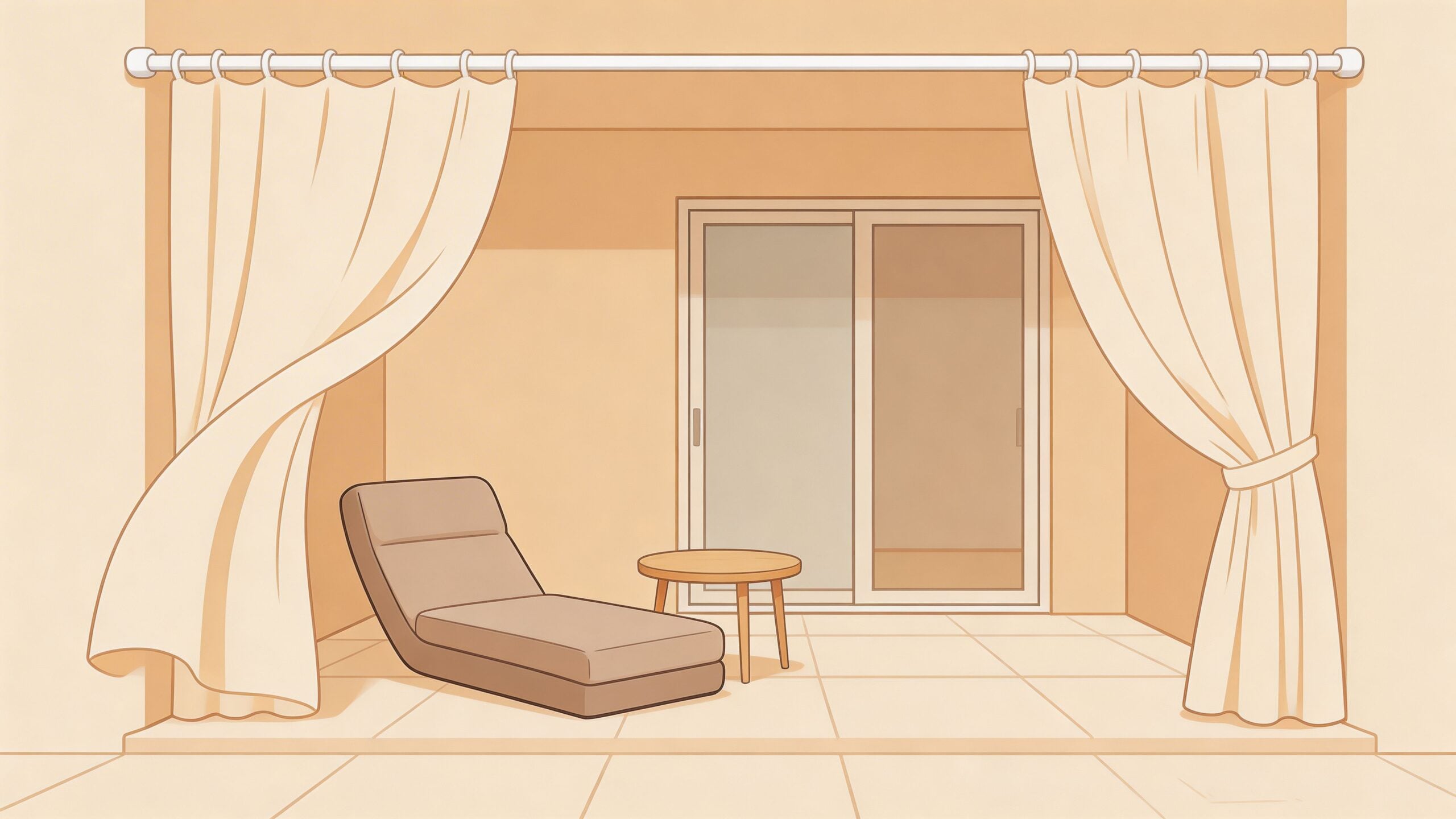
Where curtains shine
Curtains work best for adjustable privacy. Close them during dinner or when the sun is low. Tie them back in the morning and the patio feels open again.
They also pair naturally with furniture, which is where many privacy plans fall short. A curtain panel by itself can look temporary. Add a deep lounge chair, a compact loveseat, or a conversation set with the right scale, and the whole space feels intentional. That is usually the difference between a patio that gets used and one that stays empty.
If you want that same finished look you enjoy indoors, the design basics carry over outside too. Our guide to choosing curtains with the right fullness and proportion for a polished room translates surprisingly well to patios, especially when you are trying to coordinate fabric, frame color, and furniture scale.
What to watch for in Midwest weather
Fabric privacy has limits. Sun fades cheap panels. Humidity invites mildew. Wind stresses grommets, rods, and tie-backs long before the fabric itself gives out.
That does not make curtains a bad choice. It means material quality matters more than shoppers expect.
A few buying rules make a real difference:
- Choose solution-dyed outdoor fabric: It keeps its color longer and holds up better through sun and moisture.
- Use rust-resistant hardware: Rods, rings, and anchors often fail before the fabric does.
- Plan for wind: Tie-backs, bottom weights, or a precisely fitted panel help control movement.
- Pair curtains with furniture that adds structure: A well-placed sectional, bench, or dining set gives the patio visual weight so the fabric feels like part of a room, not an afterthought.
At Groen's, we usually suggest curtains as one layer, not the whole answer. They are especially effective when paired with quality outdoor furniture that defines the layout and gives the patio a settled feel. If you want a softer, more finished setup without replacing pieces every season, it often makes sense to invest once in better fabric and better furnishings. Financing can help with that if you are building the space in stages.
5. Pergolas and Shade Structures
A pergola does not create privacy by itself. It creates the framework for privacy.
That distinction matters. Many shoppers assume the structure alone will solve the problem, then feel disappointed when the patio still feels open from the sides. A pergola's strength is that it gives you a room outline. Once that outline is there, curtains, climbing plants, and furniture placement start to make much more sense.
Why a pergola changes the feel of a patio
Even a modest pergola adds overhead definition. Your eye reads the space as a destination rather than a pass-through. On a larger apartment terrace or a ground-level patio with landlord approval, that architectural frame can make the entire area feel more finished.
It also gives you hanging points for lighting, drapery, or shade elements. If you dine outside often, a pergola over a compact dining set helps the area feel intentional and welcoming.
For customers who want a custom, furniture-first approach, made-to-order thinking proves helpful. A Canadel-style dining setup under a well-scaled pergola can create a polished outdoor room. A Bassett seating arrangement can make the lounging area feel equally well-designed. Design it your way matters outdoors too.
The trade-offs are real
Pergolas ask more of you than a screen or a planter row.
They take planning. They need enough footprint to make sense visually. And in a rental, they are often only realistic if you are working with a freestanding temporary version or have clear property approval. In Northwest Indiana, material selection matters too. A structure that looks great in a catalog still has to deal with moisture, temperature swings, and seasonal wear.
If you go this route, think through the full use of the space:
- Dining-focused patio: Put the pergola over the table and use side curtains only where exposure is strongest.
- Lounge-focused patio: Keep one side more open for airflow and layer privacy on the neighbor-facing side.
- Multi-use patio: Use the pergola to zone the main area, then let planters or a slatted screen define the edges.
A pergola is seldom the first thing we recommend for the smallest apartment balconies. But for the right patio, it can be the piece that pulls the whole design together.
6. Slatted Wood Screens and Railing Toppers
Slats solve a common patio problem. You want more privacy, but you do not want the space to feel boxed in.
A slatted wood screen or railing topper gives you partial coverage while keeping some light and airflow. It is one of the most visually balanced apartment patio privacy ideas because it can look architectural instead of improvised.
Why slats work so well
The spacing does a lot of the work. Narrow gaps create stronger screening. Wider gaps feel more open and breezy. On side-by-side patios, a slatted divider can break the direct line of sight without making the area look heavy.
This approach is also useful for people who dislike the look of a full panel. Horizontal slats often read more modern. Vertical slats can feel a little more classic and can visually lift the height of the patio.
The verified market data notes that some composite options offer high opacity while still allowing airflow, which is exactly why this category keeps gaining traction in urban outdoor spaces. In practical terms, that means you can get meaningful visual coverage without creating a stale, shut-in feel.
Wood versus composite
Wood is hard to beat for warmth. It complements Amish solid-wood pieces beautifully and ties the patio into the rest of the home in a natural way.
Composite usually wins on low maintenance. In our freeze-thaw climate, that matters. The verified data also highlights newer UV-resistant composite panels designed to reduce replacement needs in windy areas. For customers who want the wood look without the same upkeep, that is a strong option.
A few details matter more than many realize:
- Gap size: Tighter spacing gives more privacy. Wider spacing gives more openness.
- Attachment method: Anything added to an existing railing has to respect safety rules and property regulations.
- Color coordination: Match or complement your furniture finish so the patio looks designed, not pieced together.
If you want privacy that still feels breathable, slats are often the best middle ground.
This option works especially well behind a sofa, beside a dining area, or around a less attractive utility view you would rather hide.
7. Layered Décor and Outdoor Rugs
Not every privacy problem is solved by physically blocking a view. Some are solved by shifting where attention goes.
That is where layered décor earns its place. A quality outdoor rug, coordinated pillows, a lantern or side table, and a few vertical accents make the patio feel enclosed emotionally, even if the edges remain somewhat open.
The psychological side of privacy
When a patio feels unfinished, your eye keeps moving outward. You notice the neighboring building, the parking area, the shared walkway. Once the space has an anchor, the eye settles inside the patio instead.
A rug is usually the first piece I would add. It establishes the room boundary underfoot. Suddenly the chairs belong together. The table has context. The space reads as intentional.
Indoor design principles help here more than people expect. This article on can you put an area rug over carpet is about interior spaces, but the same lesson applies outside. Layering creates definition, and definition creates comfort.
What works and what falls flat
A bold outdoor rug under a loveseat and chairs can make a small patio feel grounded. Coordinated pillows add softness and help the furniture feel more substantial. A tall faux plant or sculptural planter in a corner can raise the visual edge without taking over the space.
What falls flat is using décor as clutter. Too many small accessories on a tight balcony make the patio feel busy, not private. One rug, a few well-scaled textiles, and one or two vertical accents usually outperform a dozen little decorative items.
This is also one of the easiest ways to tie privacy back to furniture. A high-quality outdoor sofa or pair of lounge chairs looks more inviting when it sits on a rug with pillows that echo the patio’s color palette. The room feels pulled together. Once it feels pulled together, it feels more protected.
For shoppers who want an affordable luxury approach, this is a smart place to blend investment and restraint. Buy the durable core pieces well, then layer in accents that can be refreshed seasonally.
8. The Combination Privacy System
You step onto the patio after work, sit down with a drink, and still feel exposed from two directions. That usually means one privacy fix is trying to do too much.
The best apartment patios use layers that handle different jobs at the same time. A screen can block the direct side view. Seating can set the room edge and keep the layout from feeling temporary. Planters soften hard lines and help fill awkward gaps. Overhead structure or fabric can make the space feel settled in the evening, when open sightlines tend to feel more obvious.
Why a combination works better than a single fix
Privacy problems rarely come from one angle. A neighbor may overlook the patio from above, someone across the way may catch a direct line of sight, and low balcony railings often leave seated areas more exposed than people expect. A single panel helps, but it usually leaves another weak spot.
That is why I recommend building privacy in layers based on how the patio is used. Start with the most exposed side. Then address seated sightlines, lighting, and comfort. The result feels less like a barricade and more like an outdoor room.
A practical setup often includes:
- Back layer: A slatted panel or screen on the side with the clearest neighbor view
- Middle layer: Tall planters, a narrow bench, or a compact trellis to add depth
- Living layer: A loveseat, swivel chairs, or a sectional placed to define the gathering area
- Finishing layer: A small rug, side table, and lighting that keep the patio usable after sunset
Another strong option is a pergola with curtains on the two problem sides and the open side facing the best view. Dining furniture centered underneath gives the whole area a clear purpose. For more layout guidance, our guide to designing a captivating patio shows how to pull the pieces together without crowding a smaller footprint.
Start with the furniture, not the leftovers
Our family’s perspective at Groen’s differs from a generic privacy checklist. Furniture should not be the last thing added after the barriers go up. It should be one of the first decisions, because the right seating or dining set helps determine how much screening you need.
A deep seating group can create a visual boundary on its own. A high-back loveseat or a well-placed sectional can reduce exposure while making the patio more comfortable. A bench behind a conversation set can close off a side without adding another wall. Those choices matter, especially on apartment patios where every inch has to earn its keep.
There are trade-offs. More layers usually mean better privacy, but they also add cost, weight, and visual density. On a small balcony, too many tall elements can make the space feel boxed in. That is why we usually suggest investing first in durable core furniture, then adding the privacy pieces that solve a specific problem instead of buying five random fixes.
For Northwest Indiana patios, that approach tends to hold up better over time. Better-built seating, dining pieces, and planters can move with you, handle our weather more gracefully, and keep the patio looking finished instead of patched together. If budget is part of the equation, this is also one of the easiest areas to phase in over time, or finance sensibly, so you end up with a complete outdoor room rather than a stack of short-term purchases.
Apartment Patio Privacy: 8-Option Comparison
| Option | 🔄 Implementation Complexity | ⚡ Resource & Cost | 📊 Expected Outcomes | 💡 Ideal Use Cases | ⭐ Key Advantages |
|---|---|---|---|---|---|
| Outdoor Privacy Screens and Panels | Low–Medium, freestanding or simple mounts | Low–Moderate, materials vary, generally affordable | Immediate visual barrier; partial wind protection | Renters and homeowners needing quick, movable privacy | Portable, style variety, renter-friendly |
| Strategic Outdoor Furniture Placement | Low, rearrangement or modular ordering | Moderate–High, investment in quality furniture | Defines outdoor "room"; dual-purpose seating + screening | Larger patios, entertaining, multifunctional spaces | Comfortable, functional privacy without structures |
| Living Green Walls and Planters | Medium, planting, mounting, and ongoing care | Moderate, upfront planters and continued maintenance | Natural, attractive screening that matures over time | Gardeners and eco-conscious residents | Enhances aesthetics and air quality |
| Outdoor Curtains and Fabric Screens | Medium, requires overhead supports or rods | Moderate, performance fabrics and hardware | Adjustable, high privacy and shade; elegant look | Spaces with pergolas or ability to install supports | Flexible, stylish, great sun protection |
| Pergolas and Shade Structures | High, permits and professional installation | High, materials, labor, possible permitting | Strong architectural definition; partial shade; base for layers | Homeowners seeking permanent upgrade and value | Architectural impact; supports layered privacy solutions |
| Slatted Wood Screens and Railing Toppers | Medium, mounting; may need landlord/HOA approval | Moderate, material choice affects cost and upkeep | Modern partial privacy with airflow preserved | Design-conscious residents on small to medium patios | Contemporary look, space-efficient, breathable |
| Layered Décor and Outdoor Rugs | Low, no installation, decor placement only | Low, affordable accessories and textiles | Psychological enclosure and cozier ambiance; limited physical blockage | Renters, budget-focused users wanting style boost | Affordable, renter-friendly, easy to update |
| The Combination Privacy System | High, planning, coordination of multiple elements | High, cumulative cost and maintenance | Complete privacy, optimal function, and cohesive style | Homeowners seeking a professional, complete solution | Most effective, highly customizable and polished |
From Idea to Oasis Let Our Family Help You Invest in Comfort
You get home, slide open the patio door, and see exactly why the space still is not working. The view is open to the next building, the seating feels exposed, and the patio ends up looking better than it feels. Privacy fixes that, but the best patios do more than block a sightline. They function like an outdoor room you want to use.
That is the part we care about at Groen’s. A screen, planter, or curtain can solve one problem. The right furniture plan solves several at once. It helps create privacy, gives the space structure, and makes the patio comfortable enough for morning coffee, weeknight dinners, or an hour outside after work.
Good results usually start with one honest question. What bothers you most right now? If the issue is a direct view from a neighbor, start with the element that blocks that angle first. If the patio feels bare and temporary, start with seating that fits the space properly, then add privacy layers around it. The order matters, especially on smaller apartment patios where every inch has a job.
We help customers work through those trade-offs every day. A tall sectional can define the edge of a patio, but it needs enough clearance to move comfortably. A pair of deep lounge chairs may feel lighter visually, but they often need a screen or planter behind them to create the same sense of enclosure. Performance fabrics earn their keep outdoors, especially in Northwest Indiana where sun, rain, and temperature swings can wear out cheaper materials fast.
Our family business has always believed that outdoor furniture should be chosen for the way people live, not just for the way a display looks. Custom Order Services give you more control over size, finish, layout, and fabric, so the privacy plan and the furniture plan work together. If you want Amish solid wood for warmth and long-term durability, we can show you options that add both structure and character to the patio.
Budget matters too. Building a complete outdoor setup often makes more sense than buying a string of temporary pieces that need replacing after a season or two. Special financing is available, subject to credit approval, which can make it easier to invest in quality seating, tables, and privacy pieces as one coordinated project.
We hear the same feedback from customers across Dyer, Crown Point, St. John, Schererville, and Munster. Once the patio feels protected and furnished correctly, they use it far more often.
That is why we always recommend seeing outdoor furniture in person before you decide. Sit in the chairs. Check the seat height. Compare fabrics in natural light. Look at how wood tones, woven textures, and metal frames work together before you commit. Those details shape whether your patio feels patched together or finished.
Visit Groen's Fine Furniture in Dyer or Crown Point to explore outdoor seating, custom furniture, Amish craftsmanship, and special financing options that help you build a private patio with lasting comfort. Our family would love to help you design it your way.