What size dining table for room? Get the perfect fit!

A lot of families start in the same place. You stand in the dining room, phone in one hand, tape measure in the other, and try to picture Thanksgiving dinner, homework after school, or a quiet weeknight meal. The hard part isn't finding a table you like. It's figuring out what size dining table for room makes sense.
That question comes up all the time for homeowners in Dyer, Crown Point, St. John, and across Northwest Indiana. A table can look perfect in a showroom and feel completely different once it's in your home. Too large, and every chair pullout becomes a traffic jam. Too small, and the room feels unfinished, with everyone squeezed together when family comes over.
Our family has helped NWI households furnish their homes since 1983, and this choice is always more personal than people expect. A dining table isn't just a surface. It's where the family gathers, where stories repeat, and where everyday life happens. When the size is right, the whole room feels easier to live in.
Your Guide to the Perfect Family Gathering Spot
A family in Crown Point might walk into a furniture store thinking they need a "big table for holidays." Then they describe their home. Most nights it's four people eating dinner, one child doing homework at one end, and a walkway behind the chairs that everyone uses to get to the kitchen. Suddenly, "big" isn't the primary goal. Comfortable is.
That's the part people often miss. The right dining table should fit your room, but it also has to fit your routine. A family in Dyer with a separate dining room may want something long and classic for hosting. A couple in Munster with an open-concept main floor may need a shape that keeps the room feeling light and easy to move through.
Your best table isn't always the largest one your room can hold. It's the one that lets people sit, move, and gather without strain.
We always tell neighbors to think about three things at once:
- The room itself. Walls, doors, windows, and traffic paths matter.
- Your everyday use. Daily seating needs can be different from holiday needs.
- The feeling you want. Some rooms should feel formal and anchored. Others should feel casual and flexible.
When those three line up, the table stops feeling like a sizing puzzle and starts feeling like the center of the home.
The First Step Measure Your Dining Space Correctly
A dining room can look generous on paper and still feel cramped once chairs are pulled out and people start moving around. We see this often with families across Northwest Indiana. A room in St. John or Valparaiso may seem large enough for a long table, but daily life tells a different story once someone heads through with a casserole dish, a child backs out a chair, or a door needs to open fully.
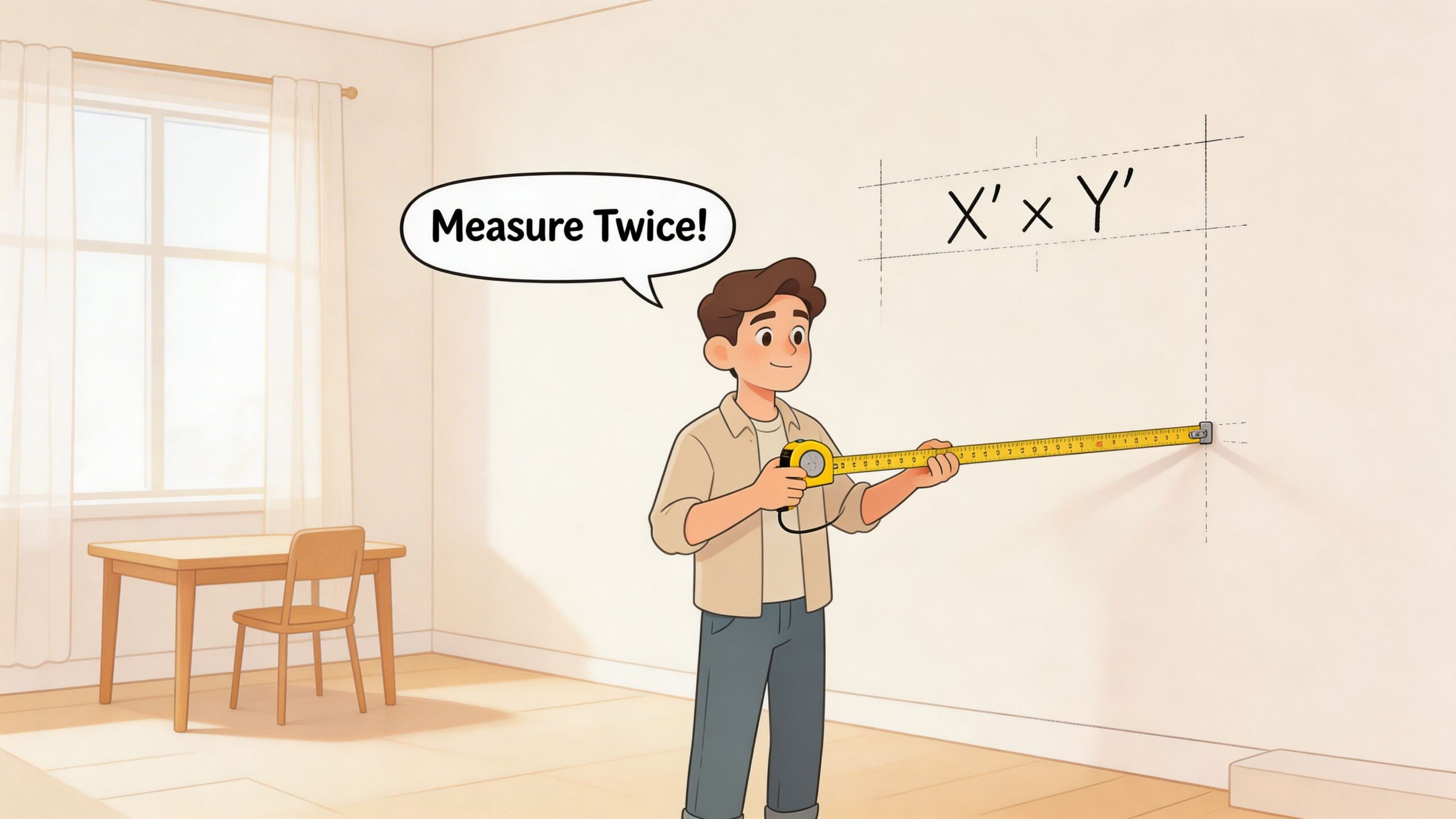
The goal is to measure for real life, not just for the table itself. A dining set works like a family circle. It needs room to expand and contract as people sit down, stand up, and pass through.
Measure the full working area
Start with the length and width of the dining area. Then pause and look at how the room functions. The usable space is the part that remains open after you account for everything that interrupts movement.
Check these trouble spots as you measure:
- Door swings that could hit a chair
- Windows, vents, or radiators that affect furniture placement
- Buffets, hutches, or sideboards already in the room
- Traffic paths to the kitchen, hallway, or patio
- Open-concept edges where the dining space shares room with another area
If you want a quick refresher before you start, this guide on how to measure furniture for your home walks through the basics clearly.
Plan for chairs, not just the tabletop
This is the part shoppers miss most often.
A table footprint is only the quiet version of its size. Once chairs are occupied, the table grows outward into the room. That is why a piece can fit mathematically and still feel awkward every evening.
Leave enough space around the table so people can pull out chairs, sit comfortably, and walk by without turning sideways. If your dining area is part of a busy main floor, give yourself more room than the bare minimum. Families with kids, frequent guests, or a walkway behind the chairs notice that extra space right away.
Simple test: If everyone has to tuck chairs in before someone can pass through, the table is too large for the room.
Pay attention to the room's feeling
Good sizing is partly measurement and partly proportion. A table that fills too much of the room can make dinner feel crowded, even if the dimensions technically work. A table with the right visual balance leaves open floor around it, so the room feels settled and easy to use.
That matters even more if you are considering a custom piece. An Amish table or a Canadel design gives you more control over length, width, and leaves, which is helpful when your room falls between standard sizes. Sometimes the best answer for an NWI home is not the biggest table possible. It is the one that feels right on an ordinary Tuesday and still welcomes everyone at Thanksgiving.
Test the layout before you buy
Painter's tape is one of the best tools in the house. Mark the table shape on the floor, then live with it for a few minutes.
Walk around it. Pull out one of your current chairs. Carry a laundry basket through the path you use most. If you host often, have two people move around the taped outline at the same time. That quick floor test shows you whether the room will feel open, pinched, formal, or relaxed.
Those small checks save people from buying a table that looks beautiful in the showroom but feels too tight at home.
Decoding Standard Table Dimensions and Seating
A dining table can technically seat a certain number of people and still feel wrong once dinner starts. That is usually the moment families realize seating charts on a tag are only the starting point.
What matters day to day is elbow room, serving space, and whether everyone can settle in without feeling packed together. A good table should feel as comfortable during a weeknight pasta dinner as it does when grandparents stop by on Sunday.
Start with place settings, not the sales tag
A helpful rule is simple. Each person needs enough width to eat comfortably, reach a glass, and talk without bumping the next chair. Formal dining needs more breathing room than casual family meals, but in either case, crowding shows up fast.
That is why seating capacity changes from one table to another, even when the lengths look similar.
For a practical comparison of common sizes, extensions, and room fit, this dining table size guide for real homes can help as you narrow the field.
Common table sizes people see most often
Rectangular tables are still the standard in many dining rooms because they handle family meals, guests, and serving dishes well. A table around 60 inches long often works for four people, sometimes six if the shape and chair style allow it. Longer rectangular tables are the usual choice for six to eight, and very large versions can handle bigger holiday groups if the room supports it.
Round tables tend to feel more conversational. Many families like them for breakfast nooks or square dining rooms because everyone faces each other naturally. Once a round top gets larger, though, reaching the middle can become less comfortable unless the design is planned carefully.
Custom sizing can solve the in-between problem. That comes up often in NWI homes, where one dining room may be compact and cozy while another has space for a longer farmhouse table with leaves.
Standard Dining Table Sizes and Seating Capacity
| Table Shape | Dimensions | Comfortably Seats |
|---|---|---|
| Rectangular | 60 inches long | 4 to 6 |
| Rectangular | 72 to 96 inches long and 36 to 40 inches wide | 6 to 8 |
| Rectangular | 108 to 120 inches long | Up to 10 adults for formal dining |
| Round | 48 to 60 inches | 4 to 6 |
| Rectangular custom option | Up to 120 inches | 10 to 12 |
Details that change comfort more than people expect
- Width matters as much as length. A table can have enough seats along the sides and still feel cramped once plates, bowls, and serving dishes are on the top.
- Chair scale changes capacity. Slim side chairs fit differently than wide upholstered chairs or armchairs.
- The table base affects the end seats. Pedestal bases usually give more knee room, while legs at the corners can limit who sits where.
- Leaves change how the room works. An extension table is often the better family choice if you want breathing room most of the year and extra seats only when needed.
One honest piece of advice from the showroom floor. Size for the way your family really lives.
If your crew lingers over coffee, homework, or board games, a little extra room goes a long way. That is where Amish-built tables and Canadel designs can be especially helpful. Instead of settling for a size that is almost right, you can choose a width, length, base, and leaf setup that fits both your room and the feeling you want in it.
The right table does more than seat people. It gives your family a place where everyday meals feel easy and holiday gatherings still feel welcoming.
Matching Table Shape to Your Room and Lifestyle
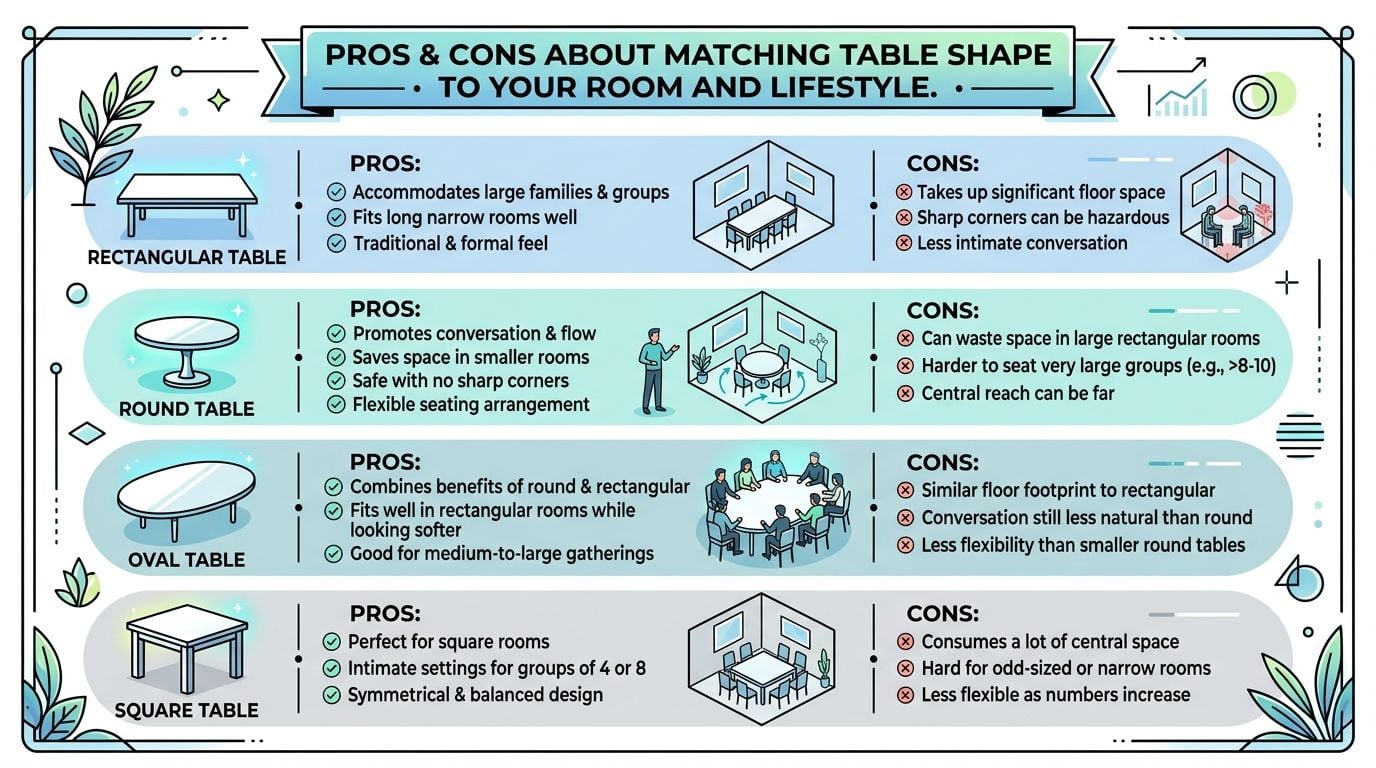
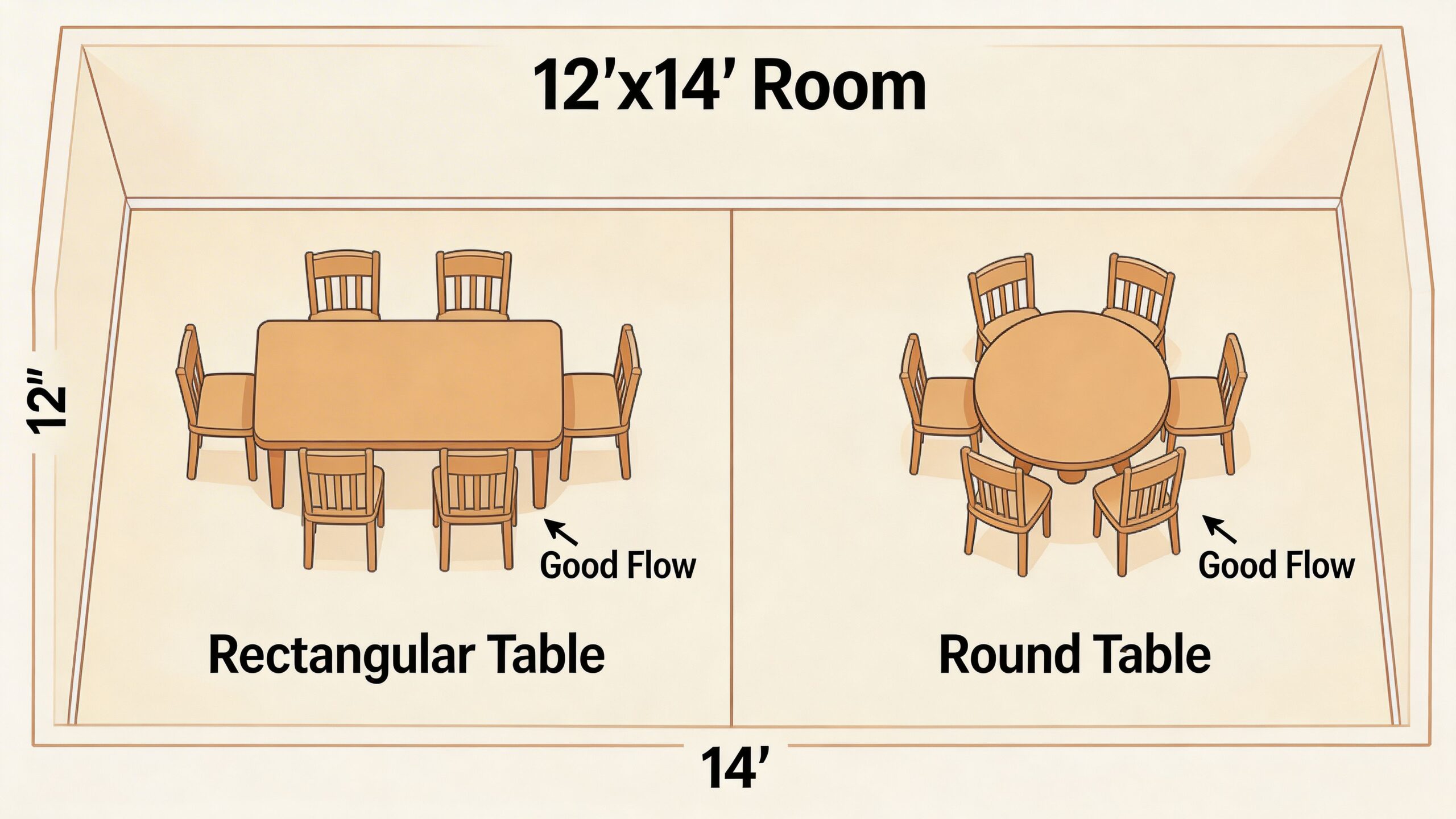
Size gets most of the attention, but shape changes how a room feels just as much. Two tables with similar seating can create completely different traffic flow.
Rectangular tables
Rectangular tables are the familiar choice for a reason. They're efficient in long rooms and work well for larger gatherings. They also line up naturally with the shape of many dining rooms.
This shape makes sense if you host often, use the room for holidays, or want a clear focal point. It also pairs well with benches or a mix of side chairs and host chairs.
Round and square tables
A round table changes the mood of the room. It feels softer, encourages conversation, and removes sharp corners. In a square room, it often looks more natural than a long rectangle.
A square table can create a similar feeling, though it usually works best when the room is close to square and the household doesn't need to seat a large group often.
- Choose round if conversation and easy movement matter most.
- Choose square if the room is balanced and daily dining is the main use.
- Choose either when you want the dining area to feel less formal.
Oval tables
Oval tables sit in a helpful middle ground. They offer the length many families want but soften the edges visually. In tighter rooms, those curved ends can make movement easier.
A table shape should support the way your household moves, not just the way the room looks in an empty photo.
If you're weighing the trade-offs, this guide to maximizing your dining space with table shapes and seating arrangements gives a practical comparison.
A family in Schererville that eats together every night may love a round table because everyone faces each other. A household in St. John that hosts bigger seasonal dinners may prefer a rectangular or oval shape because it expands the room's seating rhythm.
Visualizing the Perfect Layout in Your NWI Home
Saturday evening in Northwest Indiana often looks the same. Someone is carrying a casserole in from the kitchen, a kid is sliding into a chair too quickly, and one person is trying to pass through the room without bumping a chair back. A good table layout makes that whole scene feel calm instead of cramped.
A classic formal dining room in St. John
A formal dining room gives you clearer boundaries, which makes planning easier. Start with the room size you measured earlier, then mentally carve out open space around the table for chairs, walkways, and the simple act of sitting down comfortably. In a room around 14 by 10 feet, many families find that a full-size rectangular table feels balanced without swallowing the room.
The goal is not to fit the biggest table possible. The goal is to leave enough breathing room so holiday dinners, weeknight meals, and birthday cakes all feel easy to host.
A compact open-concept area in Crown Point
Open-concept homes play by different rules. Since the dining area shares visual space with the kitchen and living room, the table has to feel like part of the whole picture, not a separate block dropped into the middle.
In these homes, layout works a lot like traffic flow in a busy family kitchen. People cut through on the way to the fridge, the sink, the patio door, or the couch. A table that looks fine on paper can still feel awkward if it pinches those everyday paths. That is why it helps to stand in the room and trace where people walk.
A round or smaller-scale table often keeps that movement easier and helps the room feel lighter.
A helpful way to test the room before you buy
Painter's tape can save you from an expensive mistake. Mark the table size on the floor, then pull a few dining chairs into place and walk around them. Open nearby doors. Pretend someone is serving dinner while another person unloads groceries. That simple test often answers questions faster than a spec sheet.
If you want a digital preview too, some homeowners use tools like AI kitchen design to sketch cabinetry, islands, and dining zones together. If you are considering made-to-order furniture, our guide to getting started with a custom dining furniture order can help you connect the room plan to the table you want.
A family room setup in Munster
Many NWI homes use one table for everything. Breakfast. Homework. Puzzle night. Sunday dinner with grandparents. In that kind of room, the best layout supports real family habits, not a staged photo.
Ask yourself a few honest questions:
- Does the table double as a work surface? A little extra top space can make daily life easier.
- Do people pass behind seated diners often? Leave enough room so chairs and walkways do not compete.
- Do you host bigger meals a handful of times each year? An extendable table may suit your home better than a larger fixed one.
- Does the room feel heavy already? A table with a lighter visual profile can help the space feel more relaxed.
The right layout should feel natural the first time your family uses it. You should be able to move, sit, serve, and stay awhile without noticing the table as a problem. That is usually how you know the fit is right.
Design It Your Way with Custom Dining Options
A lot of families reach this point after doing the math and still feeling unsure. The room measurements may look fine on paper, yet the table still does not feel like the right one for everyday life. That usually means the decision is no longer only about size. It is about how the room feels when your family is using it.

When standard sizing falls short
Floor models are helpful starting points, but real homes are rarely built around standard dimensions. A long, narrow dining room may need a table with a slimmer width so chairs can slide out comfortably. A square breakfast area may feel better with a round top that softens the corners and keeps conversation easy.
Family habits matter just as much. One household wants a compact table for weeknight dinners. Another needs room for grandkids, casserole dishes, school projects, and holiday leaves. If a standard size gets close but never quite right, custom ordering gives you a way to fit the room and the routine together.
What custom gives you
A made-to-order table lets you adjust the details that shape daily comfort:
- Length and width that fit your room instead of forcing you to work around the table
- Shape options that suit both the floor plan and the way your family gathers
- Base and leg styles that affect knee room, chair placement, and how open the table feels
- Wood species and finishes that coordinate with flooring, cabinets, and the overall mood of the space
- Chair pairings that look balanced and feel comfortable at the table
Groen's Fine Furniture offers a custom dining furniture order process for Canadel dining and Amish solid wood pieces, which helps when your room needs something more specific than a standard floor size.
Why families choose custom
Custom work solves practical problems, but it also changes the feel of the room. A solid wood Amish table can be built with the proportions your space needs and the durability a busy household appreciates. A Canadel set gives you flexibility in finish, scale, and style, so the table feels connected to the rest of the home instead of dropped in as an afterthought.
That personal fit matters.
In Dyer, a narrow dining room may call for a rectangular table with a cleaner footprint and carefully chosen chairs. In Crown Point, a square eating area may come together better with a round pedestal table that keeps traffic flowing and leaves the room feeling lighter. Around Northwest Indiana, that is often the difference between a table that fits and one that becomes the family gathering spot people naturally settle around for years.
Bringing Your Dream Table Home with Ease
A good dining table is a long-term purchase. That's why the buying process should feel steady and straightforward, not rushed.
Many families want solid wood, custom sizing, or a made-to-order dining set, but they also want the purchase to fit their budget comfortably. Special financing is available, subject to credit approval, and that can give homeowners more buying power when they're choosing a table they'll use for years.
Think beyond the product tag
The purchase includes more than the tabletop and chairs. It also includes the experience of getting the piece home and set up correctly.
That matters more than people expect, especially with larger dining sets, extension tables, and solid wood pieces. Delivery teams need to move through entryways, protect the home, assemble the furniture properly, and place it where it belongs.
Why delivery service matters
White-glove delivery can remove a lot of stress from the process. For homeowners comparing options, this overview of furniture assembly service cost and what to expect helps explain the value of professional setup.
- Less risk. Heavy pieces are easier to manage safely with experienced installers.
- Better placement. The table gets positioned where it works best in the room.
- Less hassle. You don't have to sort out tools, packaging, or assembly steps.
For many NWI families, that combination matters just as much as style. The table should arrive ready to become part of the home, not another weekend project.
Find Your Family's Perfect Fit at Groen's
The right answer to "what size dining table for room" is part math and part instinct. The measurements tell you what fits. Your daily routine tells you what works. Together, they shape a dining space that feels comfortable, useful, and welcoming.
If you're furnishing a home in Dyer, Crown Point, Schererville, Munster, or nearby, take your room measurements with you when you shop. Sit at the tables. Walk around them. Notice how each shape changes the room. A good fit isn't only something you see. It's something you feel the moment you pull out the chair and sit down.
That kind of choice tends to last. So do the memories made around it.
Visit Groen's Fine Furniture in Dyer or Crown Point today to explore custom dining options, including Canadel and Amish solid wood designs, and ask about special financing plans. Let our family help you create a home you love.