Different Types of Lamp Shades: A Guide for NWI Homes

A lot of Northwest Indiana homes reach the same point. The sofa is in place, the rug works, the end tables are right, and the room still feels unfinished at night. The lamp turns on, but the light is too harsh, too dim, or wrong for the space.
That last layer often comes down to the shade.
For homeowners in Dyer, Crown Point, St. John, Schererville, Munster, and nearby NWI communities, lamp shades can feel oddly complicated because they sit at the crossroads of style and function. They affect how a room looks in daylight, how it feels after sunset, and whether a lamp works for reading, relaxing, or soft background light. That's why families often spend more time choosing a shade than they expected.
Since 1983, Groen's Fine Furniture has served Northwest Indiana with the kind of steady, multigenerational ownership people still value. A family business tends to hear the same honest questions over and over, and lamp shades bring up plenty of them. Which shape looks best with a round lamp? Why does one white shade glow softly while another throws light only up and down? Why does a replacement shade fit the lamp visually, but not physically?
Table of Contents
- The Finishing Touch to Your Northwest Indiana Home
- Understanding How a Lamp Shade Attaches
- A Tour of Common Lamp Shade Shapes
- Choosing the Right Material and Opacity
- Getting the Proportions Perfect How to Size Your Shade
- Design It Your Way with Custom Lamp Shades
- Illuminate Your Home with Confidence and Style
The Finishing Touch to Your Northwest Indiana Home
A common NWI decorating story goes like this. A family finds a handsome Flexsteel sofa for the living room, adds a solid wood Amish end table, places a lamp beside the chair, and expects the room to click into place. Then evening comes, the lamp goes on, and the space still feels flat.
The furniture usually isn't the problem. The shade is.
A lamp shade works a little like the final frame around a picture. It doesn't just sit there looking pretty. It shapes the light, softens the bulb, and gives the lamp a visual relationship to the rest of the room. A shade can make a traditional room feel settled, a modern room feel crisp, or a cozy family room feel gentler and warmer.
For many homes in Dyer and Crown Point, this matters most in the rooms people use hardest. A family room may need enough softness for movie night, but enough practical light for a puzzle table. A bedroom lamp may need to feel calm without making reading difficult. A dining room sideboard lamp may mostly act as atmosphere. Those are very different jobs, even if the shades look similar at first glance.
A lamp gives the bulb direction. The shade gives the room mood.
Families who want a broader room-by-room view often find helpful ideas in these home decor tips from Groen's Fine Furniture. The same principle shows up again and again. Small finishing touches change how a room lives.
That's why understanding the different types of lamp shades pays off. It helps a shopper stop guessing and start choosing with purpose. Instead of asking only, “Do these colors match?” the better question becomes, “What should this lamp do in this room?”
Understanding How a Lamp Shade Attaches
Most shade confusion starts before shape, color, or fabric ever enters the picture. It starts at the top of the lamp, where the shade connects.
A beautiful shade that attaches the wrong way is like buying the right lid for the wrong pot. It may look close, but it won't sit correctly.
Why the fitter comes first
The attachment hardware is called the fitter. Three common types appear again and again in residential lighting.
- Spider fitter. This is the one many people recognize once they see it. The shade rests on a harp and is held in place with a finial at the top. It's common on many table and floor lamps.
- Uno fitter. This style attaches closer to the socket itself rather than resting on a harp. It's often found on lamps with a more integrated look.
- Clip-on fitter. This clips directly onto the bulb and is usually used for smaller shades, often on accent lamps or petite bedside lamps.
A shopper replacing an old shade should look at the lamp hardware first, not the old shade first. Old shades get swapped over the years, and the lamp may no longer match what's currently on it.
Practical rule: If the lamp has a harp and a finial, it usually points to a spider fitter. If there's no harp and the shade attaches near the socket, it may need an uno. A small accent lamp with a shade clipped right to the bulb is usually a clip-on setup.
Some homeowners also like small accessories that soften or modify the bulb area itself. For those exploring that side of lighting, it can help to explore aromatherapy diffuser rings and see how bulb-adjacent pieces affect the feel of a lamp.
A practical place to compare lamp styles before choosing a shade is this collection of sofa table lamps at Groen's Fine Furniture. It helps to see how the base and fitter work together.
How shade measurements are written
Once the fitter is right, the next detail is the measurement language. Many shoppers get tripped up here because shade sizing sounds more technical than it really is.
According to this guide to lampshade sizing and terminology, shade dimensions are usually written as top diameter × bottom diameter × slant. That standard helps shoppers compare shades more consistently and also matters for appearance and bulb clearance.
Here's what those terms mean in plain language:
| Measurement | What it means | Why it matters |
|---|---|---|
| Top diameter | Width across the top opening | Affects how open or tapered the shade feels |
| Bottom diameter | Width across the bottom opening | Shapes the visual scale and spread of light |
| Slant | Side measurement from top edge to bottom edge | Helps describe the actual profile of the shade |
Those numbers may sound dry on paper, but they solve real problems. They help a shopper avoid a shade that looks too narrow, hides too little hardware, or sits too close to the bulb.
A Tour of Common Lamp Shade Shapes
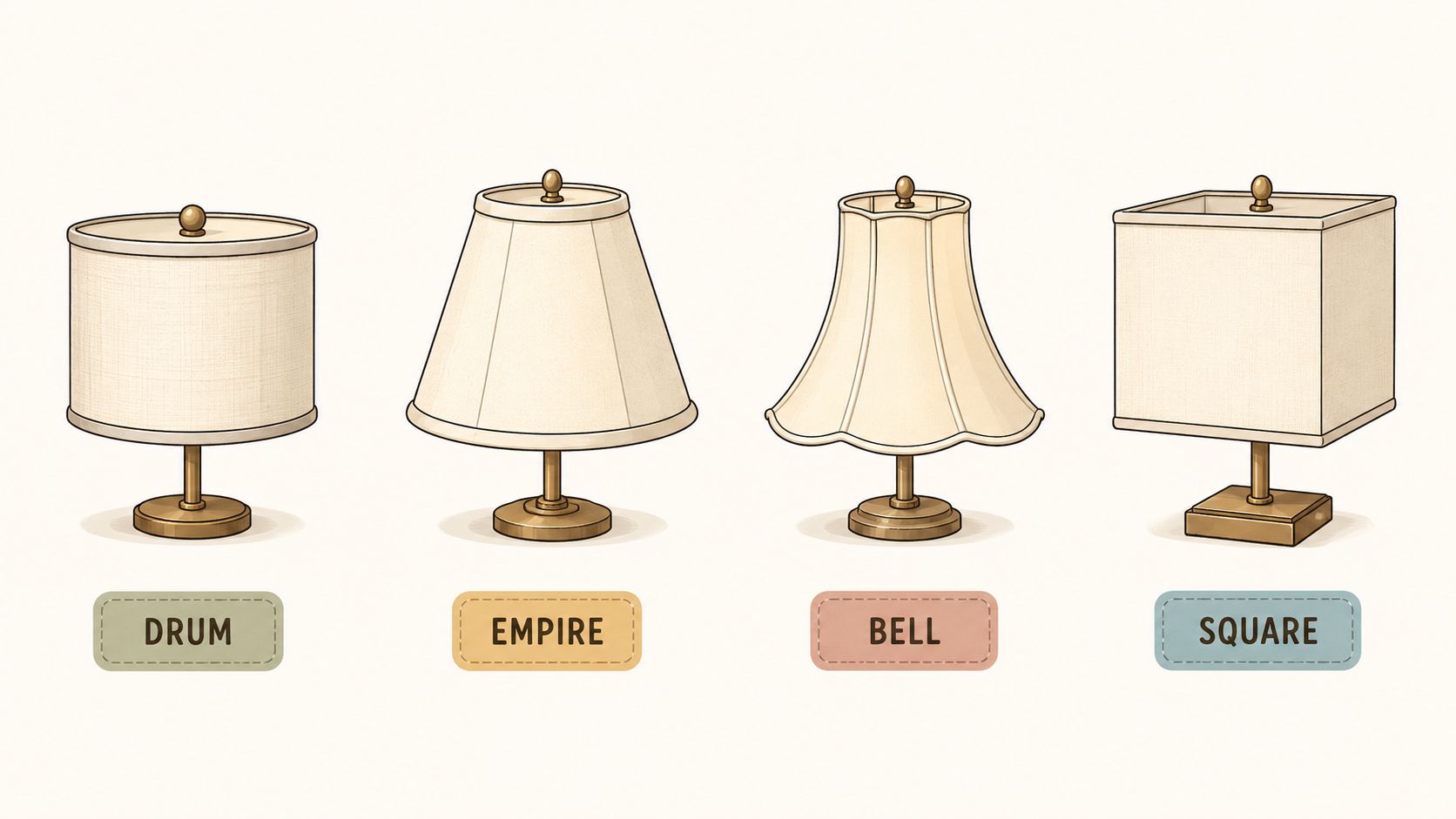
Shape is where one typically begins, and that makes sense. Shape is the part the eye notices first.
The nice part is that a few forms do most of the work in real homes. A widely cited design guide notes that the empire shade is the most common traditional form, while drum shades have been among the most popular styles for the last 20 years, with bell and square forms also remaining important choices as tastes shift toward modern interiors. That overview appears in this lamp shade shape guide.
Drum shades
A drum shade has straight sides and a clean, even profile. It feels polished without being stiff.
This shape often pairs well with updated interiors, including rooms with cleaner-lined Bassett furniture, simple side tables, and lamp bases that don't need much ornament. In many family rooms, a drum shade feels easy to live with because it looks balanced rather than formal.
A drum shade often suits:
- Simple round bases that need a modern finish
- Mercury glass or ceramic lamps with smooth silhouettes
- Transitional living rooms where classic and contemporary pieces mix
Empire shades
The empire shade is narrower at the top and wider at the bottom. It's the form many people picture when they think of a classic lamp.
This shape works especially well in traditional spaces, with carved wood, warmer finishes, and more layered furnishings. It also tends to feel right on bases that already have visual detail. The slight flare gives the lamp a settled, familiar look.
An empire shade often makes sense for:
- Traditional wood lamps
- Bedside lamps that should feel soft and timeless
- Rooms with solid wood case pieces and older architectural details
A shade doesn't need to match the room the way a uniform matches a team. It just needs to belong there.
For readers refining the bigger lighting picture, these ideas on putting a living room in the best light can help tie shade shape to comfort and layout.
Bell shades
A bell shade curves outward as it widens. It has more motion in its outline, which gives it a slightly dressier, decorative presence.
Bell shades tend to look natural in homes that lean classic, collected, or gently formal. They often work beautifully with shaped bases, antique-inspired lamps, and rooms where softness matters more than sharp geometry.
A bell shade usually feels at home beside:
- Curved lamp bases
- Traditional end tables
- Formal sitting areas or classic bedrooms
Square and rectangular shades
Square and rectangular shades bring architecture to a lamp. Their lines feel tidier and more structured than round shades.
They usually pair best with bases that already have corners, edges, or a geometric profile. Putting a square shade on a highly rounded, ornate base can work, but it has to feel intentional. In many homes, this is the shape that helps a lamp look more current without changing the base itself.
| Shape | Best visual match | Room feeling |
|---|---|---|
| Drum | Clean or transitional bases | Calm, current, versatile |
| Empire | Traditional or detailed bases | Familiar, warm, classic |
| Bell | Curved or decorative bases | Soft, graceful, dressed-up |
| Square or rectangular | Angular or geometric bases | Crisp, tailored, architectural |
Choosing the Right Material and Opacity
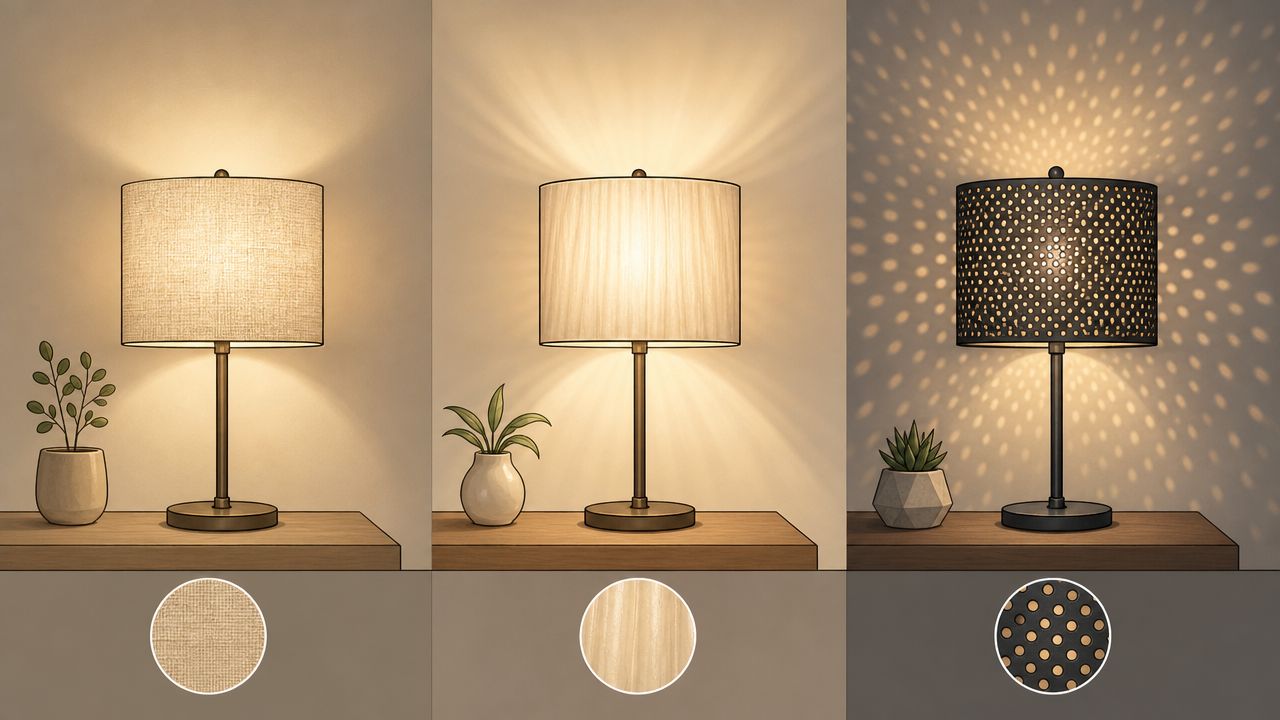
Two shades can have the same shape and still produce very different light. That difference usually comes from material and opacity.
Many shoppers are often surprised. They choose by color in the store, then bring the shade home and discover it glows more than expected, or barely glows at all.
What the material does to the light
A translucent material lets more light move through the side of the shade. Linen, paper, and some lighter fabrics often create that softer side glow. The room feels gentler because the shade itself becomes part of the light source.
A more opaque shade behaves differently. It sends more light upward and downward instead of through the sides. That can reduce glare and create a more controlled effect.
The “best” shade isn't always the one that lets the most light through. A functional shade guide points out that choosing by use matters just as much as choosing by shape, and that broader, more opaque shades can improve comfort for reading or watching TV by reducing glare. That perspective appears in this guide to lamp shade types and function.
Hard-backed and soft-backed shades
Construction changes the result even more.
According to this lamp shade safety and construction guide, hard-backed shades use a firm liner that reflects light upward and downward, making the lamp appear brighter. Soft-backed shades use flexible materials such as linen that transmit more light through the sidewall for a softer, more diffuse effect. The same guidance notes a thermal safety concern too, including a minimum clearance example of 2 1/2 inches for a 60W bulb.
That means a shade choice isn't only about style. It also affects where the light goes and whether the bulb has appropriate breathing room inside the shade.
Some shades act like a lantern. Others act more like a visor. Neither is wrong. They simply do different jobs.
A simple way to match material to the room
For homeowners comparing the different types of lamp shades, it helps to think in everyday room use.
- Linen or similar soft fabrics tend to suit bedrooms, family rooms, and sitting areas where a relaxed glow matters.
- Firm-lined shades often make sense in spots where stronger up-and-down light is useful, such as a reading chair or a desk lamp.
- Textured natural looks, including rattan or woven materials, can add warmth and casual character in farmhouse, cottage, or rustic spaces.
- Smooth, crisp materials often work well in modern interiors where the lamp should feel clean and edited.
Homeowners considering reflective and glass-based lamp styles can also browse mercury glass table lamps at Groen's Fine Furniture, since those bases often change noticeably depending on whether the shade glows softly or directs light more tightly.
Getting the Proportions Perfect How to Size Your Shade
A lamp shade works a lot like a hat. If it's too small, the whole lamp looks awkward. If it's too large, the base disappears.
Good proportion is what makes a lamp look intentional instead of pieced together.
Think of the shade like a hat
One sizing guide used by decorators recommends a simple rule. For a balanced look, a shade's height should be about two-thirds to three-quarters of the lamp base's height, and the shade's width should be roughly twice the width of the base, or at least 0.5 inch wider on each side. That guidance appears in this lamp shade sizing guide.
Those numbers give a strong starting point, but the eye still matters. A very slender base may look better with a shade that feels lighter. A chunky ceramic base may need more width to avoid looking top-heavy.
A quick sizing guide
A practical measuring routine keeps things simple.
- Measure the lamp base height from the bottom of the base up to the bottom of the socket area.
- Measure the widest part of the base so the shade doesn't end up looking pinched.
- Compare those numbers to the shade and check whether the proportions feel balanced.
- Look at the lamp straight on and see whether the socket and hardware are mostly hidden.
If too much hardware shows, the lamp rarely looks finished, even when the shape itself is attractive.
| What to check | Good sign |
|---|---|
| Shade height | About two-thirds to three-quarters of base height |
| Shade width | Roughly twice the base width |
| Edge overhang | At least half an inch wider on each side |
| Hardware visibility | Socket and support stay mostly hidden |
A lot of homeowners already use this same common-sense approach for larger purchases. The same habit behind measuring a room before a sofa helps here too. For anyone who likes to measure carefully before shopping, this guide on how to measure furniture follows that same practical mindset.
Design It Your Way with Custom Lamp Shades
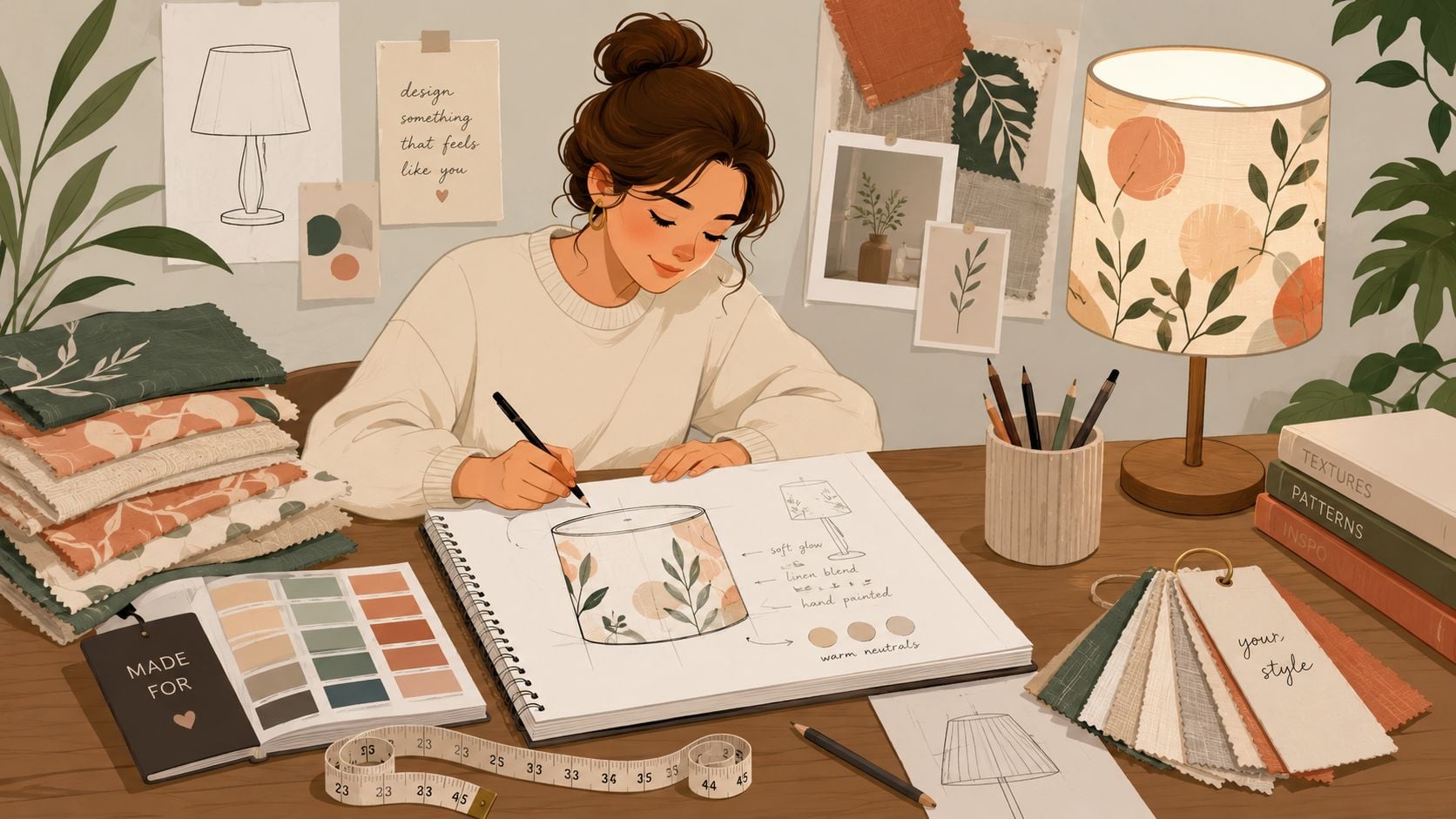
Sometimes a standard shade does the job. Sometimes it almost works, which is often more frustrating.
That happens in real homes all the time. A lamp base may be inherited, unusually tall, wider than average, or tied closely to a room's fabrics and wood tones. A ready-made shade may be close in shape but wrong in scale. Or the light may be pleasant, but not right for reading, TV time, or a dining room corner.
When standard shades fall short
Custom shades make sense when a homeowner needs the lamp to solve more than one problem at once.
That might mean:
- Matching a room's materials so the shade relates to a custom Canadel dining set or solid wood Amish bedroom pieces
- Adjusting the scale so a favorite lamp base doesn't look stunted or oversized
- Controlling the light better for evening comfort in a family room or reading nook
A function-first lampshade perspective notes that many guides overlook this practical point. The best shade isn't always the most transparent one. Broader, more opaque shades can reduce glare and improve comfort, especially for reading or watching TV. That idea is especially useful when custom options are available to fine-tune shape and function together.
Why custom can be the practical choice
For shoppers in Northwest Indiana, bespoke doesn't have to mean fussy. It often just means getting the right answer the first time.
Groen's Fine Furniture offers lighting and home décor options as part of a broader custom furniture approach, which can help when a family wants a shade that relates closely to the rest of the room rather than feeling like an afterthought. That's a practical fit for homeowners already designing dining, bedroom, or living spaces their way.
A custom shade isn't only about standing out. Often, it's about settling the room down.
That's also where buying power matters. Special Financing is available, subject to credit approval, which can make a more customized room plan easier to fit into the household budget. For families furnishing several spaces at once, that flexibility can matter just as much as the design itself.
Illuminate Your Home with Confidence and Style
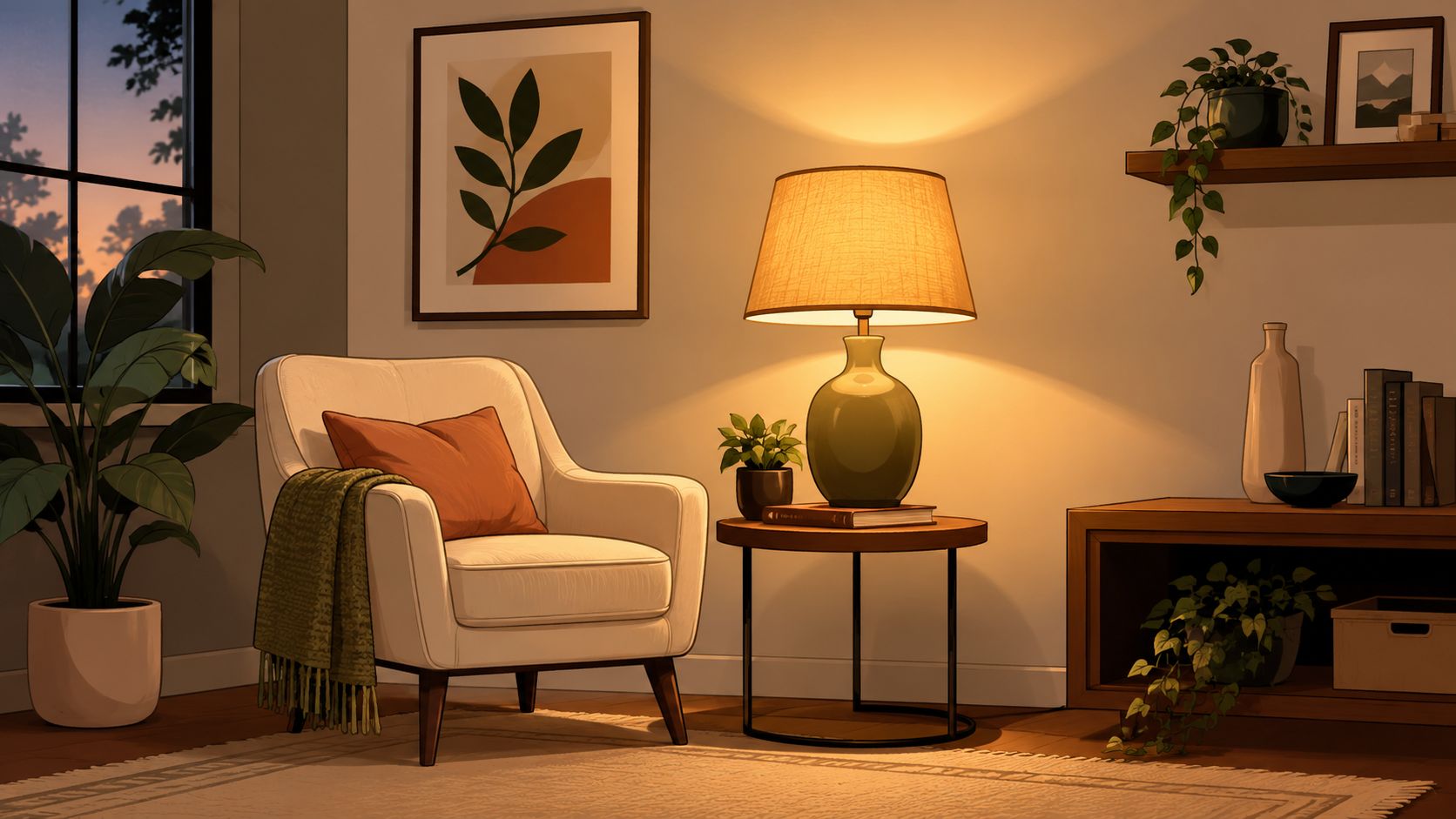
The different types of lamp shades become much easier to understand once the decision is broken into a few simple questions. How does the shade attach? Which shape fits the base? What kind of light should the room have? Does the size feel balanced?
The four questions that make shade shopping easier
A confident shade choice usually comes down to this checklist:
- Attachment first. The fitter has to match the lamp or nothing else matters.
- Shape next. The outline should make sense with the base and the room's style.
- Material matters. A soft glow and a directed glow create very different evenings.
- Proportion finishes the job. A well-sized shade makes the whole lamp look settled.
For homeowners thinking beyond a single lamp and into whole-room planning, it can also help to learn about custom home lighting design so the lamp, overhead lighting, and mood of the room all support each other.
Northwest Indiana homes don't all need the same answer. A traditional Crown Point living room, a transitional Dyer bedroom, and a clean-lined condo in Munster may all call for different shades. But the process stays the same. Match the hardware, respect the base, choose the light you want to live with, and keep the proportions honest.
For families who still want to see options in person, that part matters too. Lamp shades are easier to understand when they're viewed the way they'll be used, beside real furniture, in real rooms, with a chance to compare shape, texture, and scale side by side.
Visit Groen's Fine Furniture in Dyer or Crown Point today to explore custom options and ask about special financing plans. Let a family-owned team serving Northwest Indiana since 1983 help create a home that feels comfortable, personal, and complete.