Best Mattress for Hot Sleepers: A 2026 Indiana Guide


A lot of Northwest Indiana families know the feeling. The room seems comfortable enough, the fan is on, the sheets looked fine in the store, and yet someone still wakes up at 2 a.m. throwing off the covers and flipping the pillow to the cool side.
That kind of sleep interruption wears people down. It can leave them groggy, sore, and frustrated before the day even starts. For shoppers in Dyer, Crown Point, St. John, Schererville, Munster, and across NWI, finding the best mattress for hot sleepers usually starts with one simple question. Is the mattress the problem, or is it everything else?
There's usually more than one cause, but the mattress is often a major part of the story. A good cooling mattress can help the body settle, stay more comfortable through the night, and wake up with fewer interruptions. For neighbors comparing options locally, this guide pairs simple sleep science with practical shopping advice, including what to test in person and what to ignore. Readers who want a broader local shopping overview can also look at top-rated mattress stores near me.
Table of Contents
- Your Guide to Cooler Nights in Northwest Indiana
- Why You Overheat While You Sleep
- The Best Cooling Mattress Technologies and Materials
- How Firmness and Sleep Position Affect Temperature
- Complete Your Cool Sleep System with the Right Bedding
- The Groen's Guide to Finding Your Perfect Mattress in NWI
- Your Cooling Mattress Checklist and FAQ
Your Guide to Cooler Nights in Northwest Indiana
In Northwest Indiana, overheating at night doesn't always happen because the bedroom is hot. Plenty of people in Dyer and Crown Point keep the thermostat reasonable and still wake up warm because the bed itself holds heat around the body. That's why mattress shopping for hot sleepers can feel confusing. A mattress can feel soft and cozy for five minutes, then uncomfortable after a full night.
Families often describe the same pattern. A sleeper falls asleep without a problem, then wakes up restless, shifts around to find a cooler spot, and starts the next day feeling like the night never quite settled in. The issue isn't just comfort. Broken sleep can affect mood, energy, and how the body recovers.
For a family-owned business that has served Northwest Indiana since 1983, sleep conversations tend to sound personal, not technical. People don't walk into a showroom asking for airflow coefficients. They say their shoulders hurt, their partner sleeps warm, or they're tired of waking up sweaty.
A mattress for a hot sleeper has to do more than feel cool at first touch. It has to stay comfortable after the body has been in one spot for hours.
That's where a step-by-step approach helps. The best mattress for hot sleepers usually comes from balancing three things: how the mattress handles heat, how it supports the body, and how the whole sleep setup works together.
Why You Overheat While You Sleep
Most overheating at night comes from a mix of body heat, mattress materials, and bedroom conditions. If one part of that mix is off, sleep gets choppy fast.
Body heat has to go somewhere
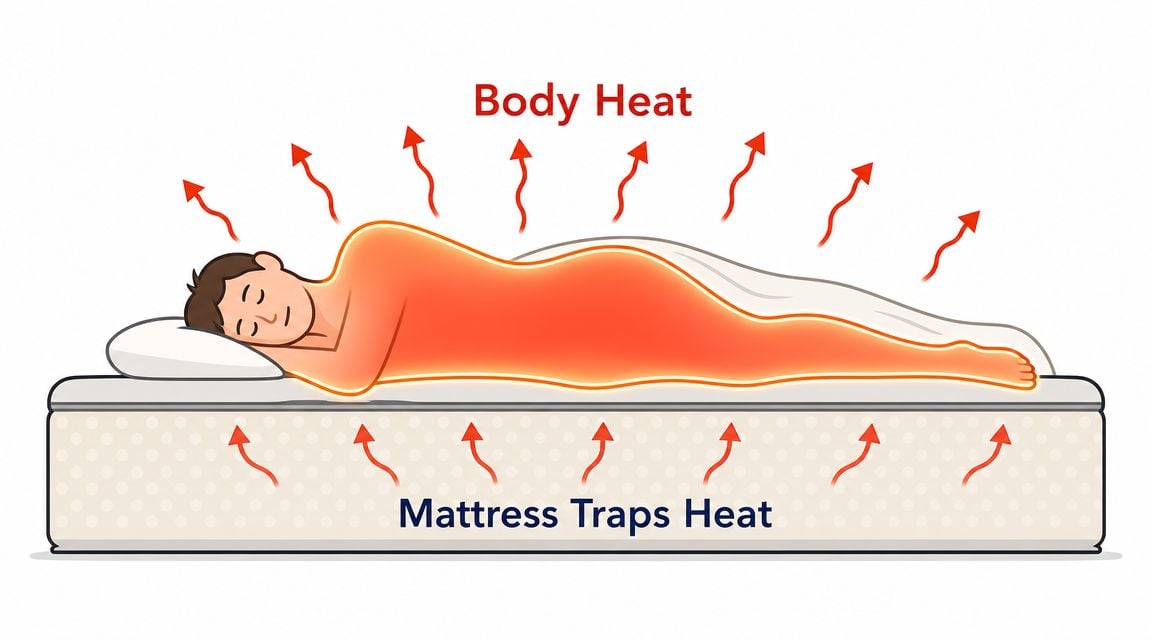
The body gives off heat all night. A mattress either helps that heat move away or holds it close to the sleeper. A simple way to think about it is house insulation. Some materials breathe and let warmth escape. Others trap it in one place.
That's why two mattresses can feel completely different even in the same bedroom. One lets air move through the bed. Another creates a pocket of warmth under the hips, shoulders, and back.
Some mattresses act like heat traps
Beds that let a sleeper sink significantly can reduce airflow around the body. More body contact usually means more warmth stays put. Older foam designs are often the first thing people blame, and sometimes for good reason, because dense materials can hold on to heat longer than more open constructions.
That doesn't mean every foam mattress sleeps hot or every firm mattress sleeps cool. Construction matters. Cover fabrics, comfort layers, and the support core all play a part in whether the bed releases heat or keeps it close.
- Close contouring: More of the body touches the mattress, so heat has fewer places to escape.
- Dense comfort layers: Some materials warm up and don't release that heat quickly.
- Limited airflow: If air can't move through the bed, warmth builds through the night.
The room still matters
A cooling mattress can help, but it can't fully overcome a stuffy bedroom. Humidity, stale air, and heavy bedding all make a sleeper feel warmer. For households that suspect the room itself is part of the problem, this guide on managing indoor humidity issues gives a practical overview of what to check.
Practical rule: If someone sleeps hot in every season, not just in July, the mattress deserves a close look.
The Best Cooling Mattress Technologies and Materials
A cooling mattress does two jobs. It should feel comfortable when you first lie down, and it should keep releasing heat as the night goes on. Those are related, but they are not the same thing.
That difference helps explain why one bed can feel cool for five minutes and still leave a sleeper warm at 2 a.m. Surface materials handle the first impression. The layers underneath decide whether heat keeps building or has a way to escape.
How cooling features work
The easiest way to shop this category is to start at the top of the mattress and work downward.
Covers are the part your body notices first. Fabrics with cooling fibers or phase-change materials can create a cooler hand feel and pull some heat away from the skin. For someone in Northwest Indiana who gets into bed after a muggy summer evening, that cooler surface can bring quick relief.
Comfort layers decide how the mattress manages warmth after that first few minutes. Gel-infused foam is meant to spread heat through the layer instead of letting it collect in one spot. Latex and other responsive materials usually keep a sleeper more lifted, which can reduce that wrapped-in feeling that many hot sleepers dislike.
Support cores affect airflow inside the bed. Coil systems usually allow more room for air to move than solid foam cores, which is one reason so many hot sleepers end up looking at hybrids. If you want a plain-English explanation of why that construction is popular, this guide on what a hybrid mattress is lays it out clearly.
A mattress works like a house in July. The roof, insulation, and vents all matter. A cool-to-the-touch cover helps at the surface, but the bed still needs breathable layers underneath or warmth can linger.
Cooling mattress technology comparison
| Technology | How It Cools | Best For |
|---|---|---|
| Cooling-fiber or phase-change cover | Creates a cooler surface feel and helps move heat away from the body at first contact | Sleepers who feel warm as soon as they lie down |
| Gel-infused foam | Distributes warmth through the comfort layer rather than concentrating it under one area | People who want pressure relief without giving up every cooling feature |
| Hybrid coil system | Leaves open space in the mattress core so air can move more freely | Hot sleepers who want support, bounce, and better airflow |
| Latex-style responsive comfort | Keeps more lift and bounce, which can mean less deep sink and better breathability | Sleepers who prefer a buoyant feel |
Labels can be misleading. A blue cover, snowflake graphic, or the word "cooling" on a tag does not tell you much by itself. What matters is how the mattress is built from top to bottom.
That is why trying a mattress in person still matters. A Northwest Indiana shopper can read product descriptions all afternoon, but a ten-minute test in a showroom often makes the difference clear. In our Dyer and Crown Point showrooms, you can feel whether a mattress keeps you gently on top of the bed or lets you sink in enough to hold more warmth around your shoulders, hips, and back.
A few practical shopping notes help here:
- Surface heat bothers you right away: Pay close attention to the cover and the first comfort layer.
- You wake up hot later in the night: Focus more on the full construction, especially breathable comfort layers and coil support.
- You love the pressure relief of foam: Look for better-designed foam models instead of ruling foam out completely.
- You are unsure how support changes comfort: Start with understanding mattress firmness for restful nights, then test that feel in person.
Many shoppers come in thinking they need one miracle material. In real life, cooler sleep usually comes from a smart combination of features that match the sleeper's body, bedroom, and comfort preference. That is the part worth slowing down for.
How Firmness and Sleep Position Affect Temperature
A mattress can test well for cooling and still feel wrong for the sleeper using it. That's because temperature and comfort are tied together. Support level changes how much a body settles into the bed, and that changes how much heat gets trapped around it.
Why sink matters
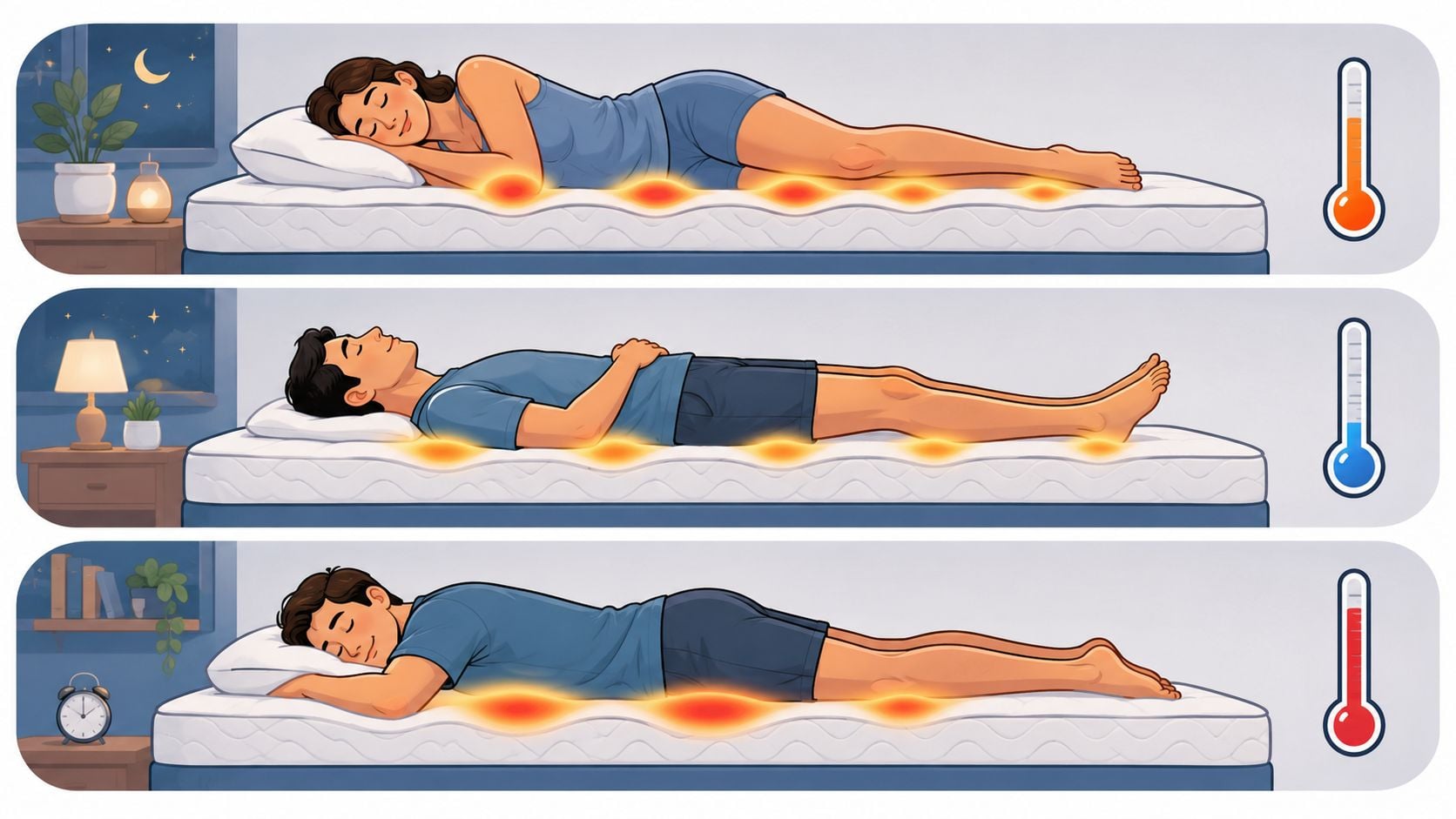
The main trade-off is simple. A softer mattress often gives better pressure relief, especially around the shoulders and hips, but it may also let the sleeper sink deeper. More sink usually means more body contact and less open air around the sleeper.
A firmer mattress often feels more breathable because the body stays more on top of the bed. But that same mattress can feel too unyielding for some side sleepers. As AARP's cooling mattress roundup notes, the best choice depends on whether a shopper prioritizes cooler sleep, spinal alignment, or the contouring feel of foam, and a firmer breathable hybrid may feel less pressure-relieving while a softer foam bed may feel more comfortable but retain more heat, as described in this guide to cooling, support, and feel.
Matching sleep position to feel
Side sleepers often need enough give for the shoulder and hip. If the bed is too firm, pressure builds and the sleeper tosses around. If it's too soft, the body may sink too much and sleep warmer.
Back sleepers often do well on a slightly firmer, more supportive surface because it helps keep the torso from settling too far. Stomach sleepers usually need even steadier support to avoid bowing at the midsection, which also tends to keep more of the body raised and less wrapped in warm material.
For people sorting out this balance, understanding mattress firmness for restful nights is a useful outside read, and Groen's also offers a local guide on how to choose the right mattress firmness.
The coolest mattress in the showroom isn't automatically the right mattress for the body sleeping on it.
A simple way to think about it is by body outline. If a sleeper leaves a deep impression in the top layers, heat usually builds faster. If the sleeper floats too much on the surface and feels pressure points, comfort suffers. The right fit sits in the middle.
- Side sleeper who sleeps hot: Usually needs pressure relief without excessive sink.
- Back sleeper who sleeps hot: Often benefits from balanced support and airflow.
- Stomach sleeper who sleeps hot: Usually does best with firmer support and less contouring.
Complete Your Cool Sleep System with the Right Bedding
Even the best mattress for hot sleepers can underperform if the bedding traps heat on top of it. The full sleep setup matters more than many shoppers expect.
Start with what touches the skin
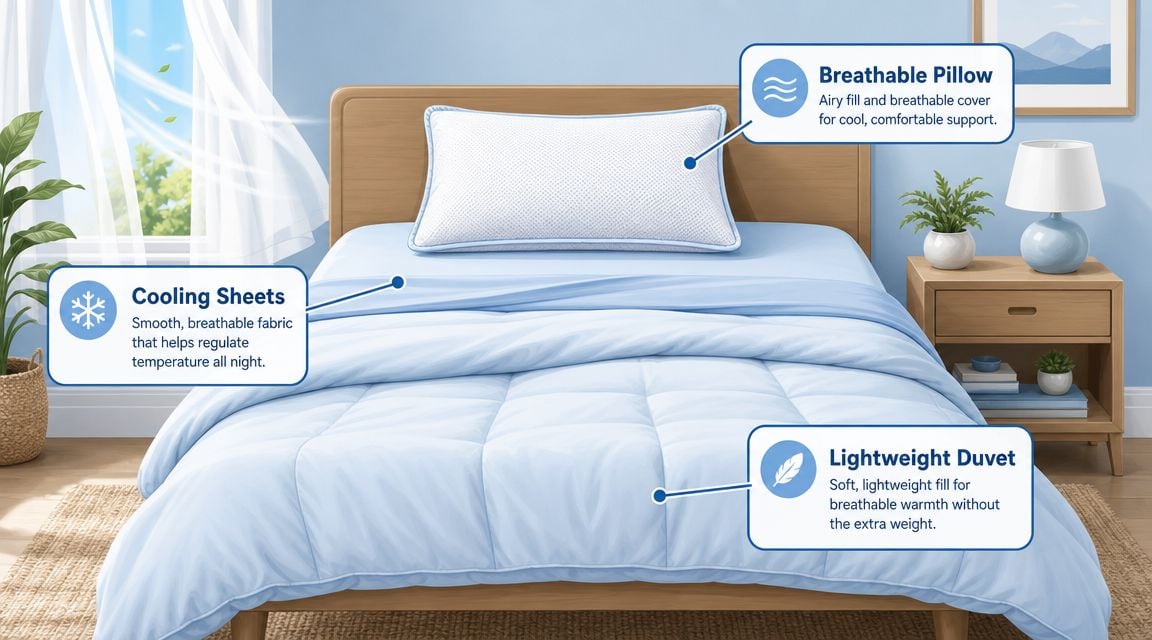
Sheets and pillowcases affect comfort right away because they sit between the body and the mattress cover. Breathable materials usually feel less clammy and allow better air movement through the night.
Many shoppers do well with Tencel, bamboo-derived fabrics, or quality cotton that feels light instead of dense. For anyone comparing warm-weather bedding materials, this warm-weather fabric guide offers a useful side-by-side look at fabric feel and breathability.
Pillows matter too. A cooling mattress under the body won't solve much if the pillow holds heat around the head and neck. Hot sleepers usually prefer pillows with breathable covers and fills that don't compress into a dense, warm block.
Don't let the protector undo the mattress
Mattress protectors often get overlooked until after the purchase. That's a mistake. An old-style protector can act like a barrier that traps warmth and moisture right at the surface.
A better choice is a protector designed to stay breathable while still guarding the mattress. The same goes for heavy comforters or layered blankets. If the bed feels hot on top, the problem may not be the mattress underneath.
A few practical checks help:
- Sheets: Choose breathable materials over slick, heat-holding synthetics.
- Pillow: Look for airflow and a cover that doesn't feel stuffy after an hour.
- Protector: Make sure protection doesn't come at the cost of heat buildup.
- Layering: Use bedding that can be adjusted easily through the seasons.
Shoppers who want to compare fabric terms before buying can use this local bed sheets guide.
The Groen's Guide to Finding Your Perfect Mattress in NWI
A Northwest Indiana shopper can read reviews at the kitchen table, compare specs on a phone, and still feel unsure once it is time to buy. That hesitation makes sense. Cooling is personal. A mattress can sound great online, but the true test is what your body feels after you have been lying still for a few minutes, the same way a winter coat only proves itself once you step outside in the wind.

For hot sleepers in St. John, Munster, Schererville, Dyer, and Crown Point, the smartest next step is simple. Try mattresses in person and give each one enough time to show its true feel.
What to do in the showroom
A quick sit on the side of the bed will not tell much. The body needs a little time to settle, especially on mattresses designed to cushion pressure points without trapping heat near the surface.
Wear comfortable clothes and test the mattress in the position used at home most often. If a sleeper starts on the side and wakes up on the back, both positions matter. The goal is to notice more than the first cool touch. A mattress should still feel supportive and comfortable after the body relaxes into it.
A simple showroom routine helps:
- Lie down for several minutes. Give the comfort layers time to respond to body weight and warmth.
- Check the usual pressure areas. Side sleepers should pay close attention to shoulders and hips. Back sleepers should notice the lower back.
- Notice how much the body sinks. More sink can mean more body contact, which can feel warmer for some sleepers.
- Compare only a few mattresses at once. After too many tests, one bed starts to blur into the next.
Bring the same mindset you would use when buying a recliner or a sofa. The first few seconds matter, but the true answer comes after the body settles.
Why local guidance helps
Online research is useful for learning the terms. In person, those terms start to mean something. "Cooling cover," "hybrid support," and "pressure relief" are easier to judge when a shopper can feel the difference between them on the showroom floor.
That matters in Northwest Indiana, where seasons swing hard. A mattress that feels fine during a cool month can feel very different in July. Local shoppers also bring different needs into the store. One couple may need a cooler surface because one partner sleeps hot. Another shopper may need better support after long workdays on their feet. A side sleeper in Crown Point may need softer pressure relief than a back sleeper in Dyer who wants a flatter, more lifted feel.
Groen's Fine Furniture has showrooms in Dyer and Crown Point where shoppers can test mattresses directly, ask about height, support, feel, and delivery setup, and compare options without guessing from a product page. It also helps to review the store's mattress return policy before buying so the purchase feels clear from the start.
Small questions often decide whether a mattress works well at home. Will the bed sit too high with the foundation? Will a protector change the surface feel? Does the edge stay supportive when getting in and out of bed?
Those are easier questions to answer face to face.
A mattress is easier to choose when the shopper can feel the difference between a bed that feels cool for a minute and one that stays comfortable through the night.
That is the practical side of shopping local. The science matters, but so does confidence. A good showroom visit connects both, so a Northwest Indiana shopper can leave knowing what feels right, why it feels right, and which mattress is worth bringing home.
Your Cooling Mattress Checklist and FAQ
A hot-sleeper mattress search gets easier when the shopper keeps the decision simple. The goal isn't to chase every cooling label in the market. The goal is to find a bed that sleeps cooler and fits the body well enough to support deeper rest.
Quick checklist before buying
- Know the main sleep position. Side, back, stomach, or combination sleeping changes what kind of support and airflow will feel right.
- Check the materials. Look for breathable covers, gel-infused comfort layers, or coil systems that encourage airflow.
- Test for real comfort. Stay on the mattress long enough to notice pressure relief and heat buildup.
- Ask about the full bed setup. Sheets, pillows, and protectors can help or hurt cooling performance.
- Review the store policy. Before buying, read the mattress return policy so expectations are clear.
Frequently asked questions
Will a mattress protector make a cooling mattress sleep hot?
It can, especially if the protector creates a less breathable surface. A protector should guard the mattress without sealing in heat.
Is a firm mattress always better for hot sleepers?
Not always. Firmer beds often allow less sink, which can help with airflow, but a mattress that feels too firm can create pressure points and restless sleep.
Can a foam mattress still work for a hot sleeper?
Yes, if the construction is designed well. Some sleepers want the contouring feel of foam and do fine with cooling covers and heat-managing comfort layers.
What matters more, the mattress or the bedding?
The mattress is the foundation, but bedding can either support that cooling effect or cancel it out. Hot sleepers usually sleep best when both work together.
Visit Groen's Fine Furniture in Dyer or Crown Point today to explore custom options, compare cooling mattress feels in person, and ask about special financing plans. Let a family-owned Northwest Indiana team help create a home, and a night's sleep, that feels comfortable, lasting, and personal.