Home Office Desk for Two: Design a Productive Shared Space

Two people working from home under one roof usually start with good intentions. One takes the end of the dining table, the other claims a corner desk, and both say it's temporary. A few weeks later, the chargers are tangled, video calls overlap, and somebody keeps bumping an elbow into a coffee mug.
That's a familiar story across Dyer, Crown Point, and the rest of Northwest Indiana. Since 1983, this family business has seen how quickly a shared work setup can turn from manageable to frustrating when the furniture doesn't match how two adults work. A proper home office desk for two isn't about squeezing in a second chair. It's about creating two work zones that can coexist every day without strain, clutter, or constant compromise.
Table of Contents
- Creating a Productive Partnership at Home
- Measure Twice Plan for Success
- Ergonomics for Two Different People
- Choosing Your Desk Style and Materials
- Taming Cords and Conquering Clutter
- Design It Your Way with Custom Orders and Financing
- Visit Us to Find Your Perfect Fit
Creating a Productive Partnership at Home
A shared office works best when both people feel like they belong there. That sounds simple, but it's where most makeshift setups fail. One person gets the better light, the stronger outlet access, or the larger surface. The other adapts, and that unevenness starts to show up in comfort, focus, and patience.
Many local households run into the same pattern. A guest room becomes an office. A finished basement pulls double duty. A spare wall in the living room turns into a work station. The room may be usable, but the furniture often wasn't chosen for two people spending real workdays side by side. That's why a purpose-built shared setup matters so much more than it first appears.
A good two-person office doesn't just fit the room. It reduces friction between the people using it.
Useful planning often starts with seeing what others have already solved well. For readers comparing layouts, storage ideas, and workstation formats, Cubicle By Design's ultimate guide gives a broad look at how shared desks can be arranged in practice.
There's also value in looking at the room as part of the home, not as an isolated workstation. That's where details like lighting, nearby storage, and visual calm matter. Homeowners who want ideas for shaping the room around the desk can also browse this guide to creating an inspiring home office for broader design direction.
The shift from temporary to lasting
The turning point comes when a household decides the shared office is no longer temporary. Once that happens, the questions change. The conversation stops being about what fits right now and starts being about what will still feel comfortable after long workdays, busy seasons, and evolving technology.
That's the right moment to think like a planner instead of a stopgap shopper. A home office desk for two should support focus, movement, and long-term durability. If it does that, the whole room starts working better.
Measure Twice Plan for Success
A shared office can look roomy until two chairs roll back, a door opens, and both people reach for power at once. That is usually when families realize a desk that fit the wall does not always fit the work.
I tell shoppers to measure the room like a working space, not a display space. A desk for two has to support movement, storage, cables, and the way two people spend a long Tuesday in that room.
Start with the room, not the desk
Measure the wall first, then measure everything that affects daily use. That includes chair travel, walking paths, door swing, window trim, vents, baseboards, and outlet placement. A desk can have the right width on paper and still create a bottleneck every morning.
A basic floor sketch helps more than people expect. Mark the desktop, both chairs, and the route each person takes in and out. Then test the tight spots. Can one person stand while the other stays seated? Can a drawer open fully? Can someone cross the room without stepping into the other person's call background?
Use this checklist before settling on a size:
- Usable wall width: Measure the section the desk can occupy after trim, vents, and outlets are accounted for.
- Chair clearance: Leave enough room behind both seats for comfortable movement. For planning a room around furniture dimensions, this guide to measuring furniture before you buy is a practical place to start.
- Traffic path: Keep a clear route through the room so one person is not boxed in when both are working.
- Power access: Check where monitors, chargers, lamps, and printers will plug in before the desk covers the outlets.
- Posture space: Leave room for each person to sit centered to their screen with their own keyboard and mouse area. Good spacing supports comfort over the long haul, and your work from home posture guide is useful for reviewing those basics.
Use dimensions that support daily work
Once the room is mapped, desk dimensions get easier to judge. A common starting range for a two-person setup is 72 inches long by 24 to 30 inches deep, according to this desk sizing reference. That size often gives each person enough personal width for a computer, a writing area, and a little breathing room. Lighter laptop use can work on less. Full-time setups with monitors and paperwork usually need more.
Depth is where many shared desks fall short. I have seen plenty of families choose a desk that looked generous from the front, only to find it felt crowded after adding monitor stands, task lights, notebooks, and charging cables. A deeper top usually makes the whole room calmer because each person can keep tools in front of them instead of stacked at the edges.
Practical rule: If both people use monitors or spread out papers, do not treat depth as an afterthought.
Bench-style planning guidance often calls for about 48 inches per person and 24 to 32 inches of depth for fuller work zones, based on shared workspace layout recommendations from commercial office planners. That does not mean every home needs a massive desk. It means two people working full days side by side usually need more surface area than a quick online photo suggests.
A quick planning table keeps the decision grounded:
| Need | Better choice |
|---|---|
| Light laptop use | A smaller shared top can work in a tighter room |
| Daily computer work | More personal width helps both people stay settled |
| Monitors and paperwork | Added depth keeps the surface usable |
| Frequent chair movement | More clearance behind the chairs prevents frustration |
For Northwest Indiana families planning to stay in the home for years, this step matters. Good measurements make it easier to choose a desk that supports both people now, and they also make custom Amish options far more practical later, because the size, storage, and layout can be built around the room instead of forced into it. Financing can make that longer-term choice reachable, but the plan still starts with honest measurements.
Ergonomics for Two Different People
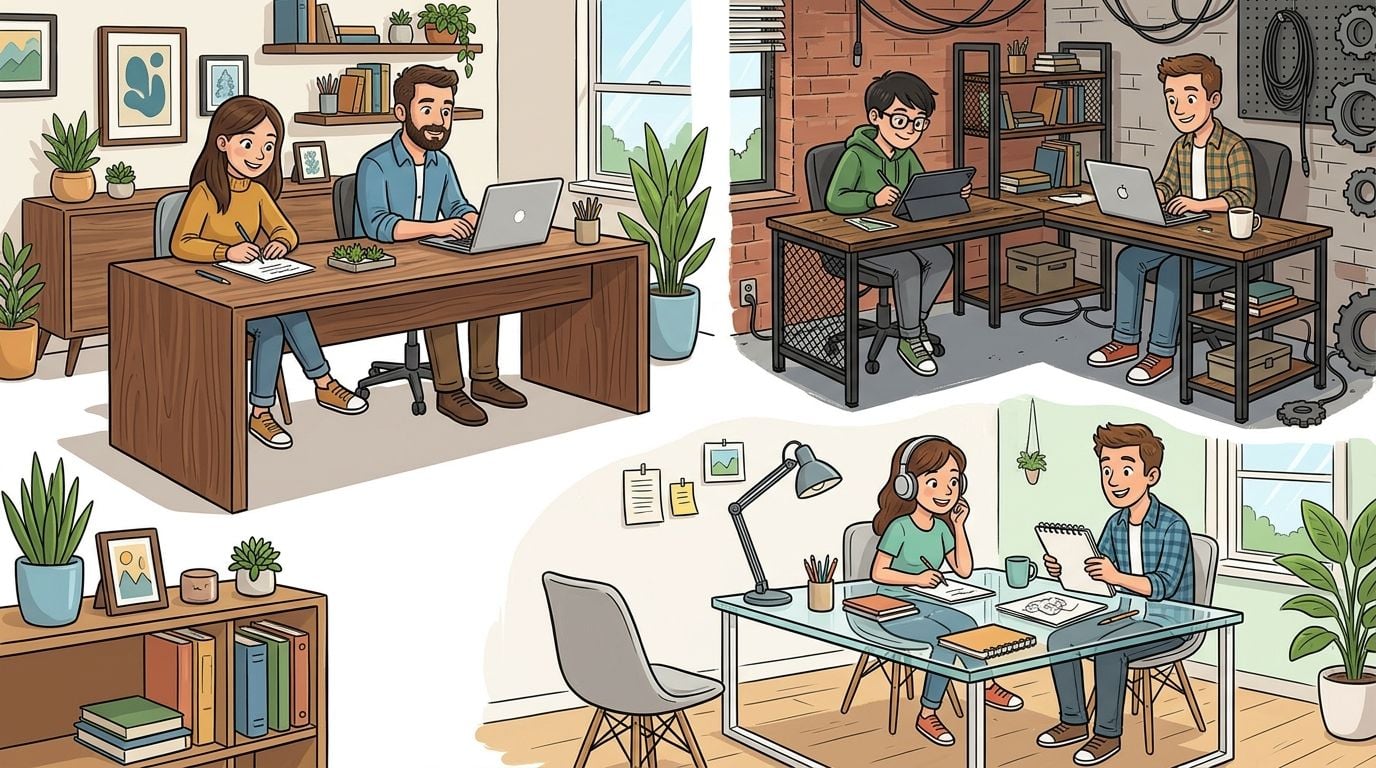
A shared desktop can look balanced and still feel wrong. That usually happens when the layout chases symmetry instead of fit.
A shared desk still needs two separate fits
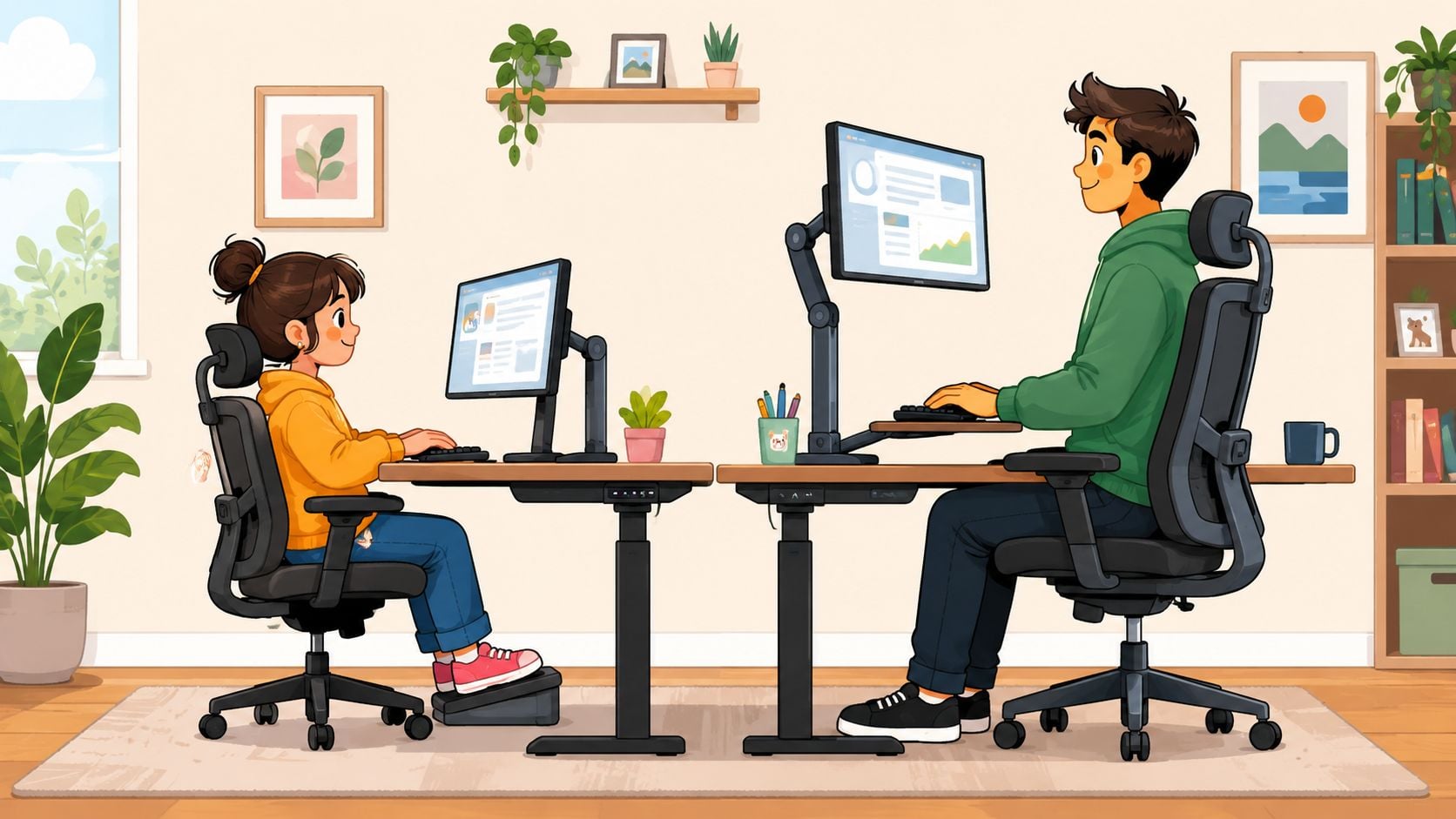
Most households don't have two people with the same height, posture, screen habits, or work routine. One may use a laptop and notebook. The other may rely on an external monitor, a full keyboard, and reference papers spread across the desk. If both are forced into the same position, one person usually ends up twisting, reaching, or lowering their head all day.
That concern isn't theoretical. Home-office ergonomics research summarized by Loctek Motion reports that 75% of surveyed employees used laptops, and among workers using external monitors, 52% had monitors set too low while only 4% were too high. The same summary notes that 31% lacked a primary screen centered directly in front of them, according to the home office ergonomics findings here. In a two-person workspace, that means each person needs enough room to place a screen directly in front of them instead of angling it around the other user.
A helpful companion read on posture habits at home is your work from home posture guide, especially for readers trying to diagnose why a desk that looks tidy still leaves them stiff by day's end.
What works when heights and habits differ
The better approach is to think in pairs, not duplicates. Each seat should have its own visual center, arm reach, and legroom pattern. That may mean one side uses a monitor arm and the other side uses a laptop stand. It may mean one person needs more depth while the other needs easier drawer access.
Several layout principles hold up well in real homes:
- Center each user to their own screen: No one should have to angle their torso toward the middle of the desk just to see comfortably.
- Treat chairs as part of the system: A desk can't compensate for a seat that won't support proper height and arm position. This guide to office chairs for long hours is useful when the desk is only part of the comfort problem.
- Avoid forced mirror-image setups: Matching accessories may look neat, but they often ignore different needs for monitor height, writing space, or handedness.
The visual goal is balance. The ergonomic goal is neutrality. Those aren't always the same thing.
Independent guidance for small office layouts also points to 36 to 48 inches between desks for chair movement and personal space, with 24 to 30 inches of desk depth supporting a usable work area, as discussed in this article on double-desk home office ideas. Even when both users sit at one continuous surface, that principle still matters. People work better when they don't feel physically crowded.
A home office desk for two succeeds when both people can settle in without adapting their posture to the furniture. That's the difference between a desk that photographs well and one that supports daily work.
Choosing Your Desk Style and Materials
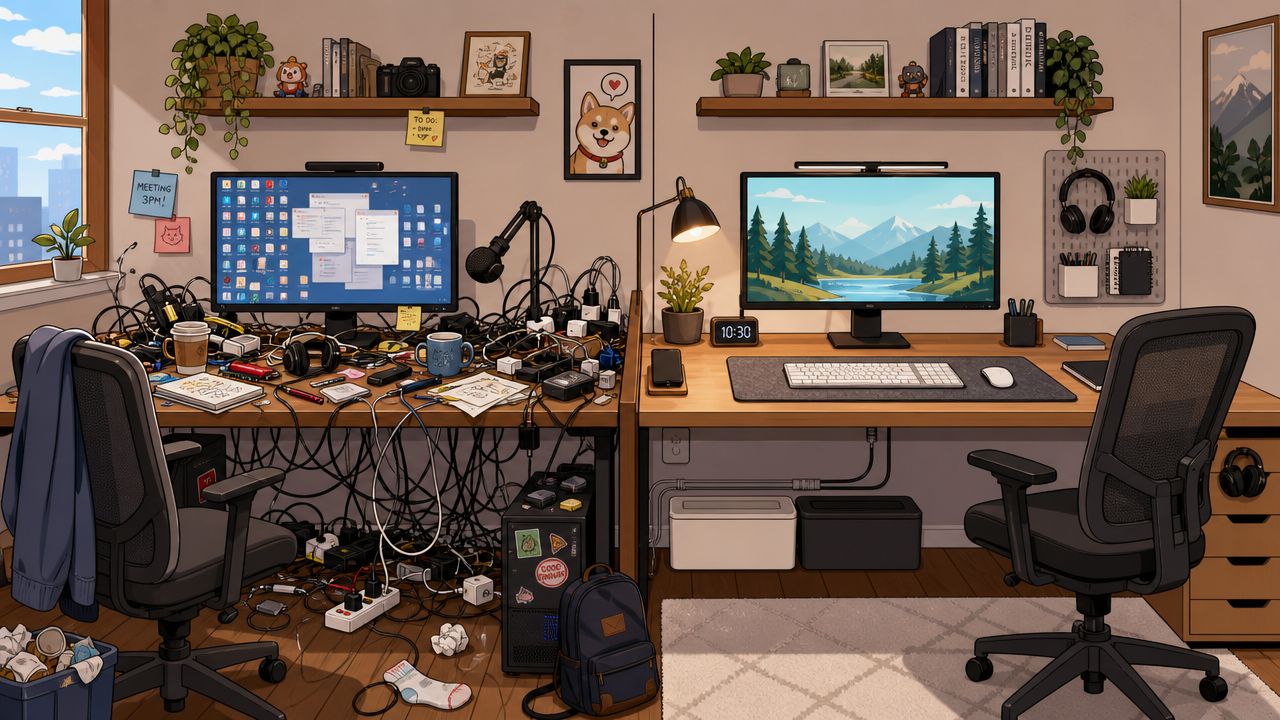
Once the size and layout are settled, the desk itself starts doing the heavy lifting. Two people use a shared desk harder than a single user does. More chair contact, more pulling on drawers, more devices, more daily wear across the front edge and top. Style still matters, but the better question is which style will stay comfortable, sturdy, and useful five or ten years from now.
Desk styles that hold up in daily life
A partner desk gives each person a defined work area and built-in storage, which helps in homes where papers, chargers, and office supplies need to stay close at hand. It also brings more visual weight into the room, so it fits best where the office has enough space to let the desk breathe.
A bench-style desk keeps the room lighter and more open. I often recommend it for households that already have a file cabinet, bookcase, or wall storage planned. The trade-off is simple. What you gain in openness, you give up in hidden storage at the desk.
An L-shaped or modular arrangement can work well if one person spends the day on a computer while the other switches between laptop work, paperwork, and phone calls. That extra separation helps many couples stay productive, but only if the overall setup feels intentional rather than pieced together over time.
Some trade-offs are easier to compare side by side:
| Desk style | Often works well for | Watch for |
|---|---|---|
| Partner desk | Traditional rooms, built-in storage, a more finished look | Bulk and visual weight |
| Bench desk | Cleaner lines, flexible seating, easier sharing of open space | Less hidden storage |
| Modular setup | Evolving needs, changing gear, mixed work styles | Can feel pieced together if not planned carefully |
Depth matters just as much as style.
A desk can look clean in a showroom and still frustrate you at home if the top is too shallow for monitors, task lighting, and a little writing space. The same goes for drawer placement. A handsome desk loses its value quickly if one person keeps bumping knees into a file drawer or has to slide sideways to get comfortable.
Why solid wood changes the long view
Material choice decides whether the desk matures well or starts looking tired early. In a two-person office, that difference shows up faster. Veneers and lighter construction can be fine in a low-use room, but a shared office asks more from the top, base, joinery, and finish every single day.
Solid wood earns its keep because it handles real life better. It has substance under your hands, it tends to age with more character, and many well-built pieces can be refinished instead of replaced. For families trying to make one smart purchase rather than a series of temporary ones, that matters. Shoppers comparing species and durability can get a clearer sense of the options in this guide to choosing the right hardwood for longevity and style.
American-made Amish furniture stands out for the same reason. The value is practical. Solid construction, dependable joinery, repairable materials, and sizing that can be made to fit the room instead of forced to fit. For Northwest Indiana families building a shared office they plan to use for years, custom Amish options often solve the little problems that standard desks leave behind. If the ideal setup needs a custom size, a different drawer layout, or a finish that works with the rest of the home, financing can also make a long-term purchase more manageable without settling for a desk that is only close.
Groen's Fine Furniture offers home office desks among its broader furniture selection, including options relevant to shared office spaces for homeowners who want to compare scale, finish, and construction in person.
Taming Cords and Conquering Clutter
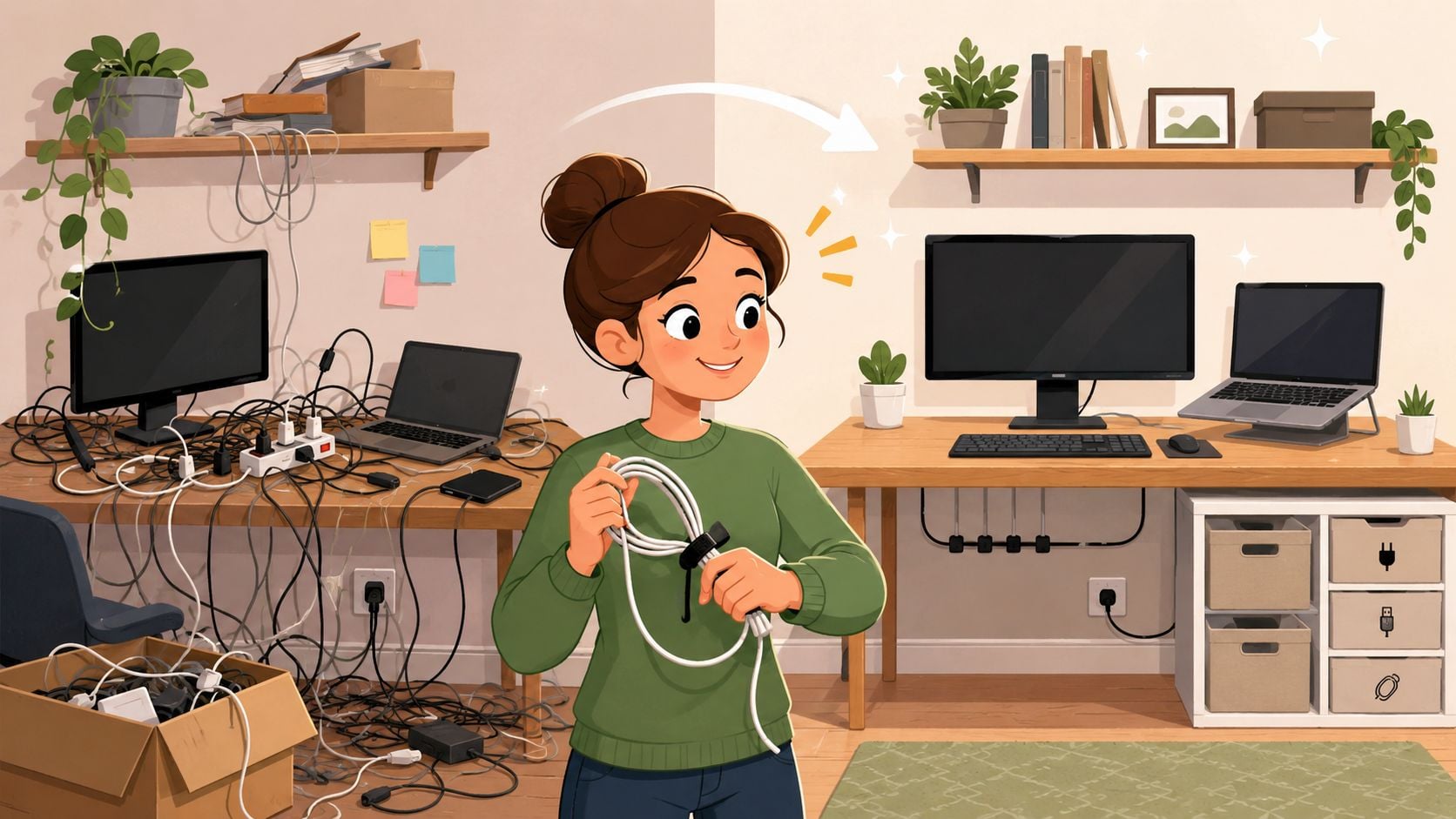
A home office desk for two can look roomy on day one and chaotic by day ten. The difference usually isn't the desk size alone. It's whether the setup includes places for tools, paper, chargers, and shared equipment to live without creeping into both work zones.
Build three zones instead of one pile
The simplest way to control clutter is to divide the office into three zones. One zone belongs to the left seat. One belongs to the right seat. The third handles shared utility items.
That utility zone can be a nearby cabinet, bookshelf, return, or mobile file piece. It should hold the printer, extra paper, office supplies, and the items both people reach for but neither wants parked in front of them all day.
A practical organization routine often looks like this:
- Personal zone: Keep daily tools inside each user's reach. That includes chargers, notebooks, pens, and headphones.
- Shared zone: Move the printer, stapler, spare cables, and supply stock away from the main desktop.
- Surface rule: Leave the center of the desk as open as possible so the room feels calm instead of crowded.
Households that need a little more hidden organization may also like ideas from this look at desks with hidden compartments, especially when the office sits in a visible part of the home.
Cable control that keeps peace in the room
Cords create visual mess faster than almost anything else. They also make cleaning harder and can turn a comfortable desk into a constant annoyance.
The strongest cable setups usually combine several small fixes instead of one big one:
- Under-desk trays: These keep power strips and excess cable off the floor.
- Grommet access: A desk with clean pass-through points prevents cords from draping over the work surface.
- Dedicated charging spot: Phones, watches, and earbuds need one home, not six temporary ones.
- Labeled cables: This sounds minor until someone unplugs the wrong monitor before a meeting.
Clutter often starts where storage ends. If every object has a place, the desktop stays clearer with less effort.
Storage should support behavior, not fight it. If filing is awkward, papers stack. If chargers have no station, they spread. If drawers are too shallow or too far away, daily tools stay out on the top. Good office furniture doesn't just offer storage. It puts the right storage in the right place.
Design It Your Way with Custom Orders and Financing
A shared office often looks simple on paper and gets complicated fast once two people start using it every day. One person may need room for dual monitors. The other may want more drawer space and a cleaner writing surface. In many Northwest Indiana homes, the room itself adds another limit with a tight wall, a window placement, or trim and flooring you want the desk to match.
When standard sizes aren't enough
Custom ordering solves those practical problems by letting the desk fit the room and the people using it. Instead of settling for a stock size that is close, families can choose the length, depth, wood species, finish, and storage layout that support daily work.
That matters more with a desk for two than it does with a single workstation. A few inches of extra depth can make monitor placement more comfortable. A better drawer arrangement can keep one user from storing supplies in the other person's space. Matching the finish to existing furniture can also help the office feel like part of the home rather than an afterthought.
Amish solid wood furniture is a good fit for this kind of project because the construction is built for long service, and the options are flexible enough to solve real room constraints. I've seen families get much better results by adjusting one or two details on paper before ordering instead of trying to force a standard desk to work after it arrives.
Make the right setup more reachable
Custom furniture and solid wood cost more up front. They also tend to hold up better, feel better to use, and stay useful through job changes, school years, and shifting technology. For many households, that makes the higher initial price easier to justify.
Financing, subject to credit approval, can help a family buy the desk that fits correctly now instead of choosing a cheaper stopgap and replacing it later. That is often the more practical path, especially for couples building a shared office they expect to use for years.
At Groen's Fine Furniture, custom orders give Northwest Indiana families a way to solve the details that matter most. Financing can make that long-term solution more attainable without giving up the wood, storage, or sizing that will keep the office comfortable for two.
Visit Us to Find Your Perfect Fit
A shared office works when the room, the desk, and the people using it are all considered together. The size has to support movement. The ergonomics have to support two different bodies. The materials have to stand up to daily life. And the storage has to keep the peace.
That's why shopping for a home office desk for two is easier in person than on a screen alone. Seeing scale, touching wood finishes, opening drawers, and testing chair clearance can tell a homeowner more in a few minutes than a product listing ever will.
For families in Dyer, Crown Point, St. John, Schererville, Munster, and across Northwest Indiana, a showroom visit can turn a vague plan into a clear solution. It's the easiest way to compare desk styles, ask about custom furniture, and see what kind of shared setup will feel comfortable for the long haul.
Visit Groen's Fine Furniture in Dyer or Crown Point today to explore custom options and ask about special financing plans. Let our family help you create a home you love.