Blog
Fabric Sofa Cleaning: A Groen’s Family Guide for NWI

A lot of fabric sofa cleaning starts the same way in Northwest Indiana. A family settles in for a movie night in Crown Point or Dyer, drinks are on the side table, popcorn is everywhere, and then somebody bumps a cushion and a spill lands right on the seat. That moment feels bigger when the sofa is new, custom ordered, or is one of the nicest pieces in the room.
For many households, a sofa isn't just another purchase. It's where kids pile in after school, where guests sit during holidays, and where everyday wear shows up first. That's why good fabric sofa cleaning isn't only about removing a mark. It's about protecting comfort, preserving upholstery, and getting more life out of a quality piece.
Our family has served Northwest Indiana since 1983, and the same question comes up in Dyer, Crown Point, St. John, Schererville, and Munster all the time. What truly works, what ruins fabric, and when is it smarter to stop and call a professional? The answers matter even more when the piece is built for lasting use, whether that means a specific Bassett look, a durable Flexsteel frame, or a bespoke fabric choice designed around a busy home.
Table of Contents
- A Foundation for Lasting Comfort in Your NWI Home
- First Steps Before You Clean Your Sofa Fabric
- Your Weekly and Monthly Sofa Care Routine
- Tackling Common Spills and Stains Like a Pro
- Deep Cleaning Methods and Smart Custom Choices
- When to Call the Professionals for Your Furniture
A Foundation for Lasting Comfort in Your NWI Home
A Crown Point family room can change fast. One minute everyone's relaxed on the sofa with a bowl of popcorn. The next, a drink tips, somebody reaches for a napkin, and panic sets in because nobody wants to damage the fabric by doing the wrong thing first.
That's where calm, practical advice matters. Fabric sofa cleaning goes better when homeowners treat the sofa like an investment piece instead of a disposable one. A quick reaction helps, but the bigger win is knowing how to care for the fabric long before a spill happens.

Why the sofa deserves more than a quick wipe
A quality sofa carries a lot of the workload in a home. It handles pets jumping up, guests sitting in the same favorite spot, and daily abrasion from denim, blankets, crumbs, and skin oils. Over time, that wear shows up as dull fabric, flattened arms, and stains that seemed minor when they first happened.
That's one reason the broader upholstery care category keeps growing. The global market for carpet and upholstery cleaning services was valued at USD 65.92 billion in 2025 and is projected to reach USD 69.98 billion in 2026, with projected growth to USD 108.57 billion by 2034 at a 5.7% CAGR from 2026 to 2034, according to Market Data Forecast's carpet and upholstery cleaning services market report. Homeowners have clearly recognized that vacuuming alone doesn't handle everything embedded in upholstery.
The local view from a family business
Groen's Fine Furniture, a family-owned business serving Northwest Indiana since 1983, provides full home furnishing services including custom tables and in-home design, with a documented history of over 30 years serving the Dyer and Crown Point areas, and maintains a reputation built on multigenerational ownership and five-star service quality, as shown on the Groen's Fine Furniture Houzz profile.
That local history shapes how furniture care is discussed in the showroom. The conversation isn't only about style. It's also about daily livability, long-term upkeep, and choosing materials that fit the home they're going into. Homeowners comparing textures, weaves, and feel can get a useful starting point from this guide to upholstery materials, especially before a custom piece is ordered.
A sofa usually looks worn before it's actually worn out. Dirt in the fibers, body oils on the arms, and untreated spills often create that tired look first.
First Steps Before You Clean Your Sofa Fabric
The biggest mistake in fabric sofa cleaning happens before any scrubbing starts. Homeowners grab a household cleaner, wet a cloth, and assume all fabric upholstery works the same way. It doesn't.
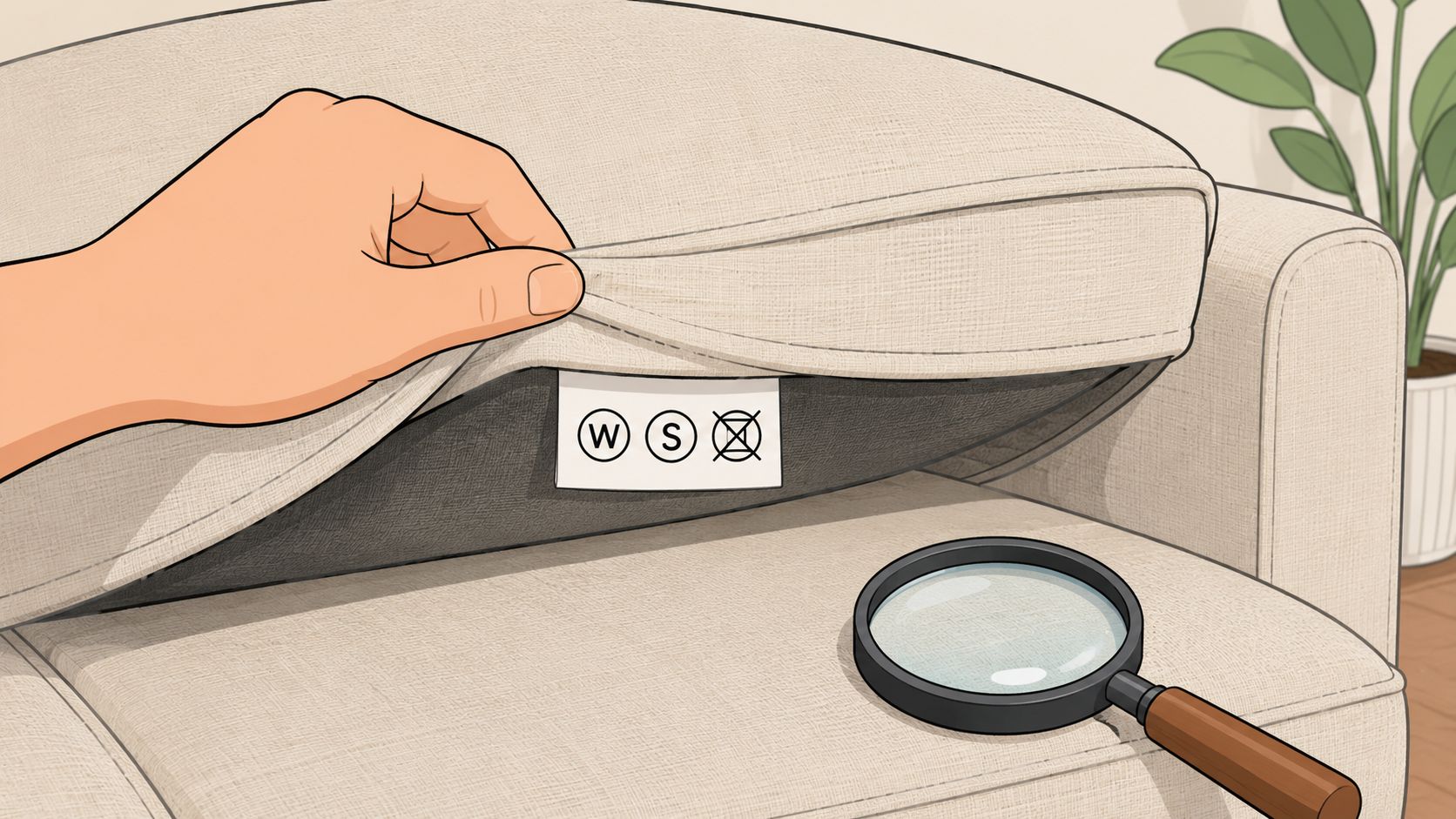
The first job is finding the manufacturer's cleaning code, usually under a cushion or attached to the frame. That small tag determines what can safely touch the fabric and what should stay far away from it.
What the fabric code means
A critical step in fabric sofa cleaning is verifying the manufacturer's fabric code. “W” indicates water-based cleaners are safe, “S” requires solvent-only cleaners, and “X” means only vacuuming is permitted. Ignoring this code leads to a 78% failure rate in stain removal due to permanent color distortion or fabric shrinkage, according to Architectural Digest's sofa cleaning guide.
Here's the practical takeaway for each code:
- W fabric means water-based cleaning methods are generally safe. This is the easiest category for at-home spot treatment.
- S fabric means solvent-only. Water is the wrong move and can create damage that looks worse than the original stain.
- WS fabric appears on many sofas, though the verified guidance above specifically defines W and S separately. For homeowners, that's the sign to read the tag carefully and follow the exact manufacturer direction rather than guessing.
- X fabric means vacuum only. No water, no solvent, no spray-and-pray cleaning attempts.
Critical warning: Never use water on an “S” code fabric.
What this means in real life
Many cleaning disasters begin when a homeowner sees a fresh stain, uses warm water and dish soap, and ends up with a larger ring, color bleeding, or a stiff patch where the fabric dried unevenly. The original spill was fixable. The wrong cleaner made it permanent.
A better approach is slow and methodical:
- Check the tag first. Don't trust memory.
- Test in a hidden spot. Even on W-coded fabric, reactions can vary.
- Use the gentlest approved method. More product rarely means a better result.
- Blot instead of scrub. Aggressive rubbing distorts fibers and spreads the stain.
For shoppers selecting upholstery for a new sofa, this same issue starts before delivery. Choosing fabric with care requirements that match the household matters just as much as color or texture. That's why many families benefit from reviewing how to choose upholstery fabric before settling on a final custom selection.
The trade-off that matters
Soft, textured, richly woven fabrics can look beautiful in a formal room. They may also ask more from the homeowner. Easier-care fabrics can make everyday life simpler, especially in homes with pets, children, or frequent entertaining.
That doesn't mean one fabric is better in every room. It means the smartest choice is the one that fits the way the sofa will be used.
Your Weekly and Monthly Sofa Care Routine
Most stain emergencies get the attention, but the sofas that hold up best usually benefit from boring, consistent care. A simple routine does more for long-term appearance than occasional aggressive cleaning.
Expert guidelines say fabric sofas should be deep cleaned every 6 to 12 months, while regular vacuuming should be done weekly to remove surface dirt, dust, and debris before it becomes embedded in the fibers, according to Sofaluz's couch cleaning frequency guide.
A weekly checklist that prevents bigger problems
- Vacuum the full surface: Use an upholstery attachment on seats, backs, arms, and along seams. Surface grit may look harmless, but it acts like fine abrasion when people sit and shift in the same spots.
- Get into creases and under cushions: Crumbs and dust collect where fabric folds meet. Those tight areas are often where odor and dullness start.
- Check for fresh spots: A spill caught early is far easier to handle than one discovered days later.
- Lift pet hair before it mats in: Vacuuming helps, but texture and friction often work better on stubborn hair. Households dealing with shedding can pick up useful techniques for tackling stubborn pet hair with friction.
A monthly reset for shape and wear
Not every maintenance step is about cleaning solution. Some of it is about keeping the sofa wearing evenly.
- Rotate loose cushions: This spreads daily use across more than one favorite seat.
- Fluff back cushions: Filling compresses over time, and regular reshaping helps the sofa keep its structured look.
- Brush lightly if the fabric allows: Some upholstery benefits from a gentle pass that lifts nap and prevents the surface from looking tired.
- Look at the arms and headrest area: These zones usually show body oils first.
Weekly care isn't glamorous, but it's what keeps dirt from becoming damage.
What works well for busy NWI homes
Homes with pets, kids, and heavy daily use usually need a little more attention to routine. The issue isn't only visible mess. It's the buildup that homeowners stop noticing because it happens slowly.
That's why fabric choice and maintenance go hand in hand. Families shopping for a new piece often benefit from considering pieces and materials that suit real-life traffic patterns, especially in homes with animals. This guide to the best furniture for pet owners is useful for thinking through those practical decisions before wear becomes frustrating.
Monthly habits that save the fabric
| Care task | Why it matters |
|---|---|
| Vacuuming | Removes grit before it settles into the weave |
| Cushion rotation | Reduces lopsided wear and compressed seating |
| Spot checks | Catches stains before they set |
| Light grooming | Helps preserve texture on suitable fabrics |
The households that get the longest life from their upholstery usually don't rely on one major cleaning day. They build a repeatable rhythm and stick to it.
Tackling Common Spills and Stains Like a Pro
Even careful homes get spills. Coffee splashes, grease from takeout finds the arm, and ink seems to appear out of nowhere. Good fabric sofa cleaning in those moments comes down to speed, restraint, and using the right process for the fabric code already checked earlier.
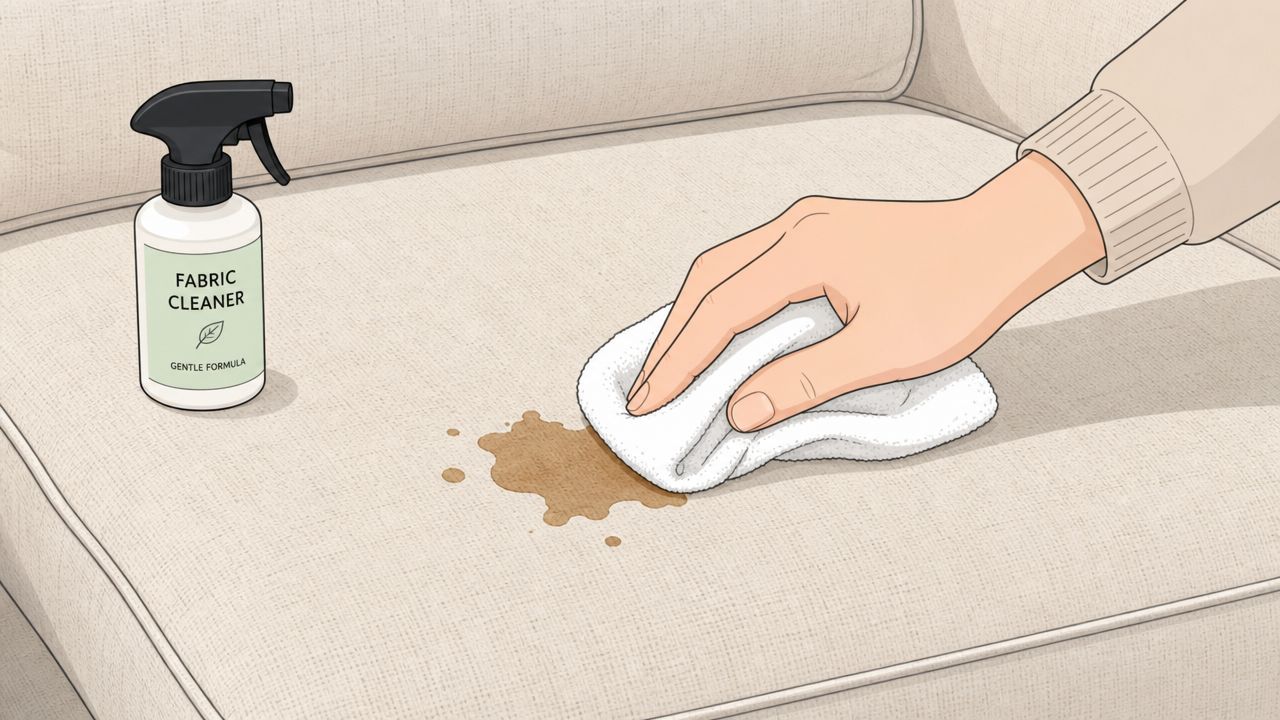
For deep stains, an upholstery steam cleaner achieves 90% stain removal success. For DIY spot-treatment, a 7-step process that includes blotting, using a water, soap, and vinegar solution, and wiping with a clean cloth is essential. Using sparkling water mixed with white vinegar can remove soap residue and brighten fabric in 95% of cases, according to Bless'er House's fabric couch cleaning guide.
The rule that matters most
Rubbing feels productive. It usually isn't.
Blotting lifts material upward. Rubbing drives it deeper, roughs up the fibers, and can spread the stain outward into a larger circle. White cloths are the safe choice because they won't transfer color back onto the upholstery.
Use pressure and patience, not force.
For coffee or wine on W-coded fabric
These stains often create the most panic because they're so visible. The process should stay controlled.
- Blot immediately: Press with a clean, dry cloth to remove as much liquid as possible.
- Use a light cleaning mix: For W-coded fabrics, a gentle mix of water, dish soap, and white vinegar is commonly used in DIY spot treatment.
- Work from the outside in: This helps keep the stain from spreading into clean fabric.
- Wipe with a fresh cloth: Don't keep reusing a dirty section of rag.
- Finish with a light residue pass if needed: Sparkling water mixed with white vinegar can help remove soap residue and freshen the area.
For greasy spots
Grease behaves differently from a liquid spill. It clings and often leaves a darkened patch behind if it's smeared around.
- Lift excess first. A spoon or dull edge can remove anything sitting on the surface.
- Blot, don't smear. Press lightly with a clean cloth.
- Apply the approved cleaner sparingly. More moisture is not the answer.
- Repeat with clean cloth sections. Dirty cloth contact often redeposits what was just lifted.
For ink or mystery marks
Ink is where discipline matters. Random household products can lock the stain in or spread dye.
- Stop testing random remedies: Mixing cleaners usually creates a larger issue.
- Treat the smallest area possible: Keep the work contained.
- Blot with an approved cleaner based on the code: If the fabric is delicate or uncertain, this is often the point to pause.
For odors and general freshening
Not every problem is a visible stain. Sometimes the sofa just smells lived in.
A common deodorizing step on suitable fabrics is baking soda, allowed to sit briefly before vacuuming. It's especially helpful on arms, seat fronts, and other high-contact areas where odors linger longest.
For households that also maintain different upholstery types, this separate guide on how to clean a leather couch is worth keeping handy so the wrong process doesn't get applied to the wrong material.
Deep Cleaning Methods and Smart Custom Choices
Routine care and spot treatment handle a lot, but every fabric sofa eventually reaches the point where it needs a fuller refresh. That's where homeowners usually weigh three options. Rent a machine, use a home upholstery cleaner, or bring in a professional.
Each route can work. Each also has trade-offs.
Comparing the main deep cleaning options
| Option | What works | Where it falls short |
|---|---|---|
| DIY rental machine | Useful for broad refreshes on suitable fabric | Easy to over-wet cushions and create long dry times |
| Home upholstery cleaner | Convenient for ongoing maintenance | Smaller capacity and still requires careful technique |
| Professional service | Better for delicate fabrics, set-in stains, and high-value pieces | Costs more than a DIY attempt |
The primary risk in DIY deep cleaning isn't usually effort. It's over-saturation. Too much moisture can leave rings, slow drying, and create texture changes that are harder to fix than the original soil. Homeowners who want a broader view of how restoration companies think about upholstery care can browse practical articles from Phoenix upholstery cleaning experts, especially for understanding why moisture control matters so much.
Why smarter cleaning starts at the buying stage
The best fabric sofa cleaning strategy begins before the sofa ever enters the living room. Fabric selection changes the whole ownership experience.
A household with kids, pets, and regular entertaining should think differently than a formal sitting room that sees light use. Performance-minded fabrics, tighter weaves, and easier-care upholstery options can reduce how stressful spills become and how often deeper intervention is needed. That's one reason custom furniture matters. Homeowners don't have to settle for a shape they like wrapped in a fabric that doesn't fit their life.
Groen's Fine Furniture explicitly offers a custom recliner program where customers can select any fabric they prefer to have the recliners custom-made to their exact style and comfort requirements, a bespoke service that allows full personalization, as described on the Groen's Fine Furniture Yelp listing.
Design it your way and clean it with less worry
Here, affordable luxury becomes practical, not flashy. A custom piece in a more forgiving fabric often saves aggravation over the years because the material is better matched to the room, the users, and the maintenance reality.
Families comparing silhouettes, cushions, and upholstery can explore design your own sofa to think through those choices before ordering. That includes balancing texture, color, cleanability, and the kind of wear the piece will see in Northwest Indiana homes.
A better fabric choice upfront also pairs well with Special Financing available, subject to credit approval. That gives homeowners buying power to choose lasting quality and bespoke details without feeling pushed into a compromise fabric they'll regret later.
The easiest sofa to clean is often the one that was specified wisely from the start.
One factual note belongs here because it directly affects care options. Groen's Fine Furniture offers a service to steam clean sofas, which makes it one practical option when a homeowner wants help beyond routine maintenance.
When to Call the Professionals for Your Furniture
A careful homeowner can handle a lot. A wise homeowner also knows when to stop. The turning point usually comes when the risk of damage becomes higher than the chance of a clean DIY win.
Professional upholstery cleaners are worth considering when the fabric is delicate, the stain has already set, or the piece itself carries too much value to gamble on trial and error. That's especially true for custom upholstery, heirloom-quality seating, and rooms where matching color and texture matter.
Signs it's time to step back
- The sofa has an S or X code: Those fabrics leave very little room for improvisation.
- The stain keeps returning after drying: That usually means residue or deeper contamination remains below the surface.
- There's a large spill across multiple cushions: Broad saturation is hard to clean evenly by hand.
- The sofa has odor plus staining: That combination often calls for more than surface treatment.
- The upholstery is custom or sentimental: High-value furniture deserves a lower-risk approach.
The decision framework that helps most
If the problem is small, recent, and clearly within the fabric's care code, at-home treatment may be reasonable. If the problem is uncertain, widespread, or already made worse by a failed attempt, outside help usually protects the piece better.
Homeowners who want another practical read on when to move from DIY to outside help can look at guidance on Sofa Cleaning Reno NV, especially for thinking through condition, fabric sensitivity, and stain severity in a straightforward way.
Some upholstery mistakes don't show up immediately. They appear the next day as rings, shrinkage, stiffness, or color shift.
For a family-owned furniture store, the relationship shouldn't end at delivery. Ongoing care is part of helping households protect what they brought home. That applies whether the piece is a hardworking family sofa, a custom recliner, or a formal room accent that needs gentler handling. In the end, the goal of fabric sofa cleaning is simple. Keep the room comfortable, keep the upholstery looking right, and make the investment last.
Visit Groen's Fine Furniture in Dyer or Crown Point today to explore custom options and ask about special financing plans. Let our family help you create a home you love.