Blog
Power Reclining Sofa: NW Indiana’s Best Comfort


For many homeowners in Dyer, Crown Point, and across Northwest Indiana, the search starts the same way. The family sits down at the end of a long day, someone wants to put their feet up, someone else wants back support, and the current sofa just doesn't cooperate. It looks fine, but it doesn't help anyone relax.
That's where a power reclining sofa starts to make sense. It isn't just a bigger recliner or a sofa with buttons. It's a living room piece built around everyday comfort, easier movement, and the kind of support people notice after movie night, game day, or an afternoon nap. For households in St. John, Schererville, and Munster that want lasting value instead of a quick replacement, it's often the upgrade that changes how the whole room gets used.
Table of Contents
- Why a Power Reclining Sofa Is Your Next Living Room Upgrade
- Understanding the Mechanism Behind the Comfort
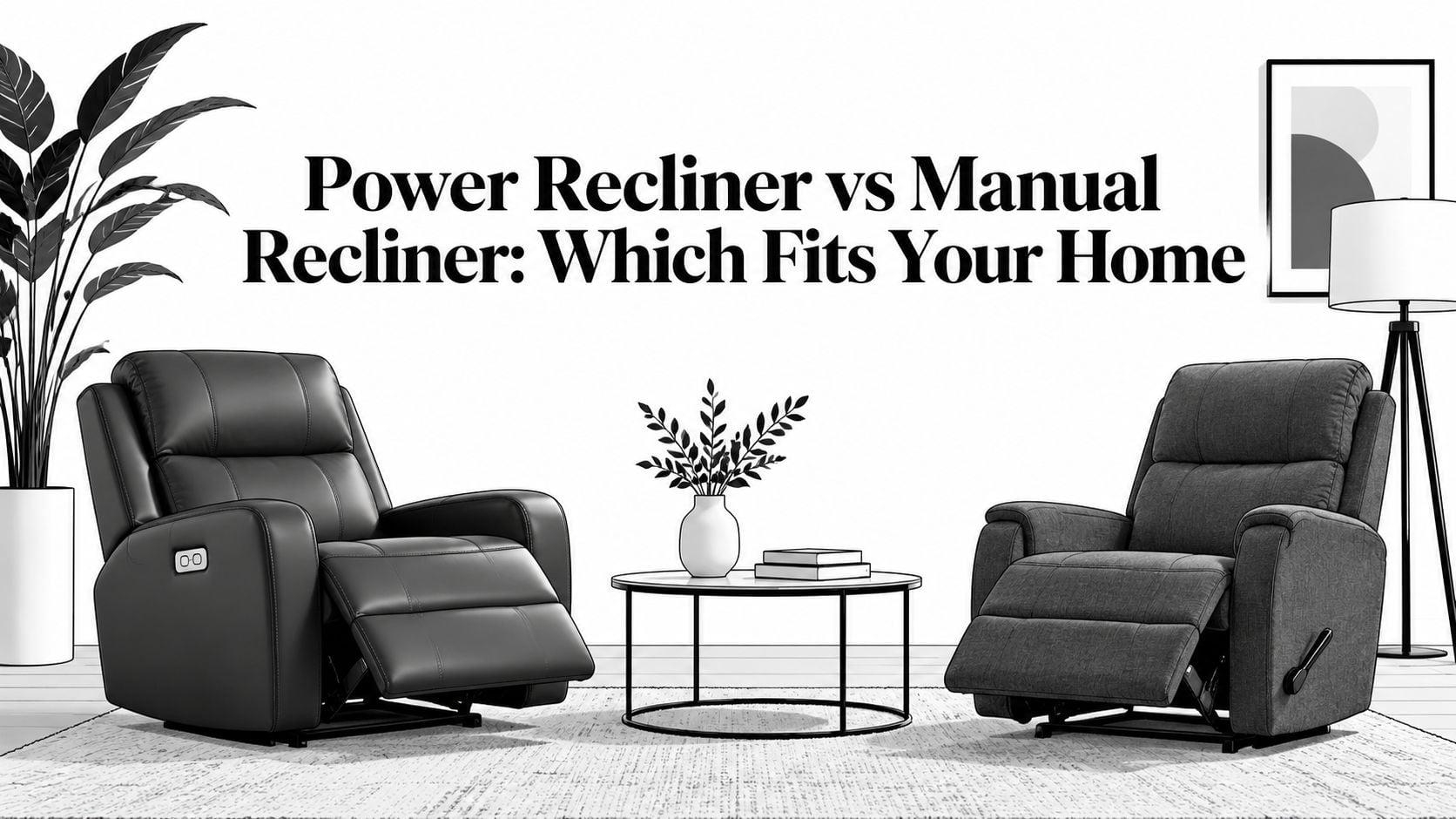
- Power Versus Manual Recliners Making the Right Choice
- Not All Power Recliners Are Created Equal
- What to Look for Inside Your Power Reclining Sofa
- Design Your Perfect Sofa and Fit It in Your Budget
- Experience the Comfort Firsthand at Groen's
Why a Power Reclining Sofa Is Your Next Living Room Upgrade
A power reclining sofa often enters the conversation when a family gets tired of “good enough.” The seat might be too upright for one person, too deep for another, and uncomfortable for anyone who wants to watch TV without stacking pillows behind their back. In many Northwest Indiana homes, the living room has become the place for everything. Relaxing, hosting, reading, scrolling, and sometimes even catching a quick nap.
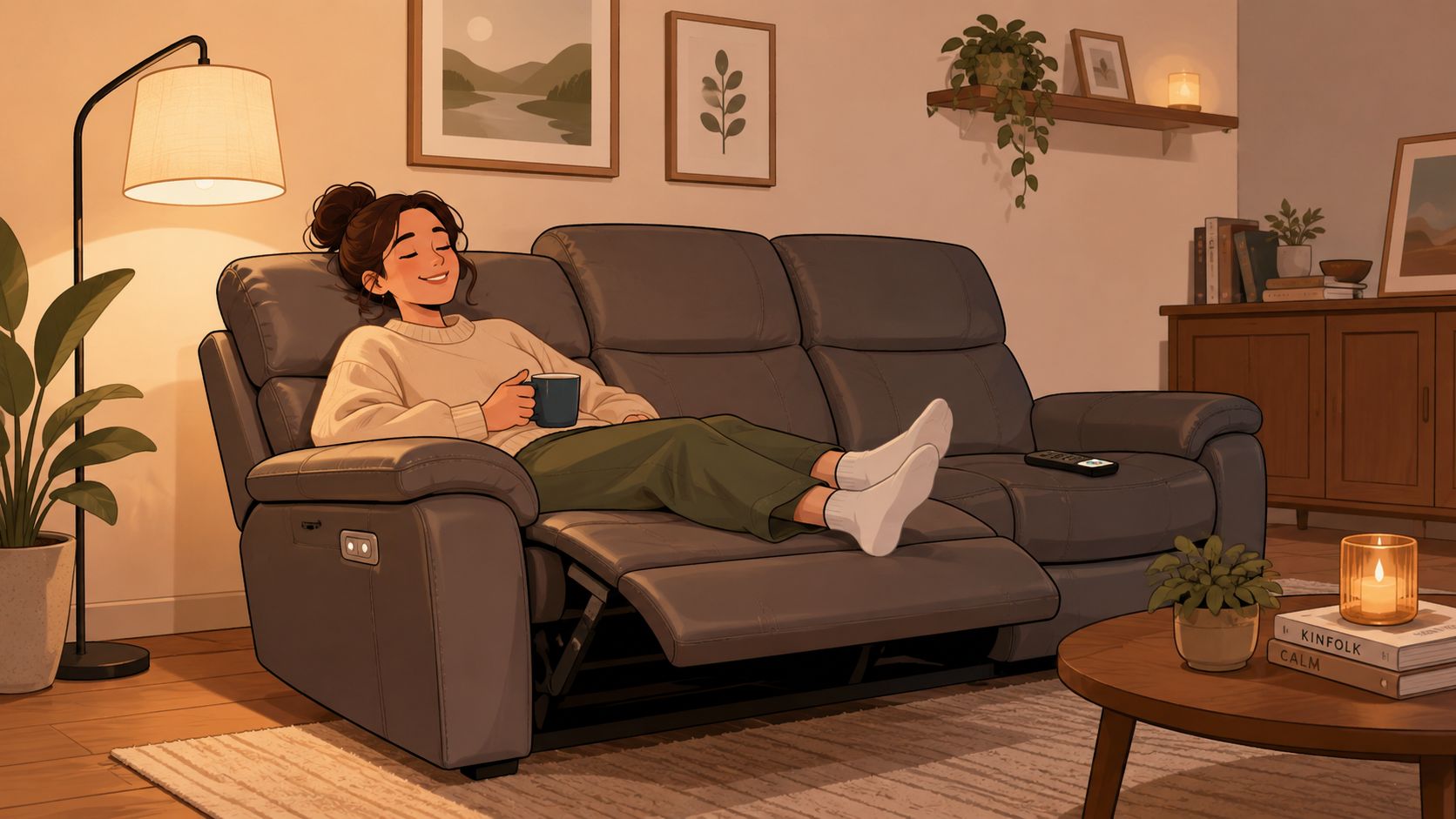
A power reclining sofa answers that problem with comfort that adjusts to the person using it. One seat can stay upright while another reclines. A parent can sit with proper support while a teen stretches out beside them. That flexibility is a big reason so many shoppers now see reclining seating as a central living room piece instead of something tucked away in a den.
The category itself has grown far beyond the old bulky recliner look. The global power reclining sofa market was valued at $12.4 billion in 2025 and is projected to reach $21.8 billion by 2034, reflecting increasing consumer preference for furniture with motorized mechanisms and superior comfort, according to Dataintelo's power reclining sofa market report.
Everyday comfort matters more than showroom looks
A sofa can look polished under bright lights and still disappoint at home. What matters after delivery is whether it supports real routines. Can someone settle in without wrestling a lever. Can a tired back relax. Can the room still feel welcoming and put together.
Practical rule: If the most-used seat in the house doesn't support the way the household actually lives, it's not the right seat.
Cleanliness matters too, especially in high-use family rooms. Households trying to protect a new upholstery purchase can pick up useful maintenance habits from J.G. Carpet Cleaning LLC on furniture care, particularly when spills, pets, and heavy daily use are part of normal life.
For shoppers comparing silhouettes, seat depths, and room layouts, this living room sofa buying guide from Groen's is a helpful starting point before narrowing down power options.
Understanding the Mechanism Behind the Comfort
Most people don't need an engineering lesson. They just want to know why a power reclining sofa feels smoother and easier to use. The simplest comparison is a power car seat. Instead of pushing, yanking, or bracing with body weight, the person presses a button and the seat moves to the position they want.
That same basic idea is what makes power reclining seating feel controlled instead of abrupt. A power reclining sofa utilizes linear actuators that translate electrical energy into precise mechanical movement, enabling the sofa to move smoothly into nearly any recline angle and hold the user's exact position with zero drift, as described in this explanation of how power reclining works.
What a linear actuator is doing
Inside the sofa, the actuator is the part doing the lifting and positioning work. It moves the footrest and backrest in a steady way. That's why the motion feels gradual instead of sudden.
Three comfort benefits come from that setup:
- Button-based control: The user doesn't need to shove back with shoulders or legs.
- Precise stopping points: The seat can stop where the body feels supported, not only at a few preset-feeling angles.
- Position stability: Once the sofa reaches the chosen spot, it stays there until adjusted again.
A good power recline should feel calm and predictable, not jerky or noisy.
Why shoppers notice the difference quickly
The comfort difference isn't only about movement. It's also about what the body doesn't have to do. With manual reclining, people often tense their legs or core to get into position or stay there. With power, the mechanism does that work.
That's especially useful for households with mixed needs. One person may want only a slight lean while reading. Another may want a deeper recline for a movie. A third may appreciate easier operation because of stiffness or limited mobility. Those differences are why many first-time shoppers spend a few minutes trying one seat and then immediately understand the appeal.
For a broader look at seating configurations and controls, this guide to types of power reclining seating helps shoppers connect mechanism choices to room use.
Power Versus Manual Recliners Making the Right Choice
This is the question heard in almost every showroom conversation. Should the household choose power or manual. The honest answer is that both have a place. The better answer depends on how the sofa will be used every day.
Across the broader market, power keeps gaining attention. North America held the largest share of the global recliner sofa market in 2024, accounting for 38% of the total market value, which was estimated at USD 4.84 billion that year, and the power recliner segment led due to greater comfort and advanced technological features, according to Jadhavar Business Intelligence's recliner sofa market report.
A manual recliner still appeals to shoppers who want a simpler mechanism and don't want to think about outlet placement. A power reclining sofa usually appeals to people who care more about easy operation, personalized comfort, and refined positioning.
Power vs Manual Reclining Sofas at a Glance
| Feature | Power Recliner | Manual Recliner |
|---|---|---|
| Ease of use | Adjusts with buttons and requires very little effort | Usually requires a lever or body pressure |
| Recline control | Allows more precise positioning | Usually offers less precise positioning |
| Comfort feel | Smooth, gradual movement | More mechanical feel during operation |
| Mobility needs | Helpful for people who want easier entry and recline | Better for those comfortable using physical force |
| Placement needs | Needs access to power | No power source needed |
| Long-term experience | Often chosen for comfort customization | Often chosen for simplicity |
Who usually prefers power
Some buying decisions become clear once the household thinks about who uses the sofa most.
- Readers and TV watchers: They often want a slight recline, not fully back.
- Anyone with stiffness: They usually appreciate not having to kick or push a footrest closed.
- Shared family rooms: Different people can dial in different comfort preferences instead of compromising on one fixed feel.
Manual can still be the right fit for a secondary room or a shopper who values fewer electrical parts. But in a main living room, power often feels like a better long-term match because comfort isn't all-or-nothing.
The best choice usually isn't the simplest mechanism. It's the one the household will enjoy using every single day.
There's also a value question here. Many shoppers first compare only purchase type, but long-term satisfaction matters more. If the sofa becomes the most-used seat in the home, easy adjustability and better support can matter more than the appeal of a simpler design on day one.
For a broader side-by-side shopping framework, this recliner buying guide can help narrow the decision without overcomplicating it.
Not All Power Recliners Are Created Equal
Once a shopper has decided on power, the next surprise is how different one model can feel from another. Two sofas may both recline electrically, but one moves back while the other supports the neck, lower back, and legs in a much more thoughtful way.
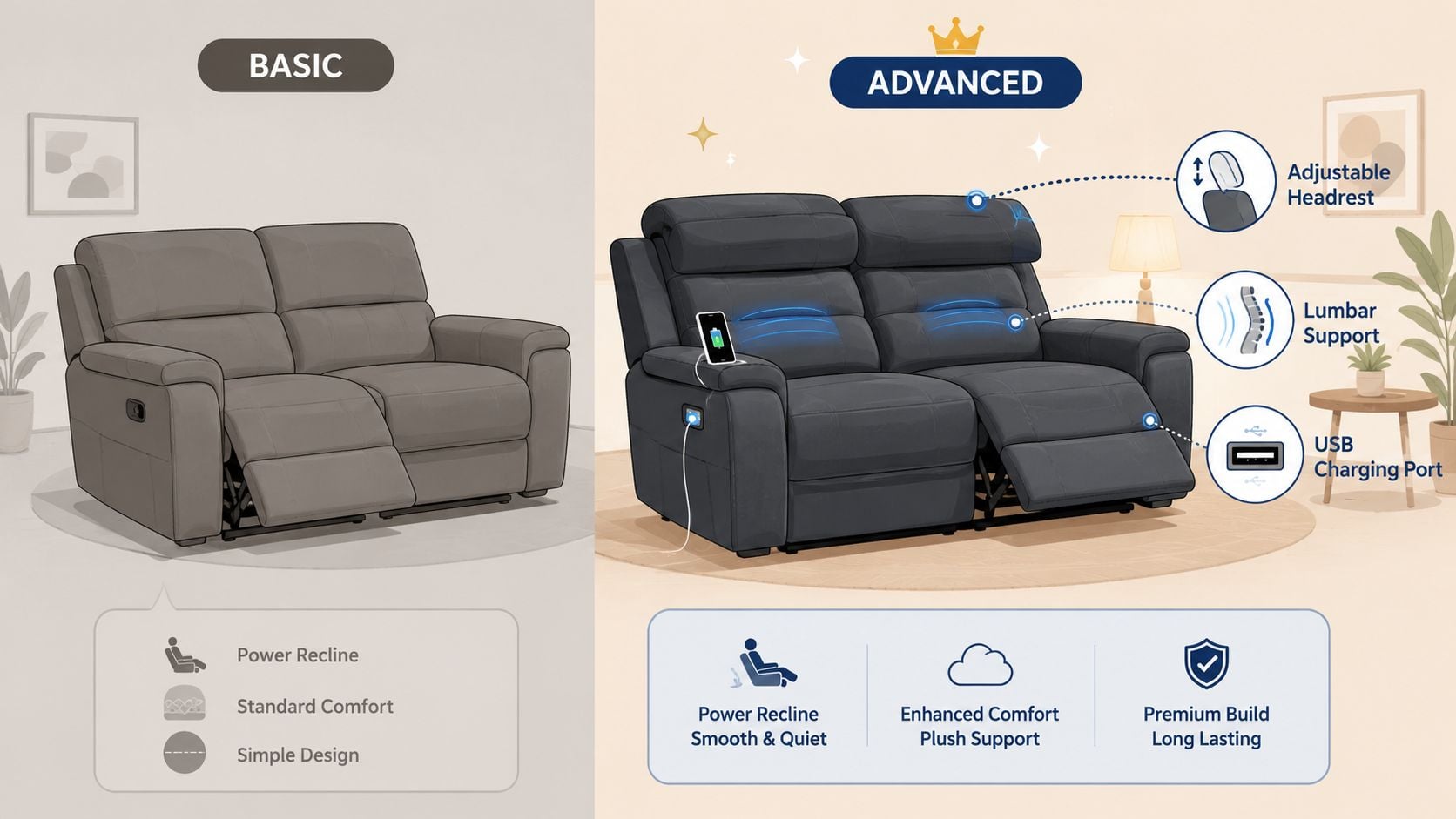
Premium power recliners with lay-flat capability, adjustable lumbar, and power headrests directly address ergonomic deficits by allowing users to find the perfect position for their body and achieve neutral spine positioning that manual recliners can't replicate, according to this guide to power reclining sofa ergonomics.
Features that solve real comfort problems
Power features matter most when a shopper connects them to an everyday annoyance.
- Power headrest: This helps when someone wants to recline without forcing the chin upward or craning the neck toward the television.
- Adjustable lumbar: This gives lower back support where many people need it most, especially during longer sitting sessions.
- Lay-flat motion: This creates a more relaxed resting position for napping or full-body support.
- Built-in charging ports: These keep a phone or tablet nearby without needing side tables full of cords.
Some models also include multi-step controls that let each user fine-tune the position. That's often where a sofa shifts from “nice feature” to “daily favorite.”
One detail many shoppers miss
USB charging sounds small until the household uses it constantly. But port construction matters. Current guides rarely explain the long-term reliability differences between power reclining mechanisms with integrated USB charging ports versus those without, even though 34% of power recliner failures in the last 12 months stem from USB port wiring degradation due to moisture and heat exposure, according to the information summarized in this reclining sofa comparison article.
For households in Northwest Indiana, that detail is worth asking about. A sealed port can be a smarter durability choice than a standard exposed one, especially in active family rooms where drinks, humidity, and everyday wear are part of life.
A feature only adds value if it still works well after years of normal use.
This is often where quality brands separate themselves. A thoughtful power reclining sofa doesn't just add more buttons. It solves support problems in a way the body notices after an hour, not just during the first five minutes.
What to Look for Inside Your Power Reclining Sofa
The outside gets attention first. Fabric color, arm shape, and stitching usually lead the conversation. Long-term value, though, starts inside the sofa. A beautiful power reclining sofa still needs a dependable structure under the cushions.
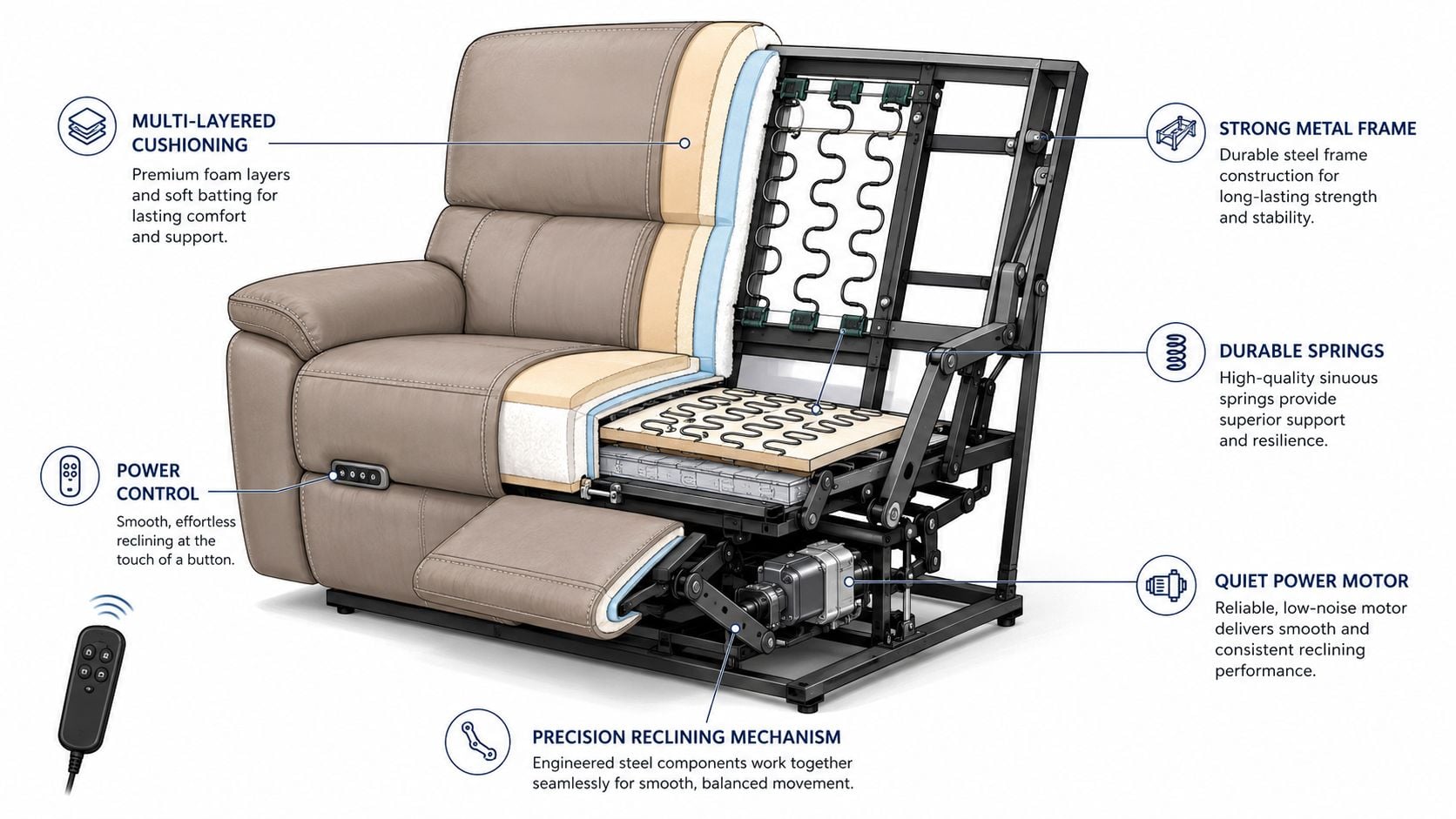
In family homes around Schererville, Munster, and St. John, seating gets tested by real life. Kids drop into it. Adults nap in it. Pets claim the same corner every evening. That's why hidden construction matters so much more than a polished sales tag.
Start with the frame and support system
A shopper doesn't need to memorize manufacturing terms, but there are a few signs of substance worth checking.
- Frame strength: Kiln-dried hardwood or well-made engineered wood generally offers a steadier base than lighter construction.
- Seat support: A quality suspension system helps the sofa keep its shape and comfort over time.
- Mechanism integration: The reclining hardware should feel secure and well-fitted, not added as an afterthought.
- Cushion resilience: Supportive seat cushions matter because a recliner that sags loses much of its comfort advantage.
Flexsteel is often part of this conversation because shoppers frequently associate the brand with durability and support, especially when they're looking for a sofa that has to serve as everyday seating, not occasional seating.
Choose upholstery for real life
The right cover depends less on trend and more on household habits. A family with pets and snacks has different needs from a formal sitting room. A home that hosts often may want something forgiving and easy to maintain.
A few practical directions usually help:
- Performance fabric: Good for busy households that want softness with easier day-to-day upkeep.
- Top-grain leather: A classic option for shoppers who want a polished look and a material that develops character over time.
- Textured weaves: Helpful for disguising small signs of daily use.
- Color choice: Mid-tone hues often wear everyday life more gracefully than very light or very dark extremes.
Shoppers should touch the upholstery, sit long enough to notice pressure points, and ask what kind of care the material expects over the years.
For anyone comparing fabric, leather, and family-friendly upholstery choices, this upholstery materials guide can make those decisions easier.
Design Your Perfect Sofa and Fit It in Your Budget
A lot of shoppers assume a power reclining sofa comes in a few standard looks and that's the end of it. That's no longer the case. The better buying experience starts when the household realizes it doesn't have to settle for a close-enough fabric, a nearly-right configuration, or a style that works only halfway with the room.
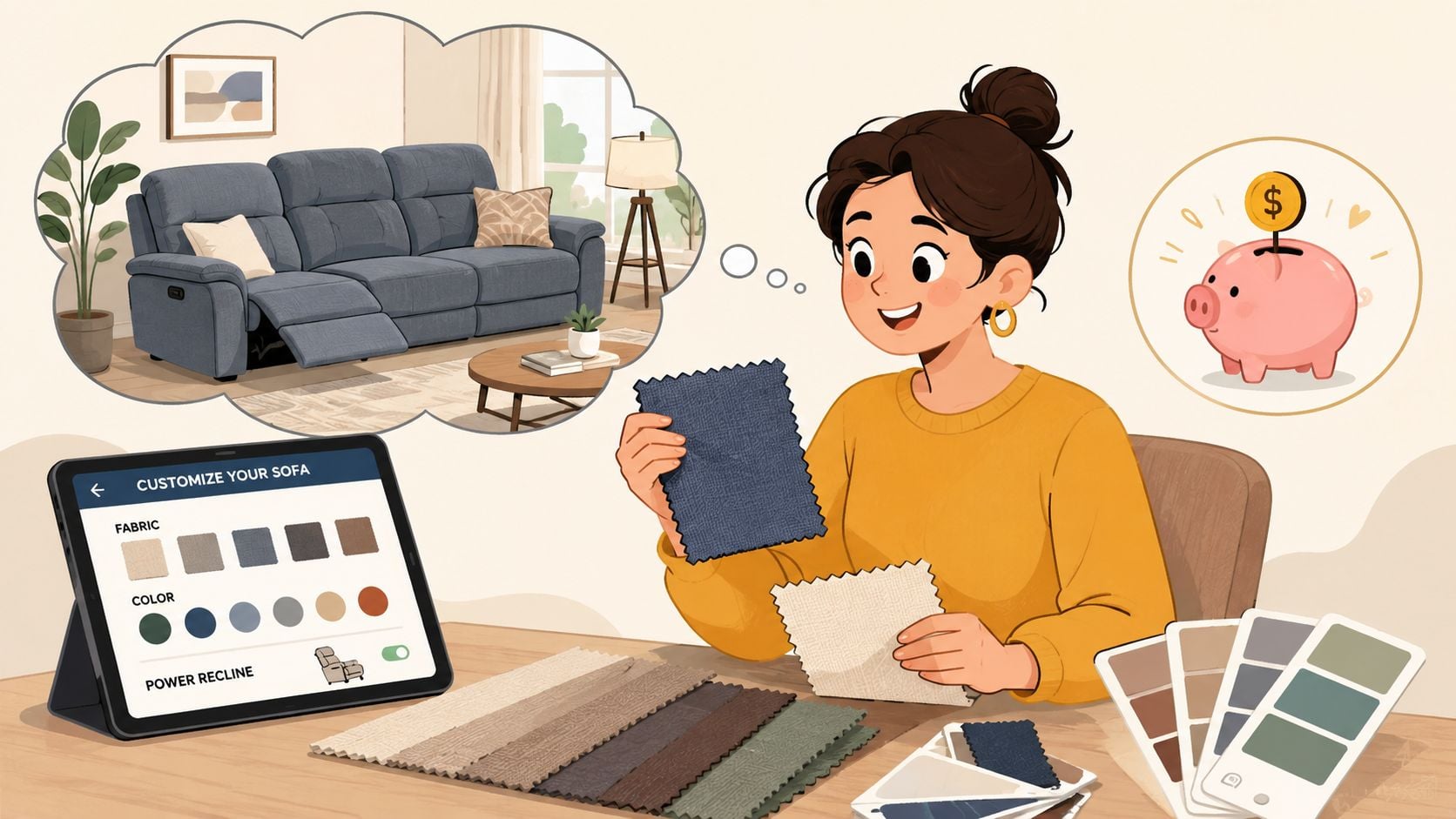
Design it your way
Custom furniture matters because living rooms aren't all built the same, and families don't all use them the same way. Some need a compact profile. Others want a larger sofa for movie nights. Some want leather with a cleaner, sleek line. Others want a softer fabric feel with a cozy look.
That same made-to-order mindset shows up across other rooms of the home too. Canadel's UDesign program enables customers to customize every aspect of dining furniture with thousands of unique combinations, including sizes, shapes, and finishes, as shown in this overview of Canadel customization. Groen's Fine Furniture also offers custom order services that allow shoppers to select styles, finishes, and sizes for pieces marked as customizable.
For shoppers who value craftsmanship, Canadel produces handcrafted wood furniture in North America with customizable stains, fabrics, and wood types such as solid maple, as described in this Canadel furniture profile. That same bespoke thinking helps shoppers approach upholstered motion seating with more confidence.
Buying power without settling
Budget matters. So does comfort. Those two things don't have to fight each other.
Special Financing is available, subject to credit approval, which can give households more buying power when they're choosing quality seating intended to last. Instead of compromising down to a piece that doesn't meet the room's needs, many shoppers prefer a plan that helps them bring home the configuration, upholstery, and support features they want.
Delivery planning matters too because power reclining sofas are substantial pieces. For readers who want a clear sense of what safe handling involves before delivery day, this guide to expert heavy item moving advice gives useful context on protecting both the furniture and the home.
Experience the Comfort Firsthand at Groen's
Reading about support, mechanism quality, and upholstery options helps. Sitting in the sofa is what usually decides it. The body notices things that a specification list can't explain well, such as whether the headrest lands in the right place, whether the seat feels balanced, and whether the recline motion feels natural.
That's especially true with power seating. One household member may love a deeper cradle. Another may want firmer support and a more upright sit. The right power reclining sofa is usually the one that fits the way the room is lived in, not the one that sounds the most impressive on paper.
Why the showroom visit matters
Trying the sofa in person answers practical questions fast:
- Does the seat height feel easy to get in and out of
- Does the head and neck stay supported while reclining
- Does the upholstery feel right for daily use
- Does the motion feel smooth and quiet
- Does the scale suit the room and the people using it
That test-drive approach matters in a way that online browsing can't replace. For homeowners in Dyer, Crown Point, and the surrounding Northwest Indiana communities, a local showroom visit also means real guidance, white-glove delivery support, and a more personal buying process shaped by multigenerational ownership and 5-star service.
A visit also helps narrow the field quickly. A shopper may think they want one arm style and leave preferring another. Someone focused on appearance may discover that lumbar support matters more than expected. A household that thought power was optional may decide it's the feature they won't want to live without.
For store directions and planning a visit, the Groen's Fine Furniture locations page is the easiest place to start.
Visit Groen's Fine Furniture in Dyer or Crown Point today to explore custom options and ask about special financing plans. Let our family help create a home that feels comfortable, lasting, and personal.