Blog
Living Room Ideas on a Budget: 8 Tips for NWI Homes

A lot of living room projects in Northwest Indiana start the same way. The sofa has lost its support, the chairs do not quite match, and the room never quite feels complete. The budget is real, and so is the need for a space that holds up to kids, guests, pets, and long winters indoors.
For homeowners in Dyer, Crown Point, and across NWI, the best results usually come from a high-low plan. Put more of the budget into the pieces you use hard every day, like a sofa, sectional, or recliner. Save on items that are easier to change later, like lamps, pillows, small tables, and wall decor. That approach gives the room comfort first, style second, and a lot less regret a year from now.
Our family at Groen's Fine Furniture has helped neighbors make those choices since 1983. We have seen the trade-offs up close. Cheap upholstery can flatten fast. Poor seat construction shows its age early. On the other hand, spending wisely on one well-built anchor piece often makes the whole room look better, even if the finishing layers come together over time.
That is also why financing can be useful when it is used carefully. Instead of settling for a sofa you plan to replace too soon, some homeowners choose a better-made piece now and spread out the cost while keeping the rest of the room simple. Pair that with a few affordable accents and the room starts working for your life right away.
If you are weighing where to spend and where to save, browse living room accent pieces and furniture options that help tie a room together and build from the seat you will use most.
The ideas below focus on practical budget decisions that still leave you with a room that feels personal, comfortable, and built to last.
Table of Contents
- 1. Mix High-Impact Statement Pieces with Budget-Friendly Basics
- 2. Embrace Neutral Color Palettes & Natural Materials
- 3. Invest in Multipurpose Furniture & Smart Storage Solutions
- 4. Incorporate Secondhand, Vintage & Upcycled Finds
- 5. Use Area Rugs to Define & Anchor the Space
- 6. Create Zones with Lighting, Furniture Arrangement & Layering
- 7. Maximize DIY & Affordable Accessories (Pillows, Throws, Wall Art, Plants)
- 8. Choose Performance Fabrics & Durable Upholstery for Long-Term Value
- 8-Point Comparison: Budget Living Room Ideas
- Your Custom, Comfortable Living Room Awaits in NWI
1. Mix High-Impact Statement Pieces with Budget-Friendly Basics
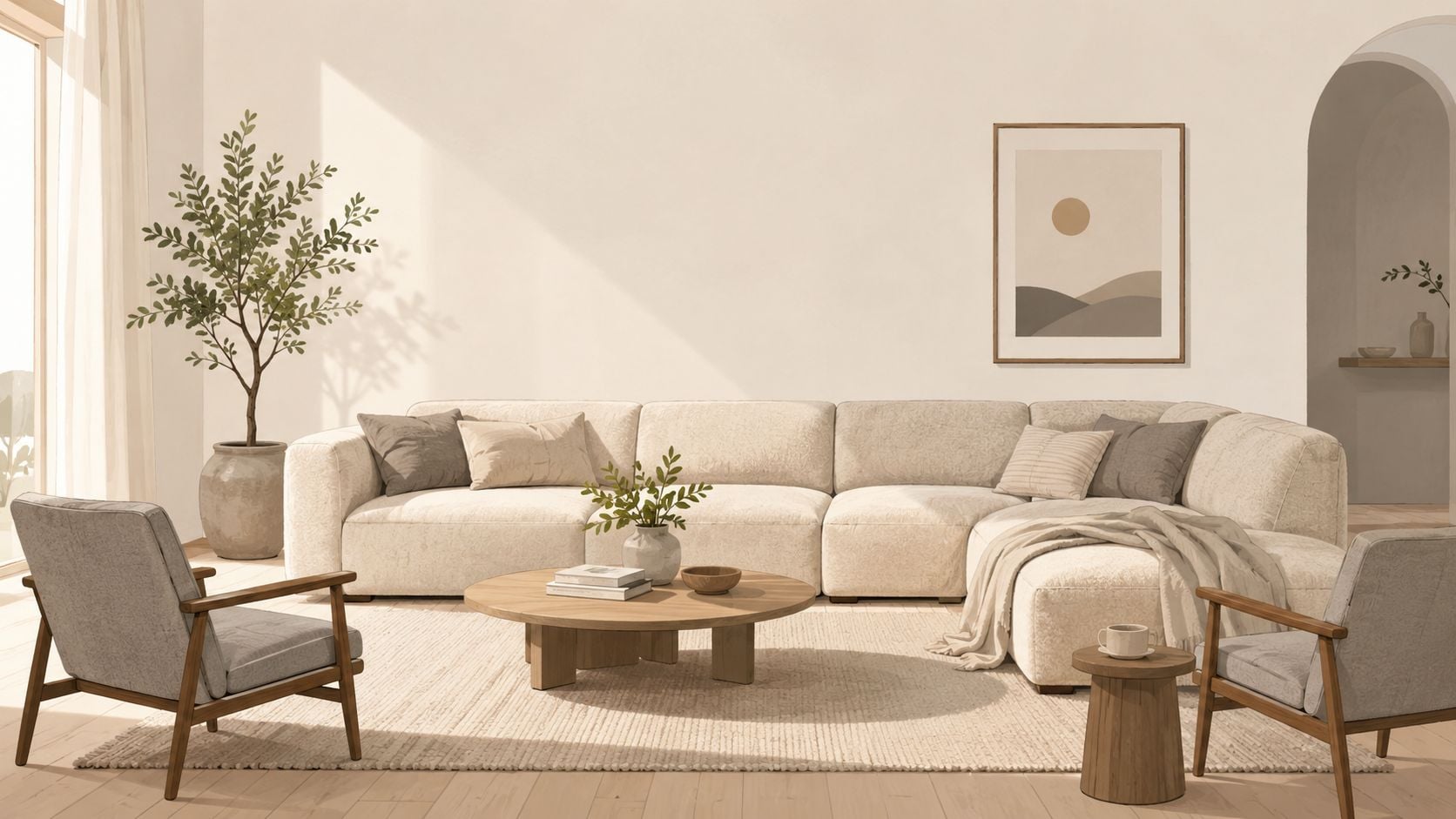
The best budget rooms rarely come from buying everything at the same price point. They come from choosing one or two pieces that do the heavy lifting, then surrounding them with simpler accents that support the look.
In most living rooms, that anchor piece is the sofa or sectional. A durable Flexsteel sectional in a neutral performance fabric gives the room comfort, scale, and staying power. Then the supporting cast can be more flexible, like smaller wood side tables, vintage-inspired accent chairs, or a simpler lamp pair that can change later.
High-low buying strategy
A solid wood Amish coffee table is another smart place to invest. It takes daily use, gets bumped constantly, and often becomes the center of the room. When that centerpiece is well built, the room feels grounded even if the accessories are modest.
Our team often recommends shoppers browse living room furniture accent pieces after they've settled on the main seating. That order matters. Start with the piece people use every day, then fill in around it.
Practical rule: Spend more on the furniture that supports your body and your routine. Spend less on the pieces you can replace without regret.
Special Financing is also part of the high-low strategy. A better sofa doesn't always need to be purchased all at once, and financing, subject to credit approval, can create buying power for a piece that will last while leaving room in the budget for affordable finishing touches.
For homeowners in Dyer, Crown Point, St. John, and Schererville, visiting a showroom helps. Sit in the sectional. Test the recline. Check seat depth. Living room ideas on a budget work best when the room still feels comfortable five years from now, not just finished this weekend.
2. Embrace Neutral Color Palettes & Natural Materials
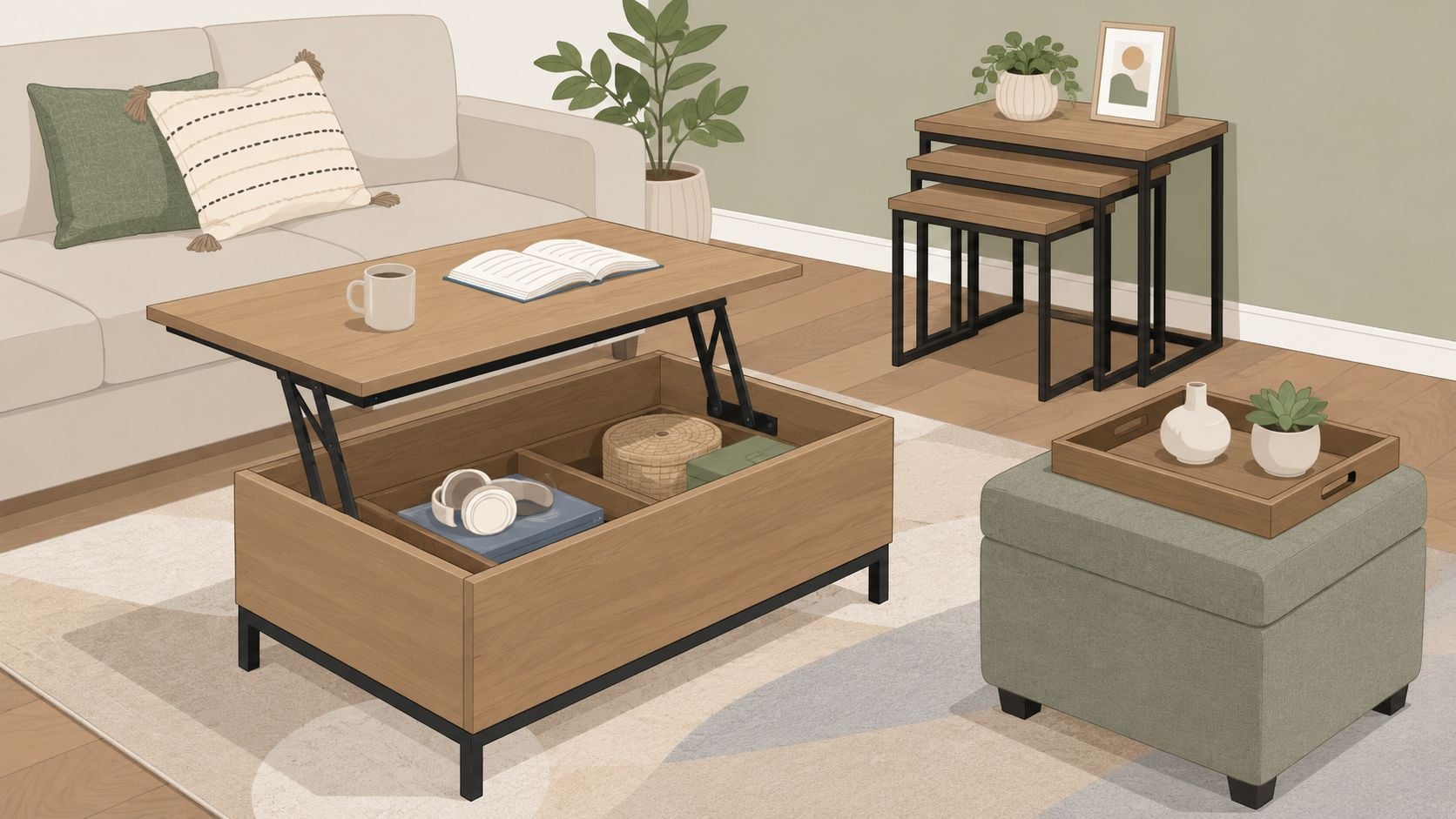
A neutral room isn't a boring room. In fact, warm whites, soft grays, taupes, and oatmeal tones usually make a budget stretch further because they stay relevant longer than trend colors.
A Bassett sofa in a quiet beige or warm gray upholstery can work with almost any wood tone. Pair that with a natural-finish Amish table, woven baskets, and a few textured pillows, and the room starts to feel layered instead of flat. Texture carries the design when color stays restrained.
Why neutrals work harder
Natural materials do something budget furniture often struggles to do. They add honesty. Solid wood, woven jute, wool-like texture, and matte ceramics give the room substance, even when not every piece is an investment purchase.
A good example is an open-concept home in Munster or Crown Point where the living room connects visually to the dining area. If the wood tones feel related, the entire space looks more intentional. That's one reason custom matters. Canadel offers thousands of custom combinations for sizes, shapes, and finishes, which gives homeowners a way to design it their way instead of settling for a close-enough finish.
Neutrals save money because they let the room evolve in small steps. Pillows, art, and greenery can change with the season, but the main furniture still feels current.
This is also where showrooms help. Photos flatten wood tones and fabric texture. In person, homeowners can compare cream against oatmeal, warm brown against lighter oak, and smooth upholstery against nubby woven fabric. That kind of side-by-side viewing usually prevents costly color mistakes and helps living room ideas on a budget feel more polished from the start.
3. Invest in Multipurpose Furniture & Smart Storage Solutions
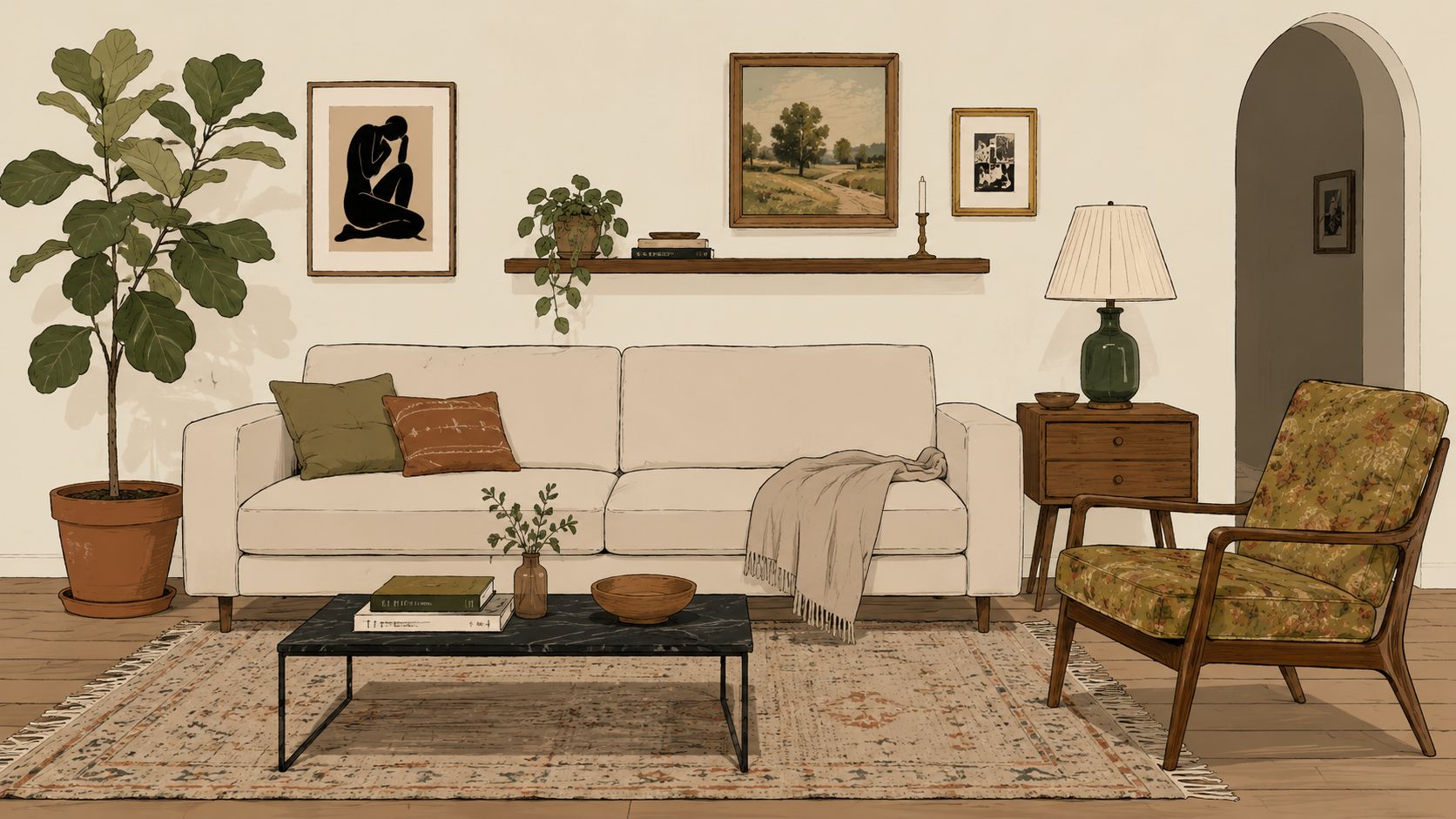
When a room has to serve as a family hangout, TV room, reading spot, and occasional work zone, single-purpose furniture starts wasting space. The better move is choosing pieces that do more than one job.
A lift-top coffee table can hold blankets, remotes, and board games while also creating a practical surface for a laptop or takeout dinner. An ottoman with hidden storage can work as a footrest, extra seat, and toy drop zone. Nesting tables can spread out when guests visit, then tuck away when they're not needed.
Storage that earns its footprint
Storage furniture only works when it's pleasant to use. Drawers that stick, lids that feel flimsy, and shelves with awkward proportions usually become daily annoyances. That's why testing the mechanics matters just as much as liking the look.
Homeowners who want more flexibility can explore living room storage options that match the room instead of forcing plastic bins and mismatched shelving into the plan. Custom order services also help here. Groen's offers custom order programs across the home, and if a piece is customizable, it displays a customizable icon with a request form option.
- Choose hidden storage first: Blankets, game controllers, chargers, and kid clutter look better behind doors or inside an ottoman.
- Keep finishes quiet: Natural wood or soft neutral finishes blend in better than busy, high-contrast storage pieces.
- Measure walking space: A beautiful storage bench isn't helpful if it interrupts traffic flow between the sofa and TV.
For families in Northwest Indiana, multipurpose furniture is one of the most practical living room ideas on a budget because it often eliminates the need to buy separate pieces later. One stronger purchase can replace two weaker ones, and the room feels calmer in the process.
4. Incorporate Secondhand, Vintage & Upcycled Finds
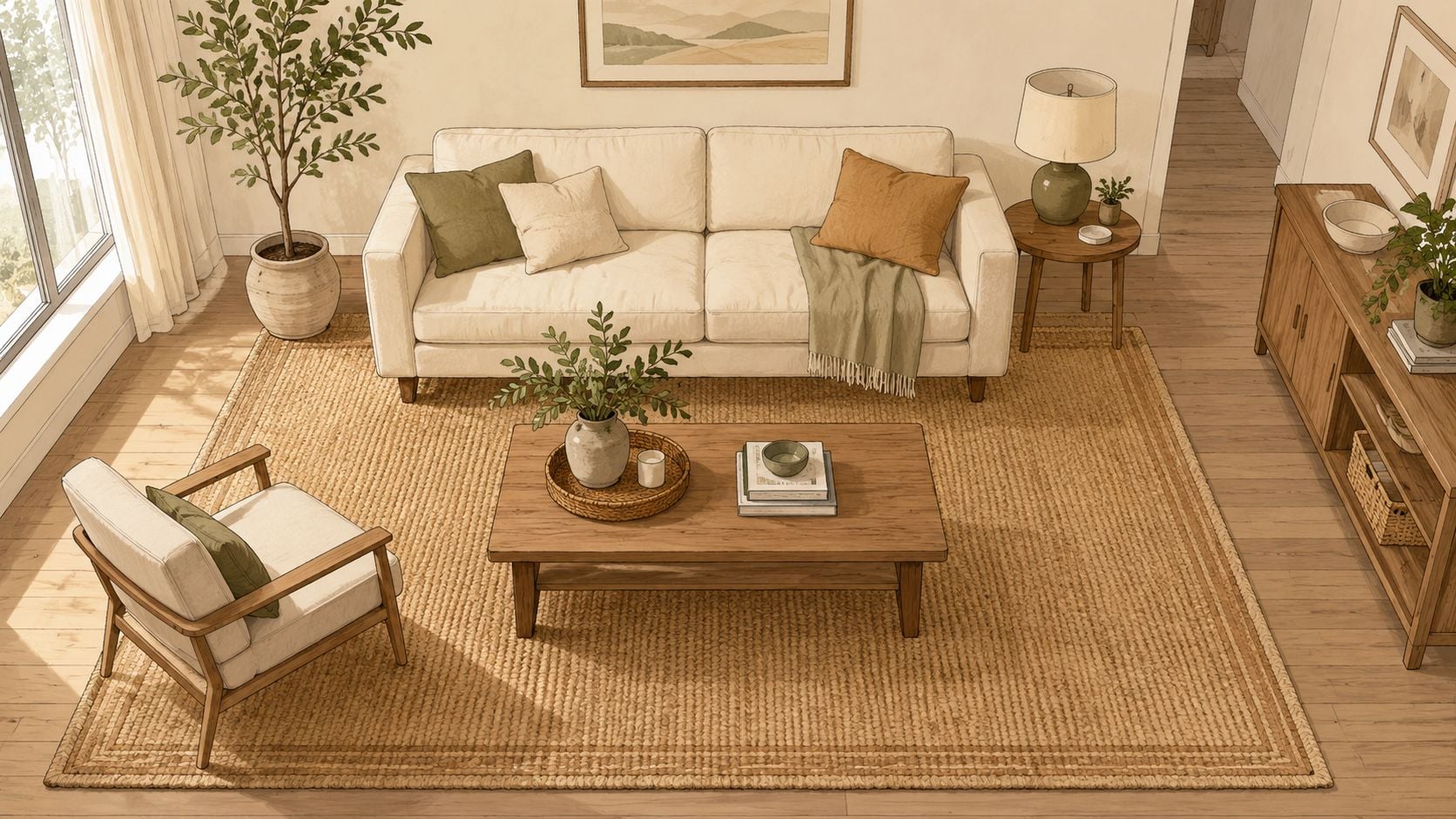
A good budget living room rarely comes from buying everything new at once. The rooms that feel settled and personal usually mix one or two dependable new pieces with older finds that bring texture, age, and a little history.
That high-low approach works especially well in Northwest Indiana homes. Estate sales, antique malls, resale shops, and family hand-me-downs can turn up solid wood end tables, framed art, ceramic lamps, benches, and mirrors for far less than buying every accent piece retail. The savings matter, but so does the result. A room with a quality sofa and a few well-chosen vintage pieces tends to feel more collected and less like a showroom set.
The trade-off is simple. Buy secondhand where wear is manageable. Buy new where comfort, support, and daily use matter most.
What usually makes sense to buy used
Case goods are often the safest category. Older side tables, coffee tables, bookcases, and cabinets can hold up for decades if the joinery is sound and the drawers still glide properly. Scratches, worn stain, and brass patina usually add character. Structural wobble is a different story.
Upholstered seating takes more scrutiny. A used accent chair can be worth it if the frame is solid and the cushion still has shape, but I rarely advise gambling on a heavily used sofa just to save a few hundred dollars. Sagging support, stale odors, and tired fabric cost more to fix than many shoppers expect. That is where a new, better-built sofa from a local store earns its place in the budget.
Homeowners who want more options beyond weekend shopping routes can use an online estate sales guide to widen the search before committing to a local pickup.
One old piece can do a lot of work.
A vintage trunk as a coffee table, a painted cabinet under the TV, or a refinished console behind the sofa can give the room depth that flat-pack furniture usually cannot. If the room has wall-to-wall carpet, placement matters just as much as the piece itself. These tips on placing an area rug over carpet without making the room feel bulky can help older wood pieces and textiles sit together more naturally.
Aim for contrast with control. Pair the vintage item with a dependable anchor piece in a quiet fabric or finish so the room feels intentional. Around Dyer, Schererville, and St. John, that often means investing in the sofa or sectional first, then layering in secondhand tables, lamps, or artwork over time. If a stronger furniture purchase stretches the budget, special financing can make that smarter long-term split easier to manage than replacing weak pieces every few years.
5. Use Area Rugs to Define & Anchor the Space
Walk into a living room with good bones but no rug, and the whole seating area can feel like it is drifting. Add the right rug, and the room settles down fast. It gives the furniture a footprint, softens hard surfaces, and helps even modest pieces look considered.
Rugs also stay high on the shopping list for a reason. Analysts cited in this roundup of home decor market statistics note that rugs and carpets make up a large share of home decor spending. Homeowners keep buying them because few updates change the feel of a room as quickly for the money.
Size matters more than pattern.
A too-small rug is one of the most common budget mistakes I see across Northwest Indiana homes. In a typical seating group, the front legs of the sofa and chairs should rest on the rug. That one choice makes the arrangement feel grounded instead of scattered. If you are reworking the whole seating plan, this guide on how to arrange living room furniture for a balanced layout can help you choose the rug size that fits the room instead of guessing.
Material is the next trade-off. Natural fibers such as jute, sisal, and wool usually age better visually and hide everyday wear with less fuss, but they are not always the softest option underfoot. Synthetic blends can be easier on the budget and easier to clean, especially in homes with kids, pets, or heavy traffic. The better high-low move is to save on accents and get a rug size and material that suits how the room is used.
A few practical rules help:
- Anchor the seating area: The rug should sit under the main furniture edges, not float alone in the middle of the room.
- Use a rug pad: It adds cushion, protects flooring, and helps the rug stay in place.
- Keep patterns quieter if the sofa is the investment piece: A subtle rug gives custom upholstery, wood finishes, and collected accessories room to stand out.
- Shop secondhand carefully for wool rugs: An online estate sales guide can help widen the search if you want character without paying full retail.
Carpeted rooms can still benefit from an area rug. The key is choosing the right pile, scale, and placement so the room feels layered instead of bulky. This guide on placing an area rug over carpet shows how to make that combination work.
For many homeowners, the smartest split is simple. Buy the best sofa your budget can reasonably support, then use a well-sized rug to tie the whole room together. That balance gives the space comfort now and staying power later.
6. Create Zones with Lighting, Furniture Arrangement & Layering
A living room feels more expensive when it's arranged with intention. That doesn't require more furniture. It requires better placement.
One corner can become a reading nook with a recliner, small table, and lamp. The main seating area can face inward for conversation instead of pushing every piece against the wall. A media console can define the TV zone without taking over the room. These subtle boundaries make the space work harder.
Arrange for conversation first
The first question isn't where the TV goes. It's how the room is used. If family and guests naturally gather to talk, the seating should support that. If the room handles movie nights, homework, and occasional guests, each use should have a clear home.
Lighting does the same kind of work. Overhead light alone is rarely flattering. A better budget approach is layering ambient, task, and accent lighting so the room feels warmer at night and more functional during the day.
A room can feel unfinished even with good furniture if the lighting is harsh and the seating doesn't relate to each other.
For homeowners reworking a room layout, this article on how to arrange living room furniture gives a helpful starting point. It's especially useful in open plans where the living room needs to connect to nearby dining or entry spaces without feeling scattered.
In the showroom, proportion becomes easier to read. A sectional that seems right online may dominate a smaller room in Munster. A pair of chairs may balance the space better. Living room ideas on a budget often come down to fewer mistakes, and layout mistakes are expensive.
7. Maximize DIY & Affordable Accessories (Pillows, Throws, Wall Art, Plants)
A living room usually starts to feel finished after the accessories go in. That is good news for budget-conscious homeowners, because pillows, throws, art, and plants can change the mood of the room without forcing a major furniture purchase.
This is also where the high-low approach works especially well. Put more of the budget into the pieces that get daily use, like the sofa or chairs. Save on the layer that can change over time. A well-built neutral sofa can carry the room for years, while affordable accessories keep it from feeling flat or too serious.
Use DIY where the risk is low and the payoff is visible
DIY makes sense for cosmetic updates. Paint a wall. Frame your own prints. Refresh a thrifted side table. Make a simple gallery wall with family photos, local art, or black-and-white prints that share a common frame style.
It makes less sense to gamble on anything tied to wiring, mounting that needs to hold real weight, or projects where a mistake costs more to fix than hiring help in the first place. I usually tell shoppers in Northwest Indiana to save their energy for the projects guests notice right away and leave the technical work alone.
A few accessory moves give a room more polish for very little money:
- Refresh the pillow mix: Use a combination of solids, small-scale patterns, and varied textures so the room feels layered instead of matched. These ideas for throw pillow styles can help narrow down what works with your sofa.
- Add one throw that looks good year-round: A cotton or lightweight woven throw often works better than buying several seasonal ones that end up stored away.
- Style one surface well: A tray, a small stack of books, and one decorative object usually looks cleaner than scattering decor across every table.
- Choose wall art with a connection to the home: Local scenes, family pieces, or simple abstracts often hold up better than generic filler art.
- Use plants to soften corners: Even one floor plant or a small grouping on a console can make a room feel more settled and less boxy.
The trade-off is simple. Accessories can help a modest room look thoughtful, but they cannot rescue furniture that is uncomfortable, undersized, or wearing out too quickly. That is why the best budget living room ideas balance low-cost finishing touches with a few smart investments.
If the budget feels tight, spread the project out. Buy the right sofa first, especially if financing helps make that purchase manageable, then add pillows, art, and greenery over time. That approach usually looks better than trying to do the whole room at once with pieces that need replacing in two or three years.
8. Choose Performance Fabrics & Durable Upholstery for Long-Term Value
Saturday night in Northwest Indiana often looks the same. Someone drops pizza on the cushion, the dog claims the corner seat, and a bright patch of afternoon sun keeps hitting the same arm every day. A budget living room works better when the upholstery is chosen for that kind of use, not just for how it looks on the sales floor.
Performance fabric usually gives better long-term value than replacing a worn sofa after a few years. It resists stains better, cleans up with less fuss, and tends to hold its color longer in busy rooms. That matters in family spaces where the sofa gets used every day, not just when company comes over.
Pets are a big part of that decision. Many U.S. households have pets, and plenty of budget decorating advice still skips over durability and easy-clean materials, as noted in an earlier source on living room budgeting. For homes in Dyer, Crown Point, St. John, and Schererville, that is a practical concern. Claw snags, shedding, and muddy paws will test a fabric fast.
The high-low approach pays off. Save on pillows, lamps, and accent tables if needed. Put more of the budget into the sofa or sectional you sit on every night.
I usually recommend looking closely at the upholstery before getting distracted by a sale price. Tight weaves, forgiving colors, and fabrics with a soft hand but better cleanability tend to age better than trendy materials that show every spot. A neutral performance fabric also gives the room more flexibility if you want to swap rugs or accessories later.
There is a trade-off. Some lower-cost upholstery feels good on day one but pills, fades, or loses shape sooner. Spending more upfront on a well-built frame and durable fabric often lowers replacement costs over time. If that upfront number feels hard to manage, special financing can make the smarter purchase more realistic without forcing the whole room to be done at once.
Showroom testing matters here. Sit in the piece. Rub the fabric between your fingers. Look at the color in natural light if possible. Good budget decisions are not always the cheapest ones. They are the ones that still make sense after a few years of real use.
8-Point Comparison: Budget Living Room Ideas
| Approach | Implementation complexity | Resource requirements | Expected outcomes | Ideal use cases | Key advantages |
|---|---|---|---|---|---|
| Mix High-Impact Statement Pieces with Budget-Friendly Basics | Medium, planning to select focal anchors and coordinate accents | Moderate budget for 1–2 quality anchors; time to curate; financing optional | Curated, long-lasting room with flexible, low-cost accent updates | Homeowners wanting durable seating and a personalized look on a mid-range budget | Cost-effective quality, customizable anchors, easy seasonal refresh |
| Embrace Neutral Color Palettes & Natural Materials | Low–Medium, requires discipline in layering textures and tones | Moderate investment in quality wood/fabrics; low cost for accessories | Timeless, versatile backdrop that is easy to refresh and broadly appealing | Long-term homeowners, resale-focused interiors, lovers of classic design | Longevity, easy updates, natural materials age well |
| Invest in Multipurpose Furniture & Smart Storage Solutions | Medium, measuring and specifying mechanisms takes care | Potentially higher upfront cost for multifunction pieces; planning time | Fewer pieces, reduced clutter, adaptable layouts and improved organization | Small homes, multifunctional rooms, families needing storage | Space-saving, high value per function, keeps spaces organized |
| Incorporate Secondhand, Vintage & Upcycled Finds | Medium–High, time-consuming sourcing and possible restoration | Low–Moderate purchase cost but may require repair or reupholstery | Unique, characterful rooms with lower environmental impact | Eco-conscious decorators, eclectic styles, bargain hunters | One-of-a-kind pieces, cost savings, sustainability benefits |
| Use Area Rugs to Define & Anchor the Space | Low, select size, fiber, and placement | Low–Moderate cost depending on size/quality; maintenance required | Defined zones, cohesive look, added warmth and floor protection | Open-plan living, mismatched furniture, budget-friendly refreshes | High visual impact for cost, ties elements together, improves comfort |
| Create Zones with Lighting, Furniture Arrangement & Layering | Medium, requires spatial planning and layered lighting design | Low–Moderate cost for lamps, rugs, and small furniture; planning time | More functional, intentional rooms with flexible activity areas | Large or open-plan spaces, multipurpose living areas, entertaining homes | Maximizes function without major purchases, impactful ambiance |
| Maximize DIY & Affordable Accessories (pillows, throws, art, plants) | Low, easy swaps and DIY projects | Low budget; time and creativity | Fresh, personalized spaces with frequent low-cost updates | Renters, trend-followers, tight budgets, seasonal decorators | Low cost, high impact, encourages personal expression |
| Choose Performance Fabrics & Durable Upholstery for Long-Term Value | Low–Medium, requires fabric selection and care understanding | Moderate–High upfront cost; sample review recommended | Longer-lasting furniture that resists stains, fading, and heavy use | Families with children or pets, high-traffic rooms, long-term homeowners | Durability, easier maintenance, better long-term value |
Your Custom, Comfortable Living Room Awaits in NWI
Creating a living room you love on a budget comes down to better priorities. Not smaller dreams. The strongest rooms usually mix one or two lasting investment pieces with more affordable layers that can evolve over time. That approach keeps the room personal, practical, and easier to update as life changes.
For many homeowners in Northwest Indiana, the smartest first step is deciding where comfort matters most. A sofa, sectional, recliner, or solid wood coffee table gets daily use and shapes the room for years. That's where quality pays off. Smaller accent pieces, wall art, pillows, rugs, and secondhand finds can do the style work without forcing every purchase into the premium category.
That's also why customization matters. Our family has served NWI since 1983, and shoppers still tell our team the same thing. They don't want a room that looks like everyone else's. They want scale that fits, finishes that coordinate, and fabrics that suit their household. Groen's Fine Furniture offers custom furniture options across the home, including Amish solid wood pieces and Canadel programs that let homeowners design it their way instead of settling for limited inventory.
Flexible budgeting matters, too. Special Financing, subject to credit approval, can help create buying power for better anchor pieces while leaving room in the plan for lighting, rugs, and accessories. That can be the difference between replacing a room twice and choosing the right core pieces once.
There's also value in seeing furniture in person before making a decision. Online photos can't show seat depth, wood character, motion comfort, or how a fabric really looks under changing light. In a showroom, homeowners can test drive the comfort, compare silhouettes, and decide whether a Flexsteel sectional, a Bassett sofa, or a handcrafted Amish occasional table fits their home and their routine.
Our family at Groen's Fine Furniture believes a beautiful living room should feel lasting, honest, and personal. It should work on a Wednesday night, not just in a styled photo. For homeowners in Dyer, Crown Point, St. John, Schererville, Munster, and across Northwest Indiana, that's the kind of value that matters most.
Visit Groen's Fine Furniture in Dyer or Crown Point today to test drive the comfort of our Flexsteel, Bassett, and Amish collections. Let our family help you explore our custom options and ask about our special financing plans to create a home you'll love for years to come.
Visit Groen's Fine Furniture in Dyer or Crown Point today to explore custom furniture, solid wood Amish craftsmanship, Canadel made-to-order options, and comfortable living room pieces built for real life. Ask our team about Special Financing, subject to credit approval, and let our family help you create a home you love.