Blog
Groen’s Mattress Return Policy & Sleep Trial

Buying a mattress can feel simple in the showroom and surprisingly emotional a few nights later at home. A family in Dyer might wake up wondering why their shoulders feel sore. A new homeowner in Crown Point might realize the mattress that felt soft for five minutes in the store feels very different after a full night's sleep.
That uncertainty is normal. A mattress isn't just another piece of furniture. It affects how you rest, how you recover, and how you feel when the alarm goes off on Monday morning.
Our family has served Northwest Indiana since 1983, and we've learned that a good mattress return policy shouldn't feel like a trap door or a legal maze. It should feel like a comfort safeguard. It exists to help you make a confident decision about something you'll live with for years, not to make you nervous after the sale.
Finding the Right Mattress for Your NWI Home
A lot of folks across Schererville, St. John, Munster, Dyer, and Crown Point come in with the same quiet concern. They don't want to make a costly mistake, and they don't want to be embarrassed if the first mattress they choose isn't quite right.
That's especially understandable because sleep comfort can be tricky. What feels wonderful while you're fully awake in a bright showroom may feel too firm, too soft, or just unfamiliar once you've slept on it for several nights at home. Your body needs time, and so does the mattress.
Why hesitation is normal
We've seen this many times. A couple buys a new mattress with the best intentions. One partner likes a plush feel. The other wants stronger support. They settle on a middle-ground option, bring it home, and then start second-guessing themselves after the first week.
That doesn't mean they chose badly. It usually means they're in the adjustment period where real sleep tells you more than a quick in-store test ever could.
A mattress return policy works best when you see it as part of your long-term sleep plan, not as a sign that something has gone wrong.
Good sleep also depends on more than the mattress alone. Bedroom temperature, evening habits, light exposure, and routine all matter. If you're working on the bigger picture too, Pain and Sleep Therapy Center's sleep guide offers helpful, practical ideas in plain language.
Comfort is personal, not one-size-fits-all
That's why we always encourage shoppers to learn how materials, support, and firmness interact before they buy. If you want a simple starting point, our Helpful Mattress Guide walks through the basics in a way that's easy to use at your own pace.
For families in Northwest Indiana, this matters even more because a mattress purchase is usually tied to a bigger life change. It might be a move, a remodel, a child heading to college, or a guest room finally getting updated. In those moments, clarity helps.
A clear mattress return policy is part of honest service. It gives you room to adjust, ask questions, and protect your sleep wellness without feeling like you're stuck.
Decoding the Fine Print of Mattress Policies
Most mattress return policies sound simple at first. Then you read the details and realize several different rules are packed into a few short paragraphs.
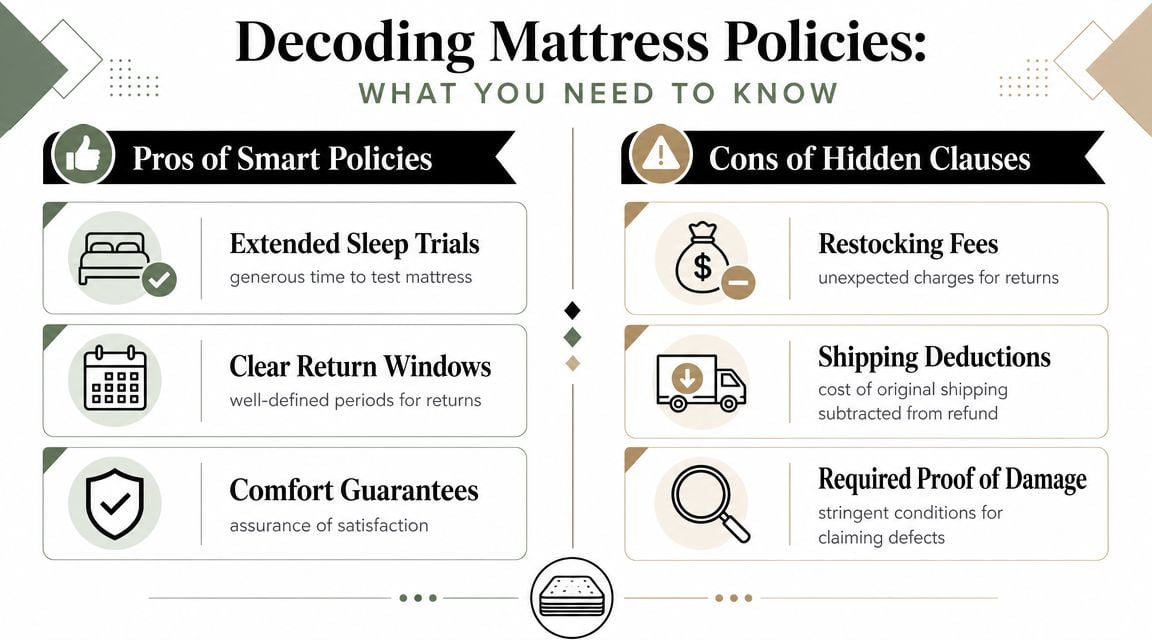
The biggest shift in the industry is this. Mattress sellers no longer treat returns like a typical clothing or appliance return. As Retail Dive's mattress returns coverage explains, the industry has moved from short in-store evaluation periods to longer sleep trials, often 100 nights or more, and many sellers require at least 30 days before a comfort return is allowed. Trial windows commonly run 90, 100, 120, or even 365 nights depending on the seller.
Why a sleep trial exists
Think of a sleep trial like test-driving a car, except the road test happens at home. You don't really know how a mattress performs until you've slept on it through ordinary life. That includes work nights, weekends, sore-back mornings, and the small adjustments your body makes over time.
A break-in period can confuse shoppers. They hear “trial” and assume they can return the mattress immediately if night one feels strange. But many sellers ask you to keep it for a while because new materials loosen slightly and your body also adapts to a new support pattern.
Practical rule: If a policy mentions comfort exchange, break-in period, or sleep trial, read those as connected terms, not separate promises.
Terms that often cause confusion
Here are the parts of a mattress return policy that deserve your attention:
Minimum use period
Some policies won't allow a comfort-based return or exchange until you've slept on the mattress for a set period.Return window
This is the outside limit. If the trial is over, your comfort option may be over too.Exchange versus refund
Some stores allow a one-time comfort exchange rather than a full return. That can still be useful, but it's not the same thing.Condition requirements
Many policies require the mattress to remain clean and free from stains or damage.Pickup, shipping, or processing costs
This is where shoppers often get surprised.
The hidden friction people miss
The phrase “risk-free” can sound reassuring, but the details matter. Some retailers charge fees, deduct shipping, or take time to process refunds after pickup. A useful business-side explanation of why clear policies matter appears in SelfServe's article on how stores can boost sales with a strong return policy. From the customer side, the lesson is simple. A strong policy is one you can understand before you buy.
Here's a quick comparison of what to look for:
| Policy area | What feels fair | What causes frustration |
|---|---|---|
| Trial terms | Clear dates and simple timing | Vague language about approval |
| Costs | Fees explained upfront | Charges revealed later |
| Outcome | Exchange or refund defined plainly | Unclear “case by case” wording |
| Mattress condition | Hygiene rules stated early | Surprise requirements after the fact |
If you remember one thing, remember this. A mattress return policy isn't only about the length of the trial. It's about how easy or difficult the process becomes when you need help.
The Groens Comfort Guarantee Our Promise to You
A comfort policy should lower stress, not add to it. That's why we prefer to think in terms of a Comfort Guarantee. The name matters because it reflects the reason the policy exists. We want you sleeping well, not memorizing policy language.

Many shoppers have been burned by policies that sound generous but still include friction. As shown in Titan's returns and exchanges policy, some mattress programs include a $99 return fee, and industry policies may also involve shipping charges or delays before a refund is completed through Titan's return details. That's why clarity matters more than slogans.
What a comfort guarantee should do
A helpful comfort policy should answer a few basic questions right away:
- How long should I try the mattress before deciding?
- Am I eligible for a refund, an exchange, or only a reselection?
- Will there be any charges if I make a change?
- What condition does the mattress need to be in?
- Who handles the pickup or swap?
If those answers aren't easy to find, the policy probably isn't customer-friendly.
What we believe customers deserve
For mattress shoppers in Northwest Indiana, a core promise is transparency. If a mattress from lines such as Serta or Beautyrest isn't feeling right, you shouldn't have to decode unfamiliar wording or chase down basic answers.
What you need is a straight conversation with a local team that explains the timing, the condition requirements, and the next step without dodging the hard parts. That kind of service fits a family-owned business much better than broad marketing phrases.
Policies are fair when they tell you the real process before you buy, not after you call with a problem.
Here's the kind of plain-language promise people deserve to hear:
Sample comfort promise: Sleep on your mattress long enough to give your body a fair adjustment period. Keep it clean and protected. If comfort is still the issue within the allowed window, contact the store promptly so a one-time exchange or next-step review can begin with clear expectations.
Why this matters for sleep wellness
A mattress isn't successful because it sold. It's successful when it supports good rest over time. That's the heart of a sound mattress return policy.
That's also why our family talks about sleep wellness, not just product specs. Coil systems, foams, and feel all matter, but the larger point is whether you wake up rested. A comfort guarantee supports that goal by giving you a structured path if the first match isn't ideal.
And while this article is educational rather than policy-specific legal language, one practical takeaway stands out. The more transparent a mattress store is before the sale, the calmer the process usually feels after the sale.
How to Ensure the Perfect Match from the Start
The best mattress return policy is the one you never need to use. Most comfort issues can be reduced when shoppers slow down and test with intention instead of choosing by label, sale sign, or a quick hand press.
That's one place a showroom still helps. Lying on a mattress for a real stretch of time tells you more than sitting on the edge for ten seconds. If you're comparing feels, support, and motion response, a local visit can save a lot of uncertainty later.
A smarter way to shop
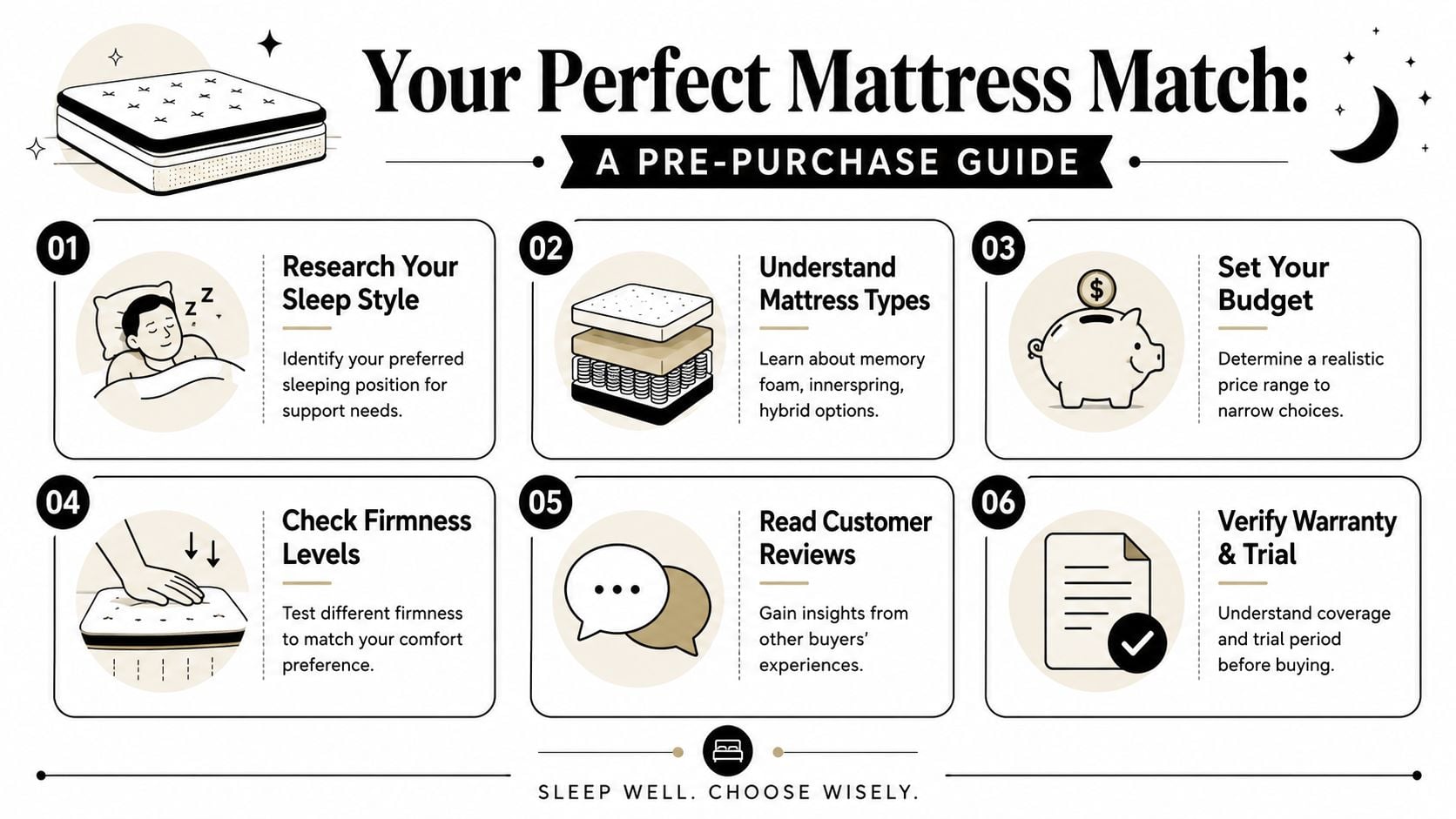
Use this checklist before you commit:
Start with your sleep position
Side sleepers often need pressure relief at the shoulders and hips. Back sleepers usually focus more on alignment. Stomach sleepers often need to be careful about going too soft.Think about your partner
If one of you sleeps hot, tosses and turns, or prefers a very different feel, say that out loud early in the process.Lie down long enough to notice pressure points
Don't rush. Stay on the mattress long enough to feel what happens in your normal sleeping position.Ask what kind of mattress you're trying
Memory foam, innerspring, and hybrid models don't respond the same way.Discuss support, not just softness
Plush can feel nice at first and still be wrong for your body. Firm can feel strange at first and still be the better long-term fit.
Questions worth asking in the store
A good shopping conversation should include things like:
- “What changes for a side sleeper on this model?”
- “How will this feel after it breaks in?”
- “What should we expect during the first few weeks?”
- “If comfort is off, what are the next steps?”
One useful local resource for that early research is what to look for when buying mattress, which helps shoppers compare support needs and comfort preferences before they narrow down options.
Why testing matters more than guessing
Many returns happen because shoppers buy around a problem instead of diagnosing it. They think, “My old bed felt hard, so I need something softer,” when the underlying issue may have been worn-out support. Or they assume “firm” means “better for your back,” even though overly firm can create its own discomfort.
The right mattress doesn't just feel comfortable in the moment. It keeps your body comfortable through the night.
This is also where broader home decisions come into play. Families who are furnishing a bedroom, updating a primary suite, or planning a whole-home refresh often don't realize how connected these choices are. Bed height, frame style, pillows, and room setup all influence the final experience. The same is true in furniture shopping generally. A made-to-order dining set or solid wood Amish bedroom piece works better when it's chosen around real daily use, not impulse. Design it your way usually leads to fewer regrets.
A Simple Path to Your Comfort Exchange
Even when people shop carefully, sometimes a mattress still isn't quite right. That doesn't mean anybody failed. It means the at-home test gave you new information.
The exchange process should feel calm and understandable. It should not feel like moving a refrigerator through a maze while reading legal fine print.
The usual path
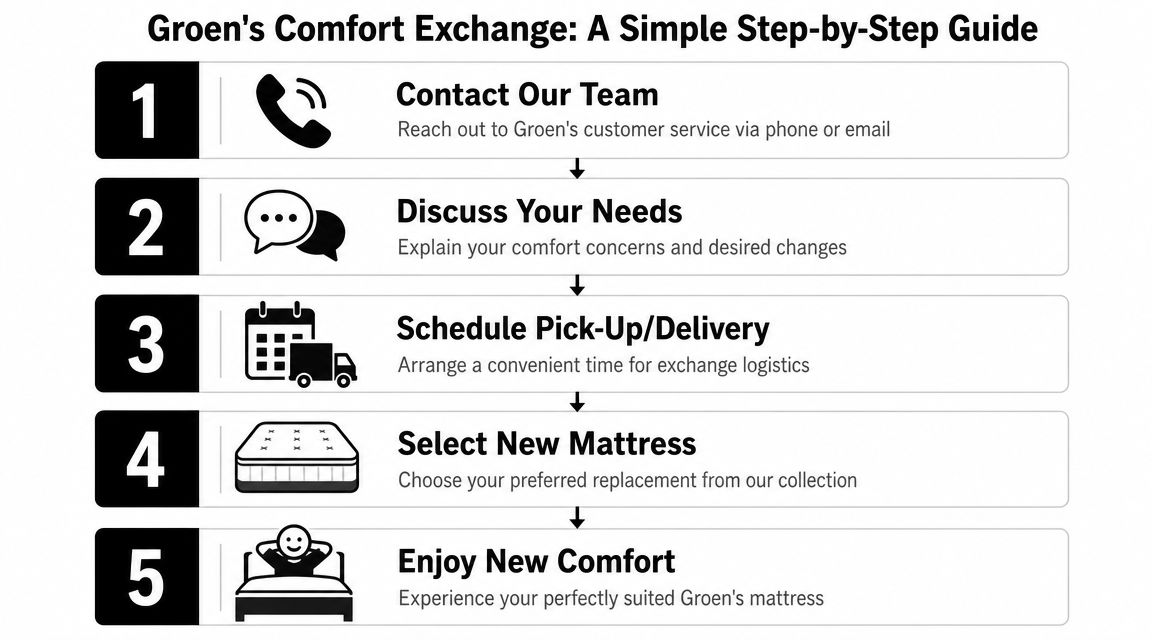
Most comfort exchange processes follow a rhythm like this:
Give the mattress time
If there's a required adjustment period, honor it. New materials need time, and your body often does too.Reach out while you're still within the policy window
Don't wait until the last few days if you already know something feels off.Describe the problem clearly
“Too firm at the shoulder” or “lower back feels unsupported” is more helpful than “I just don't like it.”Work through reselection
The goal is usually not to start over blindly. It's to use what you learned and find a better fit.Schedule the swap
A strong delivery team makes the process much easier.
What customers often worry about
People usually ask practical questions first:
- Will I need to move the mattress myself?
- Do I need special packaging?
- What if I'm not sure whether it's me or the mattress?
- Should I wait a little longer before deciding?
Those are fair questions. If you've ever handled one, you know how awkward a mattress can be. For a general look at the physical side of the job, Emmanuel Transport's guide on how to move a mattress shows why pickup support matters so much.
A cleaner experience starts with early communication
If your mattress is breaking in but still feels uncertain, start taking notes. What time do you wake up uncomfortable? Is the pressure at the hip, shoulder, or lower back? Is your partner having the same issue or a different one?
That information helps a store team recommend a smarter exchange path. It also helps you avoid overreacting to one bad night or underreacting to a real mismatch.
If you're in the adjustment stage now, our guide on how to break in new mattress can help you tell the difference between normal settling and an actual comfort problem.
A smooth exchange isn't just about paperwork. It's about having a process that respects your time, your bedroom setup, and your need for straightforward help.
Financing Your Purchase for Total Peace of Mind
A mattress is a health purchase as much as a home purchase. When budget pressure forces someone to settle for a model that doesn't really suit them, that stress can linger long after delivery day.
That's one reason special financing can matter. It gives households more buying power so they can choose the comfort and support they need, rather than narrowing the decision too quickly. If you're comparing options, furniture financing options can help you understand how payment flexibility fits into a larger purchase plan.
Why financing can support better decisions
Financing doesn't change what a mattress feels like. What it can change is the quality of the decision. It may allow a shopper to consider the right Serta or Beautyrest model for long-term comfort instead of choosing a compromise that feels “good enough” today.
That same principle shows up across the home. Families furnishing a dining room often use special financing to step up to a bespoke Canadel set or solid wood Amish piece they plan to keep for years. A mattress deserves that same long-view mindset because you use it every single night.
A brief note on Indiana consumer peace of mind
Indiana shoppers should still read the store's written terms carefully. Return and exchange rights often depend on the seller's stated policy, the condition of the item, and whether the issue is comfort, damage, or defect.
Before you buy, ask for the policy in writing and make sure you understand whether the option is a refund, an exchange, or a warranty claim.
That combination of written clarity and payment flexibility gives people the calmest path forward. You're not only protecting your budget. You're protecting your ability to choose well.
Your Mattress Questions Answered
Why do I have to keep a mattress for a while before an exchange?
Because your body and the mattress both need an adjustment period. A mattress can feel unfamiliar at first even when it's ultimately the right fit.
Do I need a mattress protector for the sleep trial?
Yes. That's one of the simplest ways to protect your comfort options. Many policies require the mattress to stay clean and free of stains, so a protector is practical, not optional.
What happens to mattresses that are returned?
It varies. Returned mattresses may be resold as open-box inventory, donated if a charity accepts used mattresses, recycled where facilities exist, or sent to a landfill when those options don't work. That's why a retailer's handling process matters, as explained in LoadUp's overview of what happens to returned mattresses.
Where can I find answers to store-specific questions?
For general policy and shopping questions, our FAQ page is a good place to start. If you're unsure whether your concern is about comfort, delivery, or warranty, ask before assuming they all follow the same rules.
Visit Groen's Fine Furniture in Dyer or Crown Point today to explore our custom options and ask about our special financing plans. Let our family help you create a home you love, and test drive the comfort you want for better rest in Northwest Indiana.