Blog
Armoire Dresser Combo: A Smart Storage Guide

A lot of bedroom storage problems start the same way in Northwest Indiana. The closet is full, the dresser drawers are packed tight, and a chair in the corner slowly becomes a second closet. We've helped families in Dyer, Crown Point, St. John, and Schererville work through that exact problem for decades, and these families don't need more stuff. They need a smarter place to put what they already own.
That's where an armoire dresser combo comes in. It gives you enclosed vertical storage, drawer storage, and a cleaner visual line than trying to wedge three smaller pieces into one room. When chosen well, it can make a bedroom feel calmer, easier to maintain, and better suited to real family life.
Your Guide to a More Organized Bedroom
A neighbor might tell us the problem like this. “I've got work clothes in one spot, sweaters in another, guest linens in a hallway closet, and the bedroom still looks crowded.” That's a familiar setup, especially in homes where closet space doesn't match modern storage needs.
An armoire dresser combo helps because it consolidates categories that usually get split up. Instead of relying on a separate dresser, a spare rack, and bins tucked under the bed, you get one furniture piece that can hold hanging clothes, folded items, and often overflow bedding or media. Major retailers now present these pieces as mainstream multifunctional storage, including Jordan's Furniture's armoire and chest collections, which reflects how established the category has become.
If your bedroom feels busy before you even start shopping, it helps to first declutter your bedroom so you know what kinds of storage you need. A piece like this works best when it matches your daily habits, not when it's asked to solve years of accumulated clutter by itself.
Practical rule: Buy storage for the life you're living now. Not for the pile you're hoping to hide.
We often suggest starting with three questions:
- What needs to hang: Work shirts, dresses, jackets, or anything that wrinkles easily.
- What should stay folded: T-shirts, jeans, sweaters, pajamas, or kids' clothes.
- What keeps ending up homeless: Extra blankets, accessories, or seasonal items.
If you want more ideas before choosing a piece, our guide to eliminating bedroom clutter with better storage solutions can help you sort the room by function instead of frustration.
What Exactly Is an Armoire Dresser Combo
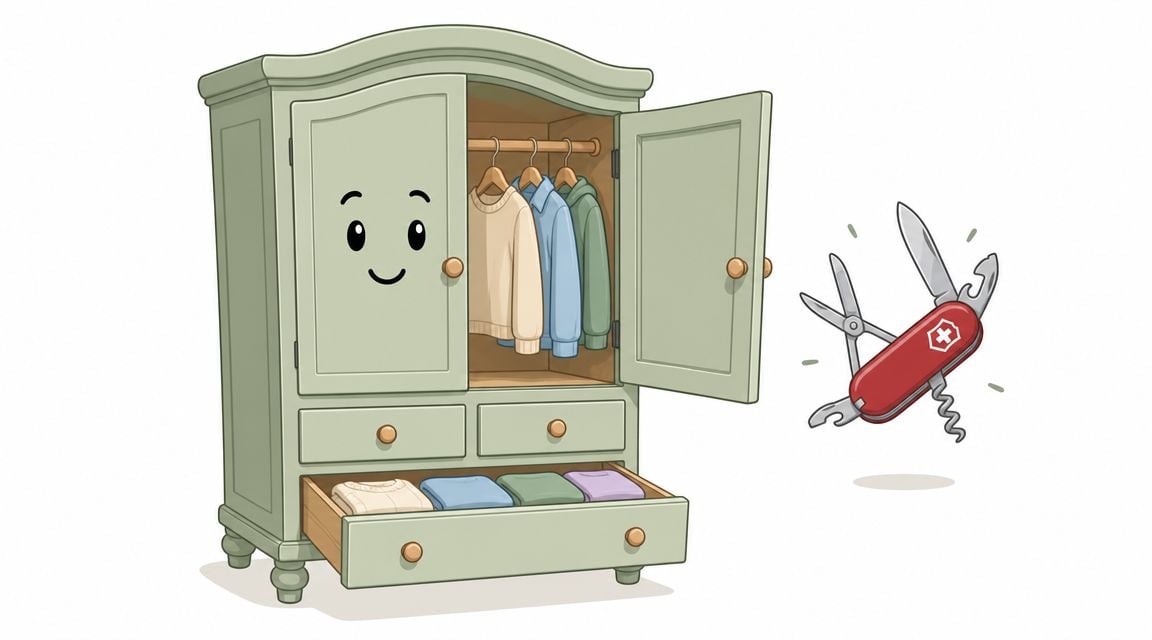
An armoire dresser combo is a hybrid. It combines the enclosed cabinet space of an armoire with the drawer storage you expect from a dresser. If a standard wardrobe mostly serves hanging clothes and a standard dresser mostly serves folded clothes, this piece sits right in the middle.
Why this piece has lasted
This furniture form isn't new. The armoire itself dates back to the 17th century, when it was used to store armor, and over time it evolved into a household organizer for clothes, bedding, and media, as described by Ashley Furniture's overview of wardrobes and armoires. That long history matters because the purpose hasn't really changed. It still solves the same problem. You need secure, enclosed storage without covering the whole room in furniture.
That's why an armoire dresser combo doesn't feel outdated when it's chosen well. It's a classic format with a modern job description.
How it differs from other bedroom pieces
The easiest way to understand it is to compare the three most common options.
| Piece | Main job | Best for |
|---|---|---|
| Dresser | Folded storage in drawers | T-shirts, pajamas, sweaters |
| Wardrobe | Mostly hanging storage | Shirts, coats, dresses |
| Armoire dresser combo | Hanging plus drawers or shelves | Mixed clothing and overflow storage |
A combo unit is useful when your room needs to do more with less floor space. In one cabinet, you might have a hanging rod behind doors, several drawers below, and shelves for linens or accessories. That mix is what makes it so appealing in guest rooms, older homes, condos, and bedrooms where the closet just isn't enough.
It's less about adding furniture and more about reducing storage friction. When every category has a place, the room stays picked up more easily.
Exploring Features and Internal Layouts
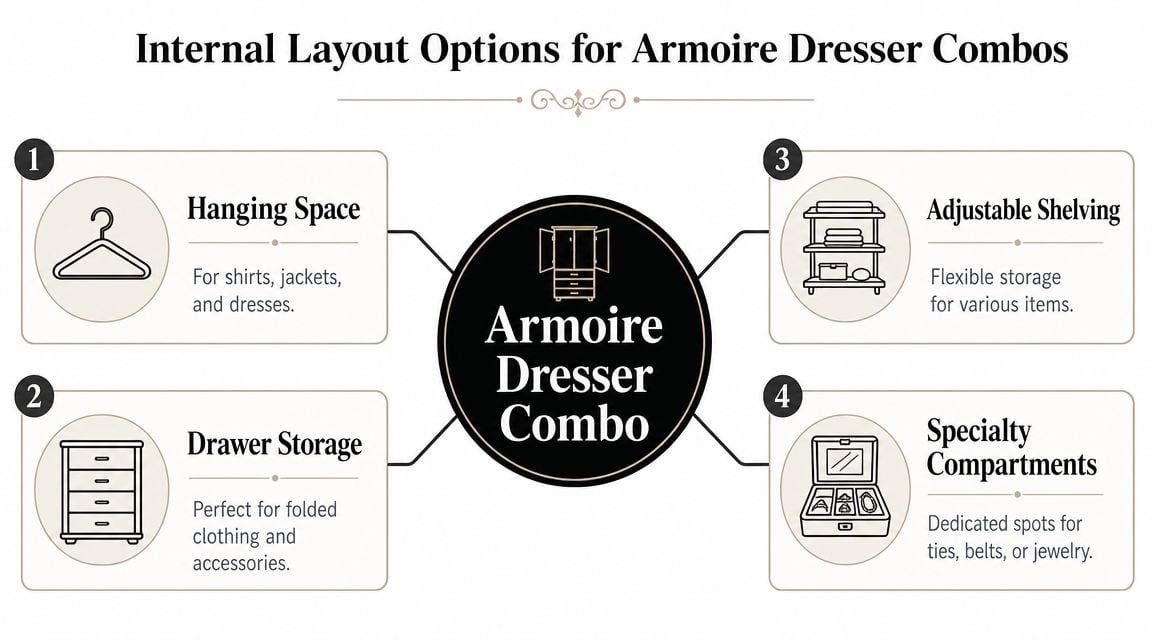
The outside style matters, but the inside layout is what determines whether you'll enjoy using the piece every day. Two armoires can look nearly identical from across the room and function completely differently once the doors open.
The first thing to check is depth
If you plan to hang clothes inside, internal depth matters more than many shoppers realize. For standard hangers, 24 inches is recommended for comfortable fit, and 20 inches is often treated as the functional minimum in space-saving designs, according to Dimensions.com's armoire and wardrobe guidance. If the cabinet is too shallow, sleeves press into the doors and garments wrinkle faster.
That one measurement changes how useful the piece will be. A beautiful cabinet that can't comfortably hold your hangers becomes frustrating in a hurry.
Common layouts that work well
Some layouts are better for certain households than others.
- Full hanging section: Good for people who wear dresses, button-down shirts, blazers, uniforms, or anything they'd rather not fold.
- Half hanging, half shelves: A practical balance for mixed wardrobes. One side handles wrinkle-prone pieces while shelves hold jeans, handbags, or stacked sweaters.
- Drawers below, cabinet above: A common combo format because it separates daily folded items from occasional hanging storage.
- Shelf-heavy interior: Better for linens, children's rooms, or guest storage when hanging space isn't the priority.
A family with school uniforms and workwear might lean toward more hanging room. A guest room usually benefits from shelves and drawers because the storage needs vary from visit to visit.
Small details that change daily use
Drawers should open smoothly and feel stable when loaded. Shelves should be placed where your habits make sense, not where a factory made a generic decision. Adjustable shelving is helpful because storage needs change over time. A shelf that holds shoes today might need to hold blankets next winter.
That's one reason some buyers look beyond stock layouts. Options like Amish-made solid wood furniture or custom order programs can give you more say in the internal arrangement. If you're comparing bedroom storage pieces and want a better sense of what features matter most, this guide to bedroom furniture storage features to know is a useful place to start.
A simple test: List your top ten clothing categories before shopping. If the cabinet doesn't clearly assign a home to most of them, keep looking.
How to Measure for a Perfect Fit in Your Home
Our family has always believed in one rule. Measure twice, buy once. An armoire dresser combo can be a smart space-saver, but only if it fits the room, the traffic path, and the delivery route.
Start with the room, not the furniture tag
Smaller units are typically about 48 to 60 inches high, while larger models often run 72 to 84 inches high and 40 to 60 inches wide. Tall versions can reach 96 inches, which makes ceiling height important, as noted in Sierra Living Concepts' armoire size guide.
That tells you something practical right away. A piece that looks manageable on a website can feel very different in a bedroom with lower ceilings, a ceiling fan, or a narrow wall between windows.
A five-part measuring checklist
Measure wall height
Go from floor to ceiling. Watch for crown molding, sloped ceilings, light fixtures, and ceiling fans.Measure wall width
Don't just measure the open wall. Account for nearby nightstands, bed clearance, switches, and trim.Measure room depth
Open doors need room to swing, and you still need a comfortable walking path in front of the piece.Measure the delivery path
Hallways, stair turns, front doors, bedroom doors, and railings matter; overlooking them often leads to surprises.Measure around what stays
The bed, bench, radiator, outlet placement, and windows all affect where the cabinet can live.
A careful walkthrough can save a lot of stress later. If you want a printable process, our furniture measuring guide lays out the basics in a shopper-friendly format.
The best-sized armoire isn't the biggest one you can buy. It's the smallest one that comfortably holds what you need and still lets the room breathe.
Designing Your Way with Custom Styles and Materials
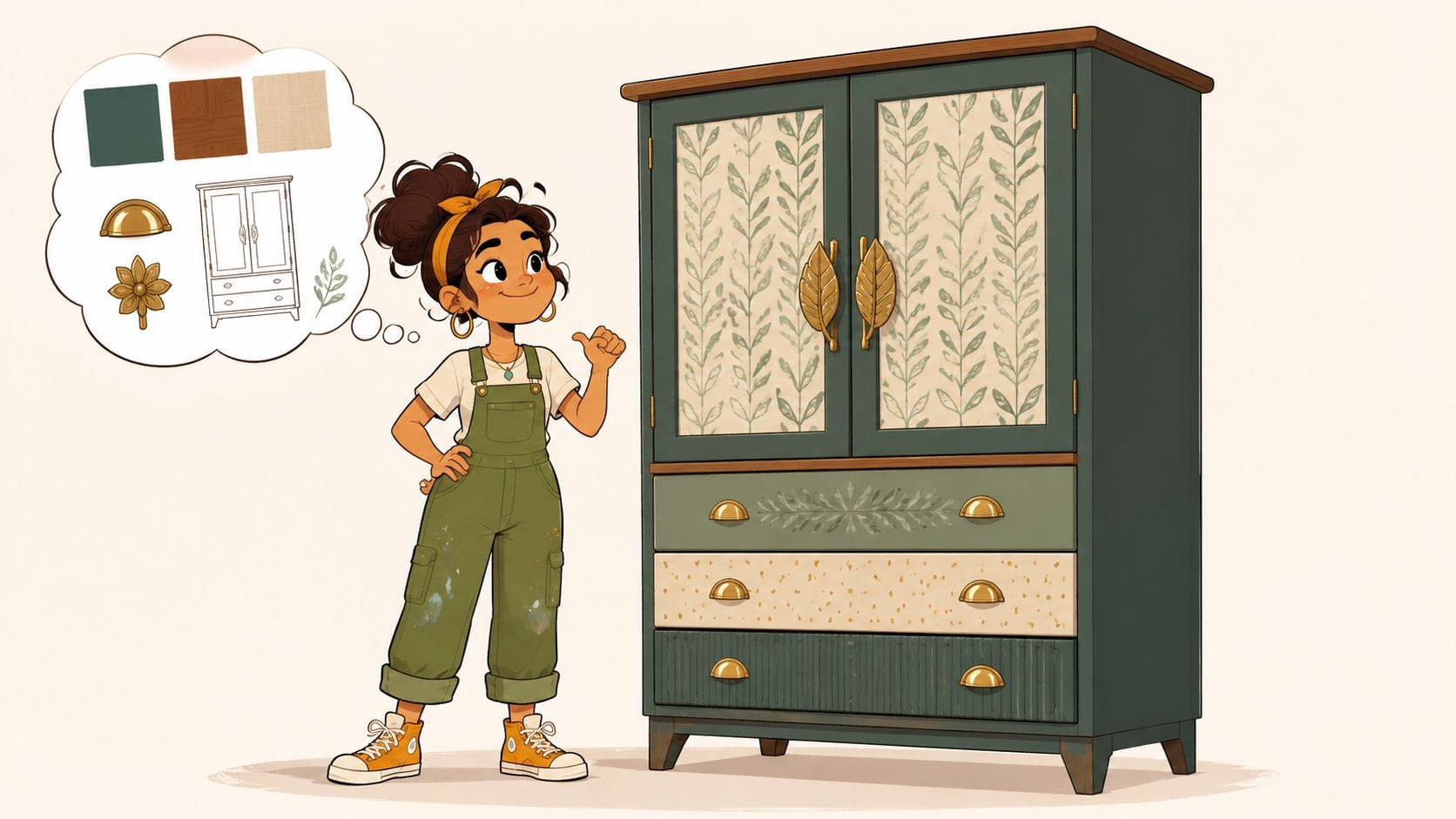
You can feel the difference between buying a storage piece off a warehouse floor and choosing one that suits your home. One option asks you to accept whatever is in stock. The other lets you solve real bedroom problems, like needing deeper drawers for sweatshirts, a finish that works with your flooring, or doors that feel right with the rest of your furniture.
Style should match the rest of your home
An armoire dresser combo should look like it belongs in the room, not like it was dropped in at the last minute. In a Crown Point home with warm floors and traditional trim, a solid wood cabinet with raised panels and a richer stain often feels natural. In a newer Schererville bedroom, cleaner lines, flatter drawer fronts, and simpler hardware can create a quieter look.
That choice is not only about appearance. It affects how long you will enjoy the piece.
Bassett often appeals to shoppers who want a polished bedroom look with a range of finish and design options. Amish-made furniture usually draws families who care about solid wood, strong joinery, and the kind of weight and presence that makes a cabinet feel grounded in the room. One is often style-flexible. The other often emphasizes craftsmanship you can feel every time you open a drawer.
Material choices affect daily use
An armoire combo works like a hardworking kitchen table. It gets used over and over, and the construction shows its value in small moments. Drawers slide. Doors swing. Pulls loosen or stay tight. Finishes either hide family wear well or show every mark.
That is why material choice is practical first and visual second.
- Solid wood: Often chosen for long service life, easier repair, and the kind of character that improves with age.
- Wood veneers over stable cores: A good option for shoppers who want a furniture-grade look across more finish choices.
- Hardware: Knobs and pulls change both the style and the feel of everyday use, especially for kids, guests, or anyone with grip concerns.
- Finish color: Lighter finishes can help a bedroom feel more open. Darker finishes can add warmth and visual weight.
A well-made piece should not feel disposable. In many families, an armoire dresser combo starts in the primary bedroom, then moves to a guest room or a grown child's home because the build still holds up and the style still makes sense.
Design around how your family actually stores things
Custom work earns its keep in a very down-to-earth way. If you hang dresses, uniforms, or button-down shirts, you may want more vertical space behind the doors. If you fold jeans, pajamas, and seasonal layers, extra drawer capacity may serve you better. The smartest layout follows your habits the way a good closet system does.
That is the practical value behind bespoke furniture choices for bedrooms and storage needs. You are not paying for fancy wording. You are choosing drawer depth, shelf placement, wood species, finish, and hardware with a purpose.
For Northwest Indiana shoppers, Groen's Fine Furniture is one local store that offers bedroom furniture, custom order help, Amish solid wood selections, and white-glove delivery from its Dyer and Crown Point showrooms. That local guidance often feels very different from the big-box experience because you can talk through room style, storage habits, and long-term use with people who work with furniture every day.
A lasting piece can be the smarter buy
Price matters. So does replacement cost.
Families often save money over time by buying one well-built storage piece instead of replacing a cheaper one after a few years of sticking drawers, loose hardware, or worn finishes. Special financing available, subject to credit approval, can also make it easier to choose the wood, layout, and construction quality that fit the home for the long haul.
That is what heirloom-quality furniture means in real life. It is not about formality. It is about owning a piece that still works, still looks right, and still feels worth keeping years from now.
Armoire Combo vs Separate Pieces Which Is Better
There isn't one right answer for every bedroom. The better choice depends on how you dress, how your room is shaped, and whether you expect the space to stay the same for years or keep changing.
The core tradeoff is straightforward. A combo unit consolidates storage in one footprint. Separate pieces give you more freedom to spread storage functions around the room.
When a combo unit makes more sense
A combo is often the stronger choice if your room is working hard.
- Smaller bedroom: You want hanging space and drawers without adding multiple bulky pieces.
- Guest room: One cabinet can handle several storage jobs while keeping the room visually tidy.
- Apartment or older home: Closet space may be limited, so one enclosed unit fills the gap cleanly.
- Shared room: Consolidated storage can make categories easier to assign.
When separate pieces may be smarter
The choice depends on your clothing mix. Combo units are useful when you need varied storage in a smaller footprint, but they may be less flexible than separate pieces if you have mostly folded items or expect to reconfigure the room later, as discussed in this comparison of wardrobes and armoires.
That often describes households with lots of sweaters, kids' clothing, athletic wear, or seasonal overflow. In that case, a wide dresser plus a separate wardrobe may let you organize more precisely.
| If your priority is… | Better fit |
|---|---|
| One footprint for mixed storage | Armoire dresser combo |
| Maximum flexibility later | Separate pieces |
| Cleaner, more unified look | Armoire dresser combo |
| Heavy folded-clothing storage | Separate pieces |
A quality piece should also last. Solid wood construction, dependable drawer movement, and stable cabinet doors matter whether you choose one combo or two separate pieces. If you're still weighing bedroom layouts, this guide on how to choose bedroom furniture can help narrow the decision.
The smartest choice is the one that fits your actual routine. If you want fewer furniture pieces and simpler daily organization, the combo often wins. If you need long-term flexibility above all else, separate storage may serve you better.
Visit Groen's Fine Furniture in Dyer or Crown Point today to explore custom options and ask about special financing plans. Our family has served Northwest Indiana since 1983, and we'd be glad to help you find a lasting storage solution that fits your home, your style, and your budget.