
Sleeper Sofa with Chaise Lounge: The Complete Buyer’s Guide


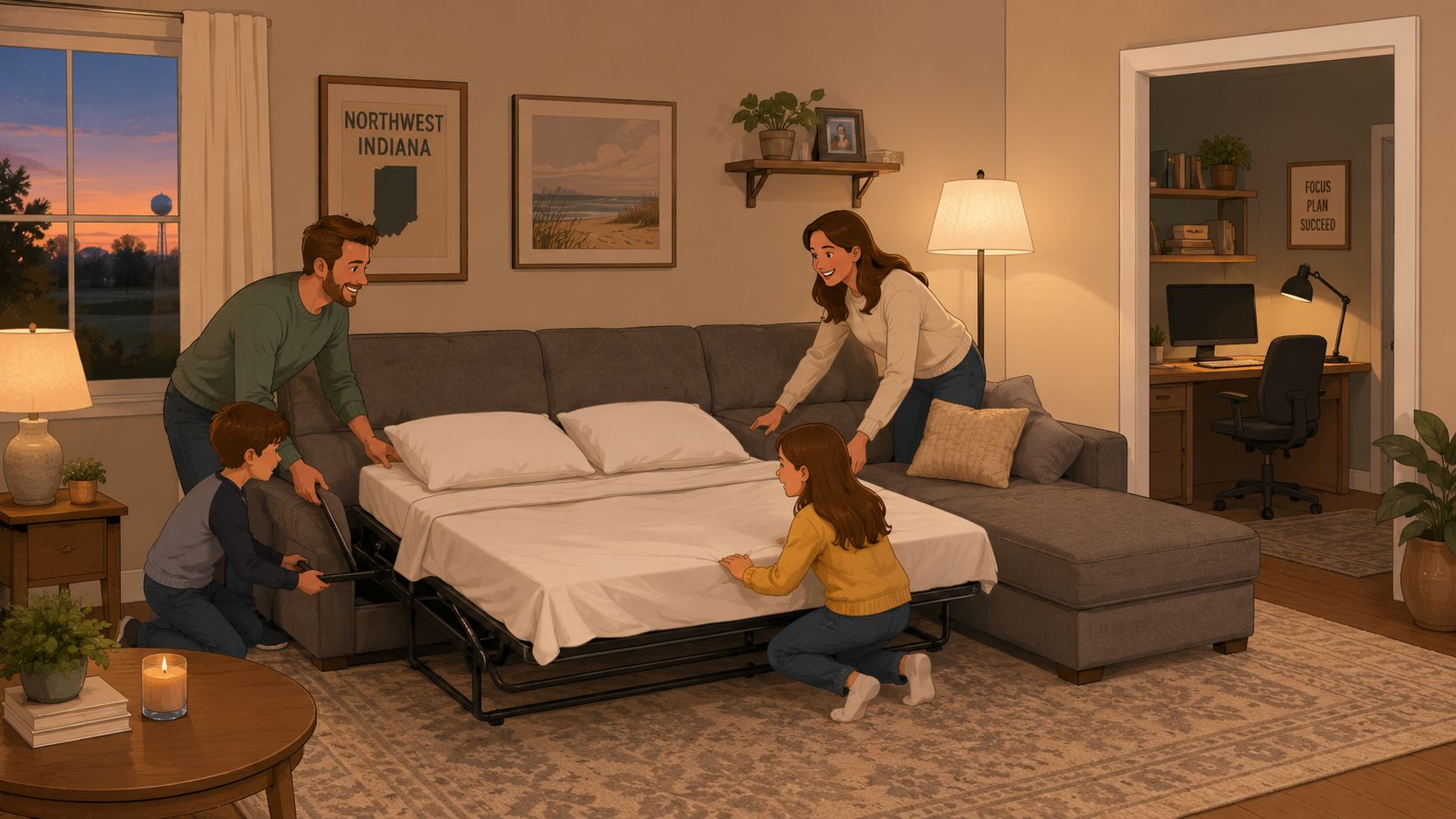
A Northwest Indiana family finally has relatives visiting from out of town, but the spare bedroom now serves as a home office. The living room must handle movie nights, everyday lounging, and overnight guests without feeling like a permanent guest room. That's exactly where a sleeper sofa with chaise lounge can earn its floor space, provided the layout works in both sofa mode and bed mode.
The chaise adds room to stretch out during the day, while the sleeper mechanism creates a dedicated sleeping surface when visitors stay. The trade-off is easy to miss: a chaise can improve comfort while consuming more floor area than a standard sofa sleeper. Families in Dyer, Crown Point, St. John, Schererville, and Munster need to measure the complete footprint, not just the piece's appearance in a showroom.
Groen's Fine Furniture has helped Northwest Indiana homeowners make these decisions since 1983. A family-owned, multigenerational retailer with five-star service, the business focuses on furniture that works in real homes, including living rooms that must serve several purposes at once. The right choice comes down to chaise orientation, mattress construction, clearance, and customization, not just the number of seats.
Why Homeowners Choose a Sleeper Sofa With Chaise Lounge
The appeal starts with a familiar problem. A family may need a comfortable place for everyone to sit on an ordinary evening, but only need a bed when grandparents, friends, or relatives come to town. A sleeper sofa with chaise lounge keeps the room open for daily life instead of dedicating valuable space to a bed that stays unused most of the year.
The chaise changes the daily experience. One person can stretch out with a book while another watches television, and the family can gather for a movie without competing for the best seat. It also gives the sofa a more relaxed profile than a conventional pull-out couch, which can make the living room feel designed for living rather than organized around emergency sleeping arrangements.
The format has matured
Older sleeper sofas earned a reputation for heavy frames, awkward mechanisms, and uncomfortable beds. Modern designs can be smoother and more supportive, but quality still varies widely. The mechanism, mattress, frame, cushion construction, and chaise connection all matter, especially when the sofa will be used every day.
The broader market reflects strong interest in furniture that serves more than one purpose. One industry outlook valued the global sleeper sofa market at USD 3.45 billion in 2025 and projected it to reach USD 5.68 billion by 2034, with a projected 5.4% CAGR over that forecast period. The same report projects growth from USD 3.72 billion in 2026 to USD 5.68 billion by 2034, which supports the view that multifunctional seating has become a substantial furniture category rather than a niche solution.
Practical rule: A chaise sleeper is a strong choice when the household will use the seating every day and the bed occasionally. It's a poor choice when the room barely fits the closed sofa.
A useful starting point
Families comparing models can review this sleeper sofa brand guide before visiting a showroom. The useful questions are straightforward: Who sleeps on it, how often will the mechanism be opened, and can the room support the extended bed without blocking normal movement?
The chaise lounge itself has a long design history. Furniture-history accounts place the modern chaise longue's popularization in 16th-century France, while related daybeds and couches spread through Europe in the 17th century. Upholstered sofa forms became more widely produced during the 19th-century Industrial Revolution, and transformable seating moved from elite custom furniture toward everyday household use by the 20th century (history of the chaise longue and daybed). Today's chaise sleeper combines that older reclining tradition with later innovations in convertible furniture.
Understanding Chaise Orientations and Size Options
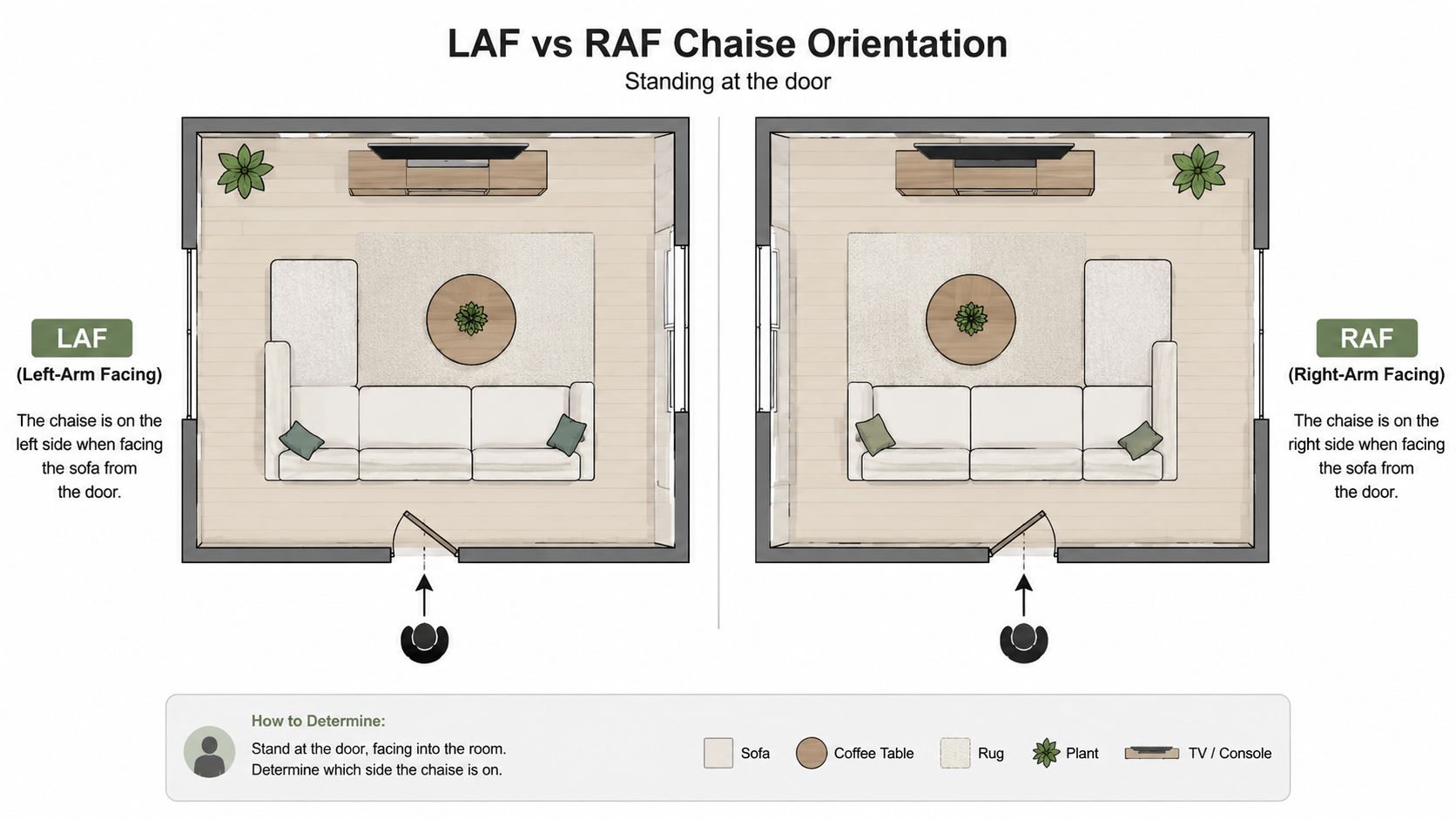
A chaise orientation determines how the sectional meets the room. Left-arm facing, or LAF, means the arm sits on the left side when a shopper faces the sofa. Right-arm facing, or RAF, places the arm on the right. This sounds simple, but many ordering mistakes happen because people describe the orientation from the doorway, from behind the sofa, or from the seated position.
Stand at the room's main entry point and face the intended front of the sectional. Identify the wall, window, doorway, or open path that should remain accessible. The chaise should support the room's natural flow, not force people to walk around its longest edge every time they cross the space.
Choose the orientation before the upholstery
A fixed chaise works well when the room layout is settled. A reversible chaise gives renters, new homeowners, and families who expect to rearrange more flexibility. It can also help when a room changes after a television moves, a play area is added, or a doorway becomes the preferred route through the space.
A practical sizing framework looks like this:
| Sleeper category | Approximate sofa width | Typical sleep format | Best fit |
|---|---|---|---|
| Apartment-scale | 72 to 84 inches | Twin or full | Studios and compact rooms |
| Standard sectional | 84 to 100 inches | Queen | Main living rooms and regular guests |
| Oversized configuration | More than 100 inches | King or expanded queen | Large, open layouts |
These ranges are useful planning categories, not universal product specifications. Actual models vary, so shoppers should confirm the manufacturer's dimensions before ordering. A living room sofa with chaise can look proportional on a showroom floor yet overwhelm a narrow living room once the chaise, arms, and sleeper mechanism are accounted for.
Match the size to real use
A twin sleeper makes sense for one occasional guest or a compact studio. A full sleeper offers more room without requiring the footprint of a larger sectional. A queen is the better starting point for frequent adult guests, but it demands more wall length and more open floor area.
Chaise length also changes the experience. Many designs use a chaise around 55 to 70 inches long, while the depth determines how comfortably someone can recline and how far the piece projects into the room. Longer lounging zones feel generous, but they can create dead space near a doorway or leave too little room for a coffee table. The correct orientation and size should be selected together, because one cannot compensate for a poor fit in the other.
Comparing Mattress Types for Sleep Comfort
A guest arrives for the weekend, unfolds the sleeper, and discovers the support bar before falling asleep. That experience usually comes from the mattress and its padding, not from the chaise itself. A good-looking sectional cannot compensate for pressure points, excessive motion, trapped heat, or a surface that feels too close to the frame.
The three common choices are memory foam, innerspring, and hybrid. They differ in contouring, airflow, bounce, support, motion control, and how smoothly they fold into the sofa.
| Feature | Memory foam | Innerspring | Hybrid |
|---|---|---|---|
| Feel | Contouring and steady | Familiar bounce | Balanced support with cushioning |
| Motion control | Stronger motion isolation | More movement may travel across the surface | Generally balanced |
| Airflow | Can feel warmer | Typically more open and breathable | Depends on foam and coil design |
| Main concern | Lower-density foam may feel firm or retain heat | Budget construction may make the bar noticeable | Often costs more and must fold smoothly |
| Best use | Couples and pressure-sensitive sleepers | Guests who prefer traditional mattress feel | Frequent guests seeking a more mattress-like surface |
Memory foam
Memory foam contours around the body and limits motion transfer, making it a strong choice for two people sharing the sleeper. Lower-density foam can retain heat or feel overly firm, especially in a cooler room where the material responds differently. Test the surface rather than judging by the label alone.
Innerspring
Innerspring mattresses provide familiar bounce and generally allow more airflow. They work well for occasional guests, but inspect the padding and frame before deciding. A noticeable bar usually signals too little cushioning or inadequate separation between the sleeper and the support structure.
Hybrid construction
A hybrid combines pocketed coils with foam comfort layers. It can provide pressure relief while preserving the supportive feel of coils, which suits adults or couples who use the sleeper regularly. The mattress still has to fold correctly, so greater thickness does not automatically mean better comfort.
Sleeper sofa mattresses commonly measure around 4 to 6 inches thick. Thickness affects both sleeping comfort and the effort required to open and close the mechanism. A queen platform may measure about 71.5 inches long by 60 inches wide, paired with a mattress around 5.5 inches thick, according to queen sleep-sofa specifications and mattress dimensions. Confirm the actual mattress and platform measurements before ordering, especially if adult guests will use it or you need existing bedding to fit.
The chaise also creates a trade-off. Its storage compartment may make the room feel efficient, yet a thicker mattress or topper can reduce usable storage and make folding harder. Measure the sleeping surface, the folded bedding, and the mechanism together.
For occasional guests, a compatible mattress topper guide can help you judge whether an added comfort layer will improve the surface. Use only a topper that fits the available storage and does not interfere with closing the sleeper.
Groen's ultimate mattress guide approaches mattress selection through rest and sleep wellness, not construction labels alone. That is the right standard. Guests remember how they slept, so choose the mattress with the same care you would give an everyday bed.
Planning Room Layout and Clearance Requirements
At 11 PM, the closed sofa measurement matters less than whether the bed can open without trapping the coffee table, blocking a doorway, or turning the room into a narrow obstacle course. A chaise sleeper can look space-conscious in a showroom and still consume the main walkway at home.
A closed sleeper sofa commonly measures about 72 to 96 inches wide, 36 to 40 inches deep, and 30 to 36 inches high. The chaise often measures 30 to 36 inches wide and 60 to 72 inches long, while the deployed bed can extend the footprint to roughly 75 to 90 inches front-to-back, according to sofa and chaise dimension guide. Treat these as planning ranges, not promises. The exact product measurements determine whether the configuration works.
Measure the living room twice
First record the closed footprint. Then map the open sleeper, including the room needed to walk around it, reach doors, and use nearby furniture. A queen-size sleeper chaise or sectional is typically 109 to 110 inches wide, while a full-size version is typically 101 to 102 inches wide, based on sleeper sectional sizing guide.
| Configuration | Closed footprint | Open sleeper footprint | Minimum room size recommended |
|---|---|---|---|
| Compact sleeper with chaise | Product-specific, often narrower than a full sectional | Bed extends into the room | A room with clear circulation around the open bed |
| Full sleeper chaise sectional | Typically about 101 to 102 inches wide | Sofa depth plus the deployed bed area | A wider room with furniture that can move aside |
| Queen sleeper chaise sectional | Typically about 109 to 110 inches wide | Often reaches roughly 75 to 90 inches front-to-back | An open living room with strong clearance paths |
Use the table to start planning, then verify the specific model. Published chaise sleeper dimensions show how closely the chaise and bed envelope can connect when opened: one configuration lists a folded-out bed length of 77 1/8 inches, a bed width of 53 1/8 inches, a chaise depth of 51 5/8 inches, and a folded-out total depth of 53 1/8 inches. Those measurements make clear why the open position deserves its own floor plan.
Protect the traffic pattern
Painter's tape is the most practical test before ordering. Mark the sofa width, chaise projection, and open bed directly on the floor. Park the coffee table where it would normally go, then walk from the living room to the kitchen, hallway, and bathroom. If the route feels tight with tape, it will feel worse with a fully upholstered sofa.
Measure the delivery route diagonally and straight on. Doorways, stairways, elevators, tight turns, and low overhangs can stop furniture before it reaches the room. Long, narrow rooms often suit a carefully oriented sectional better than a chaise aimed across the main walkway. Open-concept rooms allow more flexibility, but an oversized chaise can still create a dead zone between the sofa and dining area.
A chaise sleeper does not automatically save space. Its fixed extension occupies floor area every day, while an ottoman can move aside when the bed opens. Choose the chaise because the household will use its lounging space daily, not because a multifunctional design sounds smaller.
Before finalizing the layout, use this sofa and television placement guide to review viewing angles, screen position, and circulation together. That check can prevent a sleeper sofa from solving the guest-bed problem while creating a daily traffic problem.
Customization Options to Fit Your Lifestyle
A sleeper sofa becomes a better long-term investment when the household chooses the details around actual routines. A family with pets needs a different upholstery strategy than a formal sitting room. A couple who hosts adult guests needs a different mattress priority than a studio resident who needs a compact occasional bed.
Start with the daily surface
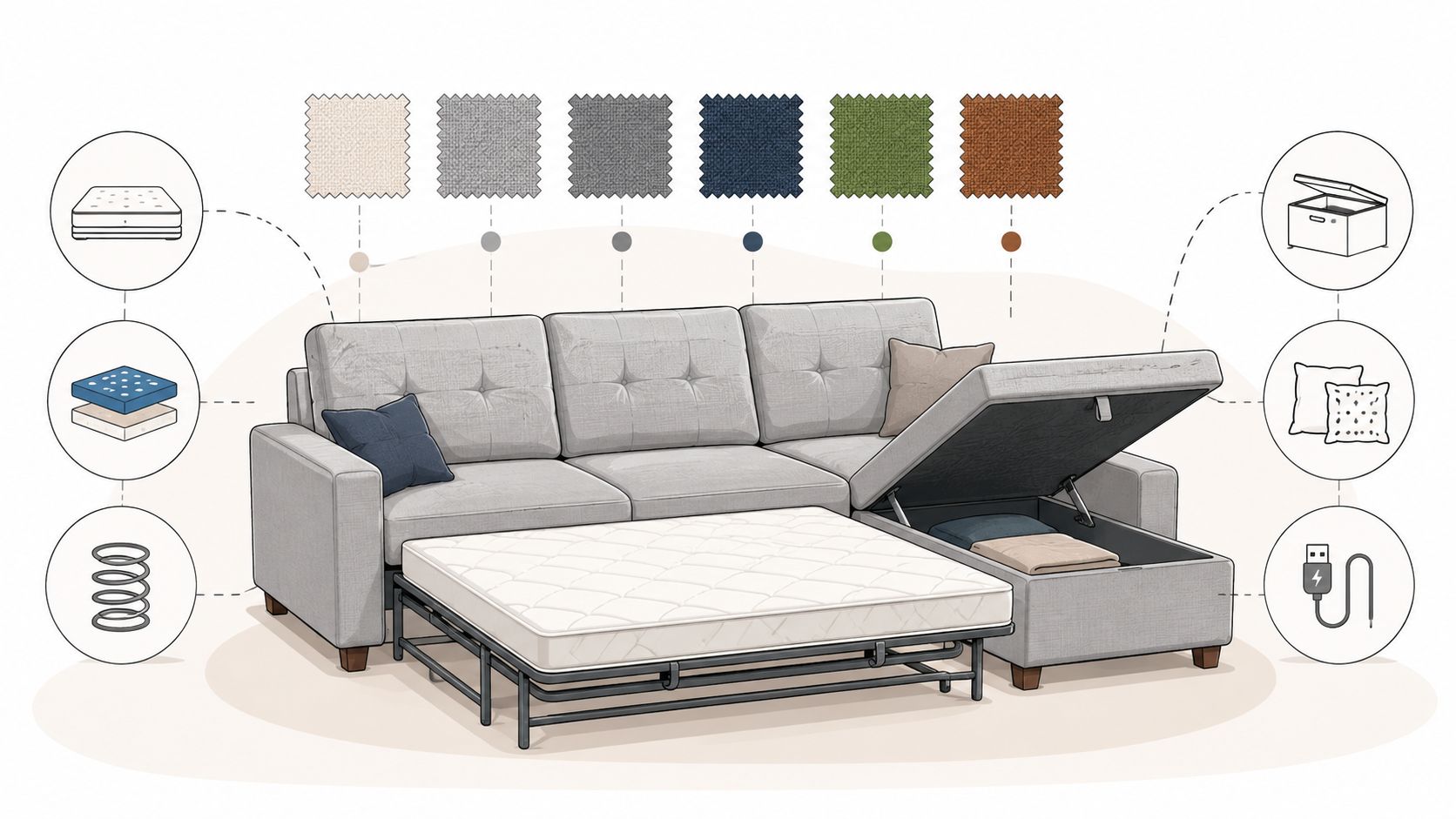
Performance fabrics suit homes with children, pets, or frequent gatherings because they make maintenance part of the design decision. Top-grain leather can give a formal room a refined appearance, while woven textiles offer texture and a durable everyday feel. The right material isn't the fanciest one. It's the one the household can live with comfortably.
Chaise length should follow the room and the person using it. A standard lounging zone around 60 inches can offer a comfortable balance, while an extended chaise around 70 inches creates a deeper place to recline. The longer option deserves extra floor-tape testing before the order is placed.
Design around changing needs
A reversible chaise is especially useful when the room may change. It lets a household shift the configuration rather than replace the entire piece. That flexibility can matter after a move, a renovation, or a change in how the family uses the room.
Other choices shape comfort and appearance:
- Arm style: Track arms keep the profile cleaner, rolled arms add traditional softness, and pillow arms create a more relaxed look.
- Cushion density: Firmer cushions can support upright sitting, while softer cushions suit casual lounging.
- Leg finish: Wood or metal finishes influence whether the sectional feels grounded, light, traditional, or modern.
- Charging features: USB integration can keep phones and tablets accessible during long lounging sessions.
- Mattress upgrade: Frequent guests may justify a more supportive foam or hybrid construction.
A household that hosts regularly might select a longer chaise, a supportive upgraded mattress, and performance upholstery. A small-apartment resident may be better served by a compact reversible chaise in a stain-resistant performance linen. These are not decorative details. They determine whether the furniture fits the household six months after delivery.
Groen's custom furniture service supports a design-it-your-way approach, including made-to-order thinking rather than settling for a floor model that only almost fits. The same philosophy extends beyond sleeper seating to Canadel custom dining and Amish solid wood furniture, where families can select materials and finishes for pieces intended to last.
Showroom Testing Tips and Financing Considerations
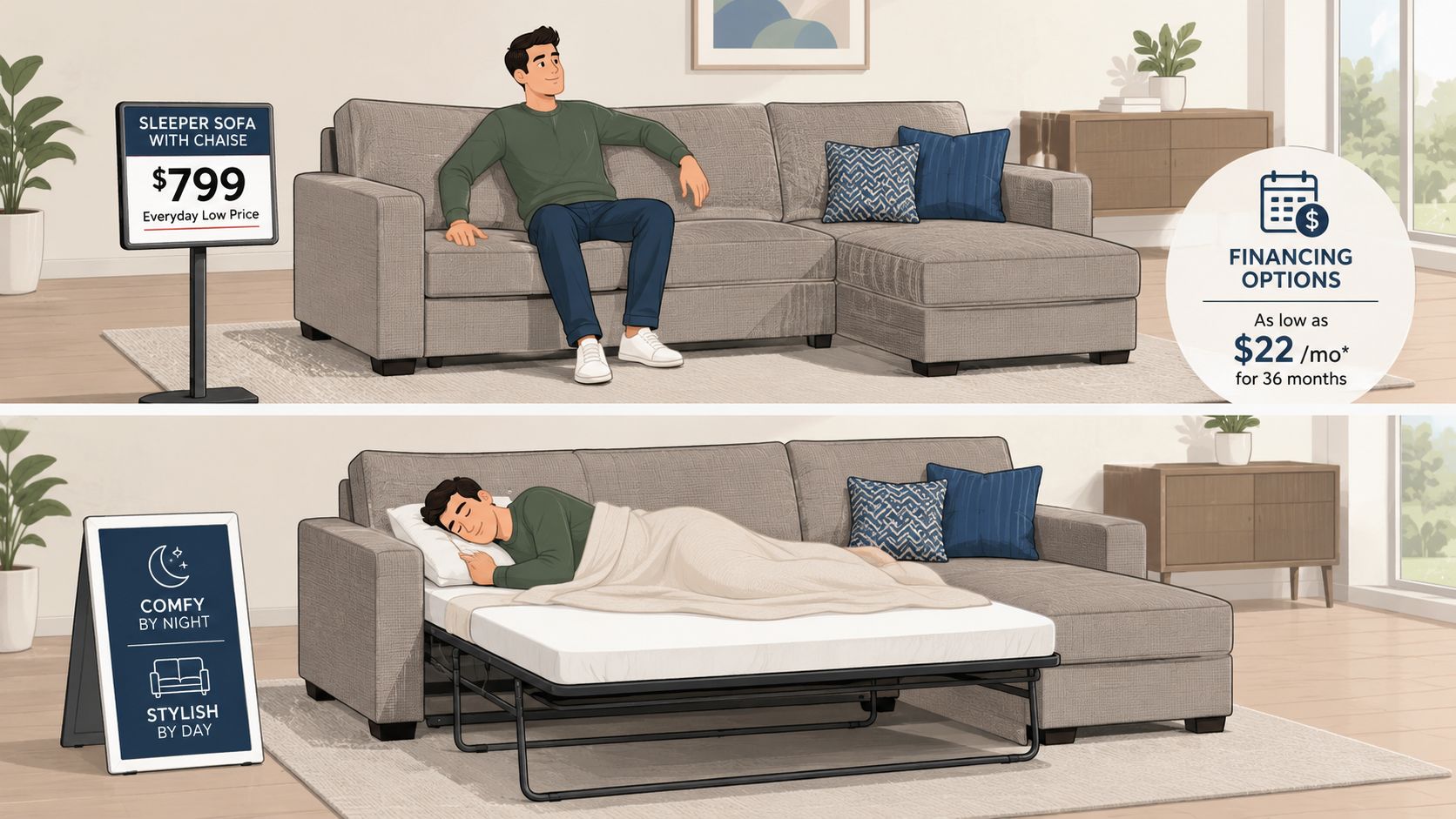
A sleeper sofa can pass a showroom glance and fail in daily use. Test the seating, chaise, mattress, and clearance before placing an order. Photos cannot show whether the mechanism operates smoothly, whether the chaise supports your knees, or whether the open bed consumes the only practical walkway.
Test the sofa and the bed
Sit in the main seat for several minutes. Check that the depth supports an upright posture and that the cushion stays stable instead of collapsing near the edge. Recline on the chaise and confirm that the extended section supports your full leg comfortably.
Open and close the sleeper mechanism yourself. A salesperson may handle it easily, while the same motion could feel difficult in a smaller room or for someone with limited lifting strength. Test the movement with the room's real clearance in mind, including space behind the sofa and along the bed's opening path.
Once the bed is open, lie on the mattress. Check for bar impressions, uneven transitions, and weak edge support. Shift positions as you would at home, then sit on the edge to see whether it remains steady.
Inspect the chaise junction. It should feel stable when weight moves across the connection, and the upholstery should lie cleanly without pulling or wrinkling around the frame.
Ask questions before signing
A knowledgeable associate should explain:
- Warranty coverage: Ask whether the frame, sleeper mechanism, upholstery, and mattress have different terms.
- Custom lead time: Confirm the expected production and delivery window for made-to-order fabric or configurations.
- Delivery access: Discuss stairs, elevators, narrow entries, and turns that could affect installation.
- Protection options: Compare fabric protection or care plans with the household's actual use.
- Mattress comfort: Ask whether a topper can be used without interfering with folding or storage.
Financing can help a household preserve buying power while choosing the comfort and construction it needs. Special financing is subject to credit approval, and terms vary by offer. Review approval requirements, fees, promotional conditions, and the total obligation before accepting (furniture financing terms and approval information).
Budget for the complete purchase, not only the sectional. Include delivery, protection plans, bedding, and any compatible mattress comfort layer. Groen's Fine Furniture offers Special Financing subject to credit approval, along with White-Glove Delivery and guidance on comfort, configuration, and care. Ask for every cost in writing, then compare the payment terms with the space and sleep needs you confirmed during testing.
Visit Groen's Fine Furniture to Find Your Perfect Fit
The best sleeper sofa with chaise lounge is the one that feels comfortable in both roles and fits the room in both positions. A sectional may look generous in a photograph but become frustrating if the open bed blocks the only path through the living room. Conversely, a thoughtfully sized chaise sleeper can give a family a daily lounge, useful seating, and a genuine guest bed without requiring a dedicated bedroom.
A showroom visit lets shoppers sit, recline, open the mechanism, and lie on the mattress before committing. It also creates an opportunity to compare durability-focused Flexsteel, style-forward Bassett, and sleep products from Serta and Beautyrest where relevant to the broader home comfort plan. For surrounding NWI communities, including Dyer, Crown Point, St. John, Schererville, and Munster, local guidance can make clearance and delivery questions easier to resolve.
Groen's Fine Furniture serves Northwest Indiana through family-owned, multigenerational service. The team can discuss custom upholstery, chaise orientation, mattress upgrades, and made-to-order configurations, while the store's broader selection includes Canadel custom dining, Amish solid wood craftsmanship, American-made furniture options, Interior Design support, and White-Glove Delivery.
Before visiting, households should bring room dimensions, doorway measurements, a simple floor plan, and photographs of the living room. They can schedule a design consultation, ask about current Special Financing promotions subject to credit approval, and review delivery timelines for custom-built sectionals. That preparation turns a broad furniture search into a practical decision based on comfort, circulation, and lasting value.
Groen's Fine Furniture offers custom living-room solutions, quality brands, mattress guidance, Special Financing subject to credit approval, and White-Glove Delivery for Northwest Indiana homes. Visit Groen's Fine Furniture in Dyer or Crown Point to test-drive sleeper sofas with chaise lounges, review your room's clearance needs, and let the family help create a home that feels comfortable and works beautifully.