Amish Furniture Store Guide for Northwest Indiana


A dining table has to survive more than a showroom inspection. It handles homework, holiday meals, hurried breakfasts, and the occasional spill. For homeowners in Dyer, Crown Point, and throughout Northwest Indiana, an Amish furniture store can offer a more dependable path than replacing another mass-produced piece that wobbles, peels, or no longer fits the room.
The right purchase starts with practical questions. Which wood species suits the household? Does the joinery support daily use? Can the dimensions, stain, and hardware be changed? What do delivery, setup, warranty coverage, and financing look like? This guide gives NWI families a direct way to evaluate solid wood Amish furniture before placing a custom order.
Why Northwest Indiana Homeowners Choose Amish Furniture
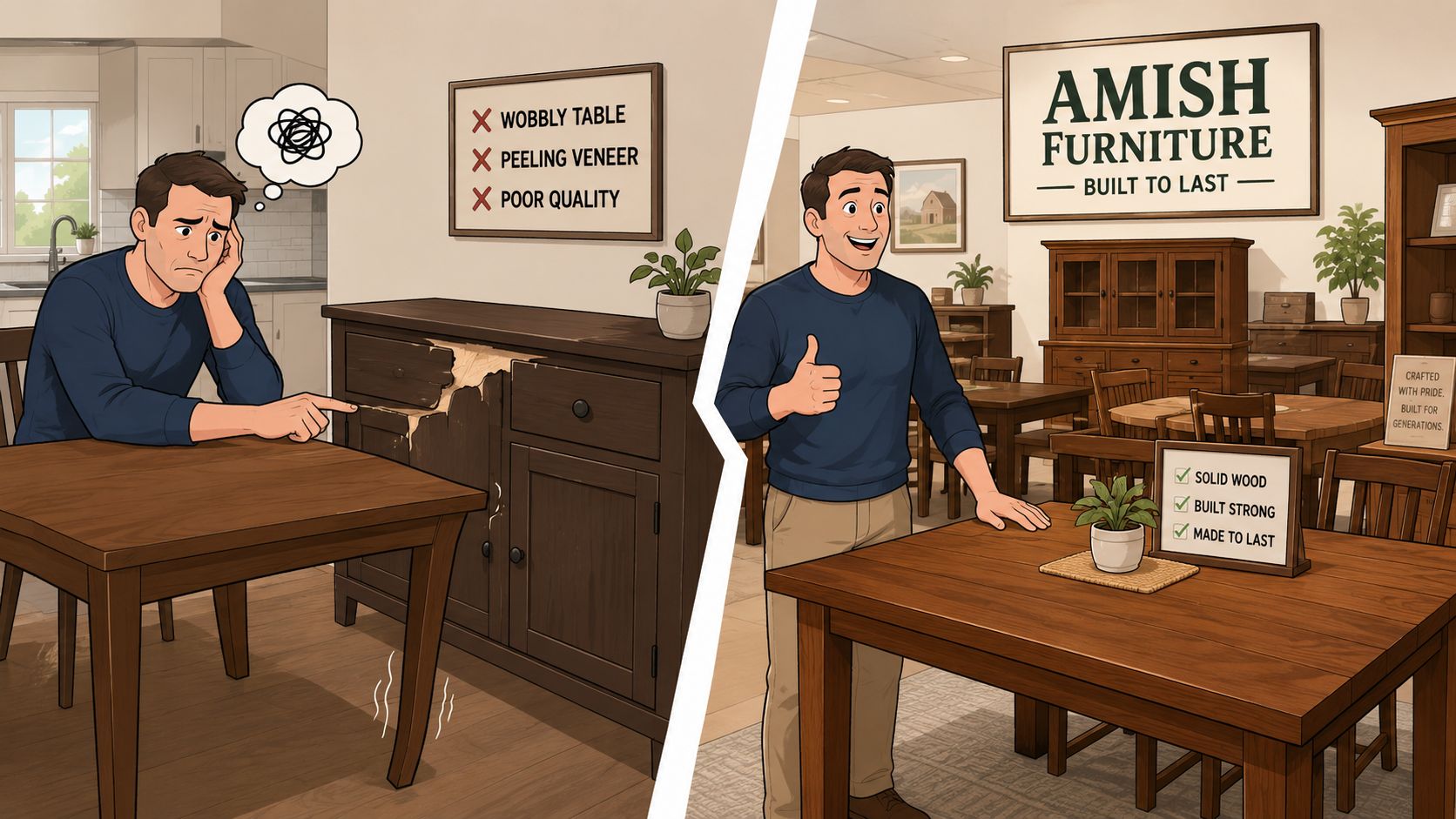
A dining chair loosens at the joint in St. John. A buffet's veneer lifts near the edge in Schererville. In Munster, a growing household needs a dining set sized for one specific room. These situations push Northwest Indiana homeowners to look beyond fixed-size, mass-produced furniture.
Authentic Amish furniture is not a decorative style. It is a practical choice built around solid hardwood, careful joinery, and the buyer's requirements. Solid wood components can be repaired or refinished over time, giving owners more options than particleboard, MDF, or veneer construction. That difference matters when a family wants furniture to serve the household for years rather than replace it after a short service life.
A regional tradition with lasting value
Amish furniture retail developed from small family workshops into a substantial regional cluster. A USDA Forest Service study identified about 450 small furniture makers in the Holmes County, Ohio cluster. The broader cluster employed 2,991 people and used an estimated 43.5 million board feet of hardwood lumber each year, representing about 11% of Ohio's hardwood lumber production and 19% of its hardwood grade lumber production.
The study also found that 71% of firms expanded during the three-year period from 2006 to 2008, while the wider domestic furniture industry contracted. That record points to a resilient supply network rather than a tiny craft niche. Ohio Amish Country also documents the shift from cottage production toward retail stores during the 1980s and 1990s, including Farmerstown Furniture's operation at the same location since 1969, as summarized in historical Amish furniture retail coverage.
For families, the value is personal as well as practical. A dining table can host birthdays, graduations, and ordinary Sunday dinners before moving to another generation. Homeowners seeking heirloom quality instead of disposable furnishings should choose a store that can discuss wood species, construction, customization, delivery, and financing clearly. Local shoppers can start by reviewing Amish furniture options near Northwest Indiana and then visiting Groen's Fine Furniture to match traditional workmanship with the room they need to furnish.
The Craftsmanship Behind Authentic Amish Pieces
The wood and the joints determine how an Amish piece performs in a Northwest Indiana home. Authentic furniture typically uses solid hardwoods such as oak, cherry, maple, walnut, and hickory, rather than particleboard, MDF, or veneer. Each species has a distinct grain, color, and feel, so select one that suits the room and the household's daily routines.
Oak shows pronounced grain and delivers a familiar, sturdy appearance. Cherry offers a smoother, warmer surface that can deepen as the piece ages. Maple has cleaner grain for a lighter, refined look. Walnut brings rich color and visual depth, while hickory adds stronger grain variation and a rustic character. Choose the hardwood that supports the room's style and the furniture's expected use.
Joinery carries the load
Stain can hide weak construction, so inspect the structural details. Mortise-and-tenon joints connect major members by fitting one piece into a prepared opening in another. Dovetail joints interlock drawer sides and fronts, helping drawers withstand repeated opening and closing. Five-piece solid-wood drawer boxes also matter because the drawer functions as a complete wooden assembly instead of relying mainly on fasteners.
A clear explanation of mortise-and-tenon joint construction shows why this joint suits pieces that must handle daily stress. Compact or multifunctional furniture offers another useful inspection opportunity. Examples such as Amish oak futon frames show how solid oak and structural joinery work together in a practical design.
| Feature | Amish Craftsmanship | Mass-Produced Furniture |
|---|---|---|
| Core material | Solid hardwood components | May use particleboard, MDF, veneer, or mixed materials |
| Drawer construction | Dovetail joinery and solid-wood boxes | Often relies more heavily on fasteners and manufactured components |
| Structural joints | Mortise-and-tenon construction at key stress points | Frequently depends on screws, staples, brackets, or glue |
| Long-term service | Solid wood can often be repaired or refinished | Composite cores can limit substantial reworking |
| Buying process | Often made to order with selected dimensions and finishes | Usually offered in fixed configurations |
Finish quality completes the build. A smooth, even surface protects the wood while keeping its grain visible. Ask how the lumber was prepared, how the finish was applied, and whether the maker accounts for seasonal movement in the Midwest. At Groen's Fine Furniture, those answers should connect traditional workmanship with your room's dimensions, design needs, and expected use.
What to Look for When Buying Amish Furniture
A confident purchase comes from inspection, not assumptions. A piece can have a traditional silhouette and still fail to meet the standards of authentic solid-wood construction. Buyers should evaluate the furniture, the order process, and the retailer's ability to explain what happens after the sale.
Start with the wood and the room
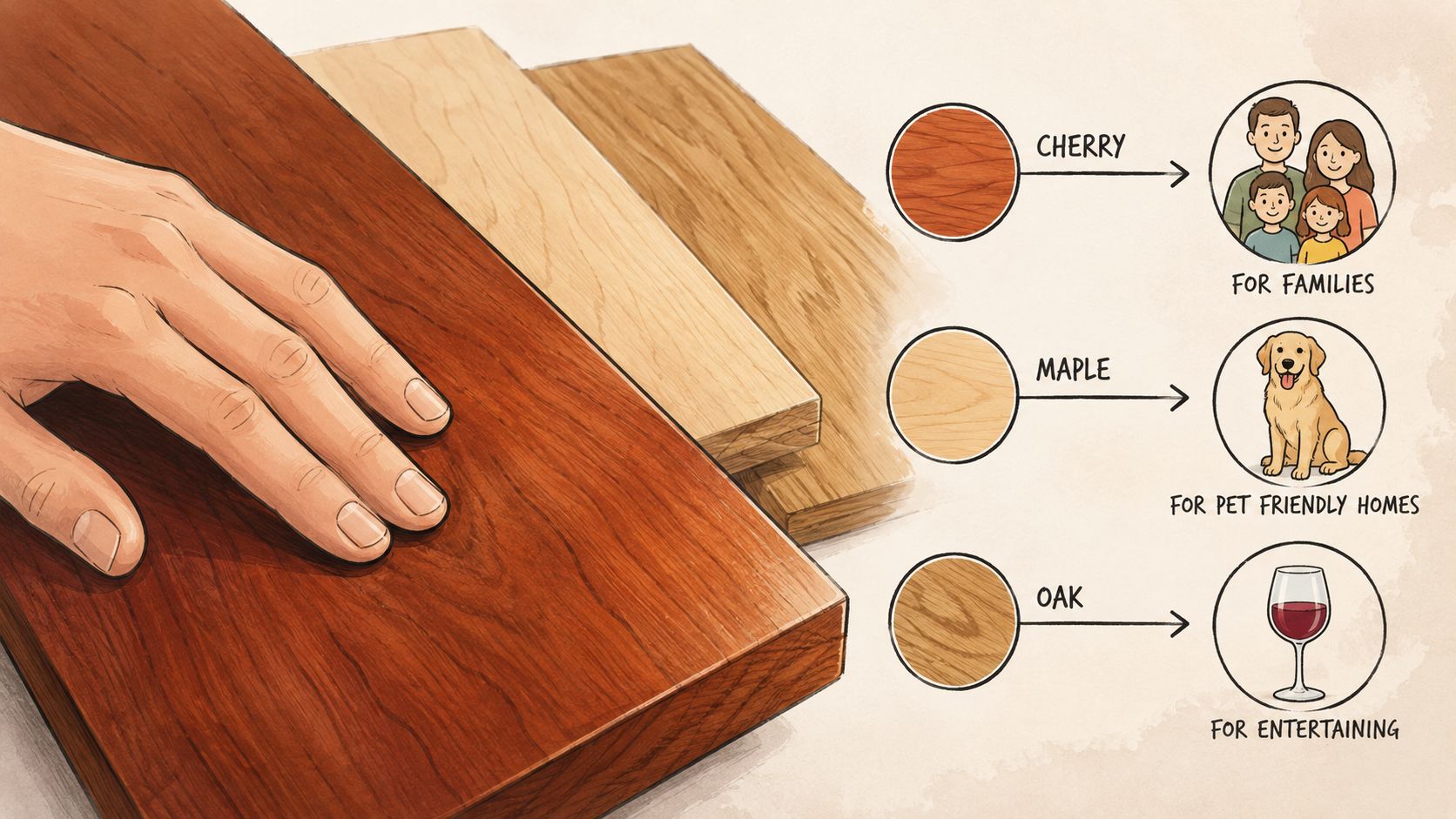
Ask to see actual samples in the showroom. Oak suits buyers who want visible grain and a durable, familiar look. Maple can work well for a busy dining area where a cleaner appearance fits the surrounding design. Cherry is a strong choice for a more formal room where a warmer patina complements the furniture over time. The right selection depends on lighting, flooring, existing pieces, and the amount of daily use.
Measure the room before falling in love with a design. Record wall width, doorway clearance, stair turns, table-extension space, and the walking paths around the furniture. A beautiful heirloom piece still fails if it overwhelms the room or cannot reach its intended location.
Inspect the details that matter
Use the following checklist during a showroom visit:
- Open every drawer: Look for tight, clean dovetails, smooth movement, and a box that feels substantial rather than flimsy.
- Examine chair and table joints: Mortise-and-tenon connections should look intentional and fit securely without visible gaps.
- Run a hand across the finish: The surface should feel smooth and even, without drips, rough patches, or inconsistent sheen.
- Ask about lumber preparation: A knowledgeable retailer should explain the wood species, drying process, finish options, and expected care.
- Confirm the order details: Verify dimensions, stain samples, hardware, lead time, warranty terms, delivery, and setup before approval.
Practical rule: If the salesperson can't explain the wood, joinery, finish, and delivery process in plain language, the buyer doesn't have enough information to place the order confidently.
Retail reputation matters because custom furniture requires communication. The retailer should document measurements and selections, provide a clear order summary, explain payment requirements, and describe how the delivery team handles setup. Five-star service isn't a slogan. It should show up as careful measuring, accurate paperwork, and support after the furniture arrives.
Customization Options and Modern Design Trends
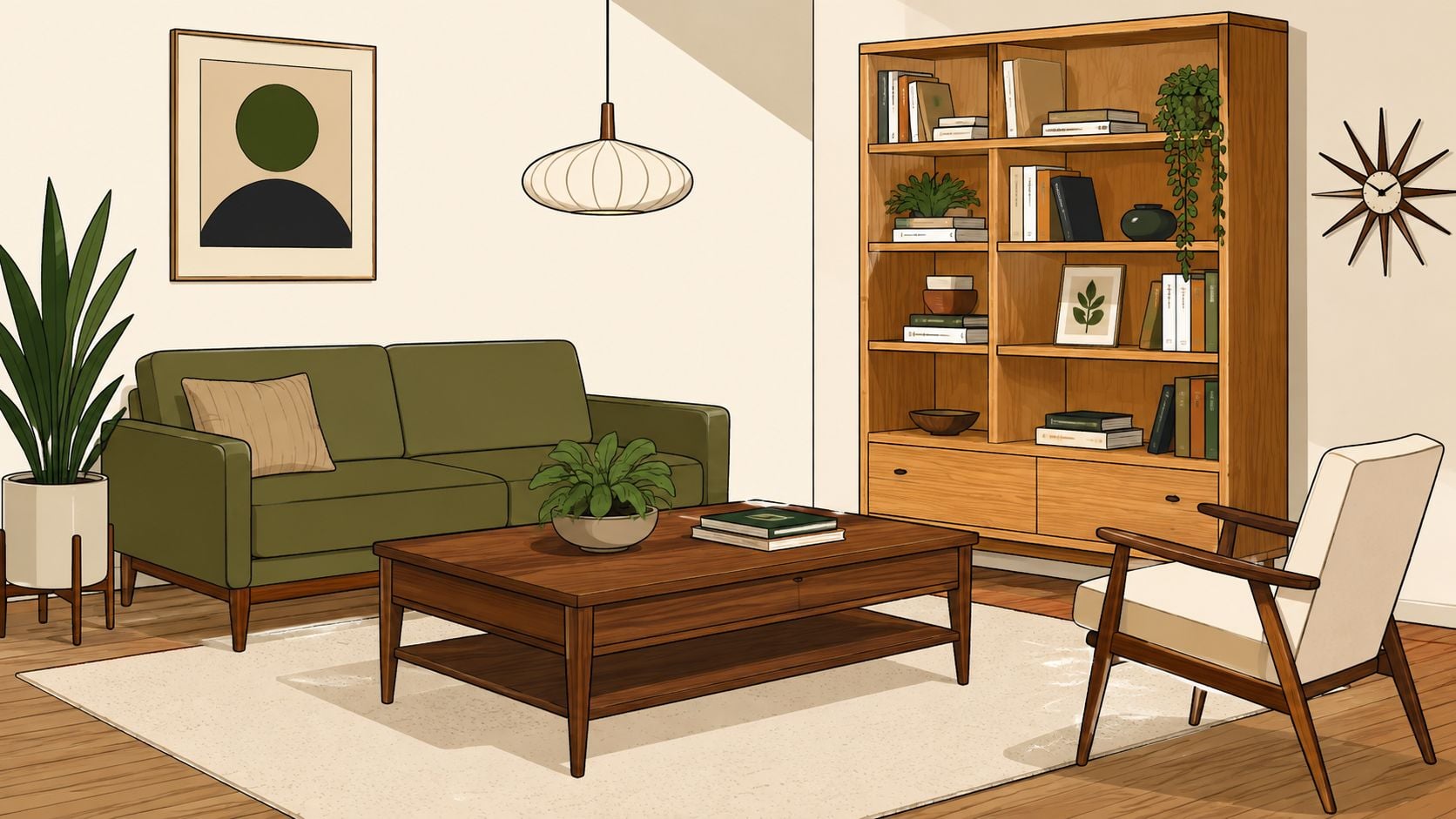
Traditional craftsmanship no longer requires a traditional-looking room. Today's Amish builders can produce pieces for modern, farmhouse, transitional, and mid-century interiors, provided the buyer makes deliberate choices about proportion, finish, and hardware.
A homeowner with an open-concept space might choose a clean-lined table in a lighter finish instead of a heavily ornamented design. Another may prefer a live-edge top with restrained legs, mixed-material accents, or discreet storage. The construction remains rooted in solid wood, while the visual language can move in a contemporary direction.
Design it your way
Customization can include:
- Wood species: Oak, cherry, maple, hickory, and walnut create different grain patterns and moods.
- Dimensions: A table, entertainment center, hutch, or kitchen island can be adapted to the room's measurements.
- Finish and stain: Samples help buyers compare warm, natural, darker, or lighter directions under their own lighting.
- Hardware and edges: Pulls, knobs, edge profiles, and other details can shift a piece from formal to relaxed.
- Storage features: Drawer counts, shelving arrangements, and cabinet configurations can support how the household lives.
Canadel's UDesign platform demonstrates the customer-facing logic of a configurable dining system. Shoppers can use Canadel's custom dining design experience to work through selected combinations rather than choosing only from fixed-stock models.
A local showroom adds an advantage that online browsing can't replace. Customers can touch wood samples, compare stain depth, sit in dining chairs, and discuss a modification face-to-face. Groen's custom-order guidance is available through custom furniture made simple, helping homeowners think through a design before committing to made-to-order work.
Pricing and Financing Your Amish Furniture Investment
Amish furniture deserves a different pricing conversation. The purchase reflects solid hardwood, skilled labor, detailed joinery, finish work, customization, and the time required to build a specific piece. A fixed showroom model may appear simpler at first, but it can force compromises in material, dimensions, or repairability.
The sensible comparison isn't only the initial invoice. It's the furniture's usefulness, serviceability, and ability to remain in the home as tastes and needs change. Solid wood can often be refinished or repaired, which gives the owner more options than a composite piece with a limited repair path.
| Factor | Amish Solid Wood Furniture | Mass-Produced Furniture |
|---|---|---|
| Material choice | Selected hardwood species | Often fixed materials or mixed construction |
| Configuration | Made-to-order dimensions and details may be available | Usually fixed sizes and designs |
| Finish | Chosen stain and finish direction | Limited factory selections |
| Long-term approach | Built for ongoing use and potential refinishing | Often treated as a replacement purchase |
| Service | Local delivery, setup, and retailer guidance may be available | Service varies by seller and delivery method |
Financing should be clear
Special Financing can provide buying power by lowering the upfront barrier, but approval is subject to credit approval. Terms depend on the lender's underwriting decision, so financing isn't a universal offer and doesn't change the underlying retail price. Buyers should ask about eligibility, payment timing, promotional conditions, and the total obligation before signing.
Northwest Indiana families can review furniture financing options while comparing the full project, including delivery, setup, custom features, and any companion pieces. Honest pricing and clear terms make it easier to fit a long-term purchase into a household budget without compromising the construction that made the furniture worth choosing.
Caring for Solid Wood Furniture Over the Years
Solid wood responds to its environment. Northwest Indiana homes experience seasonal changes, and furniture can expand or contract as indoor conditions shift. Good care doesn't require complicated products. It requires consistency and restraint.
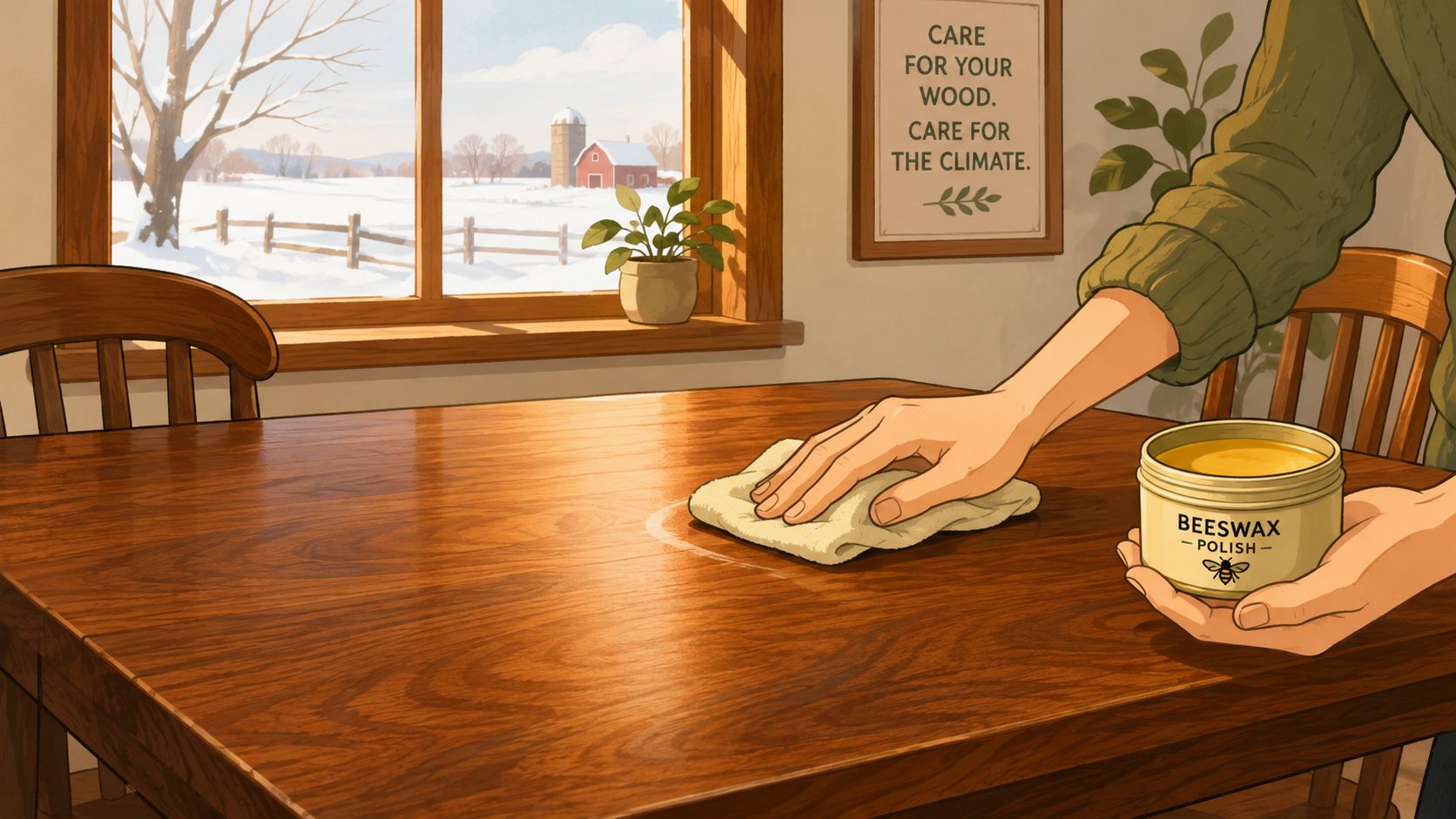
Dust with a soft microfiber cloth, moving with the grain rather than grinding particles into the finish. Use coasters under drinks and trivets under hot serving pieces. Wipe spills promptly with a slightly damp cloth, then dry the surface.
A simple maintenance routine
- Dust regularly: A soft cloth protects the finish and keeps grit from creating fine surface marks.
- Use polish carefully: Apply a quality product only when the finish calls for it. Paste wax may suit some surfaces, but the retailer or maker should confirm compatibility.
- Avoid harsh cleaners: Silicone-based sprays and ammonia solutions can damage hand-rubbed finishes and leave an undesirable residue.
- Protect against heat and moisture: Coasters, mats, and trivets prevent rings, stains, and concentrated heat damage.
- Manage sunlight: Rotate decorative items so the surface ages more evenly instead of creating sharply different protected areas.
- Keep conditions steady: A consistent indoor environment helps reduce stress from repeated moisture changes.
Minor scratches and water marks shouldn't trigger panic. Clean the area gently, avoid aggressive scrubbing, and ask the retailer about an approved touch-up method before applying household remedies. More detailed guidance is available in this wood furniture care guide.
The best maintenance decision is prevention. A table treated thoughtfully will remain useful through everyday meals, entertaining, and future changes in the room.
Why Groen's Fine Furniture Is Your Local Amish Destination
Choosing an Amish furniture store should make practical decisions easier. Before ordering, homeowners need clear guidance on wood species, stain samples, joinery, dimensions, customization, delivery, and setup. A knowledgeable local team can review those details with you instead of leaving the decision to a catalog or product photo.
Groen's Fine Furniture has served Northwest Indiana since 1983 as a family-owned business with multigenerational ownership. Its showrooms in Dyer and Crown Point let homeowners see, touch, and test furniture before placing an order. That visit helps you judge grain, finish, scale, and comfort in person.
Local guidance for modern homes
Groen's helps connect traditional Amish craftsmanship with the needs of current homes. Customers can review custom solid-wood pieces, configure Canadel dining furniture, and consider room solutions from established furniture and mattress brands, including Flexsteel for durability, Bassett for style, and Serta and Beautyrest for mattresses. The store's Helpful Mattress Guide keeps the conversation focused on rest and health as well as specifications.
Design support continues after you choose a piece. Interior Design guidance can help coordinate scale, finish, upholstery, and room flow, so a new purchase works with the rest of the home. Local delivery and White-Glove Delivery can also include placement and setup.
Online interest in Amish furniture remains significant, but showroom guidance still matters for made-to-order purchases. Exact measurements, tactile materials, finish choices, and coordinated delivery are easier to review with a local team.
Visit Groen's Fine Furniture in Dyer or Crown Point to explore custom Amish solid-wood furniture, dining options, comfort products, and White-Glove Delivery support. Ask the family team about wood species, joinery, made-to-order configurations, and Special Financing subject to credit approval. Then test the comfort, confirm the fit, and choose furniture built to serve your household for generations.