Blog
Living Room Sofa with Chaise: A NWI Buying Guide

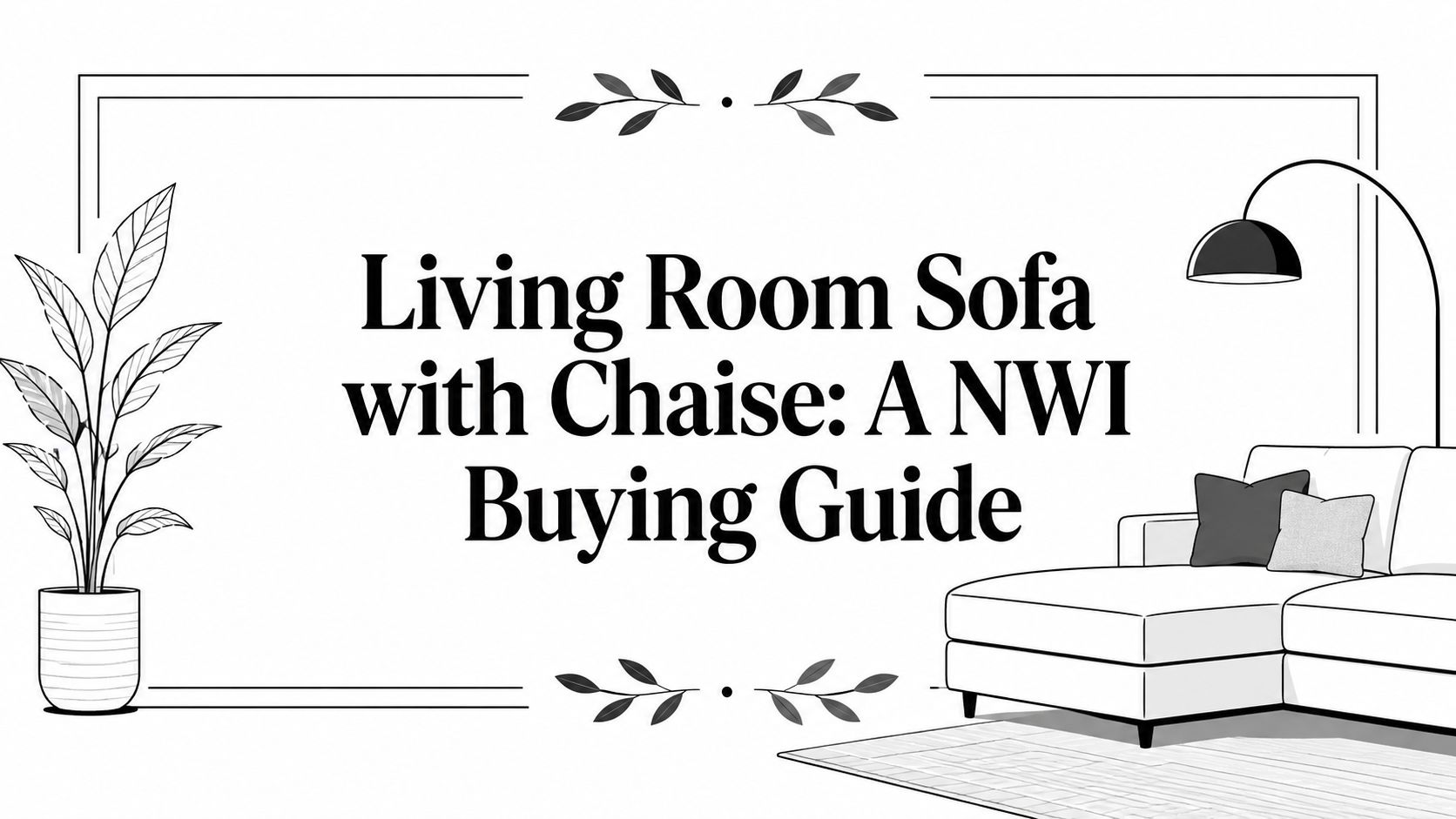
A lot of Northwest Indiana homeowners reach the same point at the same time. The old living room seating no longer fits the way the household lives. Someone wants a better place to stretch out for movie night, someone else wants the room to feel less crowded, and everyone wants the new sofa to look right once it's in the house.
That's where a living room sofa with chaise often makes sense. It gives a room that relaxed, lounge-ready feel people want from a sectional, but it can be easier to place in real homes in Dyer, Crown Point, St. John, Schererville, and the rest of NWI. For families trying to balance comfort, traffic flow, and personal style, that combination matters.
This guide focuses on the practical side of the decision. It walks through what a chaise sofa is, how to measure for one, how to choose the right orientation, and how custom ordering can solve the awkward layout problems that standard pieces sometimes can't.
Table of Contents
- What Makes a Sofa with Chaise the Perfect Centerpiece
- Mastering Your Floor Plan Measuring for a Chaise Sofa
- Left Right or Reversible Choosing Your Chaise Configuration
- Finding Your Style From Performance Fabric to Frame
- Design It Your Way Custom-Ordering at Groen's
- Making Quality Affordable Financing and White-Glove Delivery
- Experience the Comfort Firsthand in Dyer or Crown Point
What Makes a Sofa with Chaise the Perfect Centerpiece
A sofa with chaise works because it solves two needs at once. It offers the laid-back comfort people usually associate with a sectional, while keeping a shape that's often easier to live with day to day.
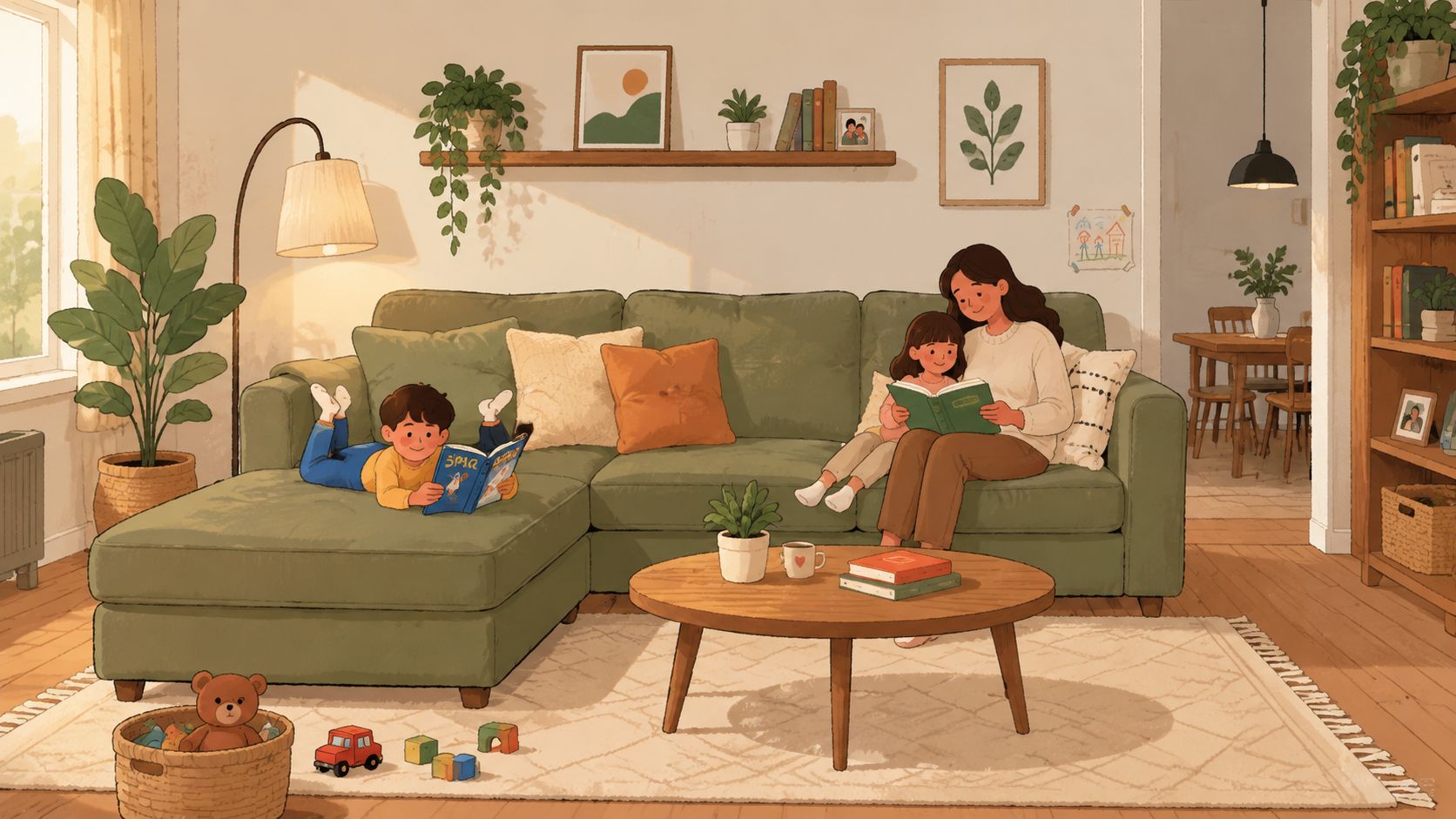
That matters in homes where the living room has to do more than one job. The same seat may need to handle reading after dinner, weekend lounging, conversation with guests, and the nightly routine of everyone gathering in one place. A chaise gives the sofa a built-in lounge spot without forcing the room into a full, sprawling sectional layout.
According to Room & Board's guide to sofas with chaise, this style is a popular sectional configuration, and the chaise is often the seat people prefer most. That rings true in everyday use. In many households, the chaise quickly becomes the spot everyone notices first and claims fastest.
Why this shape feels so livable
A standard sofa typically asks one to sit upright. A chaise changes that rhythm. It invites someone to put their feet up, turn sideways with a book, or stretch out for a quick nap without dragging an ottoman into place.
That makes the piece feel welcoming, not formal.
A well-chosen chaise sofa often becomes the room's most used seat because it supports both regular sitting and full-body lounging.
It also helps the room look settled. One piece can create a strong seating zone without requiring multiple large items that compete for space.
Comfort and style can work together
The best living rooms don't feel staged. They feel used, layered, and personal. A chaise sofa supports that look because it naturally softens a room. Add a tray on a nearby table, a lamp for reading, and a textile accent, and the sofa starts to feel like the center of daily life.
For households refining the final look, guides on details like styling a faux fur throw can help a chaise feel finished without making it look overdone.
A living room sofa with chaise often earns its place because it doesn't ask a family to choose between comfort and practicality. It gives both in one footprint.
Mastering Your Floor Plan Measuring for a Chaise Sofa
Many chaise-sofa mistakes happen before the piece ever reaches the house. The shopper measures the wall, checks the width, and assumes the sofa will fit. Then the chaise extends farther than expected, the walkway tightens, or a door no longer opens comfortably.
A better approach starts with the full room plan.
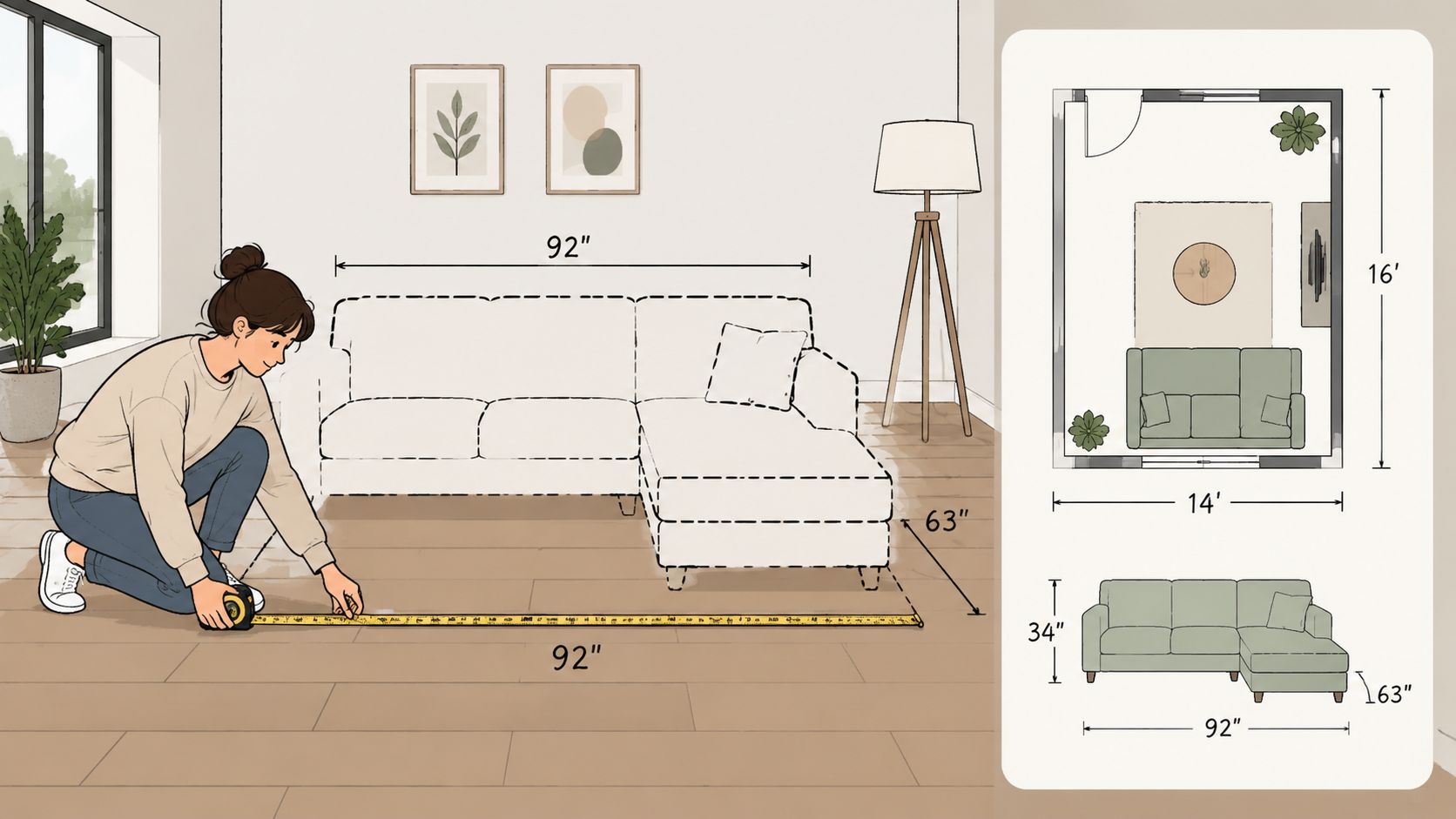
Interior design guidance notes that a sofa with chaise is often a more space-efficient choice than a larger L-shaped sectional, while still preserving the lounging function people want. The same guidance recommends leaving at least 36 inches of pathway clearance around major seating for comfortable circulation, as explained in this sectional-buying guide.
Start with the room, not the sofa tag
The first measurement isn't the sofa width. It's the usable part of the room.
That means checking:
- Main walking paths: Measure the routes people already use between entry points, hallways, and nearby rooms.
- Fixed features: Note fireplaces, radiators, floor vents, windows, and outlets.
- Surrounding furniture: Coffee tables, end tables, recliners, and media pieces all affect how the chaise will sit.
A chaise sofa can work beautifully in a compact room, but only if the lounging side doesn't steal the path everyone needs.
Practical rule: Leave enough open space for people to move around the seating area without squeezing past the arm or stepping sideways around the chaise.
For shoppers who want a deeper walkthrough, Groen's provides a helpful guide on how to measure furniture.
Use tape before buying
One of the smartest planning tricks is also one of the simplest. Mark the sofa footprint on the floor with painter's tape.
Independent dimension guidance explains that standard sofas are often 72 to 96 inches wide, 30 to 40 inches deep, and 30 to 36 inches high, while chaise styles add a projecting lounge section that makes the overall piece materially deeper. The same guidance recommends allowing 24 to 36 inches of clear walking path around the piece and using painter's tape to map the chaise projection before purchase because that extension can interfere with door swings, outlets, or circulation if the side is chosen poorly.
When tape is on the floor, problems show up quickly. A side table may no longer fit. A cabinet door may hit the corner of the chaise. The room may still technically fit the sofa, but not comfortably.
A simple tape outline helps answer questions like these:
- Can someone walk past the chaise carrying laundry or groceries?
- Does the room still feel open from the doorway?
- Is there enough space to reach the window and adjust blinds or curtains?
Think about windows, doors, and daily habits
The layout that looks best on paper isn't always the layout that works best at home. A chaise shouldn't block the room's brightest window or sit in the busiest lane if people constantly pass through the space.
In many Northwest Indiana homes, the right placement depends on how the room is used. One family may need open access to a sliding door. Another may need the chaise away from a toy basket zone. Another may realize that floating the sofa slightly off the wall makes the room feel easier to move through.
That's why measuring isn't just about whether the sofa fits. It's about whether the room still works once the sofa is there.
Left Right or Reversible Choosing Your Chaise Configuration
This is one of the biggest sticking points for buyers. The sofa style feels right, the fabric looks good, the dimensions seem workable, and then the order form asks one question that stops everything. Left or right?
The answer matters because the wrong orientation can throw off the whole room.
What LAF and RAF actually mean
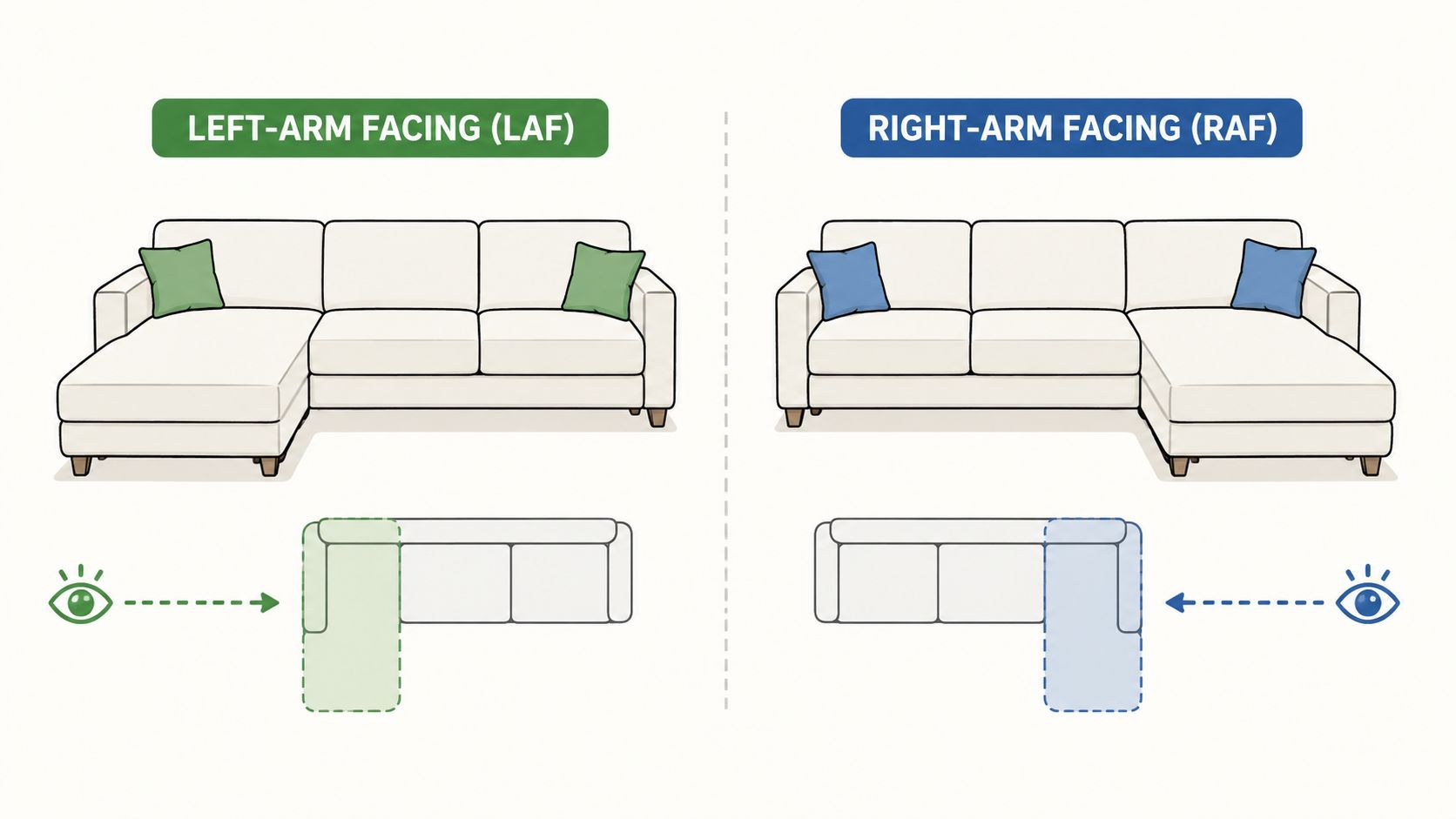
Industry guides define LAF and RAF as a facing convention. That means the chaise side is identified from the viewer's perspective while standing in front of the sofa, not from the perspective of sitting on it, as explained in this sectional orientation guide.
That one detail clears up a lot of confusion.
A quick cheat sheet helps:
| Term | What it means |
|---|---|
| LAF | The arm is on the left when someone stands facing the sofa |
| RAF | The arm is on the right when someone stands facing the sofa |
Shoppers often get turned around because they picture themselves already seated. Retailers and manufacturers usually label the piece from the front view instead.
Fixed chaise versus reversible chaise
The same orientation guidance also explains that a reversible chaise usually uses a floating ottoman-style support rather than a permanently attached frame. That design changes the decision.
Here's the practical difference:
- Fixed chaise: Better for shoppers who know exactly how the room will be arranged and want a more locked-in layout.
- Reversible chaise: Helpful for renters, first-time buyers, or households that may move and want flexibility later.
- Layout confidence: If the fireplace, doorway, or television strongly dictates the room plan, fixed may feel simpler.
- Future changes: If the room may be rearranged after a move or remodel, reversible can reduce the risk of choosing the wrong side.
The best chaise side is usually the one that keeps the lounge seat on the low-traffic side of the room.
For anyone comparing configurations in more depth, this sectionals buying guide gives a useful overview of what to check before ordering.
A simple way to decide
Instead of starting with labels, start with the room.
Ask these questions in order:
Where does foot traffic naturally move?
The chaise shouldn't stick into the route people use most.What view matters most?
In one room that may be the television. In another it may be the fireplace or window.Which side can handle a deeper projection?
One side may have plenty of breathing room. The other may run straight into a doorway or side table.Is the household likely to move soon or rearrange often?
If so, reversible deserves a serious look.
This choice can feel technical, but it's really about function. Once the room's traffic pattern is clear, the right chaise side usually becomes much easier to spot.
Finding Your Style From Performance Fabric to Frame
Style matters, but a chaise sofa also has to handle daily life. The right piece needs to look right in the room, feel right when someone sits down, and hold up to the habits of the people using it.
Comfort starts with how the chaise is used
A chaise changes the body position from upright sitting to more relaxed lounging, so the important comfort details are often seat depth, inside depth, and seat height, not just overall width. One representative chaise model measures 106" W × 66" D × 28" H, with 52" inside depth, 23" seat depth, and 17" seat height, according to this guide to sectional types.
Those numbers help explain why some chaise sofas feel easy to sink into while others feel too shallow or too deep for the way a household sits.
A few common comfort patterns show up quickly:
- Deep lounge preference: Good for readers, nappers, and movie-night households.
- More upright support: Better for formal sitting, conversation, or shorter users who don't want to scoot back too far.
- Low profile silhouettes: Often look modern, but they should still feel supportive in the back and seat.
Match the upholstery to real life
Fabric choice shouldn't start with color alone. It should start with the room's daily traffic.
Households with children, pets, or frequent guests often lean toward performance fabrics because easier upkeep becomes part of long-term satisfaction. A textured weave can disguise everyday use. A smoother fabric may feel cleaner and more refined. Leather offers a different personality altogether and can suit homes that want a timeless, refined look.
When accidents happen, practical cleaning advice also helps. Families dealing with creative little artists may appreciate a resource with effective crayon stain removal tips for upholstered seating.
For a more detailed fabric selection process, this guide on how to choose upholstery fabric can help narrow the options.
Style still needs structure
A sofa can have beautiful fabric and still disappoint if the frame and cushions don't suit the household. That's why frame quality matters just as much as color or arm shape.
In many NWI homes, the strongest style choices come from matching the sofa to the room's rhythm:
- Clean-lined silhouettes: Good for updated spaces that already have simple tables, metal accents, or lighter finishes.
- Soft, classic shapes: Better for homes that lean traditional and want warmth rather than sharp edges.
- Fitted cushions and durable construction: Useful for families who want a polished look without babying the furniture.
Brands known for durability and style, including Flexsteel and Bassett, often appeal to shoppers who want that balance of comfort and craftsmanship. The key isn't chasing a trend. It's choosing a chaise sofa whose materials, support, and shape still make sense years from now.
Design It Your Way Custom-Ordering at Groen's
A lot of shoppers can find a sofa they almost like. The length works, but the chaise is on the wrong side. The shape feels right, but the fabric doesn't suit the house. The color is close, but not close enough.
That's where custom ordering becomes more than a luxury. It becomes a practical solution.
Why custom solves real layout problems
A living room sofa with chaise has more variables than a standard sofa. Orientation, depth, arm style, fabric, and cushion feel can all affect whether the piece works beautifully or feels like a compromise.
That's why made-to-order furniture can be so valuable in real homes. Instead of forcing the room to adapt to whatever is available on the floor, the piece can be shaped around the room's needs.
Examples of common custom-order wins include:
- A better fit for an awkward wall: Especially useful in older homes with unusual room proportions.
- The correct chaise orientation from the start: Important when one side opens to a doorway or fireplace.
- Fabric that suits the household: A quiet neutral for a formal room, or a sturdier option for a busy family room.
- Details that match existing furniture: Legs, arm profiles, and cushion styles can help the new piece feel intentional.
Custom ordering is often less about adding extras and more about removing the compromises that make a room feel unsettled.
For shoppers exploring that process, Groen's Fine Furniture offers guidance on getting started with custom order.
What shoppers can usually personalize
Customization doesn't have to feel overwhelming when it's broken into a few clear choices.
A shopper typically starts with the foundation:
| Decision | Why it matters |
|---|---|
| Configuration | Determines whether the chaise supports the room's traffic flow |
| Fabric or leather | Affects maintenance, comfort, and visual style |
| Color | Helps the sofa blend in softly or stand out as a focal piece |
| Seat feel | Changes whether the sofa feels more supportive or more lounge-like |
| Finishing details | Legs, seams, and arm styles influence the final character |
This design-it-your-way approach fits the broader way many families already shop for their homes. They don't want a living room that looks copied from a display. They want something personal, lasting, and suited to how they live.
That same custom mindset shows up across the home, whether someone is designing a Canadel dining set or choosing Amish solid wood furniture for another room. A chaise sofa deserves that same level of thought.
Making Quality Affordable Financing and White-Glove Delivery
A chaise sofa is a meaningful purchase. It affects comfort every day, and it's often one of the most used pieces in the home. For many households, the primary goal isn't finding the quickest option. It's finding a piece with lasting value and a payment path that feels manageable.
Buying power for a lasting piece
Special financing can give shoppers more buying power when they want to choose quality without forcing every decision around the immediate out-of-pocket total. That can make it easier to select better materials, a stronger frame, or the custom configuration that fits the room.
For families planning a larger purchase, Groen's shares details about furniture financing options. Special financing is available, subject to credit approval.
That matters because “affordable luxury” isn't about buying the fanciest piece in the showroom. It's about bringing home something comfortable, honest, and lasting in a way that fits the household budget.
Delivery matters with a chaise
Delivery is easy to underestimate until the sofa arrives.
A chaise can be bulky, awkward to turn, and challenging to place correctly on the first try. White-glove delivery protects the purchase by reducing the stress around entryways, setup, and final placement. It also helps ensure the piece lands where it was planned to go, rather than where it was easiest to drop off.
For many NWI households, that service is part of what makes the experience feel personal. It turns a major furniture purchase into a smoother process from showroom decision to living room setup.
Experience the Comfort Firsthand in Dyer or Crown Point
A living room sofa with chaise can look wonderful online and still feel completely different in person. Seat depth, cushion support, fabric texture, and the height of the arms all become clearer once someone sits down and spends a few minutes with the piece.
That's why showroom visits still matter. Homeowners from Dyer, Crown Point, Munster, Schererville, St. John, and across Northwest Indiana often make better decisions when they can test-drive the comfort, compare materials side by side, and talk through room layout questions with someone who understands the differences.
A chaise sofa is one of those purchases where hands-on experience pays off. The right piece should support the way a household relaxes, fit the room's flow, and still feel like home years later.
Visit Groen's Fine Furniture in Dyer or Crown Point today to explore custom options and ask about special financing plans. Since 1983, this multigenerational family business has served Northwest Indiana with honest guidance, 5-star service, and quality furniture built for lasting comfort. Let their family help create a home that feels personal, comfortable, and made for real life.