12 Picture Frame: Create a Wall of Memories


A stack of family photos often starts the same way. It sits in a drawer, tucked in a closet, or stays saved on a phone while birthdays, vacations, graduations, and everyday moments wait for a proper place on the wall. For many homeowners in Dyer, Crown Point, and across Northwest Indiana, the sticking point isn't whether those memories deserve to be displayed. It's figuring out what a 12 picture frame means.
That phrase causes more confusion than it should. Sometimes it means a 12×12 frame made for one square piece, such as scrapbook art or a single photo print. Other times it means a frame that holds 12 separate photos, either as one collage frame or as a group of 12 individual frames arranged on the wall. Those are two very different projects, and most shopping guides blur them together.
That distinction matters because the sizing, layout, and hanging plan change right away depending on which version a homeowner is choosing. A square frame asks one set of questions. A 12-photo display asks another. Once that difference is clear, the whole project becomes much simpler and much more enjoyable.
The appetite for personal, meaningful decor isn't just anecdotal. The global custom picture framing market was valued at $2.8 billion in 2023, reflecting a broader shift toward homes filled with bespoke pieces and photo displays that act as emotional anchors in everyday life, according to custom picture framing industry statistics. That's part of the same idea behind loving a home as a form of self-care. Rooms feel warmer when they hold the people, places, and milestones that matter.
Turning Cherished Memories into a Timeless Display
A well-made photo display does more than fill a blank wall. It gives shape to family history. It turns a hallway, living room, or bedroom into a place that feels settled and personal instead of temporary.
The first step is choosing the right category. A homeowner usually lands in one of these lanes:
- A single 12×12 frame: Best for one square print, scrapbook page, child's artwork, or a meaningful document with room for matting.
- A 12-photo collage frame: Best for a ready-made, all-in-one presentation with a tidy, unified look.
- A wall of 12 individual frames: Best for flexibility, growth, and a more custom interior design feel.
Why the wording throws people off
“12 picture frame” sounds straightforward, but it can point to size or capacity. That's where expensive mistakes happen. Someone shopping for a frame for 12 vacation photos may accidentally buy a single square frame. Someone trying to frame one square print may end up looking at collage products that don't fit the project at all.
Practical rule: Decide whether the number 12 refers to inches or photos before choosing a frame, mat, or wall location.
That one decision clears up almost everything that follows. It also helps homeowners avoid forcing photos into openings that crop the wrong details or buying a frame that looks right online but doesn't suit the space once it arrives.
Start with the story, not the hardware
Before measuring anything, it helps to decide what the display needs to say. Some collections celebrate a child's first years. Others trace a family trip, a wedding season, or several generations in one room. A display with a clear story always looks more intentional than one built from random prints.
There's also a long tradition behind that instinct. The picture frame became a distinct decorative element during the Florentine Renaissance, when frames began functioning as separate borders that enhanced and contextualized the artwork rather than blending into it, as described in this history of picture frames. That same principle still holds. A good frame doesn't compete with the photo. It helps the eye pause and take it in.
Choosing Your Perfect Frame Foundation
Some homeowners want simplicity. Others want flexibility. The right foundation depends on how many photos need to be shown, how polished the display should look, and whether the collection may change over time.
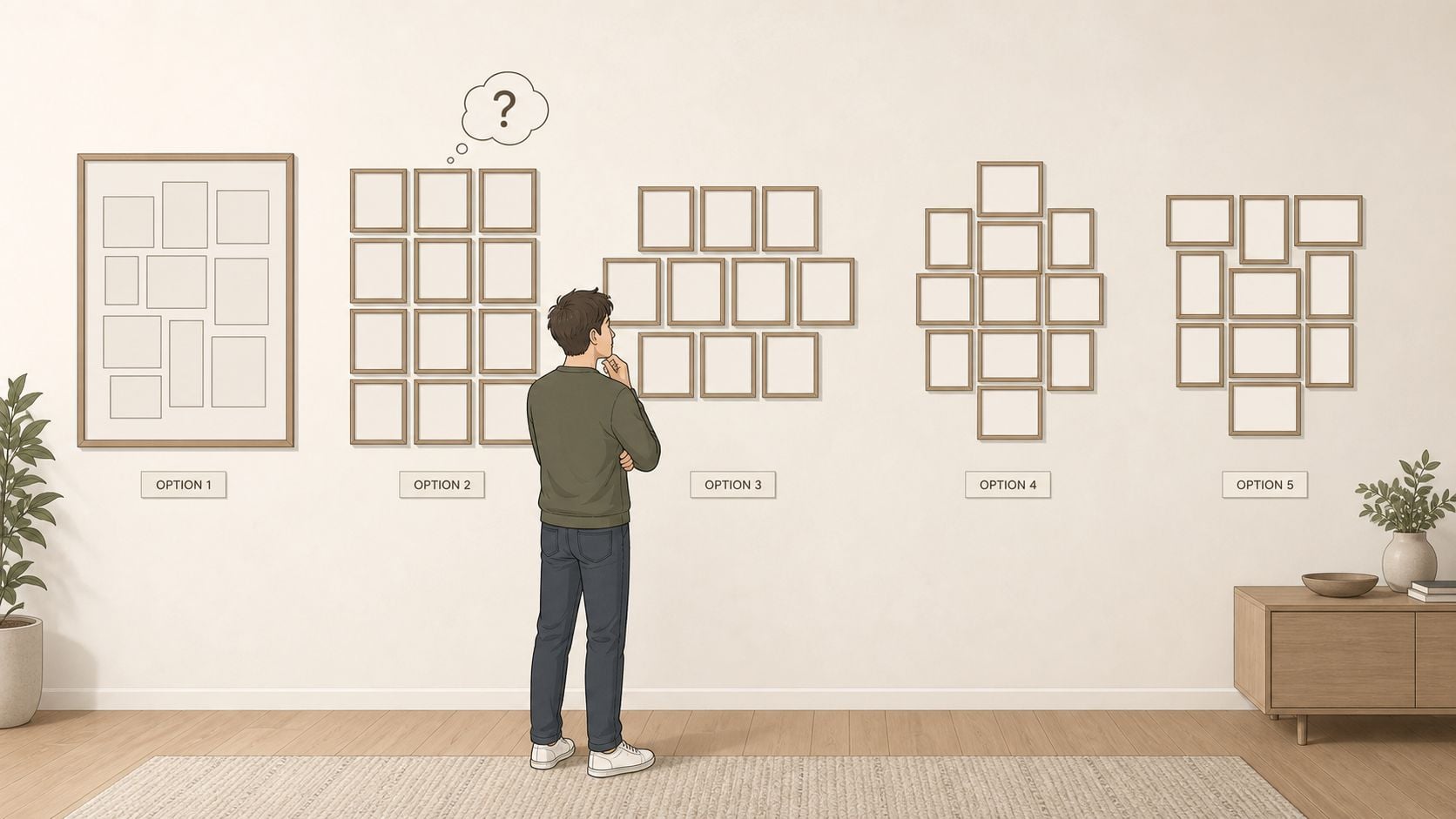
Three smart ways to approach a 12 picture frame
| Option | Best for | Strength | Watch for |
|---|---|---|---|
| Single collage frame for 12 photos | One wall-ready piece | Unified look and easier installation | Less flexibility if photos need to be swapped |
| Single 12×12 frame | One square image or scrapbook page | Clean, classic presentation | Must match the artwork size precisely |
| Gallery wall with 12 individual frames | A curated, custom display | Most freedom in layout and style | Takes more planning and precise hanging |
A collage frame suits households that want a finished look quickly. It works well for baby milestones, travel highlights, or a family timeline in one tidy unit. It also feels cohesive, especially when the frame material has visual substance and doesn't look flimsy.
A 12×12 frame is a different animal altogether. It's made for one square piece, not a dozen separate prints. This is often the best choice for scrapbook pages, children's art, square photography, or a print that deserves breathing room on its own.
A wall of 12 individual frames gives the most freedom. The arrangement can be formal, relaxed, symmetrical, or collected over time. It also allows the display to grow with a home's style.
The technical detail that matters for 12×12 frames
With a square frame, precision matters more than many shoppers expect. For a 12×12 inch frame, a critical technical specification is the opening tolerance of ±0.015? or tighter. Wider tolerances can allow the artwork to shift or bow, according to this picture frame sizing guide.
That sounds small because it is. But tiny differences become very visible once a square print is under glass. A piece that slides even slightly can make a carefully chosen photo look crooked or cheaply fitted.
A frame can look beautiful from the front and still fail at the edges. Tight fit is part of quality.
For anyone working with a single square print, it also helps to remember that the labeled frame size refers to the art opening, not the outside dimensions. That's one of the biggest reasons buyers get confused.
How to decide with confidence
A simple decision filter helps:
- Choose a collage frame if the priority is convenience and a single finished piece.
- Choose a 12×12 frame if one square image deserves center stage.
- Choose 12 separate frames if the room needs a personalized look that can be designed around furniture, paint color, and wall shape.
Homeowners trying to tie the display into the room's palette may find this guide to picking the perfect paint color for your home helpful when choosing frame finishes, mat colors, and photo tones. Those looking for broader inspiration on styling your 12 photo frame can also use that as a creative jumping-off point for theme and arrangement ideas.
Designing Your Photo Layout and Story
Once the frame type is settled, the creative work gets much more fun. A photo display then stops being a stack of prints and starts reading like a family story on the wall.

Give the photos a clear thread
A strong display usually follows one organizing idea. It doesn't need to be formal, but it should feel intentional. Good themes include:
- A timeline: newborn to graduation, first apartment to first home, or engagement to anniversary.
- A place-based collection: one beach trip, one city explored over several days, or one family farm over many years.
- A visual mood: black-and-white portraits, warm-toned travel photos, or candid images with similar lighting.
When a homeowner uses a collage frame, keeping the images connected by color, date, or subject helps the whole piece feel calm instead of cluttered. With 12 individual frames, that same discipline makes the wall look curated rather than accidental.
Use placement that feels natural in the room
For a wall display of 12 individual frames, the ergonomic benchmark for the group's center is 57 to 60 inches from the floor, according to this guide on picture frame sizing and placement. That measurement tends to feel comfortable because it aligns with average eye level rather than the center of the wall.
That point is easy to miss. Many homeowners hang photo groupings too high, especially above sofas, sideboards, or stair landings. The result is a display that feels disconnected from the furniture below it.
The wall has its own proportions, but the people using the room matter more. Art should meet the eye, not hover above it.
For rooms with long furniture pieces, the photo grouping should also feel visually related to what sits beneath it. The wall art and the furniture should read as one composition.
A homeowner working through accent color and wall balance may also appreciate ideas for a perfectly balanced accent wall, especially when the photo display is becoming the room's main focal point.
Matting and print finish make a bigger difference than expected
Matting adds breathing room. It can make ordinary snapshots feel more polished and can unify photos taken at different times. In multi-opening collage frames, the mat opening should be cut 1/16 inch smaller than the photo edges so the image is overlapped and held securely, based on the same placement and sizing guidance already cited above.
For a single square image, stepping up to a larger outer frame with a mat border creates a more refined presentation. For multi-photo walls, matching mats across all pieces can make different photos feel related.
Print surface matters too. Some homeowners prefer a softer finish because it reduces glare and gives family photos a quieter look. Anyone comparing print finishes may find this guide to matte photographic paper useful before ordering reprints for framing.
Two layouts that rarely disappoint
The formal grid
This works beautifully with 12 matching frames. It suits dining rooms, hallways, and modern living spaces where clean lines already lead the room.The story cluster
This feels warmer and a little more collected. The spacing still needs to be consistent, but the arrangement can vary around a center image or family milestone.
A good layout doesn't need to chase trends. It needs to fit the home, the photos, and the people who will walk past it every day.
Make It Yours with Custom Style and Smart Financing
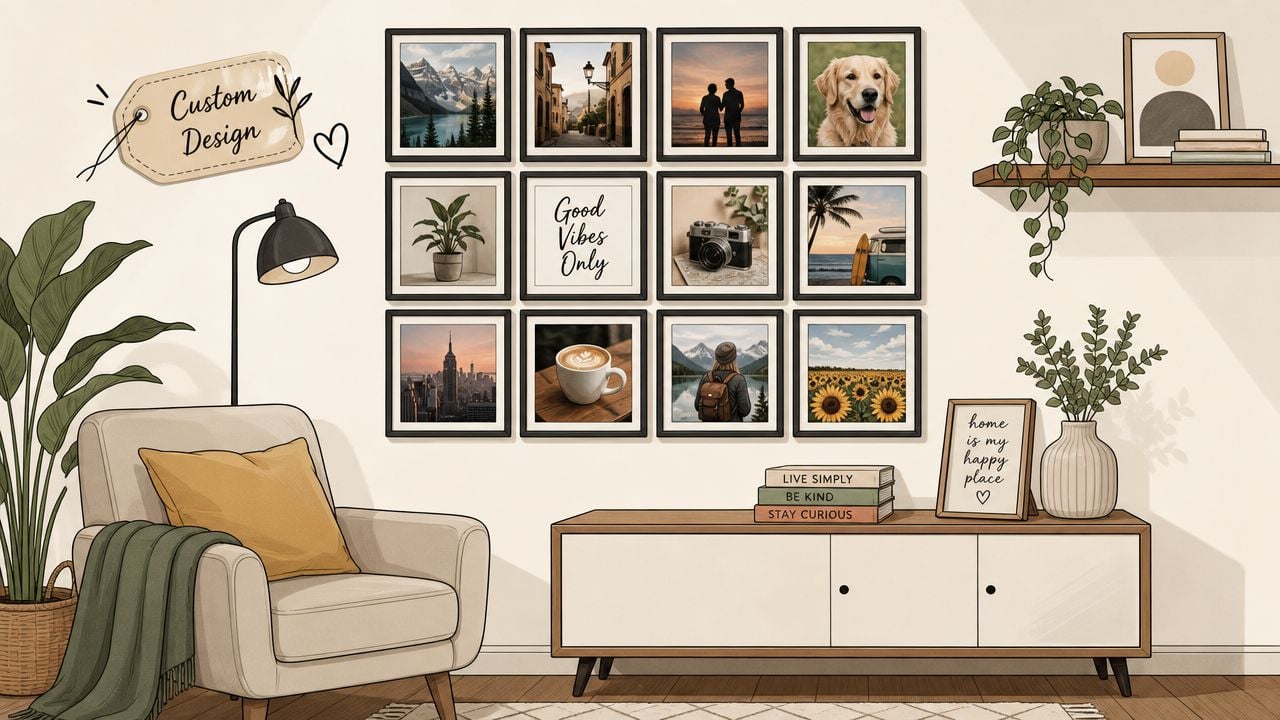
The best interiors don't come from settling for close enough. They come from choosing pieces, finishes, and layouts that reflect the household itself. That's as true for a 12 picture frame arrangement as it is for the dining table, bedroom storage, or sideboard anchoring the room.
Custom style often works best when the home is treated as one connected environment. A photo wall can echo the lines of solid wood furniture, soften the feel of performance fabrics, or reinforce the warmth of American-made craftsmanship elsewhere in the room. Bespoke choices tend to last longer visually because they aren't built around a passing trend.
For families furnishing a room around a new photo display, design it your way usually means looking at the whole picture:
- Made-to-order dining and case pieces help the room feel coordinated instead of pieced together.
- Amish furniture brings heirloom character that pairs naturally with framed family history.
- Interior design guidance helps balance scale, finish, and placement so the display belongs in the room.
A beautiful home is an investment, and thoughtful planning makes that investment easier to manage. Special financing available, subject to credit approval, can give households more buying power and help the full room come together without compromising on quality. Homeowners exploring broader custom possibilities can learn more through this guide to getting started with custom order.
A Flawless Installation Guide for Your Wall Art
A lovely frame choice can still disappoint if the hanging process goes sideways. Crooked spacing, weak hardware, or guessing at nail placement often causes more frustration than the design itself. A careful install fixes that.
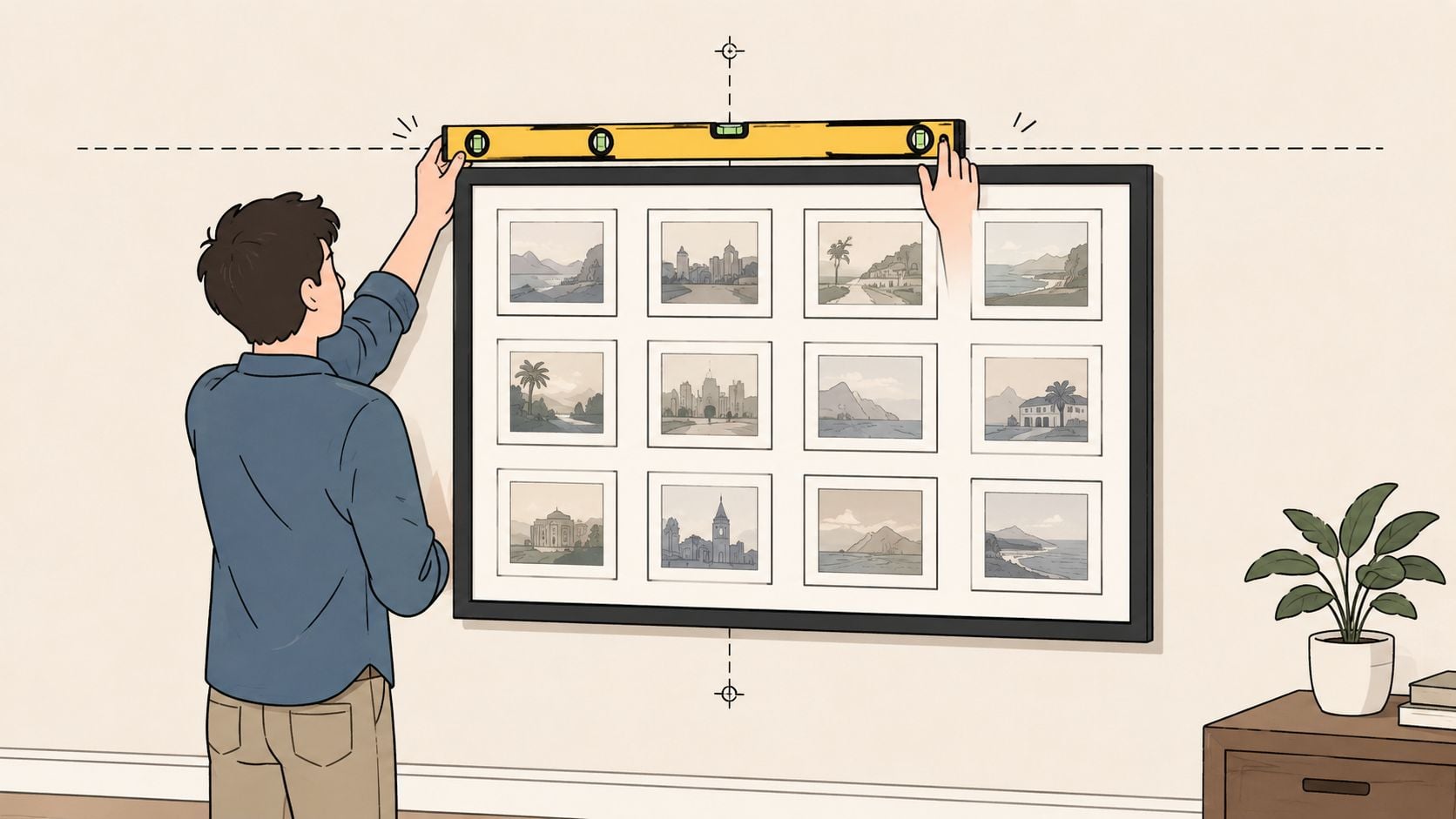
Gather the right tools first
Most homeowners only need a short list:
- Tape measure: For spacing, centering, and height checks.
- Pencil: For light wall marks that can be removed later.
- Painter's tape: For holding paper templates in place.
- Level: For straight lines across a collage frame or a gallery arrangement.
- Appropriate wall hooks or hanging hardware: Matched to the wall type and frame weight.
- Paper or kraft paper: For making templates of each frame.
Starting with the right tools prevents rushed decisions. It also lowers the risk of extra holes in the wall.
Hanging one collage frame
A single collage frame is simpler to place, but it may be heavier and less forgiving if it lands crooked.
- Measure the frame's hanging points on the back.
- Mark the desired wall height.
- Transfer those hanging-point measurements to the wall.
- Install hardware that fits the frame's weight and the wall surface.
- Hang the frame, then check with a level before calling it done.
If the collage frame sits over furniture, leave enough visual breathing room so it doesn't look crammed against the top edge of the piece below. The display should feel connected, not crowded.
Helpful check: Before making holes, hold the frame in place with another person and view it from across the room. A position that looks right up close can still feel off from the doorway.
Hanging 12 individual frames with the paper template method
This method saves walls and nerves. It's one of the most reliable ways to get a polished result.
Step 1
Trace each frame onto paper and label the top of every template.
Step 2
Mark the hanging hardware position on each paper template, not just the outer shape.
Step 3
Tape the templates to the wall and adjust until the spacing looks balanced.
Step 4
Use a level to check the top line, side line, or overall shape, depending on whether the arrangement is formal or organic.
Step 5
Hammer hooks or nails through the template marks, remove the paper, and hang the frames.
This process lets the homeowner make visual decisions before committing to holes. It's especially useful with 12 frames because a small spacing mistake repeated across the group becomes very noticeable.
Common installation mistakes
- Skipping the template stage: This usually leads to unnecessary patching.
- Mixing hanging hardware: Different hook types can shift the top lines.
- Ignoring the frame backs: Hanging points aren't always centered.
- Checking only one frame at a time: The full arrangement has to work as a group.
Homeowners who want a more detailed walkthrough for measuring and alignment can use this step-by-step resource on hanging a picture with precision. The care that goes into a clean install mirrors the same white-glove mindset people appreciate in well-handled home projects.
Styling Your Photo Display in Any Room
A 12 picture frame arrangement can work in nearly any part of the house when the photos match the purpose of the room. The trick is letting the display support the mood already happening there.
Living room warmth
Over a durable Flexsteel sofa, a 12-photo arrangement can become the room's most personal focal point. Family portraits, travel snapshots, and candid holiday moments soften the structure of the seating area and make the room feel lived in from the first glance.
Staircase storytelling
A staircase is ideal for a chronological display. As the collection rises, it can move through years of birthdays, school photos, anniversaries, and new homes. That kind of arrangement feels natural because people experience it one step at a time.
Bedroom calm
Above a classic Bassett dresser, quieter photography often works best. Black-and-white portraits, wedding images, or a small collection of generational family photos create a restful look that suits the room's purpose.
Dining and gathering spaces
Near a Canadel dining set or beside Amish Furniture in solid wood, framed family photos reinforce the feeling that the room is built for connection. The furniture supports the gathering. The wall art gives the gathering history.
In homes across St. John, Schererville, Munster, and the rest of NWI, the strongest displays aren't the trendiest ones. They're the ones that belong to the family living there.
Let Our Family Help You Create a Home You Love
A meaningful photo wall gives everyday memories a permanent place to live. Whether the project calls for one square frame, a collage piece, or a full gallery of 12 individual frames, the goal is the same. The home should feel personal, comfortable, and lasting.
For homeowners in Northwest Indiana, thoughtful details make the biggest difference. The right scale, the right spacing, and the right surrounding furnishings help those memories feel at home for years to come.
Visit Groen's Fine Furniture in Dyer or Crown Point today to explore custom options for every room and ask about special financing plans. From multigenerational ownership and 5-star service to white-glove delivery, custom furniture, Amish solid wood craftsmanship, and trusted names like Flexsteel, Canadel, Bassett, Serta, and Beautyrest, the showrooms are built to help Northwest Indiana families create a home they love.