Blog
Copper Table Lamps: Styles & Local Buying Guide


A homeowner in Dyer or Crown Point often reaches the same point with lighting. The sofa is in place, the rug works, the walls feel finished, but the room still falls flat at night. Overhead lighting handles the basics, yet it rarely brings the calm, welcoming mood most families want in a living room or bedroom.
That's where Copper Table Lamps earn their place. Copper adds visual warmth even before the bulb is turned on, and the right lamp can make a room feel softer, richer, and more settled. For households focused on designing an inviting space, this material offers both glow and character. Readers looking for more room-by-room lighting ideas may also find it helpful to browse living room lighting inspiration.
Table of Contents
- An Introduction to Warmth and Character
- The Timeless Appeal of Copper Lamps
- Understanding Copper Finishes and Patinas
- Choosing the Right Size and Style for Your Room
- Perfecting the Glow with Bulbs and Shades
- Styling Copper Lamps in Your Northwest Indiana Home
- Finding Your Perfect Lamp at Groens Fine Furniture
An Introduction to Warmth and Character
For many homes across Northwest Indiana, comfort shows up in layers. Soft upholstery, wood tones, and gentle lighting all work together. A copper lamp contributes to that mix in a way painted metal often doesn't. It brings a mellow, grounded presence that feels at home in both older houses and newer family spaces.
Copper also solves a common decorating problem. Some accents look stylish in daylight but feel cold after sunset. Copper tends to do the opposite. Its surface catches lamplight beautifully, so the fixture itself becomes part of the atmosphere.
A good table lamp doesn't just light a corner. It helps the whole room feel finished.
That's why copper table lamps appeal to so many homeowners. They can read as rustic, refined, handcrafted, or subtly classic depending on the shape, finish, and shade. They're decorative, but they also feel practical and livable, which is exactly what most families want from an everyday piece.
The Timeless Appeal of Copper Lamps

Copper lamps carry a sense of history because they really do come from a long design tradition. Their appeal isn't only about color. It's also about craft. During the Arts and Crafts movement, makers favored natural metals such as copper, brass, and pewter to highlight simplicity and handwork over mass-produced ornament. That connection helps explain why so many copper table lamps still feel honest and substantial today.
Why copper feels authentic
When shoppers say a copper lamp has “character,” they're usually responding to this heritage. The material doesn't look overly polished or factory-perfect unless that's the intended finish. It suggests touch, texture, and age in the best way.
The shift to electric lighting also matters here. The arrival of the commercial light bulb in Britain's public market in 1883 helped move homes from flame-based table lighting toward electric lamps, placing copper right at the meeting point of older metalworking traditions and newer lighting technology, as noted in this history of lighting and the Arts and Crafts period. That's one reason many pieces are described as period-inspired rather than purely modern.
Why that history still matters in a home today
A lamp with roots in handcrafted design tends to pair well with rooms that value texture and permanence. It works beside wood furniture, woven rugs, leather seating, and classic upholstery. It also softens spaces that feel too sharp or overly uniform.
Readers who enjoy mixing metals thoughtfully with other furnishings may appreciate this guide to decorating with metal accents.
A few style cues often trace back to that older design language:
- Mica or stained-glass shades bring out the heritage look many collectors and decorators love.
- Hammered or hand-finished surfaces reinforce the handcrafted feel.
- Simple silhouettes often feel more timeless than heavily embellished shapes.
Design note: Copper works best when it looks intentional, not flashy. A well-shaped lamp often says more than an overly ornate one.
That's the lasting charm of copper. It carries history into a room without making the room feel like a museum.
Understanding Copper Finishes and Patinas
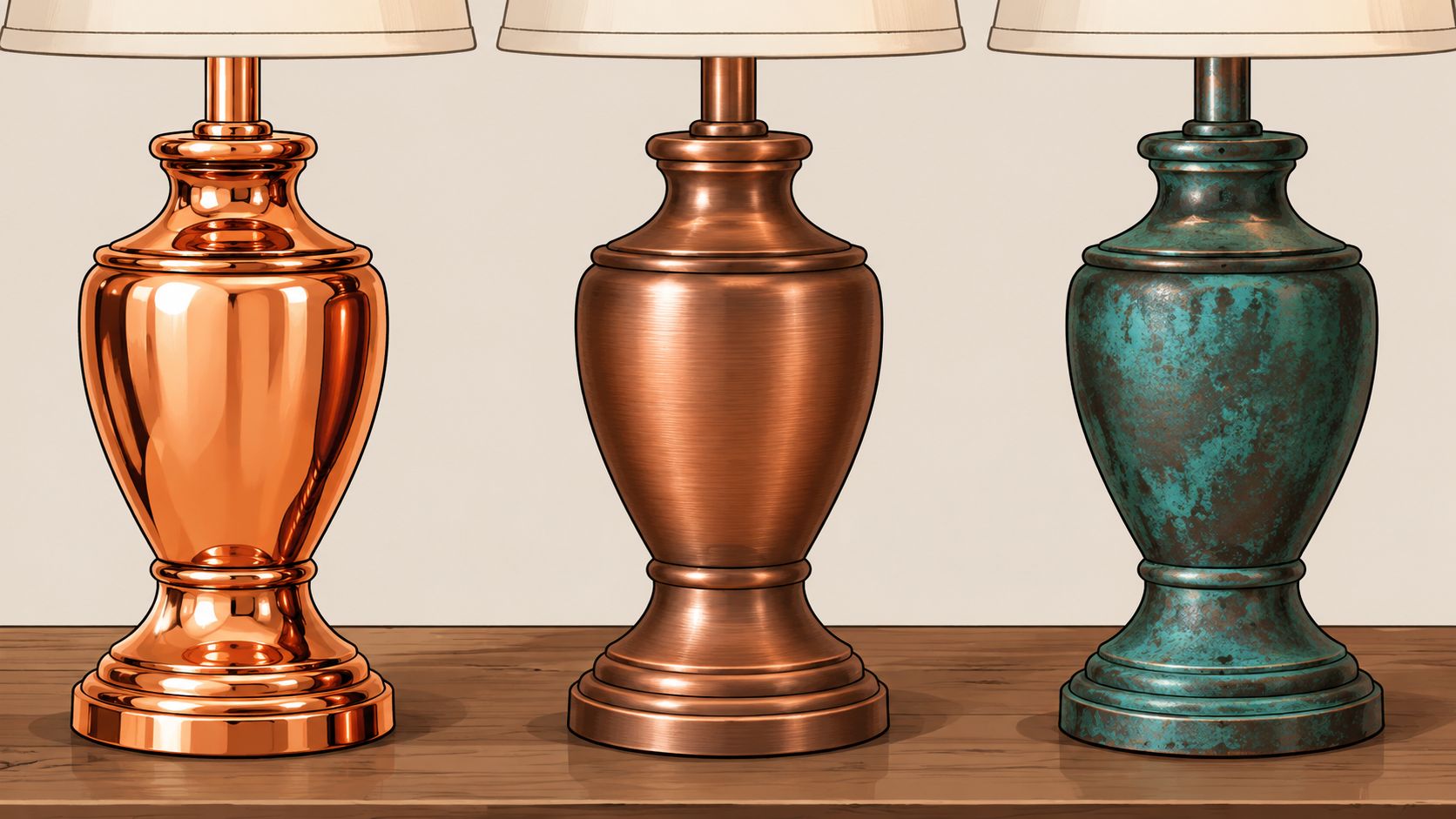
One of the biggest points of confusion for shoppers is simple. Copper doesn't describe one single look. Two lamps can both be sold as copper and feel completely different in a room. The finish changes everything.
Common looks shoppers will see
A polished finish reflects more light and feels dressier. It can look elegant on a formal end table or add contrast in a darker room.
An antiqued finish feels softer and more relaxed. It usually fits traditional, farmhouse, rustic, and heritage-inspired spaces more naturally because it doesn't call attention to every fingerprint or surface change.
Hammered copper adds texture. That texture breaks up reflections and makes the lamp feel more artisanal. In a home with wood grain, linen, or stone, hammered finishes often feel especially comfortable.
Real copper versus copper-tone
This is the practical question many product pages don't answer clearly enough. Some lamps are made with real copper, while others use a copper-tone finish over another base metal. That distinction matters because real copper can tarnish, develop patina, and show fingerprints in ways a coated copper-look lamp may not. Care, cleaning methods, and long-term durability can differ significantly, which is a key concern highlighted in this product discussion of antique copper finish considerations.
A quick comparison helps:
| Type | What it tends to look like over time | What shoppers should expect |
|---|---|---|
| Real copper | May tarnish or develop patina | A living finish with more natural change |
| Copper-tone finish | Depends on coating and base material | More controlled appearance, but finish behavior varies |
Some buyers love patina because it adds age and personality. Others want the lamp to stay closer to its day-one look. Neither choice is wrong. The better choice is the one that matches the household's expectations.
What patina actually means
Patina is the visible change that happens as copper ages. For some homes, that's a major part of the appeal. A lamp that deepens, softens, or changes tone can make a room feel collected rather than freshly staged.
For other households, especially busy ones with children or frequent cleaning, a steadier finish may be easier to live with. That's why it helps to ask direct questions before buying:
- Is the lamp solid copper or copper-toned?
- Is the finish meant to age naturally or resist change?
- What cleaning method is recommended for this specific surface?
A lamp may look perfect in a photo and still disappoint later if the finish behavior wasn't understood upfront. Finish isn't a minor detail. It's part of how the lamp will live in the home every day.
Choosing the Right Size and Style for Your Room
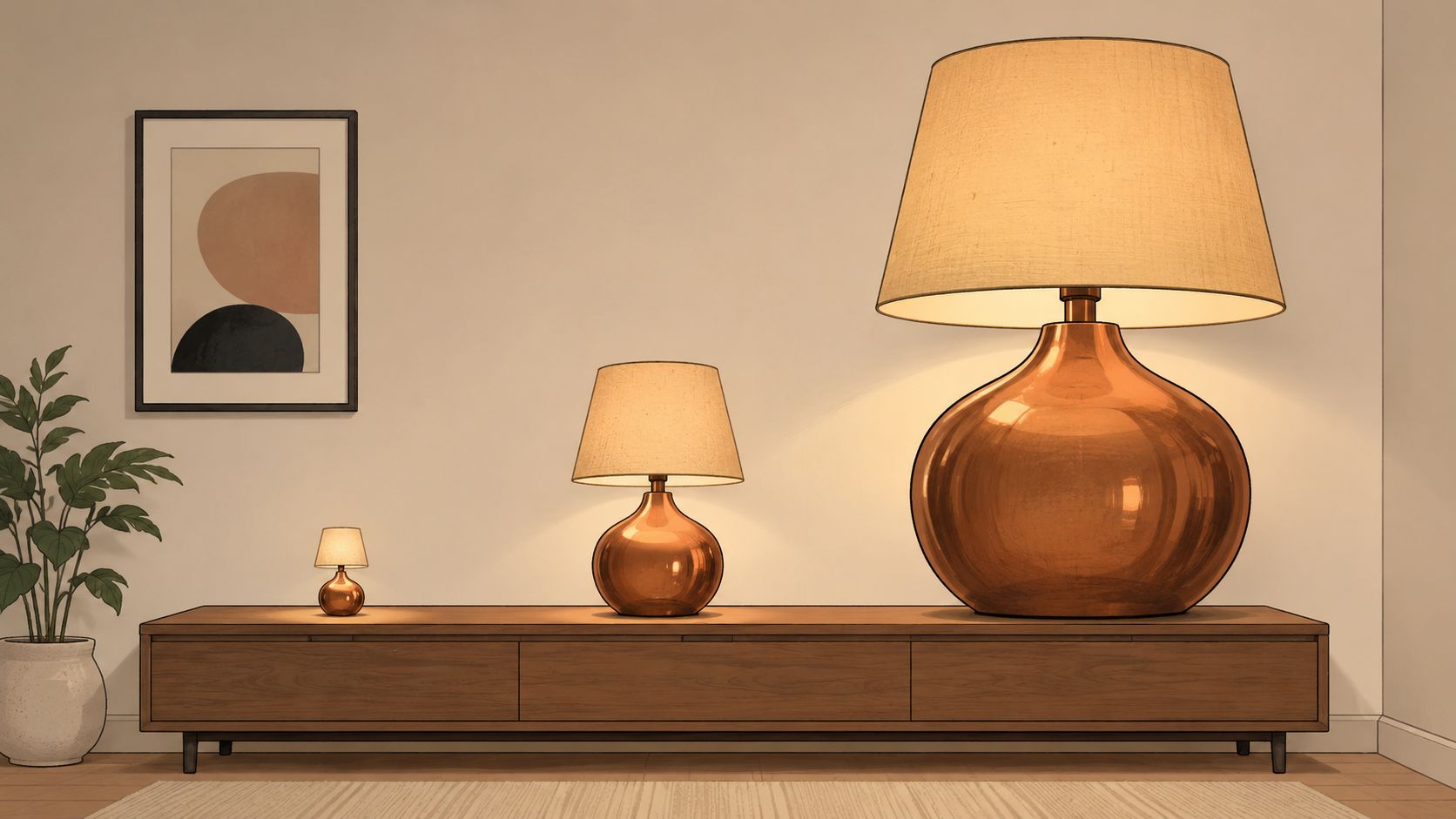
A copper lamp can be beautiful and still be wrong for the room if the scale is off. This issue frequently causes online purchases to go sideways. The finish may be perfect, but the lamp ends up looking too small beside a substantial sofa or too wide for a nightstand.
Historical examples help ground expectations. Original Van Erp copper-base lamps are often cited at about 20 inches tall by 20 inches in diameter, while smaller boudoir versions measure about 15 inches by 15 inches. Those dimensions show that classic copper lamps were often meant to read as accent pieces with real presence, not tiny task lights. The same historical source also notes that the Mica Lamp Company was founded in 1991, reflecting continued demand for handcrafted copper-and-mica lighting, as described in this overview of copper lamp history and scale.
A room-by-room way to think about size
In a living room, a copper lamp often looks best when it has enough visual weight to hold its own beside upholstered seating. If the side table is broad and the sofa has deep cushions, a delicate lamp may disappear.
In a bedroom, the lamp needs to respect the nightstand. A wide shade on a narrow bedside table can feel cramped fast, even if the lamp itself is attractive.
On a desk or library table, function matters more. The lamp still needs character, but it can't dominate the work surface.
Quick comparison by placement
Living room end table
A fuller base or wider shade often feels balanced. Copper works well here as a warm accent against wood, upholstery, and framed art.Bedroom nightstand
Keep the base proportionate to the table. If the nightstand holds books, glasses, or a charger, the lamp shouldn't consume all the usable space.Desk or reading corner
Choose a shape that directs light where it's needed. Strong style is welcome, but clutter isn't.
Readers trying to judge proportion before shopping may want a practical refresher on how to measure furniture and room fit.
Practical rule: If a lamp looks substantial in a product image, check whether the table beneath it is substantial too. Context changes everything.
Matching style to the room
Copper is flexible, but not every copper lamp suits every interior.
| Room style | Copper lamp direction that often works |
|---|---|
| Classic or traditional | Antiqued copper, mica shade, rounded form |
| Modern farmhouse | Hammered texture, simple linen shade, warm muted finish |
| Industrial | Darker copper tone, exposed structure, stronger lines |
| Rustic or lodge-inspired | Heavier base, handcrafted texture, earthy shade material |
A good match feels easy. The lamp shouldn't look borrowed from another room or another decade unless that contrast is clearly intentional.
Perfecting the Glow with Bulbs and Shades
The base gets attention, but the light is what people live with. A copper lamp can look excellent during the day and still disappoint at night if the bulb is too harsh or the shade sends light in the wrong direction.
Start with the mood
For a bedroom or living room, most households want a soft, warm effect rather than bright overhead-style glare. A bulb that casts a gentler tone usually complements copper better because the material already leans warm visually. If the goal is reading light, a slightly brighter bulb can still work, but the shade has to help control it.
A few common shade behaviors are worth knowing:
- Fabric shades usually soften and spread light.
- Mica shades often create a warm, heritage-style glow that suits copper especially well.
- Metal shades direct light more tightly and can feel more task-oriented.
Readers comparing shade shapes and materials can explore more options in this guide to different types of lamp shades.
Don't overlook wiring safety
With any metal lamp, construction matters. With copper, it matters even more because the body is conductive. In standard US three-wire cord assemblies used in table lamps, the smooth wire is the hot wire and should connect to the brass-colored screw, while the ribbed wire is the neutral wire and should connect to the silver-colored screw. If those connections are reversed, the metal lampholder and socket can become energized and create a severe shock hazard. The cardboard sleeve inside the socket is also a critical insulator and should not be discarded, as explained in this copper lamp wiring guide.
Miswiring in a copper lamp isn't a minor flaw. It's a safety problem.
That matters most with vintage pieces, handmade finds, or lamps that have been repaired. A beautiful finish doesn't guarantee safe construction. Households shopping secondhand or considering older lamps should pay attention to the socket, cord condition, and overall assembly, not just the style.
A simple decision filter
Before bringing a lamp home, it helps to ask three practical questions:
- Does the bulb type match the room's purpose?
- Will the shade soften or direct the light the right way?
- Does the lamp appear well-made and safely wired?
If all three answers are yes, the lamp usually performs as well as it looks.
Styling Copper Lamps in Your Northwest Indiana Home
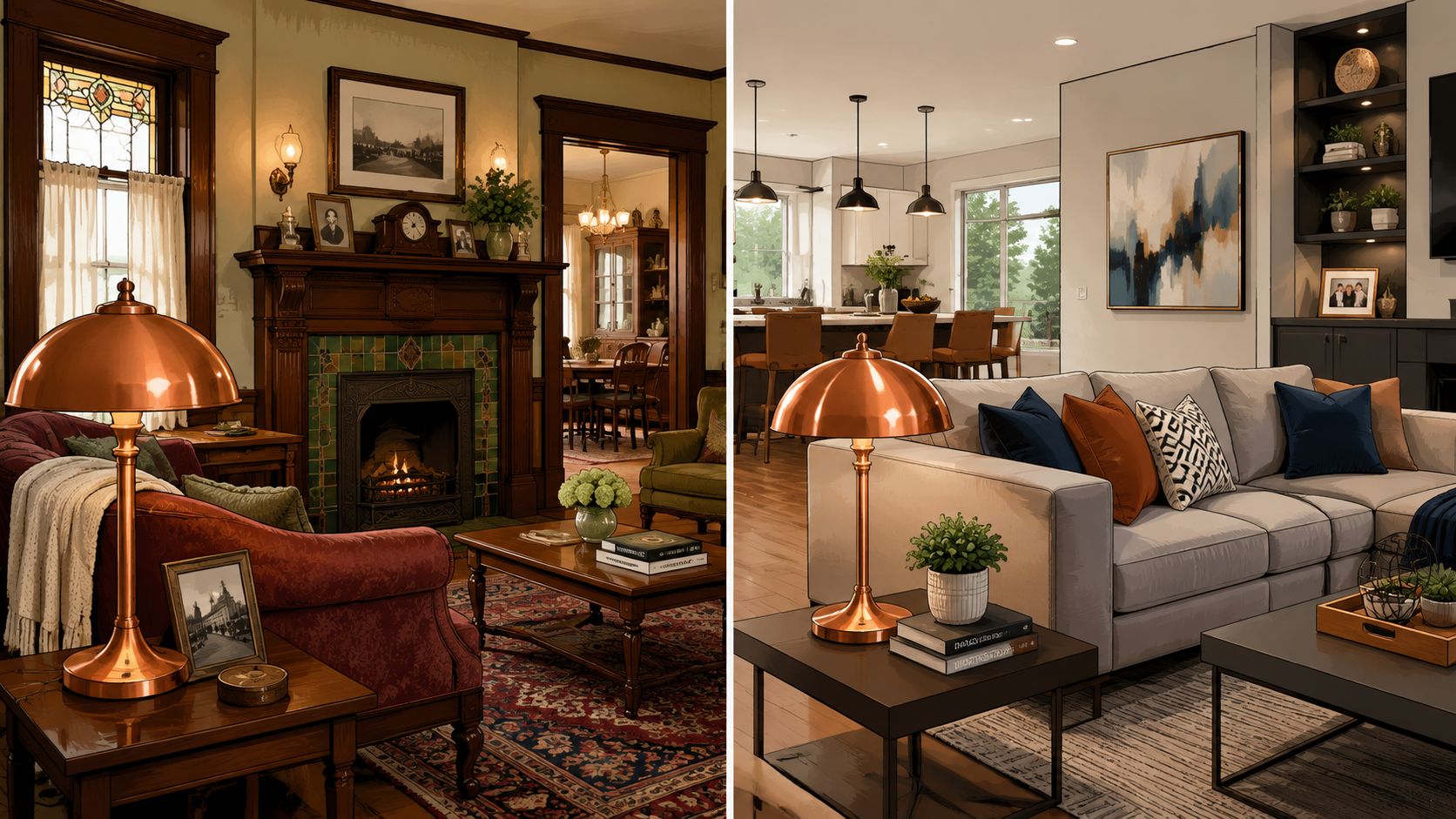
Northwest Indiana homes have range. A historic Crown Point interior, a newer St. John build, and a family home in Munster can all use copper successfully, but not in exactly the same way. The trick is to let the lamp echo the room's existing materials.
In a traditional living room
A copper lamp looks especially settled beside solid wood. On an Amish-crafted end table, an antiqued or mica-shaded lamp can reinforce the room's sense of permanence. Add upholstered seating with defined lines and warm textiles, and the lamp starts to feel like part of the architecture rather than an accessory added late.
This works well in homes that already feature medium-to-dark wood tones, framed artwork, and layered rugs. Copper gives warmth without introducing a loud new color.
In a cleaner, newer bedroom
Modern bedrooms in Schererville or St. John often have smoother silhouettes and lighter finishes. In those rooms, copper still works. The best choice is usually a simpler form with less ornament. A slim copper base with a clean shade can add warmth to painted furniture, soft bedding, and neutral walls without making the room feel heavy.
Copper doesn't have to read old-fashioned. Shape and finish decide that.
In family spaces with mixed materials
Many living rooms in NWI combine pieces collected over time. A performance-upholstered sofa, a Bassett bedroom piece repurposed elsewhere, a Flexsteel recliner, and a handcrafted wood table might all live in the same home. Copper helps bridge those differences because it relates easily to wood, leather, woven texture, and even darker painted finishes.
A few easy styling pairings often work well:
- Copper with solid wood creates a grounded, heritage feel.
- Copper with soft neutral upholstery adds warmth without clutter.
- Copper with black accents gives definition and contrast.
- Copper with linen or mica shades keeps the mood relaxed.
The goal isn't to match every metal in the room. It's to make the lamp feel connected to something already present, whether that's wood tone, fabric texture, or overall mood.
Finding Your Perfect Lamp at Groens Fine Furniture
A good copper lamp should feel chosen, not settled for. That's why local shopping still matters. Photos can suggest color, but they rarely tell the full story of finish depth, scale, or how a shade glows in person. A lamp that looks impressive online may feel thin, too orange, or oddly proportioned once it reaches the room.
For shoppers across Dyer, Crown Point, St. John, Schererville, and the wider NWI area, personal guidance makes the process easier. A family-owned store with multigenerational ownership can help narrow choices based on room size, furniture style, and finish preference instead of leaving shoppers to guess from a screen.
Design it your way
Customization is one of the best answers for anyone who hasn't found the right piece yet. Some homes need a lamp that leans more rustic. Others need something cleaner and more refined. A made-to-order approach can help homeowners coordinate lighting with Canadel dining, Amish solid wood furniture, or established room palettes so the final result feels personal.
That same thinking matters across the home. A customer choosing custom furniture, American-made upholstery, or heirloom-quality wood pieces usually doesn't want an accent lamp that feels generic.
Comfortable value matters too
Lighting may be an accent, but it still fits into a broader home budget. Special financing, subject to credit approval, can give families more buying power when they're furnishing multiple rooms or completing a larger update. That helps homeowners focus on long-term quality instead of rushing into the quickest option.
For those who prefer to shop local and compare complete-room possibilities, this look at furniture stores in Northwest Indiana is a useful starting point.
A thoughtful buying process often comes down to a few plain questions:
- Does the lamp suit the room's scale?
- Is the finish one the household will enjoy living with?
- Does it feel connected to the furniture already in the home?
- Can it be ordered or coordinated in a more personal way if needed?
The right lamp answers yes to all four. It should bring beauty, but it should also make everyday living easier and more comfortable.
Visit Groen's Fine Furniture in Dyer or Crown Point today to explore custom options and ask about special financing plans. Since 1983, this family-owned Northwest Indiana business has helped local homeowners create lasting, comfortable spaces with honest guidance, quality craftsmanship, white-glove service, and a personal touch that's hard to replace. Let their family help create a home that feels warm, finished, and fully your own.