1 Inch Wood Blinds: Your Complete NWI Buyer’s Guide


Morning light hits the kitchen, the front window feels too bare, and the old blinds never quite sat right in the frame. That's a familiar scene in homes across Dyer, Crown Point, St. John, Schererville, and Munster. Some windows need privacy. Others need softer light for a family room, office, or bedroom. Most need both, without making the room feel heavy.
That's where 1 Inch Wood Blinds tend to stand out. They bring warmth, texture, and a classic refined look that works in both older Northwest Indiana homes and newer builds. They also solve a very practical problem that many homeowners don't discover until too late. Not every window has the depth to handle a wider blind.
Families across NWI have long leaned toward natural finishes that feel personal rather than mass produced. That preference isn't fading. The global wood blinds market was valued at USD 1,734 million in 2024 and is projected to reach USD 2,119 million by 2034, reflecting sustained demand for natural interior finishes in home design, according to wood blinds market data.
For homeowners who want a room to feel more finished without sacrificing function, wood blinds offer a steady middle ground between decoration and daily usefulness. They're one of those details that can lend refinement to a whole space.
Around Northwest Indiana, thoughtful home choices still matter. That's especially true in communities where families care about lasting quality, multigenerational ownership, and personal guidance instead of one-size-fits-all advice. Helpful local expertise still makes a difference, whether someone is furnishing a whole home or refining one room. That local perspective is part of what has made Northwest Indiana furniture shopping feel more personal for so many households.
A Timeless Touch for Your Northwest Indiana Home
In many Northwest Indiana homes, window treatments have to do more than cover glass. They need to soften bright afternoon light, protect privacy after dark, and add some warmth during long winter months. A good blind should also look right with the rest of the room, not like an afterthought.
That's one reason 1 inch wood blinds remain such a dependable choice. They have a familiar, classic appearance that doesn't fight with the rest of the home. In a traditional dining room, they feel refined. In a casual family room, they still look comfortable and easy. In a bungalow with original trim, they can look especially at home.
Why natural wood still appeals
Natural wood has visual depth that painted plastic and flat synthetic finishes often can't match. Grain variation catches light differently through the day, so the window feels layered rather than blank. Even when the blind color is subtle, the texture adds life.
For many homeowners, that matters just as much as privacy or glare control. A room with wood accents often feels more settled and more finished.
A window treatment shouldn't look borrowed from another house. It should feel like it belongs with the trim, flooring, and furniture already in the room.
A fit for old homes and newer builds
In older homes around Crown Point or Munster, windows may have shallower frames, detailed trim, or proportions that look best with a slimmer blind. In newer homes in St. John or Schererville, the appeal is often the clean profile. The result is similar in both cases. The room gains function without losing character.
That balance is what keeps 1 inch wood blinds relevant. They aren't flashy. They're dependable, warm, and adaptable, which is often exactly what a home needs.
The Classic Choice Why 1 Inch Slats Endure
Not every blind style stays popular for generations. 1 inch wood blinds have, and there's a reason. Their size solves a real design problem while also giving a room a lighter visual feel than wider slats.
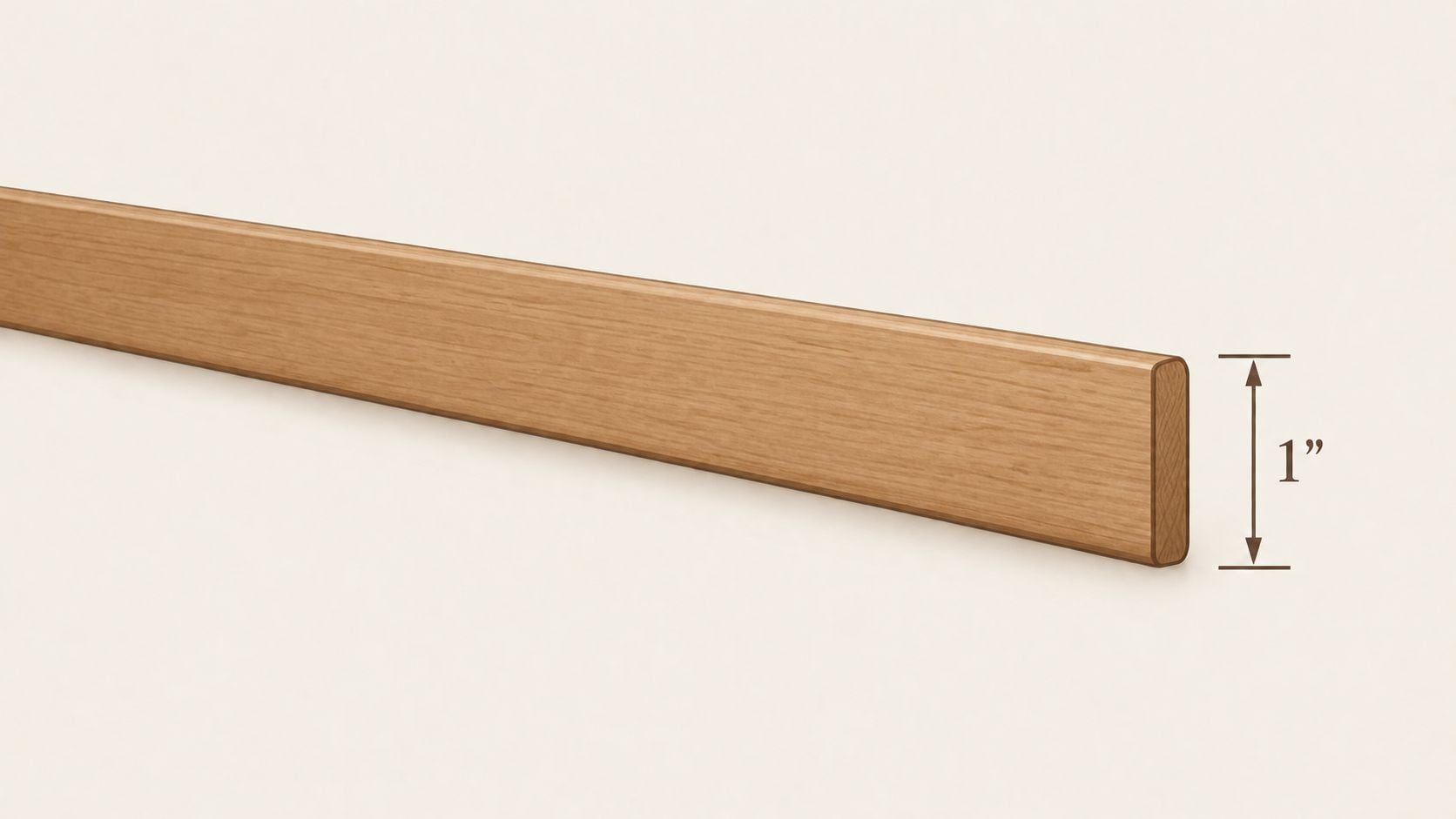
The key term is slim profile. The 1-inch wood blind's slim profile is engineered for windows with shallow depth, where the reduced slat width lets the full assembly fit within narrow recesses, often less than 2 inches deep, that can't accommodate bulkier 2-inch slats, as explained in this overview of 1-inch blinds.
Why the slimmer slat looks better in some rooms
Wider slats can be beautiful, but they create a stronger visual line. In a large room with oversized windows, that can work well. In a smaller dining room, den, office, or bedroom, they can sometimes feel a bit bulky.
A 1-inch slat usually reads as:
- More appropriate for modestly sized windows
- Less visually heavy in rooms with lots of trim or furniture
- Better suited to traditional and transitional interiors
- Cleaner from the street when viewed through the glass
This is one of those details people notice without always knowing why. The window just feels in proportion.
Why older window frames often need them
Many homes in Schererville and Munster have windows that weren't built with today's wider blind hardware in mind. Homeowners may measure the width, order a product that seems right, and only later discover the blind projects too far or won't sit neatly inside the frame.
That's where 1 inch wood blinds often become the practical answer. Their narrower slats help the whole treatment stay more compact.
Practical rule: If the goal is an inside mount and the window frame feels shallow, the slat size matters just as much as the window width.
Light control without the bulk
The smaller slat size also offers a more delicate light pattern. When tilted, the blind can filter daylight with a softer rhythm across floors, walls, and furniture. That's useful in rooms where the goal isn't total darkness but controlled brightness.
For homeowners who want something classic, functional, and scaled to the room, this enduring format keeps making sense.
Real Wood vs Faux Wood What is Best for Your Home
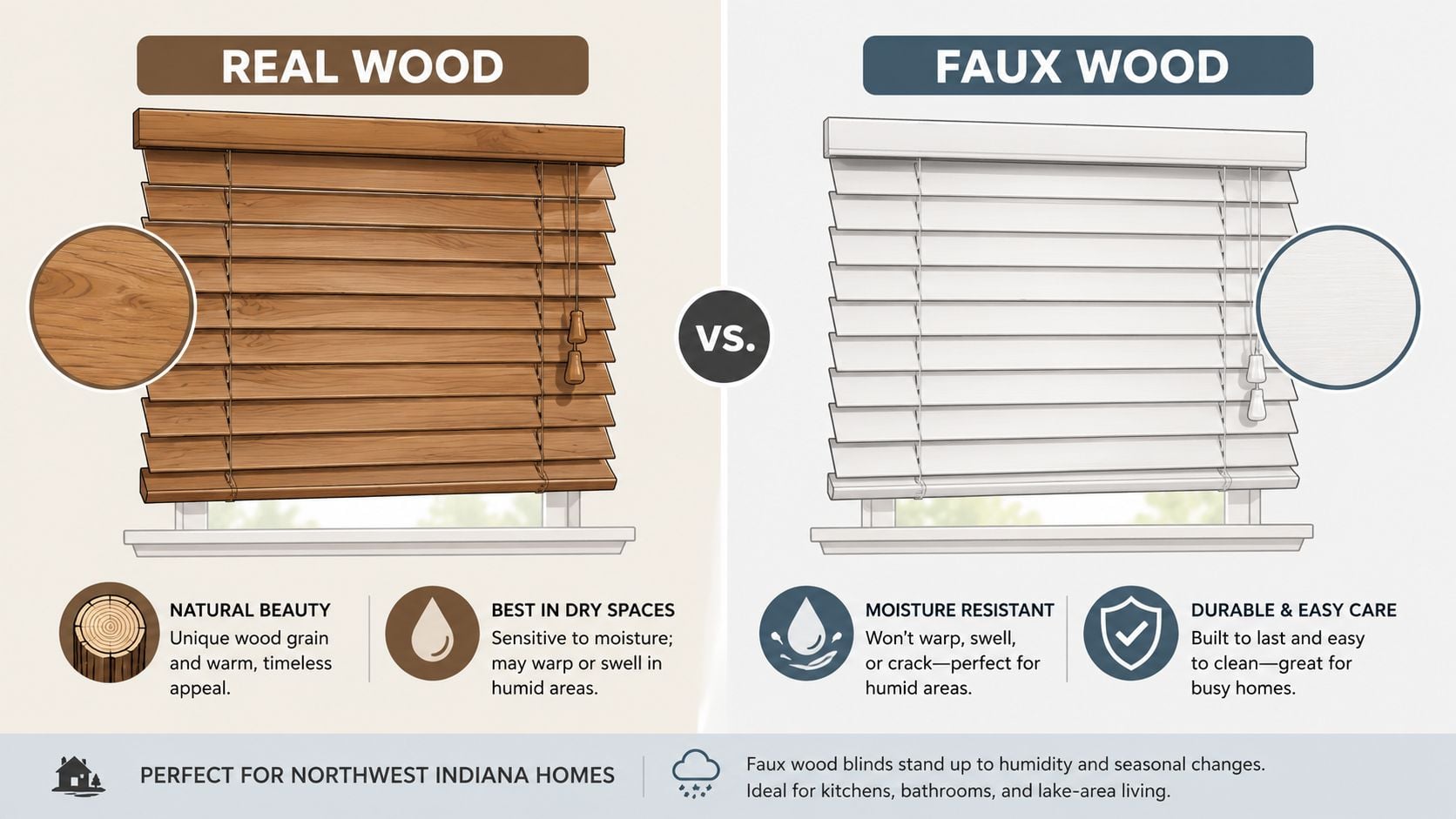
Choosing between real wood and faux wood is where many shoppers pause. Both can work well, but they serve homes a little differently. The best choice depends on the room, the moisture level, and the look the homeowner wants to live with every day.
Where real wood stands apart
Real wood offers warmth that feels closer to the appeal of solid wood furniture. The grain is unique. The finish tends to look richer in daylight. In homes with Amish furniture, Canadel dining pieces, or other custom wood furnishings, real wood blinds usually feel more coordinated and intentional.
They also challenge a common misconception. Contrary to the myth that smaller slats insulate poorly, the dense cellular structure of 1-inch real wood slats traps heat more efficiently than the hollow plastic or composite materials used in many faux wood options, offering stronger thermal performance, as described in this guide to faux wood blind buying considerations.
That point matters in Northwest Indiana, where winter drafts and cold glass can make a room feel less comfortable.
For anyone comparing wood products throughout the home, this look at engineered wood furniture can also help clarify how different wood categories perform and why material choice matters.
Where faux wood makes more sense
Faux wood has an honest advantage in high-humidity spaces. Bathrooms, laundry rooms, and some kitchens can be rough on natural materials over time. In those rooms, moisture resistance often matters more than grain pattern.
A simple way to consider it:
| Room or priority | Better fit |
|---|---|
| Formal living room | Real wood |
| Dining room with solid wood furniture | Real wood |
| Bedroom | Real wood |
| Bathroom | Faux wood |
| Laundry area | Faux wood |
| Moisture-prone kitchen window | Faux wood |
A neighborly way to decide
Some homeowners assume faux wood is always the practical choice because it sounds tougher. Others assume real wood is always better because it sounds more premium. Neither rule works in every room.
A better approach is to ask three questions:
- What does the room need most? If warmth and character lead the list, real wood often wins.
- How much moisture does the space see? If steam or humidity is routine, faux wood may be the safer pick.
- What other materials are already in the room? If the home already features solid wood furniture, trim, or flooring, real wood blinds usually feel more at home.
Real wood tends to give a room emotional warmth. Faux wood tends to win on moisture resistance. The right answer depends on where the blind will live.
Designing Your Space with 1 Inch Blinds
The easiest way to understand 1 inch wood blinds is to place them in a real room. Their value isn't only in measurements or materials. It's in how they help a space feel finished.
In a home office
A home office in St. John often needs controlled daylight. Too much brightness creates screen glare. Too little light makes the room feel closed off. A 1-inch blind gives fine control, which helps maintain a productive, polished feel.
The slim slats also suit office windows that aren't especially large. They keep the room from feeling overdone.
For broader ideas on layering style and function, these Atlanta designer's window treatment tips offer a helpful outside perspective on choosing treatments that fit a room's purpose as well as its look.
In a living room
In a living room with a Flexsteel sofa, wood blinds can add just enough texture to keep upholstery, rugs, and accent pieces from blending into one soft surface. The window becomes part of the design instead of a blank gap in the wall.
This is especially useful in neutral rooms. Painted walls, performance fabrics, and clean-lined tables can sometimes feel flat without one natural element to warm them up.
A few living room pairings work especially well:
- Warm wood blinds with soft upholstery create balance and depth
- Medium stained blinds with light walls frame the window without making it feel dark
- Painted trim plus wood blinds gives a room contrast without clutter
Readers looking for more ideas on how daylight affects furnishings can find useful inspiration in putting a living room in the best light.
In a bedroom
Bedrooms ask for privacy, gentle morning light control, and a calm appearance. With Bassett furniture or other refined bedroom pieces, 1-inch wood blinds often feel appropriately scaled. They don't overpower the bed, dresser, or nightstands.
They also support rest by letting homeowners adjust the incoming light more precisely during early morning hours or evening wind-down time.
In a bedroom, the best window treatment doesn't call attention to itself all day. It helps the room feel settled at night and comfortable in the morning.
Achieving the Perfect Fit How to Measure
Saturday morning is when many measurement mistakes happen. A homeowner stands at the window with a tape measure, writes down one width, and assumes that is enough. With 1 inch wood blinds, that shortcut often leads to a blind that rubs the frame, sits proud of the opening, or leaves more gap than expected.
Start with the mount type
Choose the mount before you measure.
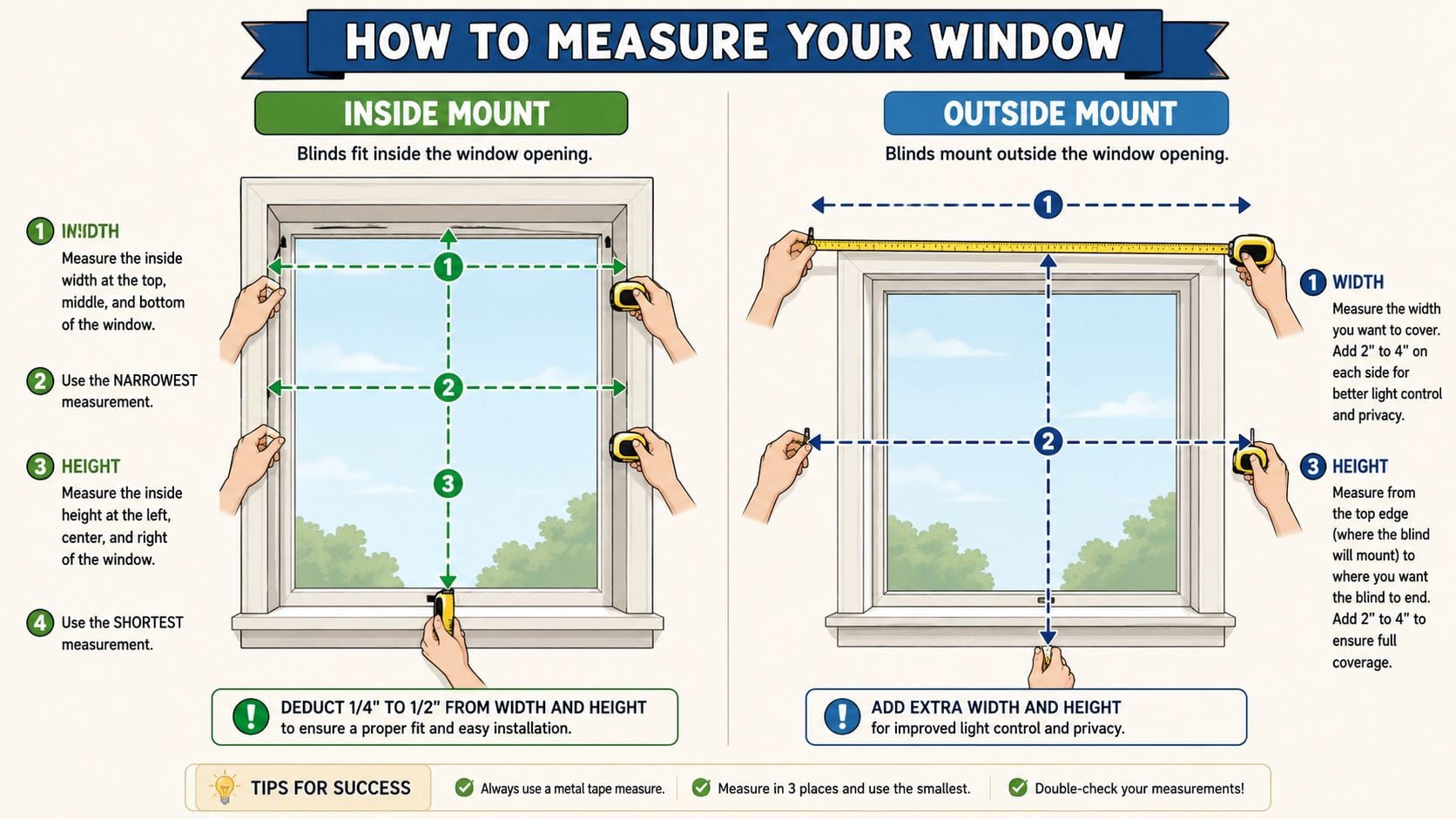
An inside mount places the blind within the window frame for a trim, built-in look. An outside mount places it on or above the trim and works well when the frame is shallow, uneven, or not attractive enough to feature. In many Northwest Indiana homes, especially older ones, that choice can change from room to room because window openings are not always consistent.
For readers who want a second example of how home style and window construction affect measuring decisions, this article on understanding window measurement for Utah homes offers helpful context.
The detail big-box guides often skip is recess depth
Width gets attention first. Depth decides whether an inside mount will work.
For 1 inch wood blinds, the window needs enough recess depth to hold the headrail and operating parts without pushing the blind outward. A shallow frame can still look wide enough from the front, which is why homeowners are often surprised on installation day. The blind was measured correctly across, but the hardware has nowhere to sit.
A good way to picture it is a drawer in a cabinet. The front opening may look large enough, but if the cabinet box is too shallow, the drawer still cannot slide in properly.
In older NWI homes with layered trim, replacement windows, or plaster returns, depth can vary even within the same room. Measure it directly instead of estimating by eye.
How to measure for an inside mount
Use a steel tape measure and record each number carefully to the nearest 1/8 inch.
Measure the width at the top, middle, and bottom.
Window frames can bow or drift out of square over time.Measure the height on the left, center, and right.
This helps catch a sill or header that is slightly off.Measure the recess depth separately.
Check from the front edge of the opening to the glass or any obstruction, including cranks, locks, or protruding trim.Write down each measurement clearly.
Small fraction errors create very visible fit problems with custom blinds.
One practical note from our showroom experience. Older homes in Northwest Indiana often have windows that look square from across the room but differ enough at the corners to affect blind operation. That is one reason custom measuring matters so much with real wood products.
How outside mount measurements differ
Outside mount measuring follows a different goal. You are planning coverage, not fitting the blind into a pocket.
Measure the area you want the blind to cover, not just the glass. Many homeowners add extra width on both sides to reduce light gaps and improve privacy. Extra height above the opening can also help the window look taller and allow more glass to show when the blind is raised.
Here is the simple distinction:
| Mount type | What you are measuring for | Main concern |
|---|---|---|
| Inside mount | Fit within the frame | Width, height, and recess depth |
| Outside mount | Cover the opening well | Privacy, light control, and visual balance |
A careful fit matters more in homes with character
Northwest Indiana homes rarely follow one pattern. A newer subdivision home may have consistent window openings, while a historic home in Crown Point or Valparaiso may have subtle differences from one room to the next. Measuring each opening on its own prevents expensive guesses.
The same principle applies throughout the home. A piece can be beautiful and still feel wrong if the scale is off. Homeowners planning a full room update may also find this guide on how to measure furniture for the right fit in your space helpful.
Customization and Your Investment Options
A standard blind can be close and still feel wrong in the room. The color may miss the undertone of your trim. The valance may look too plain for a traditional space, or too formal for a simple one. In many Northwest Indiana homes, the bigger issue is fit. A window opening can look square at a glance but still have just enough variation to affect how a blind sits and operates.
Custom ordering gives you more control over both appearance and function. You can choose a stain that works with nearby casegoods or flooring, a valance shape that suits the trim style, and operating features that make daily use easier. In a home with well-made dining furniture, bedroom pieces, or built-ins, that made-to-order approach helps the windows feel like part of the room instead of an afterthought.
Why custom is often the better value
Good customization is not about adding extras for their own sake. It is about matching the blind to the actual conditions of the window.
That matters most in older homes, remodels, and any room where the trim depth is tight. A 1-inch wood blind needs enough recess space to sit properly for an inside mount. If the pocket is too shallow, the blind may project farther into the room than expected or call for a different mounting plan. Big-box guides often rush past that point, but it is one of the details that separates an easy install from a frustrating one.
Custom work also helps when you want the blind to relate to other wood finishes in the room. Homeowners who already care for natural materials usually appreciate that consistency. The same mindset behind caring for quality wood furniture for long-term beauty applies here. Better materials and a better fit tend to stay satisfying longer.
Options that make a real difference
The best upgrades are the ones you notice every day because the room works better.
- Stain matching to coordinate with trim, flooring, or nearby furniture
- Valance selection to suit a classic, transitional, or simpler look
- Motorization for convenience on hard-to-reach windows or daily-use rooms
- Room-specific choices so a sunny kitchen, a formal dining room, and a bedroom do not all have to use the same solution
A practical way to think about cost
Custom blinds are an investment, but they can also prevent the common cycle of buying something almost right, living with the compromise, and replacing it later. That is especially true when the window opening has quirks that need attention before the order is placed.
Local guidance helps here. A designer or sales associate can spot the small details homeowners often miss, such as limited recess depth, projecting cranks, uneven trim, or a stain that looks warmer under the room's natural light than it did in the store. Those details shape whether a blind feels custom-fitted or merely acceptable.
For homeowners planning ahead, flexible payment options can make custom quality easier to budget for without dropping down to a lesser fit. And once your blinds are installed, a simple routine for cleaning real and faux wood blinds helps protect that investment.
Caring for Your Wood Blinds
Good wood blinds don't ask for complicated care. They ask for steady, gentle care. A little attention goes a long way toward keeping the finish attractive and the slats moving well.
The simple routine that works
Regular dusting is the main job. A soft cloth, microfiber duster, or vacuum with a soft brush attachment usually handles everyday buildup well. Closing the slats in one direction, dusting, then reversing them makes the work faster and more thorough.
For occasional spots, use a lightly damp cloth and dry the area promptly. Moisture should stay minimal.
What to avoid
Wood blinds and excess water don't mix well. So do harsh chemicals and heavy spray cleaners. Those can dull the finish, affect the wood, or create streaking around hardware.
This practical guide to cleaning real and faux wood blinds is a useful reference for homeowners who want a simple maintenance routine without overdoing it.
A few lasting habits help most:
- Dust often so grime doesn't build up into sticky residue
- Handle spots gently instead of scrubbing hard
- Skip soaking methods and heavy liquid cleaners
- Open and close carefully to reduce strain on cords and mechanisms
Readers who value wood furniture usually already understand the broader principle. Natural materials reward thoughtful care. This resource on how to care for wood furniture reflects that same long-term mindset.
With the right routine, wood blinds can keep their warmth and usefulness for years. That's part of their appeal. They aren't just a finishing touch for today. They're a lasting part of the home.
For homeowners in Dyer, Crown Point, and across Northwest Indiana who want a custom fit, lasting quality, and personal guidance, Groen's Fine Furniture is ready to help. Visit Groen's Fine Furniture in Dyer or Crown Point today to explore custom options, ask about Special Financing available, subject to credit approval, and experience the kind of 5-star service that comes from a family-owned business with multigenerational ownership serving NWI since 1983. Let their family help create a home that feels comfortable, personal, and built to last.