Elevate Your Space with Tree Wall Decor Metal


You’re probably staring at a wall that feels unfinished.
The sofa is in place. The dining set works. The rug helps. But that one large wall in the living room or dining room still looks flat, and framed prints just don’t feel substantial enough. That’s usually the moment people start looking at tree wall decor metal. And I think they’re looking in the right direction.
A well-chosen metal tree piece does more than fill space. It gives a room structure, meaning, and a little permanence. It feels grounded. It also avoids the disposable look that a lot of trend-driven decor has right now. If you want something that feels personal and lasting, this category makes a lot of sense.
Bringing Nature Indoors with Metal Tree Wall Decor
For many homeowners in Dyer, Crown Point, and across Northwest Indiana, the appeal is simple. A tree motif feels calm, familiar, and rooted in family life.
That’s especially true with Tree of Life designs. The symbol isn’t new or trendy. It traces back to ancient Mesopotamian art, which is part of why it still feels timeless today. Modern American-made steel versions also carry serious staying power, with 40-year durability stats noted by Michigan Metal Artwork.
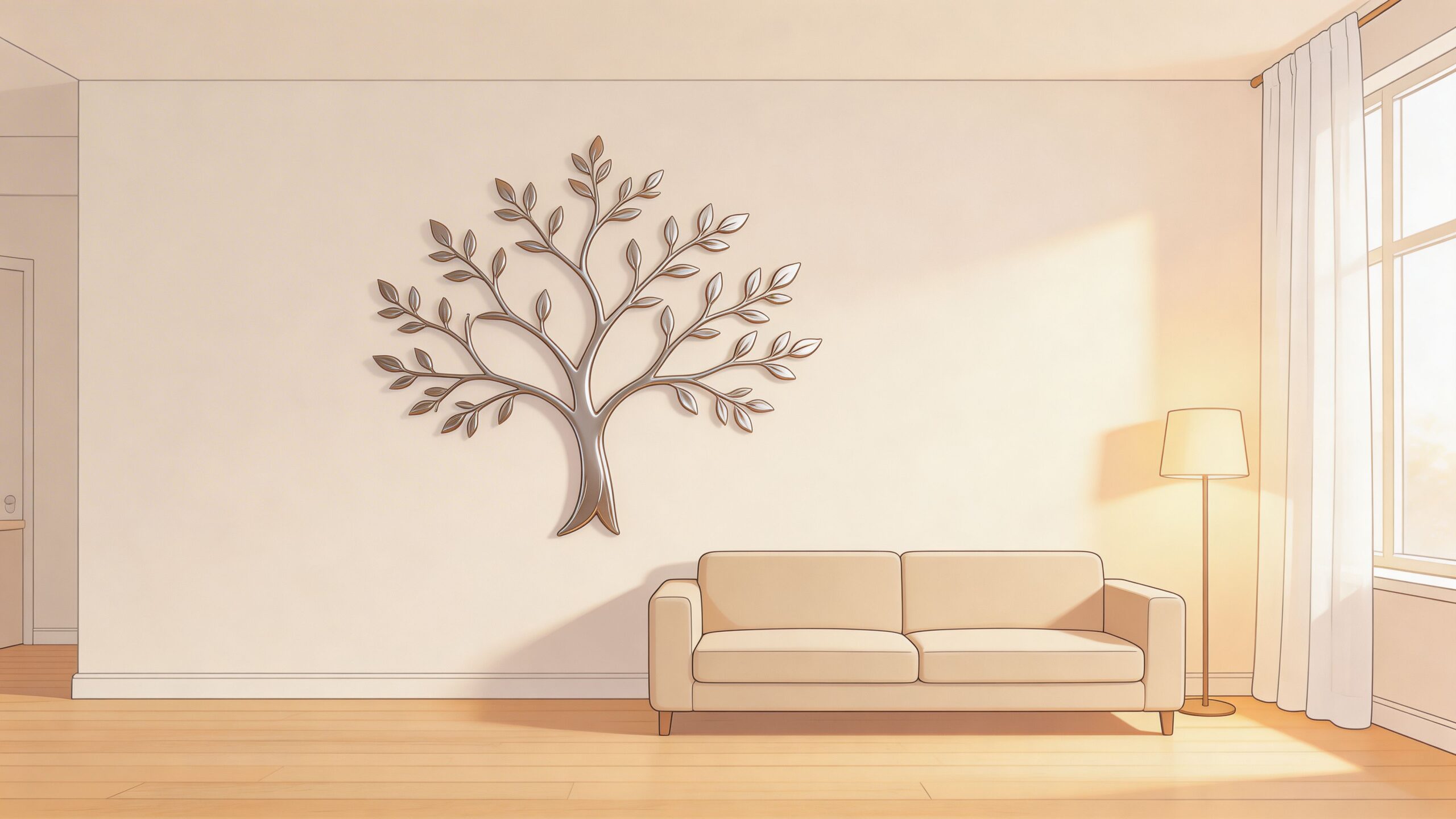
I like metal tree art best in homes that want warmth without clutter. It has presence, but it doesn’t crowd a room. If you choose the scale well, it can anchor a seating area or dining wall without needing a dozen smaller accessories around it.
Why this style lasts
Tree forms work because they combine symbolism with clean structure. Branches create movement. The trunk gives the eye a center point. Open cutouts keep the piece from feeling heavy.
A few styles tend to work especially well:
- Tree of Life designs fit family rooms, entryways, and dining spaces where you want meaning, not just decoration.
- Forest silhouettes feel a little more architectural and often suit transitional or rustic interiors.
- Single branch designs work best in cleaner, more modern rooms where restraint matters.
Practical rule: If your room already has a lot of pattern in the rug, pillows, or drapery, choose simpler metal art. Let the wall piece bring shape, not noise.
If you like the contrast that metal brings to softer furnishings, this short read on what you should know about metal accents is useful before you pick a finish or style.
How to Select the Right Size, Style, and Finish
Most mistakes with tree wall decor metal come down to one issue. People buy too small.
A strong wall piece should look intentional from across the room. If it disappears once the lamps are on and the furniture is in place, it’s not doing its job.
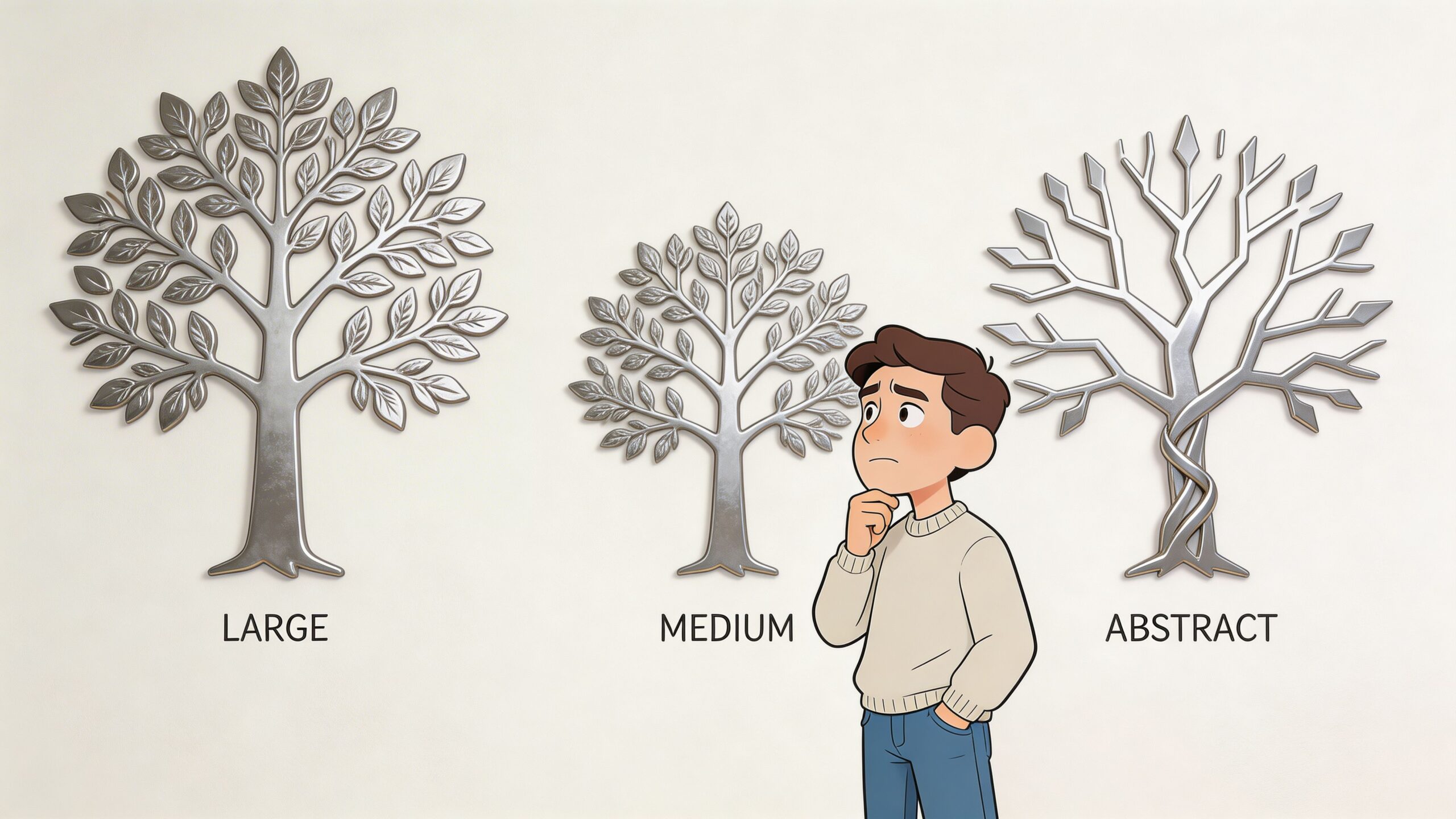
Start with scale
When you’re hanging metal art above a sofa, buffet, or bed, I recommend a piece that spans roughly two-thirds the width of the furniture below. That proportion usually feels balanced without swallowing the room.
If you want a second opinion on placement logic, this expert guide to choosing, sizing, and hanging living room wall art does a nice job explaining why scale matters so much.
Use this quick reference before you buy:
| Placement area | What usually works best |
|---|---|
| Above a sofa | Wider, horizontal tree designs with open branching |
| Above a buffet | Symmetrical Tree of Life or panoramic forest scene |
| On a narrow wall | Vertical branch or tall single-tree silhouette |
| At an entry console | Medium-scale piece with clear shape and simple lines |
Match the style to the furniture
This matters more than people think. A wall piece can be beautiful on its own and still look wrong in your home.
If your furniture has strong grain, substantial wood tones, and handcrafted detail, go with a tree design that has a little intricacy. If your room leans modern with cleaner upholstery and fewer accessories, choose a simpler silhouette.
Here’s how I’d pair them:
- With solid wood and Amish craftsmanship. Look for branch detail, hand-finished character, or a more organic shape.
- With a custom Bassett sofa or sleek casegoods. A crisp silhouette in black or bronze usually works better.
- With a light, airy room. Avoid overly dense designs. Open negative space is your friend.
For more sculptural inspiration, 3-D wall sculptures are worth browsing because they show how depth changes a wall more effectively than flat decor.
Pick a finish that belongs in the room
Finish is where many rooms either come together or fall apart.
Matte black is the safest choice. It reads clearly on most wall colors, works with almost every style, and doesn’t compete with wood tones.
Bronze brings warmth. I like it in dining rooms, homes with medium-to-dark wood furniture, and spaces with oil-rubbed or antique hardware.
Silver or brushed steel works best when the room already has cooler tones, cleaner lines, or contemporary lighting.
Don’t match metal art to every metal in the room exactly. Coordinate it. If everything is a perfect match, the room starts to look staged instead of lived in.
Designing a Bespoke Piece That Complements Your Home
I’ll say this plainly. If your wall is an awkward size, your furniture is custom, or your room has a specific look, mass-produced art is usually a compromise.
That’s the biggest weakness in this category. Most metal tree wall art on the market is standardized, and no major retailers are offering bespoke pieces designed to a homeowner’s exact furniture or room dimensions, which leaves a real gap for people who want a coordinated home, especially in places like Northwest Indiana, as noted in this Wayfair market view.
Why custom is often the smarter choice
A bespoke piece solves problems that off-the-shelf decor can’t.
Maybe your sofa is extra long, your buffet sits under a low ceiling, or your room needs a warmer bronze than what’s commonly available online. Standard sizing rarely addresses any of that well.
Custom design helps you control:
- Proportion so the piece fits the wall instead of floating awkwardly
- Finish so it works with hardware, lighting, and wood tones
- Mood so the design feels quiet, dramatic, rustic, or modern on purpose
- Integration so the art supports the furniture instead of competing with it
Coordinate the room, not just the wall
The best interiors don’t treat art like an afterthought. They build visual relationships across the room.
That might mean echoing the curves of dining chairs in the branch pattern. It might mean choosing a darker finish to connect with iron bases, cabinet pulls, or a statement chandelier. It could even mean simplifying the tree design because the furniture already carries the visual weight.
A custom piece should solve a design problem, not just give you more choices.
If you’re weighing the value of made-to-order design in general, this explanation of what is bespoke furniture makes the case well. The same thinking applies to wall decor. When the scale, finish, and style are matched to the room, the whole home feels calmer and better resolved.
A Practical Guide to Measuring and Hanging Your Art
This is the part most online product pages gloss over, and that’s a problem.
Existing content often says metal wall art is easy to install, but skips the important details on anchors, studs, and wall safety. That gap is specifically noted by Grand Mix’s overview of metal tree wall art, and it matters even more when you’re handling a large or heavy piece.
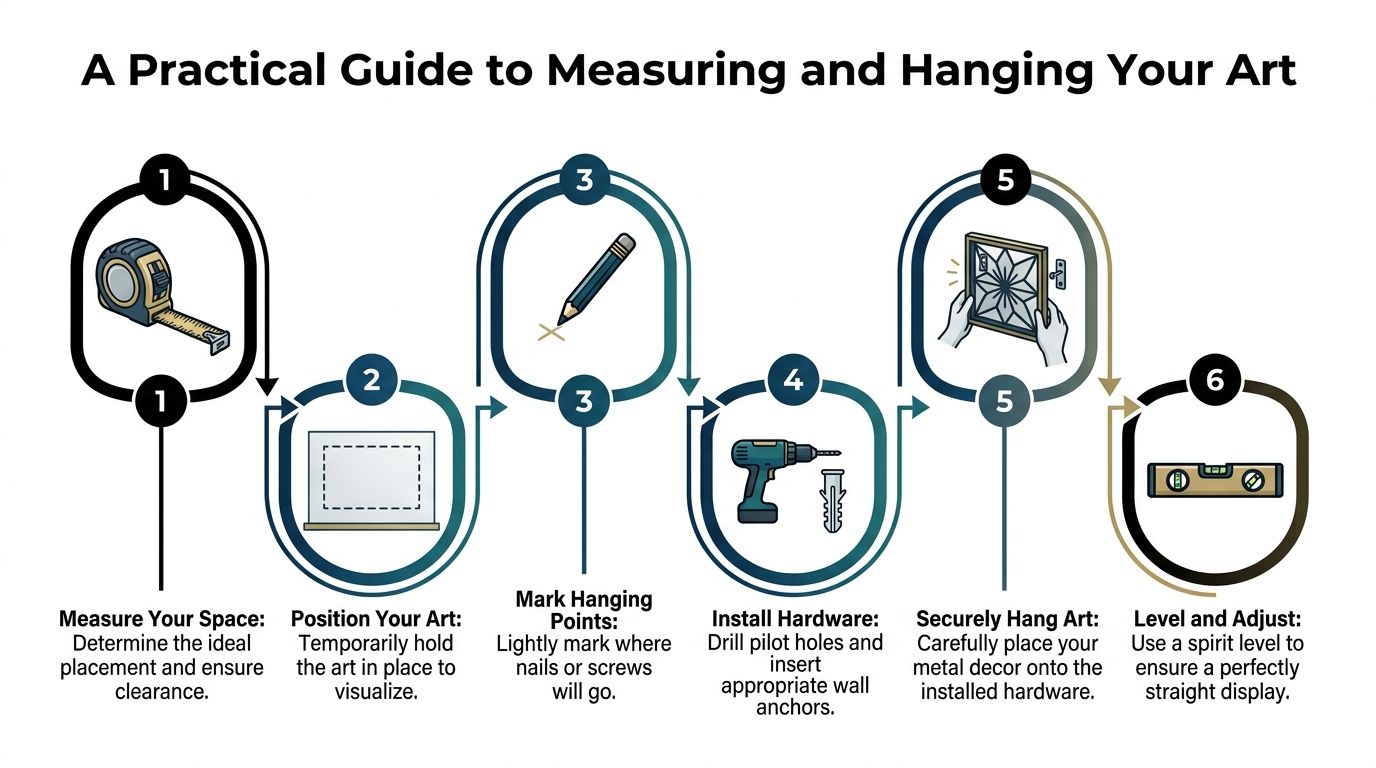
Gather the right tools first
Don’t start with the art in one hand and a random screw in the other.
You want:
- Tape measure for width and height placement
- Pencil for light marking
- Level so the piece doesn’t drift visually
- Stud finder for heavier metal art
- Appropriate hardware based on wall type and weight
If you want a more detailed companion on clean placement, this step-by-step guide to hanging your picture with precision is a helpful reference.
Where to place it
For most living rooms and dining rooms, keep the piece visually connected to the furniture below it.
I usually recommend hanging it so the bottom of the metal art sits a short distance above the sofa or buffet, not way up in empty space. If it’s on a standalone wall with no furniture beneath it, center placement at comfortable viewing height tends to feel right.
Check these three things before you mark the wall:
- Width relationship. The art should feel connected to the furniture, not narrower than a small lamp grouping.
- Breathing room. Leave enough wall around it so the branches don’t feel cramped.
- Sightline. Stand across the room and check whether the center lands naturally in your field of view.
Match the hardware to the wall
This is not the place to guess. Old drywall, plaster, and stud placement all change the installation plan.
Here’s a practical guide:
| Hardware Type | Best For | Typical Weight Capacity |
|---|---|---|
| Wood screws into studs | Heavy metal wall art on framed walls | Best choice for heavier pieces |
| Drywall anchors | Moderate-weight pieces where no stud is available | Varies by anchor and wall condition |
| Molly bolts or toggle bolts | Hollow walls needing stronger hold than basic anchors | Good for larger decorative pieces |
| Plaster-rated anchors | Older homes with plaster walls | Depends on wall integrity and hardware used |
Because the verified data here only confirms that online content often misses these details, I’m going to give you the plain recommendation. For larger metal tree art, use studs whenever possible. If you can’t, buy hardware rated specifically for your wall type and the actual weight of the piece.
A safer install process
Use this sequence and you’ll avoid most problems:
- Test the position first. Hold the art in place, or tape up a paper template.
- Mark the hang points carefully. Don’t eyeball branch-heavy pieces. Their visual center can be misleading.
- Pre-drill when needed. That helps accuracy and reduces wall damage.
- Hang with two support points. That keeps larger pieces from shifting.
- Level from the top line, then step back. Sometimes a branch pattern can trick the eye even when the bubble says level.
If the piece is large enough that you’re nervous lifting it onto hardware alone, that’s your sign to get help. Wall art shouldn’t become a two-person emergency in your living room.
Styling Your Metal Decor with Groen’s Furniture
Once the piece is on the wall, the room starts to make sense.
That’s where tree wall decor metal really earns its place. It doesn’t just decorate. It gives shape to the furniture arrangement and helps the room feel finished.
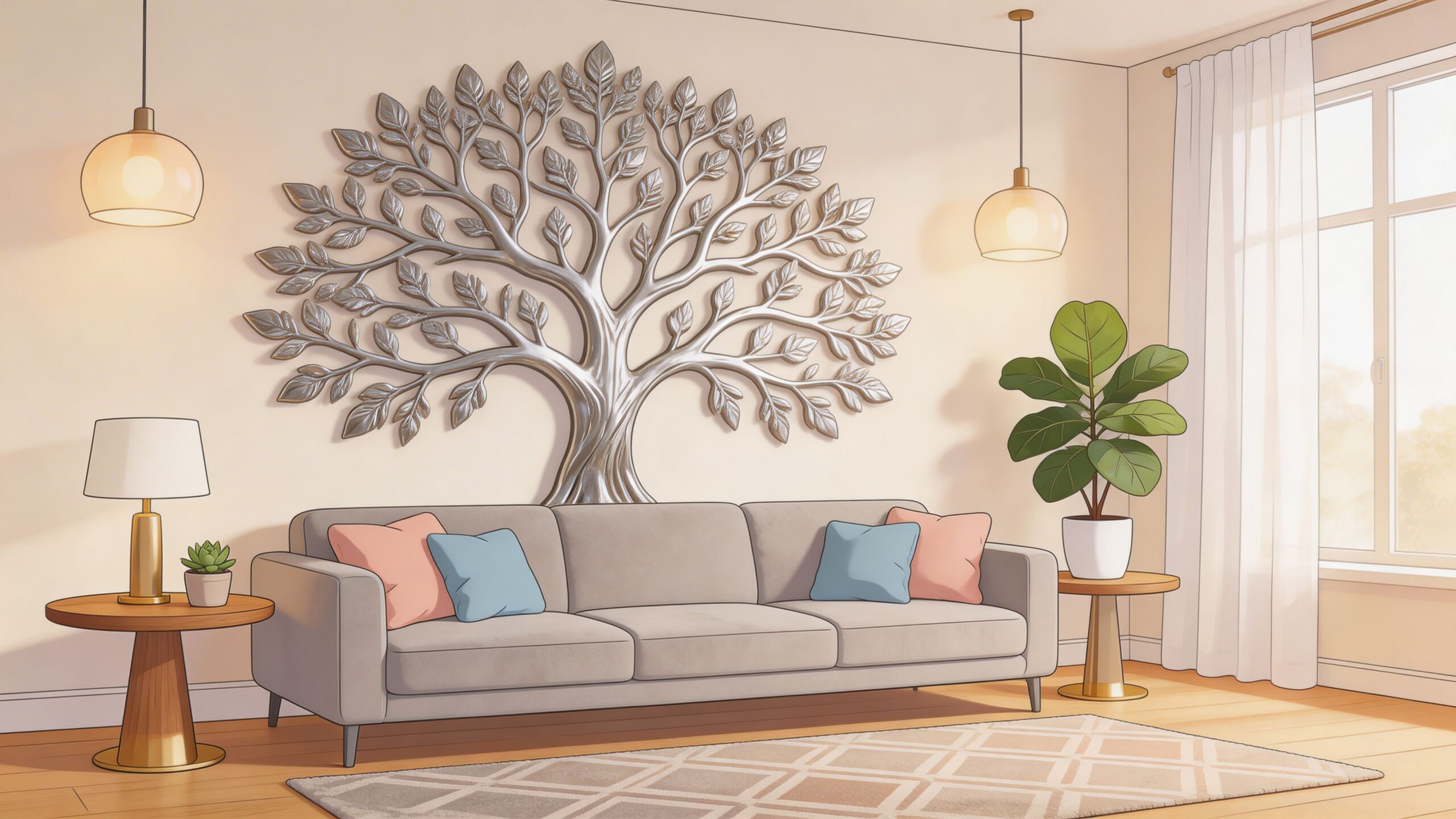
Design studies cited in this Etsy listing for oversized Tree of Life metal wall art note that three-dimensional wall decor can add visual depth to a room, and metallic finishes can reflect light to brighten a space. In plain English, metal art helps a room feel less flat and a little more open.
In the living room
A large metal tree above a sectional creates a strong focal point without adding bulk. That’s why I like it with durable upholstered seating, especially something substantial enough to hold its own visually.
A few combinations work especially well:
- Flexsteel sectional plus black tree silhouette. The comfort stays soft, while the wall gets definition.
- Bassett sofa plus bronze branch sculpture. This pairing feels well-matched and a little dressier.
- Neutral upholstery plus silver-toned tree art. Good if the room needs light bounce and a cooler palette.
In the dining room
Dining rooms benefit from wall decor that feels anchored, not busy. A panoramic forest scene or a balanced Tree of Life over a buffet can make the room feel like a destination instead of just a place to eat.
I especially like this look with custom dining and solid wood pieces because the craftsmanship speaks the same language. Wood brings warmth. Metal adds edge and shape. Together, they feel finished.
Use light on purpose
Lighting changes metal art more than people expect.
A nearby lamp, sconce, or chandelier can throw subtle shadows through the cutout branches and make the piece feel more sculptural at night than it does during the day.
Soft directional light is better than harsh glare. You want shadow and texture, not a shiny hotspot on the wall.
If your room feels flat, don’t buy more accessories first. Try adjusting the lighting around the metal art. Often that’s the fix.
Long-Term Care and Making Your Purchase Possible
One reason I recommend metal wall art so often is that it doesn’t ask much from you.
If the piece is well made, regular dusting and occasional gentle wiping are usually enough. No constant touch-up. No fabric fading. No frame corners loosening over time.
What quality looks like
The finish matters as much as the design.
The industry standard for strong protection is an electrostatic powder coating process baked at over 180°C, and that process reaches a 95-98% production success rate while helping create a finish that resists rust and corrosion. The same source notes a 15-20 year outdoor lifespan for properly finished pieces, which tells you a lot about how durable a quality indoor piece can be. That comes from Lakeshore Metal Decor’s manufacturing overview.
For basic upkeep:
- Dust regularly with a soft microfiber cloth
- Wipe gently with a lightly damp cloth if needed
- Dry it right away so moisture doesn’t sit on the finish
- Skip abrasive cleaners because they can wear down protective coating
If you want deeper maintenance advice for exposed metal finishes, this article on how to protect metal from rust is worth saving.
Make room in the budget for quality
This is also where I’ll be opinionated. Buy one good piece instead of two mediocre ones.
Metal wall art works best when it has scale, finish quality, and enough presence to carry the wall. That usually means investing a little more upfront and avoiding something flimsy that you’ll replace later.
If budget is part of the decision, it helps to look at options that give you more buying power over time. Furniture financing options can make it easier to choose the piece and the surrounding furnishings you want, instead of settling for a temporary fix.
Let Our Family Help You Create a Home You Love
Choosing tree wall decor metal isn’t really about filling a blank wall. It’s about giving your home a sense of story, comfort, and permanence.
The right piece can echo your furniture, soften a large wall, and make the room feel more thoughtful. The wrong one will always look like a last-minute add-on. That’s why scale, finish, installation, and coordination matter so much.
For homeowners across Northwest Indiana, especially in Dyer, Crown Point, St. John, Schererville, and Munster, it helps to work with people who understand how a room comes together as a whole. Bring your measurements. Bring photos. Bring the finish sample from your dining set if you have one. That’s how you choose confidently and create something lasting.
Visit Groen's Fine Furniture in Dyer or Crown Point today to explore our custom options and ask about our special financing plans. Let our family help you create a home you love.