How to Choose a Couch with Wood Trim for Your Home


A lot of homeowners in Dyer, Crown Point, St. John, Schererville, and Munster reach the same point with their living room. The old sofa still functions, but it no longer feels connected to the house around it. The floors may be warm oak, the built-ins may have a rich stained finish, and the room may need one piece that ties softness and structure together.
That's where a couch with wood trim often makes sense. It brings in upholstered comfort without losing the warmth of solid wood detail, which matters in many Northwest Indiana homes where trim, cabinetry, and flooring already shape the character of the room. For families trying to create a space that feels comfortable, lasting, and personal, this style can anchor the whole design.
Since 1983, a family-owned furniture store serving Northwest Indiana has seen how often shoppers want that balance. They don't want a sofa that looks flat or generic. They want a piece with presence. They also want flexibility, because real homes in NWI vary from classic brick colonials to newer open-concept builds. A wood-trim sofa fits both, especially when custom options and special financing available subject to credit approval help turn a long-term purchase into a realistic one.
Introduction to Couch With Wood Trim
A homeowner in Crown Point may start with one simple thought. The room needs a centerpiece. The walls are painted, the rug is in place, and the coffee table works, but the seating still feels temporary. A fully upholstered sofa can look soft and inviting, yet sometimes it disappears into the room instead of finishing it.
A couch with wood trim solves that problem differently. The upholstery handles comfort. The wood handles definition. Exposed arms, shaped rails, carved bases, or tapered legs give the eye something solid to land on, which is especially helpful in homes with hardwood floors, wood mantels, or stained stair rails.
For many Northwest Indiana families, this isn't only about style. It's about choosing a piece that feels like it belongs in the house for years, not just for one decorating season. That's part of why wood-accented seating keeps drawing attention from shoppers who want a room to feel more grounded and complete.
A sofa with visible wood detail often works like a bridge between soft furnishings and the architecture of the home.
In Dyer and nearby communities, that matters. Many living rooms need furniture that looks substantial enough for everyday life, but still polished enough for guests. A couch with wood trim can do both. It feels dressed up without becoming stiff, and it adds character without making the room feel heavy.
Understanding Couch With Wood Trim
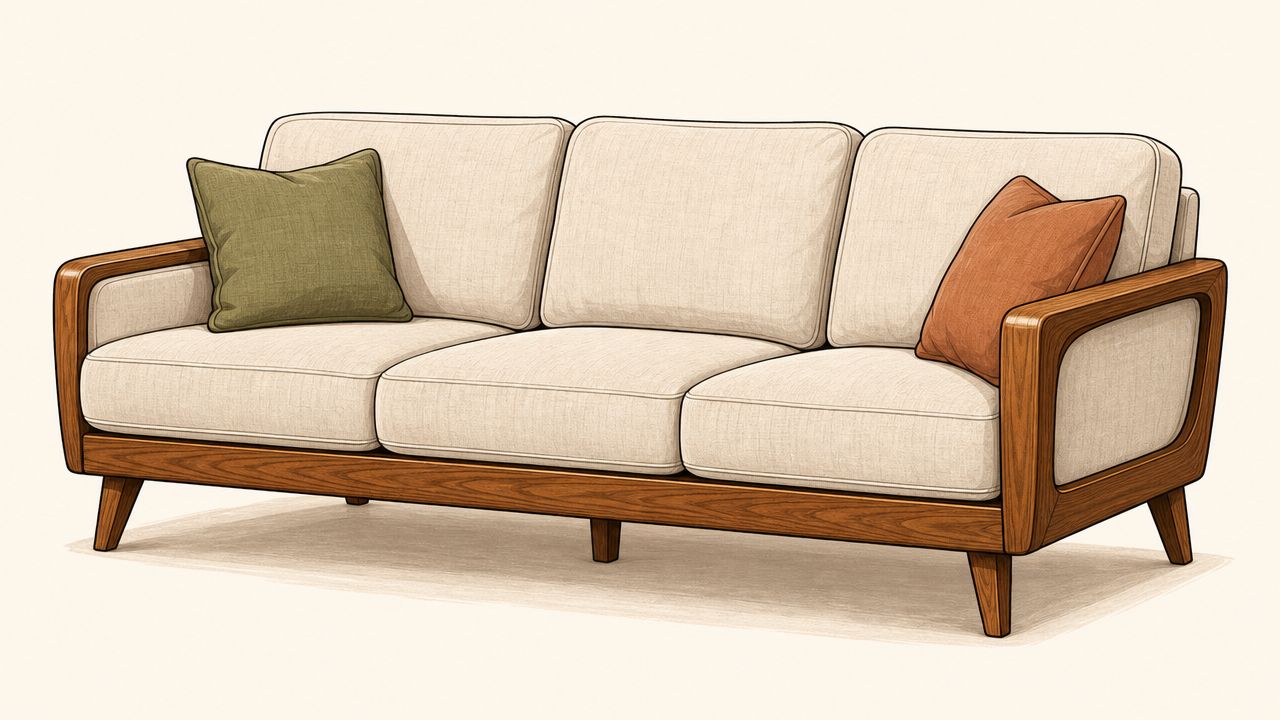
A couch with wood trim is a hybrid piece. It combines padded seating with visible wood elements such as legs, arm panels, frame outlines, apron rails, or decorative side posts. That blend gives the sofa more visual structure than an all-fabric piece.
What makes it different
The look is often the first thing noticed. Wood trim adds contrast, warmth, and a finished outline. In a room full of soft materials like rugs, curtains, and pillows, that contrast can keep the space from feeling shapeless.
There's also a broader market reason these pieces keep showing up in showrooms and design plans. The global furniture market was valued at USD 729.61 billion in 2026 and is forecast to reach USD 952.10 billion by 2031, reflecting sustained demand for mixed-material seating, according to Mordor Intelligence's furniture market report.
That mixed-material appeal makes sense in real homes. Wood brings a natural element into the room, while upholstery keeps the seating comfortable enough for daily use.
Why homeowners in Northwest Indiana notice it
In Northwest Indiana, many homes already include wood as a visual anchor. Floors, trim packages, stair parts, fireplace surrounds, and kitchen cabinetry all contribute to the background of the room. A sofa with exposed wood can connect to those features more naturally than a fully upholstered piece.
A few examples help:
- With medium-toned hardwood floors: A sofa with walnut or oak trim can make the flooring feel intentional rather than incidental.
- With painted walls and white millwork: Wood accents can add warmth and keep the room from looking too stark.
- With open-concept layouts: The trim helps the sofa read more like furniture and less like a floating cushion block.
Homeowners comparing species and grain character can also benefit from a deeper look at hardwood furniture choices for longevity and style.
Where buyers sometimes get confused
Some people assume wood trim means the whole sofa will feel formal. That isn't always true. The shape of the sofa matters more than the mere presence of wood. A clean-lined frame with simple wood arms can feel airy and current. A rolled-arm model with carved trim can feel traditional.
Others confuse trim with frame quality. The visible wood tells part of the story, but not all of it. Good construction, proportional design, and a finish that holds up all matter too.
Exploring Style Variations
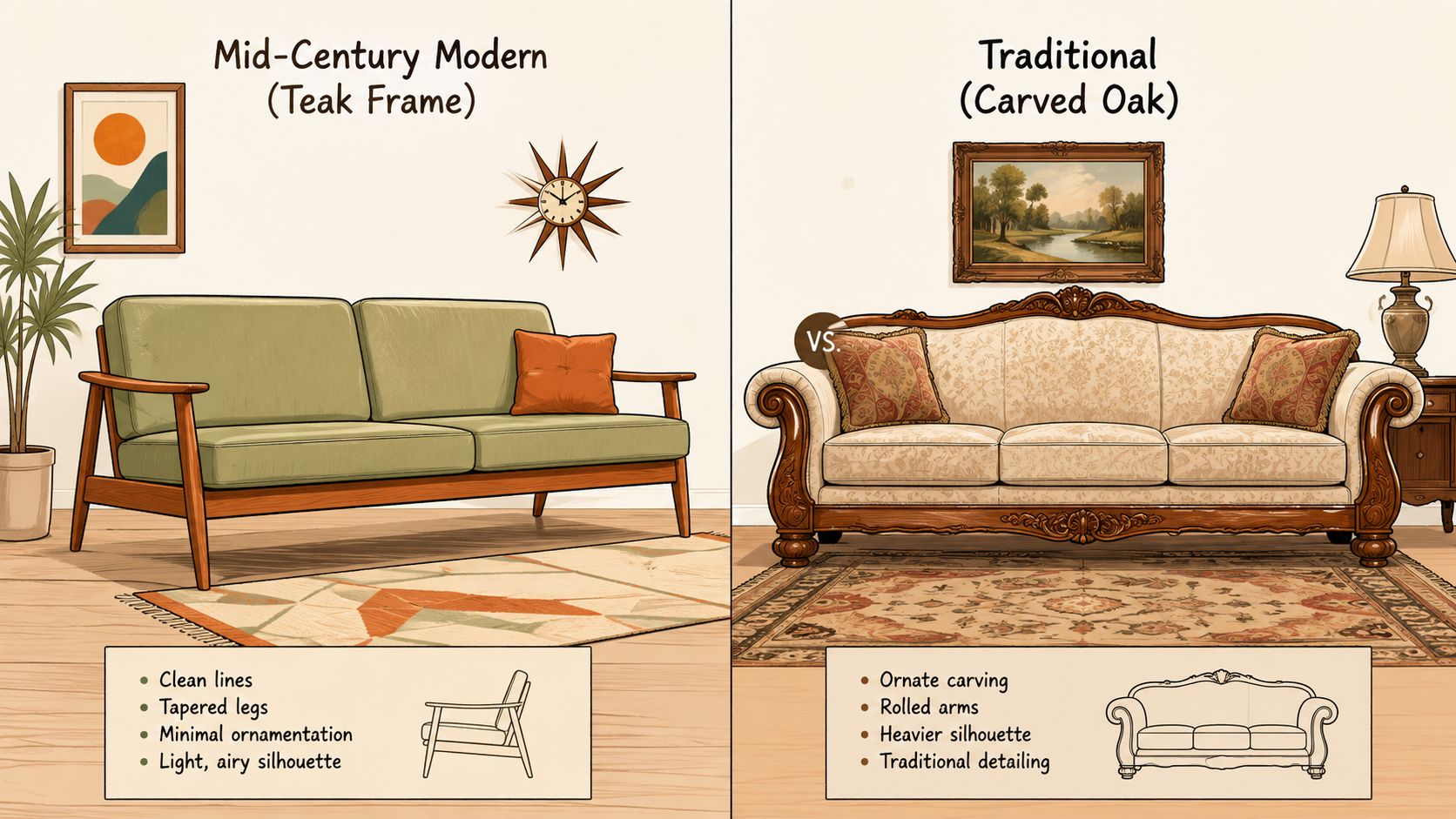
Style is where many shoppers either find their direction or get stuck. A couch with wood trim can lean mid-century, traditional, or transitional, and those categories look very different in a finished room.
Mid-century
Mid-century styles usually show more of the frame. The wood is part of the identity of the piece, not just an accent. Think slimmer profiles, open arms, and tapered legs. This look often works well in ranch homes, updated split-levels, or spaces with lots of natural light.
A Flexsteel silhouette in this category often appeals to homeowners who want durability without a bulky footprint. The wood detail reads crisp and intentional.
Traditional
Traditional wood-trim sofas usually feel more dressed. Rolled arms, carved rails, shaped legs, and richer stains fit naturally in formal living rooms, older homes, or spaces with classic millwork and deeper color palettes.
Bassett-style traditional seating often suits homeowners who want the room to feel established and timeless. If the home already has crown molding, paneled details, or darker case pieces, this style tends to settle in comfortably.
Practical rule: The more visible carving and curve in the wood, the more formal the sofa will feel.
Transitional
Transitional is where many Northwest Indiana shoppers land. It keeps the warmth of exposed wood but simplifies the lines. The sofa may have straight arms, soft cushions, and just enough wood at the base or legs to give it shape.
This style works well when a home blends old and new. A homeowner in Munster might have classic flooring but updated lighting and a more relaxed paint palette. Transitional wood trim keeps those elements from fighting each other.
A quick test helps. If the room needs a little edge, mid-century may fit. If it needs polish, traditional often wins. If it needs balance, transitional is usually the safest and most versatile direction.
Choosing Materials and Finishes
Not all wood trim looks the same, and not all finishes wear the same way. Species affects color and grain. Finish affects sheen, touch, and how the trim responds to daily life.
How wood species changes the look
Oak usually has more visible grain. It can feel grounded and familiar, especially in homes with existing hardwood details. Walnut tends to look deeper and more refined. Cherry often adds warmth and a slightly more classic tone. Maple can look smoother and cleaner, which works well in lighter interiors.
For homeowners trying to coordinate trim with upholstery, it helps to compare fabric texture and stain tone together, not separately. A guide to upholstery materials and how they perform can make those pairings easier to judge.
Why finish matters for wear
Finish isn't only about gloss. It affects how the trim handles friction from hands, blankets, pets, and routine cleaning. Verified product data in the brief shows that premium nitrocellulose lacquers with ceramic micro-spheres outperform standard polyurethane finishes in abrasion testing, making them a strong choice for higher-use living room furniture.
That doesn't mean every household needs the most advanced finish available. It means buyers should ask what kind of finish is on the wood and whether it suits the way the sofa will be used.
For readers comparing stain tone and wood appearance more broadly, this overview of premium wood staining for North Shore homes offers a useful visual reference for how finish choices can change the final look of wood surfaces.
Wood Species and Finish Comparison
| Wood Species | Finish Type | Key Benefit |
|---|---|---|
| Oak | Ceramic-modified lacquer | Helps visible grain look crisp while improving wear resistance |
| Walnut | Low-sheen lacquer | Preserves depth and richness without looking overly glossy |
| Cherry | Warm-toned protective topcoat | Supports a classic, inviting appearance |
| Maple | Smooth matte finish | Keeps the look clean and understated |
Buyers often focus on fabric first and wood second. With a couch like this, reversing that order can help. The wood tone usually needs to relate to the room's fixed surfaces. Fabric is easier to layer around afterward.
Durability Care and Maintenance
Wood trim adds charm, but it also asks for more specific care than an all-upholstered sofa. That's especially true in Northwest Indiana, where homes can swing from dry winter air to sticky summer conditions.

The care issue most guides skip
Many buying guides talk about cushions and frames but ignore exposed trim. That gap matters because most existing guides omit humidity control and trim-specific care; for example, ammonia-based cleaners can ‘fume' oak finishes, as noted in The New York Times Wirecutter furniture shopping guidance.
That single point clears up a common misunderstanding. A cleaner that seems harmless on glass or other hard surfaces can be the wrong choice for wood trim.
A simple routine that protects the finish
The safest approach is usually a gentle one:
- Dust first: Use a soft microfiber cloth so grit doesn't drag across the finish.
- Clean lightly: Use a cleaner meant for finished wood, applied to the cloth rather than sprayed directly on the trim.
- Dry the surface: Don't let moisture sit where wood meets upholstery.
- Watch the room environment: Seasonal dryness and moisture swings can stress wood over time.
Homeowners who want a broader overview of routine upkeep can use this wood furniture care guide as a companion reference.
Seasonal tips for NWI homes
Winter tends to be the season when trim issues show up first. Heated indoor air can dry out the room, while summer can bring more moisture than expected. It helps to pay attention to placement and habits.
- Keep distance from vents: Direct airflow can dry one part of the trim faster than the rest.
- Avoid harsh spot cleaning: If a spill reaches the wood, wipe it promptly instead of scrubbing.
- Use floor and arm protection nearby: Metal accessories, buckles, and sharp décor can leave marks.
- Check support as well as surface: If an older sofa has begun to sag, overall comfort may improve with structural support. This guide to restoring sofa comfort can help explain that side of the equation.
Gentle cleaning and stable room conditions usually do more for wood trim than aggressive polishing ever will.
Selecting and Styling Your Couch
Choosing the right couch with wood trim takes more than picking a favorite finish. The piece has to fit the room, match the household, and connect visually with everything around it.
Start with scale, not color
People often fall in love with the wood detail before checking whether the sofa suits the room. That's backwards. Length, depth, arm width, and walkway clearance all shape how the room will function day to day.
A practical starting point is a room measurement plan. This sofa size guide helps homeowners think through fit before fabric and trim choices narrow the field.
Once scale is right, wood trim becomes easier to judge. A broad, heavy wood base may look beautiful in a large family room but crowded in a narrow front living room. A lighter exposed frame can help a smaller room breathe.
Why customization matters more than ever
Customization has moved from a niche option to a mainstream expectation. Custom-made sofa production now accounts for 25% of global output, with 40% of consumers tailoring dimensions, upholstery, and wood-trim finishes to match their interiors, according to WorldMetrics sofa industry statistics.
That trend makes sense in places like Northwest Indiana, where homes vary widely in size and finish. A sofa in a newer Schererville home may need a different wood tone and cleaner profile than one going into a traditional Dyer living room with warmer trim and more formal case goods.
Build the room around three anchors
A styled room usually comes together faster when homeowners make decisions in the right order.
- First anchor, the wood tone: Match or intentionally contrast the trim with flooring, end tables, or built-ins.
- Second anchor, the upholstery: Performance fabric suits busy family rooms. Leather can look sharper with exposed wood and wears differently over time.
- Third anchor, the accents: Pillows, throws, rugs, and wall art should echo the room, not compete with the sofa.
A helpful way to finish the wall side of the room is to browse inspiration sources such as shop wall art online, then choose pieces that repeat one of the sofa's colors without copying it exactly.
Matching local home styles
Some pairings tend to work especially well in NWI homes:
| Home Style | Wood Trim Direction | Upholstery Direction |
|---|---|---|
| Traditional two-story | Cherry or darker oak tones | Textured neutrals or classic patterns |
| Updated ranch | Walnut or medium brown trim | Soft solids in cream, gray, or muted green |
| Open-concept newer build | Clean-lined maple or oak | Performance fabric in understated tones |
A room feels finished when the sofa relates to the house itself. That's the ultimate goal. Not just a pretty piece, but a piece that makes the whole space feel settled.
Custom Orders and Buying Guide
A wood-trim sofa often works best when the buyer doesn't have to settle for a close-enough version. Room size, stain tone, fabric texture, and arm style all matter too much for guesswork.
Where custom ordering helps most
Some households need a shorter length to preserve traffic flow. Others need a deeper seat for lounging, or a specific stain that doesn't clash with nearby flooring. That's where made-to-order options become practical, not indulgent.
Design-your-own sofa options can help shoppers sort through those decisions in a structured way. They allow selections around dimensions, upholstery, and visible wood details instead of forcing one fixed combination.
The same mindset shows up across other furniture categories. Canadel's custom dining program offers thousands of combinations of sizes, shapes, and finishes, which reinforces how valuable bespoke planning can be in a coordinated home. Amish craftsmanship follows a similar path. In fact, every piece of Amish furniture sold at Groen's is a custom order, handmade per customer specifications for size, stain color, and wood type, according to Groen's Amish furniture information.
A practical buying checklist
Before ordering, it helps to narrow the decision with a short list:
- Room relationship: Does the wood tone suit nearby trim, floors, or tables?
- Use pattern: Will the sofa handle daily lounging, formal seating, or both?
- Fabric realism: Does the upholstery fit pets, children, and maintenance habits?
- Delivery path: Can the piece move through doors, stairs, and tight turns?
- Budget comfort: Can the purchase be timed in a way that fits the household's plan?
Custom furniture works best when the buyer chooses around the room first and the trend second.
Special financing is also part of the practical side of the decision. Groen's Fine Furniture offers special financing, subject to credit approval, to help customers buy quality furniture while paying over time. For many families, that creates buying power without forcing a compromise on materials or fit.
White-glove delivery and interior design support also matter with a piece like this because placement, finish coordination, and in-room scale affect the outcome almost as much as the sofa itself.
Conclusion and Next Steps
A couch with wood trim does something many living room pieces can't. It adds softness and structure at the same time. That combination makes it especially useful for Northwest Indiana homes where wood floors, trim, cabinetry, and changing seasons all influence what looks right and what lasts.
The best choice usually comes down to four things. The style has to suit the house. The wood tone has to relate to the room. The finish has to fit everyday use. The care routine has to respect seasonal humidity and cleaner sensitivity. When those pieces line up, the sofa stops feeling like an isolated purchase and starts feeling like part of the home.
For homeowners in Dyer, Crown Point, and surrounding NWI communities, it helps to see these details in person. The shape of the arm, the depth of the stain, and the feel of the upholstery are easier to judge when the piece is right in front of the buyer. That's often where confidence comes from.
Visit Groen's Fine Furniture in Dyer or Crown Point today to explore custom options and ask about special financing plans. Let a family-owned team serving Northwest Indiana since 1983 help create a home that feels comfortable, lasting, and personal.