Blog
Dining Room Sets Glass Top Buying Guide

For homeowners in Dyer, Crown Point, and across Northwest Indiana, the dining room often turns into the one place that has to do everything. It's where kids dump backpacks, pets brush past chairs, and family dinners still need to feel special, so the table has to look good and hold up. That's why dining room sets glass top keeps coming up in real shopping conversations, especially for families who want a lighter-looking room without giving up everyday function.
Glass-top dining sets have been part of modern furniture history for a long time. By the 1950s and 1960s, makers were pairing glass with metal and wood to make dining rooms feel less heavy and better suited to smaller homes and open layouts, and that same design logic still matters today because transparent surfaces can make a room feel visually larger Laurel Crown on the history of dining room tables. Groen's Fine Furniture has served this region since 1983, and our family still hears the same question from shoppers in Munster, St. John, and Schererville. Is glass a smart choice, or just a pretty one?
Introduction
A lot of Northwest Indiana families start with the same scene. The old table is scratched, the room feels darker than it should, and everyone agrees the dining space needs a fresh look, but nobody wants a piece that turns into a cleaning headache the first week. This is the ultimate test for a glass-top dining set, not just how it looks in a showroom.
Glass works because it keeps the room open. That older design idea, using transparent tops to reduce visual bulk, still fits compact homes and open-plan spaces today Laurel Crown on the history of dining room tables. It also explains why shoppers keep choosing glass when they want a room to feel brighter without adding visual weight.
Practical rule: If the table is for daily family use, style should come second to structure, thickness, and base support.
Groen's family-owned approach fits this kind of decision well. Since 1983, our team has helped local buyers compare materials, seating layouts, and custom options without pushing them into a one-size-fits-all choice. For a starting point on layout thinking, the internal guide on designing a dining room is a useful companion before measuring anything.
The rest of the decision comes down to trade-offs. Families need to think about style, but also wobble, fingerprints, chair clearance, and whether the table still feels good after years of meals, homework, and holiday gatherings.
Benefits and Drawbacks of Glass Tops
Glass-top dining sets earn their place because they make a room feel lighter. In smaller dining spaces, transparent surfaces reduce visual bulk, and that is exactly why the style keeps showing up in modern interiors Laurel Crown on the history of dining room tables. When the base is well chosen, glass can make the table feel airy instead of heavy, which helps a compact room stay open.
Why families keep considering glass
The biggest upside is simple. Glass can look polished without locking the room into one design style. It pairs well with metal, wood, and upholstered seating, so the room can lean modern, transitional, or even warmer and more relaxed depending on the base and chairs.
Families also like the way glass keeps a visual connection across the room. A dining area that sits near the kitchen or living space can feel less crowded when the tabletop doesn't block sightlines. That's especially useful in homes where the dining room is part of a shared everyday traffic path.
The drawbacks nobody should ignore
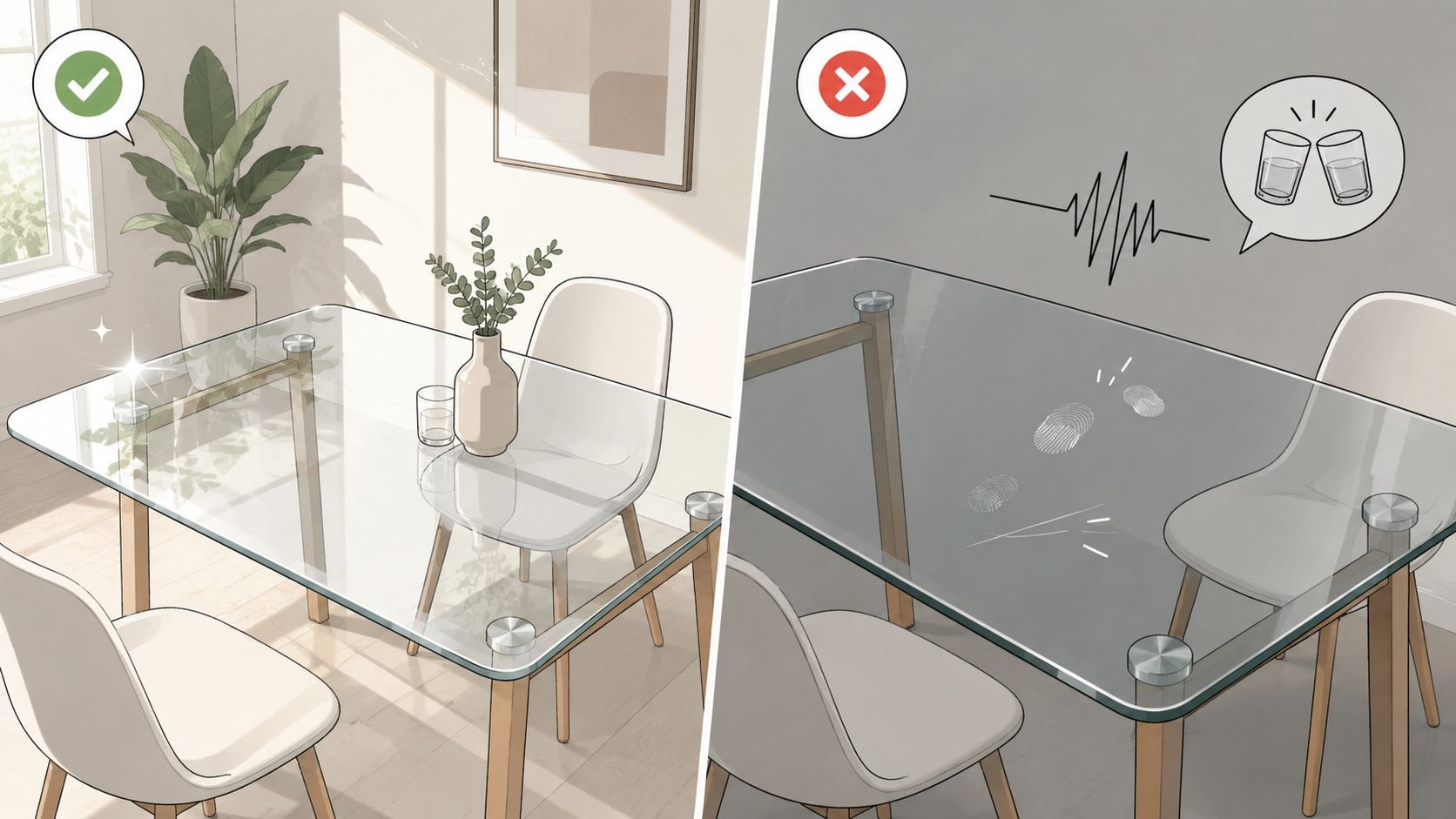
Glass asks for more upkeep. Fingerprints show fast, smudges show fast, and a busy family can end up wiping the surface more often than they would with wood or stone. That doesn't make glass a bad choice, it just means the household has to like clean lines and frequent touch-ups.
Noise matters too. Plates, cups, and serving pieces can sound sharper on glass, and some buyers notice that immediately. Wobble is another dealbreaker if the base is weak, because glass makes movement more noticeable than a heavier-looking top.
Glass is a good choice when the room needs openness, but it's a poor choice if the family wants a surface that hides daily life.
The honest answer is that glass works best when the owner values style and doesn't mind maintenance. For kids, pets, and heavy daily use, the best result usually comes from pairing glass with a strong base, sturdy chairs, and a clear plan for cleaning.
Choosing Bases and Chair Pairings
The base decides whether a glass-top table feels stable or flimsy. Independent furniture guidance says the base material defines both style and stability, and it recommends certified tempered safety glass, usually at least 10 mm thick, with compliance checks like ANSI Z97.1 Astonisa on the pros and cons of glass dining tables. That's the part families should focus on first, because glass only looks effortless when the structure under it is doing the hard work.
What each base type does well
A metal base usually gives the cleanest modern look. It feels lighter visually and often works well in homes that already lean toward open-plan spaces or mixed materials.
A wood base softens the look and helps the table feel warmer. For families who want the room to feel less cool or formal, that's often the right direction.
A mixed-material base gives the most flexibility. It can bring together the visual lightness of metal with the warmth of wood, which helps a glass-top set fit more than one style at once.
The critical point is support. The top has to sit on a base that matches the span and shape, and the overhang can't create stress points. A glass top that's too large for the base may look dramatic, but it's not the smart buy.
Chair pairings that make sense
Chair choice should follow the table's mood, not fight it. Upholstered chairs can soften the crispness of glass, which helps in family dining rooms that need comfort as much as style. Sleeker frames work when the goal is a lighter, more modern profile.
For readers comparing seating styles, the internal guide to choosing dining chairs helps narrow the field without overcomplicating the decision. A good rule is to keep the chairs visually grounded if the table already feels airy.
Good pairing rule: If the glass makes the table disappear a little, let the chairs add warmth, texture, or color.
That balance is why many shoppers want a showroom test before buying. A glass top can look elegant online and still feel wrong if the chairs are too bulky, too sleek, or too low.
Sizing and Layout Guidelines
Sizing a glass-top dining set starts with people, not décor. An industry guide recommends allowing at least 24 inches of table width per person, which means a 6-person setup generally needs a table around 72 inches long Dulles Glass on sizing a dining table for a glass top. That's the right way to think about it, because a table that looks nice but squeezes diners is the wrong table.
How to measure the room
Measure the space the table will live in, not just the open floor. Then check how much room chairs need to pull out, how much walking space remains, and whether the table blocks a traffic path. A glass top can help a room feel less crowded, but it still needs real clearance.
The size of the glass should also respect the base. For visual balance, the top is often about two-thirds of the underlying base, which keeps the edges from feeling unsupported Dulles Glass on sizing a dining table for a glass top. That ratio matters because too much overhang can create stress where the glass meets the structure.
Recommended Glass-Top Sizes by Seating
| Seating Capacity | Table Dimensions (L x W) | Suggested Glass Thickness |
|---|---|---|
| 4 people | Qualitatively smaller rectangular setup | 8 mm to 10 mm tempered glass |
| 6 people | 36 x 60 inches to 42 x 72 inches | 10 mm to 12 mm tempered glass |
| 8 people | 36 x 72 inches to 44 x 84 inches | 10 mm to 12 mm tempered glass |
For 6-person rectangular glass tops, common dimensions run from 36 x 60 inches to 42 x 72 inches, and 8-person setups typically measure 36 x 72 inches to 44 x 84 inches Dulles Glass on sizing a dining table for a glass top. For shoppers who want a layout check before ordering, the internal dining table size guide is a practical next stop.
If the room is tight, size the seating first and the style second. Comfort beats an oversized statement every time.
Safety and Maintenance Best Practices
A daily-use glass table should not be treated like a fragile accent piece. An expert buying guide recommends a minimum 8 mm tempered glass top, with 10–12 mm preferred for tables over 60 inches long, and it also stresses safety compliance such as ANSI Z97.1 or CPSC 16 CFR 1201 Povison's glass dining table buying guide. That's the standard families should look for, not an optional upgrade.
What safe ownership looks like
The first check is the edge finish. Certified tempering and finished edges matter because the safety story starts there, not after the table is already in the home. A strong rectangular glass top should support at least 200 lb of distributed load, and some 71-inch sets are rated to 300 lb Povison's glass dining table buying guide.
Daily care should stay simple. Use a gentle cleaner, avoid abrasive pads, and keep sharp items from sliding directly across the surface. Families with active kids and pets should also be realistic about scratch prevention, because glass rewards careful habits more than casual ones.
For floor protection beneath the table, the internal guide on the best furniture pads for hardwood floors helps reduce movement and protect the room around the table. That matters because wobble and floor wear often get blamed on the glass when the actual problem is underneath it.
Minor chips and edge damage need prompt attention, because the safest glass table is the one that gets checked early, not ignored.
A well-made glass top can last a long time, but only if the household treats safety and maintenance as part of the purchase, not an afterthought.
Styling Tips and Real-World Examples
A glass-top table feels different depending on what's beneath and around it. A warm wood base can make the room feel more grounded, a metal frame can push the look toward clean lines, and an upholstered chair can soften the whole setting without hiding the glass. That's why the most successful rooms don't chase a full-glass look, they mix materials with intention.
A few room directions that actually work
In a modern room, a clear glass top over a slim metal base keeps the footprint light and lets a bold rug or pendant take center stage. In a farmhouse-leaning space, a glass top on a warm wood base keeps the room from feeling heavy while still giving the table some rustic character. In transitional homes, a mix of wood and metal usually lands in the safest middle ground.
Centerpieces should stay simple. Heavy arrangements can fight the transparency of the top, while a single bowl, low floral line, or a clean tray keeps the surface open. Lighting matters just as much, because glass reflects what hangs above it and can turn a fixture into part of the table composition.
For homeowners looking at broader room direction, the internal dining room style guide helps connect the table to the rest of the space. For soft ambient ideas that complement a reflective surface, eco-friendly ambient lighting solutions offer a useful styling reference.
Style move that works every time: Let the table stay visually light, then add warmth through chairs, a rug, or the base.
That approach keeps the room polished without making it feel cold. It also gives families more room to adapt the space for weeknight dinners, holidays, and everyday clutter.
Customization Options and Financing Advice
Not every household needs an off-the-shelf answer. Groen's can help shoppers design it their way with custom order services, including Canadel Dining and Amish solid wood options that can be made to order. That matters for a glass-top dining room because the base, shape, and proportions often need to match the room more closely than a standard set allows.
Why custom is the smarter move for many families
A bespoke approach solves the biggest glass-top problem, which is fit. If the room is narrow, oddly shaped, or part of an open layout, the right base and chair profile can make the set work instead of merely fitting. Canadel's custom dining program lets shoppers build around a wide range of size, shape, and finish combinations, while Amish craftsmanship brings a solid wood foundation that can anchor the glass without looking flimsy.
Families in Dyer, Crown Point, and nearby NWI towns also tend to value in-person guidance. Our team knows the difference between a table that photographs well and one that lives well, especially when kids, pets, and daily meals all share the same room. That local, multigenerational mindset is part of why shoppers keep coming back for 5-star service and white-glove delivery.
Special financing can help make that upgrade easier to manage, with special financing available subject to credit approval. That doesn't change the quality of the table, it just gives families more buying power when they want a better-built set without waiting too long.
The right dining room set is rarely the cheapest one on paper, it's the one that fits the room, the routine, and the family's long-term use.
Groen's also carries brands like Flexsteel, Bassett, and custom dining options alongside broader home furnishings, so the shopping trip can cover more than one room if needed. For buyers who want a polished look with practical support, that combination is hard to beat.
Conclusion and Call to Action
A glass-top dining set is a strong choice when the room needs more light, less visual bulk, and a cleaner modern look. It's not the right pick for every family, though. The best results come from paying attention to tempered glass thickness, base support, seating size, and the reality of fingerprints, cleaning, and daily wear.
The smartest buyers look at the whole setup, not just the tabletop. They check whether the room can handle the size, whether the base can carry the span, and whether the chairs and finish will still feel right after the newness wears off. For families in Dyer, Crown Point, and across Northwest Indiana, that's exactly the kind of decision worth making in person.
Visit Groen's Fine Furniture in Dyer or Crown Point to explore custom dining options, ask about special financing, and compare glass-top sets with the help of a family-owned team that knows this region well. Let our family help create a dining room that looks sharp, lives well, and fits the way your home works.
A CTA for Groen's Fine Furniture.