Best Trundle Beds of 2026: Top Picks for Every Home


For homeowners in Dyer, Crown Point, and the rest of Northwest Indiana, the spare room has a way of becoming a guest room at the last minute. A child's bedroom may need to handle a sleepover, or a home office might need to welcome grandparents for the weekend without turning the whole house upside down. That's where a best trundle bed choice starts to matter, because it gives a family a second sleep surface without making the room feel crowded all day.
Our family has helped NWI households think through these room-by-room tradeoffs for years. The right trundle bed is rarely just about style, it's about how often the bed gets used, how much clearance the frame needs, and whether the room still looks polished when the bed isn't pulled out. In a house that hosts occasionally, that balance matters just as much as the finish on the wood.
If the goal is to make a small bedroom do more work, a trundle can be a smart answer. A good starting point is our storage solutions guide for small spaces, because trundle beds work best when the whole room is planned with the same practical mindset. Once the room layout, mattress height, and daily routine line up, the bed stops being a compromise and starts becoming a useful part of the home.
Introduction to Trundle Beds for Northwest Indiana Homes
A homeowner in Dyer getting ready for holiday guests usually doesn't need a full second bed sitting in the room year-round. The room may already hold a desk, a dresser, or a child's play area, and every square foot has to earn its keep. A trundle bed solves that problem in a straightforward way, because the lower bed stays tucked away until someone needs it.
That's why trundles fit so naturally in Crown Point, Munster, Schererville, and other NWI homes where rooms often have more than one job. A guest room may need to look calm on Monday, then sleep two people on Saturday. A child's room may need space for homework most nights, then sleepovers on weekends. The trundle bed keeps the room flexible without forcing the family to rearrange furniture every time someone stays over.
Practical rule: if a room needs to serve two purposes, the bed should stay visually quiet while still working hard when it's needed.
That flexibility is part of why trundles have lasted so long in furniture catalogs. They're practical, familiar, and easy to understand once the household sees how the second mattress disappears under the first. For families comparing a trundle to other space-saving ideas, the key difference is simple. The room still feels like a bedroom when it needs to, but it can function like a sitting room or office the rest of the time.
For parents, that means less clutter in a kids' room. For hosts, it means a more comfortable overnight setup. For anyone trying to keep a house looking orderly in a busy season, the trundle bed offers a dependable middle ground.
Understanding the Key Concepts of Trundle Beds
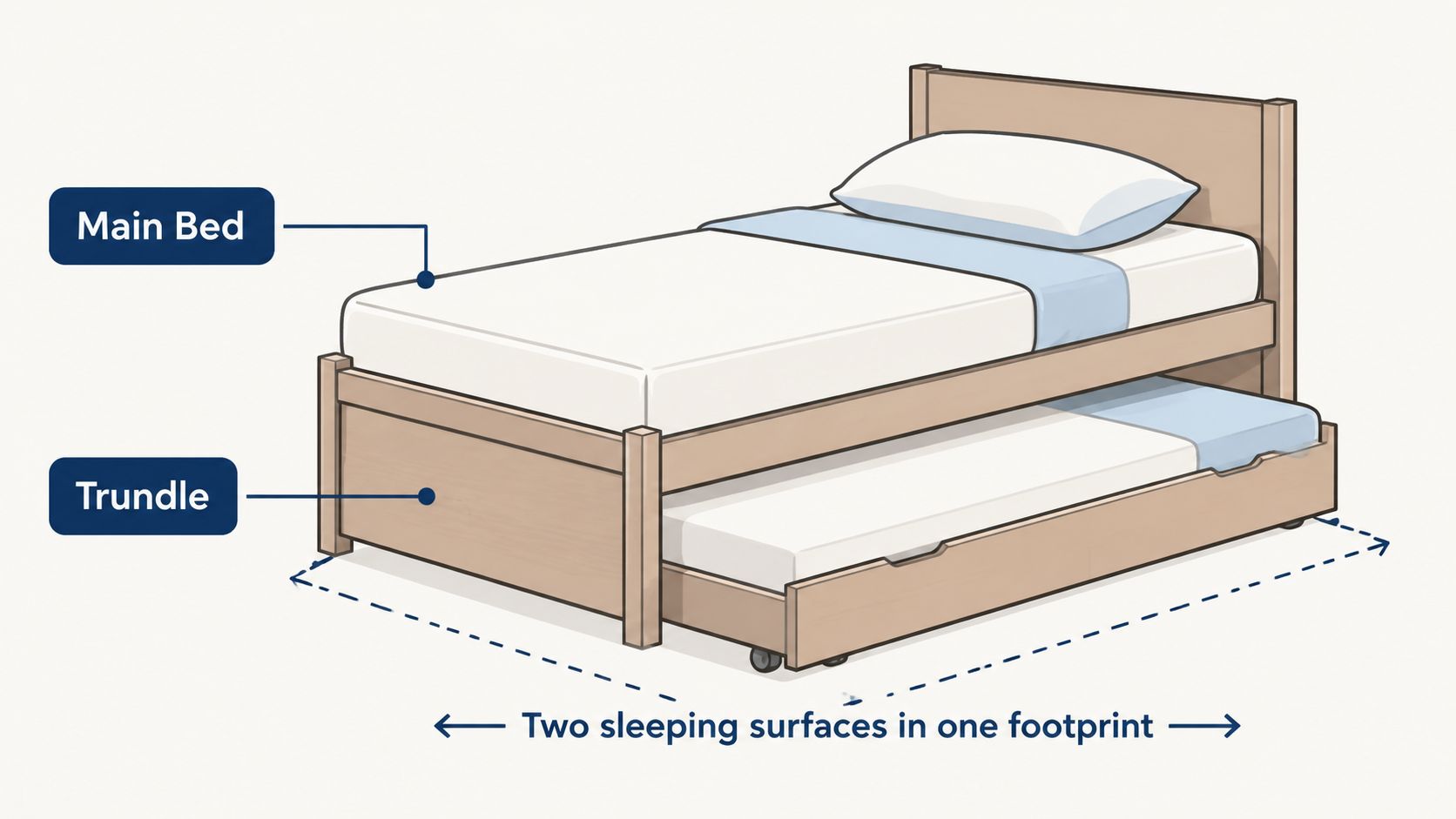
A trundle bed works because it gives a home two sleeping surfaces in the footprint of one bed. Modern retail descriptions usually frame it as a main bed with a second bed stored underneath on casters or a pull-out frame, and that's the part shoppers need to picture first. The lower bed stays hidden during the day, which keeps floor space open in small bedrooms, guest rooms, and children's rooms where every inch matters.
That idea isn't new. Trundle beds come from older daybed and guest-bed traditions, then show up in modern furniture because the need never went away. Homes still need occasional extra sleeping space, and not every house can spare the room for a permanent second bed. A trundle survives because it answers that problem without asking the room to do anything dramatic.
A useful comparison is a Murphy bed. A Murphy bed folds vertically into the wall, while a trundle hides horizontally beneath a second frame. Both save space, but they serve different room layouts and different levels of convenience. A trundle often feels easier in a child's room or guest room because the mattress stays close to the floor and the bed remains part of the room's everyday look.
The practical value is easy to understand with twin sizing. A standard twin mattress is typically about 38 inches by 75 inches, so a trundle arrangement can sleep two people while taking up roughly the floor area of one bed during the day. That's why trundles keep showing up in value-minded homes and in rooms where daily openness matters as much as nighttime function.
Two sleeping spots only help if the room still feels usable in daylight.
For families trying to keep a room light, tidy, and flexible, that balance is the whole point.
Choosing the Right Trundle for Every Use Case
A guest room trundle and a daily sleeper trundle are not the same purchase, even if they look similar at first glance. A bed that only gets used when relatives visit can stay low-profile and simple. A bed that might host a teenager, a spouse, or frequent overnight guests needs a different comfort level and a different mechanism.
The safest way to think about it is by room purpose. A spare room that doubles as an office usually benefits from a trundle that disappears neatly during the day. A child's room often works well with a pull-out setup because sleepovers are the priority and the bed can stay close to the floor. A room that needs to function as a more polished daytime space calls for a design that keeps the profile quiet and the visual lines clean.
A useful buying guide angle is use-case nuance: best hidden guest beds vs daily-sleep solutions, helping shoppers choose between pop-up trundles for sleep quality and low-profile options for daytime living spaces.
- Occasional guest use: keep the setup simple, because the lower bed may only need to be pulled out a few times a year.
- Kids' sleepovers: prioritize easy access and a frame that handles repeated in-and-out movement without feeling wobbly.
- Daily or near-daily sleeping: look for a trundle style that supports a more upright sleep surface and a better overall rest experience.
- Room aesthetics: choose a cleaner-looking profile if the bed will stay visible during work hours or daytime family use.
A home in St. John may need the spare room to stay presentable for visiting family, while a house in Munster might use the same room as a study and guest space. The right trundle depends on which role matters most most of the time. For a broader room-planning idea, Groen's daybed with storage resource can help families think beyond the bed itself and consider how the whole room functions.
Matching Sizes and Mattress Compatibility
Many shoppers start with the frame style and end up frustrated later because the mattress doesn't fit the trundle compartment correctly. The frame may look fine on the showroom floor, but the lower bed still needs enough clearance to roll smoothly. If the mattress is too tall, the bed can bind, scrape, or refuse to slide back in without a fight.
That's why clearance geometry matters. The inside height of the trundle compartment has to be greater than the mattress height limit for that exact frame, and there still needs to be room for sheets and normal movement. Store testing should confirm that the casters roll smoothly and that the unit stays square and level when extended. A frame that looks sturdy but drags on the floor won't feel like a good value for long.
Groen's twin bed dimension guide is a useful place to start when a room is being measured from scratch, especially if the bed will sit in a smaller bedroom. For families comparing sleep setups, a size chart like SouthShore Fine Linens' daybed sizing resource can also help confirm how bedding and frame dimensions line up before anything gets ordered.
| Mattress Type | Typical Height | Recommended Clearance |
|---|---|---|
| Low-profile memory foam | Lower profile works best for tight trundle compartments | Leave extra room for sheets and easy rolling |
| Latex foam | Comfort-forward and often supportive in slimmer builds | Confirm the frame clears the full mattress height |
| Innerspring | Can feel familiar for guests if the profile stays within frame limits | Measure carefully, because coil height can affect fit |
The practical question is comfort versus frequency of use. If the bed is for occasional guests, a slimmer mattress profile may be enough. If the trundle will support a sleeper more often, the family should think carefully about material, feel, and how the mattress behaves once it's tucked under the main bed. A trundle only works well when the frame and mattress behave like a matched set.
Comparing Pull-Out and Pop-Up Mechanisms
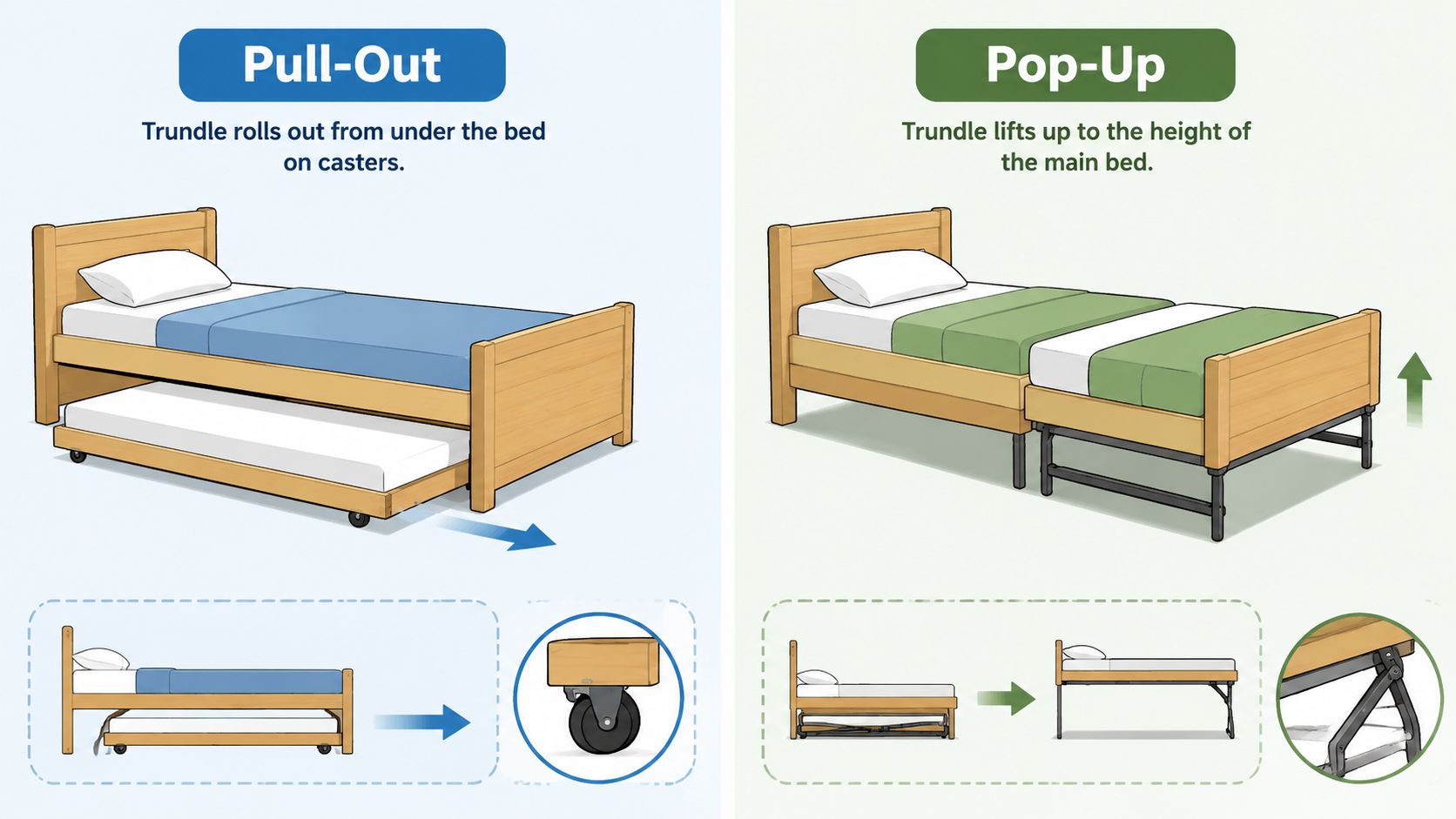
A pull-out trundle is the simpler of the two common styles. The lower bed rolls out on casters, usually staying low to the ground and keeping the setup discreet. That makes sense for a room that only needs extra sleeping space now and then, because the bed disappears cleanly and doesn't change the room's daytime character.
A pop-up trundle behaves differently. The lower mattress rises to a higher sleeping position, which can create a more usable height for an adult or a frequent guest. That extra height can matter in rooms where sleeping comfort matters more than keeping the bed as invisible as possible. The tradeoff is that the mechanism asks for more planning, more clearance, and a little more attention during setup.
The mechanism should match the way the room is actually used, not the way a product label sounds.
For a child's room, a pull-out setup often makes the most sense because the lower bed stays low and easy to access. For adult guests, a pop-up style can be the more comfortable route when the room gets used regularly. In a compact apartment or a studio-style room, the choice may come down to whether daytime openness or nighttime comfort matters more.
The visual difference is important too. A pull-out bed tends to stay out of the way, which helps a room feel open. A pop-up option can feel more like a temporary twin setup once it's extended. Neither approach is universally better. The right answer comes from the room's schedule, the sleeper's age, and the family's patience for setup.
Materials Construction and Ensuring Lasting Durability
A trundle bed gets judged by more than its finish. The frame has to move, support weight, and stay aligned after repeated use, so construction quality affects daily satisfaction in a very real way. Squeaks, loose joints, and sticky casters usually show up when the build was chosen for appearance first and function second.
Solid wood frames remain appealing because they feel substantial and age with more grace than flimsy alternatives. Amish solid wood craftsmanship is especially relevant for families who want a bed that looks at home in a bedroom today and still feels dependable years later. Groen's wood furniture guide is a helpful resource for anyone trying to sort out hardwood choices without getting lost in jargon.
Groen's Amish furniture is custom made, which means customers can select style, size, wood type, and finish. That made-to-order approach matters because a trundle often has to fit a real room, not a showroom ideal. The frame can be designed to work with the room's trim, flooring, and existing furniture instead of forcing the rest of the space to adapt.
- Check the joinery: tight joints usually hold up better than frames that rely on visual appeal alone.
- Test the casters: they should roll smoothly and keep the trundle level when extended.
- Look at the finish: the surface should fit the room and be easy to live with.
- Think about the sleeper: a more substantial build is often worth it when guests are older or the bed will see frequent use.
Upholstered trundles can make sense in some homes, but the frame still has to do the hard work underneath. If the structure is weak, the comfort layer can't fix it. A sturdy frame is what keeps the bed feeling stable on the second night and the tenth.
Styling Customization and Groen's Local Advantage
A trundle bed doesn't have to look generic, and families in Northwest Indiana usually know when a piece feels too plain for the room it lives in. That's where custom order work becomes useful, because the bed can be shaped around the home instead of around a narrow catalog choice. Groen's custom programs are designed to suit a customer's style, comfort, and budget for every room of the home, which fits the reality of bedrooms that need to coordinate with dressers, nightstands, and paint colors.
That same idea shows up in the broader custom-work culture at the store. Groen's states that its Amish furniture is made to order, and its Canadel program lets shoppers build dining pieces around their own preferences. A family that wants one room to feel warm, specific, and personal can use that same mindset in the bedroom without sacrificing practicality. Design it your way, but keep the bed comfortable enough to serve real people.
The local part matters too. Groen's has showroom locations in Dyer and Crown Point, and the company's Northwest Indiana presence gives families a place to see finishes and ask questions in person. The Dyer showroom is at 208 Matteson St., Dyer, IN 46311, and the Crown Point showroom is at 1510 North Main St., Crown Point, IN 46307. That kind of local access is useful when a family wants a bed that fits a room, not just a listing.
A custom trundle works best when the finish, function, and room layout are planned together.
For shoppers comparing budget and comfort, special financing can make a higher-quality piece easier to bring home, subject to credit approval. That gives families more buying power without pushing them toward a rushed decision. In a market where homes often need flexible furniture, the combination of made-to-order options and honest guidance is a real advantage.
Maintaining Caring for Your Trundle Bed
A trundle bed lasts longer when the moving parts get regular attention. Casters should roll smoothly, hardware should stay tight, and the frame should sit level every time the lower bed comes out. If the bed starts to wobble or drag, that's usually a sign to inspect the mechanism before it turns into a bigger problem.
Wood care matters too. A finished wood surface holds up better when it's cleaned gently and checked for wear from bedding, shoe scuffs, or repeated use. Groen's wood furniture care guide is a practical reference for keeping the frame looking right over time, especially in rooms that get more traffic than a typical bedroom.
Mattress protection is part of the maintenance picture as well. A quality protector helps guard against spills and daily wear, and a resource like Mattress Decoded's organic protector guide can be useful when a family is comparing bedding layers for a guest room or child's room. That kind of planning is especially helpful when the trundle may sit unused for stretches, then need to feel fresh immediately when guests arrive.
- Inspect locking points: make sure the bed stays stable when extended.
- Feel for sharp edges: trim or repair anything that could catch bedding or scratch a hand.
- Check weight guidance: the frame should be used within its intended limits.
- Listen for changes: new squeaks or scraping usually mean the mechanism needs attention.
A trundle is a smart piece of furniture only if it stays easy to use. Families who check the mechanism a few times a year usually avoid the frustration that comes from a bed that's hard to pull out on the one weekend it's really needed. For anyone ready to compare room-friendly options in person, visit Groen's Fine Furniture in Dyer or Crown Point today to explore custom choices and ask about special financing plans. Let our family help you create a home you love.
A CTA for Groen's Fine Furniture.