Blog
Designing a Custom Upholstered Sofa You Will Love


For homeowners in Dyer, Crown Point, and across Northwest Indiana, a custom upholstered sofa can solve more than a color problem. It can correct an awkward room proportion, improve circulation, support the way a family really sits, and create a more comfortable gathering place without forcing the household to settle for a warehouse shape. The right order starts with the floor plan, not the fabric wall.
The market is substantial. An independent estimate places the United States upholstered furniture market at USD 21.15 billion in 2025, with sofas representing 34.70% of revenue and residential demand representing 69.40% in that market view. Fabric accounted for 54.60% of the market in 2025, which reinforces how central upholstered seating is to everyday home furnishing decisions.
What a Custom Upholstered Sofa Really Means
A custom upholstered sofa is not just a standard sofa with a different color selected online. In a typical made-to-order program, the customer chooses a combination of dimensions, seat depth, arm height, cushion construction, fabric, leg finish, and configuration. A sectional may also be specified with a chaise extension, a particular return, or connectors placed to suit the room.
The frame is built or configured to the selected specification, then covered in the chosen upholstery. That distinction matters. A warehouse sofa has already been designed around a fixed proportion, while a custom upholstered sofa gives the buyer control over the relationship between the furniture and the room.
Custom is flexible, not unlimited
Most custom programs allow meaningful adjustments, but they don't turn every sofa into a one-off sculpture. A buyer can usually alter the sofa's width, depth, height, arms, cushions, and visible finishes within the manufacturer's construction system. The manufacturer may still limit the available silhouettes, proportions, seam placement, or configuration combinations.
That boundary is useful rather than restrictive. Proven frame designs have already been engineered for stability, comfort, and upholstery production. A customer receives a sofa with a coherent structure instead of paying for an experimental shape that may look impressive in a drawing but sit poorly in daily use.
Practical rule: Customization should solve a real room or comfort problem before it adds a decorative detail.
The history of upholstered seating explains why custom work remains a premium decision. A historical furniture overview notes that a traditionally upholstered sofa could require 300 to 600 hours of skilled hand labor before mechanization, which made custom seating a luxury craft for wealthy households. Industrial production later made upholstered furniture more accessible, but made-to-order work still preserves control over size, textile, finish, and comfort.
A realistic order journey
A sound custom order follows a clear sequence:
- Measure the room and delivery route.
- Choose the layout and proportions.
- Test frame, suspension, and cushion comfort.
- Compare fabric samples in the actual home lighting.
- Confirm the specification, lead time, and delivery requirements.
- Place the order through a showroom that can support the process.
Custom doesn't mean a one-week turnaround, unlimited shape changes, or an effortless return if the final dimensions were approved incorrectly. Made-to-order furniture deserves careful sign-off because the customer is purchasing a piece built around a particular home and lifestyle. A local showroom gives that conversation a practical setting, with a seat to test, samples to handle, and a specialist who can review the measurements before production begins.
Measuring Your Room and Planning Layout
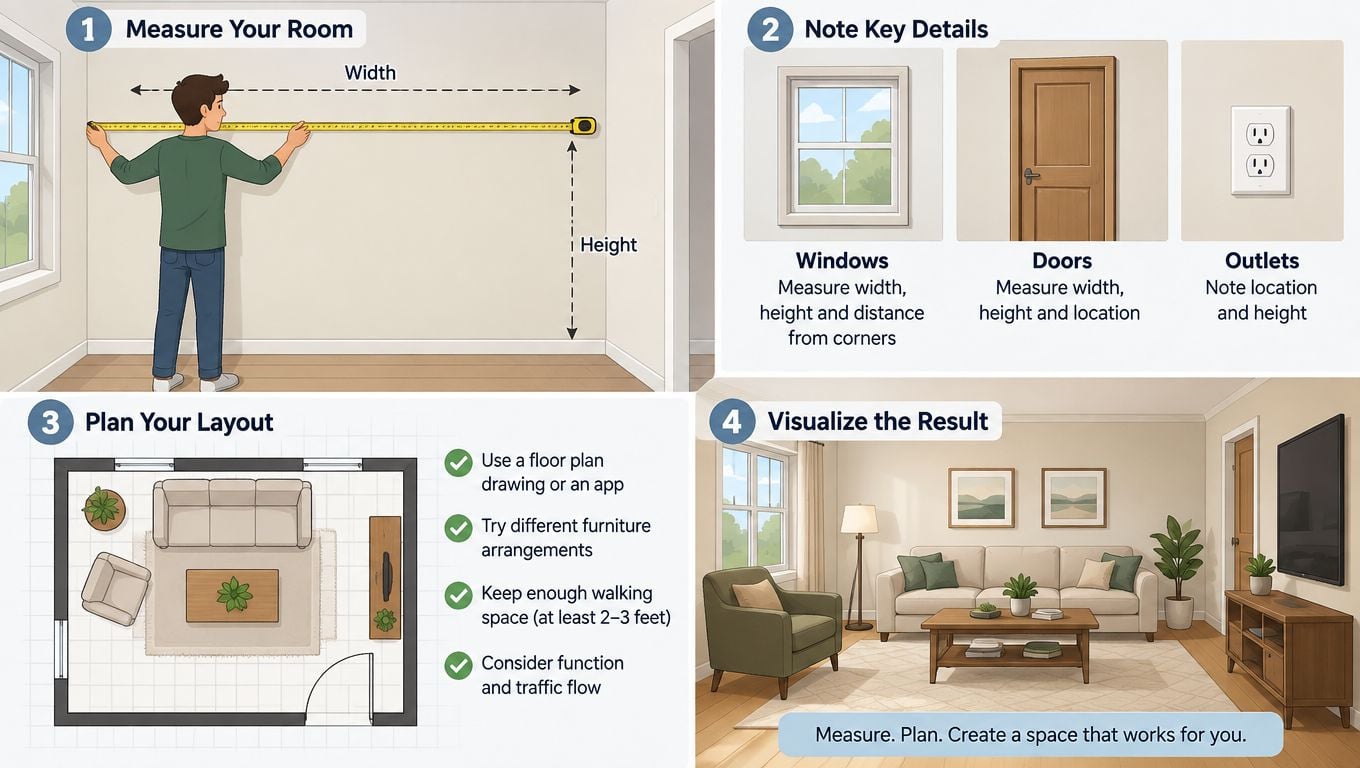
The most expensive mistake happens before fabric enters the conversation. A sofa can fit beautifully inside a living room and still fail at the front door, on a stairwell turn, in an elevator, or along a narrow hallway.
The first planning pass should follow the delivery route rather than the room. Measure the entry door, interior doors, hallways, ceiling height at tight turns, stair corners, and any railing or wall that reduces clearance. Tape gives a reliable answer. Guesswork doesn't.
Start with circulation
Once the delivery path works, map the room's movement. Mark the main walkway from the entry to the kitchen, the route to a patio or hallway, and the space needed around a coffee table. Note windows, radiators, vents, outlets, built-ins, and the television viewing position before deciding on sofa width.
A custom sectional needs even more attention. The return depth, bumper length, chaise extension, and connector position can change the usable walkway by a surprising amount. A right-arm-facing chaise may look correct on a plan but block the route that household members use most often.
The furniture measuring guide can help households organize those dimensions before a showroom appointment. It should be treated as a starting document, not a substitute for a delivery review.
Match seat depth to posture
Seat depth changes the way a sofa feels more than many buyers expect. A shallower seat supports upright conversation and makes it easier to stand. A deeper seat lets taller users stretch out or curl up, but it can leave shorter users sitting with their feet unsupported.
A useful showroom method is to compare several depths while keeping the back support in mind. The correct choice depends on body size, preferred posture, and whether the sofa serves formal conversation, family lounging, movie nights, or a mixture of all three. Arm height and seat height deserve the same attention because they influence how easily users enter and leave the sofa.
Use a simple layout test
Before selecting upholstery, households can mark the proposed sofa footprint on the floor with painter's tape. Cardboard templates can also show the difference between a standard sofa, a deeper sofa, and a sectional return. The goal isn't artistic perfection. The goal is to reveal whether the furniture leaves a comfortable route through the room.
A beautiful sofa in the wrong position becomes an obstacle every day.
The layout should be approved before a fabric swatch is pulled. Fabric affects the room's mood, but dimensions determine whether the sofa works at all.
Choosing the Frame, Suspension, and Cushion Build
A custom sofa's visible fabric gets attention, but the hidden construction determines whether the piece feels supportive and remains stable. The three decisions that deserve the most direct questions are frame material, suspension, and cushion build.
Kiln-dried hardwood is a strong frame benchmark. Common species include oak, maple, ash, and beech. Kiln-drying improves dimensional stability and helps reduce twisting, warping, and cracking over time. (Frame material guidance for upholstered furniture)
Engineered hardwood and mixed hardwood plywood can also be appropriate when the manufacturer uses them in the right places and reinforces the joints properly. Doweled joints, corner blocks, and reinforced connections generally deserve more confidence than a frame assembled with minimal support. A showroom advisor should be able to explain what sits beneath the upholstery without hiding behind the phrase “high quality.”
Suspension changes the sit
Eight-way hand-tied springs create a traditional, responsive feel and suit buyers who appreciate a more classic construction approach. Sinuous springs usually provide firmer support with a compact construction. Webbing or platform bases can support clean modern silhouettes, although the exact experience depends on the entire frame and cushion combination.
The suspension shouldn't be judged separately from the cushion. A firm spring system with a dense foam cushion can feel structured, while a more flexible base paired with a soft down blend can create a relaxed seat. Sitting on the actual model remains more useful than choosing from a specification sheet alone.
Make cushion specifications concrete
For standard residential comfort, upholstery guides commonly place foam density around 1.8 to 2.5 pounds per cubic foot, with approximately 25 to 35 ILD for typical comfort and 33 to 45 ILD for firmer or higher-traffic builds. Density describes the material's weight and resilience, while ILD describes the force required to compress it. Both matter. (Foam density and ILD guidance for sofa cushions)
A high-resilience foam core wrapped in down or fiber offers a clean shape with a softer surface. All-down cushions create a loose, enveloping feel but require regular maintenance. Hybrid constructions sit between those extremes and suit households that want softness without constant reshaping.
| Component | Option | Typical Spec | Feel | Best For |
|---|---|---|---|---|
| Frame | Kiln-dried hardwood | Stable hardwood construction with reinforced joints | Substantial and grounded | Long-term residential use |
| Suspension | Eight-way hand-tied springs | Traditional spring system | Responsive and classic | Buyers who prefer a flexible sit |
| Suspension | Sinuous springs | Continuous steel spring support | Firmer and more structured | Everyday family seating |
| Cushion | High-resilience foam with wrap | 1.8 to 2.5 lb/ft³ foam range | Supportive with surface softness | Balanced daily comfort |
| Cushion | Foam with firmer ILD | 33 to 45 ILD for firmer builds | More upright and stable | Higher-traffic seating |
Buyers interested in the relationship between frame construction and built-in furniture can also review residential interior carpentry services for useful construction context. For sofa-specific frame questions, the solid wood frame sofa guide gives households a practical checklist for the showroom floor.
Picking a Fabric That Will Hold Up
Fabric should support the room's actual behavior. A formal sitting room used mainly for weekend guests has different demands from a family room with children, pets, snacks, and daily lounging.
Cotton and linen blends offer a breathable, natural appearance and a relaxed hand. Velvet brings depth and softness, but its surface can show pressure marks and directional shading. Leather develops its own character and can be easy to wipe, although it requires care suited to the specific finish. Performance weaves, including Crypton and Sunbrella categories, are designed for households that prioritize stain resistance, moisture resistance, or easier maintenance.
Read wear ratings in context
Martindale and Wyzenbeek double-rub ratings measure abrasion resistance through different testing methods. A rating is useful, but it isn't a complete buying decision. Fiber content, weave tightness, pile direction, color, sunlight, and cleaning habits all affect how fabric behaves in a home.
A 15,000-rub fabric and a 100,000-rub fabric shouldn't be treated as interchangeable, but the higher figure doesn't automatically make a textile more comfortable or more attractive. Some high-performance fabrics can feel more technical, while a lower-rated natural blend may suit a lightly used room better. The rating should match the use rather than become a contest.
| Fabric Category | Double-Rub Rating | Best For | Care Level |
|---|---|---|---|
| Cotton and linen blends | Review the tested rating for the selected weave | Relaxed rooms and moderate use | Moderate |
| Velvet | Review the tested rating and pile behavior | Formal rooms and accent seating | Higher |
| Leather | Abrasion rating varies by finish | Durable, tailored interiors | Moderate |
| Performance weave | Often selected for demanding daily use | Families, pets, and busy rooms | Lower to moderate |
For a broader review of natural, synthetic, and performance upholstery, the Woodstock Furniture & Mattress Outlet tips offer a useful vocabulary for comparing fabric categories. Households can also consult upholstery material guidance before narrowing the swatches.
Test color and scale at home
Long sofas need patterns with enough scale to remain balanced across the full width. A small repeat may look busy, while a large pattern can create a strong focal point and require careful matching at seams. Light tones open a room visually but show marks sooner. Dark tones conceal some daily wear but can make a large sofa feel heavier.
A showroom sample should spend time in the home. Tape the swatch near the sofa location and check it in daylight, evening light, and beside the room's flooring and wall color. A 48-hour observation period is a practical way to catch a tone that shifts under the home's lighting, though this recommendation is a process preference rather than a measured industry standard.
Understanding Lead Times and the Order Process
Custom furniture moves through several hands before delivery. A straightforward order can take 8 to 14 weeks, but that estimate isn't universal and can stretch during busy fall and spring periods. Neutral industry reporting places average furniture order-to-delivery cycles at 16.3 weeks, compared with 11.8 weeks in late 2022, and notes that upholstered goods face added requirements involving component disclosure, certification, and testing. (Furniture trade lead-time reporting)
Follow the order stages
A typical process looks like this:
- Design consultation: The household discusses use, dimensions, comfort, fabric, and configuration.
- Specification confirmation: The showroom records the approved measurements, finish, cushion build, and textile.
- Frame construction: The workshop builds or configures the frame to the approved specification.
- Fabric cutting and sewing: The upholstery team cuts, aligns, and sews the selected material.
- Cushion assembly: The chosen foam, down, fiber, or hybrid fill is prepared and fitted.
- Quality inspection: The completed sofa is checked for finish, upholstery, movement, and order accuracy.
- White-Glove Delivery scheduling: The delivery team confirms access, timing, and placement.
- Final placement: The sofa enters the home, is positioned, and the room is checked for fit.

Control the preventable delays
Backordered fabric, custom leg finishes, and special-size configurations can extend the schedule. Specification changes create another avoidable delay because the order may need to return for approval or re-enter production planning.
Households can protect the schedule by approving swatches promptly, confirming the exact doorway measurements, and checking that the selected configuration matches the room plan before production begins. The custom order starting guide can help organize those decisions before the final sign-off.
The most useful question isn't “How long will it take?” It is “Which parts of this specification control the timeline?” That answer reveals whether the delay comes from fabric availability, construction, shipping, or a late design change.
Why Buying Local Matters for a Custom Sofa
An online configurator can display combinations, but it cannot show how a cushion responds to your body or whether the sofa fits the room's circulation. Start with the layout. A local showroom lets you test seat depth, arm height, cushion firmness, and frame scale in person before fabric becomes the focus.
Sit in the exact posture you expect to use at home. Check whether your feet rest comfortably, whether the seat leaves enough room to move through the space, and whether a sectional would block a doorway or create a tight passage. Those decisions shape how the room works every day.
Lighting matters too. Fabric on a screen can look different beside a window, hardwood floor, painted wall, or existing rug. A local design consultation lets you compare samples under real conditions and discuss how the sofa should relate to the rest of the room.
Service continues after the order
Custom buying includes delivery planning and follow-up. A local team can review the delivery route, identify a sectional connector issue, and coordinate White-Glove Delivery and in-home placement. If a seam loosens, a cushion needs attention, or a construction question arises after delivery, the showroom provides a direct point of contact instead of an anonymous chat window.
That relationship supports long-term ownership. A quality frame can remain useful when the room's style changes. Reupholstering or refreshing cushions later becomes a practical discussion about the existing piece, its construction, and the household's new needs.
Local knowledge has practical value
Groen's Fine Furniture serves Dyer, Crown Point, St. John, Schererville, Munster, and surrounding Northwest Indiana communities through a family-owned operation established in 1983. Its service model includes custom furniture guidance, upholstery selections, interior design support, and a five-star customer-service focus. The showroom also carries a range of living room, dining, and solid-wood furniture categories with multiple style and finish options.
The visit can support other comfort decisions as well. Households comparing mattresses can use a helpful guide focused on health, rest, and sleep wellness, with a curated selection of mattress brands available through the store. Keep the appointment centered on the sofa first, especially its size, comfort, and effect on room flow.
Care, Financing, and Your Next Step
Care begins with the selected fabric and cushion construction. A down-wrapped cushion needs more attention than a firm, tightly woven foam cushion. Performance weaves may simplify spill response, while natural fibers often reward quick, gentle treatment rather than aggressive scrubbing.
A practical routine includes:
- Reshape down-wrapped cushions: Rotate and fluff them weekly so the fill doesn't settle unevenly.
- Vacuum performance weaves: Use a soft brush attachment to remove dust without rough treatment.
- Blot natural-fiber spills: Press with a clean absorbent cloth instead of rubbing the mark deeper into the weave.
- Rotate the sofa seasonally: Change the exposure pattern where possible so sunlight doesn't affect one area repeatedly.
- Keep the cleaning code available: Store the manufacturer's care information with the order paperwork.
Professional cleaning should follow the fabric maker's guidance and the sofa's use. A busy family room may need attention sooner than a formal sitting room, but there isn't one universal interval for every textile. The cleaning code, fiber content, and professional cleaner's experience should control the decision.
Keep the order paperwork
A custom sofa file should include the approved dimensions, fabric name and code, cushion construction, frame information, finish selection, delivery record, and warranty terms. Warranty coverage may differ for the frame, suspension, fabric, and cushions, so buyers should avoid assuming that one term applies to every component.
That file helps with future service. It also gives a household a clear record if replacement cushions, matching pillows, or reupholstery becomes relevant later. A showroom that supports the order should be able to explain what the warranty covers and what care actions could affect it.
Visual documentation can help during planning, especially for households working with an interior designer or coordinating several rooms. Resources for clients with virtual tours show how visual presentations can make spatial decisions easier to review before a final selection. Room photos, a rough floor plan, and measurements remain valuable even when the appointment happens in person.
Plan the financial side early
Custom furniture requires a clear conversation about the deposit, the remaining balance due at delivery, and the payment method that fits the household's budget. The exact deposit and balance structure varies by order, so the showroom should state those terms before approval.
Furniture retailers commonly offer special financing to expand buying power. One available example advertises up to 12 months of special financing, subject to approval terms. (Example special financing information) Promotional plans and longer-term equal-payment options can change, so customers should review the current terms, approval requirements, payment schedule, and consequences of missed payments before choosing a plan.
Groen's Fine Furniture offers Special Financing subject to credit approval, allowing Northwest Indiana households to consider quality furniture while fitting the purchase into a broader budget. The sound approach is to select the sofa construction and layout first, then discuss financing directly rather than weakening the frame or cushion specification to chase an arbitrary number.
The next appointment should include room photographs, rough measurements, doorway dimensions, preferred configurations, and a few fabric ideas. A showroom visit in Dyer or Crown Point gives the household a chance to test the comfort, review construction, compare upholstery, and ask about White-Glove Delivery before placing a made-to-order sofa.
Groen's Fine Furniture offers custom furniture guidance, upholstery and finish selections, comfort testing, and service for homeowners across Northwest Indiana. Visit Groen's Fine Furniture in Dyer or Crown Point with room photos and measurements to test drive the comfort, explore a custom upholstered sofa, and ask about Special Financing plans.