
Blog
Furniture Cleaner Guide for Every Material in Your Home


For homeowners in Dyer and Crown Point, a fresh spill on a sectional, a water ring on a dining table, or a pet mark on an accent chair isn't just annoying. It's the moment when a good piece either gets protected or gets shortened by the wrong cleaner. At Groen's Fine Furniture, that matters because the homes we serve across Northwest Indiana, including St. John, Schererville, and Munster, often hold custom dining pieces, solid wood tables, and upholstery meant to last for years, not just until the next season.
Furniture cleaner is really a preservation decision. The right product and the right method protect finish, fabric, and comfort, while the wrong one leaves residue, dulls a surface, or pushes a stain deeper into the piece. That's why our family treats care as part of ownership, especially with heirloom-quality furniture, made-to-order dining, and performance upholstery that deserves to stay beautiful instead of just looking clean for a day.
Why the Right Furniture Cleaner Matters in a Real Home
A Saturday morning spill usually starts small. A mug tips, a kid runs through the room, a pet brushes a cushion, and someone grabs the nearest bottle under the sink because it sounds strong enough to fix the problem fast. That's where the real damage starts, because quick fixes can leave behind residue, set stains deeper, or weaken finishes over time.
Practical rule: if the cleaner is doing all the work and the fabric or finish is taking the punishment, the wrong product is in play.
This is especially true on pieces people plan to keep. A Canadel dining set, an Amish solid wood table, or a Flexsteel sectional isn't a temporary purchase, it's a long-term part of the home. The bigger risk is not the spill itself. It's the habit of treating every surface like it can handle the same spray, the same scrub, and the same amount of moisture.
Professional guidance on furniture care starts with inspection, dry soil removal, patch testing, and the correct sequence of cleaning steps, because that order reduces residue, dye bleed, and re-soiling. For managers who want a deeper process view, the 2026 manager's upholstery vetting guide is a useful reference point for how careful upholstery evaluation supports better outcomes. That same logic applies at home. If a cleaner leaves the room looking good but the fabric feels tacky later, it didn't really solve the problem.
For families in Northwest Indiana, preventive preservation beats emergency scrubbing every time. The piece keeps its look longer, and the owner avoids the cycle of cleaning damage that slowly makes furniture look tired before its time.
Read the Piece Before You Touch the Stain
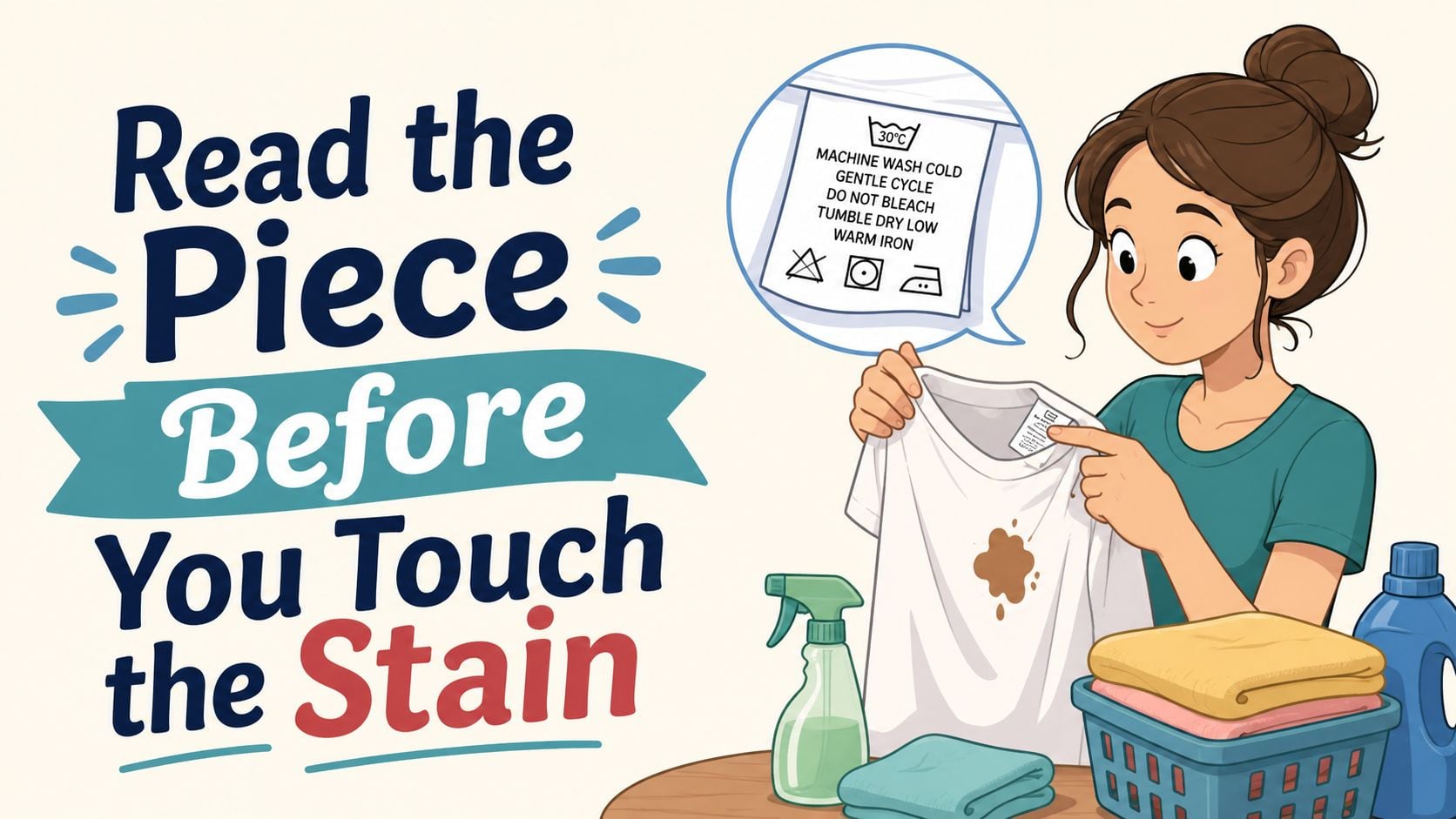
The first move is not the bottle. It's the tag. Upholstery codes tell you whether the fabric can take water, solvent, both, or almost nothing at all, and ignoring that tag is how people turn a spot into a full-panel problem. W means water-based cleaning is allowed, S means solvent only, WS means either approach may work, and X means vacuuming only, no liquid cleaning at all.
A performance fabric on a Flexsteel or Bassett piece often handles ordinary maintenance better than a delicate weave, but that doesn't make it invincible. Texture, color, and backing still matter, and any cleaner should be tested in a hidden spot before it touches the visible face of the furniture. A quick patch test takes less time than repairing dye transfer.
A five-minute pre-clean check
- Find the code tag: Check the underside, back seam, or cushion zipper area before doing anything else.
- Vacuum first: Remove hair, lint, and dry grit before any moisture is applied.
- Test in a hidden spot: Use a small amount of the chosen cleaner and wait for color change, texture change, or residue.
- Match the method to the material: Water on the wrong fabric, or solvent on the wrong finish, causes avoidable damage.
- Work small: Clean one section at a time instead of soaking the whole piece.
Professional upholstery standards also put dry soil removal before wet cleaning, and that makes sense in real homes. If dust, crumbs, and grit stay trapped in the pile, liquid cleaner turns them into mud and pushes them deeper. A careful vacuum pass is boring, but it's the step that keeps the cleaning from becoming a mess.
The sequence matters because it gives the cleaner a fair shot. Start dry, test first, then clean.
DIY Recipes Versus Commercial Furniture Cleaners
The internet loves a pantry recipe. Vinegar, olive oil, dish soap, baking soda, and club soda all get promoted as miracle fixes, but they don't behave the same way on every material. Some are fine for a quick refresh. Others leave streaks, greasy residue, or a finish that looks worse an hour later than it did before the wipe-down.
A commercial furniture cleaner is usually more predictable because it's made for a specific job, such as upholstery spotting, wood care, or leather maintenance. A DIY mix can work on the right surface, but the margin for error is much smaller. That's why “natural” isn't the same thing as “safe,” especially on custom or heirloom furniture where finish damage costs more than the stain itself.
| Cleaner Type | Best For | Residue Risk | Finish Risk |
|---|---|---|---|
| DIY vinegar mix | Light odor control on some washable surfaces | Moderate | Moderate to high on wood and delicate finishes |
| Dish soap and water | Spotting certain washable upholstery stains | Moderate if overused | Moderate if the fabric isn't coded for water |
| Baking soda | Dry odor management and some dry soil lifting | Low to moderate | Low on dry surfaces, higher if scrubbed into finish |
| Olive oil blends | Rarely recommended, and only for very specific wood touch-ups | High | High on upholstery and some finished wood |
| Water-based spray cleaner | Routine upholstery refresh on approved fabrics | Low to moderate | Low when used correctly |
| Solvent spot remover | Stubborn spots on solvent-safe fabrics | Low if targeted | Moderate to high if used on the wrong material |
| pH-neutral leather formula | Leather cleaning and conditioning support | Low | Low when matched to leather care needs |
For wood care, a disciplined wipe and dry approach is smarter than a kitchen remedy that leaves shine but attracts dust. For leather, a pH-neutral formula is the safer lane because it respects the material instead of stripping it. For upholstery, a proper spot cleaner usually beats a homemade blend because it's built to lift soil without flooding the fabric.
One useful rule from our showroom floor is simple. If the cleaner leaves the material feeling tacky, slick, or overly fragrant, it's already asking for trouble.
For customers comparing care approaches across fabric types, the internal guide on fabric sofa cleaning is a practical companion.
Material by Material Care Routines
Each material needs its own rhythm. Treat upholstery like wood and you'll oversaturate it. Treat wood like leather and you'll leave buildup behind. Good care starts with matching the cleaner to the surface, then staying disciplined about how often it's used.
Upholstery and performance fabric
Vacuum seams, creases, and cushion edges first. Then spot clean only where needed, using the mildest approved cleaner for the fabric code. Performance fabrics on Flexsteel or Bassett pieces usually tolerate routine care better than more delicate upholstery, but they still need a patch test before any stain treatment.
Leather
Start with dry dust removal, then use a pH-neutral leather cleaner. Keep water use light and controlled, because the goal is to clean the finish without stripping it. Leather rewards restraint, and heavy scrubbing usually does more harm than the original mark.
Finished and unfinished wood
Use a cleaner meant for wood, not an all-purpose spray that leaves residue. On Amish solid wood and Canadel dining tables, the key is preserving the finish, not chasing high shine. Wipe, dry, and keep the surface free of standing moisture.
Microfiber
Microfiber often looks tougher than it is. It usually responds best to a small amount of approved cleaner and careful blotting rather than aggressive rubbing. A light touch keeps the nap from flattening and avoids the patchy look that shows up after over-cleaning.
If the wood care question goes deeper than routine dusting, the internal guide on how to care for wood furniture gives a stronger reference point for protecting finished surfaces.
For anyone comparing broader surface care choices, ask Buff & Coat Hardwood Floor Refinishing for a useful look at how cleaner choice affects wood surfaces in the home. The same caution about residue and finish damage applies to furniture, just on a smaller and more visible scale.
A clean piece should still feel like itself when the job is done. If the shine feels artificial or the texture feels stiff, the cleaner was too harsh or too heavy-handed.
Stain Removal Troubleshooting by Problem
Coffee, wine, ink, grease, pet accidents, and water rings all behave differently. That's why the same spray doesn't belong on every spill. The cleaner matters, but the technique matters more, especially when the stain has already started to set.
For upholstered pieces, blot first and never grind the stain in. A gentle spot treatment works better than a hard scrub because the goal is to lift the contaminant out, not smear it through the fibers. On wood, a water ring often needs a careful drying and finish-aware approach, not more liquid. On leather, the wrong product can spread a stain and alter the sheen.
Here's the blunt truth. Coffee and red wine on fabric often respond best to fast blotting and a fabric-safe spot cleaner, while ink usually demands even more caution because rubbing can spread it. Pet accidents are the problem where speed matters most, because moisture and odor can move into padding if the spill isn't handled right away. Grease needs a targeted cleaner, not more water.
For deeper upholstery issues, the internal how to clean leather couch guide helps frame why leather stains need a different response than fabric spots. Leather and upholstery are not interchangeable just because they both sit on a sofa frame.
A few hard rules save furniture:
- Don't overspray: Too much liquid can push stains deeper and leave rings behind.
- Don't scrub aggressively: That can damage fibers, lift dye, or polish a spot unevenly.
- Don't reach for bleach on dyed fabric: Bleach changes color, and that damage doesn't rinse out.
- Don't treat a big spill like a tiny spot: A full-panel clean may be needed if the spill spread wide.
The difference between spot removal and full-panel cleaning matters in homes with kids and pets. A small ring that dries unevenly can be harder to live with than the original spill, and that's where patience pays off. Clean the problem area correctly the first time, and the fabric usually gives the piece back its original look.
Preventive Habits That Extend the Life of Your Furniture
The cheapest clean is the one that never has to happen. Routine vacuuming with the right attachment, cushion rotation, and quick attention to dust are what keep a good piece from aging early. That's not glamorous, but it's how higher-value furniture stays higher value.
Furniture care also has a health side. A peer-reviewed PubMed study found asthma prevalence was 1.7 times higher among cleaners than among referents, and it was highest among private home cleaners at 3.3 times the referent group. The same study reported that more than half had work-related respiratory symptoms, with furniture polishing and spray use tied to risk. The practical answer is clear, use fragrance-free products, keep the room ventilated, and spray onto a cloth or sponge instead of into the air.
For wood furniture, the internal how to care for wood furniture guide fits neatly with the basics here. Keep solid wood away from harsh sun, use coasters, and don't let moisture sit. For leather, gentle conditioning and light cleaning are enough to maintain the finish without overworking the surface.
Habits worth keeping
- Vacuum weekly: Dry soil is easier to remove before it becomes embedded.
- Rotate cushions: Even wear keeps a sofa from sagging or fading unevenly.
- Use coasters and throws: Small barriers prevent avoidable marks in high-use spots.
- Control sunlight: Direct sun can age wood and fabric faster than normal room use.
- Ventilate during cleaning: Fresh air reduces exposure and helps drying.
For water-related damage, the guide to fix water damaged furniture is a useful resource when the problem is bigger than a simple spill. A furniture cleaner won't solve soaked padding or a swollen wood surface, and pretending otherwise only delays the repair.

The best habit is still restraint. Clean gently, clean early, and stop before the surface starts telling on the method.
Visit Groen's Fine Furniture in Dyer or Crown Point
If a piece at home needs a cleaner but the fabric code, finish, or stain type isn't obvious, bring photos and details to our team in Dyer or Crown Point. Our family has served Northwest Indiana since 1983, and we're glad to help customers think through care for a Flexsteel sectional, a Canadel dining set, or Amish solid wood furniture without guessing. If the right solution is a custom order instead of a replacement, we can help with that too, and special financing is available subject to credit approval.

Visit our Dyer location and let our family help you protect the furniture you already love, or choose the next piece that fits your home better. We'll talk through custom options, practical cleaning care, and the kind of 5-star service that keeps Northwest Indiana families coming back.
Visit Groen's Fine Furniture in Dyer or Crown Point today to explore our custom options and ask about our special financing plans. Let our family help you choose furniture that's easier to care for, built for real life, and ready to stay beautiful in your home for years.