Blog
Extra Wide Chairs: How to Choose the Right Fit

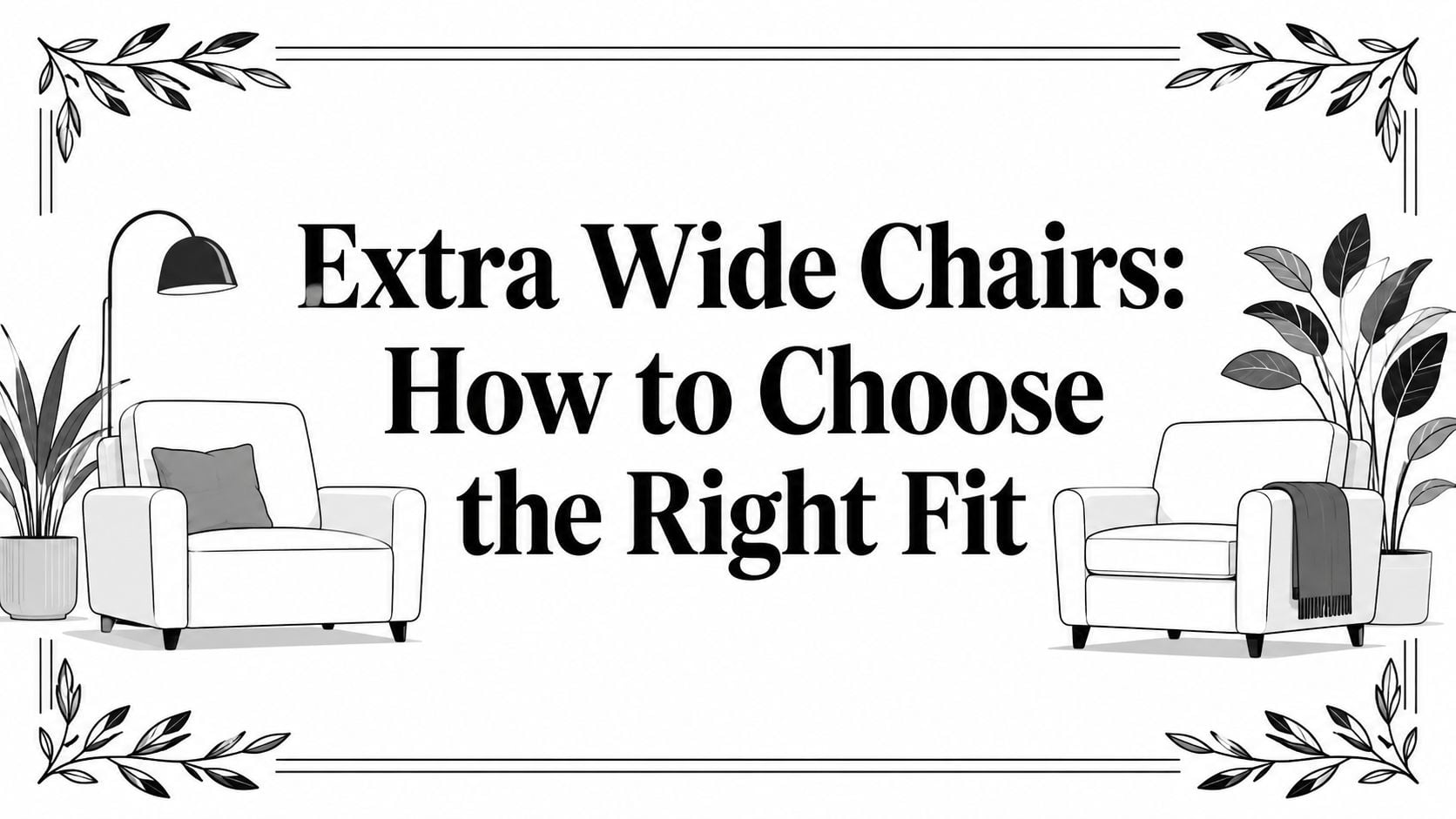
For homeowners in Dyer and Crown Point who are tired of sitting in chairs that pinch at the shoulders or feel too shallow in the seat, the problem usually isn't just comfort. It's fit. Our family has watched that same moment happen for decades, when someone sits down, shifts twice, then says the chair just doesn't work for real life anymore.
That's why extra wide chairs deserve a straight answer, not a showroom buzzword. The right chair can support a larger body, make room for aging joints, or give two people a place to sit without feeling jammed together. The wrong one can look generous and still feel tight where it matters most. We see that every week from shoppers coming in from St. John, Schererville, and Munster, and the fix always starts with measuring the right things.
Finding Comfortable Seating in Northwest Indiana
A couple from Crown Point walks into the showroom after trying three chairs at home and finding every one of them too narrow across the arms. A retiree from Dyer says the seat feels fine at first, then the shoulders start to crowd and the day gets uncomfortable fast. A parent from Munster wants one deep chair that can hold both them and a child for a story before bed. Those are not unusual requests, they're the normal ones.
We've built our business around those real-life moments since 1983. Our family's job is to match a chair to the person, the room, and the way the home gets used. That's the difference between buying furniture and settling for it.
For shoppers across Northwest Indiana, the question isn't whether a chair looks oversized in a catalog. The question is whether it fits the body without squeezing the shoulders, whether it leaves room to stand up easily, and whether it will still make sense once it's in the living room, not just on the sales floor. That's why a practical guide matters more than a pretty label.
You'll also notice that the best advice in furniture always comes back to the same thing, honest fit and honest service. That's true whether the chair ends up being a plush lounge piece, a sturdier wide-frame seat, or a custom order built to a particular body shape and room size. For a closer look at where our showrooms serve homeowners across the region, our Northwest Indiana furniture stores are where those conversations usually start.
Practical rule: a chair should feel easy the moment someone sits down, not after they “get used to it.”
What Counts as an Extra Wide Chair
The phrase extra wide sounds simple, but the number on a product page can mislead you. What matters is the usable seat width, the arm-to-arm clearance, and the seat depth. Those three measurements tell you whether a chair will fit a real person in a real room.
For clothed users, ergonomic guidance commonly puts seat width around 20 to 22 inches, with broader fits needing 22 inches or more. Commercial seating specifications also show that usable seat width often falls in the about 19 inches to 28 inches range. The tight point is usually the space between the arms, not the outside shape of the chair ergonomic guidelines, commercial seating specifications.
The three measurements that actually matter
Seat width is the sitting surface from side to side where the body makes contact.
Arm-to-arm clearance is the space that decides whether the shoulders sit naturally or get pressed in.
Seat depth affects thigh support, posture, and whether the front edge cuts into the legs.
A chair can look oversized from the outside and still feel narrow once someone sits down. That is why adjustable arms matter so much. In some commercial designs, movable arms can add up to 2 inches per side of lateral room, and that extra space can change a chair from cramped to usable.
Wide lounge chairs are a different category. A commonly cited size for that type is 60 inches or more in width, and that scale can leave enough room for two people to share it for a short time extra wide chair sizing guide. That is not the same thing as a wide single-person chair, and buyers should not mix the two.
Useful shorthand: if the product page lists only overall width, keep looking until the usable seat width and arm spacing are clear.
Who Really Needs an Extra Wide Chair
Some people need more room because a standard chair presses at the hips, shoulders, or thighs. Others need a seat that makes standing up easier, or a chair that lets two people sit close without feeling jammed together. The use cases differ, but the rule stays the same. The chair has to fit the person first.

Different households need different width
A larger-bodied shopper usually needs a broader seat pan and enough arm clearance to sit without shoulder pressure. For that buyer, width alone is not enough. The frame has to be built to handle more weight and daily use, too. Heavy-duty seating examples often pair a wider seat with reinforced construction and 400 to 650 lb capacities heavy-duty seating examples. That kind of build tells you the chair is meant to do real work, not just look oversized on the showroom floor.
An older adult may care less about dramatic width and more about easy transfers. A seat that sits too low, runs too deep, or feels tight at the arms can make standing up harder than it should be. A chair with the right seat depth and clear arm-to-arm space gives the body a better chance to move in and out without strain. That is the difference between a chair that looks comfortable and one that helps.
Couples and parents often want a shared chair that is useful, not a novelty. A lounge piece around 60 inches or more can work well for that, especially in a den or family room where someone wants to sit close for conversation, reading, or a quick rest. For readers comparing seating types, a practical wide lounge chair sizing guide can help separate a true shared lounge chair from a wider single-seat chair.
A wide chair is not only for larger bodies. It is also for anyone who wants easier movement, less crowding, or a more generous place to sit together.
Styles and Materials to Consider
The right style depends on how the chair will be used every day, not just how it looks in the store. A wide chair in a family room needs different materials than one in a reading corner or a more formal sitting room. The goal is simple, choose a finish that fits the room and a seat that still feels comfortable after real use.
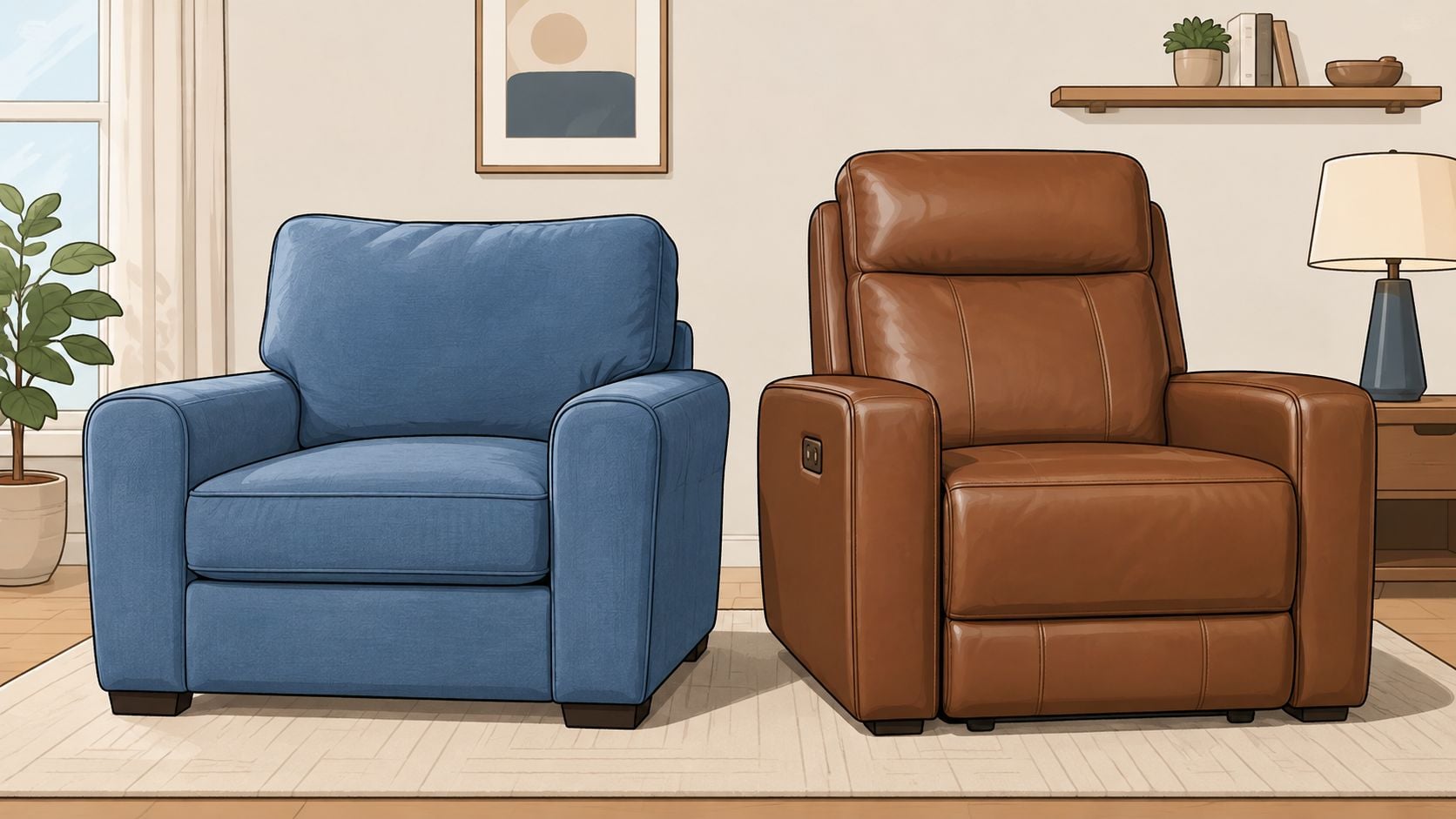
Upholstery, leather, wood, and motion each solve a different problem
Upholstered lounge chairs make the most sense when softness and day-to-day comfort matter most. Performance fabrics are practical on a larger seat because they hold up better in busy homes and are easier to live with. Homeowners who want a clearer sense of upkeep should review best upholstery cleaning methods before they choose a fabric, because maintenance is part of the purchase.
Leather and bonded leather bring a cleaner, more classic look. They fit formal rooms well and also work in homes where the chair should read as polished instead of oversized. A wide frame looks better in leather when the silhouette stays simple and the lines stay tight.
Solid wood frames with cushioned seats make sense for buyers who want a heavier, heirloom feel. That approach works especially well when craftsmanship matters, including Amish solid wood construction for people who want something made to order rather than mass produced. A made-to-order dining program follows the same logic, because it lets the buyer choose the right scale and finish instead of settling for a stock piece. A good primer on upholstery choices is also available in Groen's upholstery materials guide.
Recliners and motion chairs solve a different need. They combine wider seating with the ability to lean back, which is useful when the chair has to serve as both a rest spot and a daily living piece. For many homes, that mix of support and movement matters more than a decorative look.
Heavier-duty wide chairs also tend to pair broader seats with strong capacity ratings, and that matches how they are built. Width alone does not hold up a chair. The base, frame stiffness, and support distribution have to be built for the load.
Measuring Your Room and Your Body for the Right Fit
Bring the chair home only after you know what it will do to the room and to the person sitting in it. A wide chair can look perfect on a showroom floor and still fail in a real house if it blocks a doorway, crowds a walkway, or throws off the scale of the room. That is the mistake to avoid.
Start with the room footprint
Use painter's tape to mark the chair's footprint on the floor. A true oversized chair can take up a 60-inch-plus outline, which makes it easier to see whether the piece leaves enough open space around it wide chair footprint guidance. Check the path from the entry to the room too, because a chair that clears the room but cannot get through the house is still a bad buy.
Look at the taped outline from every angle that matters. Walkways, side tables, door swings, and the space needed to stand up without scraping a wall all matter more than a glossy photo. If the outline feels like it takes over the room, the chair is too large for that space. For a practical measuring refresher, use Groen's furniture measuring guide before you order anything.
Measure the body, not the brochure
Seat width has to match the hips and upper thighs. Seat depth has to leave the front edge off the back of the knees. Arm-to-arm clearance matters too, because a wide seat can still feel cramped if the arms pin the torso or force the shoulders inward.
A retail listing gives the numbers a useful shape. One extra-wide office chair listing shows an overall size of 33.5 inches wide, 33 inches deep, and 46 to 50 inches high, with a 28-inch seat width, a 22-inch seat depth, and a 19 to 23 inch seat-height range extra-wide office chair dimensions. That kind of sizing shows how a chair can stay generously sized while still giving some adjustability.
Rule of thumb: if the tape outline overwhelms the room, or the chair still crowds the shoulders, it is the wrong fit.
A bariatric-style listing gives another reference point. It shows 26 inch or 28 inch seat widths, 20 inch seat depth, 17.5 to 19.5 inch seat-to-floor height, 32 to 34 inch open width, and a 600 lb capacity bariatric seating dimensions. Those numbers make it easier to compare what “wide” means before you place an order.
Custom Orders and Amish Built Options
Sometimes the honest answer is that the standard wide chair still isn't wide enough, or it doesn't match the room. That's when custom work stops being a luxury and starts being the practical choice. Groen's custom order services let shoppers design it their way, with the right width, depth, fabric, and finish instead of forcing a close-enough compromise.
Why made-to-order solves the last fit problem
The off-the-rack world of extra wide chairs is limited. A made-to-order chair can solve the last inch or two that matters for shoulder room, arm clearance, or the way someone prefers to sit. That approach also works for families who want a piece that belongs in the home visually, not just physically.
For dining or gathering spaces, Canadel's custom dining program fits neatly into that idea, because it allows more specific design choices without treating every home like it has the same layout. For living spaces, Amish solid wood pieces bring a different kind of value, one built around craftsmanship and durability instead of disposable style.
This is also where a local store matters. Groen's family has served Northwest Indiana since 1983, with Dyer and Crown Point as the anchors and a reputation built on multigenerational ownership and 5-star service. That matters when the chair is being built or ordered for a real person, not just sold from a screen.
A good custom fit doesn't have to feel complicated. It should feel like the chair was made for the room, because that's exactly the point.
If the goal is a chair that fits a larger body, a specific room, or a more exact style, Amish furniture near me is a reasonable place to start looking at custom possibilities.
Delivery, Financing, and Bringing It Home
A good chair still has to get through the house. Oversized seating needs more planning than a standard armchair because the path from truck to room can be tight. Doorway clearance, hallway turns, stair landings, and ceiling corners all matter, especially when the chair has broad arms or a deep frame.
Make the purchase as practical as the fit
White-glove delivery takes the headache out of heavy furniture by handling the lifting, placement, and setup instead of leaving a boxed chair at the door. That's the right call for a larger chair, because a bulky piece usually needs more than just muscle, it needs people who know how to move it without damaging floors or walls. A smooth move requires the same kind of planning whether the home is in Northwest Indiana or someone is using planning a smooth house move in Melbourne as a checklist for what to think through.
Special financing helps too, especially when the chair is custom ordered or built with heavier construction. It gives buyers more buying power and helps fit the budget without pushing them toward a weaker chair just because it's easier on day one. That matters when the right piece is meant to last.
For room placement and setup, a helpful delivery overview can be found in Groen's furniture delivery and assembly guide. It gives shoppers a better sense of what happens after the sale, which is often where the true convenience shows up.
The point is simple. A good chair should be comfortable, and the buying process should be manageable too.
Test Drive Your Next Chair in Our Showroom
A spec sheet can't tell a shopper whether the arms feel right, whether the seat depth supports the thighs, or whether the chair makes standing up easy. Five minutes in the showroom usually says more than a dozen measurements on paper. That's why sitting down matters.
Our team sees it every day in Dyer and Crown Point. Someone comes in thinking they need a chair that's just a little wider, then finds out the core issue is arm clearance, seat depth, or the way the chair fits the room. Once those details are clear, the right choice gets a lot easier.
Groen's Fine Furniture also gives shoppers options when a standard chair isn't enough. Custom order services, Amish solid wood, and special financing can make a more specific fit possible without turning the process into a hassle. That's the advantage of shopping with a family-owned store that has stayed in Northwest Indiana since 1983.
Visit Groen's Fine Furniture in Dyer or Crown Point, sit in the chairs, and compare the feel of a wide seat against your own frame and your own room. That test drive is where the answer usually shows up.
Visit Groen's Fine Furniture in Dyer or Crown Point to test drive extra wide chairs, compare custom options, and ask about special financing. Our family will help you find a chair that fits your body, your room, and the way your home really works.