Furniture Delivery Services: NWI’s Guide to a Smooth Finish


A family in Dyer finally finds the dining set that feels right. The finish matches the floor, the size fits the room, and everyone can already picture holidays around it. Then the next thought shows up fast. How will it get home, who will bring it in, and what happens if something goes wrong at the last step?
That last step matters more than many shoppers expect. Furniture is heavy, often custom, and often meant to stay in a home for years. Delivery isn't just transportation. It's the handoff from showroom promise to everyday life in a real living room, bedroom, or dining space.
For households across Crown Point, St. John, Schererville, Munster, and the rest of Northwest Indiana, that's why furniture delivery services deserve close attention before a purchase is finalized. A smooth delivery feels easy. A poor one can make a beautiful piece feel like a mistake.
Why Your Furniture Delivery Matters in Northwest Indiana
In Northwest Indiana, many homes have tight entryways, stair turns, finished floors, and busy family schedules. A sectional might need careful maneuvering through a front hall. A solid wood bedroom set might need exact placement so nothing scrapes a wall or floor. Delivery day is where planning meets reality.
That's also where trust gets tested.
According to reporting on a Package.ai survey from Supply Chain Brain, 77% of consumers say they'll abandon a retailer after just one failed big-and-bulky delivery. That's a striking number, but it makes sense. If a store handles the final step poorly, customers often wonder what else was handled carelessly.
Delivery is part of the purchase
A sofa doesn't feel finished when it's paid for. It feels finished when it's placed correctly, inspected carefully, and ready to enjoy. The same goes for a custom Canadel dining set, a Bassett bedroom piece, a Flexsteel recliner built for daily use, or a solid wood Amish table made to become a gathering spot for years.
Practical rule: A furniture purchase isn't complete at checkout. It's complete when the piece is safely in place and the customer feels at ease.
That's especially true with made-to-order furniture. When a piece is designed around a customer's room, wood choice, stain color, or finish preference, delivery becomes the final personal step in that custom process.
The local difference customers can feel
Family-owned stores understand something large chains often miss. Delivery isn't a back-end task. It's part of service. It's one more chance to show care, communicate clearly, and protect the customer's home as well as the furniture.
That neighborly approach matters in NWI. People talk. They remember whether a team arrived prepared, treated them respectfully, and finished the job without stress. They also remember when a store made things hard.
For a multigenerational local business, that final impression carries real weight. It's one reason 5-star service isn't built only on the showroom floor. It's built curb to couch, doorway to dining room, and bedroom to bedside.
Decoding Furniture Delivery Service Levels
The phrase furniture delivery services sounds simple, but it often covers very different levels of help. One delivery may mean a boxed item left near the entrance. Another may include placement, assembly, and cleanup.
That confusion is common. As noted in this overview of furniture delivery trends, many shoppers confuse standard delivery with white glove services that include assembly and debris removal. When those details aren't clear, expectations and reality can drift apart.
The service levels most shoppers see
Three terms come up again and again in the furniture world.
- Threshold delivery means the item is brought to the first dry area of the home, such as a front door, covered porch, or garage.
- Room-of-choice delivery means the team carries the item into a designated room.
- White-glove delivery usually means a more complete in-home service that can include placement, assembly, packaging removal, and a more careful final setup.
For readers who want a broader explanation of premium handling standards beyond furniture alone, this guide to specialized art transport gives useful context for what careful white-glove service is meant to look like.
Comparing Furniture Delivery Options
| Service Level | Delivery Location | Assembly Included? | Debris Removal? |
|---|---|---|---|
| Threshold | At the entrance or first covered area | Usually no | Usually no |
| Room-of-choice | Inside a specific room | Sometimes, but not always | Sometimes, but not always |
| White-glove | Inside the home, placed where it will be used | Often yes | Often yes |
Even with that table, one rule matters most. Customers should ask exactly what's included before delivery is scheduled.
Questions worth asking before saying yes
A careful buyer should confirm details like these:
- Who brings it inside: Some services stop at the door. Others carry and place.
- What happens to packaging: Cardboard, wrap, and protective materials can pile up fast.
- Whether assembly is included: Dining tables, bed frames, and entertainment pieces often need setup.
- If stairs or tight turns are part of the job: Access matters.
- How damage is documented: A clear process protects everyone.
Customers who want a more furniture-specific explanation can also review this internal white-glove delivery service guide from Groen's.
White-glove doesn't just mean “nicer delivery.” It should mean clearer responsibility from arrival through final placement.
When shoppers understand these differences, they can compare options based on actual service, not just labels.
The Groens Fine Furniture Delivery Promise
A delivery team says a lot about a store. The way a piece is wrapped, carried, placed, and checked inside the home tells the customer whether quality was just a sales phrase or a real standard.
As noted on Groen's Fine Furniture's Houzz profile, Groen's Fine Furniture has been a family-owned business since 1983 and operates showrooms in Dyer and Crown Point, serving Northwest Indiana and the Chicagoland area. That local legacy shapes how delivery is treated. It isn't a detached logistics function. It's part of the store's relationship with the community.
A personal standard from showroom to home
When a customer chooses custom furniture, delivery becomes the final act of craftsmanship. A made-to-order Amish piece deserves careful handling because it was built to a customer's exact preferences. The same is true for Canadel dining, where the appeal is customization. Thousands of combinations of sizes, shapes, and finishes give families the freedom to design a dining set that fits their home. Delivery should honor that effort.
That local mindset matters in homes across Dyer, Crown Point, St. John, Schererville, and Munster. Some customers need a table set level in a breakfast nook. Others need a sectional placed precisely so traffic still flows naturally through the room. A thoughtful team notices those details.
What customers should expect from a strong local delivery process
A trustworthy in-home delivery service usually includes a few basics:
- Careful handling: Solid wood, upholstered pieces, and custom finishes all require different kinds of protection.
- Room awareness: Teams should pay attention to walls, corners, flooring, and stair rails.
- Clear communication: Customers should know when to expect the delivery and what the crew will do once they arrive.
- Respect for the home: Delivery is service work inside a private space. Courtesy matters.
For readers comparing in-home service options, this internal delivery and assembly page outlines one example of how a furniture store can combine transportation with setup support.
A family-owned store doesn't just deliver furniture. It carries a reputation through the front door.
Why customization and delivery belong together
Designing furniture your way only works when the final step is handled with the same care as the order itself. That's why delivery should never feel like an afterthought.
A custom Amish bedroom suite, an American-made dining table, or a durable Flexsteel piece chosen for everyday family use all represent long-term buying decisions. The promise isn't just that the furniture will look good in the store. The promise is that it will arrive ready to belong in the home.
That's also where local ownership helps. Multigenerational businesses live with the results of every delivery. The same community that shops in the showroom is the one that shares recommendations, sends family members back, and expects honest follow-through.
How to Budget for Furniture and Delivery
Furniture shopping usually starts with the piece itself. The sofa gets the attention. The dining set gets measured against the room. The mattress gets tested for comfort and support. Then delivery enters the picture, and some shoppers treat it like an add-on instead of part of the full investment.
That mindset can create problems. Delivery affects convenience, setup, cleanup, and peace of mind. For many households, it belongs in the budget from the beginning.
Think in total home value, not just line items
A practical budget asks a bigger question. What does the household need in order for the purchase to feel complete and comfortable?
That may include a white-glove setup for a large bedroom group, careful placement for a solid wood dining table, or assembly help for furniture that isn't easy to manage alone. Some families also prefer to align furniture purchases with a broader household plan. For that kind of planning, this resource on how to categorize household spending can help organize priorities before a major home update.
A few smart budgeting questions
Before making a decision, shoppers can ask:
- Is the piece custom or hard to replace? Custom orders usually deserve more careful service.
- Will assembly be difficult at home? If the answer is yes, a fuller delivery service may save frustration.
- Is protecting time part of the value? A busy family may prefer convenience over do-it-yourself hassle.
- Does the purchase need to fit a monthly plan? That's where financing can help.
For households that want a closer look at service-related charges, this internal guide on furniture delivery cost offers a useful starting point.
Special financing can create breathing room
Affordable luxury doesn't mean cutting corners. It means building a home with lasting pieces and fitting that investment into a real budget. Special financing is available, subject to credit approval, and that can give customers more buying power when they're furnishing an important room.
That's especially helpful when a family wants to choose quality materials over shortcuts. It may also make it easier to pair a better piece with the delivery support that helps it arrive and settle into the home properly.
A beautiful home usually comes together in layers. Honest planning helps each layer feel manageable.
Preparing Your Home for a Flawless Delivery Day
Delivery day goes best when the home is ready before the truck arrives. That preparation doesn't need to be complicated, but it does need to be thoughtful. A few small steps can prevent scuffed walls, blocked hallways, and last-minute stress.
Start with the path, not the piece
Many people measure the furniture and stop there. The better habit is to measure the entire route into the home.
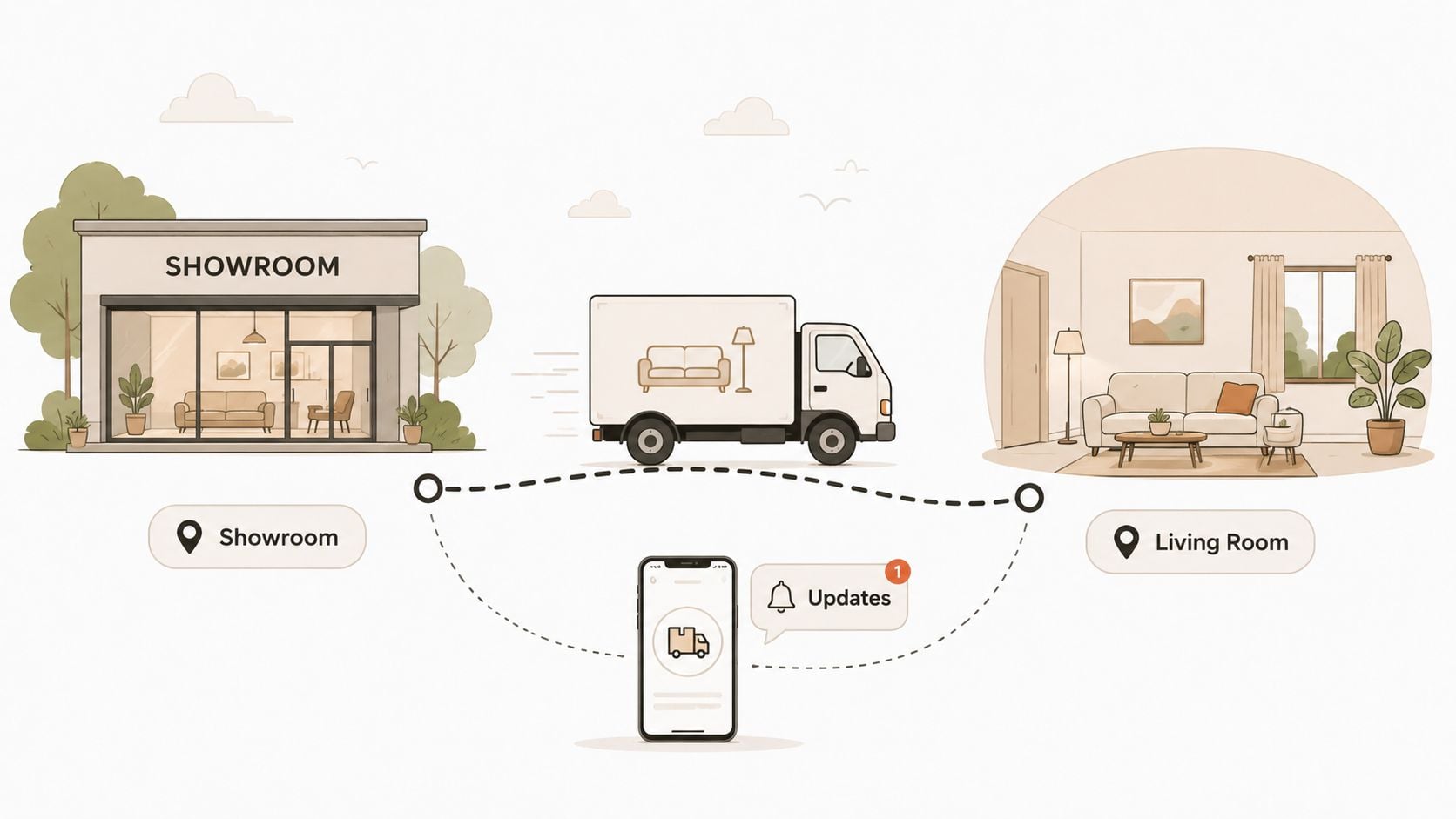
That means checking front doors, storm doors, interior hallways, stairwells, banisters, ceiling height at tight turns, and the final room itself. A customer may also want to review this internal guide on how to protect floors from furniture before delivery day, especially in homes with hardwood, luxury vinyl, or freshly finished surfaces.
Measure the route the furniture has to travel, not just the spot where it will sit.
A simple pre-delivery checklist
The smoothest deliveries usually happen when families do these things in advance:
- Clear the walkway: Remove shoes, baskets, accent tables, and rugs that could catch feet or legs.
- Open up the room: Move lamps, wall art, and smaller pieces away from the final placement area.
- Secure pets: Even calm pets can get anxious when strangers and large items enter the house.
- Keep children at a safe distance: Delivery crews need space to turn, lift, and set pieces down carefully.
- Check parking access: A driveway, curb space, or clear approach helps the team work efficiently.
Prepare the final space
The destination matters as much as the route. If a new dining table is replacing an old one, the old piece should be moved ahead of time unless removal has already been discussed. If a mattress is being delivered, bed frames and surrounding space should be ready so the team can work without delay.
Customers ordering custom furniture should also think through orientation before arrival. Which direction should the sectional face? Where should the leaf storage go? Which side of the bed should have easier walking space?
Small decisions made early save scrambling later. They also help the room feel finished sooner.
From Our Showroom to Your Living Room
Good delivery feels organized long before the truck pulls up. Customers want to know when the team is coming, what condition the furniture is in, and what to do if something doesn't look right once it arrives.

That need for clarity lines up with a broader truth in the industry. As discussed in this article on reducing service issues after furniture delivery, a transparent service protocol for damage resolution is critical for building trust, especially for high-value custom or Amish-made pieces.
What a well-run process looks like
Most strong delivery experiences follow a simple pattern. First comes scheduling. Then comes arrival and placement. Last comes inspection and signoff.
Customers benefit when each part is clear:
- Scheduling is confirmed clearly. The household knows the delivery window and understands what level of service is included.
- The team places the furniture carefully. Placement should match the agreed destination and setup expectations.
- The customer inspects before the job is closed. Visible condition, finish, alignment, and basic function should be checked while the team is still present.
For households still choosing pieces, this internal guide on how to measure furniture can help reduce fit problems before delivery day ever arrives.
If there's a problem, the next step should be obvious
Many stores struggle with confidence in this area. Customers shouldn't have to guess what happens if a finish is marked, a seam looks off, or a part needs attention.
A transparent process usually includes these basics:
- Document the issue right away: Photos and delivery notes help preserve details.
- Identify whether it's transit-related or product-related: That shapes the resolution path.
- Explain the next contact point: Customers should know who is handling the claim or service request.
- Set clear expectations: Repair, replacement parts, or follow-up service may each require a different timeline.
Customers can accept a problem more calmly when they can see the path to a fair solution.
Communication protects peace of mind
Furniture is personal. A family may have waited a long time for a bespoke dining set or a handmade Amish bedroom piece. Silence after a problem creates more frustration than the problem itself.
That's why the best post-delivery support is plainspoken. The customer should know what was noted, what happens next, and how the issue will be resolved. Honest communication keeps a temporary problem from becoming a lasting disappointment.
Choosing the Right Furniture Delivery for Your Home
The right delivery choice depends on the piece, the home, and the household's comfort level with lifting, setup, and cleanup. Some customers only need safe transport to the door. Others want the room finished before the team leaves.
A quick decision checklist
A customer is probably a good fit for a simpler service if these points sound right:
- The item is manageable: It's not unusually heavy, delicate, or hard to maneuver.
- Assembly feels easy enough: Basic setup won't become a weekend headache.
- The route into the home is straightforward: No narrow stair turns or tricky corners.
- Cleanup isn't a concern: Packaging removal can be handled at home.
A fuller in-home service often makes more sense when these apply:
- The furniture is custom, solid wood, or high value: More care is worth it.
- Placement needs precision: Dining rooms, bedrooms, and sectionals often need exact positioning.
- Assembly is part of the job: Beds, tables, and large case pieces may need professional setup.
- The household wants less stress: Convenience is part of the value.
For homeowners in Dyer, Crown Point, and across Northwest Indiana, the strongest furniture delivery services are the ones that match real needs instead of vague labels. Delivery should protect the purchase, respect the home, and leave the room feeling complete.
Visit Groen's Fine Furniture in Dyer or Crown Point today to explore custom options like Canadel dining and Amish solid wood furniture, ask about special financing plans, and test drive the comfort of quality pieces from trusted names such as Flexsteel, Bassett, Serta, and Beautyrest. Let our family help create a home in Northwest Indiana that feels lasting, personal, and ready to enjoy.