Blog
Find Custom Furniture Stores in NW Indiana

A lot of Northwest Indiana homeowners land in the same spot. The room is close, but not right. The sofa fits, but the scale feels off. The dining table works, but it doesn't seat the family the way it needs to. The bedroom looks finished, yet it still feels temporary.
That's usually the moment when shoppers start looking at custom furniture stores instead of settling for whatever happens to be on the floor. For families in Dyer, Crown Point, St. John, Schererville, and Munster, custom furniture isn't some far-off luxury category anymore. It's often the smarter path when a home needs a piece that fits the room, the routine, and the people using it every day.
The category is growing for a reason. One market estimate values the custom furniture market at USD 44.76 billion in 2026, with projections to USD 115 billion by 2035 at an 11.2% CAGR, while another estimate places it at USD 38.78 billion in 2026 and projects USD 66.49 billion by 2033 at a 9.4% CAGR. Those projections point to the same conclusion: buyers are moving toward furniture suited to room dimensions, finishes, and lifestyle needs rather than one-size-fits-all choices, according to custom furniture market projections.
Table of Contents
- Why Settle When You Can Customize Your NWI Furniture Journey
- Evaluating Craftsmanship and Materials in Custom Furniture
- The Two Paths to Custom Furniture Brand Programs and Builders
- Budgeting for Bespoke Your Guide to Pricing and Timelines
- Your Showroom Checklist How to Prepare for Your Visit
- From Our Family to Yours The Groens White-Glove Experience
Why Settle When You Can Customize Your NWI Furniture Journey
A homeowner in Crown Point finds a dining room that's too narrow for a bulky table and too important for a throwaway one. Another family in Dyer needs a sectional that won't overpower the room, but still has enough seating for movie nights and holidays. That's where the conversation changes. The question stops being “What's available?” and becomes “What belongs here?”

Custom furniture stores exist for that exact reason. They give buyers a way to stop compromising on width, depth, finish, wood species, fabric, or function. That matters in Northwest Indiana homes, where open-concept builds, older room layouts, and multigenerational households all create different furniture needs.
Families also want rooms that feel personal. Furniture sets the foundation, but the room doesn't feel complete until scale, color, and wall decor all work together. Shoppers trying to pull a room together often benefit from reading practical design resources like how to choose artwork after they've locked in the right anchor pieces.
Custom works best when the buyer starts with the room's real problems, not just a favorite color or trend.
Northwest Indiana shoppers don't need more options for the sake of options. They need the right options. A made-to-order dining set, a solid wood Amish bedroom piece, or a custom upholstery order can solve fit problems that ready-made furniture cannot.
For local buyers who want a starting point before visiting in person, browsing furniture stores in Northwest Indiana can help narrow the search by category and style. That early homework saves time and leads to better showroom conversations.
Evaluating Craftsmanship and Materials in Custom Furniture
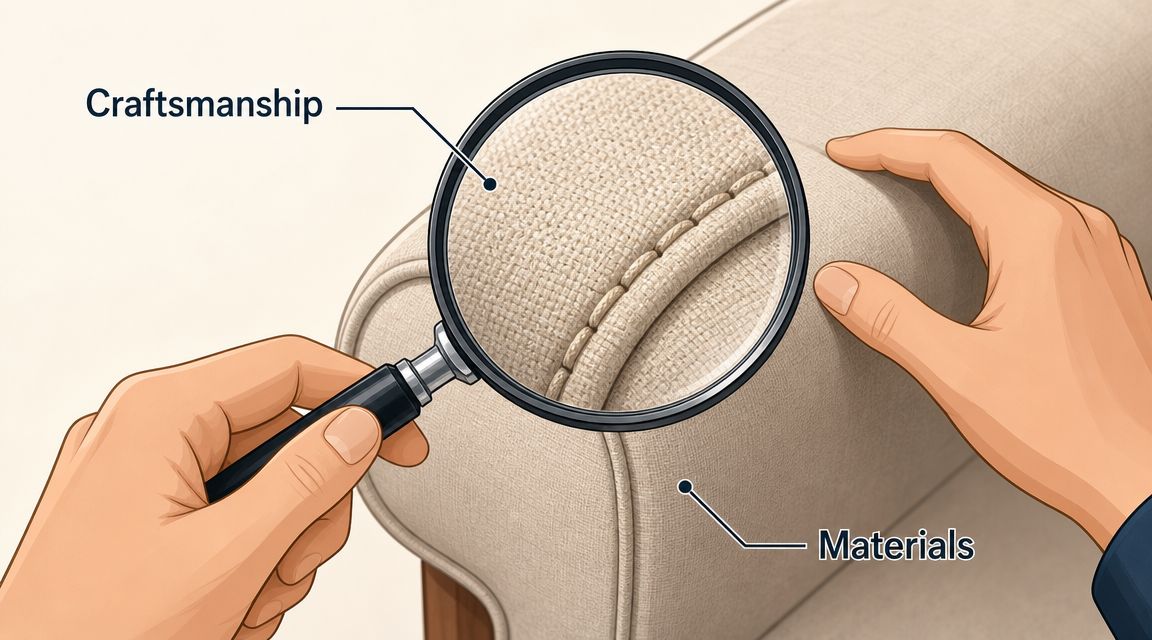
Most mistakes in custom furniture don't start with color. They start with construction. A piece can look sharp on day one and still be a disappointment if the frame, joinery, fabric, or finish won't hold up to actual family life.
Start with what can be repaired
A useful test is simple. Ask what happens to the piece after years of use. If the answer is “replace it,” that's not lasting value. If the answer is “refinish it, repair it, reupholster it, or keep it in the family,” that's a stronger purchase.
Material choice and repairability are a key dividing line in long-term durability. Solid wood construction that can be refinished offers longer lifecycle value than mass-market pieces that are difficult or impossible to repair, as noted in this discussion of sustainability and durability in furniture materials.
That's why solid wood matters so much in dining rooms and bedrooms. Amish furniture gets attention for good reason. It gives buyers a path to heirloom-minded construction, visible grain character, and the ability to renew the piece later instead of discarding it. For shoppers comparing wood types and trying to understand what lasts, this guide to choosing the right hardwood for longevity and style is worth reading before placing an order.
A buyer should inspect these details closely:
- Joinery: Dovetails, well-fitted joints, and stable connections matter more than decorative trim.
- Finish quality: A good finish should feel even, not plasticky or rushed.
- Drawer action: Drawers should glide smoothly and sit square in the opening.
- Back construction: The back and underside tell the truth. Sloppy support work usually means corners were cut elsewhere.
Practical rule: If a store only talks about appearance and avoids construction questions, the buyer should slow down.
Upholstery should match the household
Upholstery requires a different kind of honesty. A beautiful fabric that can't handle kids, pets, or frequent use is a poor match for most family homes in NWI. Performance fabrics, durable cushion construction, and dependable suspension systems deserve more attention than trendy silhouettes.
That's where trusted names in upholstery matter. Flexsteel, for example, is often part of the conversation because durability isn't just about the cover fabric. It's also about what supports the seat every single day. Bassett can be a strong fit for shoppers leaning toward style flexibility and curated upholstery options. The point isn't to chase labels. It's to match construction to daily use.
Fabric selection should also be more informed than “light or dark.” Texture, weave, cleanability, and pattern scale all change how a piece lives in a room. Buyers who want to understand decorative woven texture a little better can look at this breakdown of jacquard patterns for sofa covers, especially when comparing patterned fabrics against solids.
A smart custom buyer asks blunt questions. Will this fabric snag? Will this seat keep its shape? Will this arm style look tired in a few years? Custom furniture stores should be able to answer those questions clearly, without hiding behind showroom language.
The Two Paths to Custom Furniture Brand Programs and Builders
Not all custom furniture follows the same process. That's where many buyers get confused. They hear “custom” and assume every order starts from scratch. It doesn't.
Some custom projects are structured and efficient. Others are more open-ended and collaborative. Both can be excellent. The right choice depends on how much control the buyer wants, how specific the room requirements are, and how comfortable the household is with decision-making.
Path one follows a guided menu
This is the cleaner path for many dining rooms and coordinated spaces. A brand program gives the shopper a proven frame, then lets them adjust the variables that matter most. Size, shape, finish, base style, chair style, and upholstery choices all fit within a tested system.
Canadel is the clearest example in this category. It works well for families who want to design it their way without wandering into a completely open brief. The process feels focused. There are plenty of options, but the structure keeps the order manageable and the final result cohesive.
This approach also helps buyers avoid a common problem in custom work. Too many choices with no framework often leads to hesitation, revisions, and mismatched details.
Path two is more collaborative
Amish builders follow a different rhythm. This path is better for shoppers who care a great deal about wood species, proportions, long-term durability, and heirloom character. The project tends to feel more bespoke, especially when a room needs very specific dimensions or a piece that doesn't fit neatly into a standard product family.
This style of ordering rewards preparation. The buyer should know the room measurements, the intended function, and the overall look they want. The payoff is a piece with stronger individuality and often more meaningful craftsmanship.
For shoppers trying to understand that distinction more clearly, what bespoke furniture means offers a useful way to separate true made-to-order work from simple option-based customization.
Sometimes buyers appreciate custom design examples outside furniture because they make the decision process easier to picture. Even home fragrance has this menu-versus-bespoke split, which is why some shoppers enjoy browsing how brands explore custom candle brand options to see how structured customization differs from a more personalized build.
| Feature | Brand Programs (e.g., Canadel) | Amish Builders |
|---|---|---|
| Customization style | Guided choices within a proven line | More collaborative and specification-driven |
| Best fit for | Dining sets, coordinated rooms, easier decision-making | Heirloom pieces, exact sizing, solid wood priorities |
| Decision load | Moderate | Higher |
| Look and feel | Polished and consistent | Personal, grounded, craftsmanship-forward |
| Speed of selecting | Usually faster in the showroom | Often takes more discussion |
| Buyer profile | Wants flexibility without overwhelm | Wants deeper control and long-term material value |
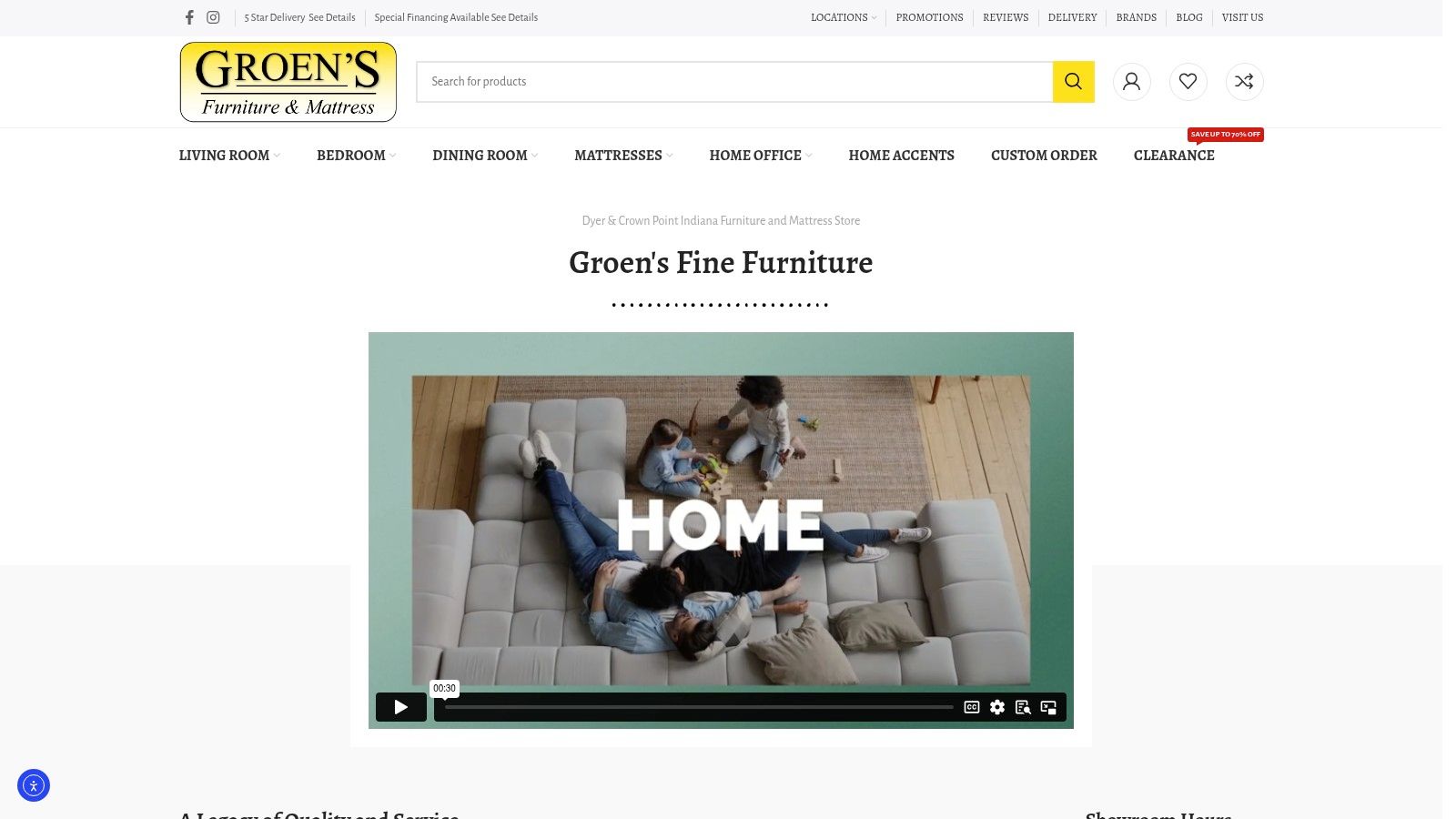
One local example of this approach in practice is Groen's Fine Furniture, where buyers can work through Canadel dining customization or explore Amish-made solid wood options depending on the project. That's useful because the two paths solve different problems, and a good showroom should help match the path to the household instead of pushing every shopper into the same process.
Budgeting for Bespoke Your Guide to Pricing and Timelines
Shoppers usually ask two questions first. What's this going to cost, and how long will it take? Those are the right questions. Custom furniture stores should answer them directly.

Price custom furniture by value not sticker shock
Custom furniture pricing reflects more than materials. It includes planning, order accuracy, finish selection, production coordination, and the fact that the piece is being built for a real home instead of a warehouse shelf. That's why the cheapest-looking option on paper often turns into the more expensive mistake in practice.
A practical benchmark from a commercial discussion of custom shop operations is an average order value of roughly $3,000 to $4,500, with a 15% to 25% close rate on quotes. That same benchmark warns that unlimited customization without a standardized framework can hurt margins and create rework, according to this discussion of repeatable customization benchmarks.
That lesson applies to buyers too. The more disciplined the process, the better the result. A clear plan saves money. Endless revisions usually don't.
- Pay for fit: A piece that solves a size problem earns its keep.
- Pay for materials that age well: Solid wood and durable upholstery tend to justify themselves over time.
- Pay for a clean process: Accurate orders, realistic expectations, and fewer surprises matter.
Timelines matter as much as finishes
Many buyers wonder whether the wait and cost of custom furniture are worth it. The answer depends on whether the order solves a real design problem and prevents expensive mistakes from buying ill-fitting ready-made pieces. Clear pricing and timeline expectations are essential, as explained in this piece on the cost and wait-time tradeoff in custom furniture.
A longer lead time is frustrating. Living for years with the wrong piece is worse.
The smartest buyers ask for timeline clarity before they fall in love with a finish sample. They ask when changes can still be made, what happens if a fabric is delayed, and how delivery will be scheduled.
Financing also belongs in this conversation. Special financing, subject to credit approval, gives families buying power without forcing them to compromise down to a lower-grade piece that won't hold up. Shoppers weighing payment flexibility can review furniture financing options before they visit the showroom.
Your Showroom Checklist How to Prepare for Your Visit
A showroom visit goes better when the shopper shows up with real information instead of guesses. Custom furniture stores can do a lot, but they can't fix bad measurements or a vague idea of the room.
Bring the right information
The most productive visit starts at home. Buyers should walk the room, take photos in daylight, and note every constraint that might affect scale or delivery.
A short checklist helps:
- Measure the room first: Wall width, window placement, traffic paths, and the distance between major pieces all matter.
- Measure the access route: Doorways, stairwells, hallways, and tight turns can ruin a good purchase.
- Photograph the space: Wide room shots beat close-up decor photos.
- Bring samples: Paint chips, flooring photos, rug colors, and fabric swatches make decision-making easier.
- Know the job of the piece: Storage, seating, everyday dining, formal use, kid-friendly use, or pet-heavy use all change the recommendation.
For anyone who wants to prepare properly, how to measure furniture is a helpful place to start. That homework prevents the classic mistake of choosing furniture by eye instead of by scale.
Showroom advice: A tape measure is more valuable than a Pinterest board if the room has tight dimensions.
Use the showroom the right way
Once inside the store, the shopper should slow down and test everything. Sit in the chair the way it will be used. Lean back. Check seat depth. Notice whether the arm height feels natural. Open drawers. Touch the finish. Look at the back of the piece, not just the front.
This is also the time to ask better questions:
- How will this material age in a busy household?
- Which options are cosmetic, and which affect durability?
- Is this dimension ideal for the room, or just available?
- What parts of the order are fixed, and what parts are flexible?
- How will delivery and placement be handled?
A good showroom conversation shouldn't feel rushed. It should feel like narrowing the field until the right answer becomes obvious. That's especially important for dining, upholstery, and bedroom pieces that are expected to stay in the home for years.
Shoppers in Dyer, Crown Point, and the surrounding NWI communities should also pay attention to comfort, not just appearance. A chair can photograph beautifully and still be wrong for long dinners. A sofa can look perfectly fitted and still miss the mark for daily lounging. Furniture needs to perform, not just coordinate.
From Our Family to Yours The Groens White-Glove Experience
Delivery is where a lot of furniture purchases go sideways. A good showroom experience loses value fast if the piece arrives with confusion, poor placement, leftover packaging, or assembly problems. White-glove delivery matters because the buying process doesn't end at the register.
For custom furniture, that final step matters even more. The piece was chosen for a specific wall, a specific room flow, and a specific purpose. It should be placed correctly the first time, assembled properly, and checked before the delivery team leaves. That's the difference between a transaction and a complete furnishing experience.
For a family-owned store serving Northwest Indiana since 1983, that service standard isn't extra. It's part of the promise. Multigenerational ownership changes how a store thinks about follow-through. Families in Dyer, Crown Point, St. John, Schererville, and Munster remember who handled the details well, and who didn't.
There's also a comfort factor that big-box service rarely matches. A buyer should feel confident asking questions about placement, care, and room balance right there in the home. White-glove delivery makes that possible, and it protects the investment the household just made in custom work.
Furniture should arrive ready to live with, not ready to troubleshoot.
Custom furniture stores earn trust when they treat the last step with the same care as the first conversation. That's how a made-to-order purchase starts feeling like part of the home instead of a stressful project.
Visit Groen's Fine Furniture in Dyer or Crown Point today to explore custom options, compare Canadel and Amish customization paths, and ask about special financing plans. Let the family help create a home that feels comfortable, lasting, and personal from the showroom floor to white-glove delivery.