What Is a Wall Hugger Recliner? a Space-Saving Guide

A wall hugger recliner is a space-saving chair that needs only 3 to 6 inches of wall clearance because its mechanism slides the seat forward as it reclines, unlike standard models that usually need 12 to 18 inches behind them. For homeowners trying to fit real comfort into a tighter living room, that small change can make a very big difference.
That situation is familiar in homes across Dyer, Crown Point, St. John, Schererville, Munster, and the rest of Northwest Indiana. A family finds the recliner they love, brings it home, and then realizes it has to sit far out from the wall. Suddenly the room feels narrower, the walkway looks awkward, and the furniture layout never quite settles in.
A wall hugger solves that problem in a cleaner way. It still gives the comfort people expect from a recliner, but it does it with a motion designed for tighter rooms, busy family spaces, and layouts where every inch matters. For households that want comfort without sacrificing flow, it's one of the smartest seating choices in the living room.
The Perfect Recliner for Cozy Northwest Indiana Homes
A common living room problem starts with good intentions. A homeowner in Crown Point wants one comfortable seat for evening TV, reading, or a quick nap. The chair looks right in the store. At home, it has to be pulled well away from the wall, and now the room has a strange empty gap behind it.
That's where a wall hugger recliner starts to make sense. Instead of demanding a big buffer behind the chair, it's built for close placement to the wall. For many homes in Northwest Indiana, especially older homes or rooms with fireplaces, end tables, or tighter traffic paths, that can turn a frustrating layout into one that finally works.
Why this style feels so practical
A wall hugger recliner isn't just for tiny apartments. It also helps in family rooms where people want more open floor space, better walking paths, or room for another piece of furniture. Some households pair one recliner with a sofa, while others prefer a couch with recliner options to keep the whole seating area comfortable without crowding the room.
A good recliner should fit the room people actually live in, not the room they wish they had.
For homeowners planning a media room, placement matters even more. Seating depth, screen sightlines, and traffic flow all need to work together. Families exploring entertainment layouts sometimes also review Wisconsin home theater services for ideas on how room planning affects comfort, especially when every seat needs a clear view.
What people usually mean when they ask this question
When someone asks, what is a wall hugger recliner, they're usually asking something more practical than technical. They want to know if the chair can sit close to the wall, whether it still reclines fully, and if it will help the room feel less cramped.
The short answer is yes. It's a recliner designed for homes where comfort matters, but floor space matters too.
The Space-Saving Secret How Wall Huggers Work
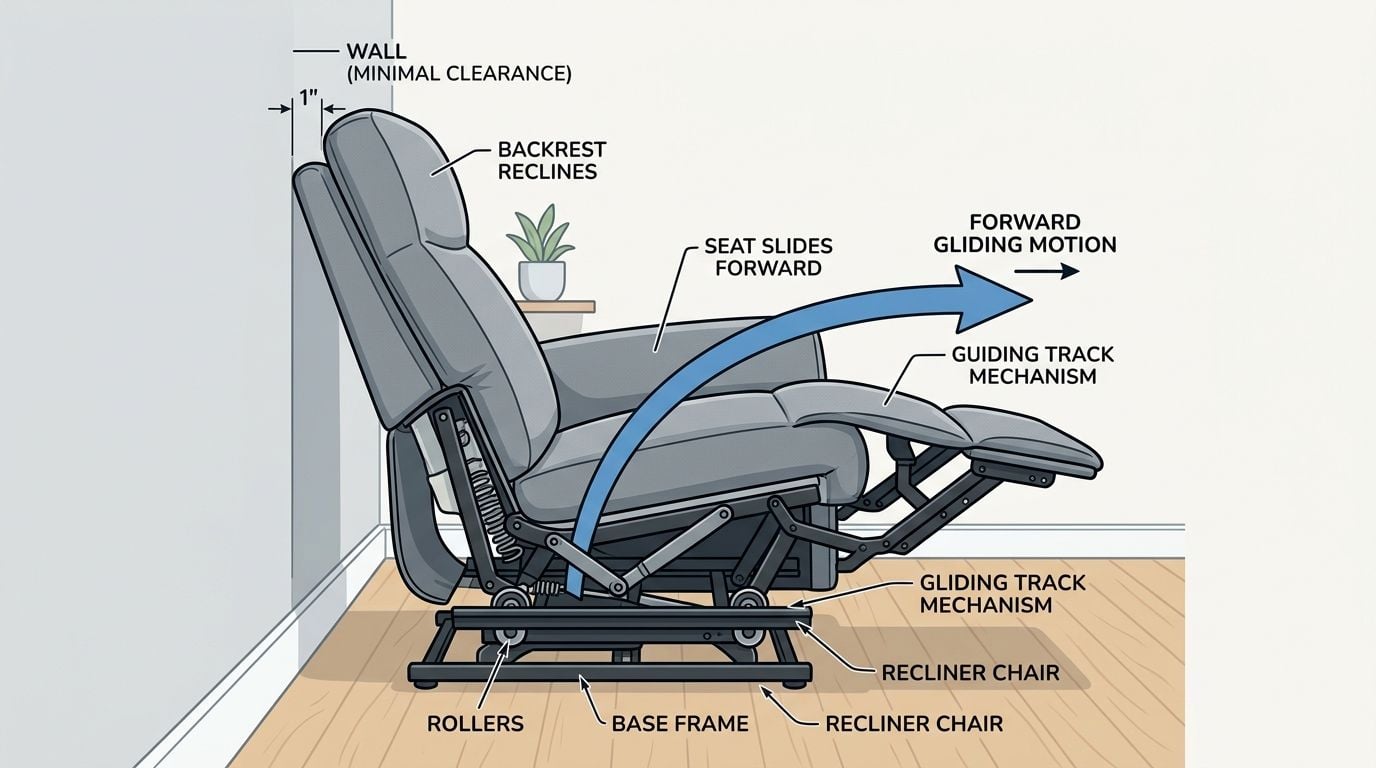
A wall hugger saves space because its movement starts under the seat, not far out behind the chair. The mechanism guides the seat and footrest forward while the back reclines, which allows the chair to open up while staying close to the wall.
Why the motion feels different from a standard recliner
A traditional recliner usually tips back into the room behind it. A wall hugger follows a different path. Part of the chair glides forward as it reclines, so the back does not need the same open space.
That detail clears up a common point of confusion for Northwest Indiana homeowners shopping for smaller living rooms, older homes, or family rooms with fireplaces and tighter walkways. People often assume every recliner needs a big empty zone behind it. A wall hugger changes that equation by shifting the chair's motion forward instead of asking the room for extra depth.
It is a small mechanical change with a very noticeable result.
What that means in real life
In everyday use, the benefit is simple. You can place the recliner closer to the wall and still use it comfortably.
That helps in a few practical ways:
- Closer placement: The chair fits better along a wall without wasting space behind it.
- Cleaner layout: Furniture can sit in a more natural line, which makes the room look less awkward.
- Easier traffic flow: Family members have a better path around the seating area, especially in narrow living rooms or shared family spaces.
Homeowners planning around end tables, hearths, or tighter room dimensions often find that the chair's path matters just as much as its size on paper. If you are comparing options for compact spaces, this guide to furniture for small living rooms can help you see how the recliner fits into the whole room, not just one corner.
Practical rule: Measure how the chair moves, not just how it looks when it is upright.
Why the mechanism matters over time
The mechanism is not just an engineering detail. It determines whether a recliner works with your room or keeps fighting it.
In many Northwest Indiana homes, space limits are not about square footage alone. They come from radiators, trim, windows, traffic paths, and the way a family uses the room every day. A wall hugger gives you more freedom to place a recliner where people can relax without blocking the natural flow of the house.
That is why this style appeals to both downsizers and busy families. One wants a room that feels open. The other wants comfort that does not get in everybody's way.
Wall Hugger vs Traditional Recliner A Practical Comparison
A side-by-side comparison usually clears up the decision faster than a long technical explanation. The biggest differences show up in placement, room flexibility, and how the chair moves when reclining.
Homeowners who want a broader overview of styles often find it helpful to review a full recliner buying guide before narrowing down a final fit.
Recliner Type Comparison
| Feature | Wall Hugger Recliner | Traditional Recliner | Rocker Recliner |
|---|---|---|---|
| Wall clearance | Needs minimal wall clearance | Needs much more open space behind it | Usually needs more rear space and room for motion |
| Best room placement | Good near a wall | Better in a room with more open depth | Better where extra movement won't interrupt traffic flow |
| Reclining motion | Slides forward as it reclines | Tilts backward into open space | Reclines and also rocks when upright on many models |
| Walking path impact | Helps preserve a cleaner path through the room | More likely to crowd the room when placed near a wall | Can take up more practical space because of both recline and rocking motion |
| Good fit for compact rooms | Often yes | Sometimes difficult | Depends on layout and whether rocking is important |
Which one fits everyday life better
A traditional recliner still works well in a larger, more open room. If there's plenty of space behind the chair, the extra clearance may not matter much. Some people also prefer the familiar motion of a rocker recliner, especially in casual family spaces.
A wall hugger stands out when placement is the problem to solve. In tighter living rooms, finished basements, condos, or rooms with fireplaces and side tables, that more controlled motion usually makes layout planning easier.
The Pros and Cons of Choosing a Wall Hugger
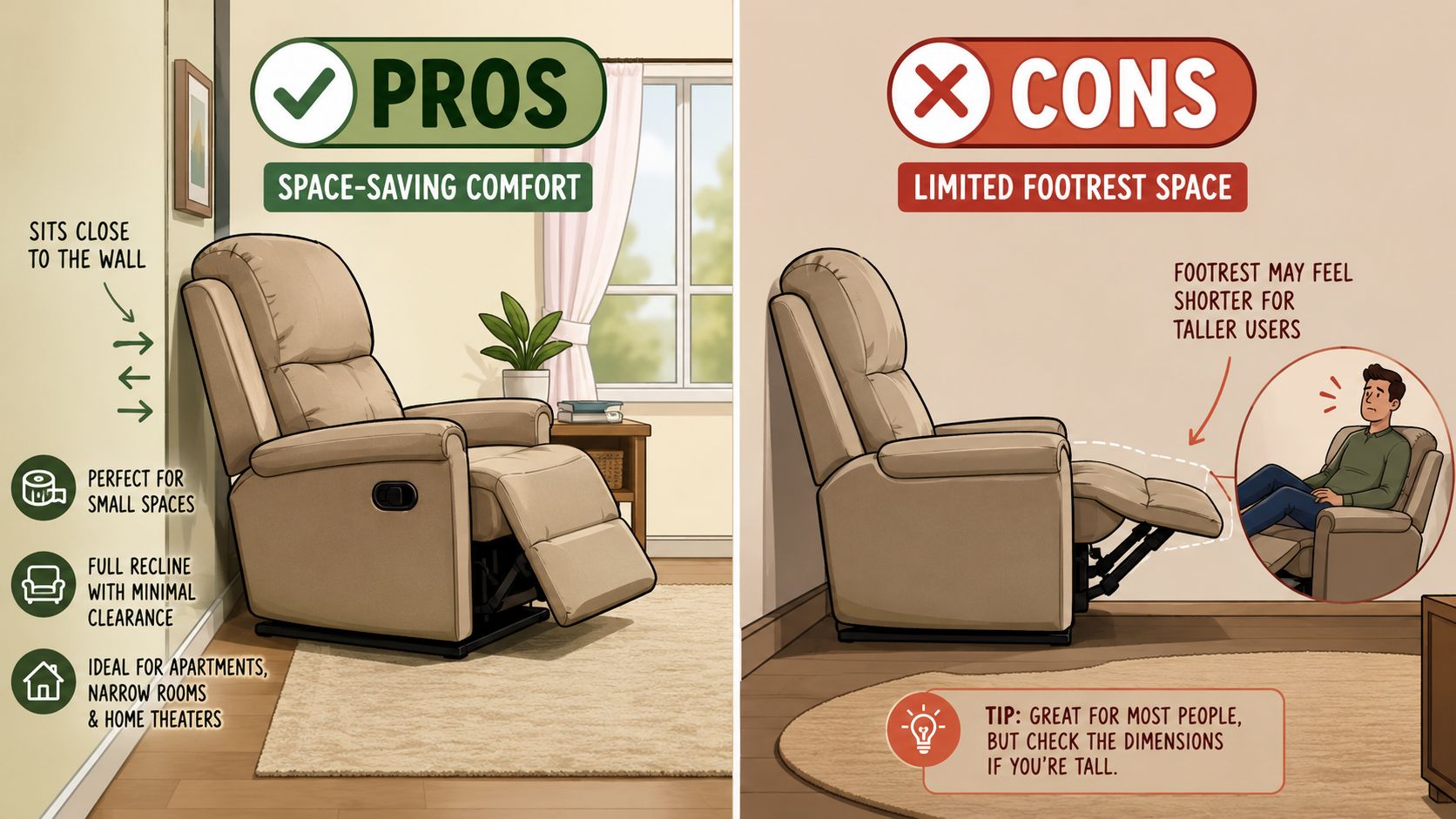
The strongest reason to choose a wall hugger is simple. It can reclaim valuable living space. One review of room layout differences notes that a wall hugger recliner can reclaim up to 2 feet of floor space compared to a standard recliner in the same configuration, which is why many homeowners look at the space-saving advantage of wall huggers when planning a smaller room.
The upsides that matter most
That reclaimed space changes daily life in practical ways. A room can feel less blocked. Side tables fit more naturally. Walkways stay more usable when someone is reclining.
For households focused on comfort and support, that matters too. A chair that fits the room properly often gets used more often because it doesn't create tension with the rest of the layout. Shoppers who are also thinking about posture and everyday comfort often compare that with guidance on the best recliner for back pain.
- Space efficiency: The chair helps keep more open floor area available.
- Better placement options: It works well along walls where a standard recliner may not.
- A tidier look: The room usually feels less cluttered because the chair doesn't sit far forward.
In many homes, the real benefit isn't only the saved inches. It's the fact that the room feels usable again.
The trade-offs worth knowing
No chair style is perfect for every shopper. Some buyers expect a wall hugger to behave exactly like every other recliner, and that's where expectations matter.
A few common trade-offs include:
- Less emphasis on rocking: Many shoppers who want a full rocking motion may lean toward a rocker recliner instead.
- Mechanism preference: Some people prefer the feel of a more traditional recline path.
- Layout still matters: A wall hugger saves space, but it still needs thoughtful placement in relation to coffee tables, end tables, and traffic lanes.
The honest takeaway
For most compact or mid-sized living rooms, the pros tend to be stronger than the cons. The chair solves a layout problem without giving up the core comfort people want from a recliner. The main question isn't whether wall huggers work. It's whether the household values space efficiency more than features like rocking motion.
How to Measure and Place Your New Recliner
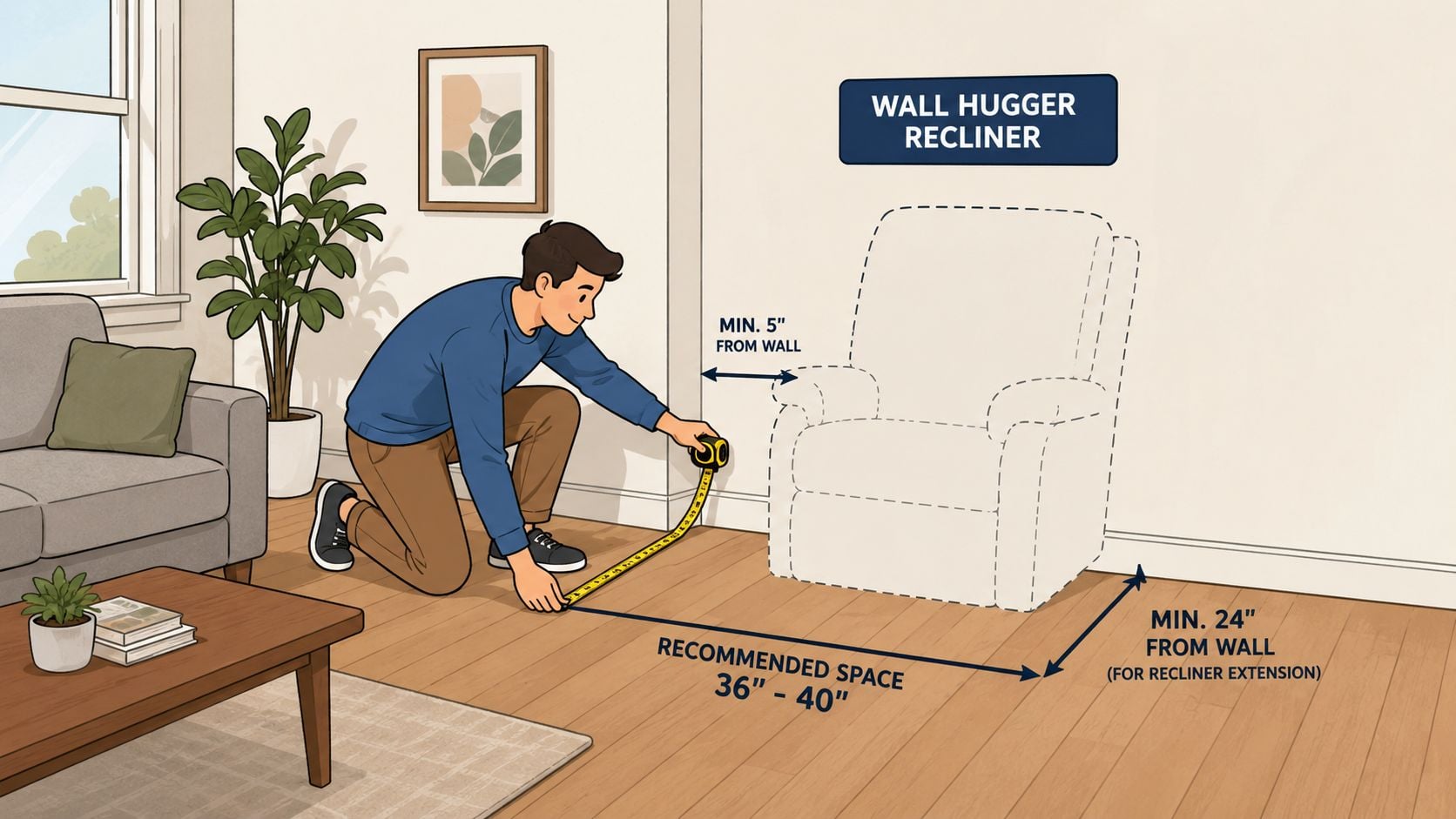
A wall hugger recliner still needs measuring. The difference is that the measuring process is more forgiving than many people expect. One guide to the mechanism notes that the track system keeps the chair at a consistent distance from the wall during the recline cycle and can allow a full lay-flat position of often 135° to 140°, which is covered in this explanation of wall hugger recline positioning.
A simple way to measure the spot
Most placement mistakes happen because shoppers only measure width. Depth and motion matter just as much.
- Mark the chair location first. Use painter's tape on the floor to outline the space where the recliner will sit.
- Measure the wall area carefully. Check not only the chair width, but nearby trim, windows, radiators, or end tables.
- Plan the front clearance. The chair moves forward as it reclines, so make sure walkways and coffee tables won't interfere.
- Check the path into the home. Doorways, hallways, and corners matter before the chair ever reaches the living room.
Homeowners who want a more detailed checklist can use this furniture measuring guide before shopping.
Placement tips families often overlook
A wall hugger can sit close to the wall, but that doesn't mean it should be dropped into any empty corner without a plan. The seat still needs room in front, and nearby tables need enough separation so the chair can operate comfortably.
Leave enough room for the person using the recliner, not just enough room for the furniture.
For anyone moving an existing recliner or preparing for delivery, this comprehensive guide to moving furniture securely offers useful handling advice that can help protect upholstery, arms, and finishes during setup.
Your Guide to Buying a Quality Wall Hugger at Groens
By the time many Northwest Indiana shoppers reach the buying stage, they already understand the basic idea of a wall hugger. The primary question is simpler and more important. Which chair will still feel comfortable on a cold February evening, fit the room well, and keep working properly after years of everyday use?
A quality wall hugger should do more than save space. It should support your body in the spots that matter, move in a controlled way, and suit the way your household lives. In a smaller ranch in Dyer, a finished basement in Crown Point, or a cozy living room with a busy family walkway, those details make the difference between a chair that looks good on the sales floor and one that works at home.
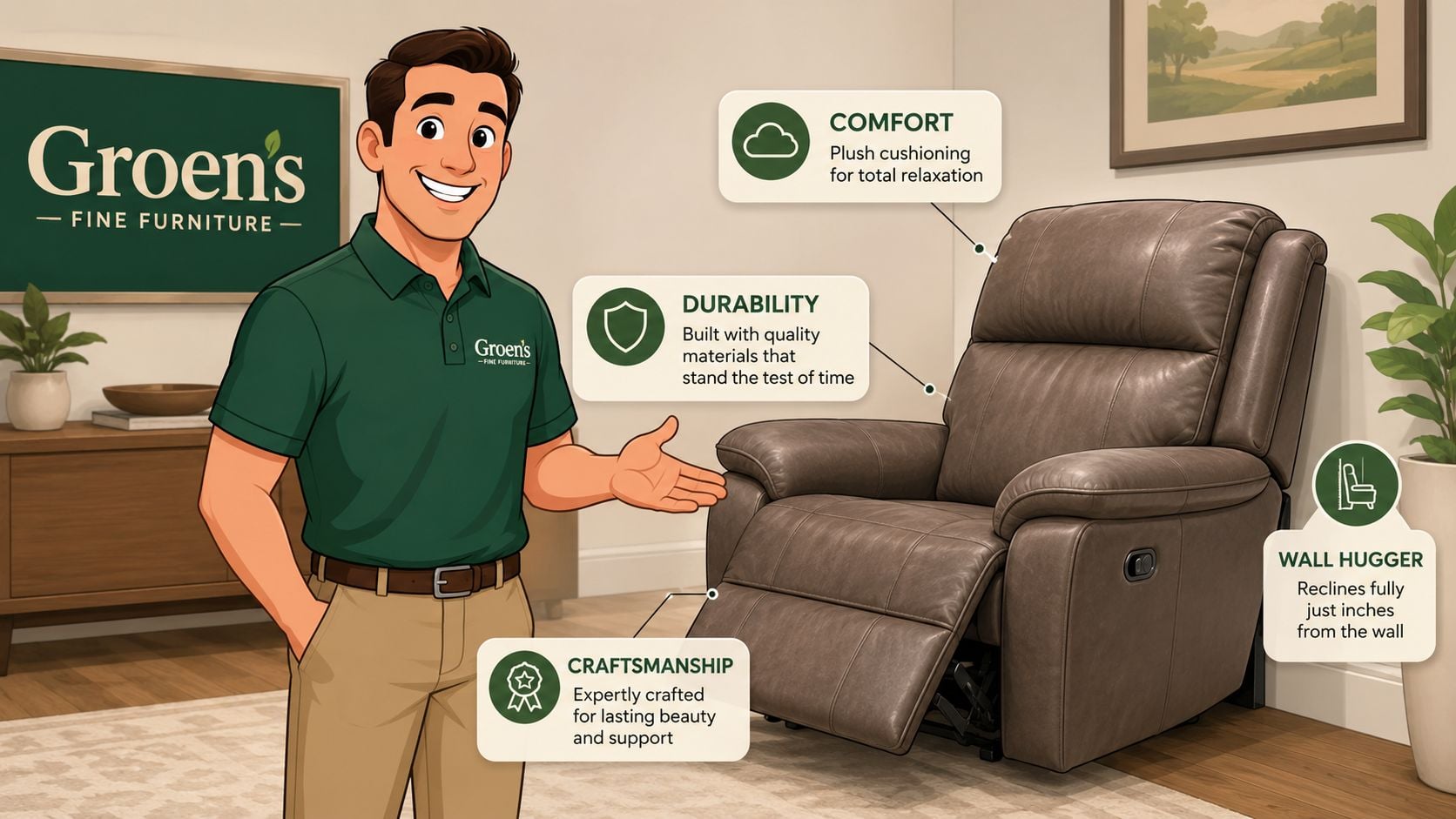
What to look for in a quality chair
Start with the feel of the chair itself. Sit down normally, then lean back, then get up again. A well-made wall hugger should feel steady through each step, almost like a well-hung door that opens easily and closes without wobbling.
Shoppers usually do best when they check a few basics in person:
- Frame feel: The chair should feel solid when you sit, shift position, and stand up.
- Seat support: Cushions should feel comfortable without letting you sink too low or lose support at the hips and lower back.
- Mechanism motion: The reclining action should feel smooth and controlled, not jumpy or loose.
- Upholstery fit: Leather, fabric, and performance materials should lie neatly over the frame, especially on the arms, seat, and footrest where wear shows first.
It also helps to stay in the chair for more than a minute. A recliner can feel plush right away and still miss the mark after ten minutes if the headrest hits too low or the seat depth is off for your height.
Design it your way
A wall hugger can be practical and still look like it belongs in the room. Some homeowners want the cleaner look of leather. Others need a family-friendly fabric that can handle pets, kids, or everyday lounging without making the room feel too formal.
Custom order options can help you match the chair to the rest of the home instead of settling for the one version in stock. That matters when you are trying to coordinate with an existing sofa, repeat a wood tone nearby, or keep a smaller room from feeling visually crowded. The same made-to-order mindset also appeals to shoppers who are furnishing more than one space and want a consistent look across living, dining, and bedroom furniture.
Balance comfort, durability, and budget
A smart purchase usually comes down to fit, comfort, and realistic value. If one of those three is off, the chair often becomes a regret purchase.
For active households, durability questions are worth asking directly. How does the chair feel after repeated use? Does the seat keep its shape? Does the mechanism operate with the same easy motion over time? Those are practical showroom questions, and they matter more than fancy wording on a tag.
Groens offers wall hugger and wall saver recliner options as part of a larger living room selection, along with custom furniture, white-glove delivery, interior design help, and special financing subject to credit approval.
A recliner is easier to choose when you can sit in it, recline it, and decide whether the motion feels right for everyday life.
Why local guidance still matters
Local guidance helps with the small decisions that end up mattering most. A family-owned store can help you sort out whether a chair belongs in a den, a main living room, or a bedroom sitting area. They can also help you compare materials for homes with dogs, grandchildren, heavy daily use, or all three.
That advice carries over to the rest of the house, too. Some families shopping for a recliner are also planning a dining update, looking at solid wood craftsmanship, or comparing mattress comfort for better sleep. The common goal stays the same. They want furniture that fits their space, feels good to use, and holds up for the long haul.