Blog
Furniture Protection Plan: Is It Worth the Investment?

For homeowners in Dyer, Crown Point, and across Northwest Indiana, the conversation usually starts the same way. A family brings home a new sectional, the kids pile in, the dog claims the corner, and the room finally feels finished. Then the salesperson asks whether to add a furniture protection plan, and that is where the honest question starts, not because the answer is complicated, but because the wrong answer can waste real money.
At Groen's Fine Furniture, our family has seen this decision play out for decades. Some households need the extra coverage, especially when life is busy and the furniture is getting real use. Others would be better off keeping their money and self-insuring the risk. The right call depends on the piece, the household, the exclusions, and how much stress a family wants to carry if something spills, scratches, or tears.
Protecting Your Investment in Comfort and Quality
A new living room can feel like a reset. The sectional fits the space, the throw pillows are finally in place, and the whole house seems calmer because the furniture works with daily life instead of fighting it. That good feeling is exactly why the protection-plan question matters, because families rarely buy a sofa for display only, they buy it to be lived on.
For shoppers in Dyer and Crown Point, the decision often comes up on higher-value pieces like a Flexsteel sectional or a custom dining set built for real family use. A plan can feel like a simple way to protect comfort, but the key question is whether the plan pays for itself under the way the household lives. A home with toddlers, pets, homework, movie nights, and frequent guests faces a different risk profile than a quiet room used occasionally.
Practical rule: If a piece is central to daily life, the protection question is really about usage risk, not just ownership pride.
That is why the best answer is rarely universal. A family that wants custom furniture or a made to order dining setup is already making a long-term investment, and that can make a service contract feel more reasonable. But if the household is careful, low-traffic, or comfortable handling minor wear on its own, the plan may be a needless extra charge.
For a broader look at how long good furniture should hold up, it helps to compare the plan to the expected life of the piece itself in this guide on furniture lifespan. If the furniture is already built for years of use, the next question is whether the protection add-on matches the family's actual habits.
Understanding What a Furniture Protection Plan Actually Covers
A furniture protection plan is not the same thing as a manufacturer warranty. Warranties usually cover defects in materials or workmanship, while protection plans start on delivery and address accidental, in-home damage like stains, rips, punctures, burns, scratches, and seam separation, as described in this explanation of what furniture protection plans cover. That difference matters because one protects against making errors in the product, while the other protects against making mistakes in the home.
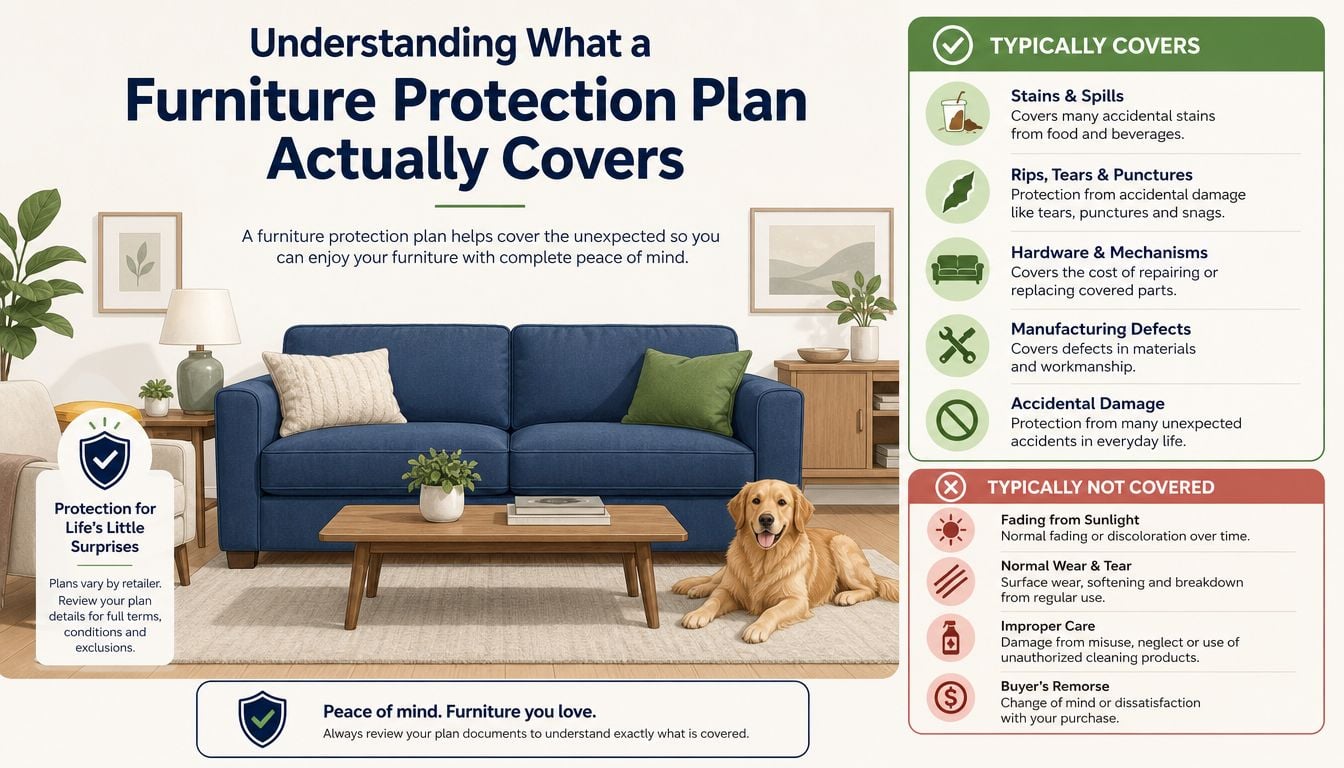
A simple way to think about it is this. If a sofa frame cracks because the frame was faulty from the start, that points toward a warranty issue. If a child spills juice, a pet claws the arm, or someone catches the fabric with a sharp object, that is the kind of problem a protection plan is built to address.
What the plan is really doing
Protection plans act like service contracts. They shift the trigger from product failure to usage risk, which means the claim usually depends on a specific accident after delivery rather than a hidden defect. That is why the wording matters so much, because a shopper can be covered for one kind of problem and fully exposed on another.
When mattress care is part of the discussion, the same logic applies to practical protection, including protecting against dust mites. The point is not to oversell a plan, but to understand what kind of harm it is designed to respond to.
For a separate look at the difference between product promises and protection terms, the warranty details at Groen's warranty page are worth comparing side by side with the plan itself. A warranty answers one question. The protection plan answers another.
Coverage Details and Common Exclusions to Watch For
The coverages that sound most useful are usually the easiest to understand. Accidental stains, tears, scratches, and some structural issues are common talking points, and furniture care plans often bundle damage that happens after purchase rather than only factory defects. The problem is that the sales pitch often stops at the headline list and skips the rules that decide whether a claim gets paid.
That is where homeowners get burned. A claim can look straightforward on paper and still fail because the item had a pre-existing issue, the damage was handled improperly, or the reporting window was missed. Some plans also expect routine maintenance, which means a buyer who ignores cleaning and care instructions can weaken the claim before it ever reaches review.
Coverage is only as useful as the process behind it. If the process is strict, the promise is narrower than it sounds.
A good example comes from a retailer's rules. Living Spaces says furniture must be delivered and installed soil-free and damage-free, and stains or damage must be reported within 10 business days; it also expects routine and preventative maintenance to have been performed. That kind of language turns coverage into a condition-based contract, not a casual promise.
Families should also read the fine print on exclusions. Normal wear and tear is often treated differently from accidental damage, and cleaning mistakes can fall outside the protection entirely. For anyone caring for wood pieces, the maintenance side matters just as much as the claim side, and this furniture care guide is a useful reminder that good upkeep helps preserve both appearance and claim eligibility.
A plain-English check helps here:
- Ask what counts as an accident. Stains, tears, scratches, and burns are often discussed, but the exact wording controls the outcome.
- Check the deadlines. A missed reporting window can matter as much as the damage itself.
- Confirm maintenance duties. Some plans expect the buyer to clean and care for the piece in specific ways.
- Watch for pre-existing condition language. Delivery-day documentation can make or break a later claim.
For readers who want a broader framework on how claim value can be affected by exclusions and payment rules, the distinction between actual cash value and replacement cost in this claim-help resource is a helpful parallel. Furniture claims follow the same basic logic, if the rules are tight, the payout can be tighter too.
Evaluating the Cost Against Potential Repair Expenses
The biggest mistake shoppers make is judging a plan by the sticker price alone. Furniture protection plans are commonly priced at about 10% to 15% of a furniture item's retail value, and another retail guide says they typically run 10% to 20% of the purchase price, with a $2,000 sectional implying roughly $200 to $300 for 5 years of coverage. That is not pocket change, and it is why the family math matters.
The same pricing logic becomes easier to understand when it's broken down by furniture type.
| Furniture Type | Typical Coverage Duration | Average Plan Cost |
|---|---|---|
| Sofa | 5 years | $100 to $300 |
| Dining set | 3 to 5 years | $75 to $200 |
| Mattress | 10 years | $50 to $200 |
Those ranges come from retail guidance that prices plans by item type, usage intensity, and expected repair risk. Sofas and sectionals tend to be the most discussed because they take the most daily abuse, while mattresses are often sold with longer contracts because ownership expectations are different.
A family that wants to self-insure can think about the choice differently. Instead of paying upfront for the contract, the household sets aside money for the occasional repair or replacement and accepts the risk that no claim process is available later. That approach makes sense for disciplined buyers, especially if the furniture is less exposed to kids, pets, or entertaining.
For shoppers weighing the whole purchase, assembly service cost considerations can also affect the overall budget picture. Once delivery, setup, and protection are all on the table, the smartest comparison is not plan price versus nothing. It is plan price versus the likely cost of handling problems on your own.
Navigating the Claim Process and Documentation Requirements
Claims are where the value of a furniture protection plan gets tested. The paperwork matters, the timing matters, and the household that keeps sloppy records usually loses the cleanest claim. Providers generally expect customers to report damage within about 30 days, take clear photos from multiple angles, and keep the original sales receipt and plan documents ready (source).
That process is usually more structured than shoppers expect. Claims are often handled by a third-party administrator, not by the salesperson who sold the furniture, so the repair or replacement path can feel more like a case file than a quick store fix. Digital claim intake helps, but it also means the burden is on the customer to submit the right proof at the right time.
The cleanest claim habits are simple:
- Photograph immediately. Clear images from multiple angles help document both the item and the damage.
- Save every document. Receipts, plan paperwork, and delivery records should stay together.
- Report quickly. Waiting too long can create avoidable denial risk.
- Track maintenance. If the plan expects regular care, keep proof that the household followed it.
Claim rule to remember: A strong claim can still fail if the buyer cannot show when the damage happened or what condition the furniture was in before it happened.
For families trying to avoid costly delays, the discipline used in insurance filing strategies for damage offers a useful mindset. The issue is the same even when the item is furniture, documentation wins disputes faster than memory does.
Groen's family has always told customers the same thing, read the process first, then buy the plan if the process makes sense for the way the home runs. A beautiful sectional is easier to enjoy when the paperwork is organized before the spill happens.
Making the Right Decision for Your Household and Lifestyle
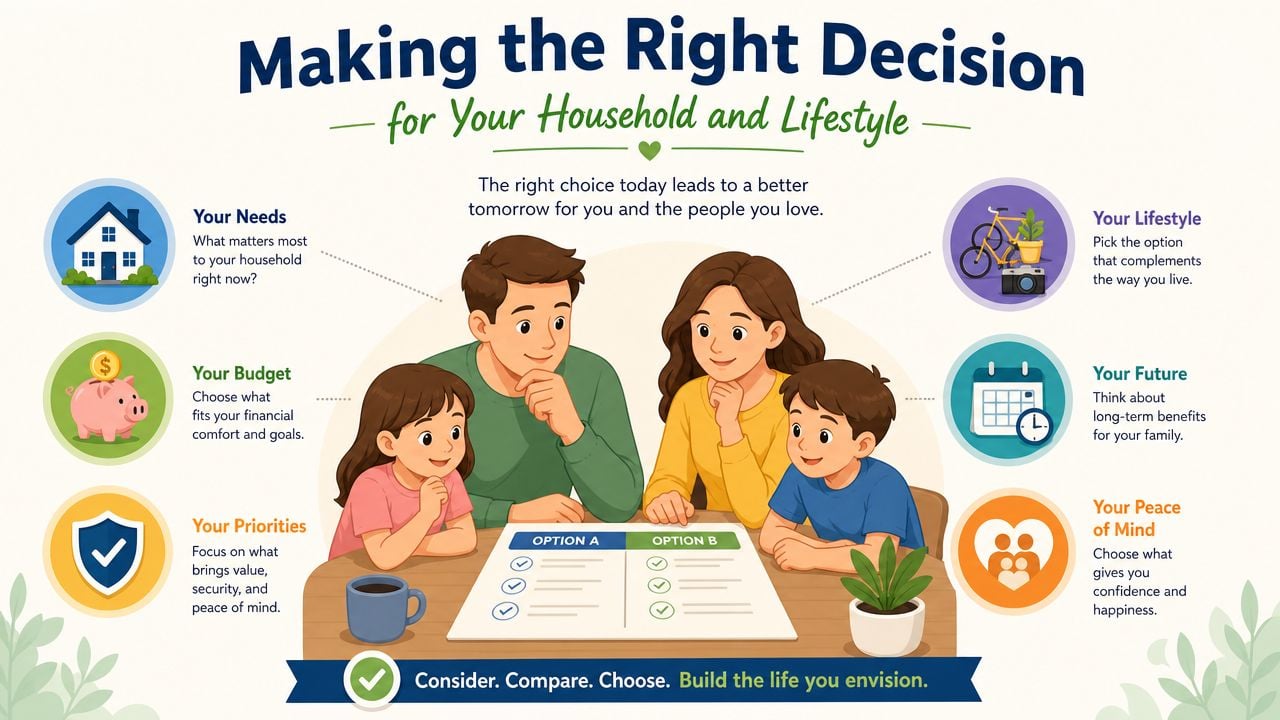
The right answer depends on how the house is used, not on how the plan is sold. Families with young children, pets, or frequent guests live with more spill risk, more abrasion, and more chances for sudden damage. That makes a plan more attractive when the furniture is a daily-use centerpiece instead of a formal-room piece that gets light traffic.
Consumers should also think about the furniture itself. A custom Canadel dining set or Amish solid wood piece can carry a different emotional and practical value than a mass-produced item, especially when the room is meant to last for years. If the household is already investing in custom order services, solid wood, and American-Made craftsmanship, some buyers decide the extra protection feels worth it because the piece matters more and replacement would be more painful.
That said, the plan is not automatically smart just because the furniture is expensive. Consumer NZ says these plans can add $150 to $300 to the cost of a couch and still may not be worth it because of exclusions. That lines up with the practical reality many households face, if the claim rules are narrow, the upfront cost can be hard to justify.
A clear decision rule helps:
- Buy the plan if the room gets heavy daily use, the household has kids or pets, and the family wants a smoother path for accidental damage.
- Skip the plan if the furniture is low-traffic, the owners are comfortable handling minor issues themselves, or the exclusions make the coverage too narrow.
- Think harder if the piece is custom, high-value, or central to the home, because the emotional cost of damage may be as important as the repair cost.
For shoppers in St. John, Schererville, and Munster, that judgment often comes down to peace of mind versus self-insurance. The strongest choice is the one that matches the household's habits, not the salesperson's script.
Your Next Steps for Protecting Your Home and Investment
The honest answer on a furniture protection plan is simple. It can be useful for busy households that expect real wear, but it is not a free pass and it is not a substitute for reading the terms. Families should compare the upfront cost, the exclusions, the claim timing, and the kind of furniture they are buying before deciding whether to add the plan or keep the money in reserve.
For homeowners who are also thinking about floor protection and long-term care, this guide to furniture pads for hardwood floors is a smart companion read. It reinforces the bigger point, protecting furniture is usually a mix of good materials, smart care, and honest expectations, not just one add-on at checkout.
Groen's Fine Furniture has helped Northwest Indiana families make these decisions since 1983, and our family still believes the best purchase is the one that fits the home, the budget, and the way people really live. Whether the answer is a protection plan, special financing, or a better-built piece that needs less hand-holding, the goal is the same, comfortable furniture that lasts and feels right in the room.
Visit Groen's Fine Furniture in Dyer or Crown Point to test drive the comfort, compare custom options, and ask about special financing plans. Our family will walk through the protection details with you so you can choose the furniture and coverage that make sense for your home.