Blog
Wedge End Tables: A Complete Guide for 2026

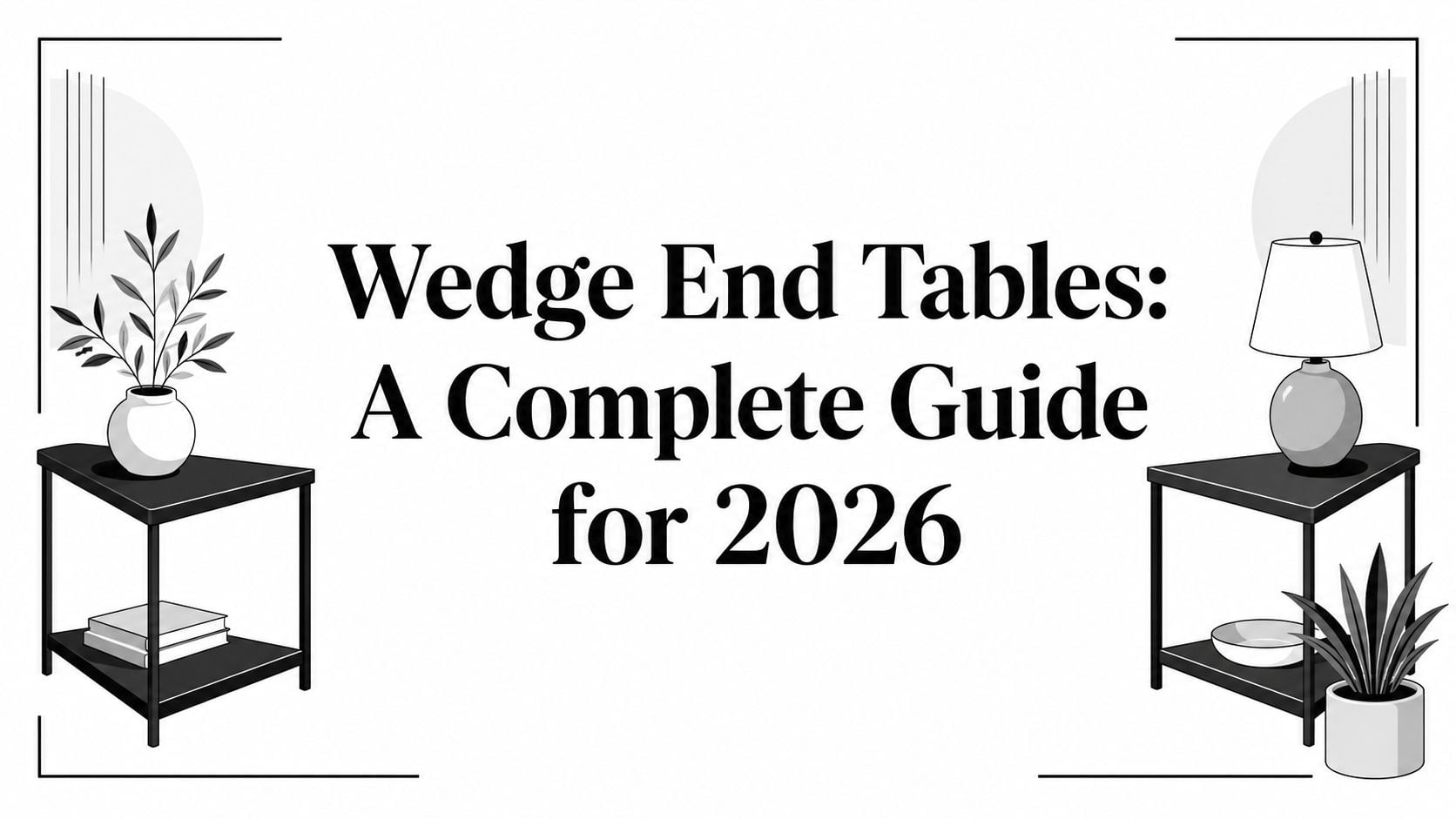
For homeowners in Dyer, Crown Point, and across Northwest Indiana, the living room usually looks calm until a sectional, a recliner, or both create that odd little gap beside the seat. A normal end table can feel too square, too wide, or just plain in the way, and that's where a wedge end table earns its keep. It solves a geometry problem first, then gives you the surface space you need for a lamp, a drink, a remote, or a book.
At Groen's Fine Furniture, our family has spent years helping neighbors work around awkward corners without giving up comfort or style. We've seen how the right table can make a room feel more open, more usable, and less crowded, especially when the layout has to work for real life, not a showroom floor plan. If you're trying to make sense of that tight space beside your sofa, this guide will walk through the shape, the measurements, the materials, and the practical next steps.
The Awkward Gap Next to Your Sofa
A lot of living rooms in Northwest Indiana run into the same problem. A deep sectional leaves a narrow wedge beside the arm, or a recliner sits a little off the wall, and a standard rectangular table either blocks the path or sits so far away that it's annoying to reach. That gap feels too small for a normal end table, but too important to leave empty.
A wedge end table is built for exactly that kind of space. The front stays narrow so the walkway remains open, while the deeper back portion gives enough surface for the everyday things people keep beside a seat. It's a smart answer when the room needs function more than formal symmetry.
That practical purpose is why wedge tables fit so naturally in homes with sectionals, recliners, and corners that don't behave like neat rectangles. They are not trying to look like a full-size side table squeezed into a corner. They're shaped to solve the clearance issue first, then support the way the room gets used every day.
For readers also thinking about small-room layouts more broadly, this small living room guide can help connect the table choice to the rest of the room plan. The key idea is simple, though, the table should work with the seating, not fight it.
Practical rule: If the table makes the walkway feel tighter, the shape is wrong for the room.
What Makes a Wedge End Table Different
A wedge end table becomes clear when you set it beside a standard end table. A traditional table usually holds a more even rectangular footprint, which fits well when the sofa and room have plenty of space around them. A wedge version narrows toward the front, so the piece can tuck into the gap beside seating without claiming the full rectangle a standard table would need.
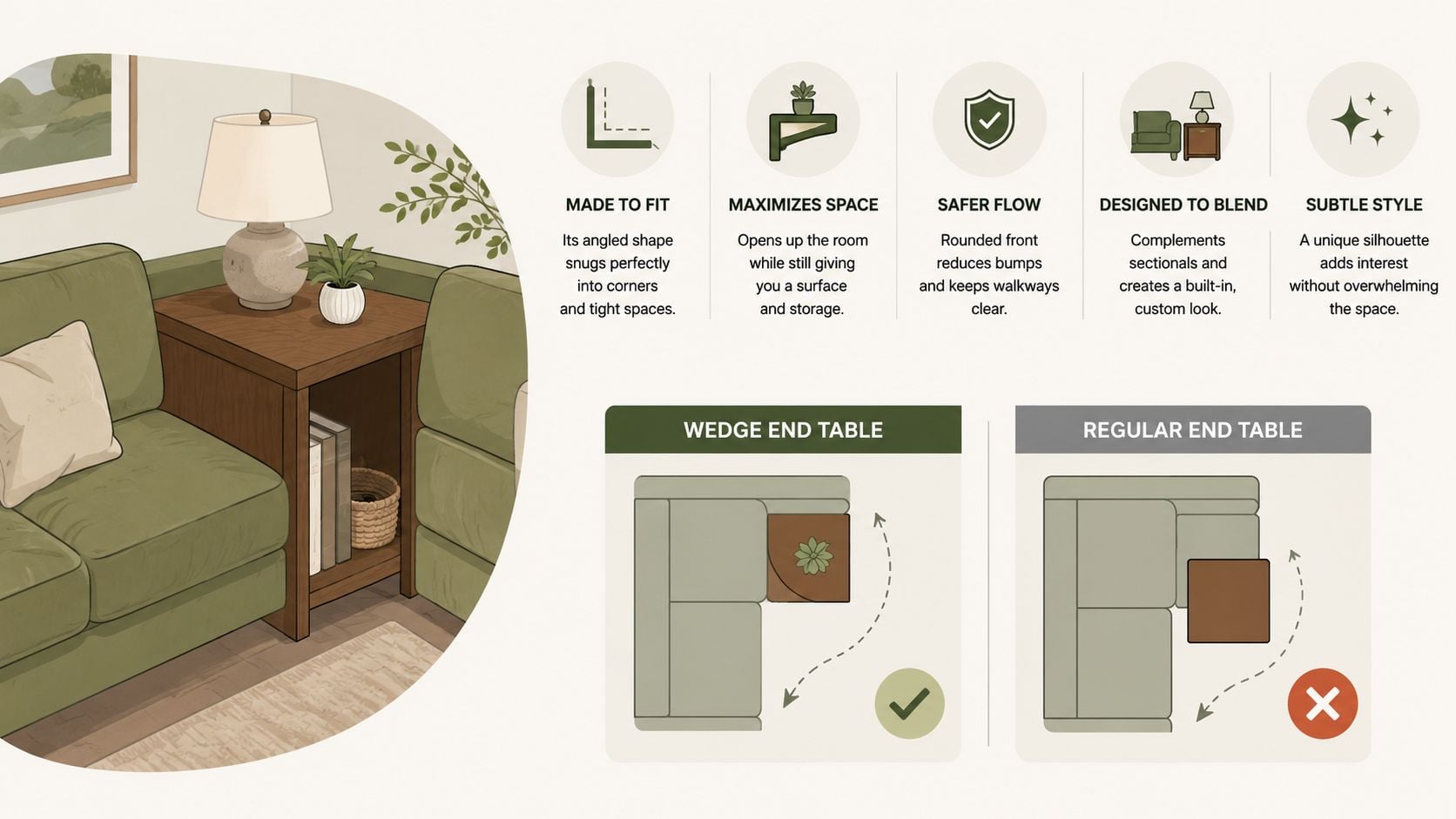
That shape follows the way many living rooms work now. Older room plans often centered on symmetry, with matching tables and lamps framing a sofa. Today's rooms often ask furniture to do a different job, especially where circulation has to stay open and the seating area still needs a place for a drink, a lamp, or a remote. A wedge table answers that need without forcing the room back into a perfect rectangle.
The shape isn't decorative first. It solves a dimensional problem.
Wedge end tables are best understood by comparing their geometry with the furniture around them. The narrow front protects the walkway, and the deeper rear gives you usable surface area where your hand naturally reaches. That is why they fit so well beside recliners and sectional arms, where a table can look fine in a floor plan and still feel awkward once someone sits down and tries to use it.
The geometry matters even more in rooms with modern sectionals and reclining seats, because those pieces create angles, overhangs, and moving parts that a standard end table often does not handle well. A wedge shape lets the table sit closer to the seat without crowding the path beside it. For shoppers who want a clearer sense of how size and placement work together, Groen's furniture measurement guide gives a practical starting point before you shop.
A standard table is about balance. A wedge table is about access, clearance, and making a difficult corner useful.
How to Measure for the Perfect Fit
A wedge end table looks simple from across the room, but the fit depends on a few careful measurements. Start with the table itself, then compare it to the sofa arm or recliner arm beside it. A retail guide notes that wedge end table dimensions often cluster around 10 to 16 inches wide at the front, 22 to 24 inches deep, and 24 inches high. Treat those figures as a starting point, since the test is whether the table sits naturally beside the seat you use every day.
The next measurement is the one that keeps the table comfortable instead of cramped. An end table should sit within about 2 inches of the adjacent sofa or chair height and be roughly equal in depth to the seat-side surface it serves. General end-table guidance also puts height in a broader range, with many tables falling around 18 to 30 inches, and says the table should sit about 1 to 3 inches from the sofa (Pop Maison). For a wedge table, those guidelines matter because the reach from your seat, the angle of the arm, and the space beside a sectional all have to work together.
Wedge End Table Measurement Cheat Sheet
| Dimension | Typical Range | Target to Hit |
|---|---|---|
| Front width | 10 to 16 inches | Narrow enough to preserve clearance |
| Depth | 22 to 24 inches | Deep enough to hold daily essentials |
| Height | 24 inches | Close to sofa or chair arm height |
A good showroom check starts with the seat height, then moves to the space beside the arm. Measure how far the table can extend without blocking feet, knees, or a walking path. After that, look at the narrow front opening and ask a practical question, can you still slip past it comfortably when someone is seated, reclined, or turning into the room?
For a room-by-room refresher before you visit, Groen's furniture measuring guide gives a clear framework for translating your room into the right dimensions. That kind of prep matters because sectionals and recliners create their own geometry, with angled arms, moving parts, and odd gaps that a standard table may not address well. Once the fit is right, the finish and style choices become much easier.
Good fit feels invisible. You notice the lamp and the drink, not the table itself.
Choosing Materials and Finishes That Last
Shape solves the space issue, but material decides how the table lives in the room. Solid wood feels warm, has real repair potential, and fits naturally with the kind of heirloom-minded furniture many families want around a sectional or recliner. That's why Amish-built pieces often make sense for homeowners who want a solid wood table that can stand up to daily use and still look right years later.
Veneer over an engineered core can be a thoughtful alternative when the goal is value with a polished look. It can deliver a refined finish without the weight or cost profile some buyers expect from full solid wood, which makes it a practical option for families balancing style and budget. Metal accents, on the other hand, can bring a cleaner edge to transitional rooms or modern spaces where the table needs to feel lighter visually.
Finish choice matters just as much as construction. A deeper stain can make the piece feel grounded, a painted finish can soften the look, and a protective topcoat helps the surface handle ordinary living room use. The best finish is the one that complements the upholstery, the flooring, and the amount of daylight the room gets, not the one that looks good in isolation.
For a deeper look at wood choices and longevity, this hardwood guide is a useful companion. It helps shoppers think about grain, durability, and style as one decision instead of three separate ones.
Groen's showroom mix gives families several pathways, from Amish Furniture craftsmanship to familiar upholstery and casegood brands like Flexsteel and Bassett. That matters because a wedge table doesn't need to be a compromise piece. It can be a coordinated part of the room, matched to the rest of the furniture in a way that feels deliberate.
Styling and Placement Around Sectionals and Recliners
A wedge table starts to make sense once you look at the furniture around it, not just the empty corner. Beside a large sectional with a chaise, the narrow front helps preserve the walking lane, while the deeper back can sit close to the arm and still leave room for a lamp, a coaster, or a small tray. That shape follows the geometry of the sectional itself, so the table feels like part of the seating plan instead of a piece squeezed in after the fact.
A reclining sofa calls for a different setup. The table needs to stay close enough for a drink, book, or remote, but it also has to clear the moving footrest, which means a wedge form can solve a problem a square table often creates. If the sofa is pulled away from the wall, the table should support easy reach without interrupting the recliner's motion.
Corners made by a chair and a window work a little differently again. There, the wedge table often acts like a soft connector, easing the angle without making the room feel closed in. A reading stack, a lamp, and one decorative object usually fit better than a crowded arrangement, because the wider rear section should do the work without turning into visual clutter.
Placement rule of thumb: Keep the table close enough for reach, then let the narrow front protect the walkway.
General end table guidance still helps you check the fit, even with a wedge shape. End tables are usually placed about 1 to 3 inches from the sofa, and their length is often considered against the length of the seating area, with broader guidance pointing to about one-quarter to one-third of the sofa length. The wedge version uses a compact front edge to adapt that idea, but the basic goal stays the same, the table should feel tied to the seat, not separated from it.
For shoppers planning a sectional layout, Groen's sectional layout ideas can help connect table placement to the whole room arrangement. A room photo or a rough sketch brought into the showroom usually makes the conversation easier, because the team can look at arm height, traffic paths, and corner angles together instead of guessing from memory.
A strong focal point can also help a small seating area feel intentional. The Brooklyn loft look guide, the Brooklyn loft look guide, shows how a bold visual element can work within a tight footprint, which is useful when a wedge table has to support a lamp and still leave the room feeling open.
Custom, Amish, and Brand Options at Groen's
A wedge table doesn't have to be an off-the-shelf guess. Groen's Custom Order Services let families design around the room instead of settling for a shape that almost works, and that matters when the sofa arm, the walkway, and the corner all have to cooperate. For shoppers who want to Design it your way, custom solid wood work through our Amish builders can turn a specific measurement, finish, or silhouette into a Made to order piece that fits the room cleanly.
That same custom mindset shows up across the rest of the showroom. Canadel gives families a way to coordinate dining pieces with the rest of the home, while brands like Flexsteel, Bassett, and Vaughan-Bassett give shoppers more style paths at different comfort and value points. The important part is choice, because a well-sized wedge table should look like it belongs in the room, not like it was dropped in by accident.
Special financing, subject to credit approval, can make that choice easier to act on without pushing the purchase out of reach. Think of it as buying power, not a shortcut. It gives a family room to choose the right size, the right material, and the right finish while still fitting the budget more comfortably.
For readers comparing custom routes, Groen's custom furniture overview explains how a made-to-order piece moves from idea to finished furniture. Henson's also offers a useful financing read for homeowners weighing project costs, through how to fund custom drapes, which connects well to the same budgeting mindset.
Our family has served Northwest Indiana since 1983, and that multigenerational service shows up most clearly when a shopper needs a real answer, not a rushed guess. A wedge table purchase becomes easier when the people helping with it know how to translate a living room problem into a workable piece of furniture.
Care, Showroom Visits, and Next Steps
A good wedge end table should be easy to live with, and simple care helps it stay that way. Dust with a soft cloth, use coasters on wood finishes, and keep the piece out of harsh direct sunlight when possible, since strong light can change the look of stain over time. Those habits don't take much effort, but they do help the table keep its color and surface quality longer.
Showroom visits make the final decision clearer because size feels different in person. Bring measurements, a phone photo of the room, and if possible, a quick note about the sofa arm height so the team can compare the table to the seating right away. That's also a good time to ask about white-glove delivery, interior design help, and special financing options that fit the budget.
A wedge table is one of those pieces that can improve daily life when the fit is right. It clears the walkway, keeps essentials close, and helps the room feel more intentional.
Visit Groen's Fine Furniture in Dyer or Crown Point to explore custom options for wedge end tables, solid wood finishes, and made-to-order pieces that fit your room. Our family can help you test the scale, talk through white-glove delivery, and ask about special financing plans that support your budget.