Blog
Pet Friendly Furniture Fabrics That Actually Last

A dog shakes muddy water across the living room rug. A cat settles into the corner of the sofa, claws working at the same seam it has chosen for months. Meanwhile, a homeowner in Dyer or Crown Point rubs a fabric swatch between two fingers and wonders whether the sofa will still look good after years of shedding, scratching, and the occasional accident.
That decision isn't about finding one magical, pet-proof textile. The right pet friendly furniture fabrics balance abrasion resistance, stain protection, cleanability, color, comfort, and the quality of the frame beneath the upholstery. A fabric that suits a heavy-shedding golden retriever may be a poor choice for a cat that scratches, while an accident-prone puppy creates a different set of demands.
For homeowners across Northwest Indiana, including St. John, Schererville, and Munster, the best choice starts with the pet's actual habits. The showroom floor also matters. A photograph can't show how a weave feels, whether hair brushes away, or how a cushion and seam respond to daily use.
Choosing Upholstery With Pets in Mind
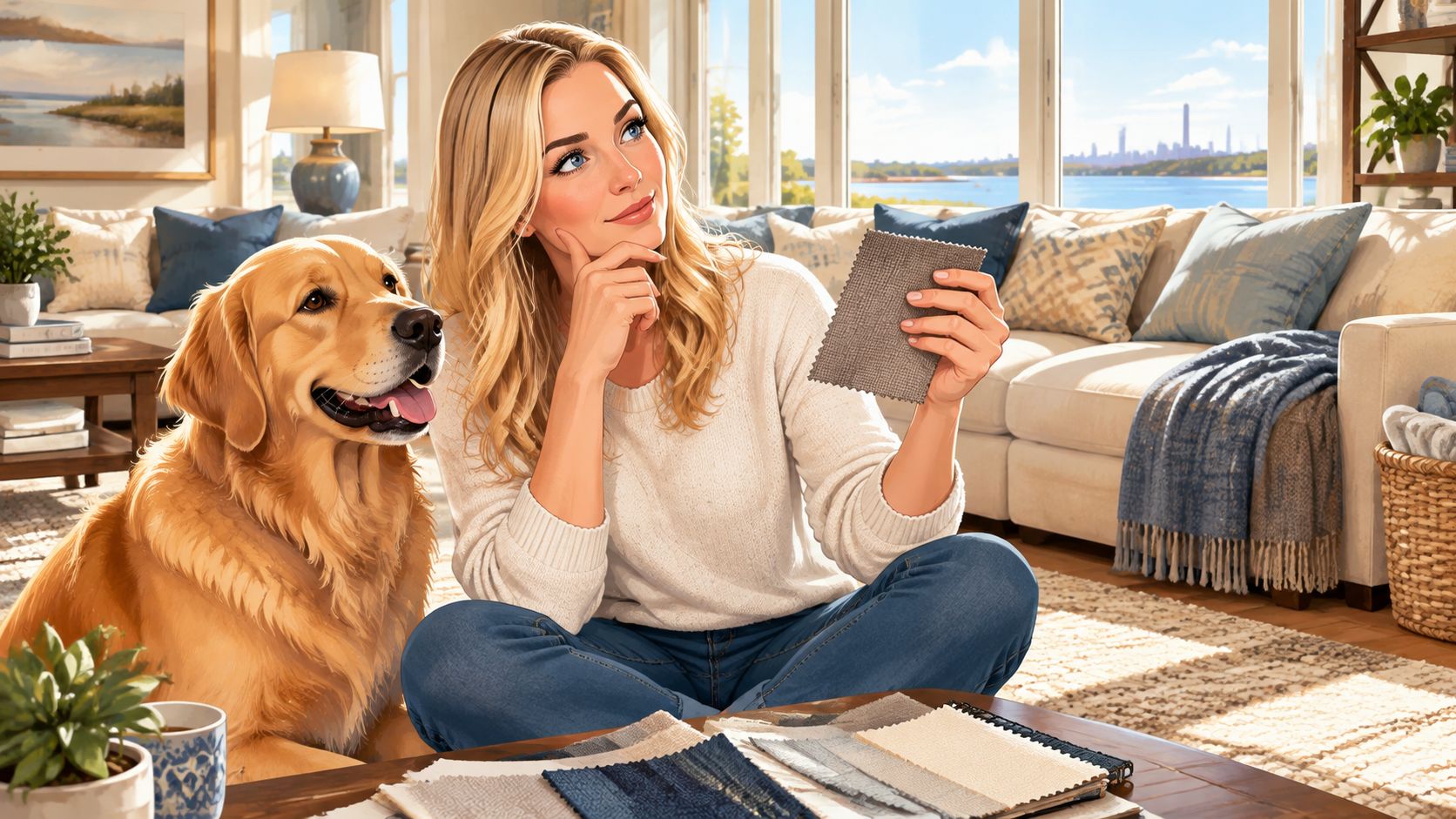
The homeowner stands beside her golden retriever, holding two gray swatches near the sofa. One has a soft, open texture that looks beautiful online. The other feels smoother and denser under her fingers. The dog sheds heavily, tracks in wet pawprints after walks, and occasionally has an accident when storms make outdoor routines difficult. A stylish fabric alone won't answer the question. The household needs upholstery that can handle the specific work the pet creates.
Pet ownership is a mainstream household reality rather than a narrow furnishing concern. NielsenIQ's global research found that 57% of consumers across 22 countries owned pets, including dogs in 33% of households and cats in 23%. The same study recorded particularly high dog ownership in Argentina at 66%, Mexico at 64%, and Brazil at 58%, while Hong Kong recorded 14% dog ownership. Those figures show why pet-resistant upholstery matters across major markets, not just in homes with unusually active animals. (NielsenIQ's global pet ownership study)
Start with the behavior, not the label
A household should identify its biggest problem before comparing fabric names.
- Shedding calls for a surface that releases hair instead of gripping it.
- Scratching demands a tight construction without loose loops for claws to catch.
- Accidents make liquid resistance and stain release more important than appearance alone.
- Muddy paws favor darker colors, patterns, and finishes that simplify frequent spot cleaning.
The rest of the furniture matters just as much. A durable textile won't prevent a weak frame from loosening or a poorly supported cushion from losing comfort. Buyers comparing upholstery can also review Groen's guidance on how to choose upholstery fabric before visiting a showroom. For practical upkeep after the purchase, homeowners may find these cleaning tips for pet sofa fabric useful.
How Pet Friendly Fabrics Actually Work
A pet-friendly upholstery decision becomes easier when shoppers separate three mechanics: durability, stain resistance, and cleanability. These terms overlap, but they don't mean the same thing. A fabric can resist abrasion while absorbing a spill, or release stains easily while offering a weave that catches claws.
Durability is the fabric's mileage
Durability measures how well upholstery handles repeated rubbing from people, paws, collars, jumping, and grooming. Think of the difference between sturdy denim and tissue paper. Dense, tightly woven synthetic upholstery generally gives pet-heavy furniture a stronger defense because the construction offers fewer openings for claws to catch and less space for hair to settle. Upholstery guidance recommends at least 50,000 Wyzenbeek double rubs for pet households, while high-performance coverings can exceed 100,000 double rubs.
Stain resistance changes the clock
Stain resistance gives a homeowner more time to respond. A liquid-barrier finish or engineered performance construction can keep a spill closer to the surface, so blotting begins before the liquid spreads through the cushion. Solution-dyed acrylic and polyester helped establish the modern performance-fabric era by providing resistance to stains, fading, and moisture in high-use interiors. (Health for Animals global pet population report)
Cleanability determines the recovery
Cleanability is what happens after the mess. A tight weave and suitable fiber can help dirt, hair, and odors come off more predictably, but a shopper still needs the manufacturer's cleaning code and treatment instructions. Technical information for performance constructions describes Class 4 to 5 stain resistance and heavy abrasion performance, while comparable collections report 70,000 to 80,000 or more double rubs alongside strong stain-removal results for soils such as urine, coffee, and ketchup. (Performance upholstery technical sheet)
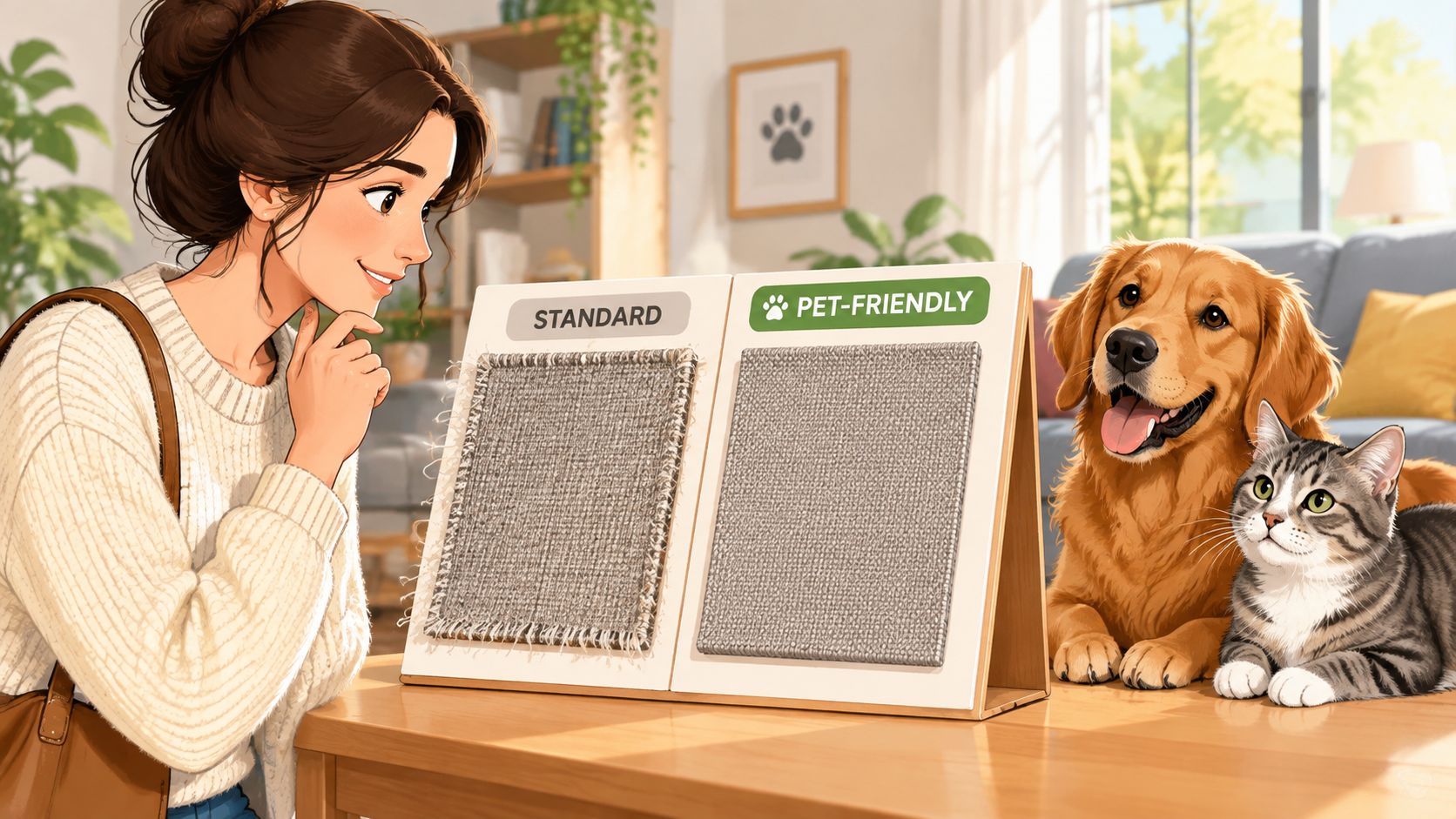
A practical rule follows: don't treat “performance” as a complete answer. Check how the textile handles abrasion, liquids, and actual cleaning. Groen's performance upholstery options can be compared by surface feel, weave, color, and care requirements rather than by a label alone.
Comparing the Main Fabric Families
Each fabric family solves a different household problem. A shopper shouldn't choose based only on softness or appearance, because the same surface can behave differently around a shedding dog, a scratching cat, or a muddy entryway.
| Fabric Family | Pet Durability | Cleanability | Tradeoffs |
|---|---|---|---|
| Microfiber | Dense surface generally resists claw snags and everyday wear | Hair and many spots can be removed with routine care | Can hold pet hair and may show water marks |
| Genuine leather | Strong surface and excellent resistance to hair and ordinary spills | Wipes clean quickly and develops character over time | Cat claws can puncture or scratch the surface |
| Performance weaves | Engineered for high use, stains, and moisture | Often releases spills more predictably than conventional cloth | Some constructions can feel warmer during long lounging |
| Performance velvet | Tight pile reduces loose loops and gives a polished appearance | Hair often sits near the surface and minor marks can be easier to manage | Claws can crush or disturb the pile |
| Cotton or linen blends | Natural hand and comfortable breathability | Usually requires more careful treatment and prompt attention | Loose or open weaves can snag and absorb spills |
Microfiber
Microfiber is a sensible starting point for many shedding dogs. Its dense surface offers fewer claw catches than a loose loop, and routine vacuuming can keep the upholstery presentable. The tradeoff is hair retention. Some microfiber can hold onto fine fur, and water marks may appear if spot cleaning isn't handled evenly.
Genuine leather
Leather is the easiest surface to wipe after ordinary spills and doesn't trap loose hair the way woven cloth can. It also develops a patina, which may make everyday use look intentional rather than worn. Cats are the deciding factor. Kneading and scratching can leave punctures or visible marks, so leather suits many dog households better than homes with determined feline scratchers.
Performance weaves
Performance fabrics are the strongest all-around category for accidents, muddy paws, and busy family rooms when the construction is specified carefully. Fiber choice and moisture-barrier systems matter, and some performance upholstery can be cleaned with bleach according to industry guidance, but the care label still controls.
Velvet and traditional blends
Performance velvet deserves a fair hearing. Its short, tight pile can look refined and reduce obvious snagging, although repeated clawing may crush the surface. Cotton and linen blends offer a natural feel, but conventional versions usually need more protection and faster cleanup. A showroom comparison of upholstery materials helps shoppers judge the textile alongside the frame, cushions, and silhouette.
Reading Durability Numbers the Right Way
A rub count is useful, but it isn't a promise that a sofa will survive every pet behavior. The Wyzenbeek test measures abrasion through repeated back-and-forth rubbing, much like an odometer records miles. Martindale uses a different testing method, so numbers from the two systems shouldn't be treated as perfectly interchangeable.
Independent guidance places standard house furniture fabric around 15,000 to 20,000 rubs, with fabrics above 20,000 rubs recommended for pet owners. Another upholstery guide recommends a minimum of 50,000 Wyzenbeek double rubs for pet households, and high-performance coverings may exceed 100,000 double rubs.
| Use Level | Double-Rub Count | Best For |
|---|---|---|
| Light household use | Around 15,000 to 20,000 | Rooms with limited daily activity |
| Active family use | Above 20,000 | Homes with children and regular pet lounging |
| Pet-heavy use | About 50,000 or more | Frequent pawing, grooming, and repeated sitting |
| High-performance use | More than 100,000 | Extremely active rooms and demanding upholstery needs |
Look beyond the headline number
Weave density, yarn twist, and the presence of loose loops affect how a fabric behaves around claws. A tightly packed surface generally limits snagging and hair penetration, while a textured loop can give a claw an easy target even if the marketing description sounds durable. Vertical and horizontal abrasion ratings may also differ, so the complete specification deserves attention.
Laboratory abrasion isn't the same as a cat repeatedly working one sofa corner. Buyers should ask about pilling, snag resistance, stain treatment, and cleaning-code requirements. Certifications such as Greenguard or OEKO-TEX can provide information about material chemistry, but they don't replace abrasion and cleanability specifications.
A useful showroom rule: Choose the fabric with the strongest complete specification, not simply the largest rub count.
For homeowners focused on long ownership, practical guidance on how to extend sofa life with Meliusly can complement the fabric conversation. Maintenance, cushion rotation, and placement still influence how upholstery ages.
Matching Fabrics to Your Pet's Habits
The best shortlist starts with the mess that happens most often. A household with a calm dog that sheds is solving a different problem from a household with a cat that attacks every loose thread.
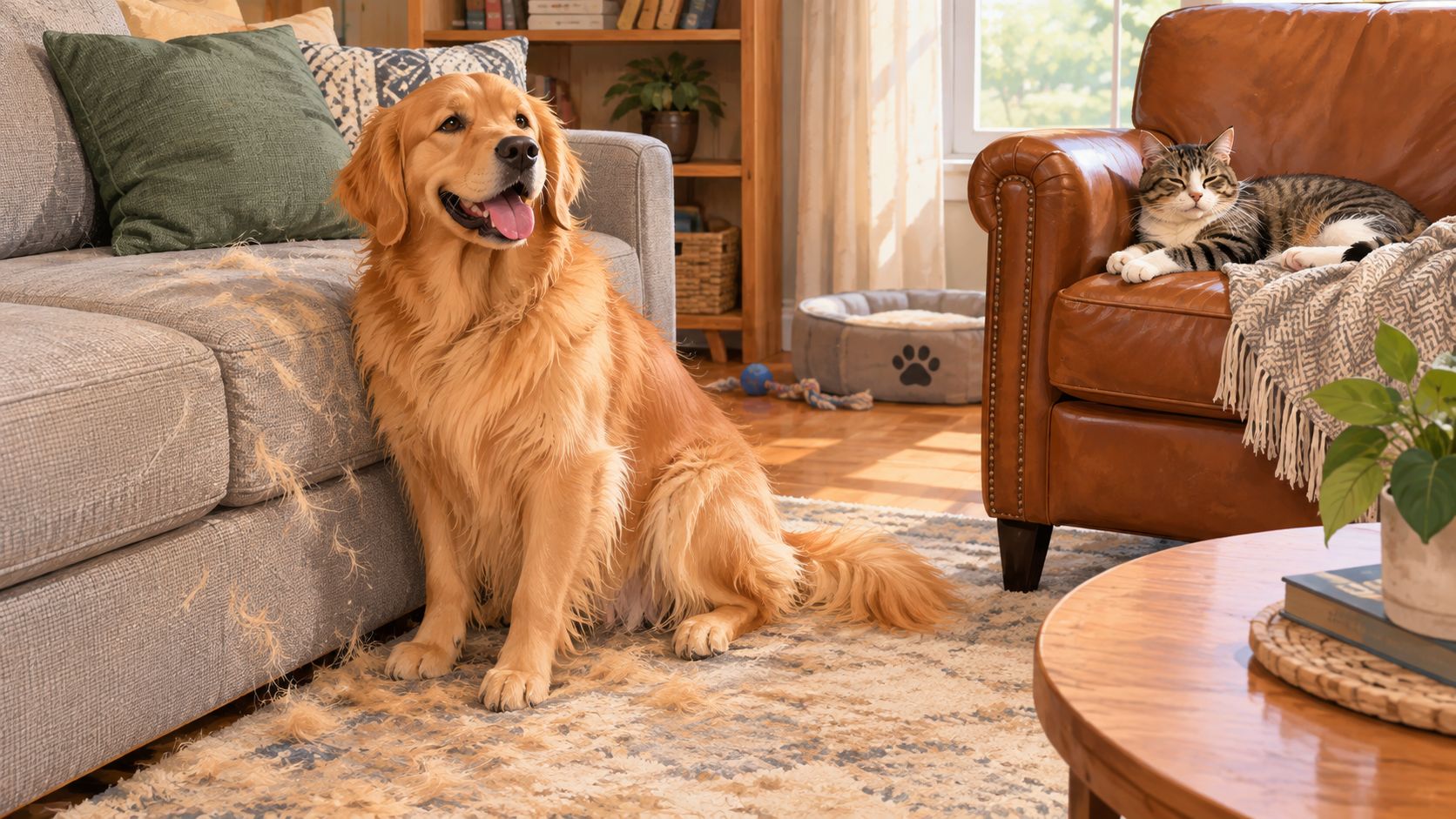
Heavy-shedding dogs
Start with tight-weave microfiber, genuine leather, or a smooth performance weave. Leather releases hair quickly and wipes clean, while microfiber can stand up well to everyday rubbing. A performance weave offers a stronger answer when shedding comes with wet fur, drool, or outdoor grime.
The compromise is comfort and appearance. Dark leather may show light hair, and some microfiber holds fur until vacuumed. A patterned performance textile can make daily shedding less conspicuous without relying on a rough, highly textured surface.
Scratching cats
Choose tightly woven performance fabric, treated canvas, or performance velvet. Loose linen, boucle, and open-loop textures invite claws into the construction. Performance velvet can reduce obvious catches, but cats can still crush or mark the pile if the sofa doubles as a scratching post.
A dedicated scratching surface remains necessary. Upholstery selection reduces vulnerability, but it can't redirect a cat's instincts by itself.
Puppies and senior pets
Accidents make Crypton-type performance upholstery, treated leather, or removable washable slipcovers the practical shortlist. Performance constructions that combine liquid-barrier behavior with strong stain release give the homeowner more time to blot. Leather handles surface cleanup well, while washable covers offer the most convenient reset when the manufacturer approves machine washing.
Comfort still matters. A surface that cleans well but feels unpleasant won't become a favorite family sofa, so the fabric should be tested by hand before ordering.
Outdoor dogs and muddy paws
Select darker tones, patterned weaves, and stain-resistant performance finishes. A subtle pattern can disguise light grime between cleanings, while a dense construction keeps mud closer to the surface. Microfiber and performance weaves make the strongest starting points; leather is another option when the household prefers quick wiping and accepts possible claw marks.
The decision should reflect cleaning tolerance as much as pet behavior. A household that wants a pristine light sofa may need stricter pet access rules, regardless of fabric.
Cleaning and Maintenance Habits That Help
Pet-friendly upholstery still needs a routine. The goal isn't to wait for a visible disaster. Regular, gentle care keeps hair, grit, and oils from working deeper into the weave.
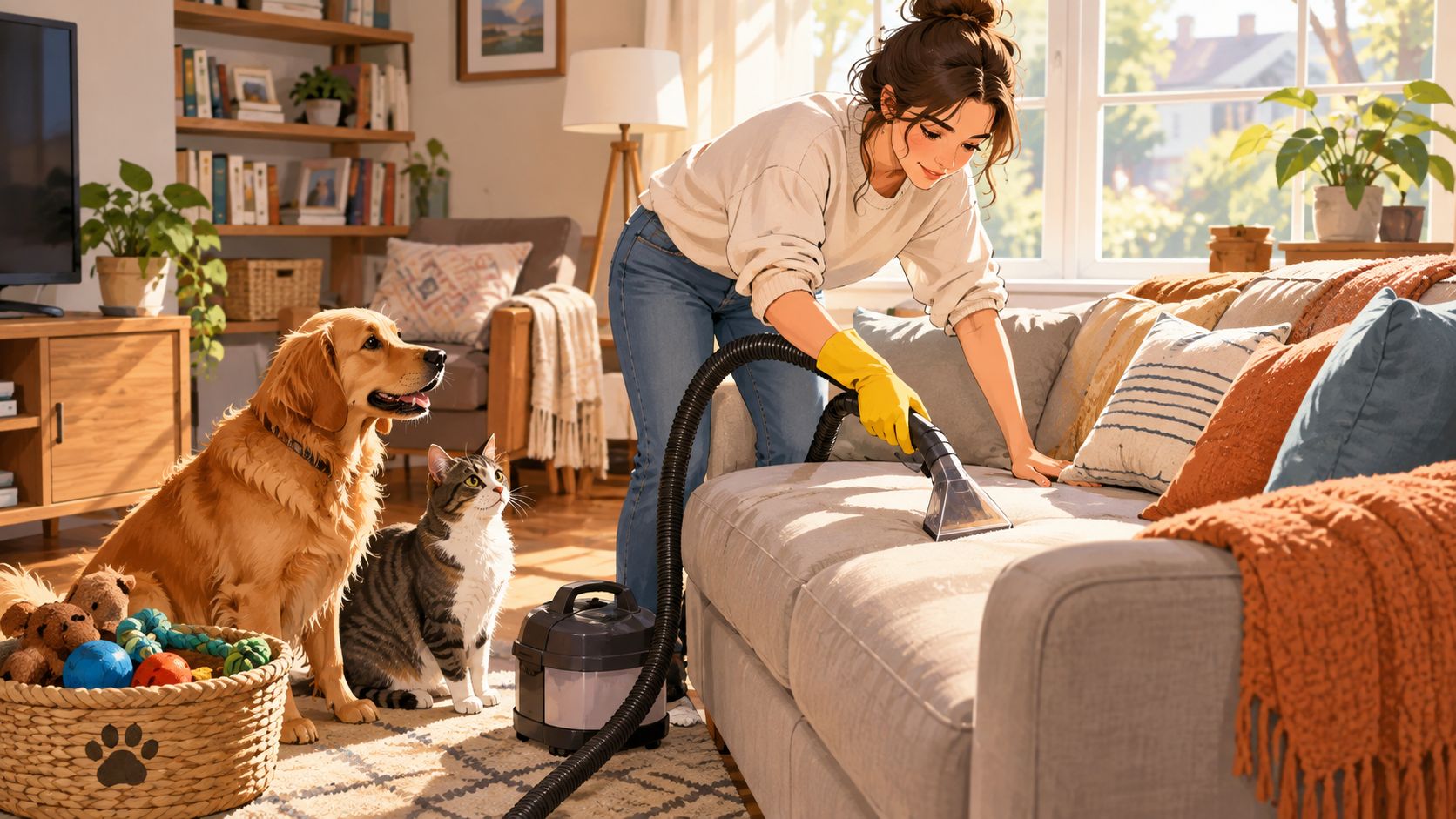
A workable weekly reset
Vacuum the sofa with an upholstery attachment, paying attention to seams, cushion gaps, and the area where the pet climbs up. Microfiber often benefits from a rubber glove or pet-hair sponge that gathers fine fur after loose hair has been lifted. A household dealing with stubborn buildup can review this guide on how to remove stubborn pet fur.
Rotate loose cushions when the design allows it. This spreads pressure from a pet's favorite spot and helps the seating maintain a more even appearance. Check zippers and seams for trapped hair before reinstalling covers.
Treat spots before they spread
Blot fresh spills with a clean cloth. Cold water and a small amount of mild dish soap can handle some surface messes, but the homeowner should test an inconspicuous area first and follow the manufacturer's cleaning code. Scrubbing creates friction, pushes the stain outward, and can distort the weave.
For urine and other organic odors, use an enzyme-based cleaner approved for the specific upholstery and safe around pets. Baking soda can provide a simple refresh when the fabric and care instructions allow it, but it shouldn't replace proper stain treatment.
Schedule deeper care
Seasonal deep cleaning gives the family a chance to inspect cushion interiors, seams, and high-contact areas. Steam cleaning should happen only when the upholstery manufacturer permits it. Too much moisture or an unsuitable extraction method can leave marks, affect backing, or damage a protective treatment.
Leather needs its own schedule. Conditioning every six to twelve months can help preserve the surface, provided the product matches the leather finish. Vinegar and bleach shouldn't be used casually on performance upholstery, especially when the fabric already has an engineered stain-resistant treatment. Always check the care label before applying a household remedy.
Groen's fabric sofa cleaning guidance offers another practical reference for building a care routine around the specific upholstery selected.
A Shopper's Checklist for the Showroom
A swatch should survive more than a quick glance. Before ordering, the buyer should evaluate the textile, the construction beneath it, and the service terms attached to the piece.
- Inspect the weave: Look for a dense construction, minimal loose loops, reinforced seams, and a surface that doesn't invite claws.
- Ask for specifications: Request the fiber content, abrasion rating, stain-treatment details, and cleaning code in writing.
- Check the frame: Substantial support and dependable upholstery construction matter when pets climb, jump, and lounge on the same furniture every day.
- Review the warranty: Confirm exclusions for pet damage, tears, burns, household chemicals, and discoloration.
- Test the color: Hold likely shades beside a sample of the pet's fur, especially if the animal sheds heavily.
- Study the cushions: Ask whether covers can be removed, whether replacement cushions are available, and how the filling is expected to perform.
- Confirm the order: Record the exact fabric, grade, color, and finish. Ask about dye-lot variation, special-order timing, delivery, and repair policies.
- Measure the route: Doorway clearance and room dimensions can matter as much as the sofa's footprint.
Custom furniture gives a household more control over configuration, dimensions, cushion feel, and fabric selection. Canadel dining pieces and Amish solid wood furniture serve the same broader principle, design the room around the household instead of forcing the household to accept a standard configuration.
A showroom associate should compare real samples without handing every pet owner the same rule. The useful question is whether the upholstery matches the animal's habits, the family's cleaning tolerance, and the room's demands. Groen's also provides a practical guide to kid-friendly and pet-friendly furniture for households balancing several kinds of daily wear.
Test Drive Your Fabrics at Groen's
A fabric sample can look different under showroom lighting, against a homeowner's wall color, and after a dog has claimed the sofa. Touching the surface reveals whether hair brushes away, whether the texture feels comfortable, and whether a claw would find a loose thread. Those details don't come through in an online photograph.
A visit to Groen's Fine Furniture in Dyer or Crown Point lets shoppers compare performance upholstery, leather, microfiber, velvet, and conventional blends in person. Customers can bring room photographs, measure doorways, and describe the behavior that matters most, whether that's shedding, scratching, muddy paws, or accidents. The team can also review fabric grades, cleaning codes, warranties, cushion options, and delivery terms before a purchase is finalized.
Custom order services make the decision more precise. A homeowner can design a sofa or sectional around the room's dimensions, choose a preferred cushion feel, and select upholstery that fits the pet's routine. The same design-first approach applies to Canadel dining furniture and Amish solid wood pieces, while Flexsteel and Bassett offer distinct directions for durability and style. Special Financing is available subject to credit approval, giving shoppers additional buying power while they fit a quality purchase into the household budget.
Local, multigenerational ownership has shaped Groen's service in Northwest Indiana since 1983. White-Glove Delivery, interior design assistance, and five-star service help carry the decision from fabric selection to placement at home.
Visit Groen's Fine Furniture in Dyer or Crown Point to test pet friendly furniture fabrics, compare custom upholstery, and discuss a sofa built around the household's actual pet habits. Ask the family-owned team about Special Financing, White-Glove Delivery, and the fabric, frame, and cushion options that can help create a comfortable home for people and pets alike.