
Blog
What Is Power Recliner


A power recliner is a chair that uses an electric motor and linear actuator to move the backrest and footrest smoothly at the push of a button. Power recliners emerged as a distinct furniture category in the mid-1980s, and modern designs now combine adjustable positioning with practical features for everyday comfort.
After a long day, the difference is easy to understand. Instead of shifting body weight against a lever or reaching for a pull handle, the user taps a control and lets the chair make the adjustment. The movement feels gradual, controlled, and personal, whether the goal is an upright position for conversation, a raised footrest for television, or a deeper recline for rest.
For homeowners in Dyer, Crown Point, and throughout Northwest Indiana, choosing one still requires more than trying the softest chair in the room. A power recliner is also a small piece of engineered equipment. The motor, actuator, control system, frame, upholstery, power source, and service options all affect the ownership experience.
What a Power Recliner Is
After dinner, you settle into the chair and press a button instead of reaching for a lever. The footrest rises, the backrest shifts, and the frame supports your body as the position changes. That simple action comes from several components working together inside the furniture.
A power recliner uses an electric motor and a linear actuator. The motor creates rotation, while the actuator changes that rotation into a controlled push or pull. That motion guides the reclining mechanism, moving the backrest and footrest through their available positions. This technical explanation of how a power lift recliner works describes the connection between electrical input, motor movement, and mechanical action.
A manual recliner asks your body to supply more of the force. You might pull a side lever, use a handle, or lean back to start the movement. A power model puts that control in a handset or buttons near the arm. Pressing a button sends a signal to the motor, and the actuator adjusts the chair while you remain seated.
The parts a buyer can expect
Most power recliners include these working parts:
- Low-voltage motor: Supplies the force that moves the reclining mechanism.
- Linear actuator: Pushes or pulls along a track to change the chair's position.
- Metal mechanism: Uses tracks and connected hardware to guide the backrest and footrest.
- Handset or arm controls: Start, stop, and fine-tune movement.
- Power cord: Connects the chair to household electricity, unless a compatible battery system is installed.
One documented service design uses a 120 VAC, 60 Hz supply, a 24 VDC output stage, and a maximum rated current input of 3.7 A. In that arrangement, household alternating current is converted to low-voltage direct current for motor control. Those ratings apply to that system, not every power recliner, so follow the specifications supplied with the chair. The power recliner service manual offers the technical reference.
Room layout also affects the mechanism you choose. A wall-hugger model is designed to recline with limited space behind it. Some catalog specifications call for only 5 to 6 inches of wall clearance. This guide to what a wall-hugger recliner is explains why that design can suit a smaller living room.
At a Groen's Fine Furniture showroom, you can connect these parts to what you feel. Listen to the motor, test the controls, and check how the chair moves beneath your weight. A power recliner is a coordinated piece of equipment, built to turn a button press into repeatable movement.
How the Motors and Controls Work
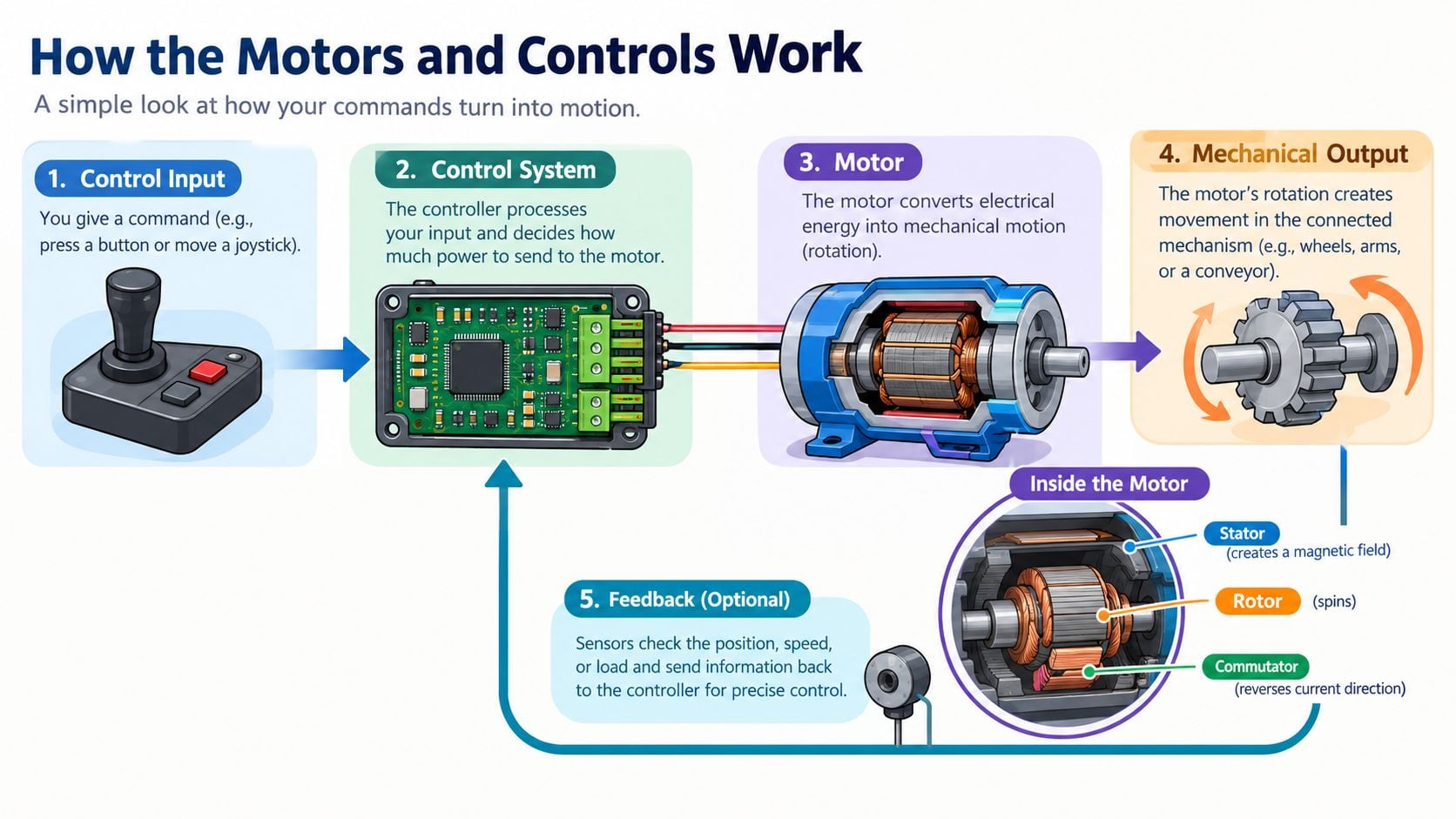
The easiest way to understand a power recliner is to follow the action from the user's hand to the chair's movement. A button or handset starts the process. The power supply delivers electricity, the motor creates rotation, and the linear actuator changes that rotation into movement along a track. The chair's backrest and footrest then move through the available range until the user releases the control or the mechanism reaches its limit.
Four components work together
The motor supplies torque, or turning force. The linear actuator translates that turning force into a push or pull. A track and linkage direct the movement so the chair opens and closes in a predictable path rather than shifting abruptly.
The power supply usually connects to a household outlet. Some chairs also support a rechargeable battery option, which can reduce visible cord concerns and provide limited operation during an outage. Modern models may use electricity, batteries, or both, and some higher-end designs provide separate power for the back, footrest, and headrest. This overview of power recliner operation and power options explains why battery and plug-in arrangements deserve a direct showroom conversation.
The controller is the user-facing part of the system. It may sit on the outside arm or connect by a cord as a handset. Depending on the model, buttons can control the footrest, backrest, headrest, lumbar support, or a return-to-upright home position. USB charging ports may also be built into the control area, which is convenient for keeping a phone nearby during a movie or reading session.
Practical rule: The most useful control layout is the one the intended user can find and operate without twisting, guessing, or reaching awkwardly.
Why dual motors feel different
A single-motor design may coordinate the back and footrest together. A dual-motor system can let the backrest and leg rest move independently, giving the user more precise control over the seating position. Manufacturer documentation for powered lift recliners specifically describes this independent movement. The dual-motor recliner documentation offers a reference for how separate motor functions can expand adjustment.
That distinction matters in ordinary situations. A reader may want the head and back slightly reclined while keeping the legs lower. Someone watching television may want the footrest raised without changing the back angle. A person taking a short rest may prefer a different combination altogether.
The motor should sound steady rather than strained. The movement should begin without a harsh jolt and stop when the control is released. For shoppers considering a chair with heated or massage features, a power recliner with heat and massage introduces additional comfort functions that should be tested separately from the reclining mechanism.
Common Types of Power Recliners
A power recliner is a small piece of engineered equipment, and its design affects how it serves the person using it. A lift model helps with standing. A headrest model changes upper-body support. A wall-hugger manages limited room space. The right type depends on the user's movement needs, preferred comfort, and available clearance.
Power lift recliners
A power lift recliner raises the chair and tilts the seat forward to assist the user in standing. Unlike a standard recliner, its main movement is upward and forward rather than backward. Patents describe this counter-balanced lifting action as a way to reduce stress on the back and knees during the transition from sitting to standing. The documented lift mechanism explains why a lift chair should be assessed as mobility-support furniture as well as comfort seating.
This style may suit someone recovering from surgery or anyone who finds rising from a low seat difficult. Test the complete lift cycle in a showroom. Notice the starting seat height, the forward tilt, and how securely your feet meet the floor.
Headrest and footrest models
A power headrest and footrest recliner lets the user adjust leg extension and head angle for different activities. Reading may feel better with a moderate recline and added neck support. Television viewing may call for a raised headrest and extended footrest. A separate lumbar adjustment can provide another point of control.
Small changes can matter. The chair should support the head without pushing it forward, while the footrest should support the legs without pressing uncomfortably behind the knees.
Zero-gravity designs
A zero-gravity recliner moves the body toward a more evenly supported posture, with the legs raised and the back reclined. Its purpose is to reduce pressure points and create a balanced resting position. The name describes a seating position, not a guarantee of comfort.
Check the lower-back support, head position, and available space for natural movement. Hold the position long enough to notice whether your body stays relaxed.
Wall-hugger models
Wall-hugger power recliners are built for rooms with limited space behind the chair. Some mechanisms require only 5 to 6 inches of clearance, which can help in a tighter seating arrangement or beside a wall. A guide to different types of power reclining seating can help you compare configurations before a showroom visit.
| Type | Key Feature | Best For |
|---|---|---|
| Power lift | Raises and tilts the chair forward | Users who need help standing |
| Headrest and footrest | Adjusts upper and lower support | Reading, television, and individualized comfort |
| Zero-gravity | Raises the legs and balances the reclined posture | Resting with broad body support |
| Wall-hugger | Reclines with limited rear clearance | Smaller rooms and close-to-wall placement |
Features often appear together. A lift chair may include separate adjustments, while a wall-hugger may also have a power headrest. Try each position in person at Groen's Fine Furniture. The showroom lets you connect the mechanism you read about with the support, movement, and fit you can feel.
Power Recliner vs Manual Recliner Benefits
The central difference is effort. A power recliner responds to a button, while a manual recliner depends on a lever, handle, or body movement. That makes power seating attractive to users who want fine control without pulling, pushing, or shifting weight.
Power models also support a broader range of positions. Catalog specifications describe power mechanisms as offering infinite positions rather than fixed detents, meaning the user can stop at many points instead of choosing only preset mechanical angles. That flexibility can help someone find a comfortable posture for reading, conversation, television, or rest.
| Category | Power Recliner | Manual Recliner |
|---|---|---|
| Effort | Button-controlled movement | Lever, handle, or body pressure |
| Positioning | Fine adjustment across the mechanism's range | Usually fewer fixed positions |
| Accessibility | Useful when physical effort is difficult | Requires more active movement |
| Cost | More components can raise the purchase cost | Often a simpler value choice |
| Power needs | Requires an outlet or compatible battery | No electricity required |
| Best for | Personalized comfort and easier operation | Simplicity and flexible placement |
The tradeoffs deserve attention
A power recliner is usually heavier because it contains motors, wiring, and a reclining mechanism. It also needs access to power, which can influence furniture placement. If the room has no convenient outlet, or if the chair must move frequently, a manual model may be more practical.
A manual recliner can cost less, weigh less, and operate during an outage without any backup system. Its simpler construction may also make basic service more straightforward. Those benefits don't make it automatically better. They matter more to shoppers who value independence from electricity and uncomplicated operation.
The best match is the chair that removes the problem the household actually has.
Older adults, post-surgery users, and people with limited arm, back, or leg strength often appreciate push-button adjustment. Someone who wants a straightforward chair near a remote wall outlet may prefer manual operation. A power and manual recliner comparison can support the decision, but sitting in both styles remains more revealing than reading feature lists.
Key Buying Considerations Before You Choose
A showroom test becomes much more useful when the buyer arrives with practical questions. Comfort matters, but a chair can feel excellent for a moment and still be too deep, too tall, difficult to place, or costly to maintain.
Start with the person and the room
Seat height and depth affect how easily the user sits down, keeps both feet supported, and stands again. Back height influences head and neck support. The fully reclined footprint matters just as much as the upright dimensions because the footrest and backrest need clear space.
Before shopping, measure the intended area and note nearby walls, tables, walkways, and power outlets. A shopper should ask:
- Fit: Does the seat support the user's hips and thighs without forcing the knees too high?
- Clearance: How far does the chair extend when fully open?
- Capacity: What weight rating applies to this exact model?
- Placement: Can the cord reach the outlet without crossing a walkway?
Listen to the mechanism
The motor should move smoothly and consistently. During a demonstration, the buyer should listen for unusual grinding, clicking, or straining and watch whether the footrest opens evenly. A dual-motor chair should demonstrate whether the back and leg rest can move separately, rather than relying on a label alone.
The buyer should also ask about the power supply, cord length, battery backup, and what happens during an outage. Many power and lift recliners plug into a standard wall outlet, while some models may include rechargeable battery backup. This explanation of electric recliner motor control provides useful background for that conversation.
Choose upholstery for real life
Leather, performance fabric, and microfiber each create a different daily experience. Leather can offer a smooth, substantial feel and straightforward surface care. Performance fabric may suit active households with children or pets. Microfiber provides a soft hand and requires care that matches the manufacturer's instructions.
A removable or adaptable cover can also help protect a reclining sofa or chair in a busy home. For shoppers comparing coverage options, a white recliner sofa cover offers a practical resource to review alongside the selected upholstery.
Ask about the structure and future service
The frame, mechanism, motor, handset, and power supply all deserve attention. The buyer should ask how replacement parts are handled, whether the mechanism is serviceable, and what warranty coverage applies to the motor and reclining system. Repair and parts availability matter because a power recliner has more electrical and mechanical components than a fixed chair.
The ultimate recliner buying guide can help organize those questions before a visit. Safety also starts with placement. Cords should stay protected, the moving base should remain clear, and children and pets shouldn't play around the mechanism.
Safety and Maintenance Tips That Matter
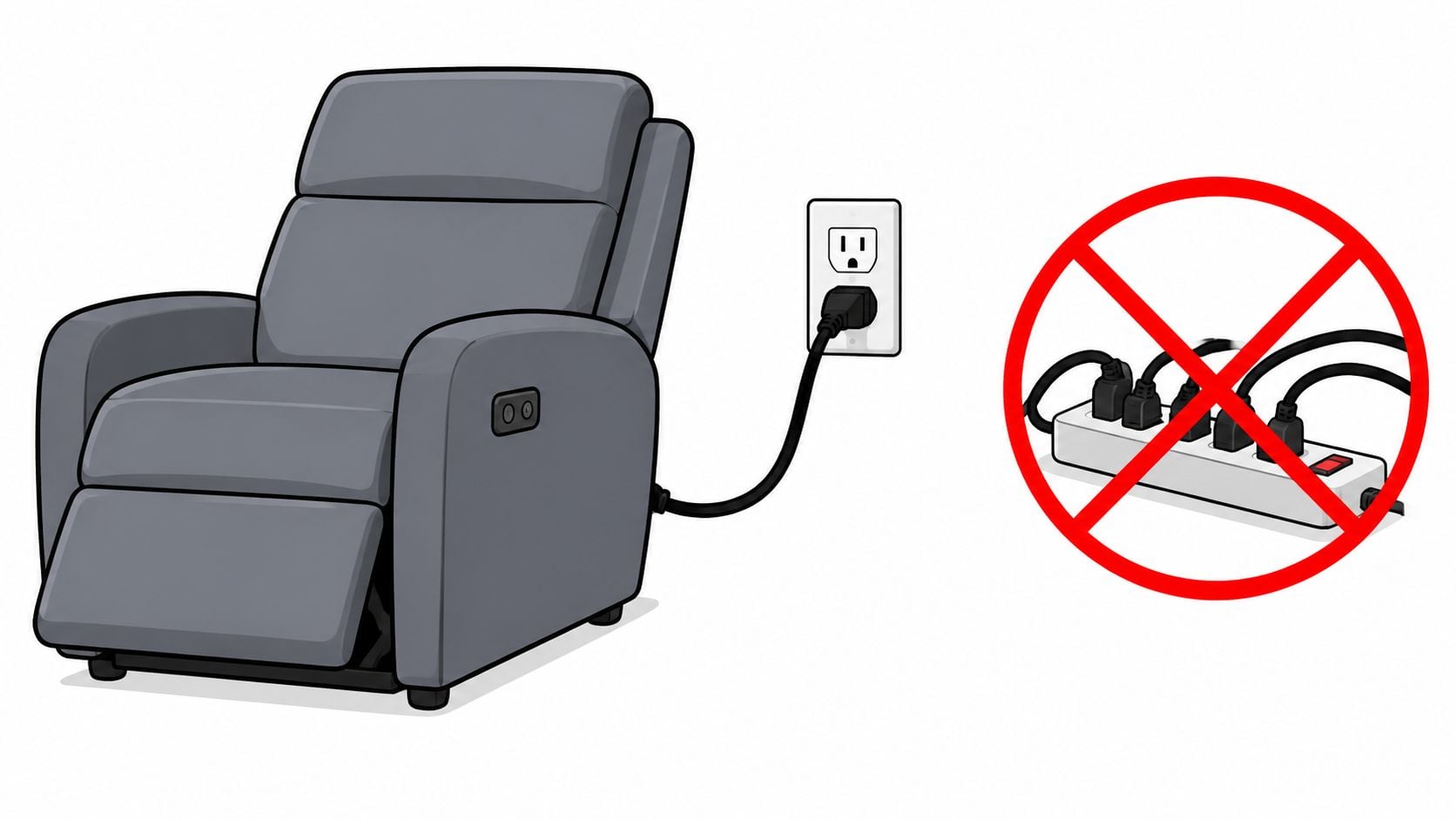
A power recliner needs ordinary care and thoughtful placement. The chair should connect directly to a suitable wall outlet, rather than a daisy-chained power strip or an extension cord. Surge protection may help protect electronics, but the manufacturer's electrical instructions should always take priority.
Small fingers, paws, and tails can reach moving gaps if children or pets play near the base. Controls should be locked when that function exists, and a handset should be stored where young children can't reach it. Users should also remain within the chair's stated weight limit because exceeding it can place extra stress on the frame and motor.

A simple care routine
- Clear the mechanism: Keep toys, pet items, blankets, and debris away from the moving base.
- Vacuum gently: Use a narrow attachment around crevices without pulling on wiring.
- Inspect the cord: Look for wear, pinching, or damage before continued use.
- Notice changes: Uneven movement, new noise, or hesitation deserves prompt service.
- Follow upholstery guidance: Condition leather only as directed and use fabric protection when the care guide recommends it.
- Read first: The manufacturer's care instructions should be reviewed before the first spill or cleaning treatment.
Battery backup can help during an outage, but it shouldn't be treated as unlimited operation. The owner should ask how the battery is charged, how the chair behaves without wall power, and whether the backup supports all functions or only selected movement.
Repair questions deserve a place in the original purchase conversation. Retailers and manufacturers vary in their ability to supply handsets, motors, actuators, and power components. A chair that feels comfortable today should also have a sensible path for service if a component eventually needs attention.
Trying Options at Groen's Fine Furniture
Reading about motors and mechanisms narrows the field, but a showroom visit reveals the details a specification sheet can't capture. At Groen's Fine Furniture, shoppers can sit in power lift, headrest and footrest, and zero-gravity styles, then operate the controls while a knowledgeable team explains what each movement does.
The family-owned business has served Northwest Indiana since 1983, with showrooms in Dyer and Crown Point. Its surrounding service area includes St. John, Schererville, and Munster, making an in-person visit practical for many NWI households. The selection includes brands such as La-Z-Boy, Flexsteel, and Palliser, with Flexsteel associated with durability, along with upholstery and finish choices that support a more personal fit.
What to bring and test
Room measurements help the team discuss wall clearance, walking paths, television sightlines, and outlet placement. The intended user should also be part of the test whenever possible, especially if the chair will support someone with mobility concerns.
A useful showroom test includes:
- Seat fit: Check whether the hips, thighs, feet, and lower back feel supported.
- Footrest travel: See whether the leg support reaches a comfortable length.
- Headrest movement: Test the viewing angle for reading and television.
- Lift assistance: Operate the full rise and forward-tilt sequence.
- Motor sound: Listen for smooth, even operation without distracting noise.
- Control access: Confirm that every button is easy to identify and press.
Power outages and battery backup are common practical questions. Some models may operate from a rechargeable battery, while others depend entirely on a wall connection, so the selected chair's specifications matter. Manual recliners remain the simpler choice for rooms without reliable outlet access, while power models provide easier adjustment and more precise positioning.
Longevity depends on construction, use, care, and future service. Buyers should ask about the mechanism warranty, motor coverage, replacement parts, and the process for addressing uneven movement or a failed handset. Groen's also offers White-Glove Delivery, custom furniture guidance, Interior Design support, and special financing subject to credit approval, helping shoppers connect the chair purchase with the rest of the room and their available buying power.
The same approach applies throughout the home. Custom Canadel dining allows a household to design a table and chairs its own way, while Amish solid wood furniture emphasizes craftsmanship and made-to-order character. For sleep wellness, the Helpful Mattress Guide can help households compare Serta and Beautyrest options with attention to rest and recovery, not just specifications. Bassett adds style choices, and American-Made and solid wood selections can support a lasting room plan.
The retailer's multigenerational ownership and five-star service reflect a local approach that treats furniture as a long-term relationship rather than a quick transaction. Testing the motor, feeling the support, and discussing service in person turns online research into a confident decision.
Visit Groen's Fine Furniture in Dyer or Crown Point to test power lift, headrest, footrest, and zero-gravity recliners with the help of a local family-owned team. Explore custom furniture options, White-Glove Delivery, and Special Financing subject to credit approval, then find the comfortable, lasting fit that works for the home.