Blog
Performance Upholstery: Durable Fabrics for Your Home

A family in Northwest Indiana doesn't need much imagination to know what a sofa goes through in a normal week. One day it's a landing spot for school backpacks. The next it's the front row for movie night, a pet nap zone, and the place where someone balances a bowl of salsa a little too confidently. Beautiful furniture matters, but so does the ability to live on it without feeling tense every time a drink gets set down.
That's why so many homeowners in Dyer, Crown Point, St. John, Schererville, and Munster start asking the same question. Is there a fabric that still looks refined, but doesn't demand a perfectly spotless home? The answer is performance upholstery. Demand for durable home solutions is rising, with the global furniture performance fabric market projected to grow from USD 1.8 billion in 2023 to USD 3.6 billion by 2032 according to market projections for furniture performance fabric.
For households that already stay on top of floors, kitchens, and everyday messes, upholstery is another part of the bigger home-care picture. A practical routine that includes consistent residential upkeep often helps families protect the entire space, not just the furniture. Homeowners looking for room ideas and local inspiration can also browse Northwest Indiana furniture options to see how durable pieces fit real homes.
Table of Contents
- Your Guide to Worry-Free Living in Northwest Indiana
- What Exactly Is Performance Upholstery
- The Science Behind Stain Resistance and Durability
- Performance Fabric vs Traditional Upholstery
- Choosing the Right Performance Fabric for Your Home
- Design It Your Way With Custom Orders and Financing
- Care Lifespan and Our Lasting Commitment
Your Guide to Worry-Free Living in Northwest Indiana
In many NWI homes, the living room isn't a showpiece first. It's the busiest room in the house. Kids stretch out for cartoons before school. Guests gather there during holidays. Pets circle the cushions until they find the warm spot. That daily use is exactly why ordinary upholstery can start looking tired long before the frame underneath is ready to quit.
Performance upholstery fits this kind of home because it's designed for real contact with real life. A family can choose a light neutral sectional, a textured accent chair, or upholstered dining seating without feeling like every snack and spill is a looming disaster. That changes how a room gets used. People relax more when the furniture feels ready for the moment.
Why this matters locally
Northwest Indiana households often want two things at once. They want a polished room that feels welcoming to guests, and they want furniture that can handle a busy routine. Those goals don't clash as much as they used to.
A practical fabric doesn't have to look practical. That's one of the biggest shifts in modern upholstery.
Performance upholstery gives families a way to aim for comfort, style, and resilience in the same piece. For a home that hosts game nights, family birthdays, or a steady stream of everyday activity, that balance can make furniture feel like a better long-term decision.
What people usually worry about
Most shoppers aren't confused about whether messes happen. They're confused about what “performance” promises.
Some assume it means waterproof. Others assume it means stiff or commercial-looking. Neither assumption is especially helpful. Good performance upholstery is better understood as fabric made to resist the kinds of wear that come from repeated, ordinary use indoors.
- Spills happen fast: Families want time to blot and clean before moisture sinks deep.
- Traffic adds up: Seat cushions and arms get rubbed, pressed, and leaned on every day.
- Looks still matter: A durable fabric still needs to feel right in a family room, office, or dining space.
That's where the details start to matter.
What Exactly Is Performance Upholstery
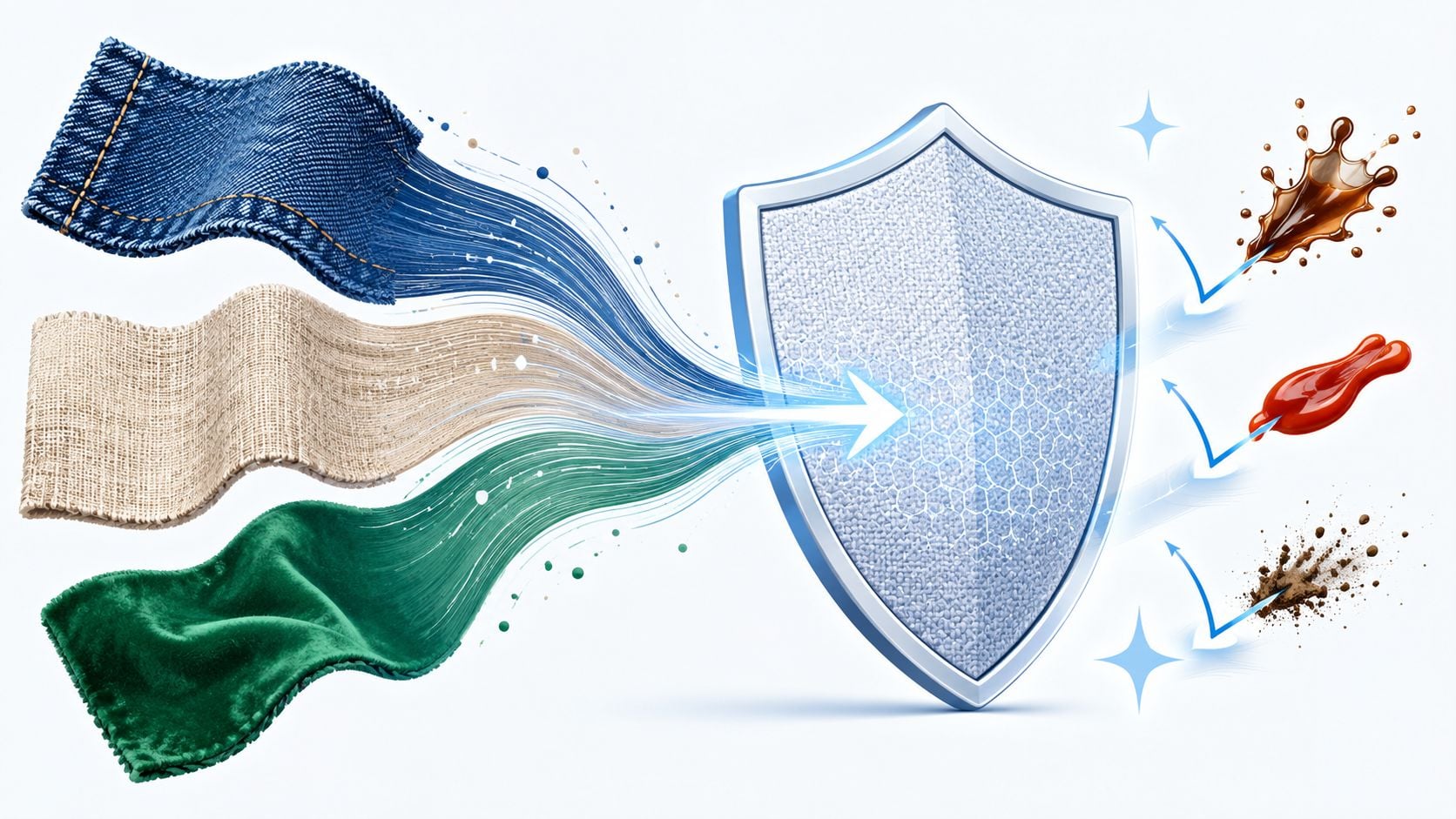
Performance upholstery isn't one single fabric. It's a category of upholstery materials designed to handle tougher indoor use than standard decorative fabric. The best way to think about it is simple. It's the fabric version of a good everyday jacket. It still looks nice, but it's built for weather, movement, and repeat use instead of just appearance.
A simple way to think about it
A standard upholstery fabric may look beautiful on day one and still be the right choice in a quiet room. Performance upholstery is built for homes where the furniture gets touched, sat on, cleaned, and used constantly.
That usually means the fabric is engineered to do several jobs at once:
- Resist everyday staining: Liquids and messes have a harder time soaking in right away.
- Handle friction better: Repeated sitting and movement are less likely to rough up the surface quickly.
- Stay presentable longer: The fabric is meant to keep its appearance through regular household life.
For anyone sorting through fabric terms, this upholstery materials guide helps connect fiber names and textures to actual furniture use.
Why standards matter
A lot of marketing language sounds reassuring until someone asks, “How is that measured?” That's where standards matter. To be considered performance upholstery for indoor use, fabrics must meet ASTM D3690-19 specifications that set minimum thresholds for tensile strength and abrasion resistance, helping ensure they don't tear or degrade in high-traffic settings, as outlined in the ASTM D3690-19 upholstery specification.
That sounds technical, but the benefit is easy to understand. The fabric isn't being judged only by color or softness. It's also being judged by whether it can hold up under repeated stress indoors.
Practical rule: Performance upholstery should be judged by how it behaves after months of use, not just how it feels in the first five minutes.
That's why a shopper may touch two fabrics that seem similar at first, yet one is far better suited for a family sectional. Performance upholstery is about hidden strength as much as visible beauty.
The Science Behind Stain Resistance and Durability
Shoppers often hear broad promises like “easy to clean” or “built to last,” but those phrases can describe different kinds of protection. The science behind performance upholstery usually comes down to where the protection lives. It may be built into the fiber itself, or it may be applied to the surface as a treatment.

Protection built into the fiber
Some fabrics are engineered so that their protective qualities are part of the yarn, not just something added later. That matters because the benefit runs deeper than the surface. If the fabric gets regular use, the protection isn't just sitting on top waiting to wear away quickly.
This kind of construction is especially useful in spaces with steady sunlight or frequent contact. A family room in St. John or Schererville with bright windows may need a fabric that doesn't just clean up well, but also keeps its color and structure looking steady over time.
A helpful way to think about it is this. If the protection is part of the fiber, it's like waterproof material woven into a jacket. It's part of what the fabric is.
Protection added to the surface
Other fabrics rely on advanced finishes that sit on or around the fiber and help block moisture before it penetrates. In a busy house, that can buy valuable cleanup time. A spill lands, beads, or lingers near the surface, and the person cleaning has a better chance to blot it before it becomes a deeper problem.
That kind of barrier can be a smart fit for homes with children, pets, or frequent entertaining. The room still looks soft and inviting, but the fabric has a working shield.
For homeowners thinking beyond seating, it also helps to match upholstery durability with other hardworking surfaces. Families comparing materials across a full room update may want to find durable flooring solutions so the sofa, chairs, and floors all support the same level of daily use.
Surface protection helps most when the household acts quickly. Even high-performing fabric benefits from prompt blotting instead of letting spills sit.
Anyone narrowing down choices can use this guide for choosing upholstery fabric to connect these technical differences to everyday needs like sunlight, pets, and room traffic.
Performance Fabric vs Traditional Upholstery
A balanced comparison matters because not every room needs the same kind of fabric. A family room sectional and a formal accent chair live very different lives. Performance upholstery isn't automatically the right answer for every piece, but it is often the better fit where the furniture gets regular, hands-on use.
Fabric Showdown Performance vs Traditional
| Feature | Performance Upholstery | Traditional Upholstery (Cotton, Linen, etc.) |
|---|---|---|
| Durability | Built for repeated indoor use and better resistance to wear in active spaces | Often best in lower-traffic rooms or on pieces that get gentler use |
| Stain resistance | Designed to slow absorption and improve cleanability | More likely to absorb spills quickly, depending on the fiber and weave |
| Feel | Can range from crisp to soft, with many options that don't feel overly technical | Often prized for natural hand, softness, or relaxed texture |
| Color and pattern options | Broad range of looks, including tailored neutrals and family-friendly textures | Also versatile, especially for decorative or formal styling |
| Care requirements | Usually easier for daily spot cleaning when used properly | May need more caution with spills and more selective placement |
| Initial investment | Often chosen as a value move for long-term use | May work well when the room sees lighter traffic or a more decorative role |
Traditional fabrics still have a place. Cotton and linen, for example, can bring softness, breathability, and a relaxed character that many people love. In a quiet sitting room or a bedroom bench that doesn't get constant use, that may be exactly the right choice.
When traditional fabric still makes sense
Some buyers hear “performance” and assume it's always superior. That's too simple. The better question is whether the fabric matches the room.
A traditional fabric can make sense when:
- The room is low traffic: Formal spaces often don't need the same level of spill resistance.
- Texture leads the decision: Some people want the casual drape or natural variation of classic fibers.
- The piece is decorative first: An occasional chair may not need heavy-duty protection.
For shoppers comparing tactile surfaces more broadly, this look at suede and leather differences can help clarify how appearance, feel, and upkeep often pull in different directions.
Some of the best furniture decisions happen when a household stops asking “What's best?” and starts asking “What fits this room?”
That mindset leads to fewer regrets. A hardworking sectional often benefits from performance upholstery. A quieter space may leave room for something more delicate and purely decorative.
Choosing the Right Performance Fabric for Your Home
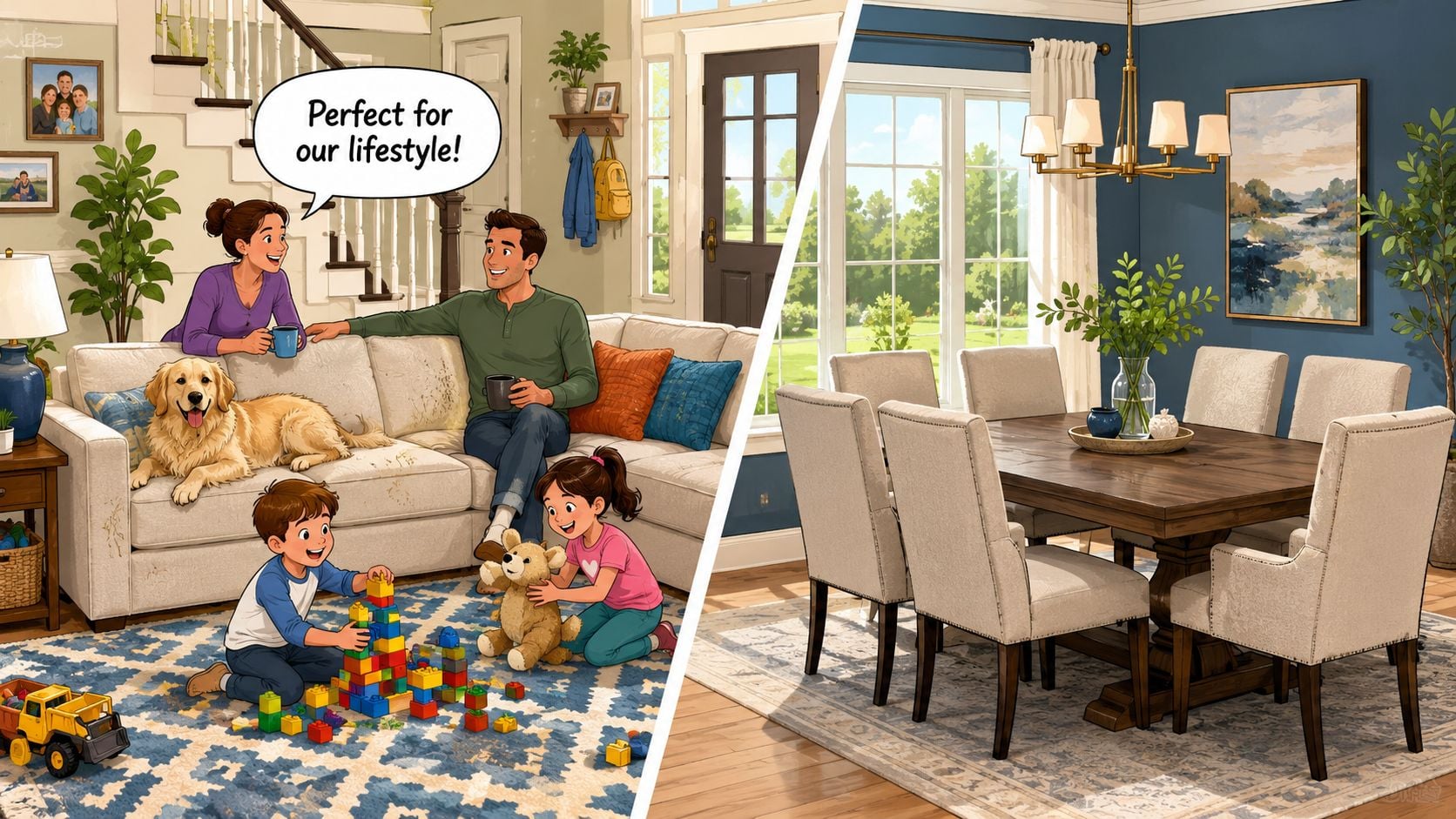
The right performance upholstery depends less on trend and more on how the room is used. A sectional that anchors daily life needs a different fabric than a dining chair used mostly for holidays and weekend meals. A smart choice starts with friction, spills, sunlight, and who's climbing on the cushions.
What to check before choosing
For a primary family room sofa, a fabric should have an abrasion rating of at least 30,000 double rubs, which exceeds the 15,000 double rub baseline often associated with medium-duty residential furniture, according to this guide to upholstery durability ratings. In plain language, that means the fabric is better prepared for daily sitting, shifting, and repeat use in the busiest room of the house.
That number helps, but it shouldn't be the only filter. Abrasion ratings measure rubbing wear, not every kind of damage. Sharp claws, rough seams on clothing, and aggressive cleaning can create different problems.
A practical shopping checklist looks like this:
- For family rooms: Choose a fabric with the right abrasion level and a texture that won't show every touch.
- For pet homes: Look for a tighter weave and think beyond stain resistance. Surface texture affects how fur, snags, and daily cleanup feel.
- For sunny spaces: Ask how the fabric handles light exposure so color stays steadier over time.
- For dining chairs: Favor easy cleanup and a pattern or weave that hides minor marks between cleanings.
Families with dogs or cats can also compare room-by-room priorities in this guide to the best furniture choices for pet owners.
One common myth that trips people up
A lot of buyers assume a fabric that looks luxurious must be fragile, and a fabric that performs well must look flat or synthetic. That's outdated thinking. Modern performance upholstery includes textures and finishes that mimic softer, more decorative looks much better than people expect.
One place shoppers get misled is velvet and linen. Not every fabric described with those style words has the same practical behavior. The appearance can resemble a classic textile while the construction underneath is doing much more protective work. That's why touching a swatch and asking how it performs together matters more than judging by the label alone.
Flexsteel and Bassett are often strong starting points for households that want durability paired with style because shoppers can focus on frame quality and fabric choice together, instead of treating upholstery like an afterthought.
A good fabric choice should fit the busiest person in the house, not the tidiest one.
That one rule helps simplify dozens of swatches very quickly.
Design It Your Way With Custom Orders and Financing
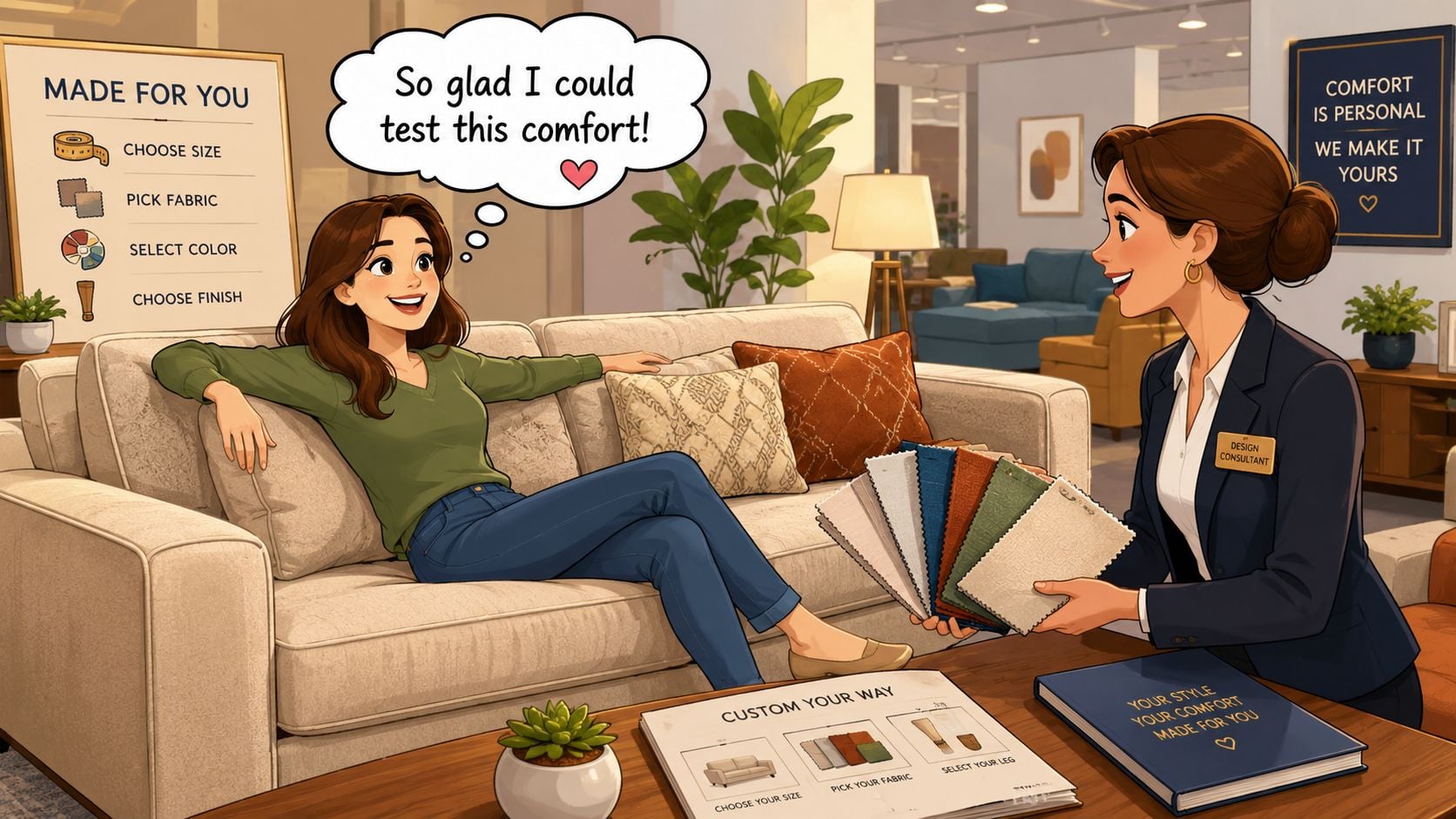
One of the biggest advantages in furniture shopping is this. A family doesn't have to settle for the exact fabric on the floor sample. The strongest homes are usually built one practical decision at a time, and custom furniture makes that possible by pairing the right silhouette with the right upholstery.
Why made to order matters
A bespoke approach gives homeowners more control over how a piece will live in the room. Maybe the household wants the support and durability associated with Flexsteel, the styling options found with Bassett, or the craftsmanship of Amish solid wood in nearby spaces. The fabric decision can work alongside those priorities instead of fighting them.
That's especially helpful when a room has specific needs:
- A narrow space: The size and shape matter as much as the upholstery.
- A busy household: The frame, cushion feel, and fabric all need to support daily use.
- A coordinated home: Dining, living, and occasional pieces should feel related without looking repetitive.
Canadel offers a strong example of what true customization looks like. Its custom dining program includes thousands of combinations for tables and chairs, allowing a piece to be designed to exact specifications, as shown in Canadel custom dining options. That same made-to-order mindset helps buyers think more clearly about upholstered furniture too. Design it your way means the room doesn't have to be built around whatever happened to be in stock.
Buying power without settling
Quality furniture is a meaningful purchase, especially when families are choosing pieces intended to last through moves, milestones, and years of use. That's where special financing, subject to credit approval, can give shoppers buying power without forcing them into a compromise they'll regret later.
The value isn't only financial. It's emotional. A household can choose the fabric that fits the way they live, the frame they want, and the finish or scale that belongs in the room.
Multigenerational ownership and 5-star service matter here because a personal buying experience usually leads to better questions being asked before the order is placed. White-glove delivery and thoughtful interior design help round that out, especially for families furnishing an entire room rather than replacing a single chair.
Care Lifespan and Our Lasting Commitment
Performance upholstery is easier to live with, but it isn't maintenance-free. That's the point many guides skip. Some households become so focused on removing every mark immediately that they use harsh methods which wear the fabric out faster than the original stain would have.
The cleaning mistake many households make
Industry data points to a real cleanability paradox. Many performance fabric failures come from accelerated wear caused by improper, harsh cleaning methods rather than from the original stain, according to the ACT durability discussion on cleaning and wear. In plain terms, over-scrubbing can become the bigger problem.
That's why a gentle process usually serves furniture better than a panicked one.
Blot first. Don't grind the spill deeper with pressure, heat, or aggressive rubbing.
This same principle shows up in other upholstery environments too. Even a guide for recreational boat owners emphasizes that material-safe cleaning technique matters when upholstery faces repeat exposure and cleanup.
Simple habits that help fabric last
A few steady habits go a long way:
- Blot, don't scrub: Lift moisture with a clean cloth instead of grinding it into the fibers.
- Test first: Try any cleaner on an inconspicuous area before using it broadly.
- Follow maker guidance: Cleaning codes and care instructions exist for a reason.
- Rotate seat use when possible: Families naturally favor one cushion. Even use helps appearance.
- Vacuum gently: Dust and grit can act like sandpaper when left in the fabric.
A realistic view helps too. Even excellent upholstery lives in everyday environments. Kids grow, pets claim corners, and family routines change. Good furniture should age gracefully, not remain untouched forever. That's why long-term value comes from the combination of smart fabric choice, sensible care, and guidance from people who understand how homes operate in Northwest Indiana.
Visit Groen's Fine Furniture in Dyer or Crown Point today to explore custom options, test drive the comfort in person, and ask about special financing plans. Since 1983, this family-owned business has served Northwest Indiana with honest pricing, multigenerational service, and a personal approach that helps homeowners in Dyer, Crown Point, St. John, Schererville, and Munster create homes they love.