Recliner with Cup Holder: Your Complete Buying Guide


For homeowners in Dyer, Crown Point, and nearby Northwest Indiana communities, a living room often ends up doing double duty. It's where the family settles after work, where the movie night drinks need a safe landing spot, and where one chair can become everyone's favorite seat. A recliner with cup holder earns its place by making that everyday rhythm easier.
The cup holder sounds small until it isn't. Once the seat is part reading chair, part snack station, and part late-night reset button, that built-in detail starts shaping the whole buying decision, from the mechanism to the upholstery to how easy the chair is to clean.
Why Every Home Needs a Great Recliner With Cup Holder
Saturday evening usually reveals whether a chair earns its place. The room finally quiets down, the remote is close at hand, and the seat beside the lamp becomes the spot everyone drifts toward. In that setting, a recliner with cup holder feels less like a novelty and more like part of the room's daily rhythm.
The cup holder changes the whole buying decision. It affects how much room the drink insert needs, how well it protects against spills, how it fits with the upholstery, and whether the mechanism still feels comfortable once the chair is in use. A chair built around that detail is easier to live with than one where the holder feels added on as an afterthought.
That focus on comfort and convenience also helps explain why recliners keep drawing attention in the furniture market. A market study on the recliner market reports steady growth in the category, and that matches what many families already notice in showrooms and homes. People want seating that supports everyday use, not just a place to sit.
Practical rule: the chair should make daily life easier without turning into a cluttered gadget.
For families in Northwest Indiana, that usually means one seat has to do several jobs well. It should support reading, TV time, or conversation after dinner without forcing a side table into every arrangement or making the drink feel precarious. The cup holder helps the chair handle those routines with less fuss, especially when the seat is also chosen for comfort in a longer sit.
If back comfort is part of the search, this guide on finding the best recliner for back pain can help narrow the rest of the seat choice.
Understanding What Makes a Recliner With Cup Holder Special
A recliner with a cup holder succeeds or fails on a simple detail. The opening has to hold a drink firmly without squeezing it, and the surrounding frame has to stay steady enough that the holder does not feel loose or improvised. If that balance is off, the feature becomes a nuisance instead of a help.
How the feature evolved
The drink holder in today's seating did not begin in recliners. Patent and product-history evidence shows earlier ideas for holding drinks and small items in furniture and accessories, including a 1991 “nested container holders” patent and a 1998 “combination cup and cellular phone holder”. Later chair-specific designs included a 2002 folding chair with retractable cup holder and a 2006 adjustable armchair tray patent and product-history record.
That history matters because it shows the feature developed over time before it became common in newer recliner models. It also helps explain why cup holders are more than decorative add-ons. They grew out of broader seating and tray-holder engineering, then moved into upholstered living-room furniture as home comfort and entertainment habits changed.
A 2022 federal patent dispute also shows that sofas and recliners with cup holders were common enough to reach infringement litigation by then. In plain terms, the feature had moved from novelty into everyday furniture design.
Why the cup holder affects the whole chair
Once a cup holder is built into the frame, it shapes more than drink storage. It affects the arm structure, the upholstery cut, the cleaning routine, and sometimes the chair's long-term durability. A shallow holder, for example, can leave a drink feeling unstable, while a thoughtfully built one feels like part of the chair from the start.
That is why buyers should treat the cup holder as part of the chair's architecture, not a bonus feature. It helps avoid the common mistake of choosing a recliner for its appearance first and only later finding that the holder is hard to clean, awkwardly placed, or too shallow for the drinkware used at home.
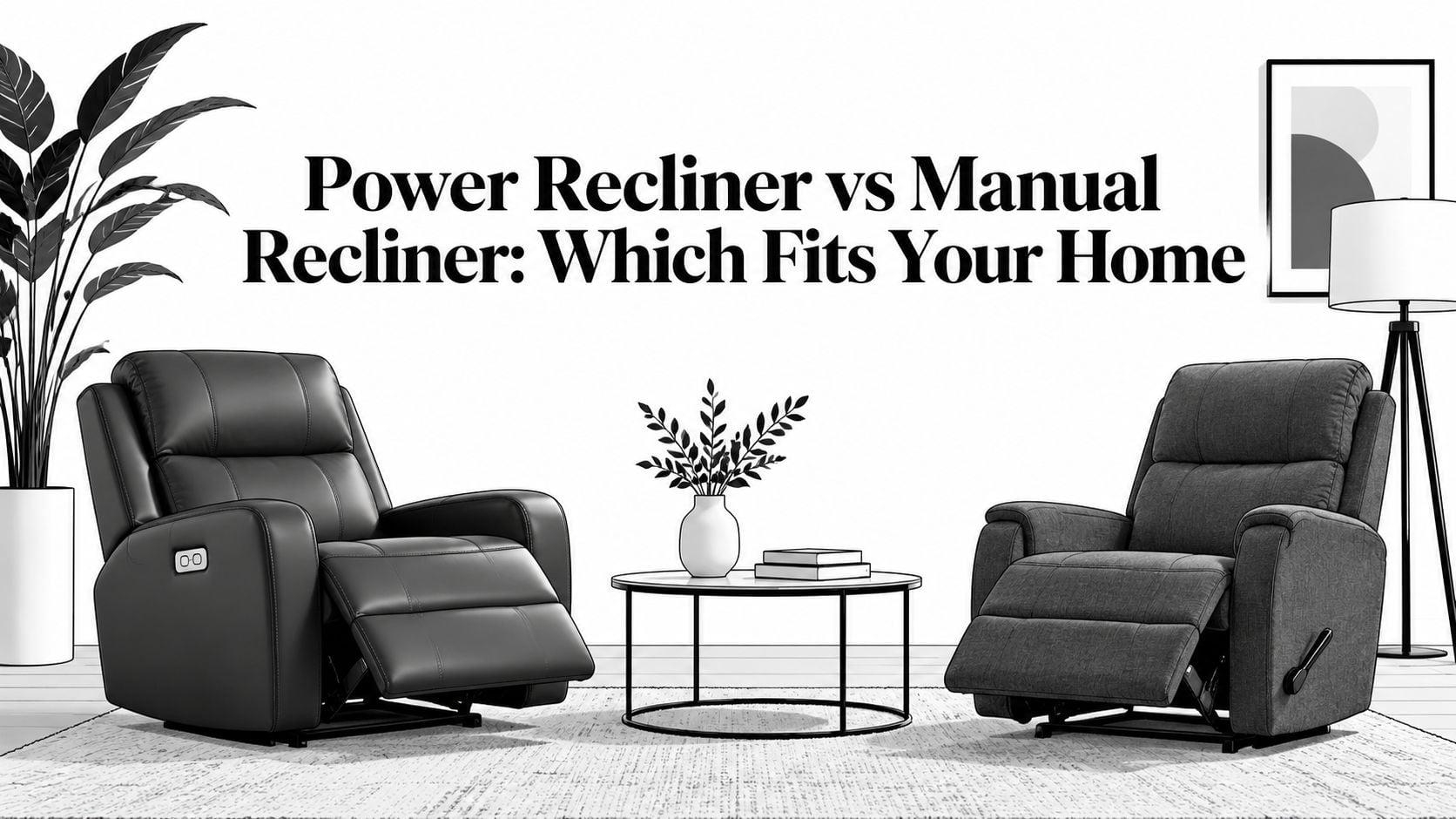
Manual Power and Lift Recliner Mechanisms Compared
A recliner with cup holder works best when the chair's motion matches the way the room is used. A seat that opens and closes all week in a family room needs a different setup from a theater-style chair that mostly stays in place.
Which mechanism fits the household
| Recliner Mechanism Comparison | How It Operates | Best For | Price Range | Maintenance |
|---|---|---|---|---|
| Manual | Lever or body pressure releases the footrest | Simple living rooms, lighter daily use | Lower than motorized styles | Fewer moving parts, easier upkeep |
| Power | Button or remote controls the position | Home theater rooms, frequent use, easier positioning | Higher than manual styles | More parts to inspect and power to manage |
| Lift | Motor helps the sitter rise and sit | Mobility support and aging-in-place needs | Usually higher because of the assist function | Motor care and regular function checks |
Manual chairs stay appealing because they are straightforward. Power chairs suit long movie nights and regular lounging, especially if the user wants less effort in adjusting position. Lift chairs serve a different purpose, since the focus shifts from relaxation alone to getting in and out of the seat with less strain.
Simple fit test: if the chair will be used mostly for occasional lounging, manual can make sense. If it will be the main family seat, power often feels easier to live with.
For shoppers comparing those two mainstream options, this internal guide is a helpful next step: power recliner vs manual recliner.
The cup holder changes the choice because it adds another layer of planning. A manual recliner may be the cleaner choice for a busy household that wants fewer service points. A power model may fit better if the buyer wants the chair to feel like part of a dedicated entertainment setup. Lift models bring their own priorities, and the cup holder becomes secondary to access and support.
The cup holder also changes how buyers should judge the mechanism. If the holder sits near the arm structure, the chair needs enough stability around that area so the opening does not feel flimsy or awkward. If the cup holder is part of a powered or lifted design, the internal layout has to work around motors, controls, and moving parts without making cleanup harder. That is why the holder is never just a place for a drink. It shapes the chair's frame, the user's reach, and the way the whole seat fits daily life.
Styles, Sizes, and Cup Holder Design Details
A recliner with cup holder may look straightforward from across the room, but the decision comes down to fit. The chair has to work for the room, the body, and the drink, and those three pieces do not always line up neatly.
The opening size is only part of the story
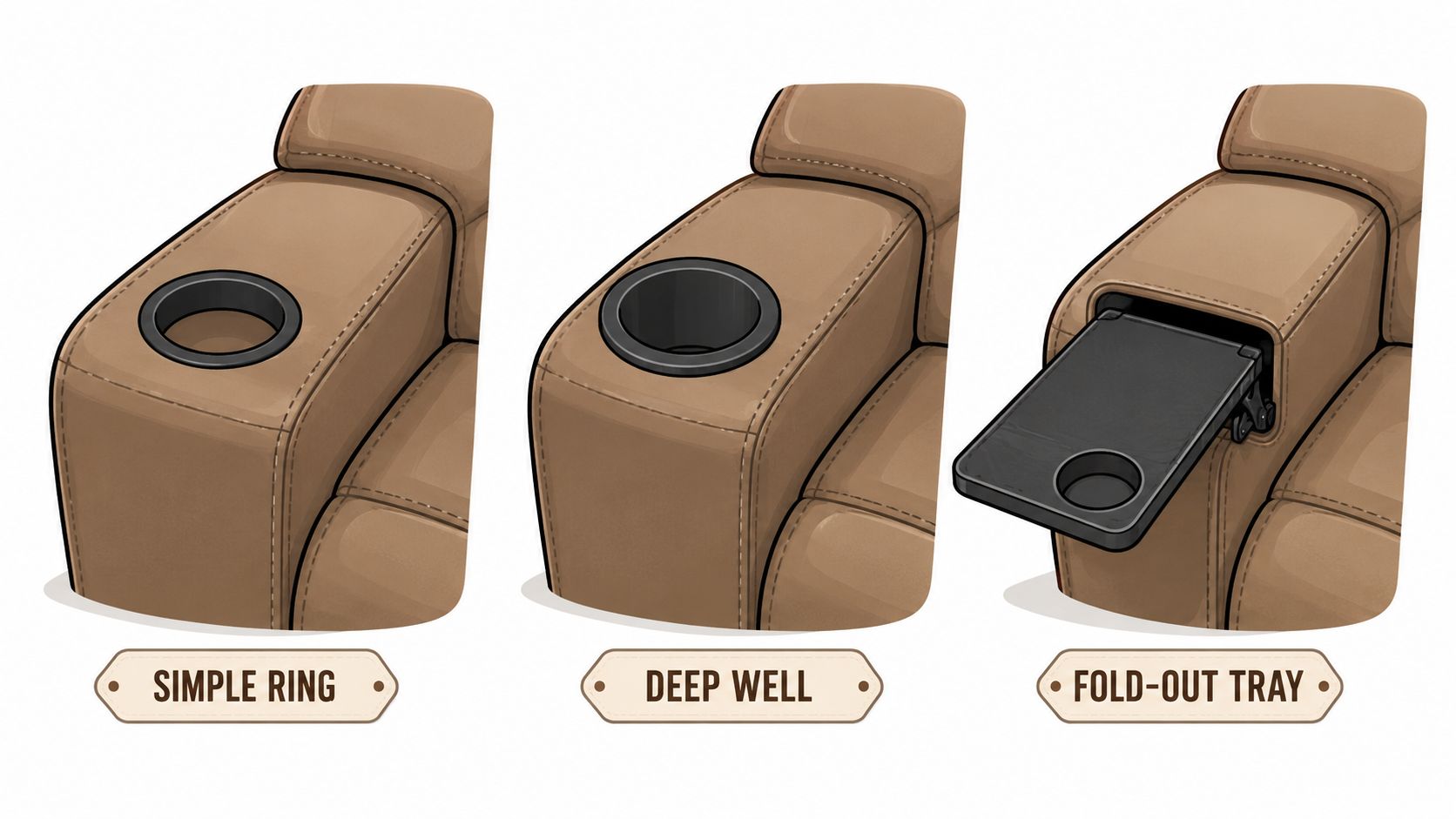
Integrated cup-holder modules in recliner-style seating are commonly built around an internal opening of about 80 to 90 mm, with larger modules using cutouts near 100 mm by 146 mm design guide on cup holders. That range works for many standard tumblers and helps reduce fit problems with insulated drinkware, though oversized flasks can still be too large.
The useful check is simple. Buyers should verify both the cup diameter and the console thickness before ordering, because depth and surrounding shape matter as much as the opening itself.
Placement changes how the chair feels
Cup holders built into an armrest feel direct and familiar. The drink stays close without adding a large center console, which can suit smaller rooms or spaces where a lighter visual profile matters.
A console-style layout creates more of a shared entertainment feel. It gives the middle section a clear role for storage and beverages, but it also changes the chair's footprint. For careful room planning, that tradeoff matters just as much as recline.
The reclining console sofa guide makes a similar point. If the holder sits in the center structure, buyers need to consider what that convenience costs, whether that is space, armrest storage, or a simpler look.
The right size is the one that fits the drinks already used at home. A chair that holds a standard mug securely may still be awkward with a large insulated bottle, and that is usually where disappointment starts.
Upholstery Choices and Added Features That Matter
The upholstery should be chosen with the cup holder in mind, not after it. Drinks get set down, lifted, bumped, and sometimes spilled, so the surface around the holder needs to match real use, not just a catalog photo.
Material choice should follow the cleanup plan
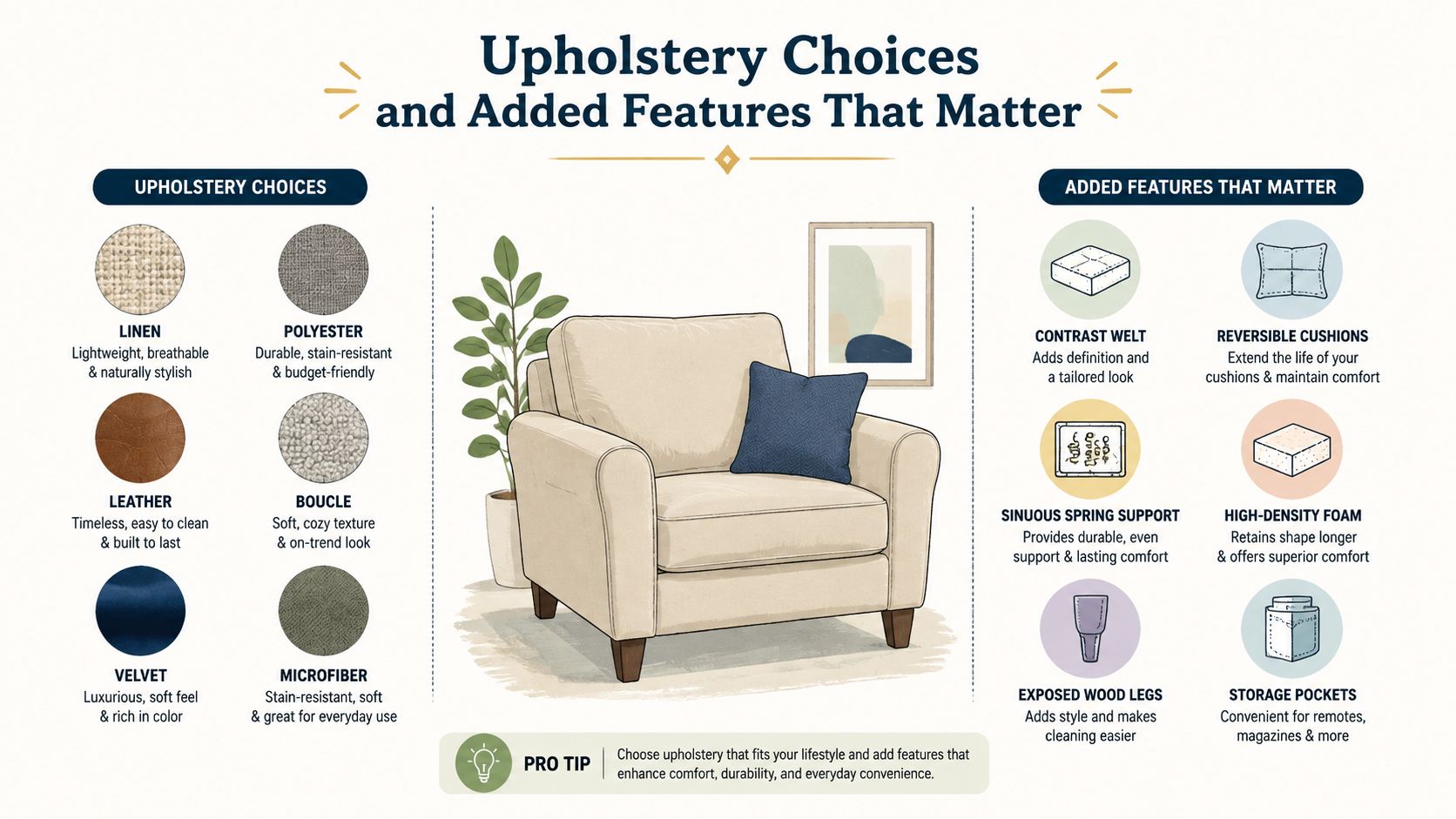
Leather tends to feel polished and wipe clean with little effort. Microfiber often feels softer and more forgiving in a casual family room. Performance fabrics are made for daily messes, which matters when a cup holder turns the chair into a regular drink zone. Faux leather can deliver a similar look, though long-term wear and heat sensitivity still deserve attention.
Spill protection deserves equal attention. If liquid reaches the foam or nearby frame parts, the damage can spread beyond the visible stain and shorten the chair's life. That is why removable liners, moisture-resistant substrates, and easy-access cleaning matter more than glossy feature lists suggest spill and cleanability guidance.
A practical fabric choice should fit the room's use. For help comparing feel, durability, and upkeep, shoppers can start with how to choose upholstery fabric.
Extras can help, but they also add complexity
USB ports, hidden storage, adjustable headrests, lumbar support, massage, and zero-gravity positioning can make a recliner more useful. Each one also adds seams, ports, lighting, or electronics, which gives dirt and wear more places to show up.
Good buying habit: the more features the chair has, the more important it becomes to ask how each one will be cleaned, powered, and repaired.
A feature-rich chair is not automatically better. A simpler chair with a well-built cup holder can be easier to wipe down and can have fewer failure points. That matters for households that want the seat to stay dependable instead of becoming high-maintenance.
The upholstery should also fit the room's traffic, the family's habits, and the cleaning routine they will follow.
Pros and Cons of a Recliner With Cup Holder
A good recliner with a built-in drink spot saves a side table, keeps the remote close, and makes movie nights easier. It can also make a room feel more organized because fewer small items have to float around the chair.
But the tradeoffs are real. Built-in holders can reduce armrest storage, and the more integrated features the chair has, the more places there are for wear to show up. That's especially true when the chair includes ports, lighting, or extra moving parts.
What fits the drink you actually use
Another question buyers ask too late is whether the holder fits modern bottles and tumblers. Many models still assume a standard roughly 3-inch drink diameter, while some products offer snap-in or removable inserts to improve fit and cleaning cup-holder fit guidance.
That matters because the market is full of larger reusable cups now. If the opening is too tight, the drink won't sit securely. If it's too loose, the cup slides around every time the chair moves.
The cup holder should fit the drink the household uses most often, not the smallest cup in the kitchen.
A quick decision list
- Choose built-in cup holders when the chair will anchor regular TV watching, reading, or relaxed family time.
- Choose simpler construction when low-maintenance cleaning matters more than extra features.
- Choose removable inserts when different drink sizes need to fit without wobble.
- Choose fewer electronics when reliability and easy wipe-down care matter most.
The best answer isn't always the most feature-packed chair. It's the one that fits how the room is used, how often spills happen, and how much upkeep the household is willing to handle.
Custom Ordering, Delivery, and Financing at Groen's
A chair only feels custom when it fits the home, not just the floor plan. That's why made-to-order furniture can be a smart path for households that want to choose dimensions, finishes, or materials instead of settling for a one-size option. Our team helps customers move through that workflow by discussing the piece, sharing material samples, and shaping the order before production begins, which is the basic logic behind made to order furniture custom furniture workflow.
What custom can change
For a recliner with cup holder, custom ordering can mean the difference between a chair that fits the room neatly and one that feels oversized or awkward. It can also help when the buyer wants the cup holder integrated into a specific layout, upholstery family, or room style. That “design it your way” approach is especially useful when the chair needs to coordinate with other pieces already in the home.
For coordinated spaces, Canadel custom dining and Amish Furniture in solid wood can help carry the same design language from dining room to living room. That's useful for families who want bespoke finishes, heirloom craftsmanship, and a more unified home without repeating the same furniture everywhere.
Financing and delivery
Furniture financing is often tied to credit approval, and the terms commonly include purchase minimums or monthly payment requirements financing terms example. That kind of special financing can make it easier to bring home a quality seat without forcing the decision into a single payment.
White-glove delivery matters too, especially for heavier recliners or chairs with built-in features. A good delivery team places the chair where it belongs, removes the packaging, and reduces the stress of getting a large piece from the truck to the living room.
Buying power improves when the store can help with both the order and the setup.
Groen's Fine Furniture has served Northwest Indiana since 1983, with showrooms in Dyer and Crown Point and multigenerational ownership that families here already know by name. For shoppers in St. John, Schererville, and Munster, that local continuity is part of the value because the service doesn't disappear after the sale.
For anyone ready to start a custom order, the next step is here: getting started with custom order.
Maintaining Your Recliner and Making It Last
A cup holder adds convenience, but it also adds a cleanup habit. After spills, the holder should be wiped down quickly so moisture doesn't sit in the module or work its way into surrounding materials. That small routine protects both the chair's finish and its internal structure.
Keep the holder and mechanism clear
Debris in retractable tracks, sticky residue around the opening, and forgotten crumbs in seams can all affect how the chair feels over time. The safest habit is to clean the cup area right away and check the moving parts during regular room cleaning.
Fabric type changes the maintenance rhythm. Wipeable surfaces make quick cleanup easy, while softer fabrics may need more attention around the arms and holder edges. Either way, the point is consistency, not perfection.
Care that extends the investment
- Wipe spills immediately so moisture doesn't reach foam or frame materials.
- Clear debris from seams and tracks so moving parts stay smooth.
- Use cleaner-friendly materials when the chair will get daily use.
- Schedule professional cleaning when ordinary upkeep stops being enough.
A well-chosen chair should support daily life for years, not just look good on delivery day. That's the philosophy families expect from a local furniture store that stands behind its recommendations.
For households comparing comfort seating, Groen's Fine Furniture also carries Flexsteel, Bassett, Serta, and Beautyrest, along with options that suit different rooms and sleep needs. The same honest approach that helps with living room seating carries into every other part of the home.
Visit Groen's Fine Furniture in Dyer or Crown Point today to explore custom options for a recliner with cup holder and ask about our special financing plans. Our family would be glad to help you test drive comfort, compare materials, and find a piece that feels right for your home.