Blog
Amish Furniture Finish: A Practical Buyer’s Guide


A family in Dyer finally finds the dining table that fits the room, the chairs that feel right, and the wood that looks like it belongs in the home. Then the conversation turns to the finish. Should the surface look natural or formal? Will it handle spilled juice, hot serving dishes, daily cleaning, and years of family meals? Those questions matter more than a stain name on a sample card.
The right Amish furniture finish is a deliberate design and durability choice. It determines how the wood feels, how easily the surface cleans, how visible wear becomes, and how well a solid hardwood piece responds to everyday life. For homeowners in Dyer, Crown Point, and throughout Northwest Indiana, the smartest approach is to choose the finish around the household, not around a showroom photograph.
What an Amish Furniture Finish Really Does for Solid Wood
A solid wood table is constantly responding to its surroundings. Wood takes on and releases moisture as indoor conditions change, which can contribute to seasonal swelling, shrinking, movement at joints, and stress along edge grain. A finish slows that exchange. USDA Forest Products Laboratory guidance explains that each added coat improves moisture resistance, with a three-coat film providing the strongest humidity protection among the tested systems. USDA guidance on finish coats and moisture protection
That protective layer also shields the surface from abrasion, spills, household chemicals, and light exposure. It doesn't make a table indestructible, but it gives the hardwood a practical barrier against the things that happen around a family table. A properly applied finish helps preserve the grain while reducing the chance that ordinary use turns into premature refinishing.
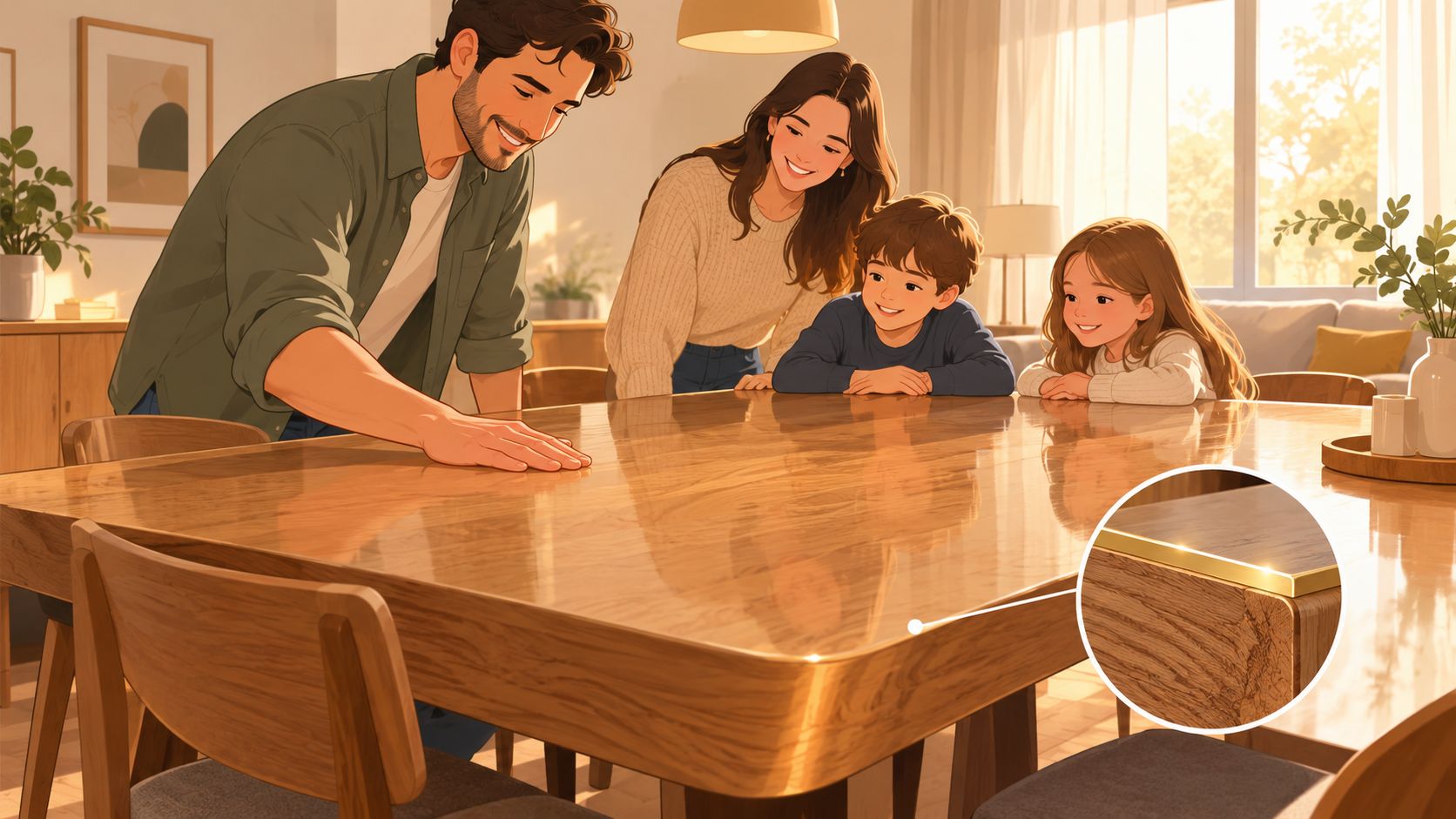
Stain and topcoat serve different jobs
Stain changes color. It penetrates the wood to deepen, warm, cool, or mute the natural tone while allowing the grain to remain visible. Topcoat protects the surface. It sits above the stained wood as the clear protective skin.
That distinction prevents a common buying mistake. A dark stain isn't automatically more durable, and a clear finish isn't necessarily visually plain. Durability comes primarily from the protective coating, its application, and its cure, not from the color underneath.
Sheen is the visual control. Matte and low-sheen finishes soften reflections and create a relaxed, natural appearance. Satin gives a balanced look that works in most homes. Higher gloss levels reflect more light and can make grain appear sharper, but they also show fingerprints, dust, and surface marks more readily.
Practical rule: Choose the stain for the room, then choose the topcoat for the household.
For an Amish-built piece intended to serve for decades, finish quality matters as much as the joinery and lumber. A properly built film protects the wood without making it feel like plastic. Customers comparing solid wood options can also review how hardwood choice affects furniture longevity and style before selecting the finish.
How Amish Finishing Evolved From Hand Work to Modern Standards
Older small-shop finishing depended heavily on the individual craftsperson. One worker might wipe a stain by hand, another might brush a protective coat, and a third might sand the surface before the next application. That approach could produce beautiful results, but it also created variation in film thickness, sheen, color matching, and cure time.
Amish furniture production changed as regional manufacturing clusters became more organized. A U.S. Forest Service case study identifies median establishment years of 1996 for manufacturers, 1997 for wholesale distributors, and 2000 for specialized finishing companies, a pattern showing that organized finishing operations emerged in the late twentieth century. Historical background on Amish furniture manufacturing
Standardization improved consistency
The same case study describes standardized finish colors as an important part of cluster success. Shared color systems allowed semi-custom pieces made by different firms to maintain a consistent appearance, while individual shops could finish furniture in-house or work with specialized finishers.
A contemporary finishing room may separate the work into a controlled sequence:
- Pre-sanding smooths the surface and prepares the grain.
- A seal coat manages absorption and helps create an even base.
- Color application establishes the selected stain.
- Intermediate sanding and sealing build a uniform surface.
- Topcoating adds the protective film and desired sheen.
- Curing and inspection allow the finish to harden before the piece moves to delivery.
The exact equipment and process vary by shop. Spray booths, dust control, airflow management, and controlled curing all help finishers create a repeatable result, but standardization doesn't erase the wood's character. Oak still shows its open grain, cherry still carries its warmth, and hickory still displays natural variation.
The buyer benefits in practical ways. A table and its chairs can match more reliably, replacement pieces can be ordered with a consistent color reference, and the finish can be selected as part of a made-to-order specification. Customers evaluating construction details can also explore Amish furniture quality and craftsmanship before making a purchase.
The Main Finish Types Used on Amish and Solid Wood Furniture
A dining table in a busy kitchen faces spills, heat, wiping, and daily contact. A bedroom chest does not. The finish should match that reality, not the stain color. Groen's custom-order and Amish-built options give you room to choose based on how the piece will be used, how much wood texture you want to feel, and how much upkeep you will accept.
Oils and waxes favor a natural feel
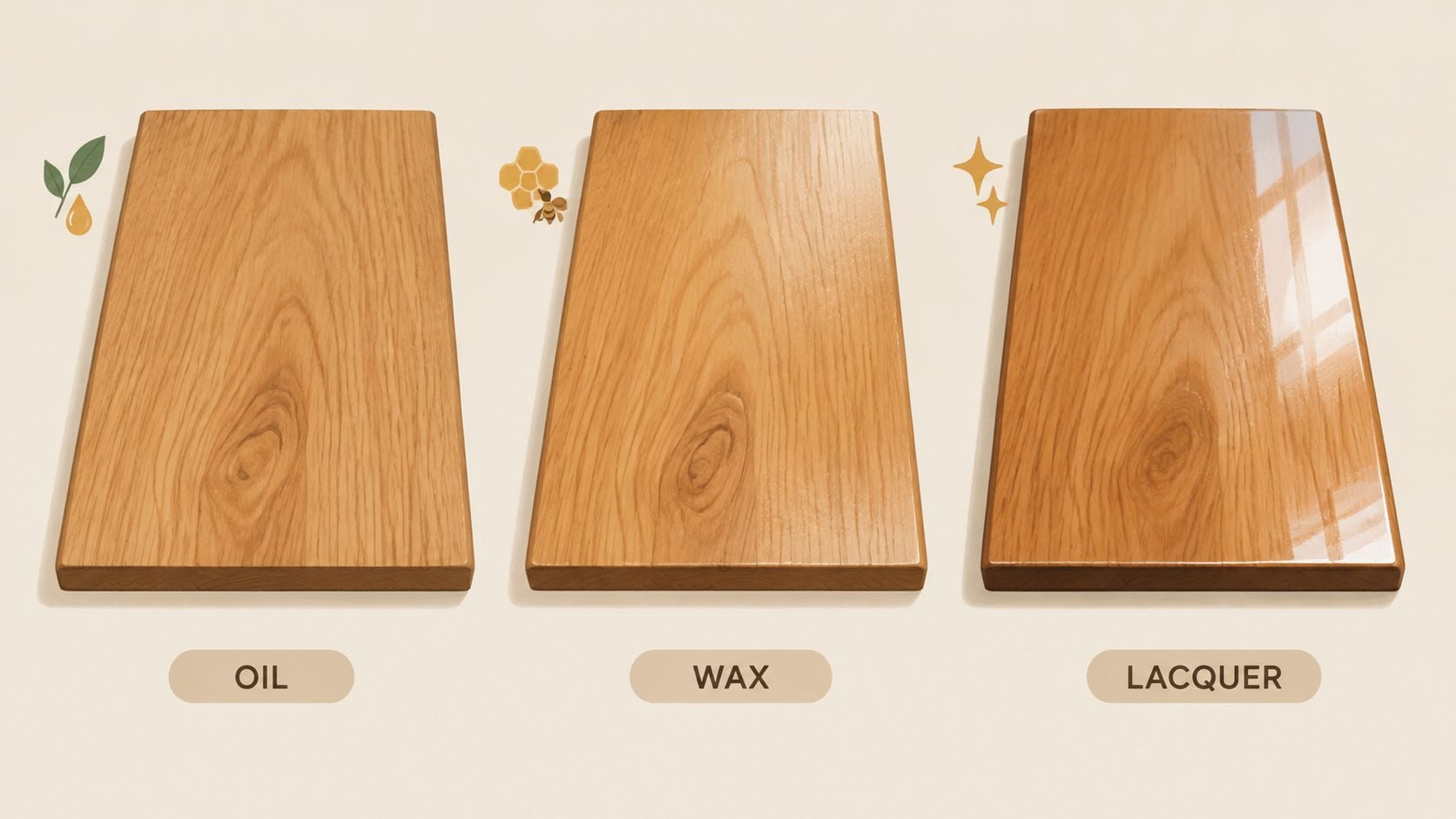
Penetrating oils soak into the grain instead of forming a thick reflective film. The result feels close to unfinished wood and usually appears matte or softly satin. Wax adds a gentle glow and a smooth touch, but its protection remains limited.
Choose these finishes for lower-impact furniture or for rooms where periodic maintenance is part of the appeal. They are a poor fit for a heavily used family dining table. Spills, abrasion, and repeated cleaning call for more attention, and the surface may need refreshing as its protective quality declines.
Stains provide color, not the complete defense
Wiping stains change the wood's color while keeping the grain visible. The stain normally works with a sealer and clear topcoat, so judge the full finishing system rather than the color coat alone. For help with choosing the right dining room table finish, start with the table's daily demands and the protection required.
Wood species alter the finished result. Open-grained oak accepts color readily, while fine-grained maple needs more careful preparation. Cherry often looks better with a natural or lighter treatment because a heavy stain can hide its warmth. Hickory keeps its visible variation after coloring. Walnut already has substantial depth, so a clear protective coat is usually the better design choice.
Lacquer prioritizes speed and smooth application
Catalyzed and pre-catalyzed lacquers spray evenly and dry quickly. That makes them practical for production work and can simplify touch-up repairs. They provide useful everyday protection, though they generally resist chemicals less effectively than properly cured conversion varnish.
Lacquer suits accent furniture, bedroom pieces, and rooms with fewer spills. For a broader look at protective coatings and wood-color products, review this Neasden Hardware varnish selection. Groen's finisher should still determine the appropriate system for the selected piece.
Polyurethane builds a flexible protective layer
Polyurethane forms a durable film in oil-based and water-based versions. Oil-based polyurethane develops amber warmth over time, which works well with traditional wood tones. Water-based polyurethane stays clearer and preserves the original appearance of lighter species.
It is a sound choice for tables and desks when the application is controlled. Poor leveling or an overly thick film can distract from solid-wood craftsmanship. Ask how the finish will look at the chosen sheen, not just which product category is being used.
Conversion varnish is the professional workhorse
Modern Amish furniture frequently uses catalyzed conversion varnish, a two-part finish that forms a hard cured film through chemical crosslinking. Industry guidance describes better resistance to moisture, heat, spills, and abrasion than conventional lacquer, which explains its common use on dining tables and desks exposed to regular contact and cleaning. Amish furniture finish guidance on conversion varnish
Independent buying guidance also describes multiple-coat application with hand-sanding between coats, along with 20 to 40 stain options in many shops. Current Amish furniture buying guidance For high-use solid wood ordered through Groen, conversion varnish is the finish I recommend first when durability and simpler upkeep outweigh a softer, more tactile surface.
Comparing Durability, Look, and Maintenance Side by Side
Finish selection becomes easier when the trade-offs are visible. No finish wins every category. Oils feel the most natural but require more attention. High-gloss films create a polished appearance but reveal fingerprints. Conversion varnish offers the strongest practical protection, although a serious scratch may still require professional repair.
| Finish Type | Durability | Look and Sheen | Repairability | Best Room Use |
|---|---|---|---|---|
| Oil | Light to moderate protection; vulnerable to standing moisture and heavy abrasion | Natural, tactile, usually matte or low sheen | Small worn areas can often be refreshed locally | Bedrooms, occasional tables, lower-impact spaces |
| Wax | Light protection and limited resistance to heat and spills | Soft glow with a warm, organic feel | Simple to renew, but frequent wear remains visible | Decorative furniture and lightly used rooms |
| Lacquer | Moderate protection with useful everyday performance | Smooth, even, from low sheen to gloss | Often easier to touch up than harder crosslinked films | Bedroom furniture, accent pieces, moderate-use surfaces |
| Polyurethane | Strong protection against common wear and moisture | Satin through gloss; oil-based versions add warmth | Local repair varies, deeper damage may require broader refinishing | Desks, dining furniture, home offices |
| Conversion varnish | Strong resistance to moisture, heat, spills, and abrasion | Consistent, refined, from subdued sheen to polished gloss | Minor marks may be blended, deep damage usually needs professional work | Family dining rooms, kitchens, daily-use great rooms |
Choose by the damage the room creates
A family kitchen places more stress on a finish than a formal dining room used occasionally. Repeated wiping, wet glasses, food residue, homework, and chair movement all favor a hard, well-cured film. A bedroom dresser has a different job, so the tactile appeal of oil or the repairability of lacquer may carry more weight.
Sheen also changes maintenance perception. A low-sheen surface disguises small dust and handling marks better. Gloss reflects more light and can make a formal room feel finished, but it demands more consistent cleaning.
For buyers comparing coating behavior across wood surfaces, this resource on oil-based versus water-based floor coatings offers helpful background on the visual and performance differences between those broad categories. Furniture finishes aren't floor finishes, but the comparison clarifies why chemistry affects color, sheen, and upkeep.
Matching Stain Color and Sheen to Your Room and Décor
The wood species establishes the starting point. Stain modifies that starting point, and sheen determines how light interacts with the final surface. Treating those choices separately can lead to a piece that looks attractive on a sample but feels wrong once it sits beside the room's flooring, walls, and natural light.
Quarter-sawn white oak with a dark stain creates a formal, architectural impression. The strong grain and distinctive figure remain present, but the deeper color gives the piece more visual weight. That combination suits traditional dining rooms, Mission-inspired interiors, and spaces with substantial furnishings.
Cherry takes a different path. A natural or light finish keeps its warm character visible and allows the wood to develop a richer appearance as it ages. In a relaxed dining area or bedroom, a low-sheen clear finish can feel more inviting than a reflective surface.
Use sheen to control the room's mood
A matte finish absorbs more light and feels understated. Satin is the dependable middle ground, offering enough reflection to show craftsmanship without turning every surface mark into a focal point. Gloss makes a table or hutch look formal and polished, but it works best when the household accepts more visible fingerprints and dust.
Lighting changes the result. A cool, north-facing room may benefit from warmer oak, cherry, or honey tones. A sunlit room can support gray, weathered, or natural finishes, although direct sunlight still deserves caution because UV exposure can alter wood color unevenly.
The same species can move from traditional to contemporary through stain and sheen alone. White oak with a soft natural finish feels calm and modern. The same wood in a deep brown with a higher sheen reads more formal. Maple's fine grain supports clean, quiet interiors, while hickory's natural variation suits rustic and farmhouse settings.
A custom-order program removes the need to accept a near match from available inventory. Groen's Fine Furniture offers custom Amish furniture finish and stain selections, allowing buyers to coordinate wood type, color, sheen, dimensions, and hardware around the room rather than forcing the room to accommodate a stock piece.
Caring for an Amish Finish So It Lasts for Generations
Good care is simple, but it has to match the finish. Sealed surfaces and oil-treated surfaces shouldn't receive the same products, and solid hardwood shouldn't be treated like a disposable composite panel. The safest routine starts with removing grit before it can scratch and wiping spills before moisture sits on the surface.
Use a soft microfiber or cotton cloth for dusting, moving with the grain. For sealed furniture, a barely damp cloth followed by immediate drying is usually safer than a heavy household cleaner. Avoid abrasive paper towels, silicone-heavy sprays, and products that leave a cloudy buildup. For oiled or waxed furniture, follow the maker's care instructions and use only compatible conditioning products.
Protect high-contact areas
Dining rooms deserve the most discipline because food, heat, and moisture arrive together.
- Use coasters and placemats: They reduce direct contact with wet glasses, hot dishes, and gritty tableware.
- Blot spills promptly: Press a clean cloth against the liquid instead of spreading it across the grain.
- Keep vents and heaters clear: Rapid drying can stress solid wood and contribute to cracking or movement.
- Limit direct sun: Rotate décor and use window treatments so the surface doesn't age unevenly.
- Lift objects: Dragging lamps, serving pieces, and ceramics creates avoidable abrasion.
Moisture control matters throughout the home. USDA guidance confirms that additional finish coats slow moisture exchange, but no finish eliminates wood movement. Seasonal indoor changes can still affect a solid wood piece, especially at joints, edge grain, and wide panels.
Light scratches often respond to a color-matched wax stick or touch-up marker. A small dent may sometimes be eased with controlled moisture and gentle warmth, but experiments on a visible tabletop are risky. Water rings and cloudy marks should be assessed before anyone reaches for an abrasive paste, because the ring may sit in the coating rather than in the wood itself.
Know when home repair stops making sense
Refresh an oil finish when the surface looks dry and the manufacturer's instructions allow it. A sealed conversion-varnish surface usually shouldn't receive an oil treatment because it feels dull. Deep gouges, peeling, structural movement, or widespread finish failure call for a professional rather than a series of home remedies.
Curing also affects care. A finish can feel dry within hours yet remain softer beneath the surface while it hardens. Typical examples include shellac curing in about 2 to 3 days, lacquer in 3 to 7 days, and oil-based polyurethane taking up to 30 days for full cure. Drying and curing guidance for wood finishes The maker's delivery and care instructions should take priority.
For a practical routine covering cleaning, protection, and repair, use this wood furniture care guide. A seasonal check should include tabletop condition, chair hardware, sunlight exposure, nearby heating, and any new rings or scratches.
Choosing the Right Finish for the Way You Actually Live
The best finish recommendation starts with behavior, not décor. Three households can choose the same wood and need completely different surface treatments.
The active family
Children, pets, snacks, homework, and repeated wiping point toward conversion varnish or catalyzed lacquer on a dining table. Oak, maple, or hickory pairs well with that use because each brings a practical balance of durability and visible character. A medium brown or natural stain with a satin sheen keeps the table forgiving without making it look overly formal.
The frequent entertainer
Hosts need the same resistance to spills and handling, but the surface should also suit the room's presentation. Conversion varnish remains the sensible choice for a buffet, dining table, or serving cabinet, while satin or soft gloss usually offers a better balance than a mirror-like finish. High gloss can look elegant, but it reveals fingerprints and handling marks quickly on broad surfaces.
The design-driven caretaker
A buyer who values grain texture and accepts regular maintenance can choose oil and wax or a low-sheen polyurethane. Cherry with a natural treatment creates a warm, relaxed look. Walnut with a clear low-sheen coat preserves its deep color without forcing additional darkness. These choices reward careful ownership, but they aren't the right answer for a surface expected to absorb constant abuse.

Bring those lifestyle details to the showroom. The salesperson needs to know whether the table will host daily meals, whether pets jump near the furniture, whether the room receives strong afternoon sun, and whether the household prefers easy upkeep over a tactile natural surface.
Bring Your Vision to Our Dyer or Crown Point Showroom
Finish decisions are easier in person because screens flatten the differences that matter. At a showroom, buyers can compare stain samples on the actual wood species, feel the difference between matte and satin, and see how light changes a color across a broad tabletop. Room photos, paint swatches, flooring samples, and a clear description of household routines make the conversation more useful.
Groen's Fine Furniture serves Dyer, Crown Point, and surrounding Northwest Indiana communities, including St. John, Schererville, and Munster. The multigenerational, family-owned business has served NWI since 1983, with a customer experience built around personal guidance, honest pricing, custom furniture, and five-star service.
Amish solid wood pieces can be made to order with selected wood, stain, finish, dimensions, and hardware. The same design-first approach extends to Canadel dining, while Flexsteel supports durability-focused living rooms and Bassett brings additional style options. Customers furnishing bedrooms or improving sleep can also use the helpful mattress guide when comparing Serta and Beautyrest products.
Special Financing is available, subject to credit approval, to provide additional buying power while a household plans a quality purchase. White-Glove Delivery and interior design guidance can help carry the project from finish selection through installation. For shoppers ready to compare options locally, the Amish furniture store collection provides a starting point before a showroom visit.
Groen's Fine Furniture offers custom Amish solid wood furniture with finish and stain choices shaped around each home's design and daily use. Visit Groen's Fine Furniture in Dyer or Crown Point to compare samples, ask about Special Financing subject to credit approval, and let the family help create a home that feels comfortable, lasting, honest, and personal.