Blog
Best Desk for Small Office: The 2026 Buyer’s Guide

For homeowners in Dyer, Crown Point, and across Northwest Indiana, a small office usually starts the same way, a spare bedroom, a corner of a den, or a tucked-away nook that looks fine until a chair rolls in and the room suddenly feels tight. The desk that works in that space is rarely the prettiest one on the floor, it's the one that leaves room to work, move, and breathe.
That's why the best desk for small office is really a whole-workstation decision, not a single furniture pick. Our family has seen enough rooms in NWI to know the problem is usually not “too little style,” it's too much bulk in the wrong place. A desk should fit the room, support the body, and keep the day from feeling cramped.
A lot of office planning gets treated like a facilities problem, not a home one. If a team is comparing work setups, even a guide on hoteling features for facility admins shows how much thought goes into shared space, circulation, and flexibility. The same logic applies at home, because a cramped workstation gets old fast.
For homeowners who want a room that feels finished, not improvised, our team at Groen's Fine Furniture keeps the focus on fit, comfort, and honest value. If the room calls for a specific solution, that's where custom order services become useful, because a desk shouldn't force the room to adapt badly around it.
Why the Right Desk Changes How a Small Office Works
A small office falls apart when the desk is oversized or badly placed. The room starts to feel like it's working against you, with the chair bumping a wall, the printer shoved too far away, and the monitor turned at an awkward angle just to make everything fit.
The right desk changes that immediately. It gives the room a clear center, keeps traffic paths open, and makes the workspace feel intentional instead of temporary. For people in Schererville, Munster, and the rest of Northwest Indiana, that matters because a home office often has to share square footage with sleeping space, storage, or family life.
The desk is only part of the footprint
A desk doesn't live alone. Once a chair, monitor, keyboard, and paperwork show up, the main question becomes whether the room still moves comfortably. That's why a desk that “fits” on paper can still feel wrong in daily use.
Practical rule: If the room feels awkward when the chair pulls back, the desk is the wrong size, even if the tape measure says it fits.
Groen's family-owned approach since 1983 has always been about solving that kind of problem with people, not just products. When a room needs more than a standard rectangle, custom order thinking helps, because the desk can be designed around the room instead of the other way around. For homeowners comparing layouts, the broader home-office planning ideas on Groen's home office design ideas are a useful place to think through the whole setup before buying.
Small room, bigger payoff
A desk that's scaled correctly also changes how the workday feels. The monitor sits where it should, papers aren't sliding into the lap, and the room stops feeling like a holdover from a guest-room conversion. That's the difference between a desk you tolerate and a desk you use well.
The point is simple. The best desk for small office is the one that fits the room, supports the work, and doesn't turn every chair movement into a hassle.
Measuring Your Space Before You Fall in Love
Buyers get into trouble when they shop by looks first. A desk can look right in a showroom and still make a room feel cramped at home if the depth, chair swing, or door clearance is off.
Start with the wall the desk will live on, then measure the full width and depth of the usable zone. Don't stop at the empty wall space, because baseboards, outlets, closet doors, and room entries all change what fits. A desk that only works by ignoring those details is the wrong buy.
Measure the working zone, not just the wall
A good measurement sketch should include four things:
- Wall width: The full horizontal space where the desk could sit.
- Desk depth: The distance from wall to front edge, because this controls how much chair and leg room remains.
- Door and closet swings: Anything that opens into the office can make a “perfect fit” useless.
- Chair pushback space: The chair has to move back without hitting a wall, bed, or dresser.
That last point matters more than most buyers think. Space-planning guidance says 24 inches of chair pushback is the minimum, and 36 inches is more comfortable for movement. That is why a desk width alone can mislead you, a 48-inch desk may feel generous in one room and tight in another.
For a clear measuring checklist before you shop, see how to measure furniture properly. Bring that same sketch to any showroom visit. It keeps the conversation focused on what the room can handle.
The sweet spot for tight rooms
For small offices, a practical desk often lands in the 48 to 60 inch width range, with 24 to 30 inches of depth as the space-efficient sweet spot. A desk in that range usually gives room for a monitor, keyboard, and paperwork without taking over the room. A very small office can sometimes start at 42 to 48 inches, while a larger small office can stretch to 60 to 72 inches, but the room has to earn that extra width.
That is why homeowners in converted bedrooms, nooks, and awkward corners should measure twice, then shop once. If the room is unusual, custom order work stops being a luxury and starts being the practical fix. Groen's custom-order approach in NWI matters here because the desk can be built around the room's real limits instead of forcing you to live with a compromise.
Bring the room sketch, the chair width, and the door swing directions to the showroom. Judge the desk against the space you live with, not the space you wish you had.
Choosing the Right Desk Type for Your Room
Different room shapes call for different desk types. A straight wall, a tight corner, and a space that doubles as a guest room each ask for a different answer, and there's no reason to pretend otherwise.
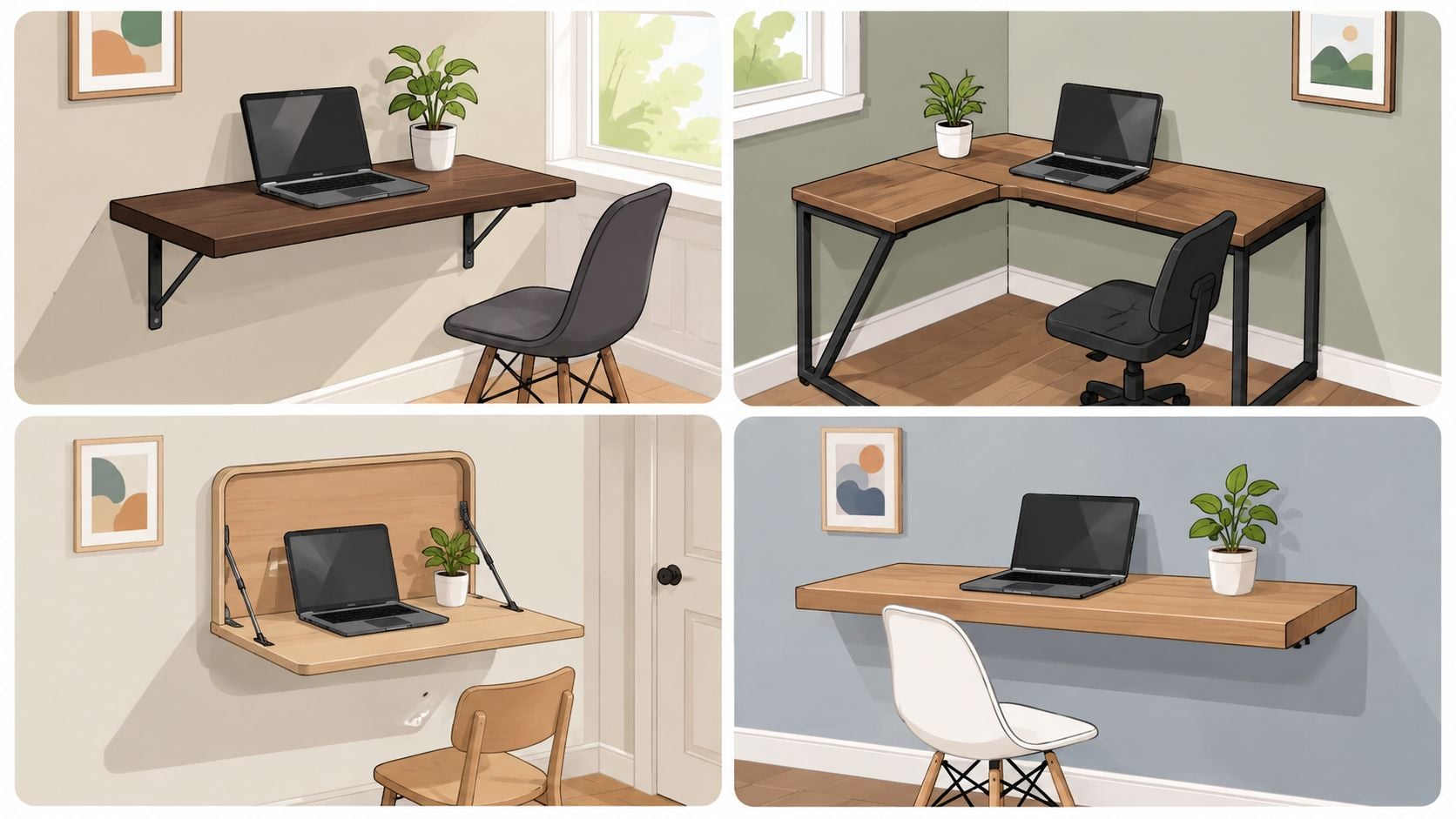
The quickest way to get this right is to match the desk type to the room shape and the work style, not the catalog photo. For shoppers looking for small-room options, desk ideas for small spaces can help frame the decision, but the answer is still in the room itself.
Wall-mounted and floating desks
These are the floor-space savers. They work well when the room is narrow or when the goal is to keep the floor visually open, but they're not the answer for heavy equipment or long, all-day use. Once the load grows, the tradeoff shows up fast.
Compact L-shaped desks
These are the spread-out option for people who juggle papers, dual monitors, or separate zones for writing and computing. They're useful when the room has a true corner to claim, but they need more planning than most buyers expect. If the corner is awkward, the desk will feel awkward too.
Fold-down and drop-leaf desks
These are best when the office also has to disappear. They're convenient for occasional use and light tasks, but they usually don't feel substantial enough for a full-time workstation. If the workday is long, the flimsy feel gets old.
Standing desks and corner desks
Standing desks are worth serious consideration when posture and flexibility matter, but they need the right frame specs to stay stable. Corner desks make use of dead space, yet the keyboard side can feel cramped if the room is too tight. The corner shape solves one problem and sometimes creates another.
A good desk choice is less about style and more about what the room allows without friction.
How to decide fast
Choose wall-mounted if floor space is the top priority. Choose compact L-shaped if the work spreads out. Choose fold-down if the desk won't be used all day. Choose standing if comfort and adjustability matter. Choose corner if the room has dead space that needs a job. For unusual layouts, a bespoke or made-to-order desk can blend features from more than one type, which is often the cleanest fix.
Standing Desks and Adjustable Frames in Tight Spaces
A sit-stand desk in a small room has to do more than move up and down. It has to stay steady while the frame lifts, the monitor rises, and the keyboard stays usable without wobble. In a tight office, that usually matters more than a clean-looking base.
Compact standing desks should be judged by specifications, not by finish alone. A small footprint helps, but if the frame flexes every time someone types, the desk is not doing its job. For shoppers planning a room around a sit-stand setup, see more options at https://groensfinefurniture.com/desk-ideas-for-small-spaces/.
The numbers that matter
A compact model like the Branch Duo Standing Desk uses a 36 x 24 inch footprint, a 28 to 47.3 inch lift range, a 275-pound capacity, BIFMA commercial-grade certification, and a 10-year warranty. A comparable small-space option, the Uplift V2 42 x 30 inch version, is cited with a 355-pound capacity, a 22.8 to 50.9 inch adjustment range, and a 15-year warranty. Those specs show a clear tradeoff. A smaller frame can fit a tighter room, while a larger frame usually gives more margin for load and stability. Business Insider's standing desk guide lays out those figures.
The practical takeaway is simple. Heavier monitors, dual-arm mounts, and gear that stays on the desktop all day favor the higher-capacity frame. More load margin usually means less wobble during typing and during height changes. That is the difference between a desk that feels solid and one that starts to annoy you by midweek.
Who should pay for adjustability
A small office does not automatically need sit-stand functionality. If the desk is mainly for occasional paperwork or a light laptop setup, a simpler desk is the better buy. If the room supports long work sessions, posture changes, or shared use between adults, the adjustable frame earns its place fast.
Compact electric standing desks now come in smaller footprints such as 42 x 30 inches, which makes the category more realistic for tight rooms. That helps in home offices where flexibility matters more than a fixed setup. For shoppers comparing small adjustable options, standing desks for small spaces shows how compact this category has become.
The clean rule is this. Buy standing-desk adjustability when the room and the workday both need it. Skip it when the office is too small for the mechanism to pay off. For a home that needs a tighter custom fit, Groen's order process can combine a smaller footprint with the right working height and storage layout instead of forcing a one-size answer.
Ergonomics That Make a Small Desk Actually Comfortable
A small desk can still be miserable if the body is set up badly. People blame the desk when the problem is usually monitor height, chair position, glare, or a keyboard that sits in the wrong spot.
The basic setup is not complicated. The top third of the screen should sit around eye level, the keyboard and mouse should let the elbows stay near a natural bend, and the chair should support the lower back without forcing a slouch. Get those three things right, and the desk starts working with the body instead of against it.
Lighting and window placement matter more than style
Task lighting should land in the 300 to 500 lux range for comfortable work, and that matters in long northern winters when daylight can be limited. Keep the monitor perpendicular to a window so glare doesn't wash out the screen. That one move saves a lot of squinting.
Good lighting beats decorative clutter every time. A small office feels larger when the screen is readable and the corners aren't fighting reflections.
A simple day-one checklist
Use this sequence after the desk is in place:
- Set the screen height: The upper portion of the display should sit near eye level.
- Check chair distance: Sit back and make sure the feet land flat while the knees and hips feel relaxed.
- Place keyboard and mouse together: Don't force the arms to reach or twist.
- Aim the monitor away from glare: A window beside the desk is better than a window behind it.
- Add task lighting: Use enough light to read comfortably without strain.
The office feels different when these pieces are right. The room no longer depends on the desk alone to carry the whole experience, because the workstation supports the day properly.
Materials, Finishes, and Why Custom Order Pays Off
In a small office, every finish shows and every joint gets used. That's why materials matter more than people think, especially when the desk is close to a wall, window, or doorway.
Solid wood has staying power. Veneer can look clean and polished, engineered wood can serve a purpose, and metal frames can give visual lightness, but quality joinery and durable construction are what keep a desk from feeling tired after a few years of daily use. In a compact room, flimsy details stand out fast.
Why custom sizing solves the common problem
Most small offices aren't perfect rectangles. A wall might be a little short, a vent might sit too close to the floor, or an angled ceiling might rule out a standard desk. That's where made to order work becomes practical, because the desk can be sized to fit the room exactly instead of forcing awkward clearance.
Groen's family-owned showroom also gives shoppers a place to look at Amish solid wood craftsmanship and Canadel custom programs for homeowners who want a precise fit and finish. The value there is simple, the piece fits the room, and the room looks finished instead of improvised.
Finishes that help small rooms feel open
Lighter wood tones brighten tight spaces. Painted finishes can blend into the wall and reduce visual bulk. A darker desk can still work, but it needs enough visual breathing room around it or it starts to feel heavy.
Better fit beats bigger furniture. In a small office, the right dimensions and finish usually matter more than the longest spec sheet.
For shoppers who want a desk that belongs in the room instead of crowding it, custom order options are the smart route. The getting started with custom order guide helps explain the process in plain terms, and that matters when a standard desk just won't solve the space problem cleanly.
Setting a Realistic Budget and Making Quality Affordable
A small-office desk should be treated like a foundation piece. It gets used every day, it shapes the room, and it usually outlasts the impulse buys people make when they're trying to fix a workspace fast.
That's why value matters more than a sticker price alone. Flexsteel brings durability, Bassett brings style, and Amish-built pieces bring craftsmanship that's built around solid wood and long life. Those are the kinds of names that make sense when the desk has to hold up through real use, not just look good on delivery day.
Honest buying power
Special financing can make a better piece easier to fit into a household budget, as long as it's used thoughtfully and subject to credit approval. That's not about chasing a deal, it's about giving a family room to choose quality without forcing the budget to absorb everything at once. For a lot of shoppers, that's the difference between settling and buying once.
A multigenerational store earns trust by being clear about that tradeoff. Groen's family ownership, rooted in NWI, matters because local service, honest guidance, and 5-star service are part of the value, not an afterthought. A desk should come with straight answers, not sales pressure.
What to ask in the showroom
- Will this fit the room after the chair pulls back?
- Does the finish make the room feel lighter or heavier?
- Can the size be adjusted if the wall is slightly off standard?
- Is special financing available to spread out the purchase?
A quality small-office desk costs more than a flimsy one because it's doing a harder job. The right question isn't whether to spend less, it's whether the desk will still feel worth it after daily use wears the novelty off.
| Desk Type Comparison for Small Offices | Typical Footprint | Best Room Shape | Key Tradeoff |
|---|---|---|---|
| Wall-mounted or floating desk | Compact, wall-based layout | Narrow rooms | Saves floor space, but limits load and flexibility |
| Compact L-shaped desk | Corner footprint | Rooms with a true corner | Spreads work out, but needs more planning |
| Fold-down or drop-leaf desk | Very small when closed | Multi-use rooms | Disappears easily, but feels lighter duty |
| Standing desk | Small to medium footprint | Tight rooms that need flexibility | Adjustable comfort, but stability depends on frame |
| Corner desk | Corner-oriented footprint | Dead-space corners | Efficient use of space, but the keyboard side can feel tight |
Caring for Your Desk and Putting It All Together
A small-office desk lasts longer when it gets treated like a working surface, not a landing zone. Coasters keep moisture off the finish, the right cleaner protects the surface, and a quick hardware check once in a while keeps the frame solid.
Keep solid wood out of harsh direct sun when possible, and don't park it right against a heating vent. In compact rooms, desks often sit close to windows and walls, so the finish takes more daily abuse than people expect. A little care keeps the piece looking settled instead of worn.
The short version
Choose the room size first. Choose the desk type second. Test the setup in person before committing, because comfort is harder to judge from a photo than from a seated position.
That last step matters most. A desk that looks right but feels wrong will get resented every day. A desk that fits the room and supports the body will make the home office easier to live with.
Our family has spent decades helping Northwest Indiana homeowners build rooms that feel comfortable, lasting, and honest. For people in Dyer, Crown Point, St. John, Schererville, and Munster, that means a showroom visit can solve a lot of second-guessing before the purchase ever leaves the floor.
Visit Groen's Fine Furniture in Dyer or Crown Point to test-drive desk comfort, explore custom order options, and ask about special financing subject to credit approval. If a small office needs a smarter fit, our family can help you choose a desk that works with the room instead of crowding it. Start with Groen's Fine Furniture, then bring your measurements in and let's find the right setup for your home.